
Wagons have long lived in the shadow of flashier performance machines, often dismissed as practical tools rather than serious driver cars. For decades, the spotlight remained fixed on coupes and sports cars, while wagons quietly evolved into something far more capable than their reputation suggested. By 2026, that quiet evolution is impossible to ignore.
The reality is that many wagons were engineered with the same performance foundations as their sportier counterparts.
They shared engines, chassis components, and sometimes even identical performance figures, yet they carried an entirely different image. That contrast allowed them to deliver speed and handling without attracting the same level of scrutiny or expectation.
Another advantage wagons held was usability. While sports cars often sacrificed comfort, space, and practicality, wagons offered a complete package. They could carry passengers, handle daily duties, and still deliver impressive performance when pushed. This dual nature made them incredibly versatile, even if they were not immediately recognized for it.
In recent years, enthusiasts have started to reevaluate what defines a great performance car. Straight line speed is no longer the only measure. Balance, real-world usability, and driving engagement are gaining importance. Wagons from the past have begun to stand out because they deliver all of these qualities in a way that feels natural and unforced.
There is also a growing appreciation for subtlety. Not every fast car needs to announce itself loudly. Many wagons offer performance in a more understated form, which adds to their appeal. They surprise rather than shout, and that element of surprise is part of what makes them memorable.
This article highlights ten wagons that quietly outperformed sports cars of their era. Each one brings a different perspective on what performance can look like when it is not constrained by traditional expectations.
Also Read: 10 Premium Coupes Selling Below What They’re Actually Worth
1. Audi RS4 Avant (B7)
The Audi RS4 Avant B7 is a perfect example of how performance can be hidden in plain sight. At first glance, it appears refined and composed, but beneath that calm exterior lies a machine built with serious intent. It carries the same DNA as high-performance sports cars, yet delivers it in a far more versatile form.
Its naturally aspirated V8 engine is central to its identity. The power delivery is smooth and progressive, building strength as the revs rise. It does not rely on forced induction or sudden bursts. Instead, it rewards drivers who stay engaged and committed, offering a more immersive experience.
Grip is where the RS4 Avant truly separates itself. The All Wheel Drive system ensures that power is translated into forward motion with remarkable efficiency. In conditions where many sports cars struggle, this wagon maintains composure and confidence, allowing it to perform consistently.
Inside, the cabin reflects a balance between luxury and purpose. It provides comfort without diluting the driving experience. This combination makes it equally suited for long journeys and spirited driving, something most sports cars cannot achieve simultaneously.
The real strength of the RS4 Avant lies in how effortlessly it blends roles. It does not force the driver to choose between practicality and performance. Instead, it delivers both in a seamless manner.
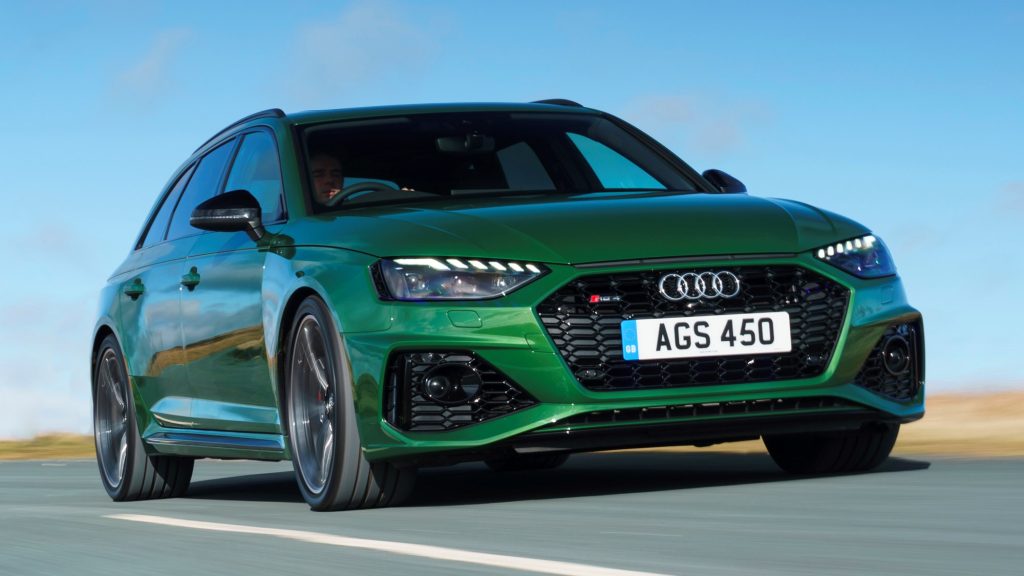
Over time, this ability has become more valuable. As cars become more specialized, the RS4 Avant stands out as a reminder that performance does not have to come with compromises.
2. Volvo V70 R (P2)
The Volvo V70 R took a different approach to performance, focusing on intelligent engineering rather than aggressive presentation. It never tried to compete visually with sports cars, which allowed it to operate under the radar while delivering impressive capability.
Its turbocharged engine provides strong mid-range performance, making it feel responsive in everyday driving situations. It is not about chasing extreme top-end numbers. Instead, it delivers usable power that fits naturally into real-world conditions.
What makes the V70 R particularly interesting is its adaptive suspension system. This feature allows the car to adjust its behavior based on driving conditions, offering a level of versatility that many sports cars of its time simply did not have. It can shift from comfortable to controlled with minimal effort.
The interior reinforces its dual purpose. It remains true to Volvo’s reputation for safety and comfort while integrating subtle performance elements. This creates an environment that feels welcoming rather than intimidating.
On the road, the V70 R surprises with its stability and composure. It handles with confidence, maintaining control even when pushed beyond what most would expect from a wagon. That capability often catches drivers off guard.
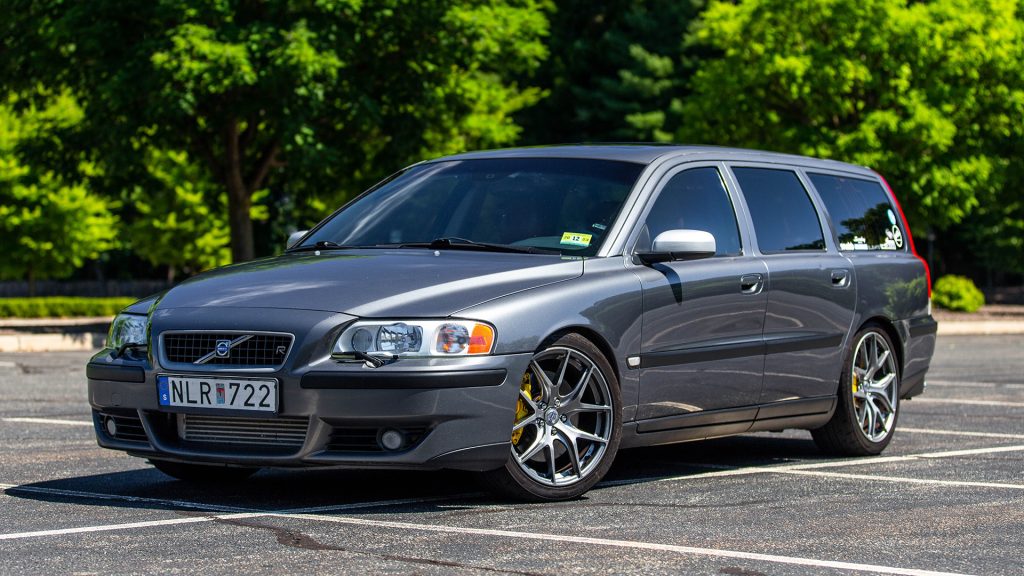
Its understated design is part of its charm. It does not rely on aggressive styling cues to communicate its abilities. Instead, it lets its performance speak for itself, which adds to its appeal among enthusiasts who value subtlety.
As perspectives shift, cars like the V70 R are being appreciated for their intelligence and balance. It proves that performance can be delivered in ways that do not follow traditional formulas, and that difference is exactly what makes it stand out today.
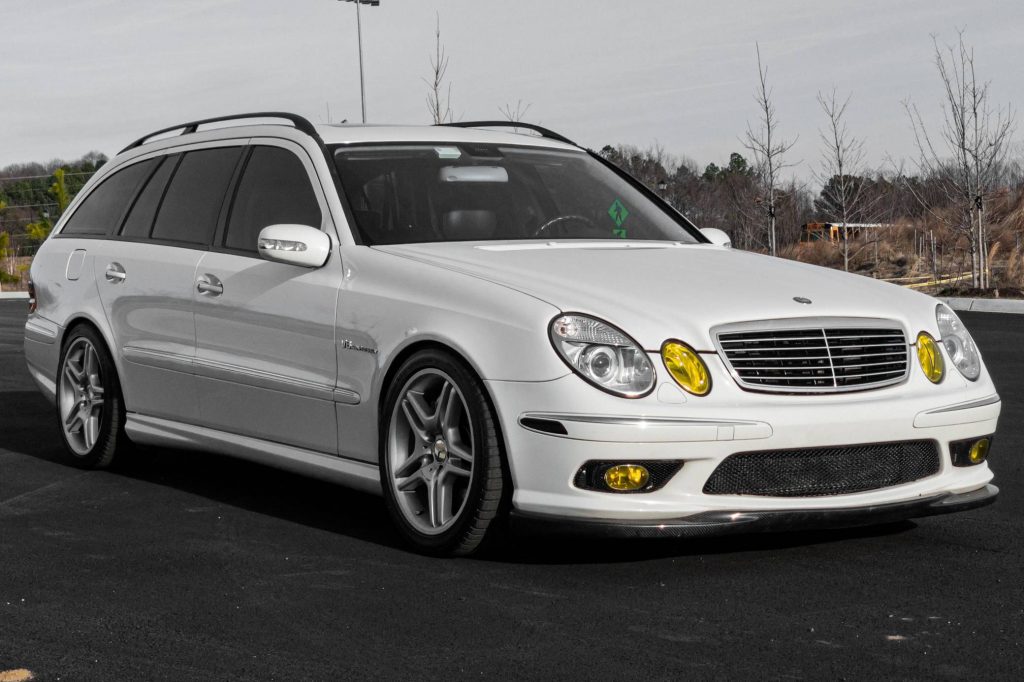
3. Mercedes-Benz E55 AMG Wagon (S211)
There is something almost contradictory about the Mercedes-Benz E55 AMG Wagon. It looks composed, even reserved, yet the moment it moves with intent, that calm exterior gives way to something far more aggressive. This contrast is what defines its appeal.
At the center of the experience sits a supercharged V8 that delivers torque in a way few engines of its time could match. There is no waiting, no gradual build-up, just immediate and forceful acceleration. It feels effortless, almost casual, yet the numbers it produces rival dedicated sports cars from the same era.
Rather than focusing purely on agility, the E55 takes a different route. It uses its power to dominate long stretches of road, where stability and composure become more important than sharp cornering. The suspension keeps the car controlled even under heavy acceleration, creating a sense of confidence that builds with speed.
Inside, the environment leans toward luxury without losing its performance edge. Materials, seating, and layout reflect a car designed for long distance comfort. At the same time, there is an underlying sense of capability that never fades into the background.
What makes this wagon particularly compelling is how it manages extremes. It can behave like a refined family car one moment and transform into something far more intense the next. That shift happens without drama, which makes it feel even more impressive.
The understated design works in its favor. It does not announce its performance loudly, which allows it to surprise those who underestimate it. That quiet confidence is part of what keeps it relevant.
As modern performance cars become more complex, the E55 AMG Wagon stands out for its straightforward approach. It combines raw power with usability in a way that feels increasingly rare.
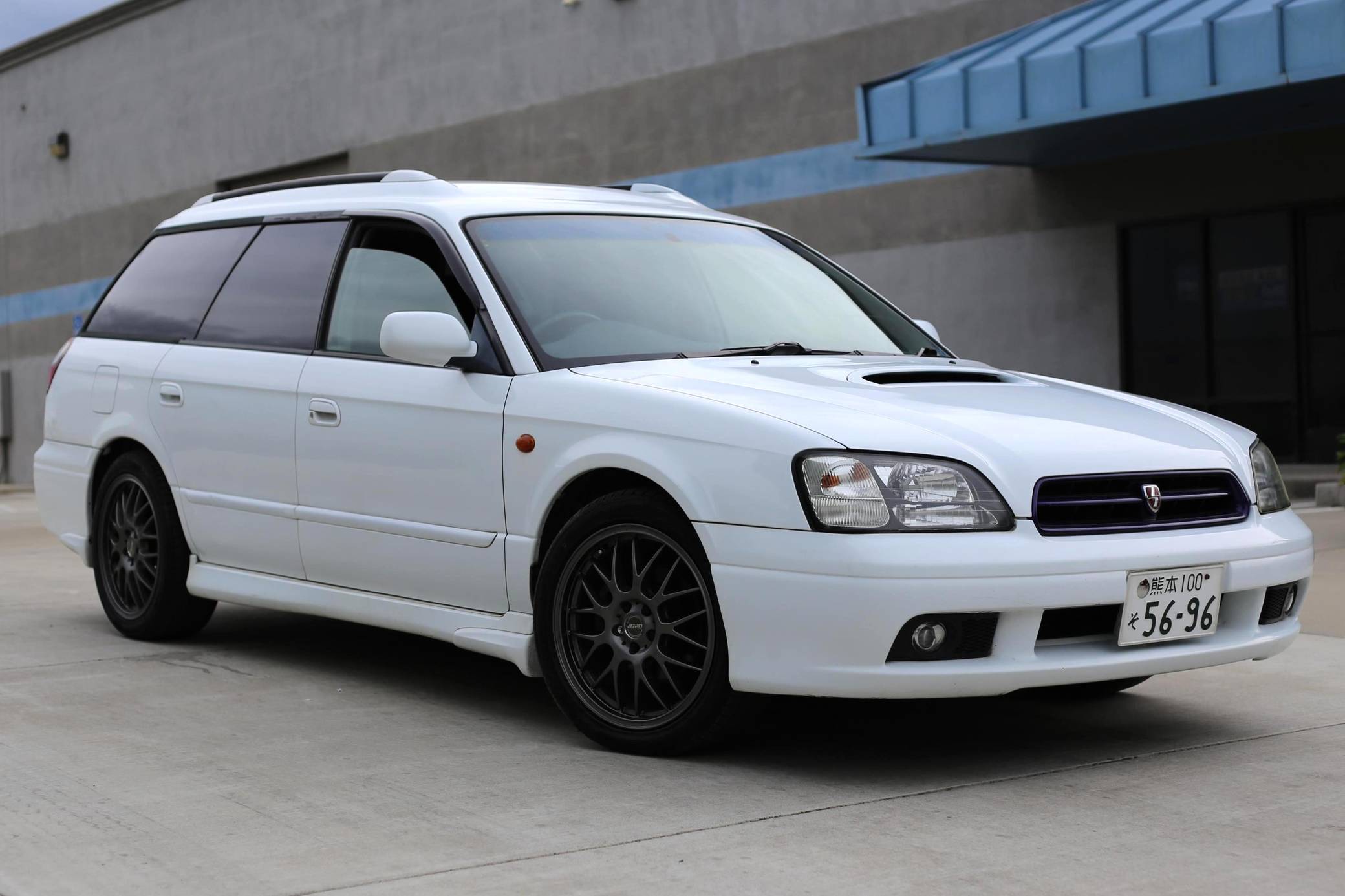
4. Subaru Legacy GT Wagon (BP5)
The Subaru Legacy GT Wagon followed a path that focused less on image and more on capability. It did not try to compete directly with high-end performance cars. Instead, it built its reputation through consistency and real-world effectiveness.
Its turbocharged engine provides a strong, usable power band that suits a wide range of driving situations. It responds quickly and delivers performance in a way that feels accessible rather than overwhelming. This makes it easy to enjoy without requiring constant effort.
One of its defining traits is how it handles varying conditions. The All Wheel Drive system gives it a level of confidence that remains steady regardless of weather or road surface. While many sports cars demand ideal conditions to perform at their best, the Legacy GT adapts without hesitation.
The driving experience is shaped by balance rather than extremes. It does not chase sharpness at the expense of comfort, nor does it soften its responses too much. Instead, it finds a middle ground that feels natural and predictable.
Inside, the cabin emphasizes practicality. There is enough space to handle everyday needs, yet the layout still supports an engaged driving position. This combination makes it suitable for both routine use and more spirited drives.
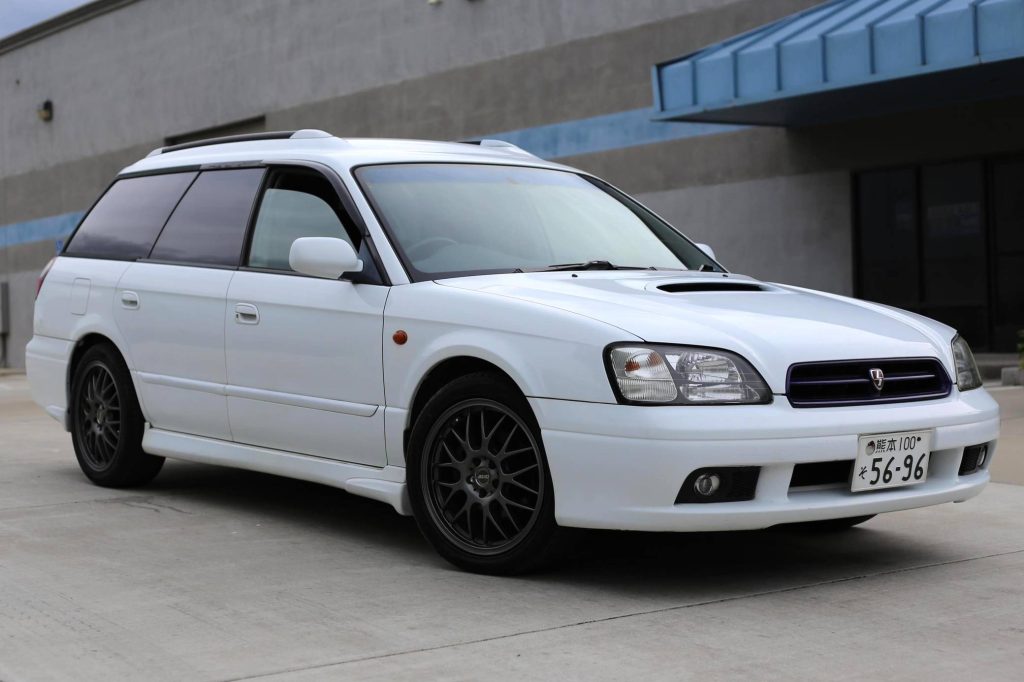
Its design reflects its purpose. Clean lines and a restrained appearance allow it to blend in easily, which adds to its understated character. It does not seek attention, yet it earns respect through performance.
What sets the Legacy GT Wagon apart is its reliability as a performer. It delivers consistently without demanding special conditions or constant adjustment. That dependability is what allows it to quietly outperform expectations.
As enthusiasts revisit cars that offer genuine capability without excess, the Legacy GT Wagon continues to gain appreciation. It represents a practical approach to performance that remains relevant even as automotive trends evolve.
5. BMW E61 M5 Touring
Start with the engine, because everything about the BMW E61 M5 Touring revolves around it. A naturally aspirated V10 in a wagon sounds excessive on paper, yet in practice, it transforms the car into something that defies expectations. The way it climbs through the rev range feels urgent and precise, creating a sense of occasion every time it is driven with intent.
Unlike many performance wagons that lean toward balance, this one leans toward intensity. The power delivery is not just strong, it is demanding. It asks the driver to stay engaged, to understand how to manage that performance rather than simply relying on the car to do everything. That interaction becomes part of its appeal.
The chassis complements the engine with a level of control that keeps the experience from becoming chaotic. It is firm, deliberate, and capable of handling the engine’s output without feeling overwhelmed. There is a certain discipline in how it moves, even when pushed hard.
Step inside, and the contrast becomes clear. The interior carries the familiar comfort and refinement expected from a BMW of its class, yet there is always a sense that something far more serious sits beneath the surface. It is a dual identity that never fully settles into one role.
Ownership is not without its demands. Maintenance, complexity, and running costs all play a role in shaping how the car is experienced over time. Yet those very factors contribute to its rarity today, as fewer well-maintained examples remain.
What makes the E61 M5 Touring stand out is not just its specifications, but its character. It feels like a machine built without compromise, prioritizing performance in a way that feels bold even by modern standards.
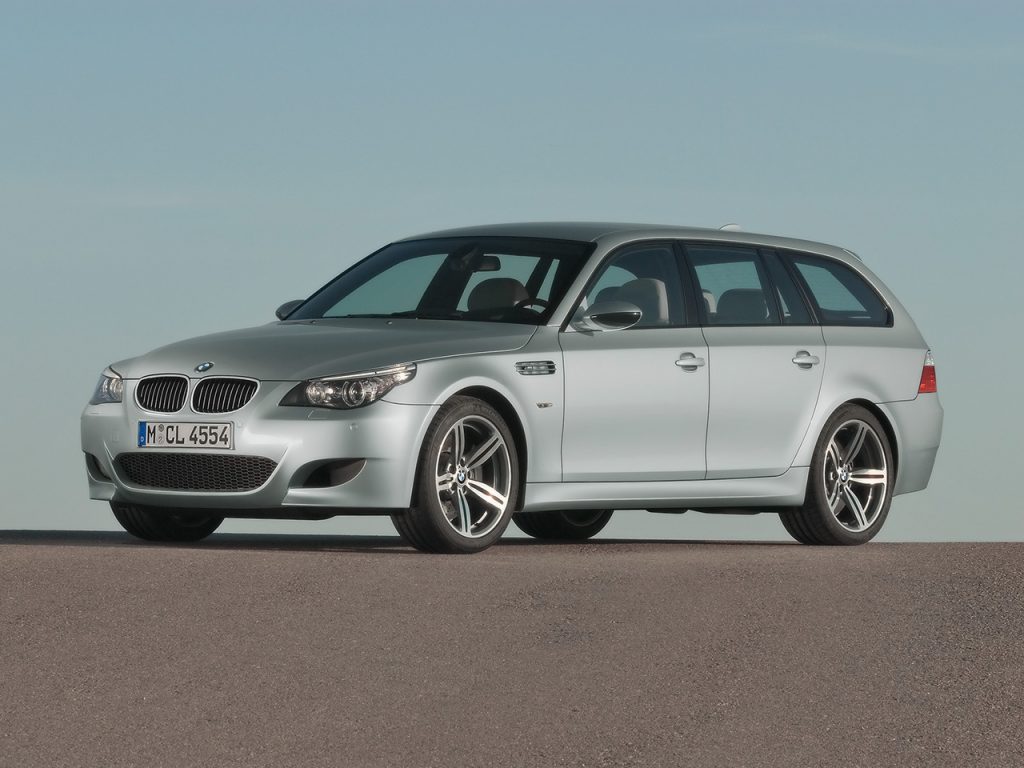
As the industry moves toward more controlled and restrained forms of performance, this wagon represents a moment when ambition took precedence. That alone ensures its place among the most distinctive wagons of its era.
6. Saab 9-3 Turbo X SportCombi
The Saab 9-3 Turbo X SportCombi carries a different kind of presence. It does not rely on dramatic numbers or aggressive styling to make its point. Instead, it builds its identity through uniqueness, both in design and engineering approach.
Its turbocharged V6 engine delivers power in a smooth, controlled manner. Rather than overwhelming the driver, it provides a steady surge that feels composed and predictable. This creates a driving experience that is engaging without being exhausting.
A key feature that sets it apart is its advanced All Wheel Drive system. Designed to enhance stability and traction, it allows the car to adapt to different driving conditions with ease. The result is a level of confidence that remains consistent, regardless of the environment.
The exterior design reflects Saab’s distinct philosophy. Clean surfaces, subtle details, and a cohesive shape give it a look that stands apart from more conventional wagons. It does not follow trends, which helps it maintain a strong identity over time.
Inside, the cabin carries that same theme. Controls are arranged with purpose, and the layout feels intuitive. The design shows careful thought, prioritizing usability without sacrificing character.
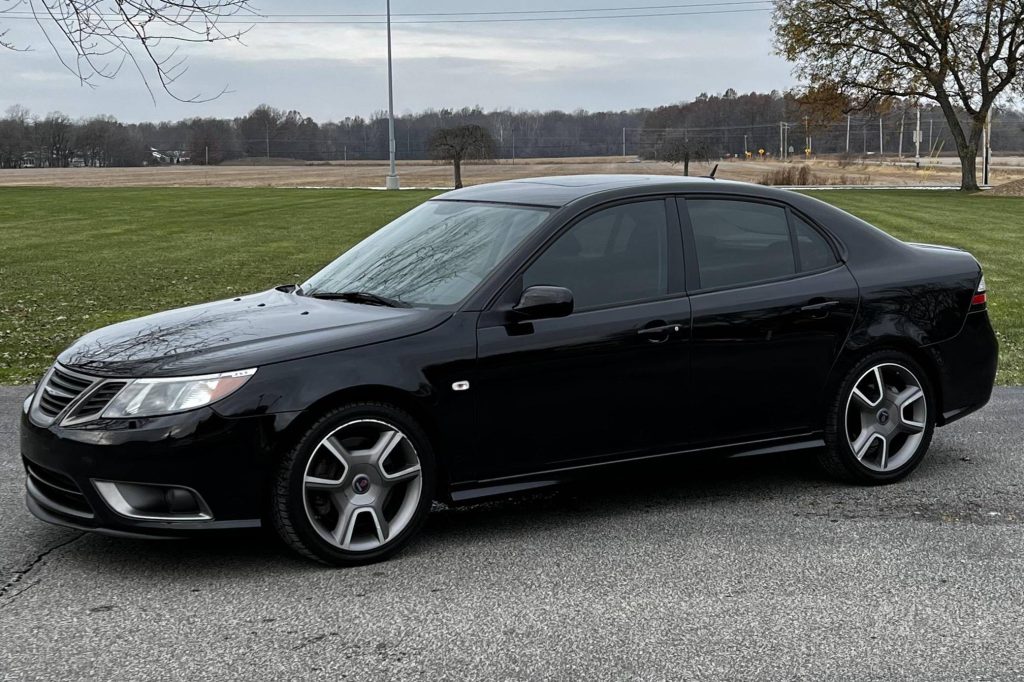
What makes the Turbo X particularly interesting is its limited production. It was never intended to be a mass market performance model, and that scarcity is becoming more significant as time passes. Fewer cars mean fewer opportunities to experience what it offers.
The driving experience is defined by composure. It does not chase extremes, yet it delivers performance in a way that feels complete. That balance is what allows it to quietly outperform expectations.
As Saab’s presence in the automotive world becomes part of history, cars like the Turbo X take on additional meaning. They represent a different way of thinking about performance, one that values individuality as much as capability.
7. Audi S6 Avant (C6 V10)
Some performance cars try to impress immediately. The Audi S6 Avant from this era takes a slower approach, revealing its strengths gradually. It does not rely on sharp styling or loud intent. Instead, it builds its reputation through depth.
The V10 engine defines the experience, yet not in the way most expect. It delivers power smoothly, almost deceptively, creating a sense of effortless momentum rather than aggressive acceleration. The car gathers speed in a way that feels composed and controlled, which makes it particularly effective over longer distances.
Handling is shaped by stability first. This is not a wagon that chases agility above all else. It focuses on maintaining balance and confidence, especially at higher speeds. The All Wheel Drive system reinforces that character, ensuring traction remains consistent even when conditions change.
The interior leans toward refinement. Materials, layout, and noise isolation create a calm environment that contrasts with the engine’s potential. That contrast is important because it allows the car to operate in two distinct modes without conflict.
Design plays a quiet role in its identity. The exterior avoids dramatic elements, choosing instead to present a clean and understated profile. It blends into everyday traffic, which makes its performance feel even more surprising when revealed.
What sets the S6 Avant apart is how it prioritizes effortlessness. It does not demand attention or constant input. It allows the driver to access performance without feeling overwhelmed, which makes it highly usable in real-world scenarios.
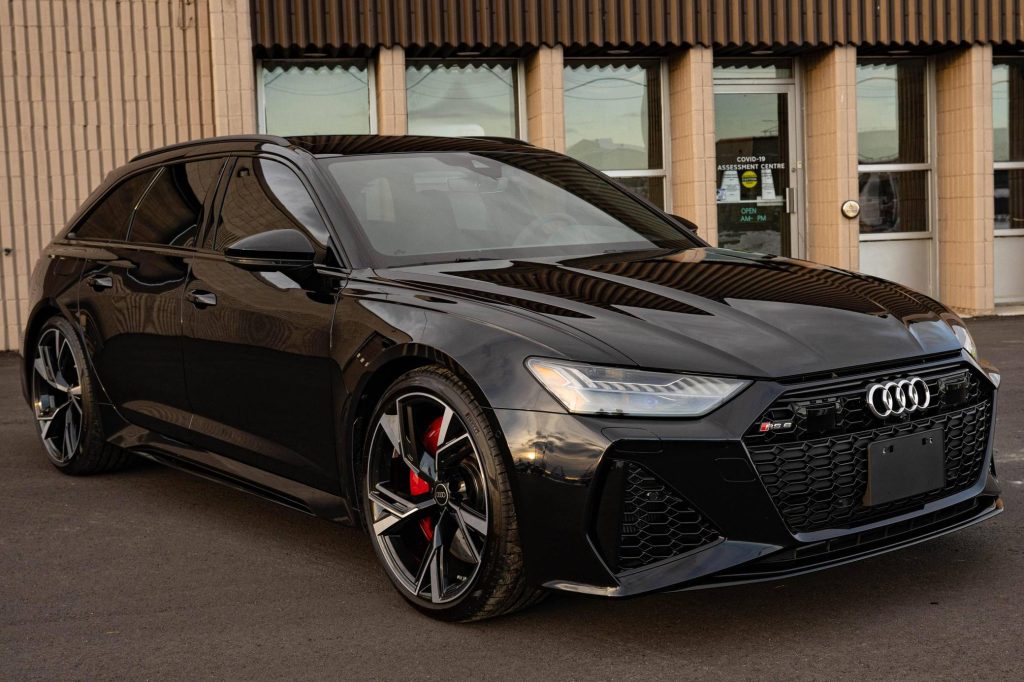
As preferences shift toward cars that combine speed with comfort, this approach becomes more relevant. The S6 Avant demonstrates that performance does not always need to be intense to be effective.
8. Dodge Magnum SRT8
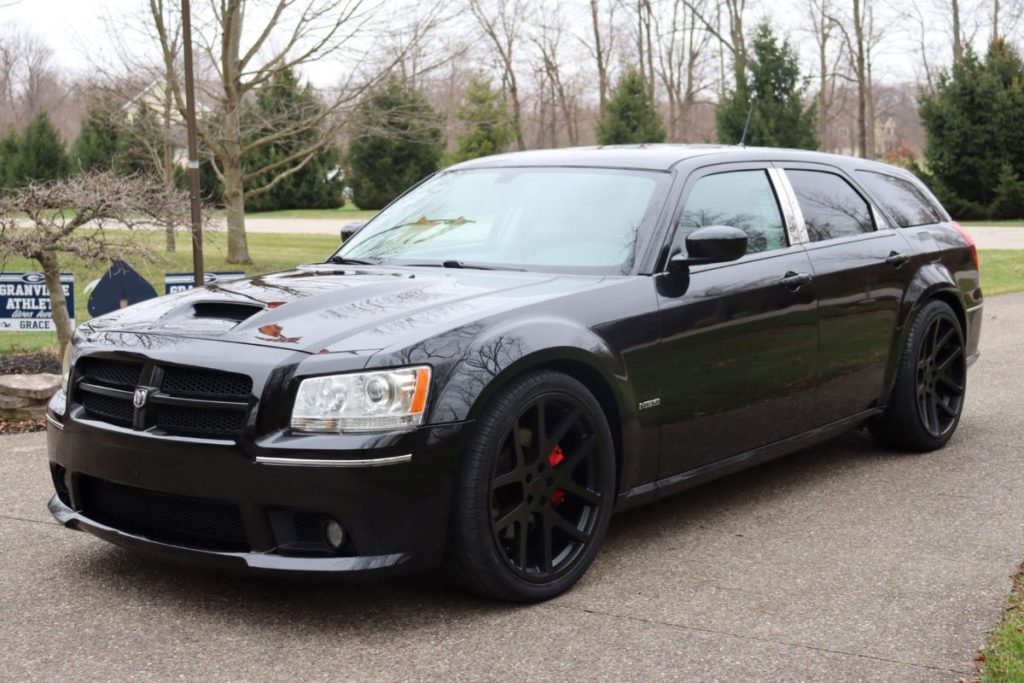
The Dodge Magnum SRT8 takes a completely different route, embracing presence and power in equal measure. Where some wagons rely on subtlety, this one makes its intentions clear from the moment it appears.
Its V8 engine delivers performance with a sense of immediacy that defines the entire experience. Acceleration feels direct and forceful, creating a connection that is simple yet satisfying. There is no complexity in how it delivers speed, just raw output that responds instantly.
The driving character leans toward boldness. It is not about precision or delicate balance. It is about momentum, traction, and the ability to translate power into movement without hesitation. That approach gives it a personality that feels distinct from more refined competitors.
Inside, the cabin reflects a focus on function. It does not attempt to match the luxury of European rivals. Instead, it provides a straightforward environment that supports the car’s performance-driven nature.
Visually, the Magnum stands apart with its long, muscular proportions. It carries a presence that is difficult to ignore, yet it remains practical in how it uses its space. That combination of size and capability adds to its appeal.
What makes the Magnum SRT8 particularly interesting is how it redefines expectations. It proves that a wagon can deliver serious performance without adopting traditional sports car characteristics.
Over time, this difference has become its strength. As the market becomes more uniform, cars that offer a distinct identity tend to gain attention.
The Magnum SRT8 represents a moment when performance was approached with simplicity and confidence. That clarity continues to resonate with enthusiasts who value direct, unfiltered driving experiences.
9. Cadillac CTS-V Wagon (Second Generation)
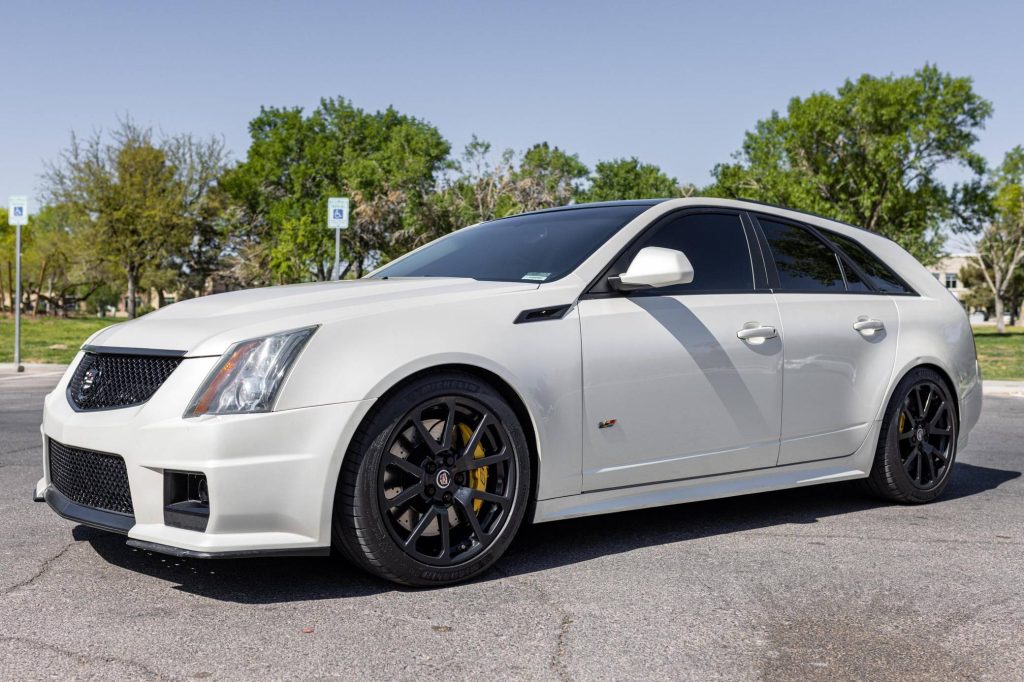
Begin with its stance, because the Cadillac CTS-V Wagon makes an impression before it even moves. Sharp lines, angular surfaces, and a planted posture give it a presence that feels deliberate rather than decorative. It looks engineered for purpose, not styled for approval.
Press the throttle, and the character shifts immediately. The supercharged V8 delivers power in a way that feels both controlled and overwhelming at the same time. There is a constant surge available, yet it remains manageable if the driver respects it. That balance between restraint and force is what defines the experience.
The chassis does not try to soften the intensity. It holds firm, allowing the car to translate its power into forward motion with confidence. There is a sense of stability that builds as speed increases, making it feel composed even when operating at levels that would challenge many sports cars.
Inside, the cabin blends performance cues with everyday usability. Seating, controls, and layout are arranged to support both spirited driving and routine use. It does not force the driver to choose one role over the other.
One of the defining aspects of this wagon is its rarity. It was never a common sight, and production numbers remained limited. That scarcity has become more significant with time, especially as demand for distinctive performance cars continues to grow.
The manual transmission option adds another layer of engagement. It turns the car into something more interactive, giving the driver direct control over how the performance is delivered. That involvement is becoming increasingly valuable in a world moving toward automation.
Culturally, the CTS-V Wagon represents a bold statement. It challenged expectations about what an American performance car could be, combining power, practicality, and design in a way that felt unconventional.
As attention shifts toward cars that offer both identity and capability, the CTS-V Wagon continues to gain recognition. It stands as proof that performance can exist outside traditional formats without losing its impact.
10. Volkswagen Passat W8 Variant
The Volkswagen Passat W8 Variant takes a quieter, more unconventional path. It does not rely on extreme numbers or aggressive presentation. Instead, it builds its identity around an unusual engineering choice that sets it apart immediately.
The W8 engine is the centerpiece, not because it delivers overwhelming performance, but because of how it delivers it. The power comes through in a smooth, composed manner, creating a driving experience that feels refined rather than aggressive. It is a different interpretation of performance, one that values consistency over intensity.
On the road, the car maintains a calm and stable character. It does not encourage aggressive inputs, yet it responds confidently when pushed. This creates a sense of trust between driver and machine, which is often overlooked when discussing performance.
The All Wheel Drive system enhances that stability, ensuring that power is distributed effectively across varying conditions. It allows the car to maintain its composure without requiring constant correction or adjustment.
Inside, the cabin reflects a focus on practicality and subtle refinement. Materials and layout prioritize usability, creating an environment that feels familiar yet quietly distinctive. It is not trying to impress, but it leaves a lasting impression through its coherence.
What makes the Passat W8 Variant particularly interesting is its rarity. The engine itself was produced in limited numbers, and fewer wagons were built compared to standard models. That combination creates a level of exclusivity that is not immediately obvious.
Its design remains understated, which adds to its appeal. It blends into everyday surroundings while carrying something unique beneath the surface. That contrast gives it a quiet confidence.
As enthusiasts begin to value engineering individuality more highly, cars like the W8 Variant gain attention. It represents a willingness to experiment, to try something different without relying on conventional formulas.
Performance has never belonged exclusively to sports cars. The wagons highlighted here demonstrate that capability can take many forms, often appearing where it is least expected. They challenge the idea that excitement must come at the expense of practicality.
Each of these cars approaches performance from a different angle. Some rely on raw power, others on balance, and a few on engineering creativity. That diversity is what makes them so compelling, as they offer alternatives to the traditional sports car formula.
A key reason behind their growing recognition is how well they fit into real-world driving. They do not require perfect conditions or limited use. Instead, they deliver performance in a way that integrates naturally into everyday life.
There is also a shift in how enthusiasts define value. Subtlety, versatility, and character are gaining importance. These wagons embody those qualities, offering experiences that feel complete rather than one-dimensional.
Another factor shaping their appeal is rarity. Many of these models were produced in limited numbers or have become difficult to find in well-preserved condition. That scarcity adds weight to their significance.
Culturally, they represent a moment when manufacturers were willing to experiment with form and function. They blurred the lines between categories, creating vehicles that could not be easily defined.
As the automotive world continues to change, the importance of these wagons becomes clearer. They serve as reminders that performance is not confined to a single shape or purpose.
These machines did more than keep up with the sports cars of their era. In many ways, they redefined what performance could mean, and that redefinition continues to resonate today.
Also Read: 10 McLaren Models Defining the Last Decade of Hypercar Engineering
