
The modern family SUV market in 2026 is more competitive than ever, with automakers racing to deliver vehicles that balance comfort, technology, fuel efficiency, and practicality. Among all these priorities, one feature continues to stand out as a major deciding factor for buyers: the usability of the third row.
While nearly every midsize and full-size crossover today claims to offer seating for six, seven, or even eight passengers, the reality is that not all third rows are created equal. Many are best suited for small children or short emergency trips rather than daily adult use.
For growing families, carpooling parents, or anyone who regularly travels with extended family, a genuinely usable third row can completely change the ownership experience. The difference between a cramped, knees-up seating position and a properly designed adult-friendly seat is significant on long road trips. Comfort, legroom, headroom, seat cushioning, and even air conditioning access become critical factors when evaluating a three-row SUV.
In 2026, manufacturers began addressing this issue more seriously. Models like the Toyota Grand Highlander, Honda Pilot, Hyundai Palisade, and Chevrolet Traverse have been engineered specifically to maximize interior space while maintaining manageable exterior dimensions.
At the same time, larger full-size SUVs such as the Ford Expedition, Chevrolet Tahoe, and Nissan Armada continue to offer traditional truck-based strength with genuinely spacious third rows that adults can use comfortably for hours.
Another major shift is the rise of platform efficiency. Automakers now use dedicated SUV platforms instead of stretched compact designs, allowing third rows to move forward into more usable space. Hybrid and electrified versions are also influencing interior layouts by freeing up floor space and improving packaging efficiency.
This article explores 09 of the best family crossovers and SUVs in 2026, where the third row is not just a marketing afterthought but a truly usable seating area for adults. These selections are based on interior space, real-world comfort, cargo practicality, and family usability. Whether you prioritize affordability, luxury, hybrid efficiency, or maximum space, these vehicles represent the most practical choices in today’s three-row SUV segment.
1. Toyota Grand Highlander
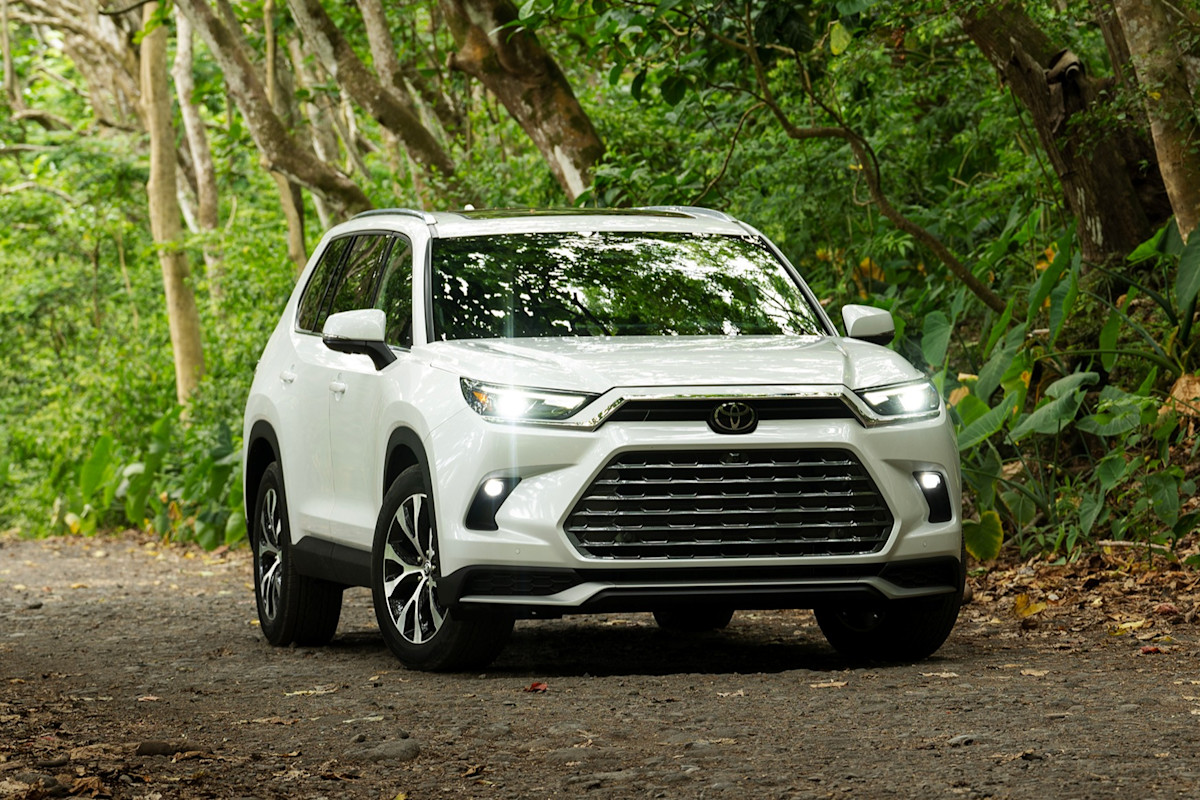
The Toyota Grand Highlander stands out in 2026 as one of the most intelligently designed three-row SUVs because it directly addresses the biggest limitation of midsize family vehicles, which is usable third-row space. Unlike many competitors that simply stretch an existing platform, Toyota engineered the Grand Highlander with a clear focus on interior volume efficiency.
This results in a cabin that feels noticeably larger from the moment you step inside. The extra length and width are not just cosmetic changes; they fundamentally improve passenger comfort in all three rows, especially the third row, where most SUVs tend to compromise.
The third row is where the Grand Highlander separates itself from traditional midsize crossovers. Adults can sit back there without feeling forced into a cramped posture, which is a major improvement over older Highlander generations.
Legroom is sufficient for average-height adults on long highway trips, and the seat base is positioned in a way that supports the thighs rather than leaving them suspended. The seatback angle is also more natural, reducing fatigue over extended travel. For families who frequently rotate seating positions during long drives, this level of comfort makes a noticeable difference in usability.
Another important factor is how Toyota has balanced passenger space with cargo practicality. Even when all three rows are in use, the Grand Highlander still provides usable luggage space behind the third row. This is critical for airport trips, family vacations, or situations where every seat is occupied but storage is still required.
Many midsize SUVs fail here by sacrificing all cargo room when the third row is deployed, but Toyota has managed to avoid that tradeoff through efficient packaging and platform design.
Ride quality is another area where the Grand Highlander excels for family use. The suspension is tuned for comfort rather than sporty handling, which means road imperfections are absorbed effectively before reaching passengers in the rear rows.
This is especially important for third-row occupants, who typically experience more vertical motion in less refined SUVs. Combined with good cabin insulation, highway cruising feels stable and quiet, which helps reduce travel fatigue for adults seated in the back.
The Toyota Grand Highlander succeeds because it feels like a purpose-built family transporter rather than a modified midsize SUV. It delivers near full-size usability in a more manageable footprint, making it one of the most practical choices for families in 2026 who need real third-row comfort without stepping into oversized vehicle territory.
2. Hyundai Palisade
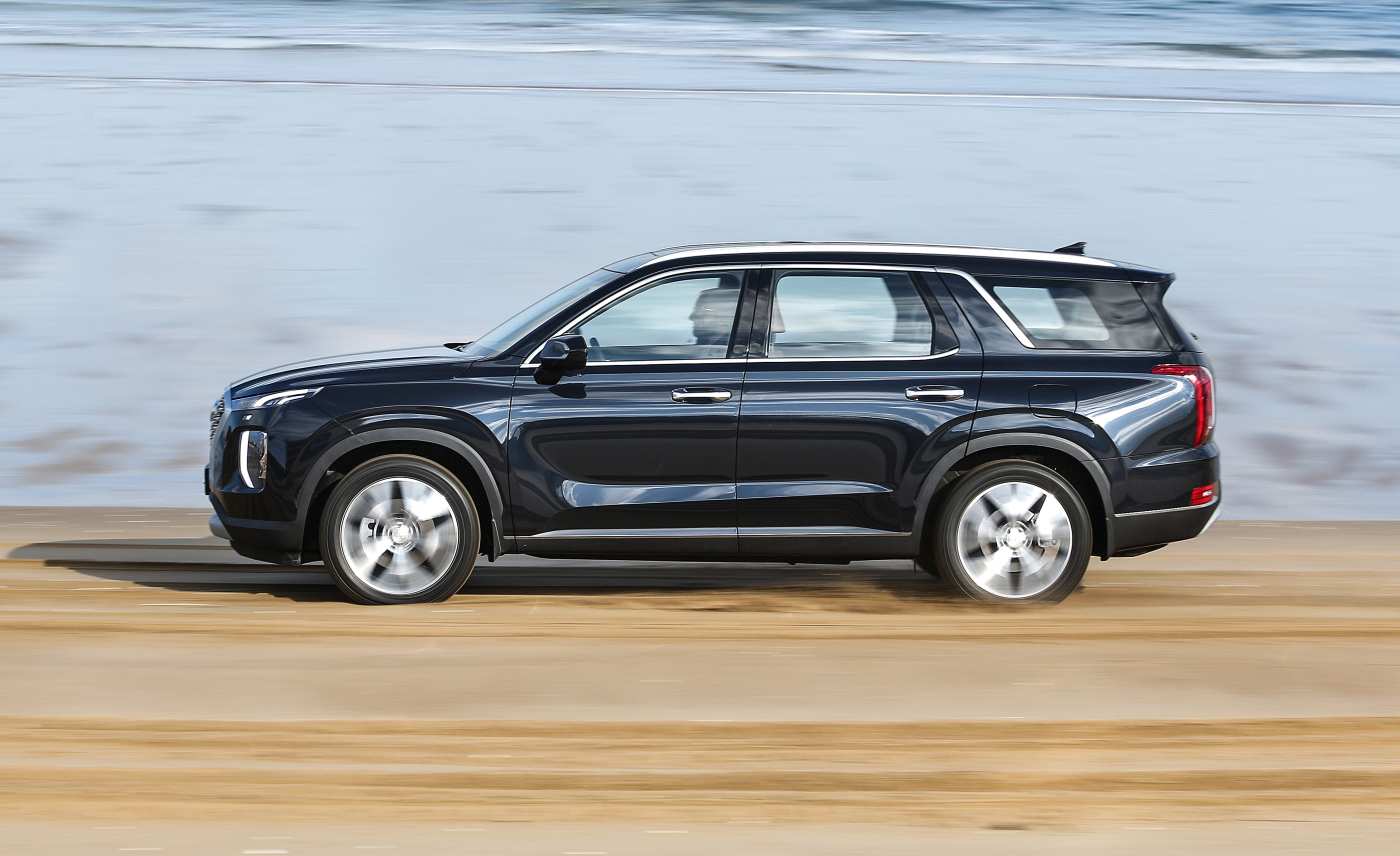
The Hyundai Palisade has built a strong reputation as one of the most comfort-focused three-row SUVs in the midsize category. From a design perspective, Hyundai clearly prioritized passenger experience over aggressive styling or sporty performance characteristics. The result is a vehicle that feels calm, spacious, and intentionally designed for family use. The cabin layout emphasizes visibility, comfort, and accessibility, all of which contribute to making long journeys less stressful for all occupants.
The third row in the Palisade is one of its most appreciated features among families. While it is not as spacious as full-size SUVs, it is significantly more usable than many competitors in the same segment. Adults can sit there comfortably for shorter to moderate trips without feeling excessively cramped.
The seat cushioning is softer than that of many rivals, and the seating position is more upright, which helps reduce strain on the lower back during travel. Access is also relatively easy due to wide rear doors and well-designed second-row folding mechanisms.
One of the strongest aspects of the Palisade is its interior quality, which often feels closer to luxury vehicles than mainstream midsize SUVs. Materials throughout the cabin are soft-touch and well-finished, giving the interior a refined atmosphere.
This becomes especially noticeable when the vehicle is fully occupied, as passengers in all three rows benefit from a quieter, more insulated environment. Hyundai’s attention to noise reduction plays a key role in maintaining comfort for third-row passengers, who are typically more sensitive to road and wind noise.
Technology and convenience features are also well thought out. Rear climate controls ensure that third-row passengers are not dependent on front-row adjustments for comfort. Multiple USB ports and storage solutions throughout the cabin make long trips more practical for families with devices and personal items.
Safety systems are comprehensive and standard, which adds peace of mind when transporting multiple passengers in different seating positions.
The Hyundai Palisade is a strong all-around family SUV because it delivers a near-luxury experience at a mainstream price point. Its third row is not just an emergency option but a genuinely usable space for real-world travel, making it one of the most balanced choices in 2026.
3. Kia Telluride
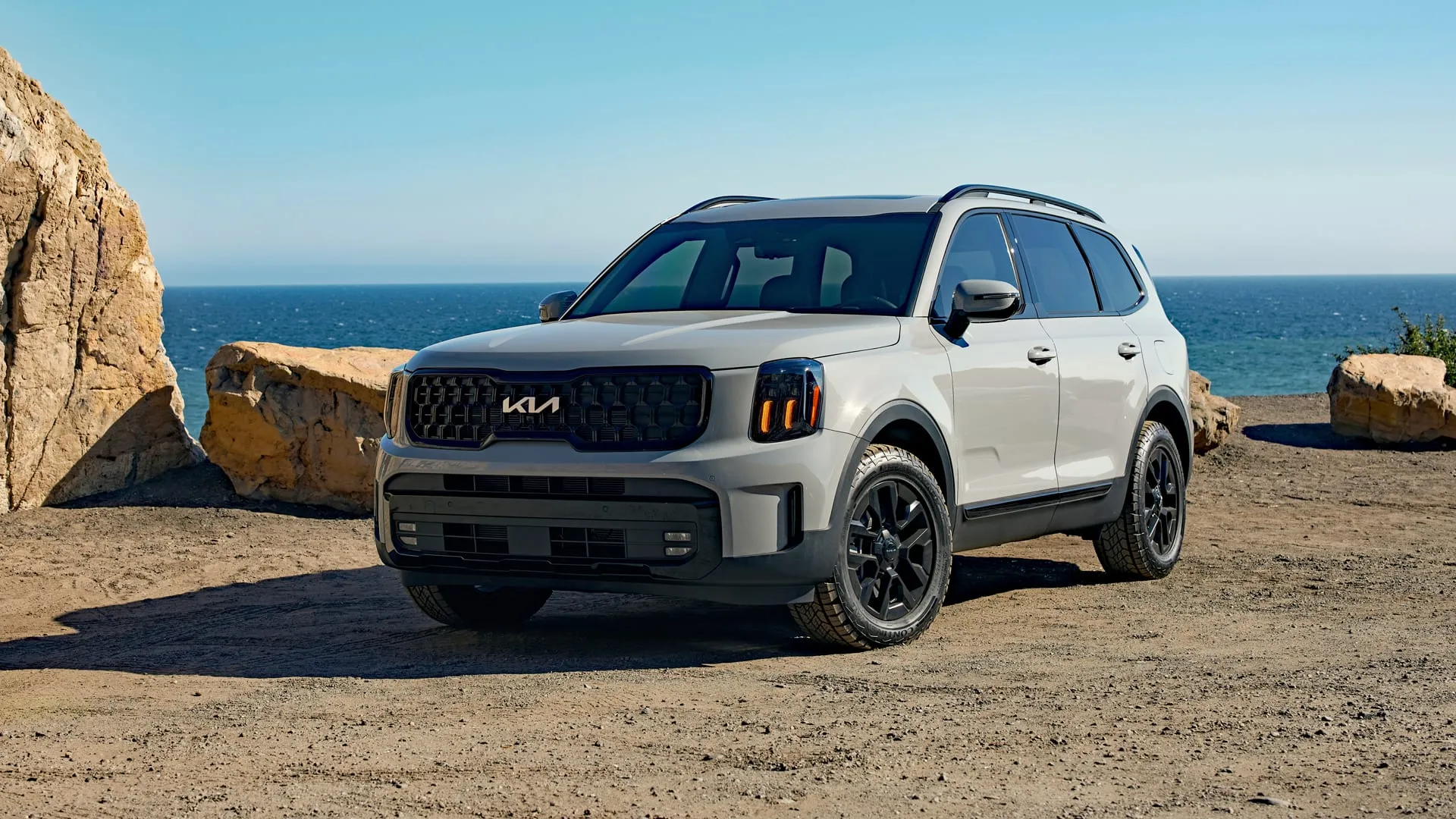
The Kia Telluride continues to dominate the midsize SUV conversation because it blends practicality, comfort, and design in a way that resonates strongly with modern families. It has consistently been one of the most awarded SUVs in its category due to its ability to deliver a premium experience without requiring a premium budget. In 2026, it remains a top choice for buyers who want a dependable, spacious, and visually appealing three-row vehicle.
The third row in the Telluride is designed with real usability in mind, which is why it stands out in its segment. While it is not intended for full-time adult occupancy on extremely long journeys, it is comfortable enough for most family situations, including school runs, airport transfers, and moderate road trips.
The seat height and floor positioning are well balanced, which reduces the feeling of sitting too low or too cramped. This small design detail significantly improves perceived comfort for adult passengers.
One of Telluride’s biggest strengths is its interior usability. The cabin layout is intuitive and logical, which makes it easy for families to adapt quickly without needing to learn complex systems. Storage compartments are placed strategically throughout the vehicle, ensuring that items like water bottles, bags, and electronic devices are easy to organize.
This level of thoughtful design becomes especially important when all three rows are occupied, as clutter can quickly reduce comfort in family travel situations.
Ride quality is another area where the Telluride performs exceptionally well. The suspension is tuned to prioritize comfort over sportiness, which means that road irregularities are softened before they reach passengers.
This is particularly beneficial for third-row occupants, who often feel the most movement in less refined SUVs. The stability of the vehicle at highway speeds also contributes to a relaxed travel experience, even when fully loaded with passengers and cargo.
The Kia Telluride succeeds because it offers a near-perfect balance of value, space, and comfort. It is not the largest SUV in its class, but it uses its space intelligently enough to make the third row genuinely usable for most family needs. This combination of practicality and refinement makes it one of the most trusted family SUVs in 2026.
4. Honda Pilot
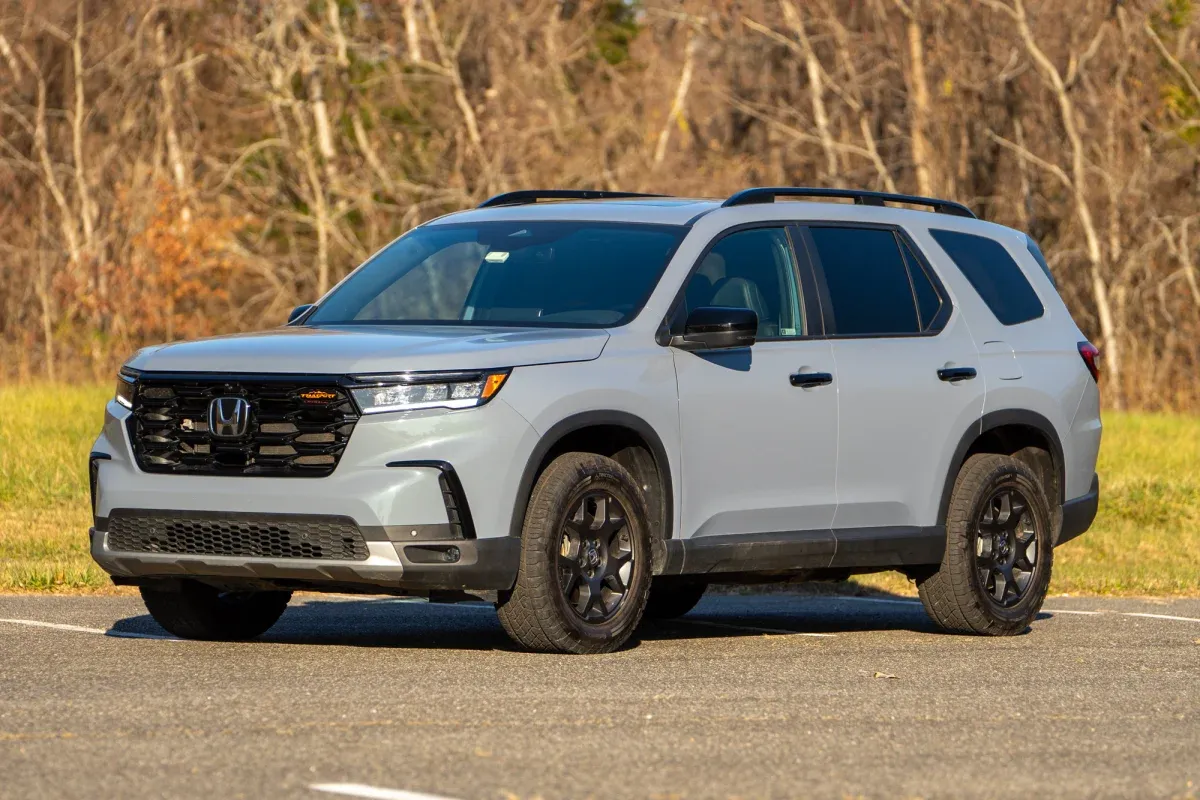
The Honda Pilot has long been regarded as one of the most practical family SUVs on the market, and its 2026 iteration continues that tradition with a strong emphasis on usability and reliability. Unlike some competitors that focus heavily on luxury features or aggressive styling, the Pilot remains grounded in functional design.
Every aspect of the vehicle is built around long-term family use, making it a dependable choice for buyers who prioritize consistency over flashiness.
The third row in the Pilot is one of the most usable in the midsize SUV segment. While it is not as spacious as full-size models, it provides enough legroom and headroom for adults to sit comfortably on moderate trips. The seating position is more upright than that of older generations, which helps reduce fatigue during travel. Honda has also improved access to the third row by optimizing the folding mechanism of the second-row seats, making entry and exit smoother for passengers of different ages.
Durability and reliability are key reasons why many families choose the Pilot. Honda has a long-standing reputation for producing vehicles that perform consistently over time, and the Pilot is no exception.
This reliability becomes especially important for families who depend on their vehicle for daily transportation, school commutes, and long-distance travel. Knowing that the vehicle will maintain performance over many years adds significant value beyond just interior space.
Interior design in the Pilot focuses on clarity and simplicity. Controls are easy to understand, and the infotainment system avoids unnecessary complexity. This is beneficial for families who want a straightforward driving experience without dealing with overly complicated menus or settings.
The layout also supports practicality, with well-placed storage areas and flexible seating configurations that make it easy to adapt the cabin for different passenger loads.
The Honda Pilot is one of the most dependable midsize SUVs for families who need occasional adult-friendly third-row seating. It may not be the most luxurious or stylish option, but its combination of space efficiency, reliability, and ease of use makes it a strong long-term investment for practical buyers in 2026.
Also read: 10 Cars With Intuitive Physical Controls That Reduce Modern Driver Distraction
5. Chevrolet Traverse
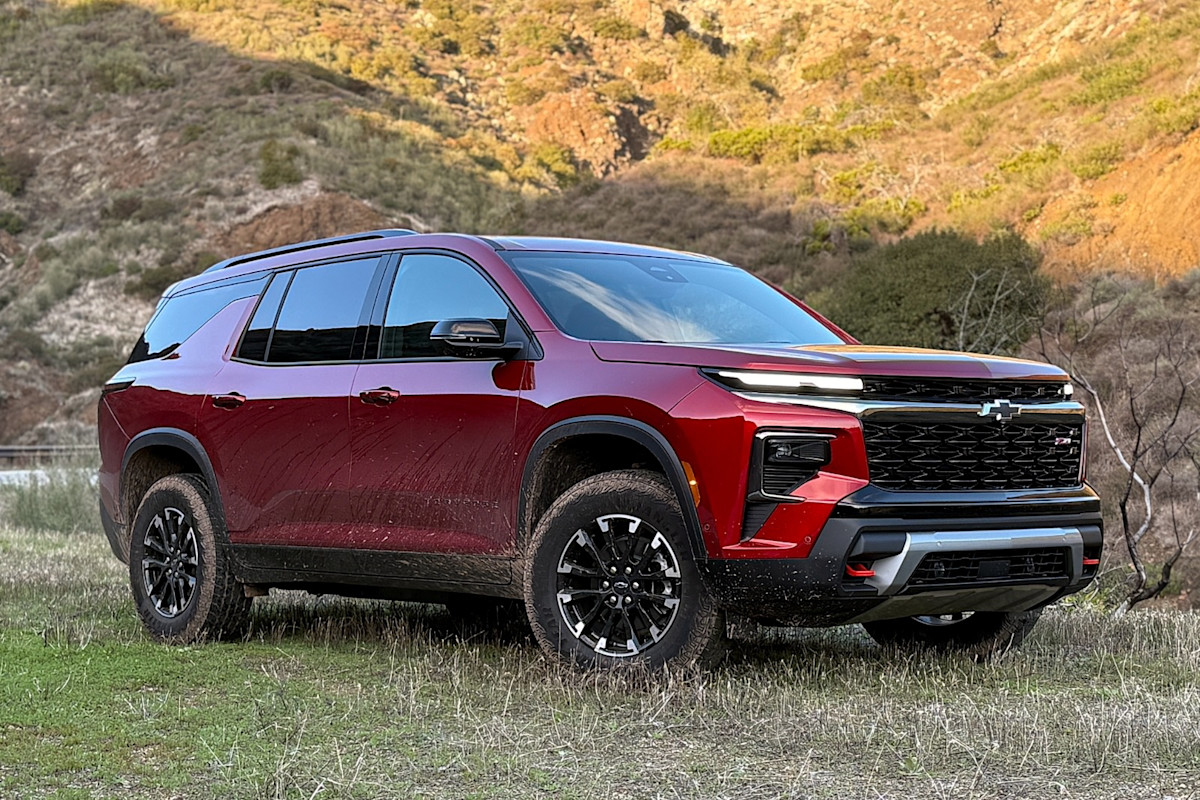
The Chevrolet Traverse has built its reputation on one core strength, which is interior space. Among midsize three-row SUVs, it consistently ranks as one of the most accommodating options for passengers in all seating positions. This makes it especially appealing to families who prioritize roominess over luxury finishes or sporty handling.
The third row in the Traverse is noticeably more usable for adults compared to many rivals in the same category. The seating position is designed to reduce the feeling of confinement, and there is adequate headroom for average-height passengers.
Legroom is also more generous than expected for a midsize SUV, which allows adults to sit comfortably for short to medium-distance trips without significant discomfort. This makes it a practical option for families who frequently carry multiple passengers.
Cargo space is another area where the Traverse excels. Even with all three rows in use, it offers a reasonable amount of storage space behind the third row, which is rare in this segment. This is particularly useful for family vacations, shopping trips, or airport travel where luggage and passengers need to be accommodated simultaneously. The ability to maintain usable cargo space while carrying a full load of passengers significantly improves real-world practicality.
The interior design of the Traverse is intentionally simple, focusing on ease of use rather than premium materials or complex features. This straightforward approach makes it easier for families to operate the vehicle without confusion. Controls are intuitive, and the cabin layout is designed to maximize space efficiency rather than visual luxury. This contributes to a more functional and family-friendly environment.
The Chevrolet Traverse remains one of the best midsize SUVs for families who need maximum interior space without stepping into a full-size vehicle. Its third row is among the most usable in its category, making it a strong option for buyers who frequently carry adult passengers in all seating positions.
6. Ford Explorer
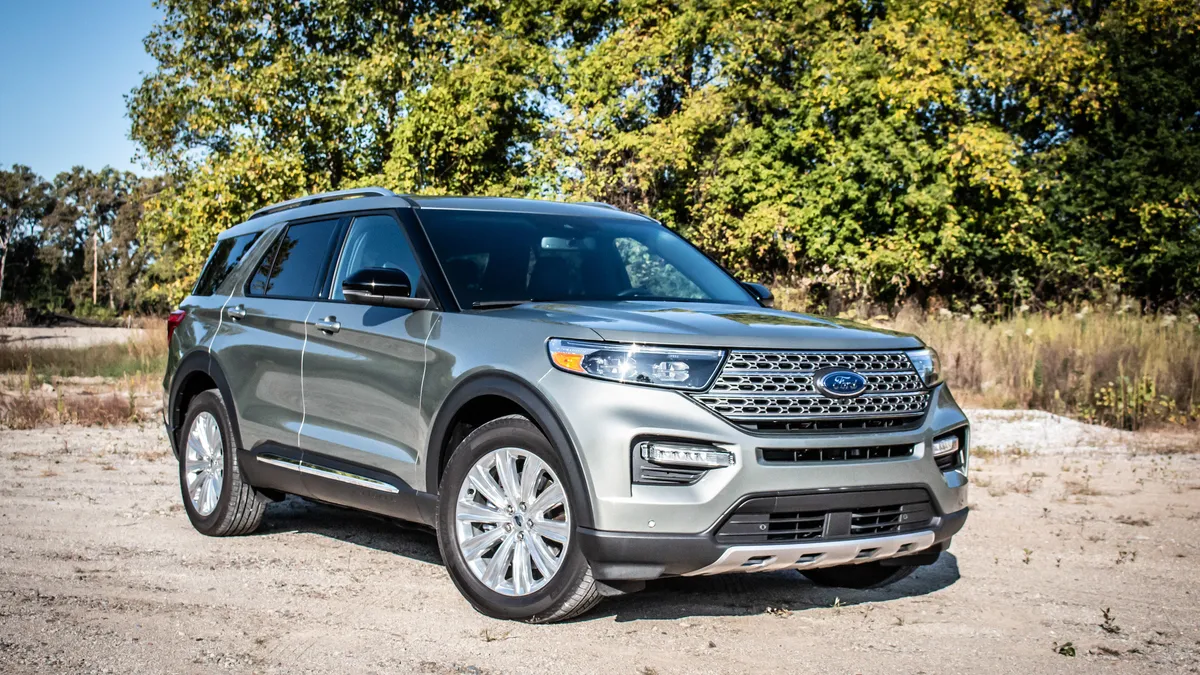
The Ford Explorer continues to be one of the most recognizable three-row SUVs in North America, and in 2026, it remains a strong contender for families who need a balanced mix of practicality, performance, and everyday usability.
Unlike some competitors that prioritize either luxury or maximum space, the Explorer sits in the middle, offering a versatile platform that adapts well to different family needs. Its design evolution over the years has focused on improving interior efficiency while still maintaining a driving character that feels more engaging than many family-focused SUVs.
The third row in the Explorer is best described as usable rather than spacious, but it has improved enough in recent generations to comfortably accommodate adults on shorter trips.
Legroom is adequate when the second row is adjusted slightly forward, and the seating position is more upright compared to older models, which reduces the feeling of being cramped. While it is not ideal for long-distance comfort for taller passengers, it works well for occasional use, such as school runs, short road trips, or urban commuting with multiple passengers.
One of the Explorer’s strongest attributes is its driving balance. Ford has tuned the chassis to offer a more dynamic feel than many competitors in the midsize SUV segment. This makes it appealing for drivers who do not want a vehicle that feels overly soft or disconnected from the road.
At the same time, it still maintains enough comfort to ensure passengers in all three rows are not subjected to harsh road feedback. This balance between control and comfort is a key reason why the Explorer remains popular.
Interior technology is another area where the Explorer holds its ground. Modern infotainment systems, digital instrument clusters, and driver assistance features all contribute to a more connected driving experience.
These features are especially useful for families who rely on navigation, entertainment, and safety systems during long trips. The layout is generally user-friendly, though it leans slightly more toward tech-focused users than simplicity-driven ones.
The Ford Explorer is a solid choice for families who want a flexible SUV that can handle occasional third-row use while still delivering engaging driving dynamics. It may not offer the most spacious rear seating, but it compensates with versatility, technology, and a well-rounded driving experience.
7. Nissan Pathfinder
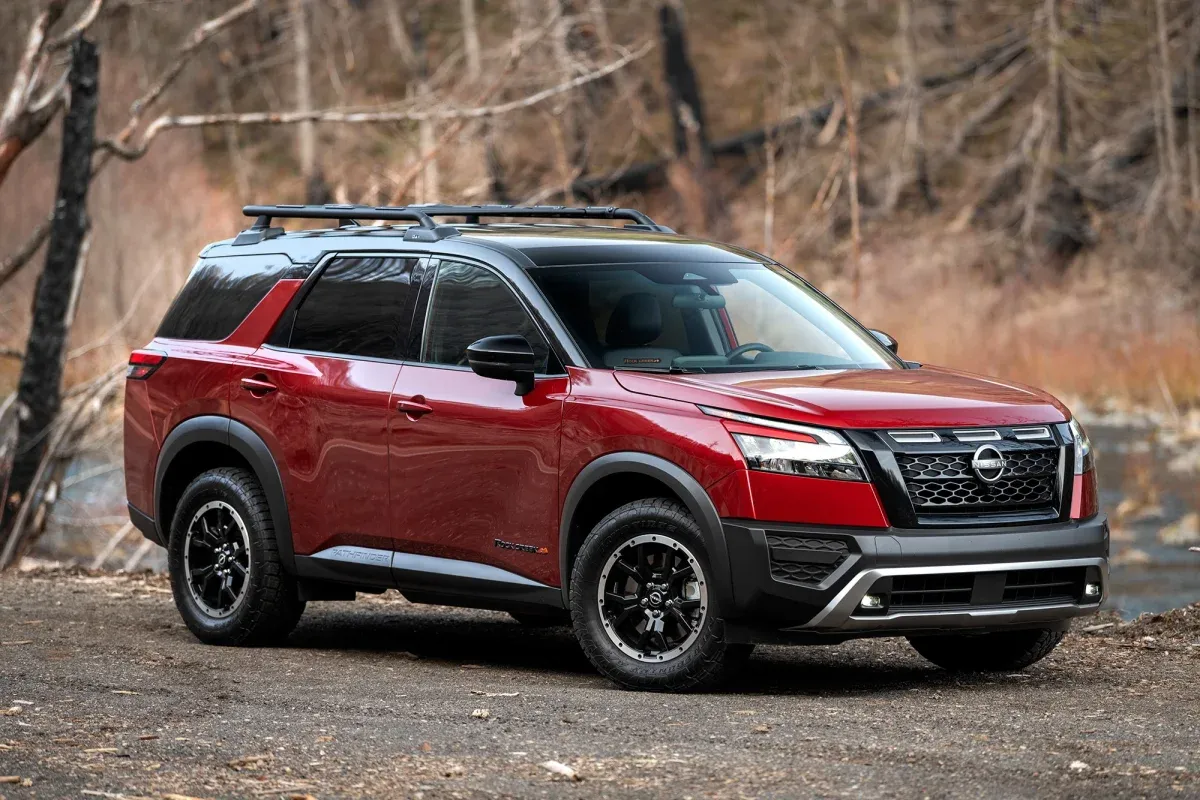
The Nissan Pathfinder has undergone significant refinement in recent generations, transforming it from a relatively basic SUV into a much more family-focused and comfort-oriented vehicle.
In 2026, it stands as a strong competitor in the midsize three-row category, especially for buyers who prioritize smooth driving behavior and interior practicality. Nissan has clearly worked to improve cabin usability, ride quality, and seating comfort to better meet modern family expectations.
The third row in the Pathfinder is designed with accessibility and short-term comfort in mind. While it is not the largest in the segment, it offers enough space for adults to sit without extreme discomfort on shorter journeys.
The seat height is reasonable, and the cushioning is improved compared to older generations. Entry and exit are also relatively simple thanks to a well-designed second-row sliding mechanism, which makes it easier for passengers to move into the rear seats without awkward climbing.
Comfort is one of the Pathfinder’s defining characteristics. The suspension is tuned to absorb road imperfections effectively, which results in a smoother ride experience for all passengers. This is particularly important when the vehicle is fully loaded, as many SUVs in this segment tend to become less stable under weight. Nissan has managed to maintain composure and ride consistency, which enhances long-distance usability for families.
The interior design is functional and family-oriented, with a focus on usability rather than overly complex styling. Controls are straightforward, and storage spaces are placed in practical locations throughout the cabin.
This makes it easy for families to organize personal items during travel, reducing clutter and improving comfort inside the vehicle. The infotainment system is also relatively simple to operate, which is helpful for drivers who prefer minimal distraction.
The Nissan Pathfinder is a comfortable and dependable midsize SUV that works well for families needing occasional third-row seating for adults. It may not lead the segment in space, but it excels in ride comfort and usability, making it a practical everyday family vehicle.
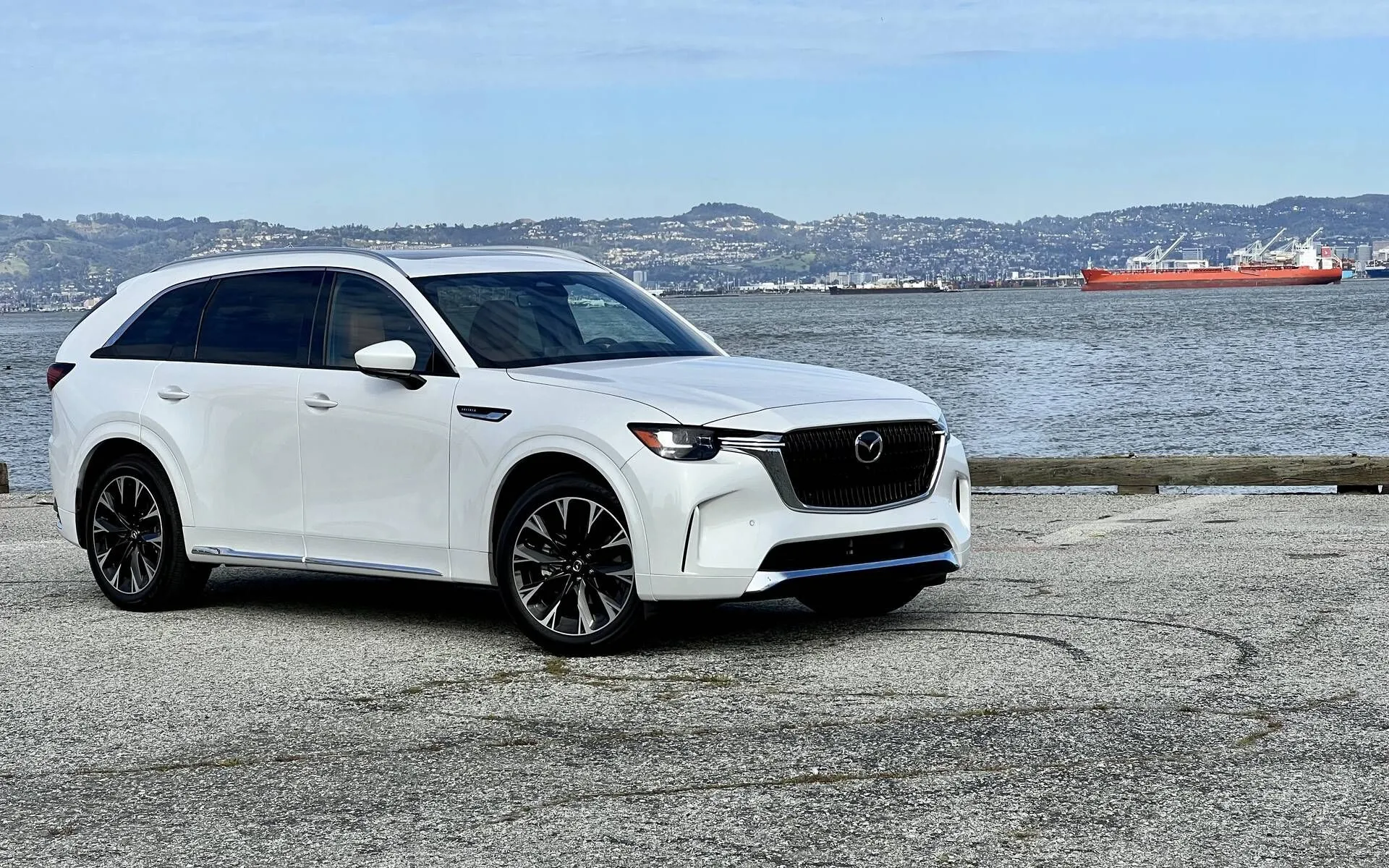
8. Mazda CX-90
The Mazda CX-90 represents Mazda’s move further into the premium SUV space, combining strong driving dynamics with a highly refined interior experience. It is positioned slightly differently from many traditional family SUVs, as it emphasizes driving enjoyment alongside practicality. This makes it particularly appealing to buyers who want something more engaging without sacrificing occasional third-row usability.
The third row in the CX-90 is more compact compared to larger midsize SUVs, but it is still usable for adults on shorter trips. Mazda has focused on creating a well-finished and comfortable environment rather than maximizing raw space.
The seating position is relatively upright, and the materials used in the rear are consistent with the premium feel found throughout the cabin. While taller adults may find long journeys less comfortable, it works well for occasional use or smaller passengers.
One of the standout features of the CX-90 is its driving experience. Mazda is known for prioritizing driver engagement, and this SUV reflects that philosophy. The steering feel is more precise than many competitors, and the vehicle maintains a sense of control and responsiveness that is rare in larger family-oriented SUVs. This makes it particularly appealing for buyers who still enjoy driving but need the practicality of a three-row vehicle.
Interior quality is another major strength. The CX-90 features high-quality materials, clean design lines, and a minimalist layout that gives it a near-luxury feel. This attention to detail enhances the experience for all passengers, even those in the third row. The cabin is also well insulated from road and wind noise, contributing to a more relaxed environment during travel.
The Mazda CX-90 is best suited for families who value driving enjoyment and premium interior design but only require occasional third-row use. It is not the most spacious option in its class, but it stands out for its refinement and driving character.
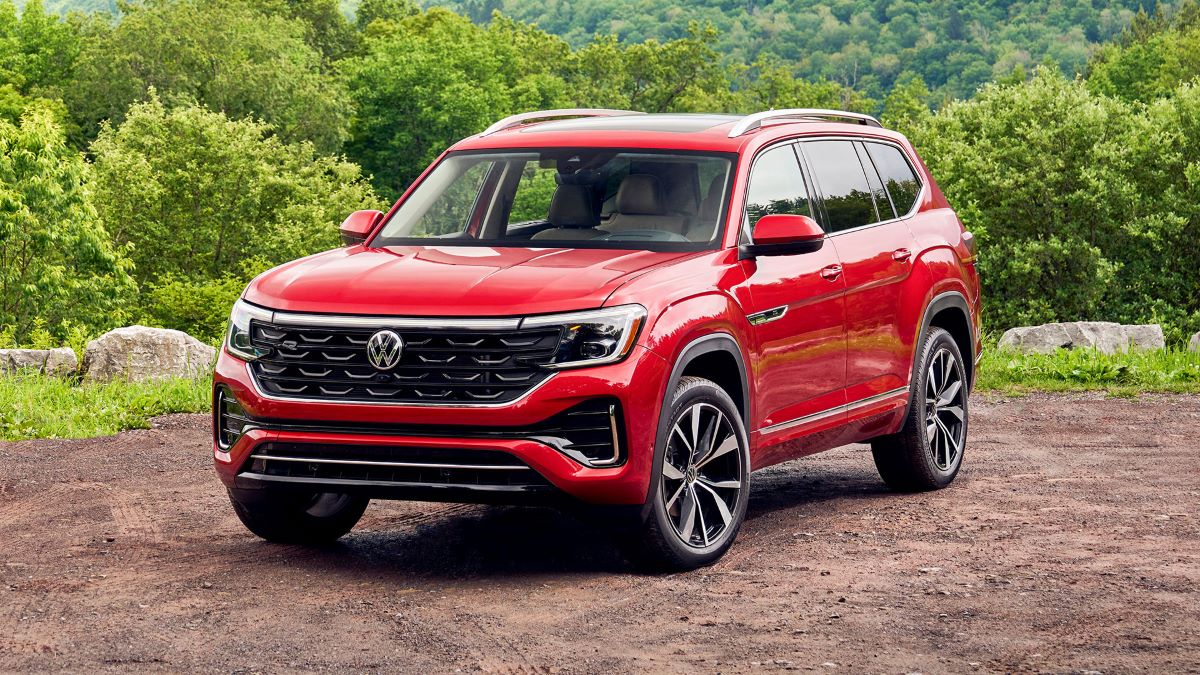
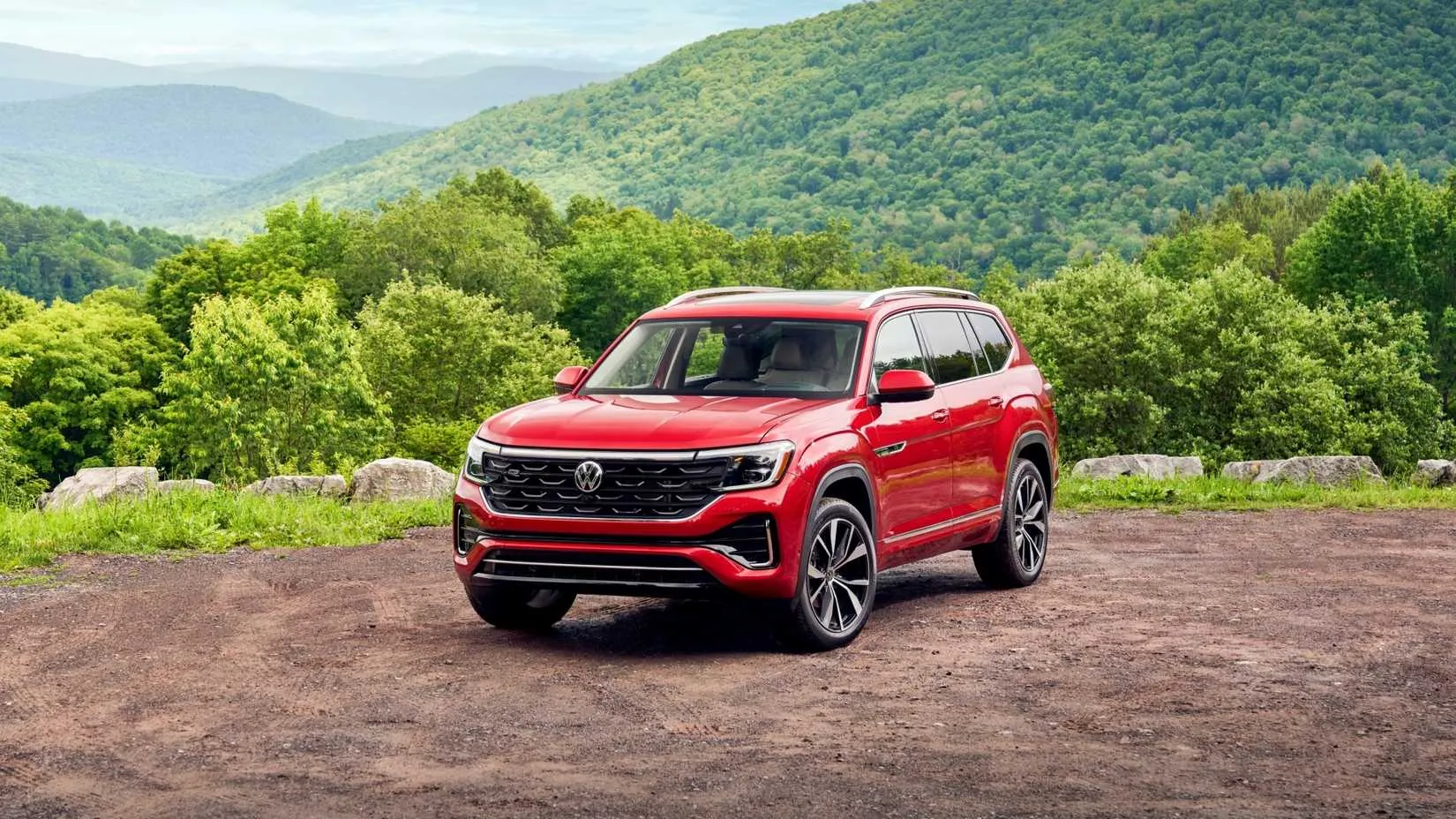
9. Volkswagen Atlas
The Volkswagen Atlas is designed with one clear goal in mind, which is maximizing interior space within a midsize SUV footprint. This makes it one of the most practical choices for families who prioritize roominess over luxury features or sporty performance. In 2026, the Atlas continues to appeal to buyers who want a straightforward, functional vehicle that can comfortably handle multiple passengers.
The third row in the Atlas is one of its strongest selling points. It offers more usable space than many competitors in the midsize category, making it suitable for adult passengers on shorter and medium-length trips.
The boxy exterior design directly contributes to this advantage, as it allows for a more upright cabin structure that benefits headroom and legroom in the rear seats. This makes it especially practical for growing families or those who frequently transport additional passengers.
Interior design in the Atlas is intentionally simple and functional. Volkswagen has focused on creating an easy-to-use layout that does not overwhelm drivers or passengers with unnecessary complexity. Controls are clearly arranged, and the infotainment system is straightforward, making it accessible for users of all ages. This simplicity is a major advantage for families who prioritize ease of use over advanced customization.
Cargo capacity is another area where the Atlas performs well. Even when all three rows are in use, it still offers usable storage space at the back, which is essential for everyday practicality. Whether it is groceries, luggage, or sports equipment, the Atlas provides enough flexibility to handle typical family demands without requiring constant seat adjustments.
The Volkswagen Atlas is a strong option for families who want maximum interior space in a midsize SUV without unnecessary complications. Its third row is among the more accommodating in its class, making it a reliable and practical family vehicle.
