
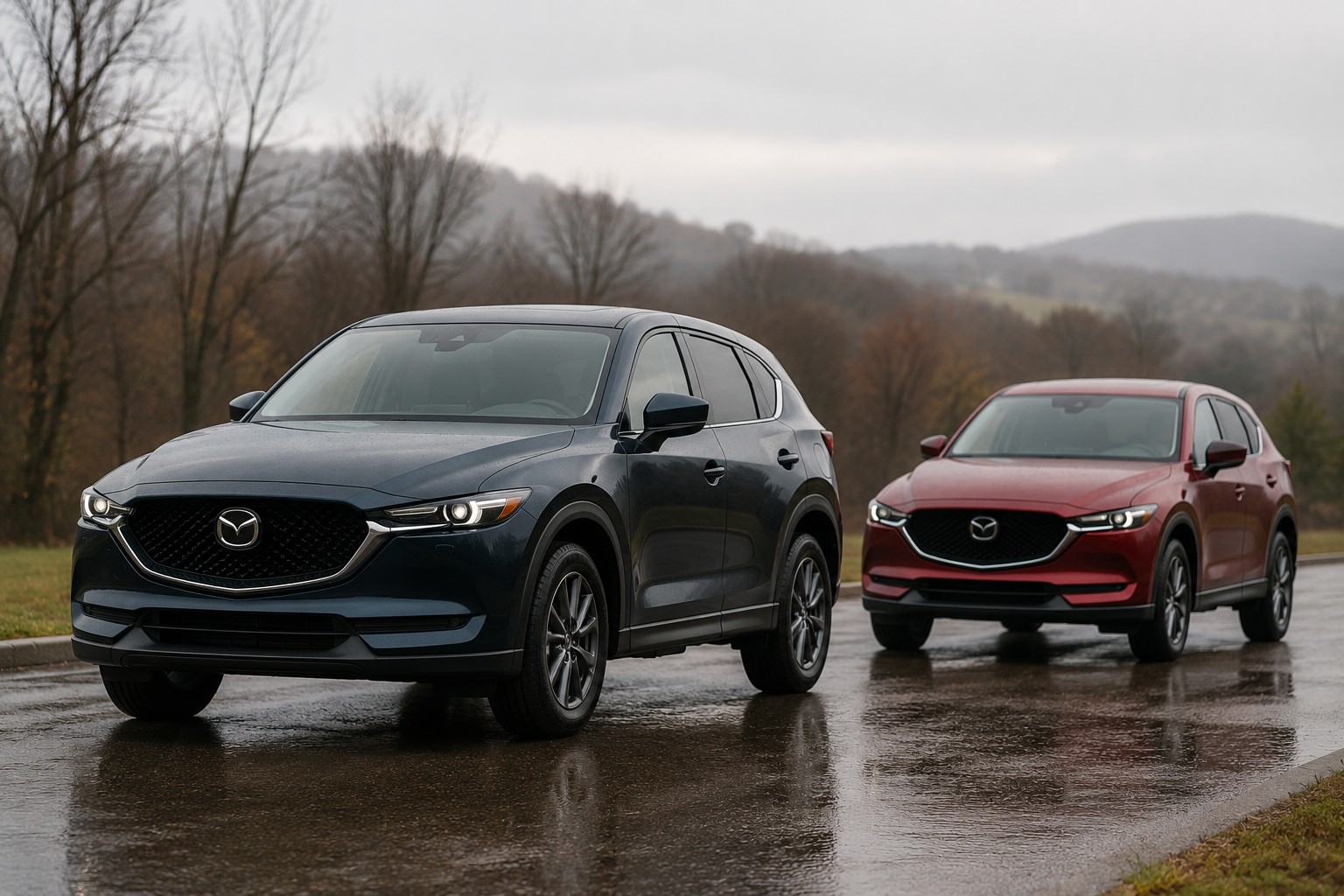
For nearly a decade, Mazda stood as one of the most admired automotive brands. It was the Japanese carmaker that consistently delivered premium-feeling vehicles at mainstream prices, earning trust from buyers across every continent.
Consumer Reports once placed Mazda second in its brand reliability rankings, an extraordinary achievement for a relatively small manufacturer. That ranking placed Mazda ahead of giants like Honda, Ford, and Hyundai in the eyes of millions of careful buyers.
But the story has taken a sharp and uncomfortable turn in recent years. Mazda recorded the biggest drop in reliability rankings of any carmaker in 2026, falling eight spots to land at 14th place.
For a brand that built its entire identity around precision engineering and disciplined development, this decline is both surprising and deeply significant. Understanding how Mazda arrived here requires examining the decisions the company made and the very real consequences that followed.
The Golden Era: When Mazda Was a Reliability Benchmark
Not long ago, Mazda’s reliability reputation was the envy of the global automotive industry. The brand earned its credibility through incremental development, careful engineering, and a firm refusal to rush unproven technology into production.
Models like the Mazda3 and the CX-5 became trusted names among reliability-conscious buyers around the world. These were vehicles that owners could depend on day after day, year after year, with minimal unexpected costs.
In J.D. Power’s 2025 U.S. Vehicle Dependability Study, Mazda ranked second in the mass market segment with a score of 161 problems per 100 vehicles. That placed the brand ahead of Toyota and Honda, two manufacturers with decades-long reputations for bulletproof quality.
The CX-5 was the crown jewel of this reliability story. The current generation has been on sale since 2017 and has gone without a recall from 2019 onward, a remarkable record by any measure. That kind of long-term consistency is extremely rare in modern automotive manufacturing, and buyers noticed.
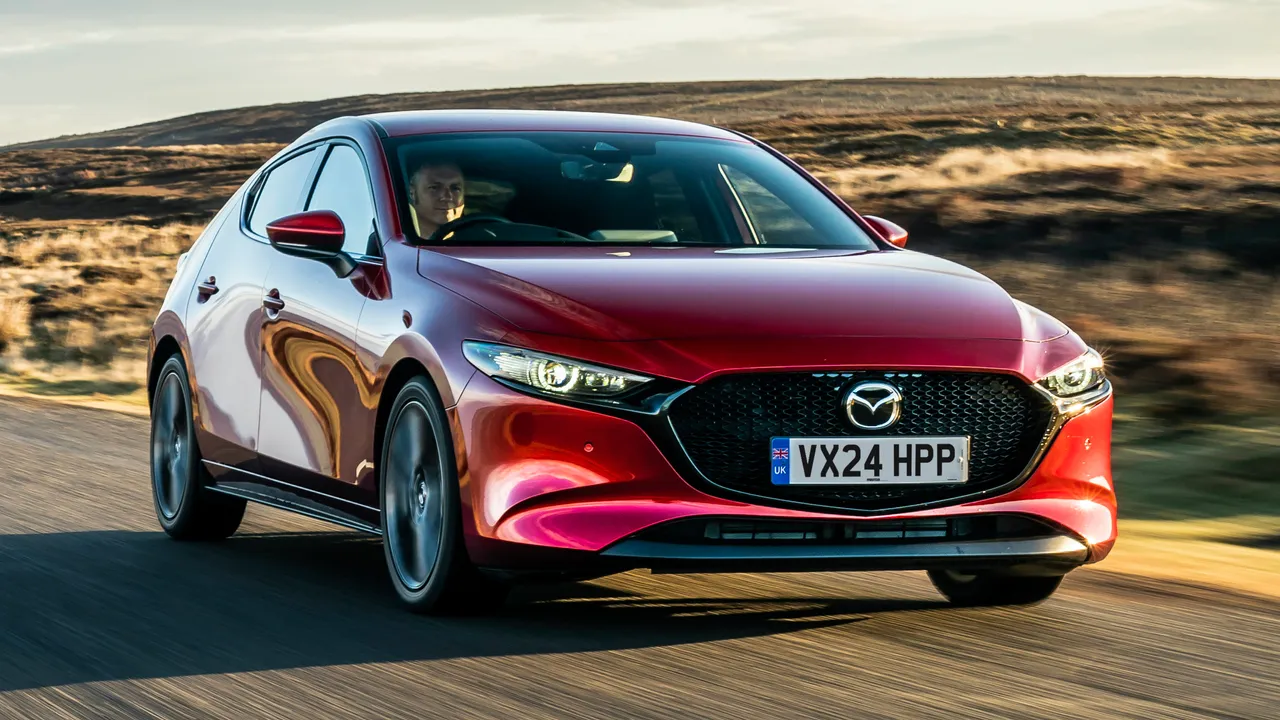
RepairPal rates Mazda 4.0 out of 5.0, placing it 5th out of 32 car brands. The average annual repair cost for a Mazda owner is just $462, compared to the industry average of $652 real savings that compound year after year for loyal customers.
Mazda’s manufacturing philosophy, known as “Monotsukuri,” formed the backbone of this success. The approach integrates advanced technologies, including robotics, CNC machining, and 3D printing, to maintain extremely precise manufacturing standards. Quality was not accidental at Mazda. It was deliberately engineered into every vehicle that left the production line.
Also Read: 6 Trucks With Comfortable Middle Seats vs 6 That Are Practically Useless
The Turning Point: Too Much Innovation, Too Quickly
Every great reliability story eventually reaches a turning point. For Mazda, that moment arrived when the company decided to dramatically expand its SUV lineup while simultaneously introducing entirely new platforms, new engines, new transmissions, and plug-in hybrid technology all at once.
The CX-70 and CX-90 launched as the most ambitious vehicles Mazda had ever produced. They brought a new straight-six engine, a new platform, a new transmission, and the brand’s very first plug-in hybrid powertrain to market simultaneously. In automotive engineering, complexity is the enemy of reliability. When so many systems are new at the same time, problems become almost mathematically inevitable.
Both the standard and plug-in hybrid versions of the CX-70 and CX-90 delivered below-average reliability scores. More damaging still, these issues persisted into the second model year, suggesting Mazda struggled to identify and correct the root causes quickly enough. Other manufacturers have managed faster turnarounds in similar situations.
The 2024 CX-90 scored just 9 out of 100 on one major reliability index, accompanied by 11 separate recalls. Reported problems included failures in the steering system, electrical architecture, and forward collision avoidance technology. For a brand whose identity rested on careful, proven engineering, these numbers represented a serious collapse.
The plug-in hybrid variants suffered the most acutely. Battery system faults, electric motor issues, and software malfunctions in the hybrid control units generated significant owner complaints. Buyers who specifically chose Mazda because of its reliability reputation found themselves making unexpected dealer visits, a deeply frustrating experience for any loyal customer.
The Technology Gamble: Abandoning What Worked
As reliability data worsened, Mazda’s leadership appeared to accelerate rather than pause its technological transformation. The brand began aggressively redesigning its interior strategy, moving away from the physical controls that owners had praised for years and towards large, all-screen dashboard interfaces.
Mazda publicly defended the decision to introduce a 26-inch touchscreen in the upcoming CX-6e. Company executives argued that larger screens offer better possibilities for displaying information clearly. But this reasoning struck many industry observers as deeply ironic given the timing. For years, Mazda was specifically praised for resisting the touchscreen trend when every competitor was chasing enormous displays.
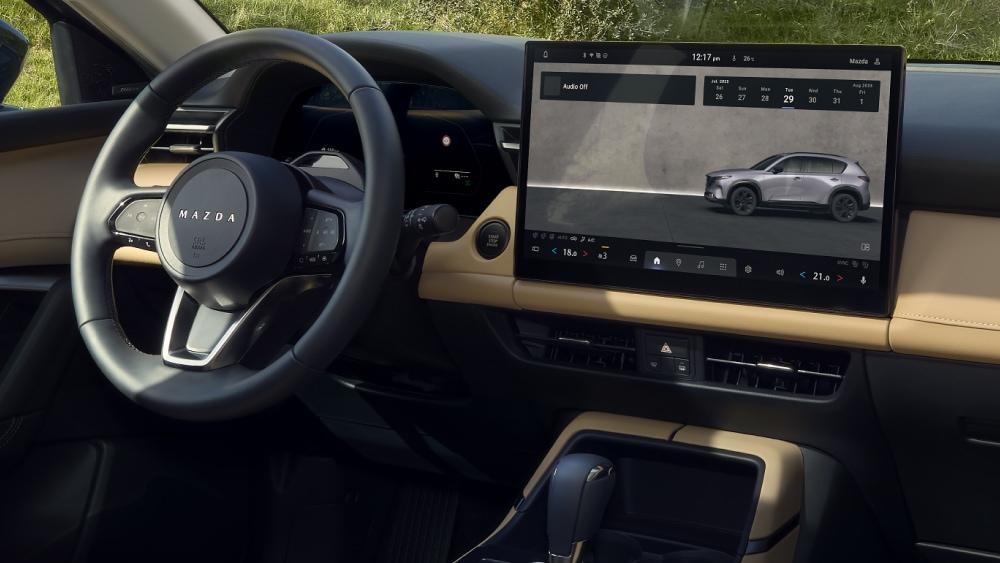
Its rotary dial-controlled infotainment system was widely celebrated as safer, more intuitive, and more driver-focused than the glass slabs appearing in rival vehicles. That restraint was considered a mark of real automotive maturity.
Now, Mazda is pursuing an all-screen interior strategy precisely as other major manufacturers are reversing course. Brands including Hyundai and several European carmakers have begun reintroducing physical buttons after extensive negative feedback from owners on touch-only interfaces. Mazda is moving directly against that emerging consensus.
The connection between increased software complexity and reduced reliability is not a theory; it is documented in the data. Every additional touchscreen function, every new software module, and every over-the-air update pathway creates another potential point of failure. Mazda’s reliability problems with the CX-90 and CX-70 are partly a direct consequence of this dramatically increased electronic complexity.
The Human Cost: Real Owners, Real Problems
Behind every reliability ranking are real people who purchased vehicles with genuine expectations. Mazda owners have historically been among the most loyal in the entire automotive industry, people who chose the brand deliberately, for specific reasons rooted in trust.
Recalls for the 2024 and 2025 Mazda3 and CX-30 affected over 171,000 vehicles due to a faulty airbag sensor. The defect could prevent airbags from deploying correctly during a crash, a safety concern of the most serious possible category.
Separately, recalls for the 2024–2025 CX-90 and 2025 CX-70 affected over 150,000 vehicles for software failures in control modules. These faults could cause a sudden and unexpected loss of driving power. A steering wheel defect was also identified, increasing crash risk under certain conditions.
Mazda also faced class-action legal action related to a defect in the SKYACTIV-G 2.5 Turbo engine. The issue involved coolant leaks that could lead to overheating and potential engine failure, affecting popular models including the CX-5, CX-9, and Mazda6. The SKYACTIV engine family had previously been celebrated as one of Mazda’s greatest engineering achievements, making this lawsuit particularly difficult for the brand’s reputation.
The emotional damage to customer relationships is harder to quantify but no less real. Loyalty earned over many years of consistent quality can erode far more quickly than it was built. An owner who experiences repeated unexpected repairs does not simply move on quietly; they share their experience, reconsider future purchases, and influence the decisions of people around them.
Reading the Rankings Honestly: What the Data Actually Shows
It is important to approach Mazda’s reliability situation with clear eyes, neither dismissing the problem nor overstating it beyond what the evidence supports. The picture is genuinely mixed, and that complexity matters enormously for international buyers making purchasing decisions.
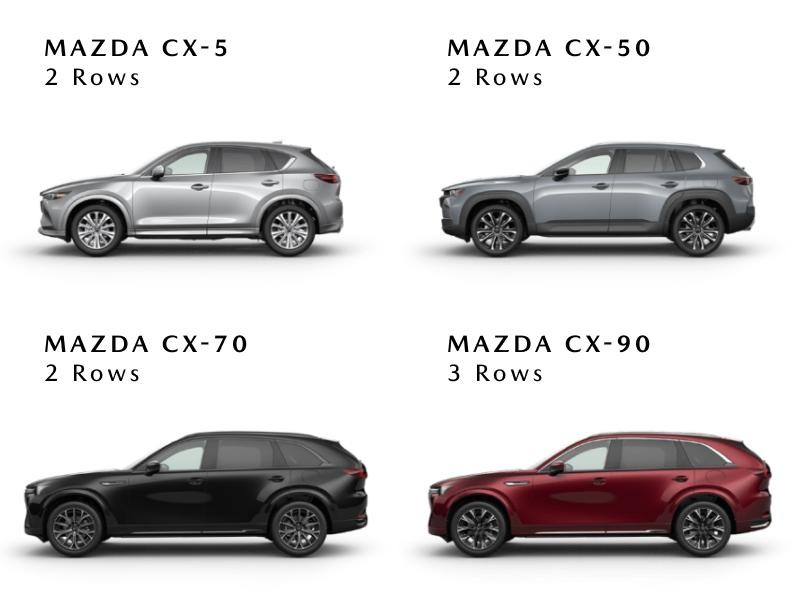
Mazda’s older, established models continue to perform well. The Mazda3 scores above average for reliability. The CX-30 and CX-50 score at or near average. The problem is concentrated almost entirely in the brand-new vehicles built on entirely new platforms, a crucial distinction for any buyer.
Mazda’s brand ranking also suffered partly from a statistical consequence of the CX-5 redesign. Because the CX-5 is being redesigned, it was temporarily excluded from Consumer Reports’ new-car predicted reliability ratings for 2026. This removed one of Mazda’s strongest reliability assets from the equation entirely, making the brand score look worse than the reality of individual models might suggest.
The broader lesson embedded in decades of automotive data remains consistent. Buying an all-new or substantially redesigned vehicle in its first model year carries measurably higher reliability risk regardless of brand.
This advice applies with special force to Mazda’s current lineup, where the gap in quality between its proven older models and its ambitious new ones is particularly wide.
What Mazda did well was by being careful, patient, and incremental. When it abandoned that philosophy in pursuit of rapid expansion and technological transformation, the reliability data reflected that change almost immediately.
The question now is whether Mazda’s leadership will recognise this clearly enough to course-correct and how quickly loyal buyers around the world will be prepared to wait for that correction to arrive.
Also Read: 10 Cars That Have Cult Followings You Didn’t Know About
