

Used SUV shopping feels like a treasure hunt. You scroll through listings, find a low-mileage option at a price that seems almost too good, and start getting excited. Then you wonder: why is this so affordable? Sometimes the answer is straightforward. Sometimes it is because that SUV spent two years being driven by hundreds of strangers who had absolutely no emotional connection to it, no incentive to treat it gently, and no reason to report the curb they clipped or the pothole they hit at full speed.
Rental fleet vehicles are not automatically bad purchases. Some of them are genuinely well-maintained because large rental companies follow strict service schedules to protect their assets. But the truth is that rental vehicles see a type of use that no private owner replicates.
Different drivers every few days, highway miles stacked in short bursts, aggressive acceleration from people unfamiliar with the vehicle, and minimal care for the interior. By the time a rental SUV reaches a used lot, it has lived a very different life from a single-owner vehicle.
Here is what makes this tricky: rental history is not always disclosed. A dealer buying inventory at auction does not always know, or volunteer, where the vehicle came from. A private seller who bought the car from a rental company may not mention it either. You are often left to figure it out yourself, using physical clues, paperwork trails, and a few smart questions.
This page gives you eight concrete signs to look for before you hand over your money. Whether you are considering a 2023 Ford Explorer XLT AWD, a 2022 Nissan Pathfinder SV 4WD, or something from a recent model year sitting on a dealer’s used lot, these signs apply universally. Read carefully, shop smart, and walk in knowing exactly what to look for.

1. The VIN History Report Tells a Story Worth Reading
How a Vehicle Identification Number Can Reveal Fleet Ownership in Minutes
Before you ever set foot near the vehicle, before you touch the door handle or sit in the driver’s seat, your first move should be pulling a full vehicle history report using the VIN. Services like Carfax and AutoCheck compile ownership records, title history, odometer readings, accident reports, and in many cases, fleet registration data. A former rental vehicle will often show up with a title history listing a rental company as a previous owner; Hertz, Enterprise, Avis, Budget, National, or Alamo are among the most common.
Rental companies title their vehicles in bulk, and those titles leave a paper trail. When the rental company sells the vehicle off their fleet (usually at 12 to 18 months of service or around 20,000 to 40,000 miles), that transfer registers in the ownership chain. A Carfax report that shows the first owner as a corporation rather than an individual, especially one with an address in a city known for large fleet operations, is a clear indicator of rental history.
Look at the odometer entries in the report as well. Rental vehicles accumulate miles quickly and unevenly. You might see 18,000 miles in the first 14 months, then a gap before the next recorded entry. That gap is often when the vehicle was in active daily rental rotation. Private owners tend to rack up miles more gradually and consistently.
Take a buyer considering a 2022 Hyundai Tucson SEL AWD with 28,000 miles listed at an attractive price point. A Carfax pull on that vehicle might show two title transfers: one from Hyundai Financial to Enterprise Rent-A-Car, and a second from Enterprise to the current seller. That two-step ownership chain is a textbook rental fleet pattern. Without pulling the VIN report, that history is invisible to the average buyer walking a used lot.
Accidents reported through rental companies also show up differently from private-owner accidents. Rental companies report damage through their own internal insurance, and not every minor collision makes it into the Carfax database the way a private insurance claim would. A clean Carfax on a rental vehicle does not necessarily mean the vehicle had zero incidents. It means zero incidents were formally reported to the database, which is a different thing entirely.
Some sellers will present a clean Carfax as a guarantee of a trouble-free history. Accept it as one piece of useful information, not a final verdict. Use the VIN report as your starting point, then follow up with physical inspection and a pre-purchase mechanical evaluation. The report opens the door. What you find afterward either confirms or complicates the picture.
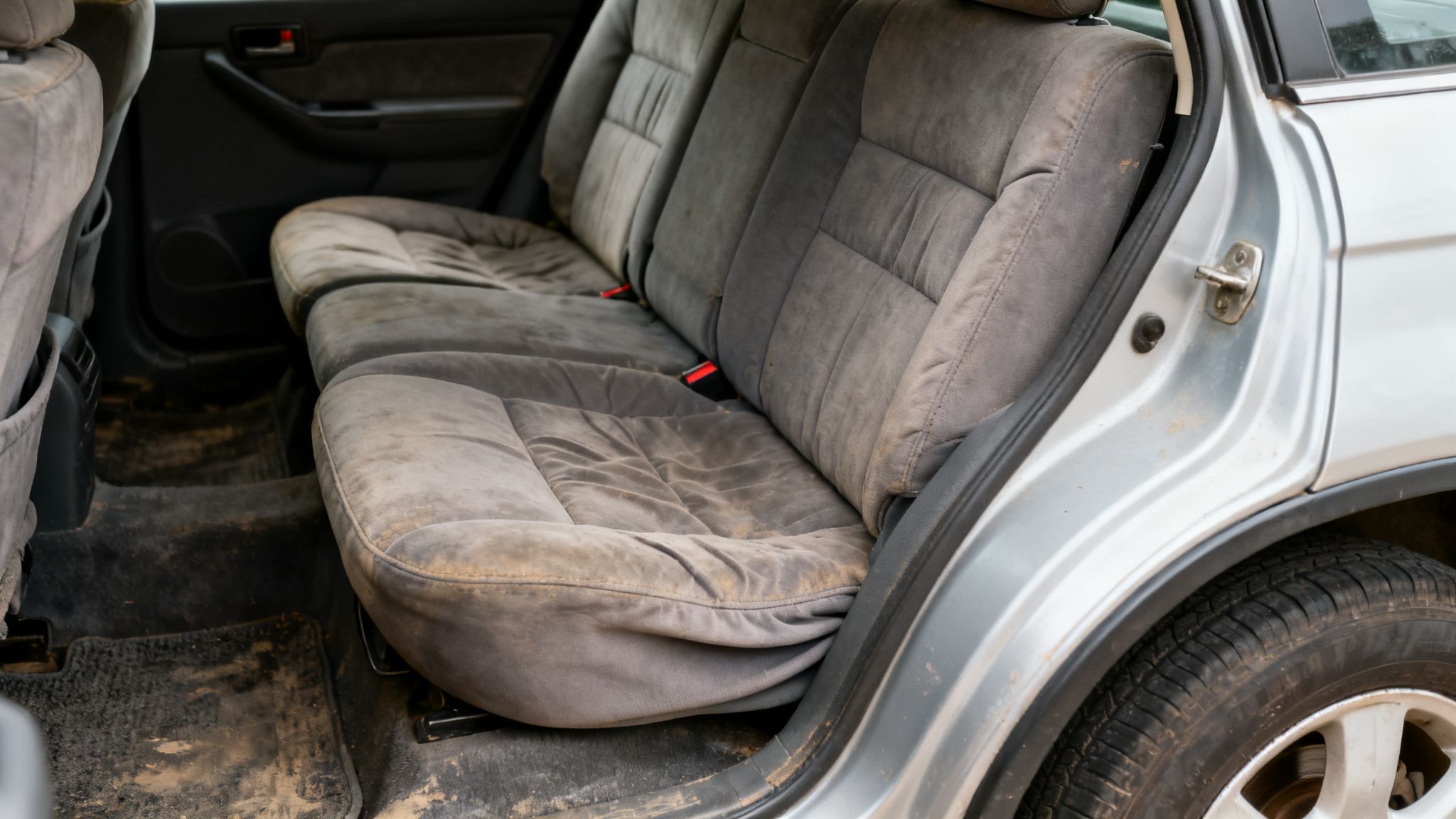
2. Interior Wear Patterns That Do Not Match the Mileage
When the Inside of the Vehicle Tells a Different Story Than the Odometer
Low mileage and heavy interior wear do not belong together. If a used SUV has 32,000 miles on the odometer but the interior looks like it has absorbed the chaos of a small airport, something does not add up. Rental vehicles experience an intensity of interior use that private owners rarely produce, because every renter treats the space differently, and most treat it with far less care than they would their own vehicle.
Start with the driver’s seat. Rental vehicles cycle through dozens of drivers annually, which means the driver’s seat fabric or leather takes repeated wear from people of different sizes, wearing different clothing, adjusting the seat to different positions every single time. A 2023 Chevrolet Equinox LT AWD with 35,000 miles that was a rental for 18 months might show seat bolster wear, fading on the seat fabric, and cracking on a leather bolster that a single private owner would not produce at that mileage.
Check the steering wheel next. Rental vehicle steering wheels are gripped by hundreds of different hands. A worn or shiny patch on the steering wheel at the 9 and 3 o’clock positions is normal on any used vehicle, but excessive wear, soft spots in the leather, or peeling on a relatively low-mileage vehicle suggests unusually high handling frequency. Compare the wear pattern against what you would expect for the mileage claimed.
Door panels take a predictable beating in rental use. People loading and unloading luggage, children climbing in and out without supervision, bags dragging across door trim panels, and feet kicking the lower door cards all create a pattern of scuffs, scratches, and gouges. Inspect every door panel under good lighting. A flashlight or your phone’s torch function works well for revealing surface marks that overhead lot lighting conceals.
Floor mats are another telling indicator. Most rental companies use basic rubber floor mats or replace them periodically. If the floor mats in the vehicle look brand new compared to the rest of the interior, that replacement was deliberate. Pull the mats up and inspect the carpet underneath. Rental vehicles often show staining, grinding debris, and wear patterns on the carpet that the clean replacement mats were covering. A 2023 Kia Sorento SX AWD with suspiciously pristine mats but stained underlying carpet is worth questioning.
Cup holders and center consoles in rental vehicles develop a particular kind of buildup: layers of residue from hundreds of different beverages, sticky spots that were never properly cleaned, and lid mechanisms that have been opened and closed thousands of times. Run your finger inside the cup holders. Check the console lid hinge for looseness. These are small details that build a clear picture when taken together.
Also Read: 4 SUVs With Genuinely Useful Tow Modes vs 4 Where It’s Just a Dashboard Button

3. Service Records Are Either Missing or Come From a Single Corporate Source
What the Maintenance History Can Tell You About Who Was Really Driving
Private owners build a service history that reflects personal habits. Some are meticulous, keeping every oil change receipt and rotating tires religiously. Others are less consistent, but their records still read like an individual’s life: a mix of dealerships, independent shops, and maybe a few gaps during a busy season. Rental vehicle service records look nothing like this.
Fleet maintenance for rental companies is handled centrally. Either a contracted service provider handles all oil changes and routine maintenance on schedule, or the rental company uses their own service infrastructure. What this produces is a service history that shows a corporate account name, often a fleet management company, rather than a personal name, and entries that are perfectly spaced at regular mileage intervals because the vehicles are serviced on a program, not when the owner gets around to it.
Ask the seller for all available service records. A 2022 Ford Escape SE Sport Hybrid AWD that was a rental for 15 months might show every oil change completed at a Jiffy Lube account tied to a fleet management company, with the service location listed as a city far from where the vehicle is currently being sold.
That geographic inconsistency between service location and selling location is a rental pattern. Private owners typically service their vehicles near where they live. Gaps in service history after the first owner are also worth noting. When a rental company sells fleet vehicles at auction, the auction record sometimes does not include the complete maintenance file.
A buyer who purchased that vehicle and is now reselling it may have no service records to show for the first 20,000 miles, which is exactly the rental period. Ask directly: “Do you have records covering the vehicle’s complete history?” If the answer is no or vague, push for an explanation.

4. Fleet Markings, Sticker Residue, and Barcode Ghosts That Linger
Physical Evidence That the Vehicle Was Tagged and Tracked as Fleet Property
Rental companies track their vehicles obsessively. Every vehicle in a fleet carries identifying markers: barcodes, tracking stickers, lot number decals, and sometimes paint markings used for vehicle identification in large parking lots. When those vehicles are sold off the fleet, the rental company removes the obvious markings. But removal is rarely perfect, and the residue, shadows, and surface changes left behind are readable if you know what to look for.
Check the windshield carefully, both inside and out. Rental company tracking stickers and registration holders are often applied to the lower left or lower right corner of the windshield. When removed, they leave a faint rectangular ghost, a slightly cleaner patch of glass that does not match the surrounding surface.
Under certain lighting angles, particularly with the sun behind you and light raking across the windshield, these ghosts appear clearly. A 2022 Jeep Cherokee Latitude Lux 4WD that spent 14 months at a rental company will almost certainly show this type of windshield residue.
Inspect the rear bumper and cargo area. Large rental companies often apply barcode stickers or inventory number decals to the rear of their vehicles, sometimes on the bumper fascia, the liftgate glass, or inside the cargo area on the floor or side panel.
Sticker residue, slight paint color differences where a decal was removed, or faint outlines of rectangular labels are signs of prior fleet marking. Run your hand over the rear bumper and liftgate. You can often feel the edge of a removed sticker as a faint ridge, even when the visual evidence has been cleaned.
Inspect the door jambs and the inside of the fuel door. Fleet vehicles sometimes carry identification numbers in less visible locations because companies want redundant tracking systems. An ink-stamped number or small barcode label inside the fuel door, on the B-pillar door jamb, or on the underside of a cargo area cover is a sign of fleet inventory management.
Wheel wells and underbody areas sometimes carry spray-painted lot numbers on rental fleet vehicles, particularly those that passed through large auction facilities. A 2023 Nissan Murano SL AWD with a painted number inside the wheel well is almost certainly a former fleet or auction vehicle with institutional ownership history. These painted markers are not applied by manufacturers or private owners.
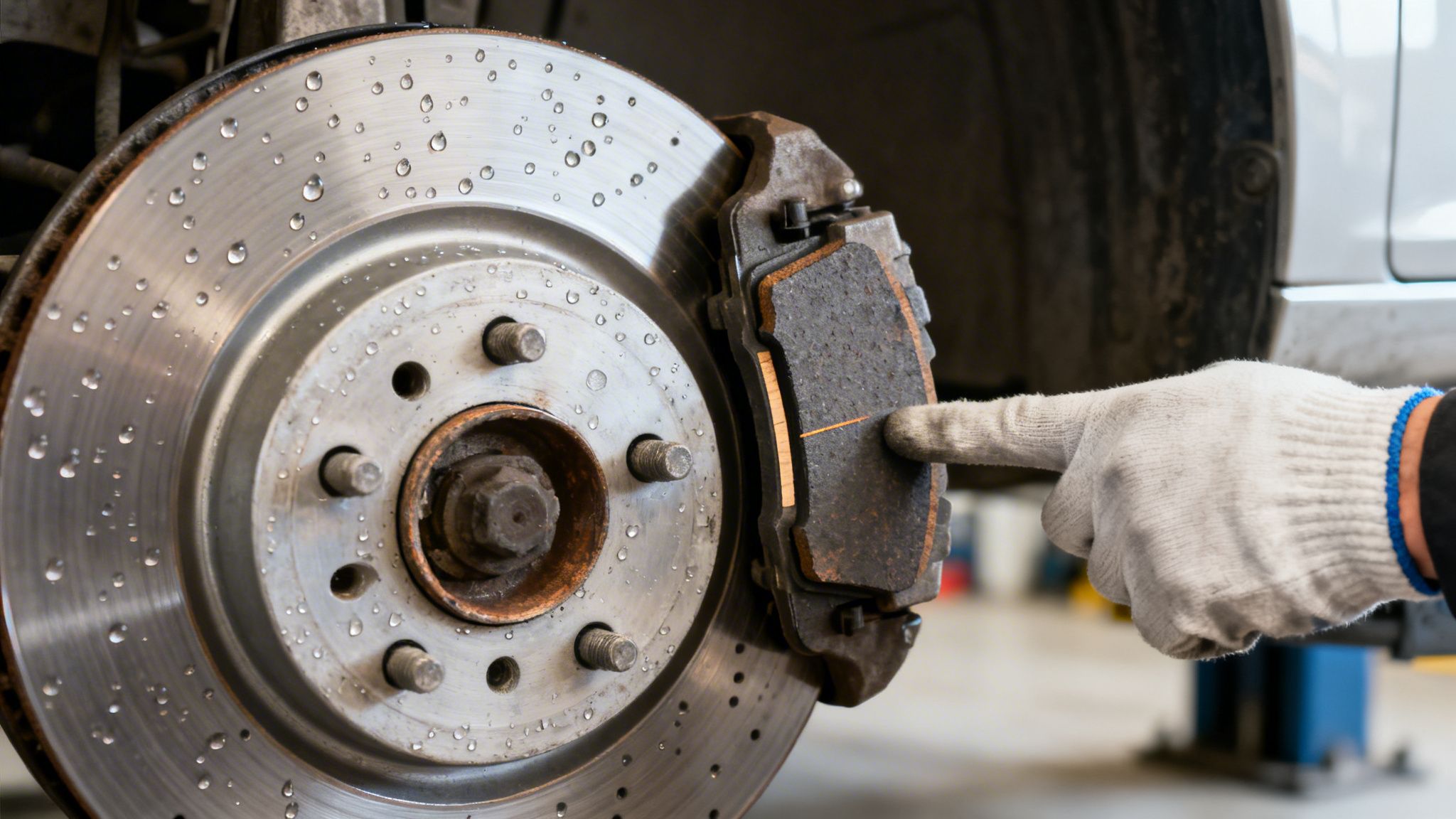
5. Tires and Brakes Replaced Too Early for the Mileage
What Premature Wear Parts Tell You About How the Vehicle Was Actually Used
Private vehicle owners rarely replace tires before 40,000 to 50,000 miles on a well-maintained SUV. They rotate regularly, keep inflation correct, and the tires wear evenly and last accordingly. Rental vehicles experience a completely different wear pattern: short trips, frequent hard stops as unfamiliar drivers react to traffic, aggressive acceleration from standstills, and cornering that exceeds what cautious regular drivers produce. The result is tires and brakes that wear out faster than the mileage would normally suggest.
Finding fresh tires on a used SUV with under 40,000 miles should prompt a question. Ask when the tires were replaced and why. A private owner who replaced tires at 28,000 miles has either a specific reason, road damage, a warranty replacement, or something worth investigating. A vehicle that shows new tires with no explanation at moderate mileage may have had them replaced because rental fleet wear forced the issue.
Brake pads tell a similar story. On a 2022 Buick Enclave Avenir AWD driven conservatively by a single owner, brake pads can last 40,000 to 60,000 miles. On a rental vehicle of the same model with the same odometer reading, those pads may have been replaced once or twice already because dozens of drivers applied the brakes differently, often harder and later than necessary.
Ask whether brakes have been replaced and when. If they have been replaced at an unusually low mileage, it reflects heavier-than-normal use. Rotors are also worth inspecting visually. Step back and look through the wheel spokes. Scored, grooved, or lipped rotors on a relatively low-mileage vehicle suggest heavy or improper braking habits.
Rental vehicle rotors often show exactly this kind of wear because the braking style varies so widely across different drivers. A 2023 Acura MDX A-Spec SH-AWD with scored front rotors at 30,000 miles is showing signs of harder use than private ownership typically produces.
Suspension components can also show accelerated wear on former rental vehicles. Struts, bushings, and ball joints absorb road impacts. When a vehicle is driven hard by many different people over a short period, these components wear faster than their mileage rating suggests.
Ask a pre-purchase mechanic to inspect suspension wear specifically. Worn strut bushings or excessive play in suspension joints on a vehicle with moderate mileage is a flag worth investigating further.
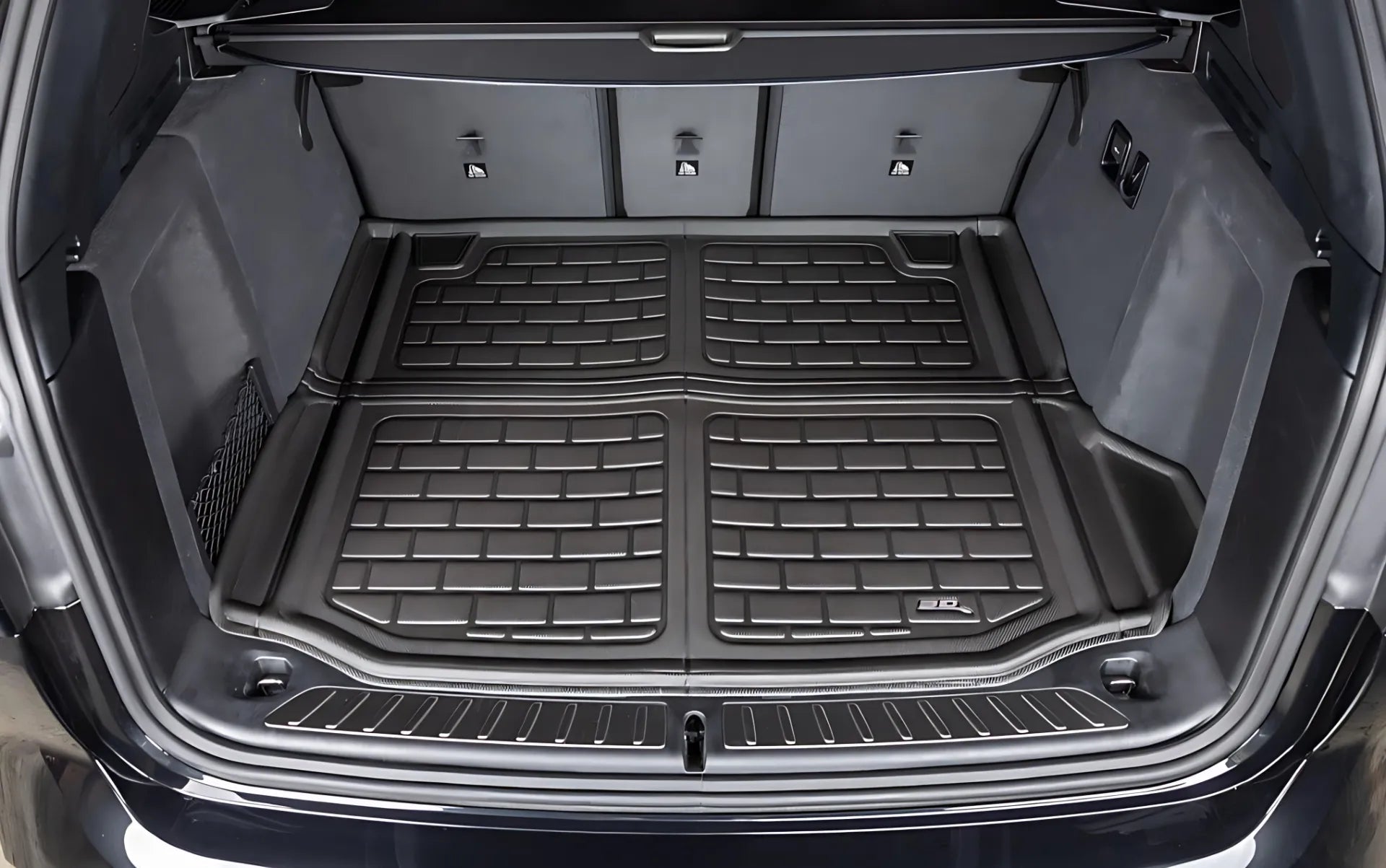
6. Trunk and Cargo Area Damage Patterns From Luggage and Loading
What Heavy Cargo Use Looks Like in a Vehicle That Hauled Stranger After Stranger
Rental SUVs carry luggage. A lot of luggage. Vacation travelers, business trip road warriors, families relocating temporarily, and weekend adventure seekers all throw bags, suitcases, strollers, coolers, and boxes into the cargo area of a rental SUV without any particular care. This concentrated, repetitive loading and unloading leaves evidence that is easy to spot when you know where to look.
Pull up the cargo area floor mat and examine the underlying cargo floor surface. Rental vehicles show scratch patterns, scuff marks, and surface abrasion from hard-sided luggage being dragged across the cargo floor. A 2023 Mazda CX-9 Carbon Edition AWD with otherwise clean styling, but a cargo floor full of parallel scratch marks from rolling suitcases has been hauling luggage regularly, more than any typical single-owner family vehicle would.
Check the rear bumper at the load edge. When people load luggage into an SUV, they rest bags on the rear bumper while adjusting their grip before lifting them into the cargo area. This produces scuff marks, paint wear, and sometimes small chips on the rear bumper’s top edge, the area just below the liftgate opening.
Rental vehicles almost universally show this pattern because renters are not careful about how they rest their bags. A private owner who regularly loads into their own vehicle tends to be more deliberate. Finding heavy bumper load-edge wear on a 2022 Dodge Durango GT Plus AWD with relatively low mileage is a meaningful detail.
Cargo area side trim panels also take consistent hits from the corners of suitcases and bags. Look for scuffs, dents, or deformed trim pieces at luggage-corner height on both sides of the cargo area. Rental use produces a very specific scuff pattern at roughly the same height on both sides because bags enter at a consistent angle through the liftgate opening.
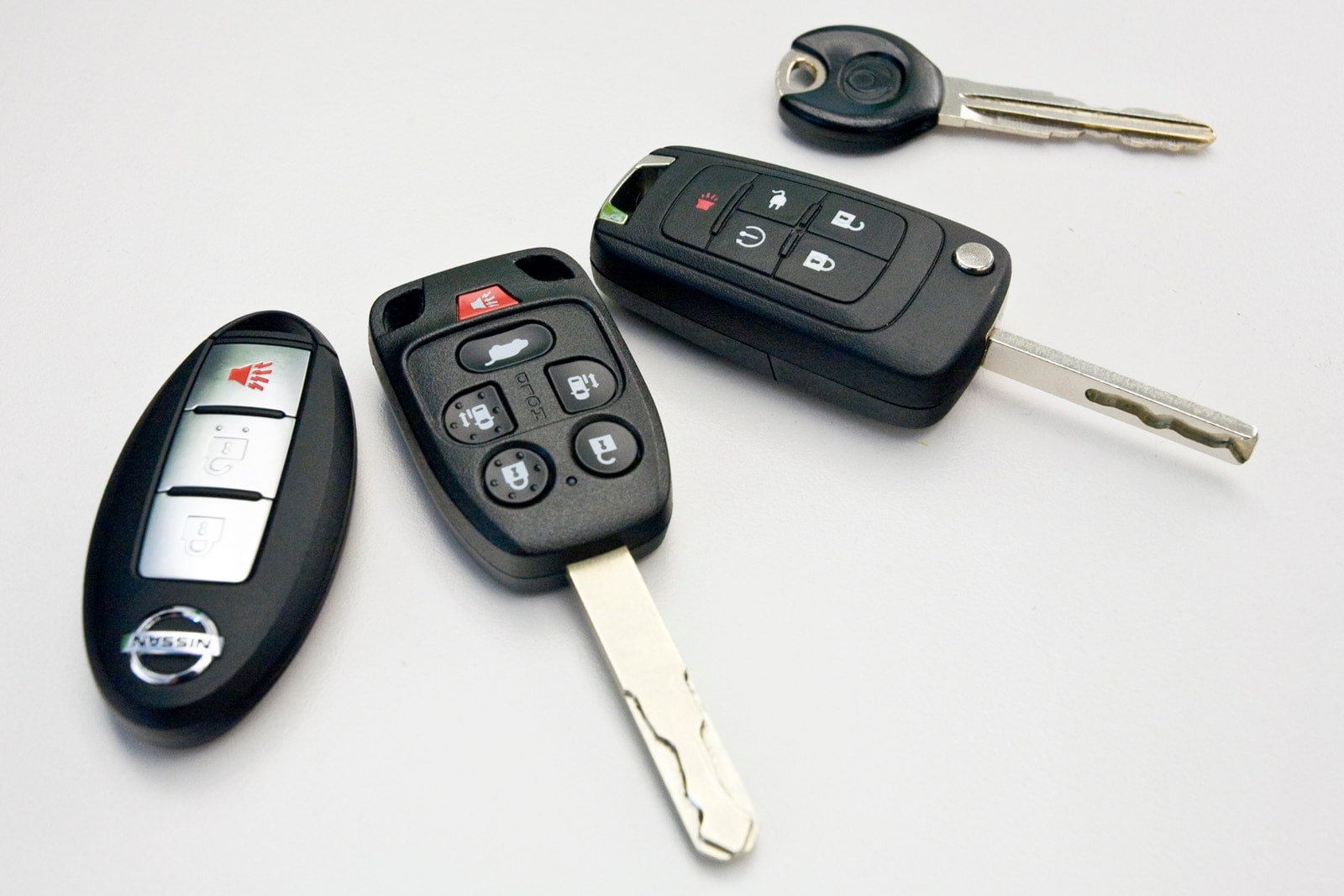
7. Multiple Key Fobs or Non-Original Keys Without Explanation
What the Keys That Come With the Vehicle Can Tell You About Its History
Every new vehicle comes with a matched set of key fobs programmed specifically to that car. Typically, buyers receive two fobs from the factory. Some manufacturers include three. What you should not find on a private-owner used vehicle is a key fob from a completely different brand, a generic replacement fob that was clearly programmed after the fact, or a set of keys where one is obviously newer than the other with no explanation.
Rental companies go through key fobs. They are lost by renters, damaged in drop boxes, and replaced routinely throughout a vehicle’s fleet life. When the rental company sells the vehicle off fleet, they typically provide at least one working key, but it is not always the original factory-programmed set. Finding a single key fob on a vehicle that should have come with two, or finding a replacement fob that does not match the vehicle brand’s standard design, is a flag worth raising.
Ask the seller directly how many keys are present and whether they are original to the vehicle. A private owner who bought their 2021 Subaru Ascent Touring AWD new and drove it for two years will almost certainly have both original fobs. A dealer who acquired the same vehicle through auction may only have one, or may have a replacement programmed fob without the secondary original.
Missing keys matter financially, too. Programming a new key fob for a modern vehicle with proximity entry and push-button start typically costs $250 to $500 at a dealership. That cost belongs in your price negotiation if the vehicle is short a key. Do not absorb it silently.
Some rental companies use their own proprietary key fobs that include tracking chips or RFID identification beyond the standard vehicle programming. If you find a fob that has an unusual design, an extra button with no labeled function, or a brand marking that does not match the vehicle manufacturer, it may be a fleet-specific key from the rental company’s supplier. This is an unmistakable sign of rental history.
Also Read: 5 SUVs Where Heated Steering Wheels Still Work vs 5 That Burn Out Fast

8. Dealer Auction Paperwork, Lot Numbers, and Price Sticker Patterns
How the Paper Trail From the Dealer’s Purchase Reveals Where the Vehicle Came From
Used vehicle dealers buy inventory from multiple sources: trade-ins, private purchases, manufacturer programs, and auto auctions. Auto auctions are where rental companies offload fleet vehicles at the end of their service cycle, and the paperwork from that auction process sometimes makes its way into the vehicle’s file at the dealership, either by accident or because the dealer did not think to remove it.
Ask the dealer for the full paper file on any used vehicle you are seriously considering. Request the original title, the auction run sheet if applicable, the vehicle history report they pulled during acquisition, and any inspection records from their reconditioning process. A thorough dealer will have all of this.
What you are looking for in the auction run sheet is the seller’s name, which will often list the rental company directly, or a fleet remarketing service like Manheim, ADESA, or FleetLogistics. Fleet remarketing auction run sheets contain condition grading information, prior use descriptions, and sometimes explicit fleet identification codes.
A 2023 Hyundai Santa Fe Calligraphy AWD sold through a fleet remarketing lane at a major auction will have a run sheet that says so. If that sheet is in the dealer’s file, the rental history is documented right there. If it has been removed or is unavailable, that absence is also telling.
Window price stickers on used dealer lots sometimes carry lot tracking numbers, reconditioning codes, or inventory identifiers that experienced buyers can cross-reference. While these alone are not definitive proof of rental history, they form part of the broader picture you are assembling through every step of your inspection.
Reconditioning records is equally valuable. When a dealer takes in a fleet vehicle, they typically put it through a reconditioning process: detail cleaning, minor scratch repair, fluid checks, and sometimes light mechanical work. If the reconditioning invoice is available and it lists an unusually high number of cosmetic repairs, replacement floor mats, or a deep interior cleaning for a low-mileage vehicle, that level of remediation reflects the wear pattern of rental use, not private ownership.
