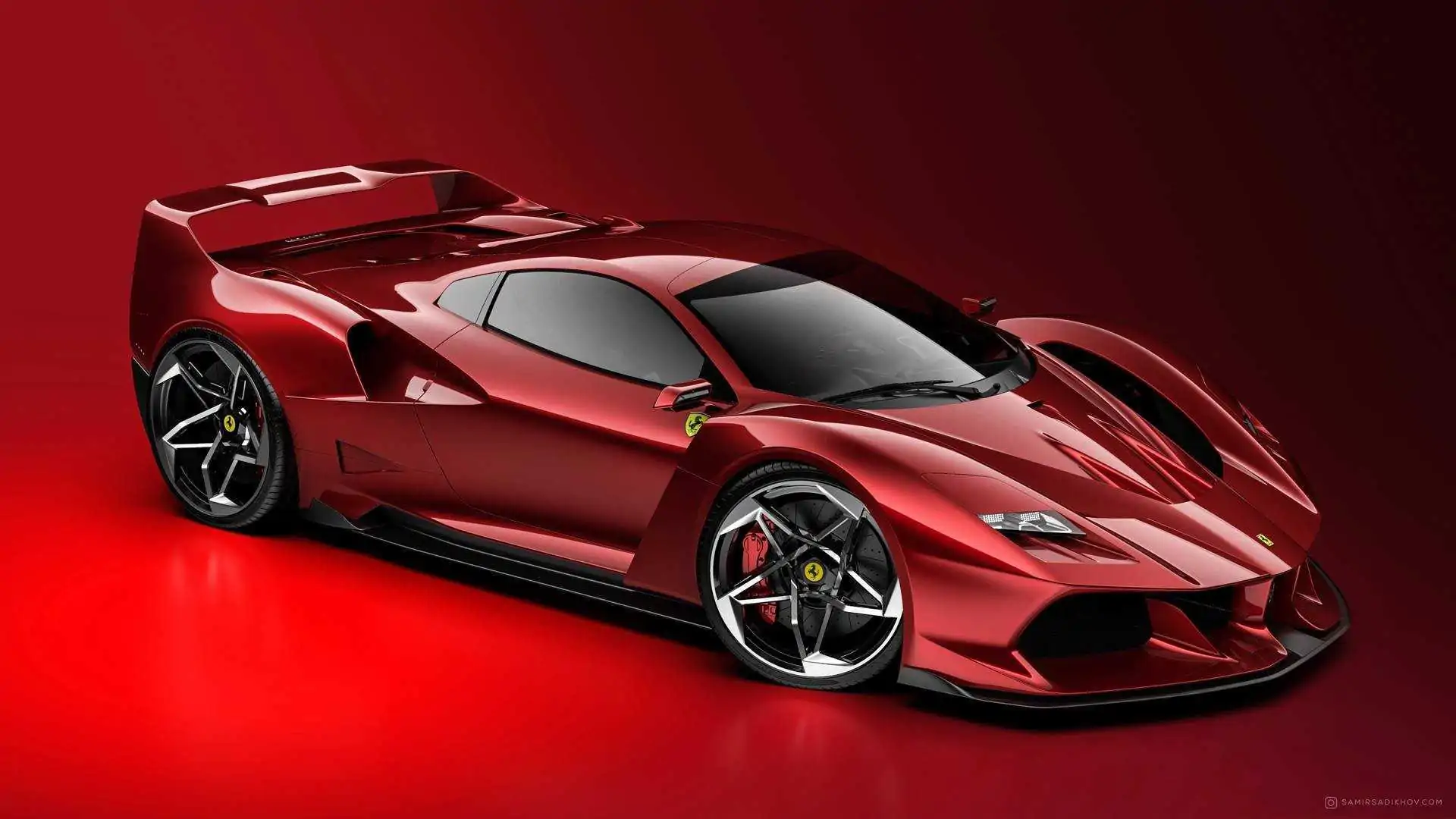
The 1980s were a defining decade for performance engineering, producing some of the most iconic and influential sports cars ever built. This list, 10 Best Sports Cars From 1980s, highlights machines that blended raw speed, innovative technology, and unforgettable design language during a transformative era in automotive history.
At the forefront is the Ferrari F40, an uncompromising analog supercar, represented here as Ferrari F40, which set benchmarks for speed and driver engagement. Alongside it, models like the Porsche 959, Testarossa, RUF Yellowbird, and Mazda MX-5 showcase the diversity of 1980s performance, from extreme supercars to lightweight driver-focused icons.
Together, they form a legendary lineup that continues to inspire enthusiasts and define what true sports car excellence means. Each model reflects a unique philosophy, yet all share a focus on performance, mechanical purity, and emotional driving experience that still resonates with collectors today across generations of automotive enthusiasts worldwide and historians alike today.
1. Ferrari F40
The Ferrari F40, introduced in 1987, is widely regarded as the ultimate analog supercar and the final road car personally approved by Enzo Ferrari. Built to celebrate Ferrari’s 40th anniversary, it was conceived as a no-compromise machine focused entirely on speed, lightness, and raw driver engagement. At a time when many performance cars were beginning to adopt electronic aids and luxury comforts, the F40 rejected them completely in favor of a pure racing-derived experience.
At its core is a 2.9-liter twin-turbocharged V8 engine producing around 478 horsepower, allowing the F40 to become the first production road car to surpass 200 mph. It accelerates from 0 to 100 km/h in just 3.8 seconds, placing it among the fastest cars of its era. Power is delivered through a manual transmission with no driver assists, reinforcing its uncompromising character.
Weight reduction was central to its design philosophy. Extensive use of carbon fiber, Kevlar, and aluminum helped keep the car’s weight to roughly 1,100 kg. The interior is stripped down, featuring pull-strap door handles, minimal insulation, and no radio or luxury features. Every element was designed with function over comfort in mind.
Aerodynamics also played a critical role. The wedge-shaped body, flat undertray, and large rear wing were engineered to maximize downforce and stability at extreme speeds. The suspension uses a traditional but highly tuned setup with double wishbones, coil springs, and adjustable ride height for varying driving conditions. Steering is fully manual, offering direct feedback without assistance.
The F40’s braking system is derived from racing technology, featuring large ventilated discs and four-piston calipers without ABS or power assistance. This further emphasizes its raw, driver-focused nature.
Inside, the cockpit is purely functional, with racing seats, analog gauges, and minimal trim. Everything is designed to serve performance rather than comfort.
Produced in limited numbers, the F40 quickly became a symbol of 1980s performance engineering. It represents the peak of analog supercar design, combining extreme speed, lightweight construction, and mechanical purity in a way few cars have matched since.
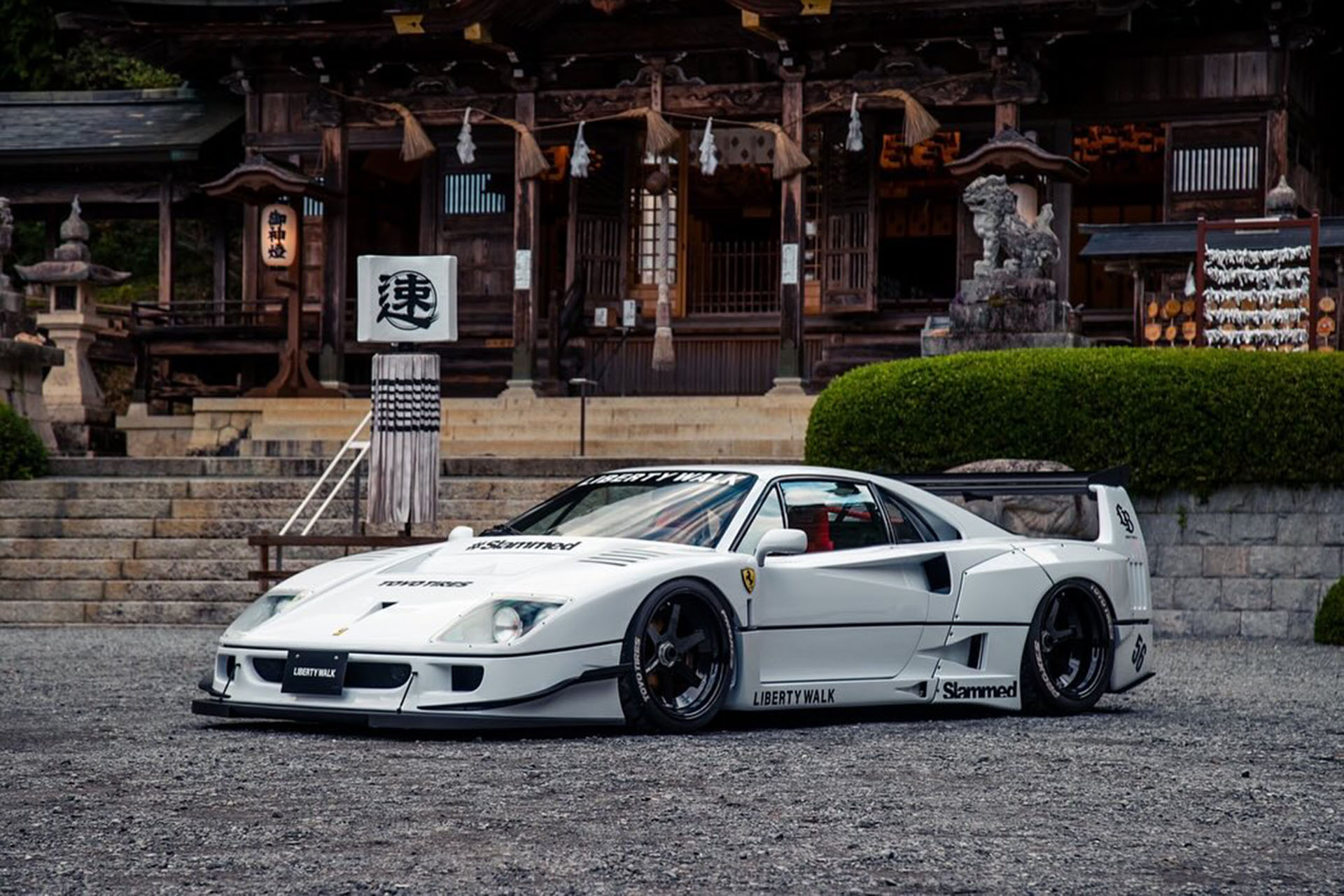
2. Porsche 959 (1986)
The Porsche 959 (1986) represents a major turning point in sports car development during the 1980s. It was initially designed for Group B rally racing but evolved into a production supercar that showcased a wide range of advanced automotive technologies. Powered by a 2.85-liter sequential twin-turbocharged flat-six engine producing about 444–450 horsepower, it reached a top speed of 197 mph and briefly became the fastest street-legal production car in the world.
A defining feature of the 959 was its electronically controlled all-wheel-drive system, known as PSK. Unlike conventional mechanical setups, it continuously adjusted torque distribution between the front and rear axles based on driving conditions, throttle input, and wheel slip. This gave the car exceptional traction and stability across a wide range of surfaces, from wet roads to high-speed circuits.
The chassis and suspension systems were equally advanced. The car used adaptive damping and automatic ride-height control, allowing it to lower itself at high speeds for better aerodynamics and raise itself for uneven terrain. Its body construction combined aluminum, Kevlar, and fiberglass-reinforced plastics, reducing weight while maintaining strength and rigidity.
Aerodynamics played a central role in its design. The 959 achieved a drag coefficient of 0.31 and was engineered to eliminate aerodynamic lift, a rare accomplishment for a road car at the time. Sequential twin turbocharging improved power delivery by reducing turbo lag, allowing smoother acceleration across the rev range.
Although Group B racing was discontinued before the 959 could fully compete, the model demonstrated its durability by winning the 1986 Paris–Dakar Rally. This achievement highlighted its ability to perform in extreme conditions as well as on paved roads.
Driving impressions from Nürburgring testing sessions emphasized its versatility. The car could behave calmly and predictably in normal driving while delivering high levels of grip and responsiveness during aggressive use. Multiple selectable torque modes allowed the driver to adjust handling characteristics for dry, wet, or low-traction surfaces.
The Porsche 959 introduced technologies that later became standard in high-performance vehicles, including advanced AWD systems, active suspension concepts, and integrated electronic control. It remains one of the most influential performance cars of its era.
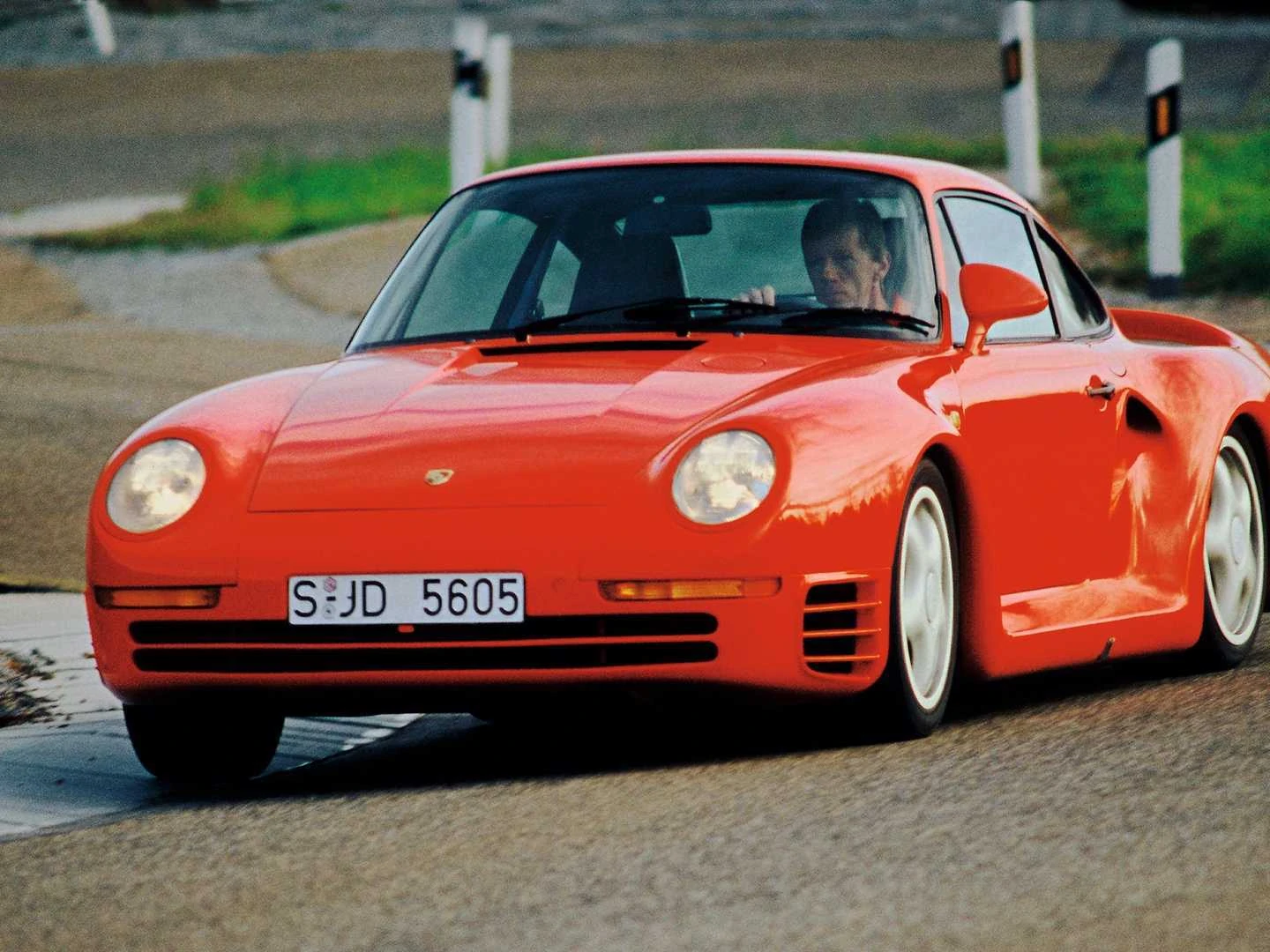
3. Ferrari Testarossa (1984)
The Ferrari Testarossa (1984) stands as one of the most recognizable and culturally significant sports cars of the 1980s. It captured the era’s fascination with bold design, high performance, and visual drama, becoming a global symbol of automotive excess. Powered by a 4.9-liter naturally aspirated flat-12 engine producing around 380 to 390 horsepower, it could reach approximately 180 mph while delivering strong, progressive acceleration through a five-speed manual gearbox.
Its design was as influential as its performance. The wide rear track, dramatic proportions, and signature side strakes defined its identity. These strakes were not purely decorative, as they directed cooling air to the rear-mounted radiators. The car’s width and aggressive stance improved stability compared to its predecessor while creating one of the most distinctive silhouettes in automotive history. Despite its exotic appearance, it was also engineered as a grand tourer, with improved cooling that made long-distance driving more comfortable than earlier mid-engine Ferraris.
Inside, the Testarossa offered a surprisingly spacious cabin for a supercar, with supportive seats, good visibility, and a leather-trimmed dashboard set low beneath the windscreen. However, the driving position remained unconventional, with offset pedals and a steering wheel that required adjustment. The heavy controls, particularly the manual gearbox, demanded effort but rewarded the driver with a mechanical and engaging experience.
On the road, the Testarossa combined grand touring comfort with a demanding but rewarding driving character. The flat-12 engine delivered a smooth, building surge of power and a uniquely theatrical exhaust note often described as one of the greatest sounds in automotive history. At the same time, its weight distribution and high-mounted engine created a noticeable rear bias, requiring careful driving at the limit. Understeer appeared when pushed, while oversteer could develop abruptly if balance was lost, making it a car that demanded respect and precision.
Despite its handling challenges, it was not designed as a pure track machine. Instead, it excelled as a long-distance grand tourer with dramatic styling and an unforgettable presence. Its popularity was amplified by appearances in popular culture, most famously in Miami Vice, where it became an icon of wealth and style.
The Ferrari Testarossa remains a defining product of its era, remembered for its combination of striking design, distinctive engine character, and its role in shaping the image of 1980s supercars.
4. RUF CTR “Yellowbird” (1987)
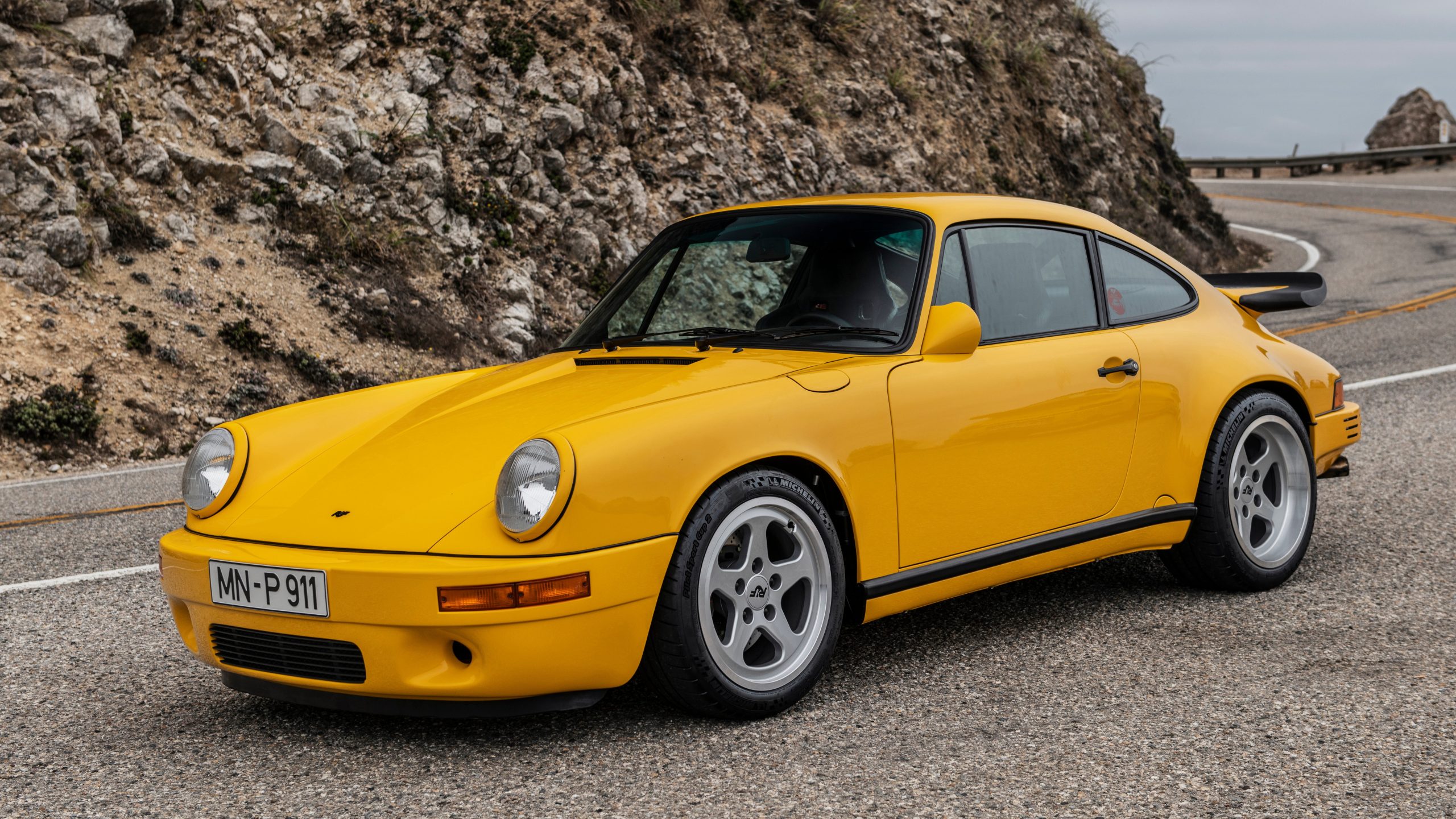
The RUF CTR, better known as the “Yellowbird,” is one of the most famous high-performance cars of the 1980s because it transformed a modified Porsche 911 into a record-breaking machine that could rival dedicated supercars. Built by RUF Automobile, it was based on a Porsche 911 Carrera chassis but heavily re-engineered to deliver extreme speed in a deceptively simple form.
At its core was a 3.4-liter twin-turbo flat-six engine producing 469 horsepower, though some estimates suggest the real output may have been higher. Combined with a stripped-down, lightweight construction using aluminum body panels and aerodynamic refinements, the CTR achieved a remarkable top speed of 211 to 213 mph. This performance allowed it to outperform rivals such as the Ferrari F40 and Porsche 959 in contemporary speed tests, including Road & Track’s 1987 world speed competition.
Beyond raw numbers, the Yellowbird became legendary for its engineering philosophy. RUF reduced weight aggressively, used a narrow-body Carrera shell, and added only what was necessary for stability at high speeds, including subtle aerodynamic changes and a roll cage for rigidity. The result was a car weighing roughly 2,579 pounds, giving it exceptional power-to-weight performance for its era.
Its reputation was cemented by its famous Nürburgring promotional video, where the CTR is seen sliding at high speed in dramatic, uncontrolled-looking drifts. This footage helped establish the car as a cultural icon long before viral internet media existed.
Driving impressions describe a car that feels calm and manageable off boost, almost like a standard 911, but transforms violently once the twin turbos spool. Acceleration arrives abruptly, delivering a surge of power that can easily overwhelm traction and push the car into controlled oversteer. Despite its brutality, the chassis remains surprisingly composed thanks to its rigid structure.
The RUF CTR “Yellowbird” ultimately represents Alois Ruf’s vision of combining prototype-level performance with road-going usability, creating one of the most iconic tuned cars ever built.
5. Mazda MX-5 Miata (1989)
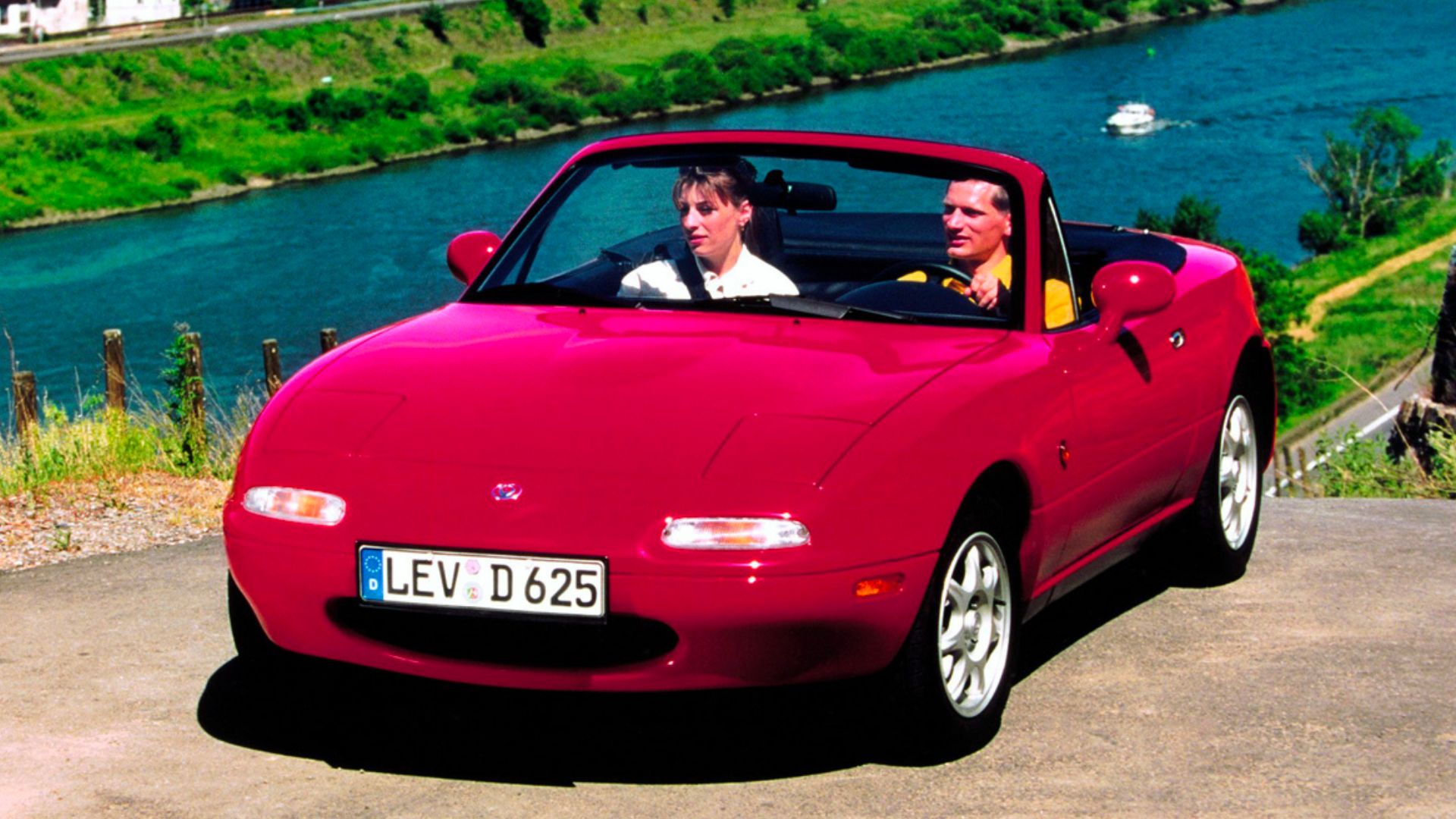
The 1989 Mazda MX-5 Miata arrived at the end of the 1980s as a refreshing return to simple, lightweight sports car principles, reviving the classic British roadster idea with Japanese engineering reliability. Rather than chasing extreme horsepower or complex technology, Mazda focused on balance, purity, and accessibility. The result was a compact, rear-wheel-drive convertible built around the philosophy of “jinba ittai,” meaning unity between driver and car.
At its core, the Miata uses a modest 1.6-liter twin-cam four-cylinder engine producing 116 horsepower. While not powerful by performance standards, its low weight of roughly 2,100 pounds allows it to feel lively and responsive in real-world driving. Acceleration is respectable for the era, with a sub-9-second 0 to 60 mph time, but the real appeal lies in how naturally the engine delivers power and encourages rev-happy driving.
The chassis plays a major role in its reputation. A near-perfect 50:50 weight distribution, double wishbone suspension at all four corners, and carefully tuned bushings give the Miata exceptional balance and predictability. Drivers can gradually explore its limits with confidence, as the car remains stable and communicative even when pushed. Its handling is neutral at first, with mild understeer that can transition into controllable oversteer using throttle input.
One of the Miata’s standout features is its manual five-speed gearbox. With short, precise throws and light effort, it encourages frequent shifting simply for enjoyment. The steering is light and direct enough for city use, while still providing enough feedback for spirited backroad driving.
Design-wise, the Miata combines nostalgia and simplicity. Pop-up headlights, smooth body lines, and a compact roadster profile give it instant visual charm. Inside, the cabin is straightforward and functional, with supportive seats, clear gauges, and thoughtful ergonomics. Despite its small size, it accommodates taller drivers comfortably and provides decent storage for daily use.
Practical usability also extends to its convertible roof, which is easy to operate manually and allows open-air driving at a moment’s notice. Ride comfort is firm but manageable, and wind protection is better than many earlier roadsters.
The Miata’s combination of affordability, reliability, engaging dynamics, and everyday usability made it a global success. It redefined what an entry-level sports car could be, offering driving enjoyment without requiring excessive speed or cost.
Also read: 10 Cars Where the Lease Penalty Costs More Than the Down Payment
6. Toyota Sprinter Trueno AE86 (1985)
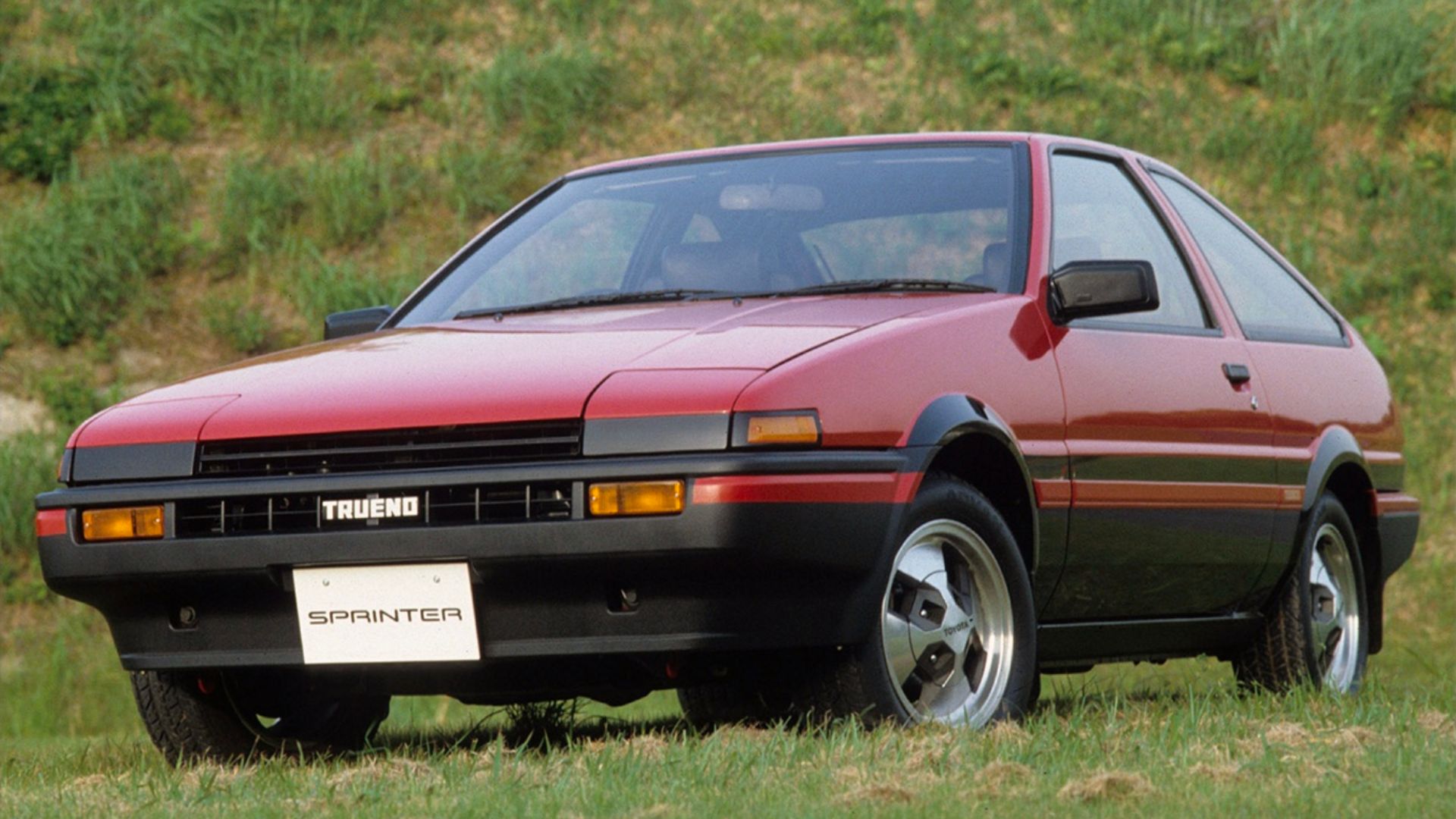
The 1985 Toyota Sprinter Trueno AE86 became a defining figure in automotive history not through outright speed, but through balance, simplicity, and driver engagement. Built on a lightweight rear-wheel-drive platform, it delivered a pure and predictable driving experience that made it especially effective for learning control at the limit. Its reputation eventually grew far beyond Japan, becoming a global symbol of grassroots performance and the foundation of modern drifting culture.
At the heart of the AE86 is the 1.6-liter 4A-GE twin-cam inline-four engine. Producing roughly 112 to 128 horsepower depending on specification, it may appear modest, but its character is defined by high-revving performance and responsiveness. With a 7,800 rpm redline, the engine encourages drivers to stay in the upper rev range, where it feels most alive. Paired with a lightweight body weighing around 900 to 1,000 kilograms, the powertrain delivers energetic real-world performance despite its small output.
The chassis is what truly defines the AE86. Its near 50:50 weight distribution, compact dimensions, and rear-wheel-drive layout create a naturally balanced platform. Suspension tuning allows predictable transitions at the limit, and when traction is broken, the car responds progressively, making it ideal for controlled oversteer. Drivers can influence the car’s behavior easily using throttle input, a key reason it became so influential in drifting.
Inside, the AE86 reflects 1980s Japanese simplicity. The cabin is functional, with clear gauges, straightforward controls, and good outward visibility. Higher trims like the GT-Apex add supportive sport seats and a more refined feel, while the three-door liftback design provides surprising practicality for a sports-oriented coupe.
Beyond its mechanical strengths, the AE86’s cultural impact is immense. It was instrumental in the rise of drifting in Japan, popularized by driver Keiichi Tsuchiya. Its global fame expanded further through the anime Initial D, where it became a legendary symbol of street racing spirit. It also proved competitive in touring car and rally disciplines, demonstrating versatility beyond street use.
Today, the AE86 is valued as much for its driving purity as for its cultural legacy. While it is slow by modern standards and increasingly expensive due to collector demand, it remains one of the most respected driver’s cars ever built, celebrated for its direct connection between machine and driver.
7. Buick GNX (1987)
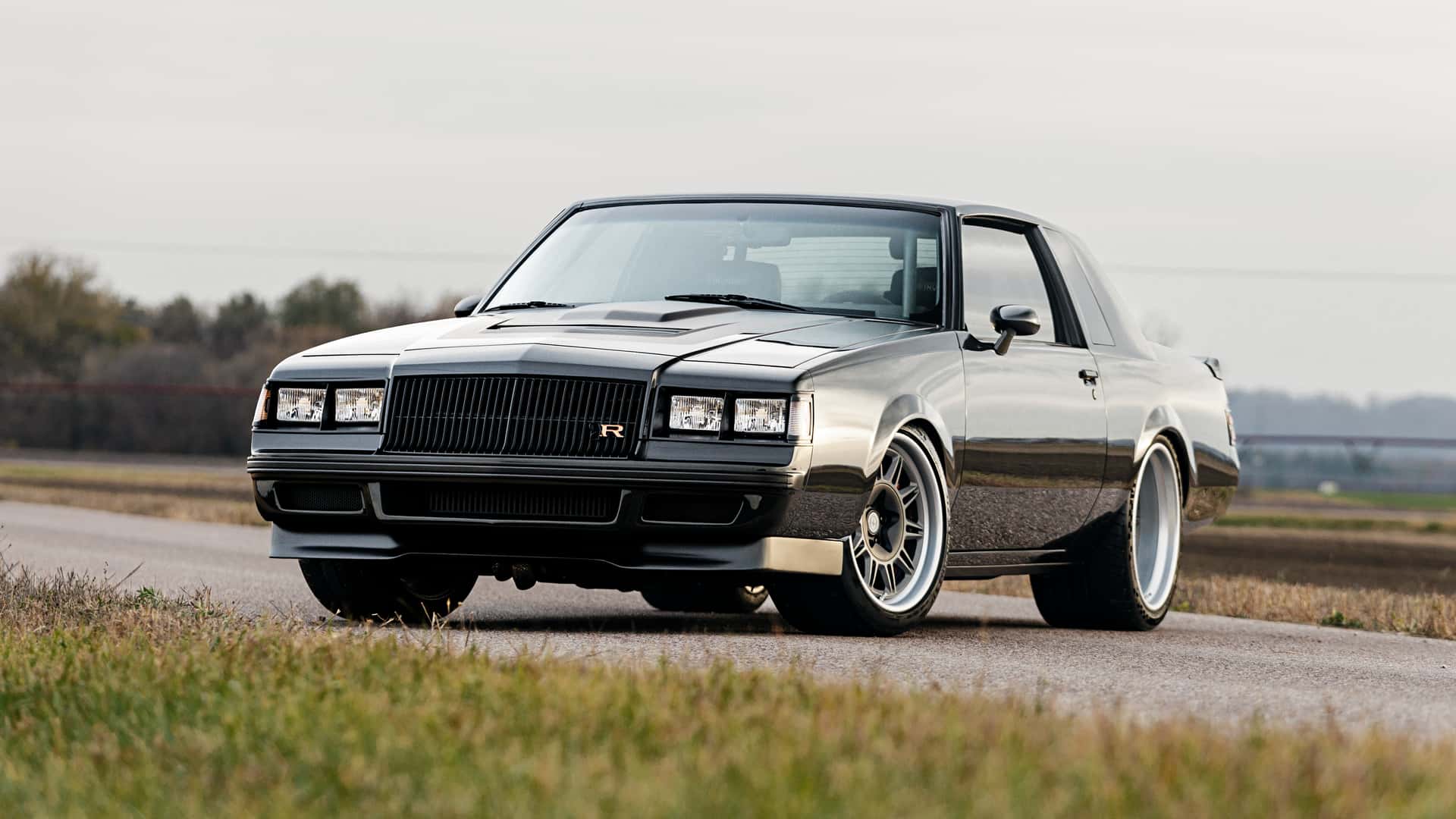
The 1987 Buick GNX stands as one of the most intimidating and unconventional performance cars of the 1980s, earning its reputation as a “sleeper” that could embarrass exotic European sports cars while wearing the appearance of a conservative luxury coupe. Based on the Grand National and developed in partnership with ASC/McLaren, it represented the final and most extreme evolution of Buick’s turbocharged performance experiment.
At its core, the GNX used a heavily modified 3.8-liter turbocharged V6 engine. Officially rated at 276 horsepower and 360 lb-ft of torque, the output was intentionally understated, with real-world figures exceeding 300 horsepower. This engine featured upgrades such as a larger ceramic-turbine turbocharger, improved intercooling, revised engine management, and increased boost pressure. The result was explosive acceleration, with 0 to 60 mph times of around 4.7 seconds, placing it in direct competition with much more expensive performance cars of the era.
ASC/McLaren’s engineering contributions extended beyond the engine. The transmission was recalibrated for aggressive shift behavior, while the rear suspension was redesigned with a torque arm and reinforced axle setup to better handle the sudden surge of turbocharged power. Wider performance tires and flared bodywork improved grip, though the chassis still struggled to fully contain the engine’s output at higher speeds.
Stylistically, the GNX embraced a deliberately sinister aesthetic. Finished exclusively in black, it featured functional fender vents, subtle aerodynamic modifications, black mesh wheels, and an aggressive stance that reinforced its “Darth Vader” nickname. Inside, the cabin contrasted its exterior with a more traditional layout highlighted by performance-focused Stewart-Warner analog gauges.
Despite its raw speed, handling remained its weakest area. The GNX excelled in straight-line acceleration but felt unsettled on rough or winding roads, exposing the imbalance between its powerful drivetrain and older platform design.
Production was extremely limited, with only 547 units built, making it an instant collector’s item. Today, the GNX is remembered not only for its performance but also for challenging assumptions about American muscle cars. It proved that a turbocharged V6, when properly engineered, could rival and even outperform the era’s most celebrated sports cars while retaining an unassuming exterior.
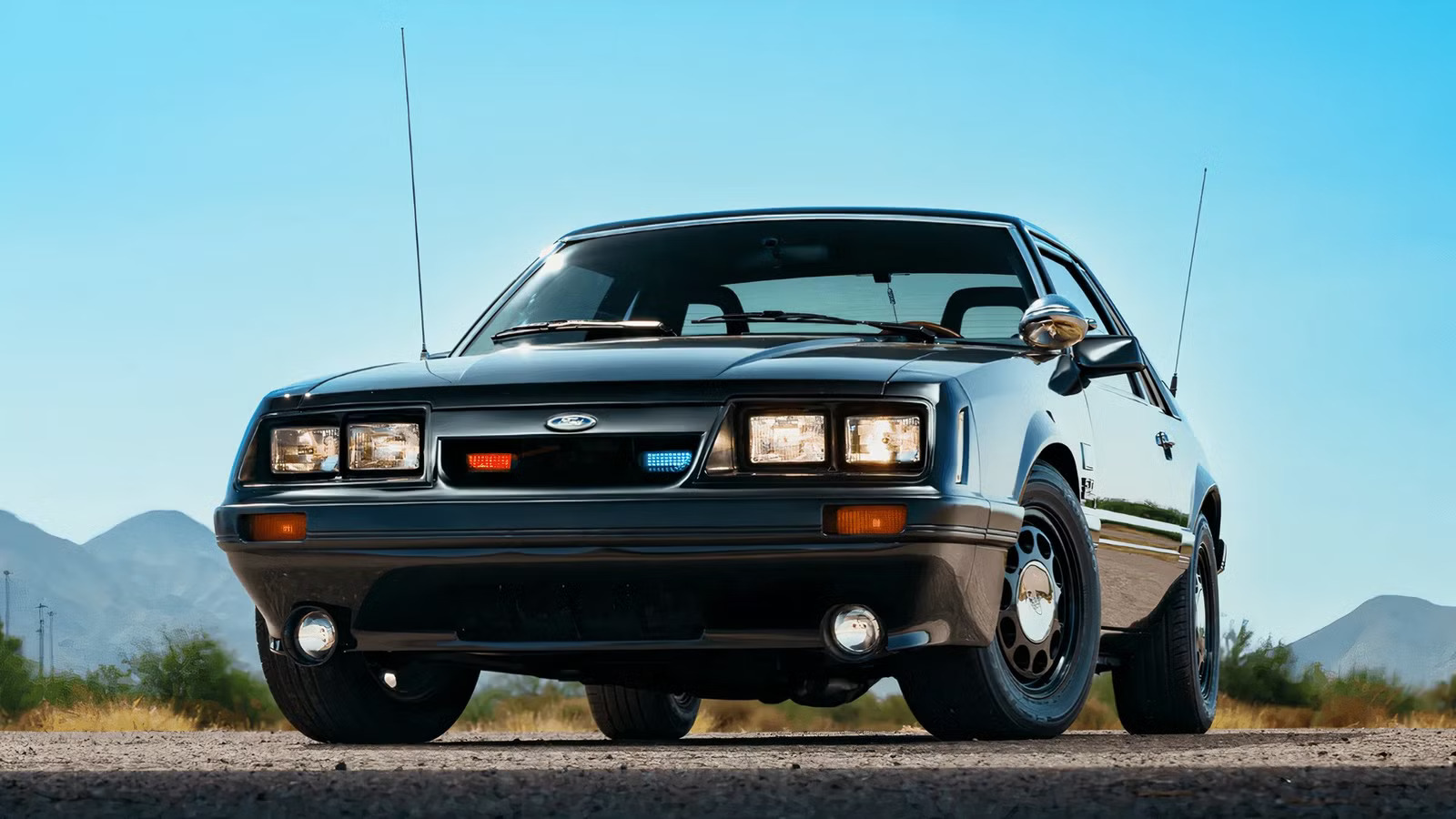
8. Ford Mustang GT 5.0 Fox Body (1987)
The 1987 Ford Mustang GT 5.0 marked a major revival for American performance cars, transforming the Fox Body Mustang into an affordable, high-volume muscle icon. With its refreshed aerodynamic styling and upgraded drivetrain, it became one of the most influential performance cars of the late 1980s, helping preserve the V8 muscle tradition during an era of tightening emissions standards.
Power came from the legendary 5.0-liter High Output V8, a 302-cubic-inch engine revised with improved cylinder heads, a larger throttle body, and updated tuning. Output rose to 225 horsepower and 300 lb-ft of torque, delivered directly to the rear wheels. While these numbers may seem modest today, the engine’s real strength was its immediate low-end torque, allowing strong launches and quarter-mile times in the high-13 to low-14 second range in stock form. However, it tended to lose breath at higher RPMs, favoring street torque over high-revving performance.
The Fox Body chassis offered a lightweight platform that enhanced straight-line speed and made the car highly receptive to modifications. Suspension updates improved handling compared to earlier models, but body roll and rear-end instability remained noticeable when pushed hard. Braking performance was a weak point, with front discs and rear drums struggling under repeated hard use, often requiring upgrades for spirited driving.
Styling changes in 1987 modernized the Mustang’s appearance. The new aero front end, integrated body skirts, and revised taillight design gave it a sleeker, more contemporary look. Inside, Ford introduced a more focused cockpit layout with improved instrumentation and supportive bucket seats, although rear passenger space remained limited.
One of the Mustang GT’s greatest strengths was its mechanical durability and enormous aftermarket support. The 5.0-liter V8 proved highly reliable, while the platform became one of the most customizable in automotive history, supporting everything from mild street builds to serious drag racing machines.
The 1987 Mustang GT ultimately became a cornerstone of American performance culture. It delivered accessible V8 power, strong real-world performance, and limitless tuning potential, securing its place as one of the most important muscle cars of its era.
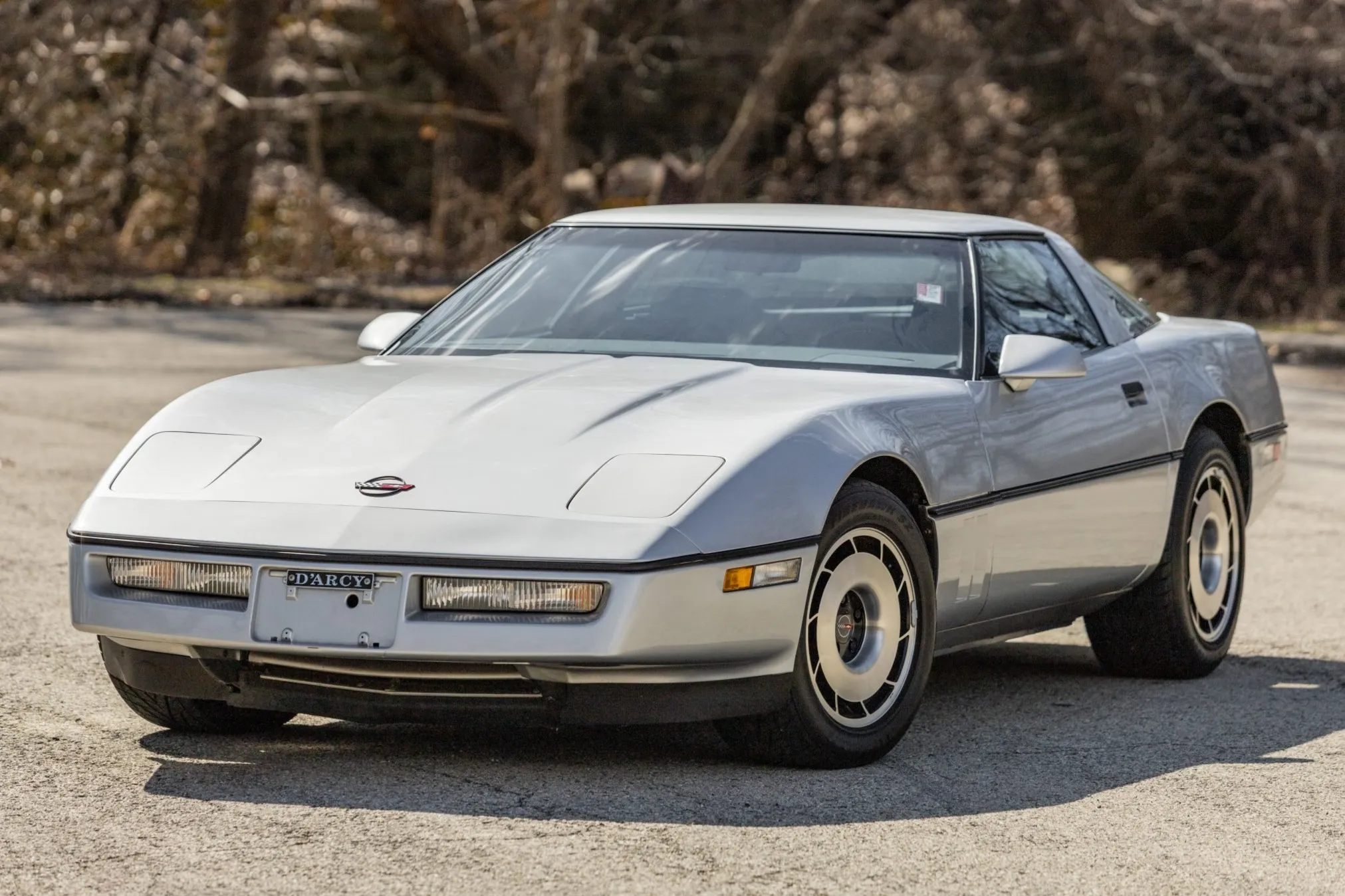
9. Chevrolet Corvette C4 (1984)
The 1984 Chevrolet Corvette C4 marked a major transformation for America’s most famous sports car, replacing outdated styling and chassis design with a sharp, futuristic package aimed at competing directly with Europe’s best. Built around a rigid uniframe structure and a lightweight, fully independent suspension system, the C4 introduced a level of engineering precision that dramatically improved handling stability and cornering grip. Its wedge-shaped body, pop-up headlights, and one-piece clamshell hood gave it a clean, aerodynamic look that reflected the technological optimism of the 1980s.
One of its most distinctive features was the fully digital dashboard, which used multi-colored LCD displays and bar graphs to present speed, engine data, and performance readouts. This sci-fi inspired cockpit became a defining visual element of the car, even if it felt unconventional compared to traditional analog gauges.
Power came from a 5.7-liter Cross-Fire injected V8 producing around 205 horsepower. While not exceptional in straight-line terms, the engine delivered strong drivability and helped the C4 reach about 140 mph, with 0 to 60 mph times under seven seconds in early testing. Its performance was matched by impressive braking capability, using a four-wheel disc system that delivered short stopping distances for its era.
Where the C4 truly stood out was in handling. It was capable of exceeding 0.90 g on the skidpad, placing it in genuine supercar territory for lateral grip. Its suspension geometry, forged aluminum components, and performance-focused Z51 package gave it precise steering response and the ability to maintain composure through high-speed corners. Drivers could confidently explore the car’s limits, with predictable understeer at the edge and strong stability under load.
Inside, the C4 offered improved ergonomics, more cabin space, and supportive sport seats with multiple adjustments. The removable targa roof added open-air flexibility without sacrificing structural rigidity.
Despite its strengths, the Corvette C4 was not perfect. Early models were relatively heavy, the interior materials were basic, and the transmission felt dated. However, its combination of futuristic design, advanced chassis engineering, and accessible performance redefined the Corvette formula. It re-established the model as a serious global sports car contender and set the foundation for future generations of American performance cars.
10. Volkswagen Golf GTI (1983)
The 1983 Volkswagen Golf GTI marked a turning point in performance car history by creating the blueprint for the “hot hatch” segment. It combined everyday practicality with genuine driving excitement, proving that a compact family hatchback could also deliver sports car-like engagement without high cost or complexity. This balance made it one of the most influential cars of the 1980s and a template that competitors quickly tried to replicate.
At its core, the GTI used a fuel-injected 1.8-liter four-cylinder engine producing around 90 horsepower. While modest by modern standards, its lightweight construction, just over 2,100 pounds, allowed it to feel lively and responsive. Acceleration from 0 to 60 mph took under 10 seconds, which was competitive for small performance cars of its time. The engine was eager to rev and worked best when driven with intent, rewarding active driver involvement rather than effortless speed.
The driving experience was defined by agility and balance. A lowered and stiffened suspension, along with anti-roll bars and ventilated front discs, gave the GTI sharp cornering ability and predictable handling. Its front-wheel-drive layout made it stable and approachable, while still allowing playful, controlled dynamics on winding roads. Steering feel was heavier than modern cars but provided strong feedback, adding to the sense of connection between driver and machine.
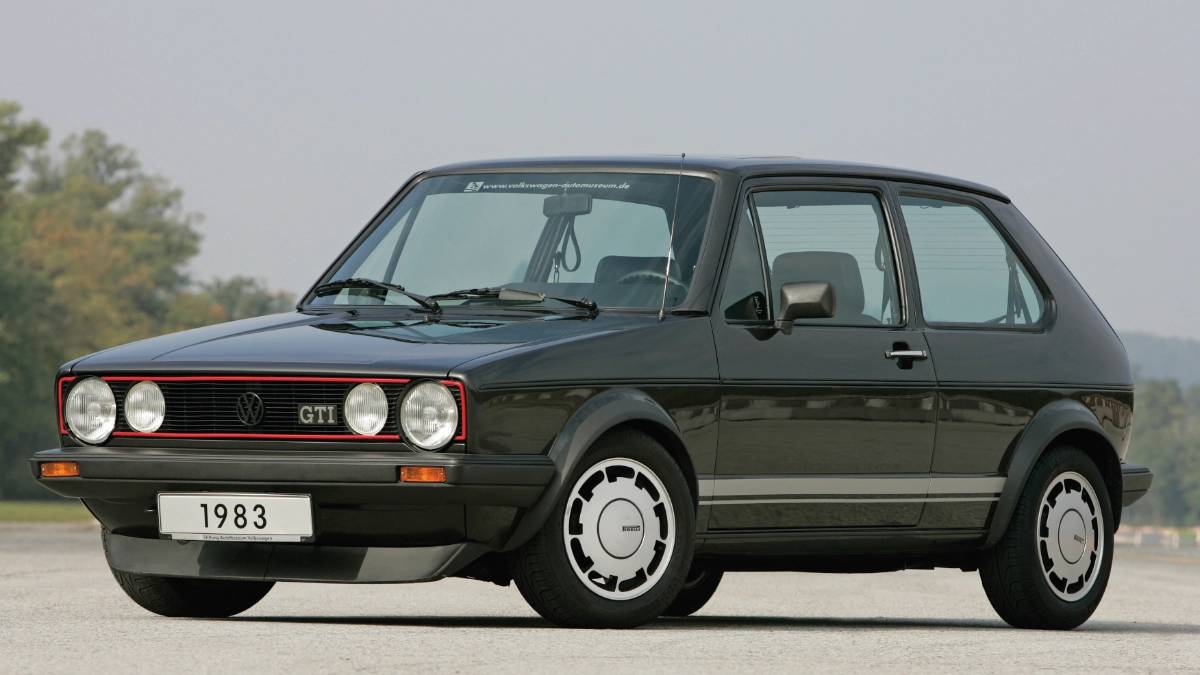
Styling played a key role in its identity. Subtle but purposeful details like red grille accents, flared arches, and a front spoiler gave it a sporty character without excessive aggression. Inside, tartan cloth sport seats and the signature golf-ball gear shifter reinforced its playful yet functional personality. Despite its performance focus, the GTI remained a practical five-door hatchback with strong usability, fuel efficiency, and everyday comfort.
The GTI’s greatest achievement was redefining what a performance car could be. It showed that excitement did not require exotic pricing or impractical design. Instead, it delivered a complete package that blended fun, accessibility, and reliability. This formula not only created a new segment but also influenced decades of future performance hatchbacks, securing the Golf GTI’s legacy as a foundational icon of modern driving enjoyment.
Also read: 5 Cars That’ll Cost You Under $400/Month