
For decades, the Ford Mustang has represented raw American muscle, affordable speed, and a rebellious spirit that refuses to fade. Ferrari, on the other hand, has long been viewed as the ultimate symbol of exotic European performance, combining precision engineering with breathtaking design and race-inspired technology.
Traditionally, these two automotive icons existed in very different worlds. Ferrari catered to wealthy collectors and elite enthusiasts, while the Mustang delivered accessible performance to the average driver. Yet modern performance engineering has dramatically narrowed the gap between muscle cars and supercars. In some cases, the gap has disappeared entirely.
Today’s most powerful Mustangs are not just fast for muscle cars. They are genuinely capable of outrunning several stock Ferraris in straight-line acceleration, quarter-mile times, and even top speed runs.
Thanks to supercharged V8 engines, advanced aerodynamics, upgraded suspension systems, and cutting-edge transmission technology, Ford has transformed the Mustang into a legitimate supercar hunter.
Certain Mustang variants can accelerate harder than Ferraris, costing three or four times as much. Others dominate drag strips with astonishing horsepower figures that embarrass exotic rivals. Even heavily modified street-legal Mustangs have proven that American engineering can challenge the best performance machines from Italy.
What makes these Mustangs especially fascinating is the variety they bring to the table. Some rely on factory-backed engineering from Ford and Shelby American, while others achieve insane speed through aftermarket tuning and forced induction upgrades.
Several models are designed primarily for track performance, while others focus on straight-line acceleration and drag racing dominance. Regardless of their purpose, every Mustang on this list has one thing in common. They have the capability to outrun at least one stock Ferrari under the right conditions.
This article explores nine extraordinary Mustangs that shattered expectations and proved that raw American muscle can compete with elite European exotics. Each section examines performance figures, engine specifications, driving characteristics, and the specific Ferraris these Mustangs can outperform.
From legendary Shelby models to modern supercharged monsters, these cars showcase just how far the Mustang platform has evolved. Enthusiasts who once viewed Ferraris as untouchable performance kings may be surprised to discover how many Mustangs now stand toe to toe with the world’s most celebrated Italian supercars.
Also Read: 10 Cars Owners Routinely Drive Past 350,000 Miles
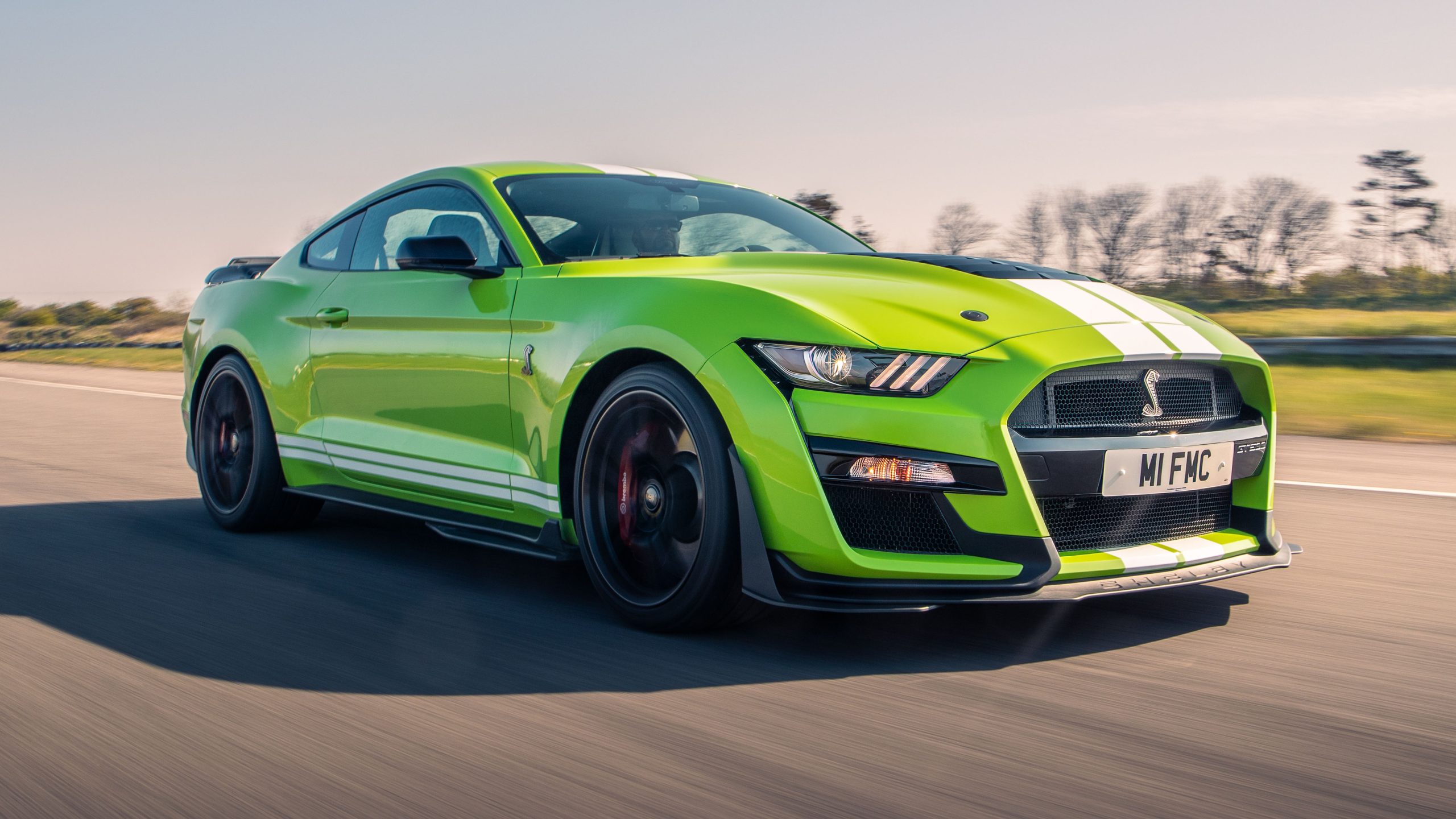
- Engine: 5.2 liter supercharged V8 (Predator)
- Horsepower: 760 hp
- Torque: 625 lb ft (847 Nm)
- Length: ~4,811 mm
- Width: ~1,916 mm (without mirrors)
1. Shelby GT500
The modern Shelby GT500 is perhaps the clearest example of a Mustang capable of humiliating exotic supercars. Powered by a supercharged 5.2-liter Predator V8 engine, the GT500 produces a staggering 760 horsepower and 625 lb ft of torque. Those figures alone place it firmly within supercar territory. Equipped with a lightning-fast seven-speed dual-clutch transmission, the GT500 launches with astonishing violence and can reach 60 mph in roughly 3.3 seconds.
What makes the GT500 especially impressive is how it compares directly with modern Ferraris. In many independent performance tests, the GT500 has matched or beaten cars like the Ferrari Portofino and Ferrari California T in straight-line acceleration.
The dual clutch gearbox shifts with incredible speed, eliminating the slow gear changes that once held muscle cars back against European rivals. Combined with massive Michelin Pilot Sport Cup 2 tires, the GT500 delivers traction levels previously unimaginable for a front-engine American coupe.
The aerodynamic design also contributes heavily to its performance capabilities. Large front air intakes, an aggressive rear spoiler, and functional cooling systems allow the GT500 to maintain stability at high speeds.
Optional carbon fiber handling packages further sharpen the car’s track performance. While Ferraris traditionally dominated road courses due to superior balance and handling precision, the GT500 has become shockingly competent in corners as well.
One reason enthusiasts admire the GT500 is its value proposition. A Ferrari capable of similar acceleration often costs several hundred thousand dollars. The GT500 achieves comparable straight-line speed at a fraction of the price.
This affordability has helped redefine public perception of American performance cars. No longer viewed as crude machines built only for drag racing, modern Mustangs like the GT500 have proven they can challenge elite supercars in multiple environments.
The GT500 also possesses an intimidating personality that distinguishes it from Ferrari models. The supercharged V8 produces a thunderous exhaust note that feels unapologetically aggressive. Ferrari engines are often praised for their high-revving sophistication, but the GT500 counters with brute force and relentless torque delivery. It represents a uniquely American interpretation of high-performance engineering, and it does so with enough speed to outrun several stock Ferraris.
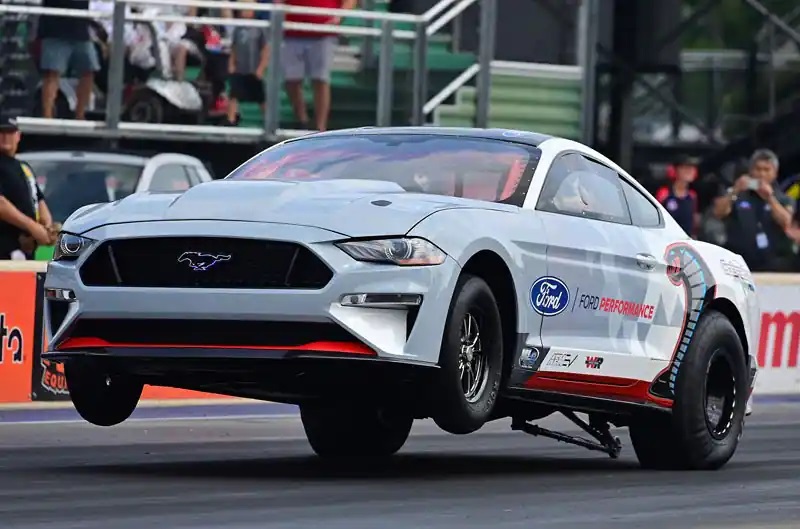
- Engine: Fully electric drag racing powertrain (no combustion engine)
- Horsepower: 1400+ hp (electric equivalent output)
- Torque: Not officially fixed, instant electric torque (estimated 1,100+ lb ft)
- Length: Based on Mustang body, ~4,780 mm
- Width: ~1,880 mm
2. Ford Mustang Cobra Jet 1400
The Mustang Cobra Jet 1400 represents the future of American drag racing performance. Unlike traditional V8-powered Mustangs, this machine uses fully electric propulsion to generate more than 1400 horsepower. Built specifically for drag racing, the Cobra Jet 1400 demonstrates how electric technology can deliver performance levels beyond many exotic supercars.
Acceleration is where the Cobra Jet 1400 becomes truly astonishing. This electric monster can complete the quarter mile in the low eight-second range while exceeding 170 mph. No stock Ferrari currently sold can match those drag strip numbers. Even some of Ferrari’s most advanced hybrid hypercars struggle to compete against the immediate torque delivery of the Cobra Jet 1400.
Electric motors provide instant power without waiting for revs to climb or turbos to spool. The result is explosive acceleration from a complete standstill. Traditional Ferraris rely heavily on high-revving engines and sophisticated gearboxes to achieve maximum performance. The Cobra Jet 1400 bypasses those limitations entirely by delivering brutal acceleration the moment the driver touches the throttle.
Ford developed the Cobra Jet 1400 partly to showcase the future possibilities of electric performance vehicles. While many enthusiasts feared electrification would eliminate excitement from performance cars, this Mustang proved otherwise.
The violent launches and jaw-dropping quarter-mile times generated enormous enthusiasm within the racing community. It also highlighted Ford’s willingness to innovate while preserving the Mustang’s performance legacy.
Although the Cobra Jet 1400 is not a street-legal production car, it deserves recognition because of its extraordinary capabilities. It demonstrates that the Mustang platform remains adaptable and relevant even in the era of electrification.
Ferrari continues developing hybrid systems for improved efficiency and performance, but Ford’s electric Cobra Jet already illustrates how devastating electric acceleration can become. Against stock Ferraris in a drag race, the Cobra Jet 1400 would leave many Italian exotics struggling to keep up.
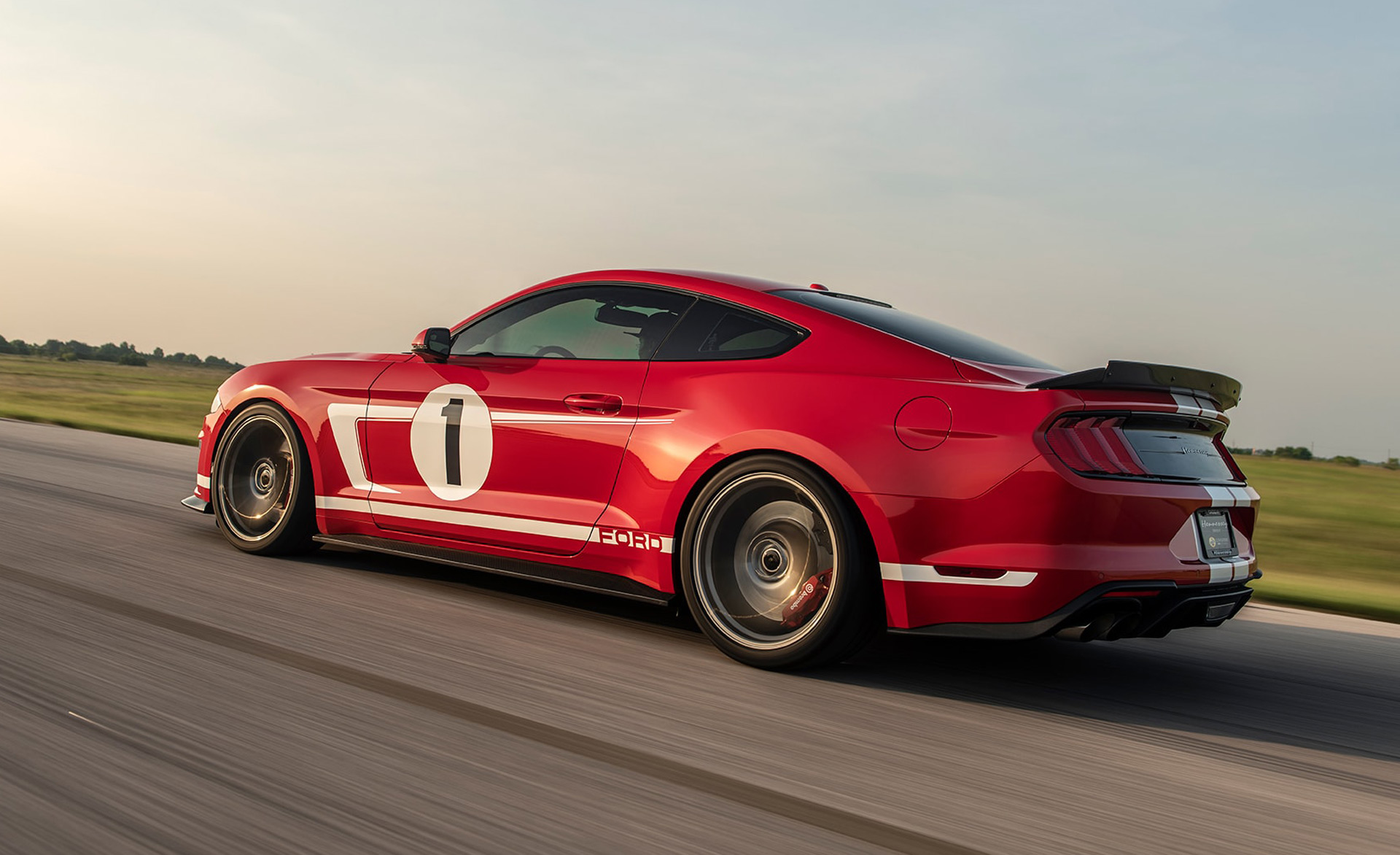
- Engine: 5.0 liter V8 with supercharger upgrade
- Horsepower: ~808 hp
- Torque: ~677 lb ft (918 Nm)
- Length: ~4,780 mm
- Width: ~1,915 mm
3. Hennessey Heritage Edition Mustang
Hennessey Performance Engineering has built some of the fastest American cars ever created, and the Heritage Edition Mustang stands among its most outrageous achievements. This heavily upgraded Mustang produces over 800 horsepower thanks to extensive modifications that include a supercharger system, upgraded fuel delivery, and enhanced engine internals.
The Heritage Edition Mustang can accelerate from 0 to 60 mph in under 3.5 seconds and complete the quarter mile in approximately 10.7 seconds. Those numbers place it firmly ahead of several stock Ferrari grand touring models. The combination of massive power and lightweight modifications transforms the Mustang into an absolute rocket in straight-line contests.
One of the defining characteristics of Hennessey vehicles is their relentless focus on power delivery. While Ferrari engineers prioritize balanced handling and refined driving dynamics, Hennessey embraces raw acceleration.
The Heritage Edition Mustang feels brutally fast under full throttle, with immense torque pinning occupants into their seats. This aggressive personality appeals strongly to enthusiasts who value pure speed above all else.
The visual styling also enhances the car’s appeal. Unique heritage-inspired graphics, upgraded wheels, and aerodynamic improvements create a distinctive appearance that separates it from ordinary Mustangs. Despite its enhanced performance, the car retains much of the Mustang’s traditional muscle car identity. It remains loud, aggressive, and unapologetically American.
Ferrari models may offer greater exclusivity and exotic styling, but the Hennessey Heritage Edition Mustang proves that aftermarket engineering can create astonishing performance machines capable of embarrassing expensive European sports cars.
In drag racing scenarios and highway acceleration runs, this Mustang can outperform Ferraris that cost significantly more. It highlights the incredible tuning potential of the Mustang platform and demonstrates why American muscle remains a serious force in the performance world.
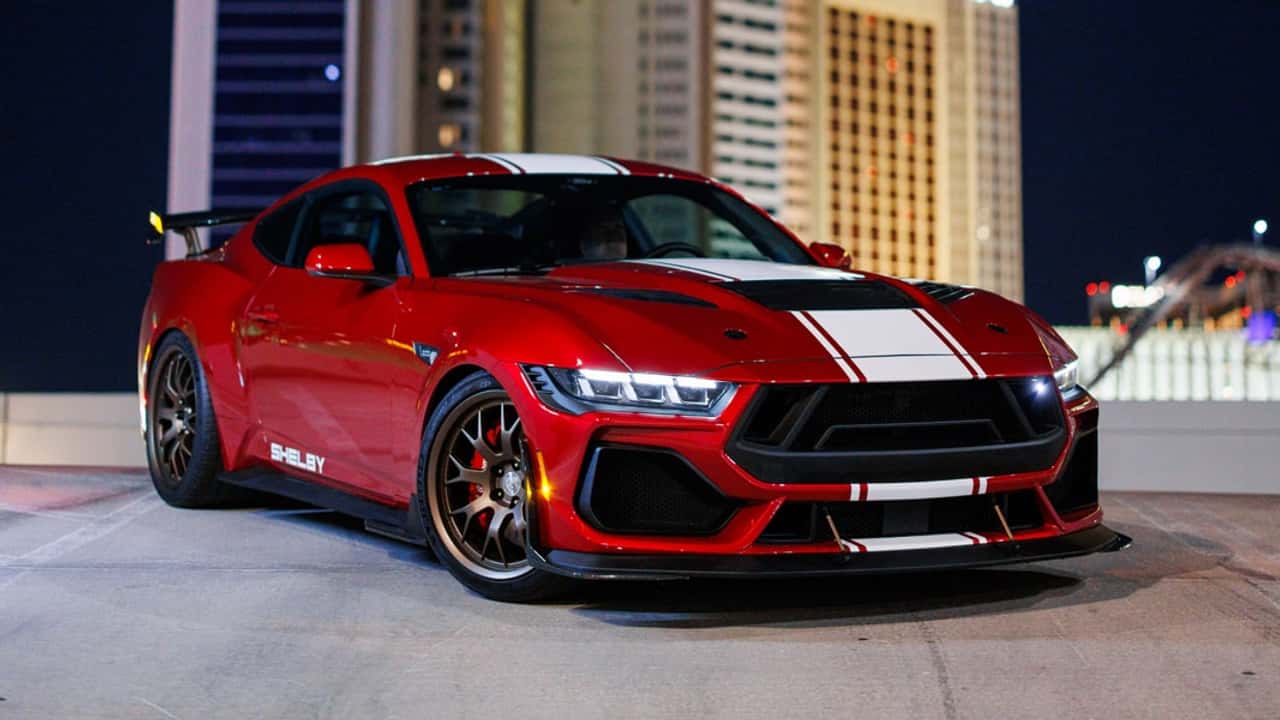
- Engine: 5.0 liter V8 (supercharged)
- Horsepower: 825+ hp
- Torque: ~600–650 lb ft (varies by setup)
- Length: ~4,780 mm
- Width: ~1,915 mm
4. Shelby Super Snake
The Shelby Super Snake has become legendary among Mustang enthusiasts for combining outrageous horsepower with street-legal usability. Depending on configuration, the Super Snake can produce over 825 horsepower from its supercharged V8 engine. That immense output enables performance figures rivaling elite European supercars.
Acceleration is ferocious. The Super Snake launches aggressively and storms through the quarter mile with remarkable speed. Many Ferrari models, especially older naturally aspirated variants, struggle to keep pace with the Super Snake in straight-line acceleration. The massive torque generated by the supercharged engine gives the Mustang a decisive advantage during rolling races and highway pulls.
Shelby American also upgrades suspension components, brakes, cooling systems, and aerodynamics to ensure the car remains manageable despite its extreme power. Earlier generations of high-horsepower muscle cars often suffered from poor handling and excessive wheelspin. The modern Super Snake addresses those weaknesses with advanced chassis tuning and high-performance tires.
The emotional appeal of the Super Snake cannot be ignored either. It combines classic American muscle styling with modern engineering sophistication. The aggressive hood vents, racing stripes, and thunderous exhaust note create an unforgettable presence on the road. Ferraris may attract attention through elegance and exclusivity, but the Super Snake commands respect through sheer intimidation.
Another reason the Super Snake stands out is its versatility. Unlike purpose-built drag racers, this Mustang remains comfortable enough for street driving while still delivering astonishing acceleration. Owners can cruise casually through city streets one moment and outrun exotic supercars the next. This dual personality contributes heavily to the car’s popularity among performance enthusiasts.
When compared against stock Ferraris such as the Ferrari California or older F430 models, the Shelby Super Snake often emerges victorious in acceleration contests. Its overwhelming horsepower and torque allow it to dominate many real-world racing situations. It represents the ultimate evolution of traditional supercharged American muscle.
- Engine: 5.0 liter V8 with supercharger
- Horsepower: ~800 hp
- Torque: ~630–640 lb ft
- Length: ~4,780 mm
- Width: ~1,915 mm
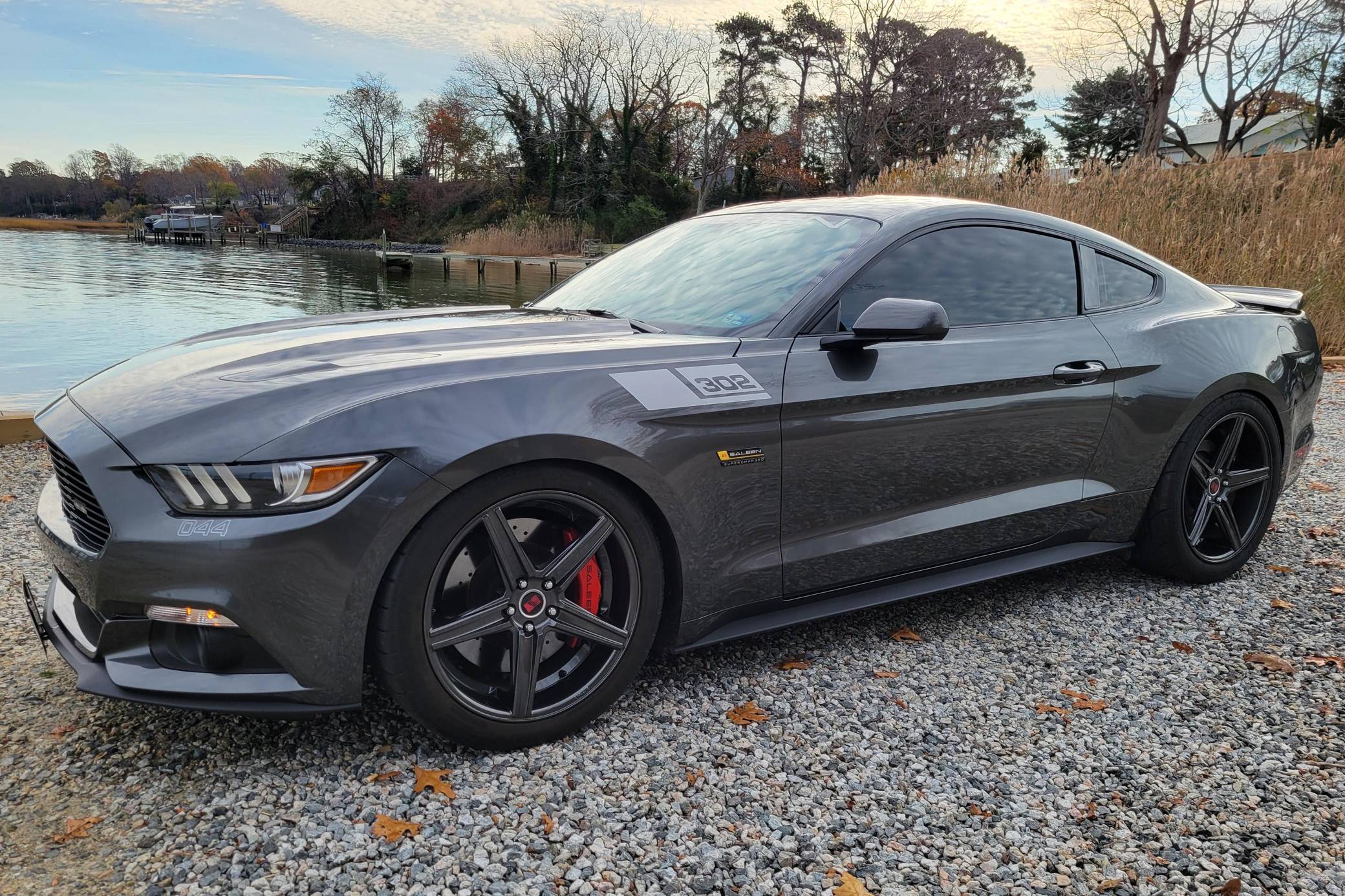
5. Saleen S302 Black Label Mustang
Saleen has long been associated with high-performance Mustangs, and the S302 Black Label represents one of the company’s most extreme creations. Equipped with a supercharged 5.0-liter V8 producing approximately 800 horsepower, the S302 Black Label transforms the Mustang into a serious supercar competitor.
Performance figures are deeply impressive. The S302 Black Label can accelerate from 0 to 60 mph in the mid-three-second range while delivering brutal midrange acceleration. Against several stock Ferraris, especially entry-level grand touring models, the Saleen Mustang proves shockingly competitive.
Saleen engineers focus heavily on balance and drivability rather than raw horsepower alone. The suspension receives substantial upgrades that improve cornering stability and steering response.
Aerodynamic enhancements help maintain high-speed composure, while upgraded brakes ensure reliable stopping power. These improvements allow the S302 Black Label to perform confidently beyond straight-line racing scenarios.
The styling of the Black Label Mustang also deserves praise. Aggressive bodywork, functional aerodynamic components, and custom wheels create a distinctive appearance that feels both modern and intimidating. Unlike some heavily modified muscle cars that appear overly exaggerated, the Saleen maintains a refined yet aggressive aesthetic.
One key advantage of the S302 Black Label is exclusivity. Production numbers remain relatively limited compared to standard Mustangs, giving the car a special appeal among collectors and enthusiasts. Ferraris are often admired partly because of their rarity, and Saleen achieves a similar sense of uniqueness within the Mustang community.
In real-world acceleration contests, the Saleen S302 Black Label can outperform Ferraris like the California T and older 458 Italia models under certain conditions. Its immense power output and carefully tuned chassis create a thrilling driving experience capable of rivaling far more expensive European exotics. It proves once again that the Mustang platform can evolve far beyond its traditional muscle car roots.
Also Read: 8 SUVs Where Owners Hit 500,000 Without Major Repairs
- Engine: 5.0 liter V8 supercharged
- Horsepower: ~750 hp
- Torque: ~610–630 lb ft
- Length: ~4,780 mm
- Width: ~1,950 mm (widebody)
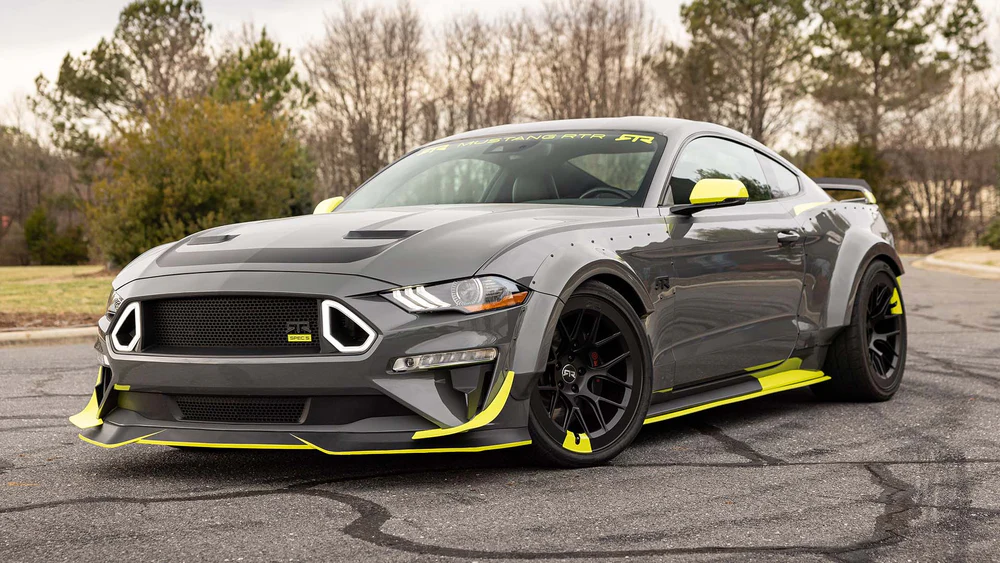
6. RTR Spec 5 Mustang
The RTR Spec 5 Mustang combines aggressive styling with extraordinary performance engineering. Developed with input from professional drift driver Vaughn Gittin Jr., the RTR lineup emphasizes driver engagement and raw excitement. The Spec 5 sits at the top of the range with over 750 horsepower generated by a supercharged V8 engine.
Unlike some Mustangs focused purely on drag racing, the RTR Spec 5 balances straight-line speed with remarkable handling capability. Upgraded suspension geometry, advanced dampers, and performance tires give the car impressive cornering confidence.
While Ferraris traditionally excel in handling precision, the RTR demonstrates that modern Mustangs can become surprisingly agile performance machines.
Acceleration remains deeply impressive. The Spec 5 launches aggressively and delivers relentless power throughout the rev range. Against several stock Ferrari GT models, the RTR can achieve faster acceleration and quarter mile times. The supercharged torque creates an immediate surge of speed that feels incredibly dramatic behind the wheel.
Design plays a major role in the RTR’s identity. Unique lighting elements, wide body styling, and aggressive aerodynamic enhancements create a visually striking package. The car looks purpose-built for high-performance driving, and its appearance matches the intensity of its capabilities.
Another fascinating aspect of the RTR Spec 5 is its versatility across different driving disciplines. It performs effectively on road courses, drift circuits, and drag strips alike. Ferraris are often engineered with specific performance priorities, but the RTR embraces a more diverse performance philosophy. This adaptability makes it especially appealing to enthusiasts seeking a car capable of multiple forms of motorsport excitement.
The RTR Spec 5 showcases how far aftermarket Mustang engineering has progressed. Once dismissed as simple, straight-line machines, modern Mustangs can now challenge Ferraris not only in acceleration but also in handling and driver engagement. The RTR represents a new generation of American performance philosophy that combines muscle car aggression with refined chassis engineering.
- Engine: 5.0 liter V8 supercharged
- Horsepower: ~750 hp
- Torque: ~670 lb ft (907 Nm)
- Length: ~4,780 mm
- Width: ~1,915 mm
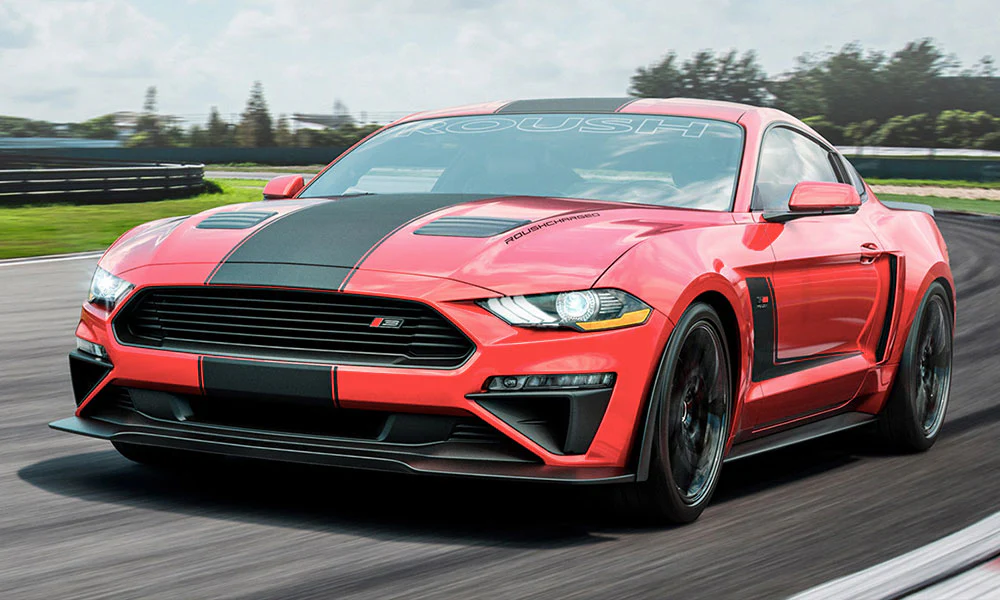
7. Roush Stage 3 Mustang
Roush Performance has spent decades refining Mustangs into high-performance street machines, and the Stage 3 Mustang stands among its greatest achievements. Powered by a supercharged 5.0-liter V8 producing more than 750 horsepower, the Stage 3 delivers performance capable of rivaling exotic European sports cars.
The car’s acceleration is explosive. Massive low-end torque combined with advanced transmission tuning enables rapid launches and brutal highway acceleration. In many real-world racing situations, the Roush Stage 3 can outrun Ferraris such as the California and Portofino. The car’s immense torque advantage becomes especially noticeable during rolling acceleration contests.
Roush engineers also prioritize drivability and reliability. Unlike some aftermarket builds that sacrifice comfort for extreme performance, the Stage 3 remains practical enough for daily driving. Interior upgrades add refinement, while suspension tuning preserves ride quality without compromising handling capability.
Aerodynamic enhancements further improve the car’s high-speed behavior. Front splitters, rear spoilers, and functional cooling systems help maintain stability during aggressive driving. Combined with upgraded brakes and chassis components, these modifications create a well-rounded performance package.
The exhaust note of the Roush Stage 3 deserves special mention as well. The supercharged V8 produces an aggressive soundtrack filled with deep growls and mechanical intensity. Ferraris often captivate enthusiasts with high-pitched exotic engine notes, but the Roush counters with a thunderous American muscle symphony that feels equally emotional in a completely different way.
Perhaps most importantly, the Stage 3 Mustang demonstrates the enduring appeal of supercharged American V8 performance. Even as hybrid and electric technologies become increasingly common, there remains something deeply satisfying about massive displacement and instant torque. The Roush Stage 3 embraces that philosophy completely while delivering enough speed to challenge respected Ferrari models.
- Engine: 5.2 liter supercharged V8 (expected high-output variant)
- Horsepower: 800+ hp (target estimate up to ~815+ hp)
- Torque: ~650 lb ft (estimated)
- Length: ~4,810 mm (approx)
- Width: ~2,000 mm (wide track aero setup)
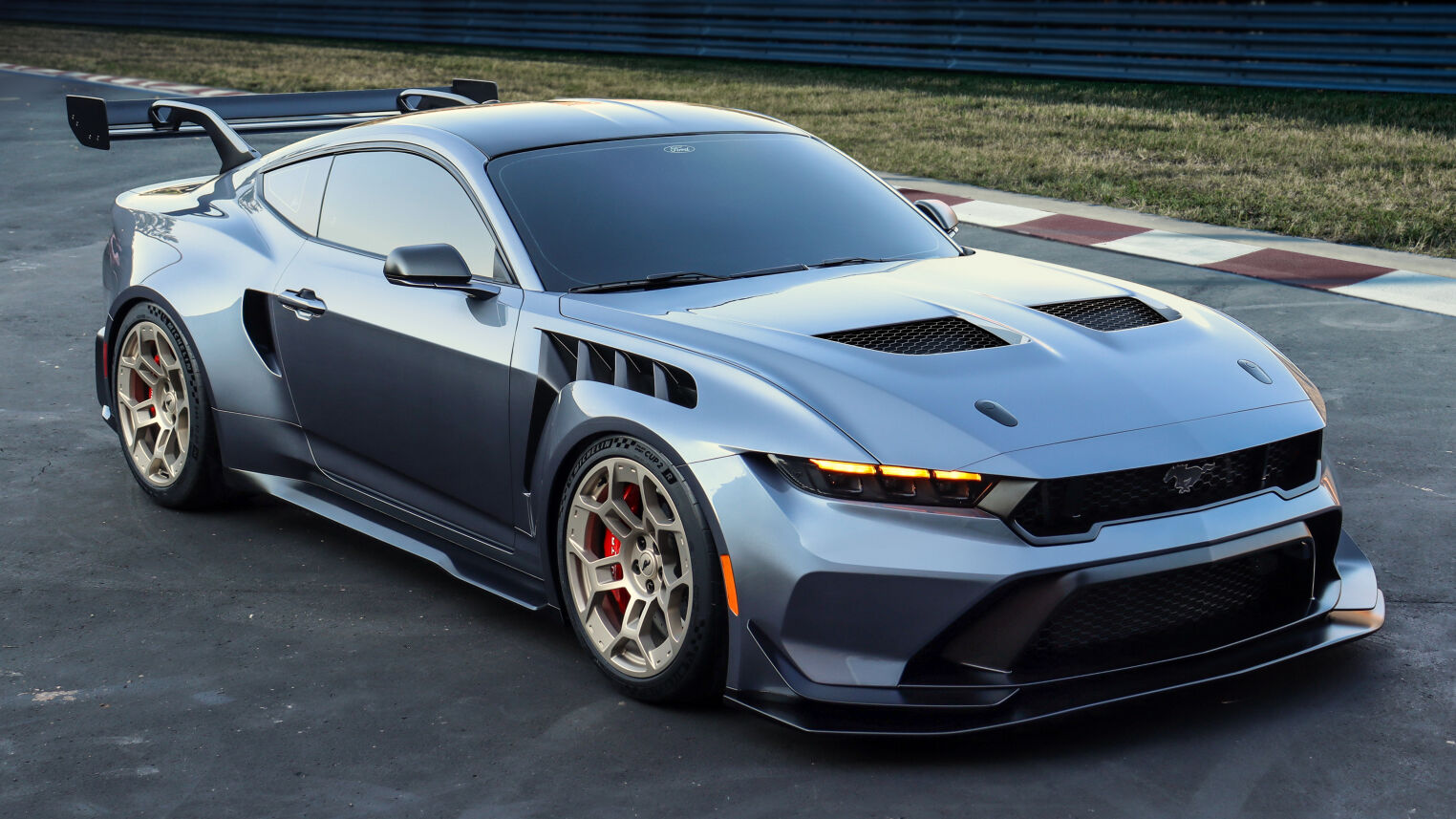
8. Ford Mustang GTD
The Mustang GTD represents the most technologically advanced production Mustang ever created. Inspired heavily by GT3 race cars, the GTD features active aerodynamics, carbon fiber body panels, semi-active suspension systems, and a supercharged V8 expected to produce more than 800 horsepower.
Unlike traditional muscle cars focused primarily on straight-line acceleration, the GTD targets complete track performance. Ford developed the car with ambitions of competing against elite European sports cars on legendary circuits like the Nürburgring. This represents a massive evolution for the Mustang brand.
Performance expectations for the GTD are extraordinary. Early projections suggest acceleration and lap times capable of rivaling or surpassing several modern Ferraris. Advanced aerodynamics generate significant downforce, while rear-mounted transaxle architecture improves weight distribution. These engineering decisions move the GTD closer to true supercar territory than any previous Mustang.
The interior also reflects this transformation. Carbon fiber racing seats, digital displays, and premium materials create an environment far more sophisticated than traditional Mustangs. Yet despite these advancements, the GTD retains the aggressive spirit that defines the Mustang lineage.
One of the most fascinating aspects of the GTD is what it symbolizes for American performance engineering. For decades, European manufacturers dominated discussions surrounding track-focused supercars. The GTD challenges the hierarchy directly by combining cutting-edge technology with massive supercharged power.
If performance estimates prove accurate, it may become the first Mustang fully capable of competing with Ferraris on both road courses and drag strips.
The Mustang GTD proves that Ford no longer views the Mustang as merely a muscle car. It has evolved into a genuine global performance platform capable of challenging the world’s most respected supercars. Against stock Ferraris, the GTD may ultimately become one of the most formidable Mustangs ever produced.
- Engine: 5.0 liter Coyote V8 (built, twin turbocharged)
- Horsepower: 1,000 to 1,500+ hp
- Torque: 900 to 1,300+ lb ft
- Length: ~4,780 mm (stock body basis)
- Width: 1,900 to 2,050 mm (depending on widebody kit)
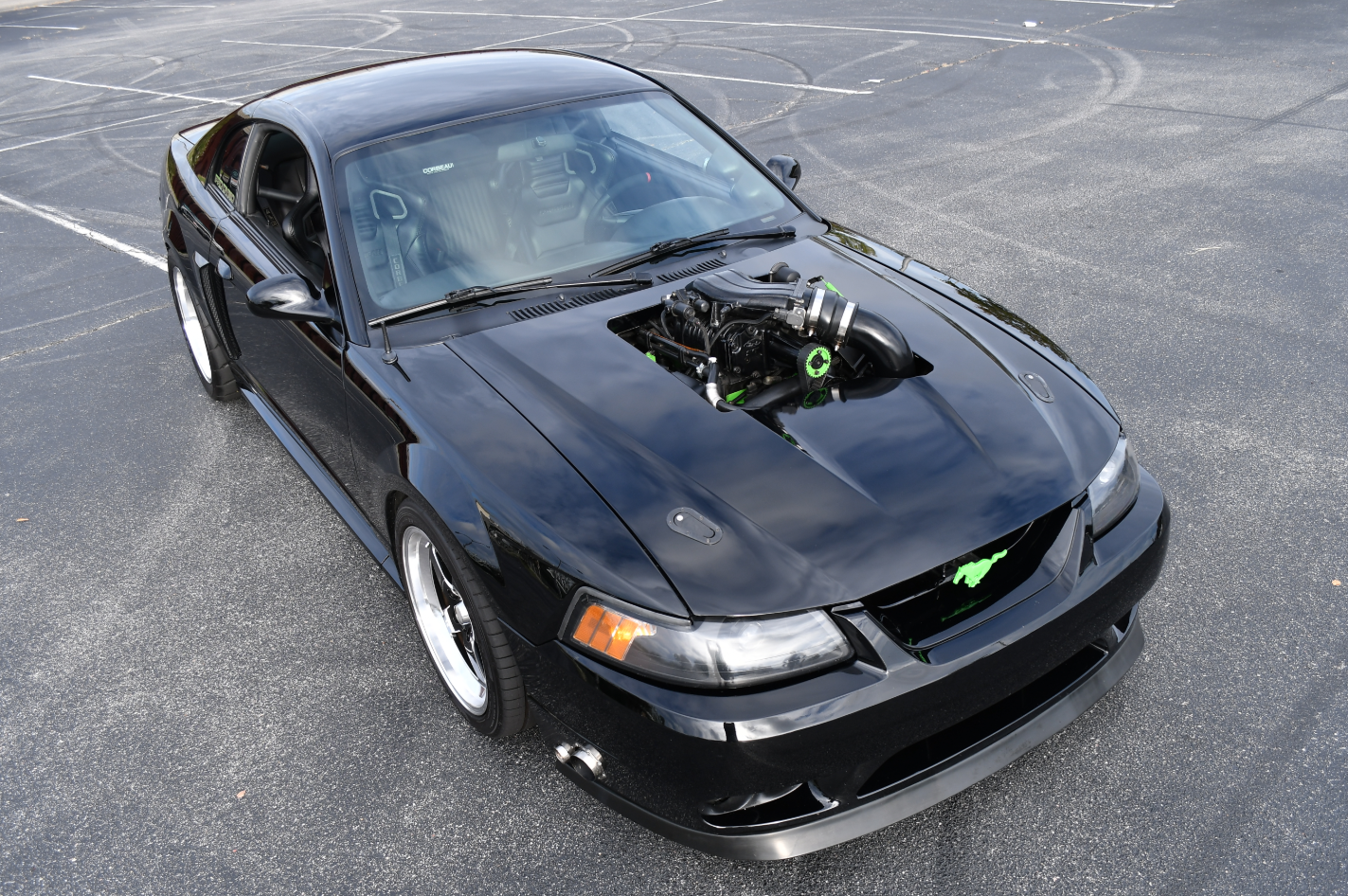
9. Twin Turbo Custom Mustang Builds
Few automotive experiences are more terrifyingly fast than a properly built twin-turbo Mustang. Across the United States, performance shops have transformed Mustangs into thousand-horsepower monsters capable of humiliating nearly any production Ferrari ever built.
Twin turbo setups dramatically increase horsepower while providing enormous tuning flexibility. Many custom builds produce between 1000 and 1500 horsepower while remaining street legal. At those levels, acceleration becomes almost impossible to comprehend. Quarter-mile times in the seven and eight-second range become possible with proper traction and tuning.
What makes twin-turbo Mustangs especially dangerous is their scalability. Owners can adjust boost levels depending on fuel type, racing conditions, and performance goals. Ferraris leave the factory with carefully calibrated performance limits, but custom Mustangs can continue evolving almost endlessly through aftermarket modifications.
These builds often feature reinforced engine internals, upgraded transmissions, race-inspired suspension systems, and advanced electronic tuning solutions. The result is a Mustang capable of devastating acceleration far beyond what most stock Ferraris can achieve. In highway races and drag strip competitions, twin-turbo Mustangs frequently dominate exotic supercars costing hundreds of thousands of dollars.
The visual presentation of custom twin-turbo Mustangs varies widely. Some owners preserve a sleeper appearance that hides the car’s extraordinary capabilities beneath relatively subtle styling. Others embrace aggressive wide-body kits and exposed turbo hardware to showcase the vehicle’s performance potential.
Perhaps the greatest appeal of these builds lies in their individuality. Each twin-turbo Mustang reflects the owner’s personal vision and engineering philosophy. Unlike factory-produced Ferraris with standardized specifications, custom Mustangs become unique performance creations tailored to specific goals.
These extreme builds represent the ultimate expression of Mustang performance culture. They demonstrate that with enough engineering expertise and aftermarket support, the Mustang platform can achieve performance levels rivaling hypercars. While Ferraris continue pushing technological boundaries, twin-turbo Mustangs prove that raw American horsepower still possesses the ability to dominate nearly any acceleration contest.
