
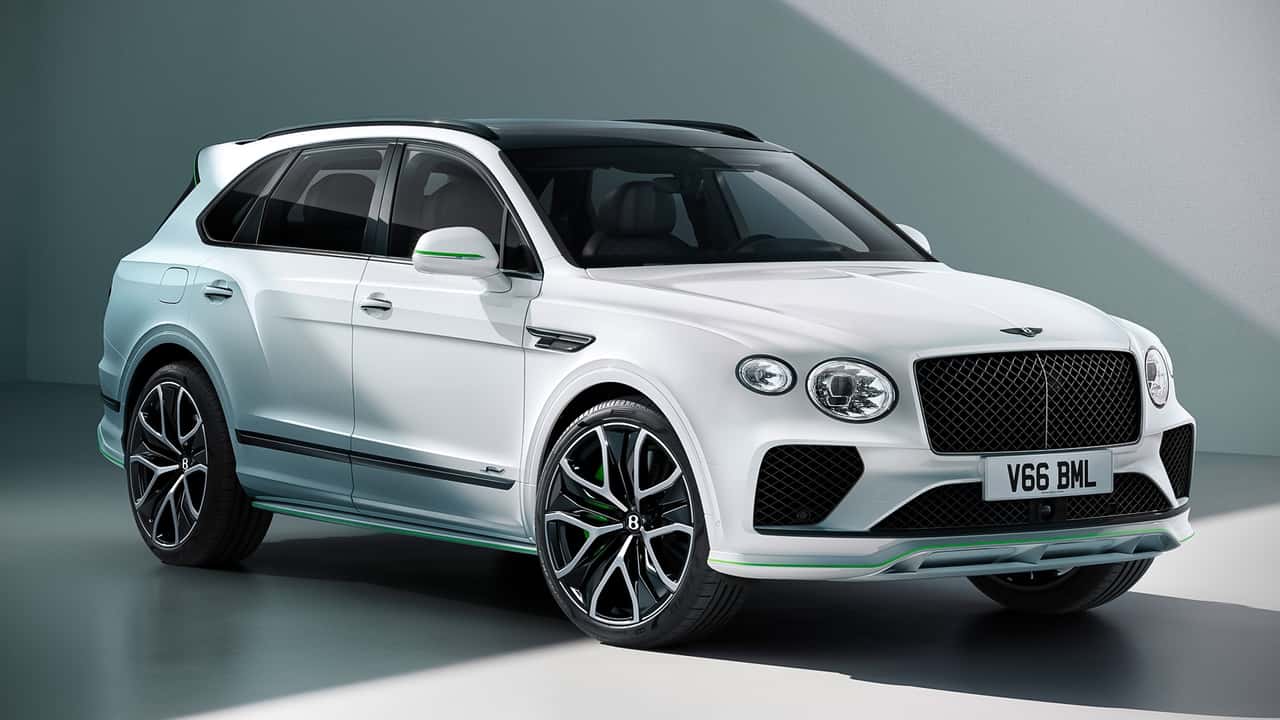
For a long time, the V8 engine stood as the default choice whenever strength and speed topped the wish list. Eight cylinders carried a certain promise, along with a deep exhaust sound that signaled purpose before the vehicle even moved. Drivers picked V8 power for pickups, muscle cars, upscale sedans, and performance SUVs because nothing else felt as confident or as commanding.
That reputation did not come from hype. V8s earned it by delivering strong acceleration, abundant torque, and a driving feel that smaller engines could not recreate at the time. That chapter has not closed, yet it no longer defines the entire story. Advances in engineering have allowed modern twin-turbo V6 engines to erase much of the advantage V8s once held.
In several vehicles, the balance has tipped completely. These newer V6 setups now deliver higher output figures, quicker response, improved efficiency, and reduced weight. In practical terms, that means faster launches, better handling, and lower fuel use without sacrificing everyday drivability.
The reason behind this change lies in how far engine technology has progressed. Turbo systems are now carefully controlled to minimize delay and deliver boost exactly when needed. Features such as twin scroll designs and advanced valve control help engines respond smoothly rather than feeling strained.
Direct fuel injection and refined software let smaller engines produce more usable energy with each ignition cycle. As a result, a well-tuned 3.0 or 3.5 liter twin turbo V6 can match or exceed the performance once associated with much larger engines, while fitting into tighter spaces and reducing mass.
This page looks at eight vehicles where a twin-turbo V6 proves stronger than its V8 rivals in ways drivers actually notice. Each example examines power figures, torque behavior, acceleration, everyday driving feel, and the technical thinking behind the engine design. From performance sedans to trucks and high-powered SUVs, these vehicles show why six cylinders can now stand tall without apology.
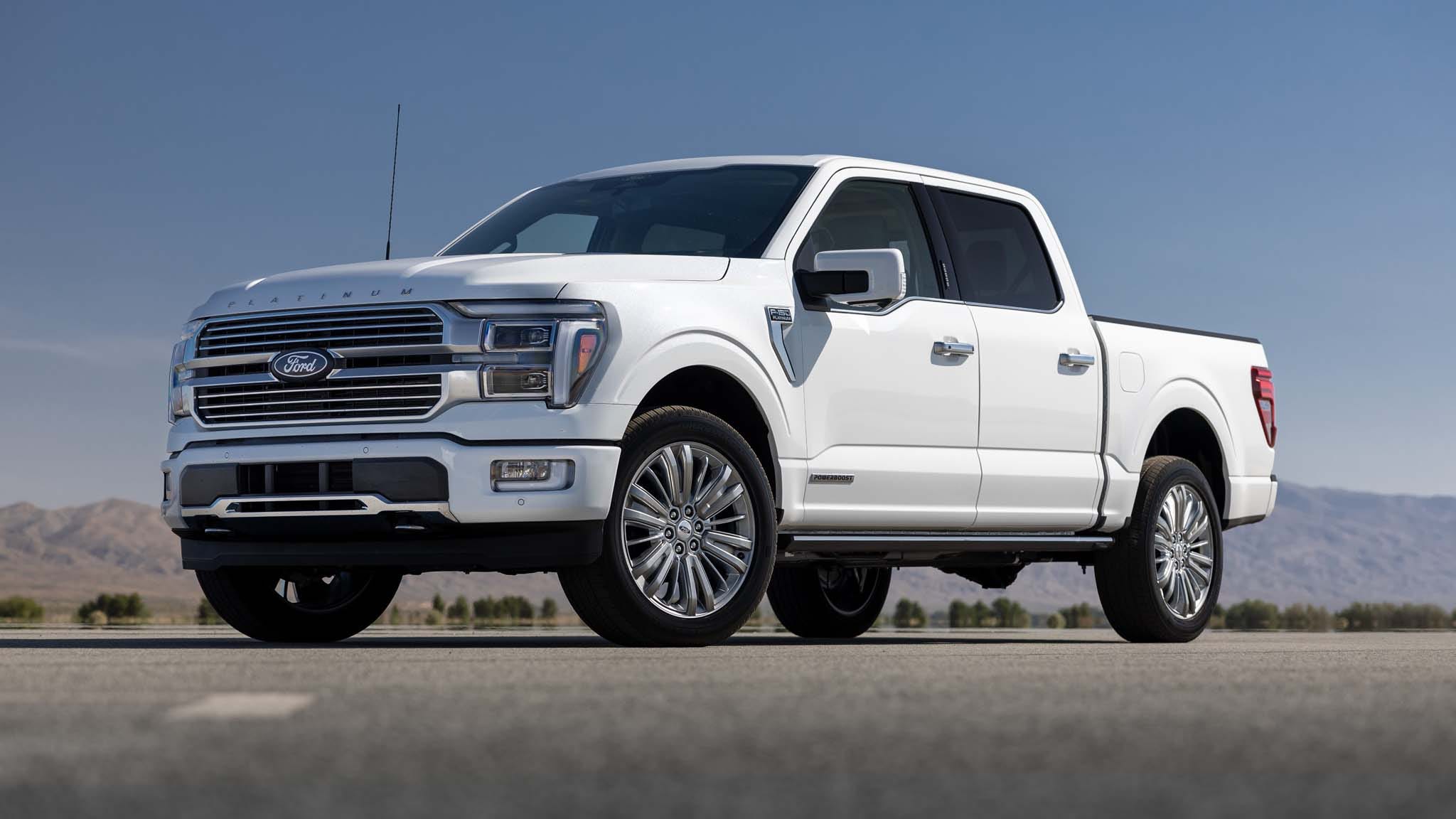
1. 2025 Ford F-150 Platinum 4WD With the 3.5L PowerBoost Twin-Turbo V6 Hybrid
- Engine: 3.5L twin turbo V6 hybrid
- Horsepower: 430 hp
- Torque: 570 lb ft
- Length and width: 232 in length, 80 in width
Several years ago, Ford made a decision that challenged long-held assumptions within the pickup market. For decades, buyers associated top-tier capability in a full-size truck with a large naturally aspirated V8 engine. Ford chose a different direction by placing a twin-turbocharged V6, supported by a hybrid system, at the peak of the F-150 lineup. Initial reactions included doubt from traditional buyers who equated cylinder count with strength. Practical results have since answered those doubts with clarity.
The 3.5-liter PowerBoost twin-turbo V6 hybrid fitted to the 2025 F-150 Platinum 4WD produces 430 horsepower and 570 pound-feet of torque. These figures exceed those of the 5.0-liter V8 still available within the range, which delivers 400 horsepower and 410 pound-feet of torque.
The difference is not theoretical. Torque availability at lower engine speeds defines how a truck performs when towing, carrying heavy loads, or accelerating from rest while under strain. With 160 additional pound-feet of torque, the PowerBoost engine demonstrates superior pulling strength in real driving conditions.
Towing ratings reinforce this advantage. When properly equipped, the PowerBoost F-150 is rated to tow up to 12,700 pounds, compared with roughly 11,000 pounds for the 5.0-liter V8. This gap places the two engines in clearly different capability brackets. Buyers hauling large trailers, construction equipment, or recreational loads benefit directly from this added capacity.
The improvement represents a measurable increase rather than a marketing figure without practical value. Fuel consumption figures also favor the hybrid V6. In four-wheel-drive configuration, the PowerBoost achieves an estimated 24 miles per gallon combined, while the V8 returns about 18 miles per gallon under similar conditions.
For owners who cover high annual mileage, the difference translates into substantial fuel cost reduction across several years of ownership. Such savings arrive without sacrificing performance, which strengthens the case for the smaller displacement engine. Acceleration performance provides further confirmation.
A fully equipped F-150 Platinum 4WD with the PowerBoost system reaches 60 miles per hour in roughly 5.4 seconds. The V8-powered equivalent requires approximately 6.1 seconds. Under load, the disparity becomes more pronounced due to immediate low-speed torque delivery from the turbochargers and electric motor. This characteristic improves confidence during merging, overtaking, and uphill towing.
The hybrid system integrates a 35-kilowatt electric motor into Ford’s ten-speed automatic transmission. This motor supplies instant torque during initial acceleration and supports the engine when boost pressure is building. As a result, throttle response remains direct and predictable, closely resembling that of a larger naturally aspirated engine.
Rather than feeling compromised, the driving experience feels refined and responsive. The PowerBoost configuration demonstrates how modern engineering can exceed traditional expectations while delivering tangible benefits across performance, efficiency, and capability.
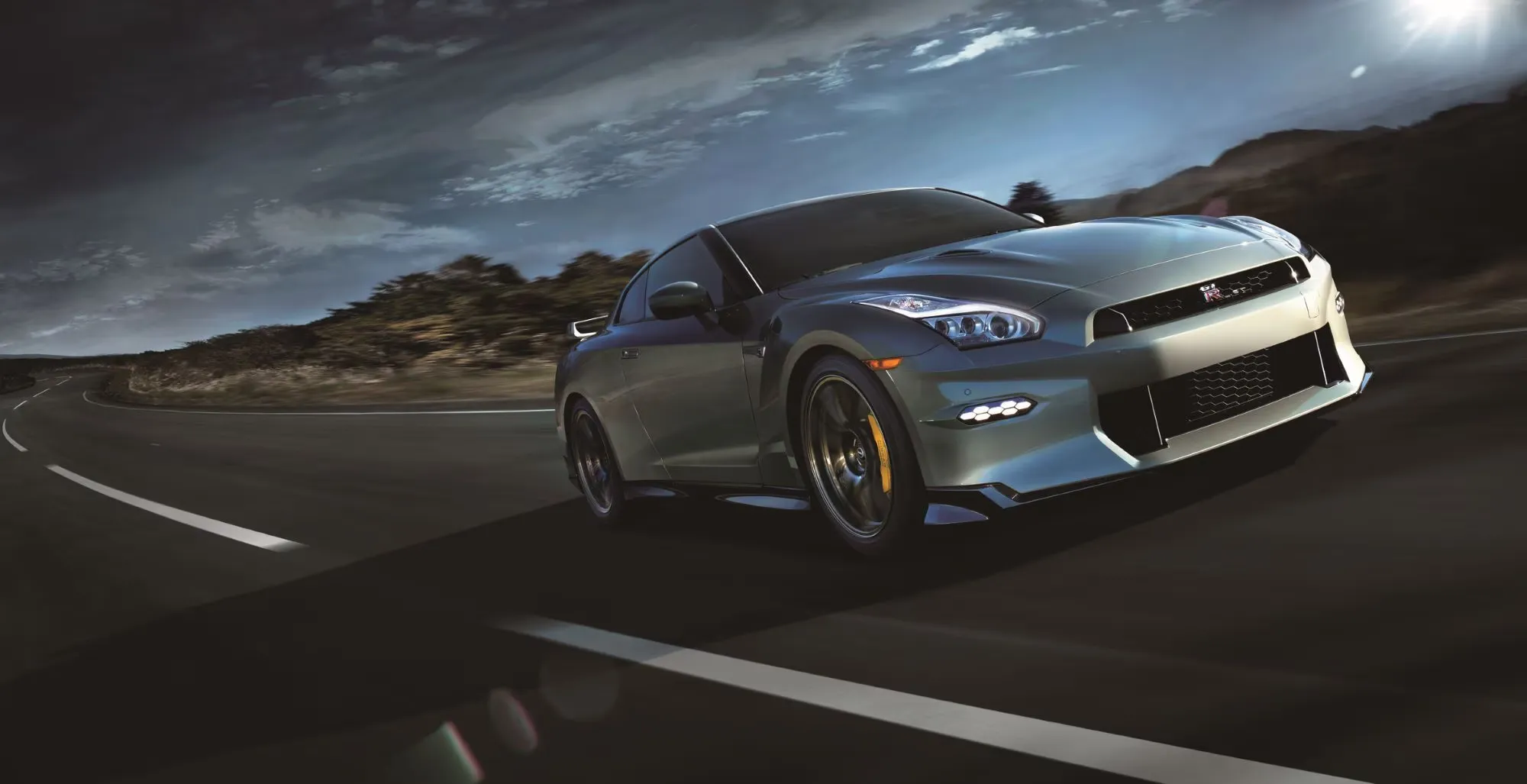
2. 2025 Nissan GT-R Premium AWD With the 3.8L Twin-Turbo V6
- Engine: 3.8L twin turbo V6
- Horsepower: 565 hp
- Torque: 467 lb ft
- Length and width: 185.4 in length, 74.6 in width
Within high-performance motoring, few engines have altered expectations as thoroughly as Nissan’s 3.8-liter twin-turbocharged V6 fitted to the GT-R. Since its introduction, this power unit has consistently challenged vehicles equipped with larger V8 engines, many of which carry higher price tags and stronger brand prestige. The GT-R’s performance record has been established through measurable results rather than reputation alone.
The VR38DETT engine powering the 2025 GT-R Premium AWD produces 565 horsepower and 467 pound-feet of torque. These figures place it firmly within the territory traditionally reserved for large displacement V8 engines. What distinguishes the GT-R is not only output, but how that power is delivered and managed. The engine provides sustained pulling force across a wide engine speed range, enabling rapid acceleration without constant gear changes.
Manufacturing quality forms a central part of this engine’s identity. Each VR38DETT unit is assembled by a single technician at Nissan’s dedicated facility in Yokohama. This process, which requires several hours per engine, reflects a focus on precision and accountability.
A signed nameplate affixed to each engine reinforces the personal responsibility involved in its construction and contributes to the engine’s reputation for durability under extreme operating conditions. Performance data illustrates the engine’s effectiveness. The GT-R accelerates from 0 to 60 miles per hour in approximately 2.9 seconds, aided by its advanced all-wheel-drive system and sophisticated launch control programming.
Torque delivery at low engine speeds, combined with precise traction management, allows the vehicle to transfer power to the road with minimal loss. Naturally aspirated V8 engines, regardless of displacement, face physical limitations in replicating this type of launch performance without forced induction.
In its pricing bracket, the GT-R competes with high-performance vehicles powered by large V8 engines, including sports cars from established American and European manufacturers. While some of these rivals offer exceptional sound and character, the GT-R’s consistent real-world acceleration and grip often match or exceed them during everyday driving conditions. Rolling acceleration, particularly at highway speeds, benefits from the twin-turbo V6’s strong mid-range output.
The GT-R demonstrates that cylinder count alone no longer defines performance leadership. Through turbocharging, advanced drivetrain integration, and meticulous assembly standards, Nissan has produced a six-cylinder engine capable of rivaling and surpassing traditional V8 benchmarks. The result is a vehicle that continues to command respect within performance circles through proven engineering rather than tradition.
Also Read: 9 Hypercar Engines That Hit Over 1,500 Horsepower
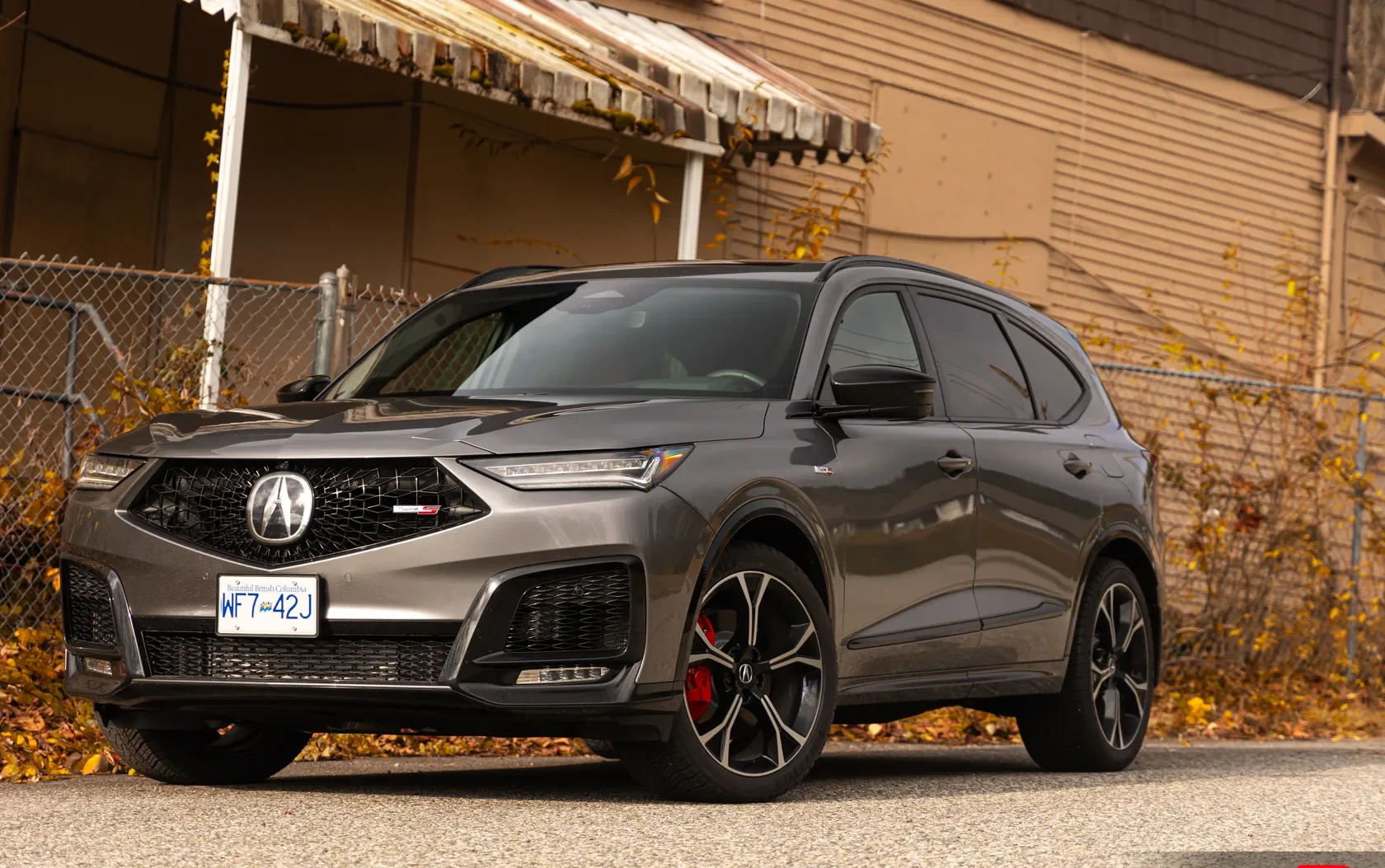
3. 2025 Acura MDX Type S SH-AWD With the 3.0L Twin-Turbo V6
- Engine: 3.0L twin turbo V6
- Horsepower: 355 hp
- Torque: 354 lb ft
- Length and width: 198.4 in length, 78.7 in width
Premium three-row SUV buyers considering performance alongside practicality have historically turned to V8-powered alternatives from Mercedes-Benz, Land Rover, and Jeep when maximum power output was a priority. Acura’s 2025 MDX Type S SH-AWD challenges that assumption with a 3.0-liter twin-turbo V6 producing 355 horsepower and 354 lb-ft of torque, figures that compare favorably against several V8-powered competitors while delivering stronger fuel economy and a more responsive driving character.
Acura’s twin-turbo V6 in the MDX Type S uses an i-VTEC variable valve timing system combined with twin sequential turbochargers sized to minimize lag at low engine speeds while providing sufficient flow for maximum power output at higher rpm. Boost builds quickly from idle, providing useful torque for everyday driving situations like highway merging and elevated-speed lane changes that represent the practical performance demands most three-row SUV buyers actually encounter.
Comparing this engine against the Mercedes-Benz GLE 450 4MATIC’s turbocharged inline-six, which produces 362 horsepower from 3.0 liters with a mild-hybrid assist, reveals a closely matched performance contest where the Acura’s twin-turbo architecture and SH-AWD torque vectoring system produce a more engaging driving experience at a substantially lower starting price.
MSRP for the MDX Type S SH-AWD starts around $67,000. The GLE 450 starts around $72,000. For a buyer who wants maximum performance from a three-row premium SUV without paying European luxury pricing, the MDX Type S makes a compelling technical and financial argument.
Fuel economy from the 3.0-liter twin-turbo in the MDX Type S reaches approximately 22 miles per gallon combined in AWD configuration. A V8-powered Jeep Grand Wagoneer L Series I AWD in comparable premium trim achieves approximately 15 miles per gallon combined. That 7 miles per gallon difference represents approximately $1,225 in annual fuel savings at 15,000 miles and $3.50 per gallon, while the Acura’s twin-turbo V6 produces only modestly less horsepower than the Wagoneer’s 6.4-liter V8 at 471 horsepower.
SH-AWD (Super Handling All-Wheel Drive) differentiates the MDX Type S from simply being a powerful SUV by adding active torque vectoring that distributes power not just between axles but between rear wheels during cornering, overdelivering rear outside wheel torque to produce a handling response that feels more like a sport sedan than a three-row family hauler.
That dynamic character, combined with the twin-turbo V6’s output, makes the MDX Type S a vehicle that outperforms its cylinder count in every meaningful sense.
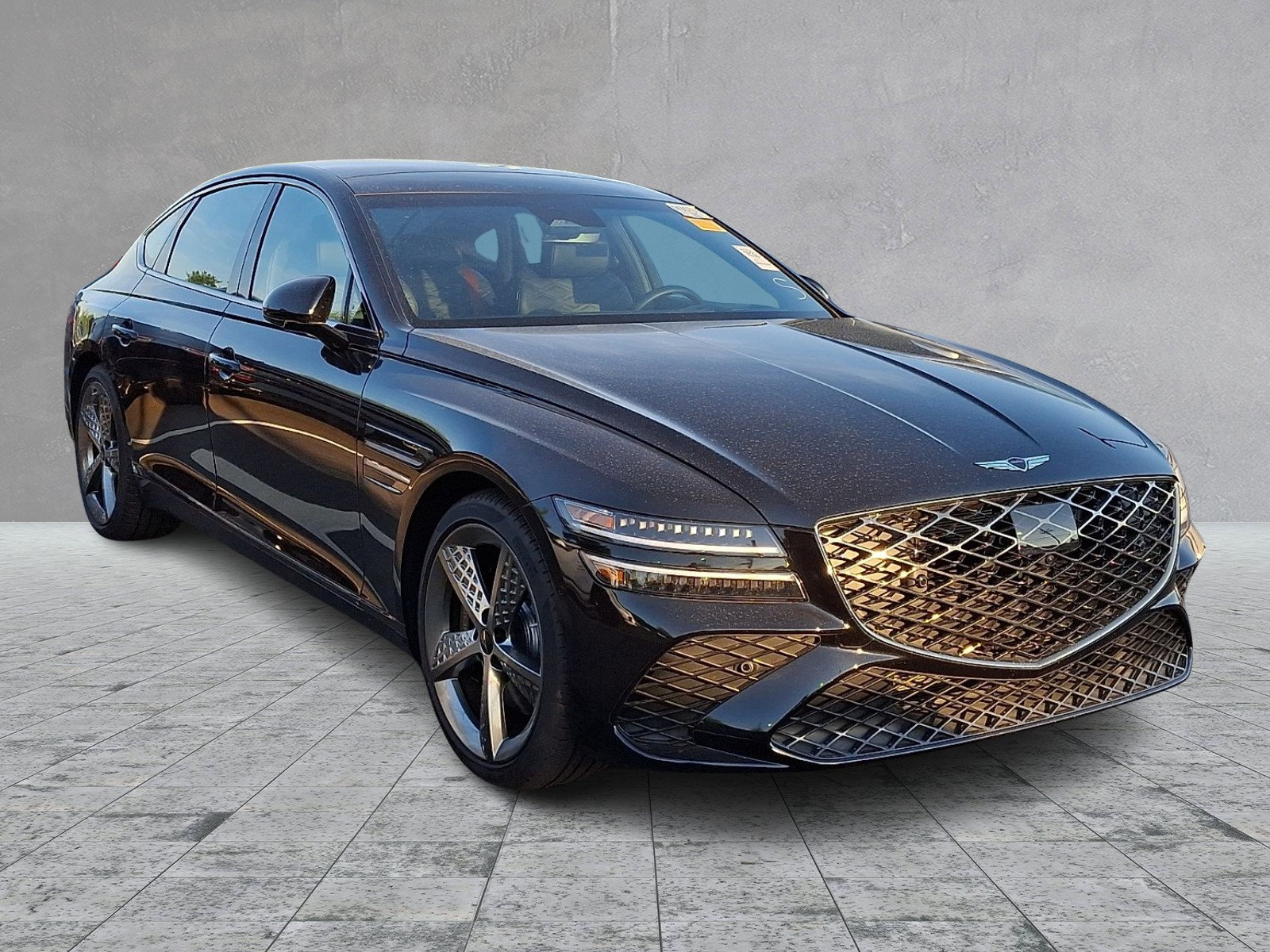
4. 2025 Genesis G80 3.5T Sport Prestige AWD With the 3.5L Twin-Turbo V6
- Engine: 3.5L twin turbo V6
- Horsepower: 375 hp
- Torque: 391 lb ft
- Length and width: 196.7 in length, 75.8 in width
Genesis entered the luxury sedan market as a challenger without the decades of prestige history that BMW, Mercedes-Benz, and Audi carry. What it brought instead was a willingness to engineer beyond its price point, and nowhere is that philosophy more evident than in the 3.5-liter twin-turbo V6 powering the 2025 Genesis G80 3.5T Sport Prestige AWD. Producing 375 horsepower and 391 lb-ft of torque, this engine competes directly with V8-powered European luxury sedans that cost $20,000 to $30,000 more.
BMW’s 5 Series M550i xDrive uses a twin-turbo V8 producing 523 horsepower at a starting price approaching $85,000. Audi’s S6 uses a twin-turbo V8 producing 444 horsepower at a starting price of around $80,000. Genesis’s G80 3.5T Sport Prestige AWD produces 375 horsepower from its twin-turbo V6 at a starting price of approximately $62,000.
While the Genesis produces fewer horsepower than either German V8, the performance gap at real-world driving speeds is narrower than the specification sheet suggests, and the price gap of $18,000 to $23,000 is not narrow at all. Acceleration from 0 to 60 mph in the G80 3.5T Sport Prestige AWD runs approximately 4.5 seconds, which places it firmly in the performance sedan territory that attracts buyers considering the European V8 alternatives.
At typical highway speeds and in the acceleration scenarios that real-world driving produces, a 4.5-second 0 to 60 time delivers a subjective driving experience that most buyers cannot distinguish from a 3.9-second one. For buyers making a rational performance-to-dollar calculation, the G80’s twin-turbo V6 performance at its price point produces better value than V8 alternatives at their price points.
Genesis’s twin-turbo V6 architecture uses twin intercoolers to maintain intake charge temperature under sustained boost conditions, improving consistency of power delivery during spirited driving without the power tapering that heat-soaked turbocharged engines can exhibit during prolonged use.
Eight-speed automatic transmission calibration in the G80 3.5T provides crisp, fast gear changes in Sport mode while remaining smooth and unobtrusive in Comfort mode, giving the driver a meaningful character range from the same powertrain.
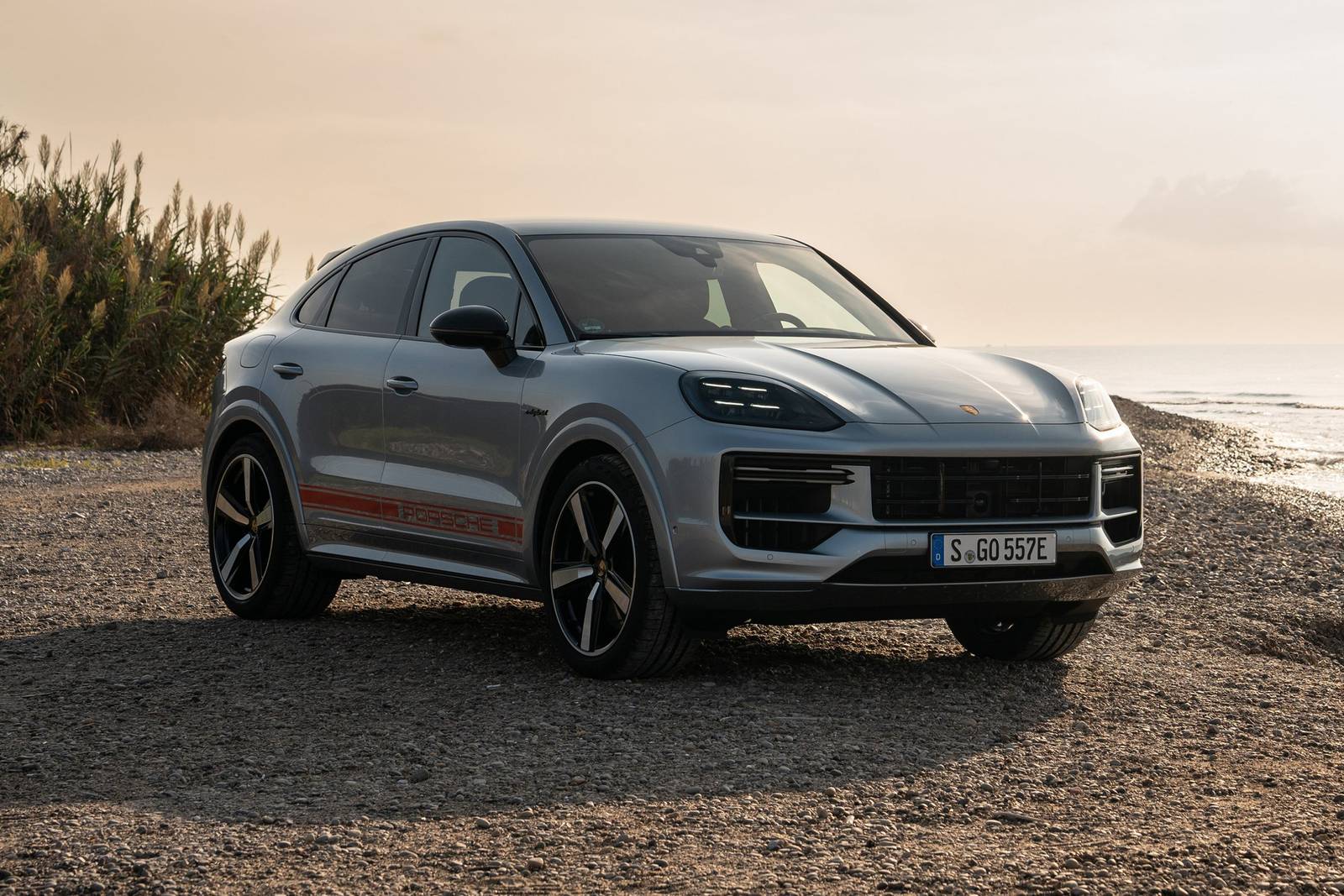
5. 2025 Porsche Cayenne S Coupe AWD With the 2.9L Twin Turbo V6
- Engine: 2.9L twin turbo V6
- Horsepower: 468 hp
- Torque: 442 lb ft
- Length and width: 194.2 in length, 78.1 in width
Porsche positions the Cayenne S Coupe as a performance-focused luxury utility vehicle that sits below the V8-powered Turbo variants while still carrying a clear sporting identity. Instead of pursuing maximum cylinder count, the manufacturer relies on a compact 2.9-litre twin-turbocharged V6 that reflects a deliberate engineering direction.
This engine delivers 468 horsepower and 442 pound-feet of torque, figures that place the vehicle firmly within high-performance territory while avoiding the weight and consumption penalties associated with larger engines. The idea behind this power unit rests on output density rather than raw size. Producing 468 horsepower from 2.9 litres translates to an exceptionally high horsepower per litre figure.
When compared with traditional V8 rivals, the engineering efficiency becomes clear. A supercharged 5.0-litre V8 from a competing luxury brand produces more total horsepower, yet it does so from almost double the displacement. The Porsche engine extracts more energy from each litre of capacity, reflecting modern turbocharging calibration, thermal control, and internal component design refined through years of motorsport influence.
Straight line performance reinforces this technical approach. The Cayenne S Coupe AWD accelerates from rest to sixty miles per hour in roughly 4.3 seconds in standard form. When equipped with the Sport Chrono package, launch control sharpens throttle response and transmission behaviour, reducing that sprint to around 4.0 seconds.
These figures place the vehicle ahead of several heavier V8-powered luxury sport utility vehicles, even those marketed as flagship performance models. Efficiency plays an important role in the ownership equation. Mixed driving fuel consumption averages between nineteen and twenty-two miles per gallon combined, depending on driving conditions and configuration.
Comparable V8 models within the same category often record figures closer to fifteen or sixteen miles per gallon. Over an annual distance of fifteen thousand miles, this difference produces tangible fuel cost reductions, especially considering that both engine types require premium petrol. For long-term owners, this translates into lower running expenses without sacrificing pace.
Power delivery is supported by the Porsche eight-speed Tiptronic S automatic transmission. This gearbox works in close coordination with the turbocharged engine, ensuring gear changes occur while boost pressure remains available. The result is uninterrupted acceleration that feels smooth and controlled rather than abrupt. Unlike some high-output engines that feel strained at higher speeds, the Cayenne S Coupe maintains consistent thrust across its operating range.
Chassis tuning further reinforces the sporting character. Adaptive suspension, precise steering calibration, and balanced weight distribution allow the vehicle to handle with composure uncommon for its size. The Coupe body style lowers the centre of gravity slightly while also contributing to a more dynamic visual presence. Interior quality meets Porsche standards, combining premium materials with a driver-oriented layout that prioritises clarity and control.
From a value standpoint, the Cayenne S Coupe AWD presents a compelling alternative to heavier V8 competitors. Buyers receive performance that matches or exceeds many larger engines, paired with reduced fuel use and refined drivability. Rather than serving as a compromise, the 2.9-litre twin-turbo V6 defines the vehicle’s identity.
It demonstrates how modern performance engineering can deliver speed, control, and efficiency within a luxury sport utility format without relying on traditional displacement-driven solutions.
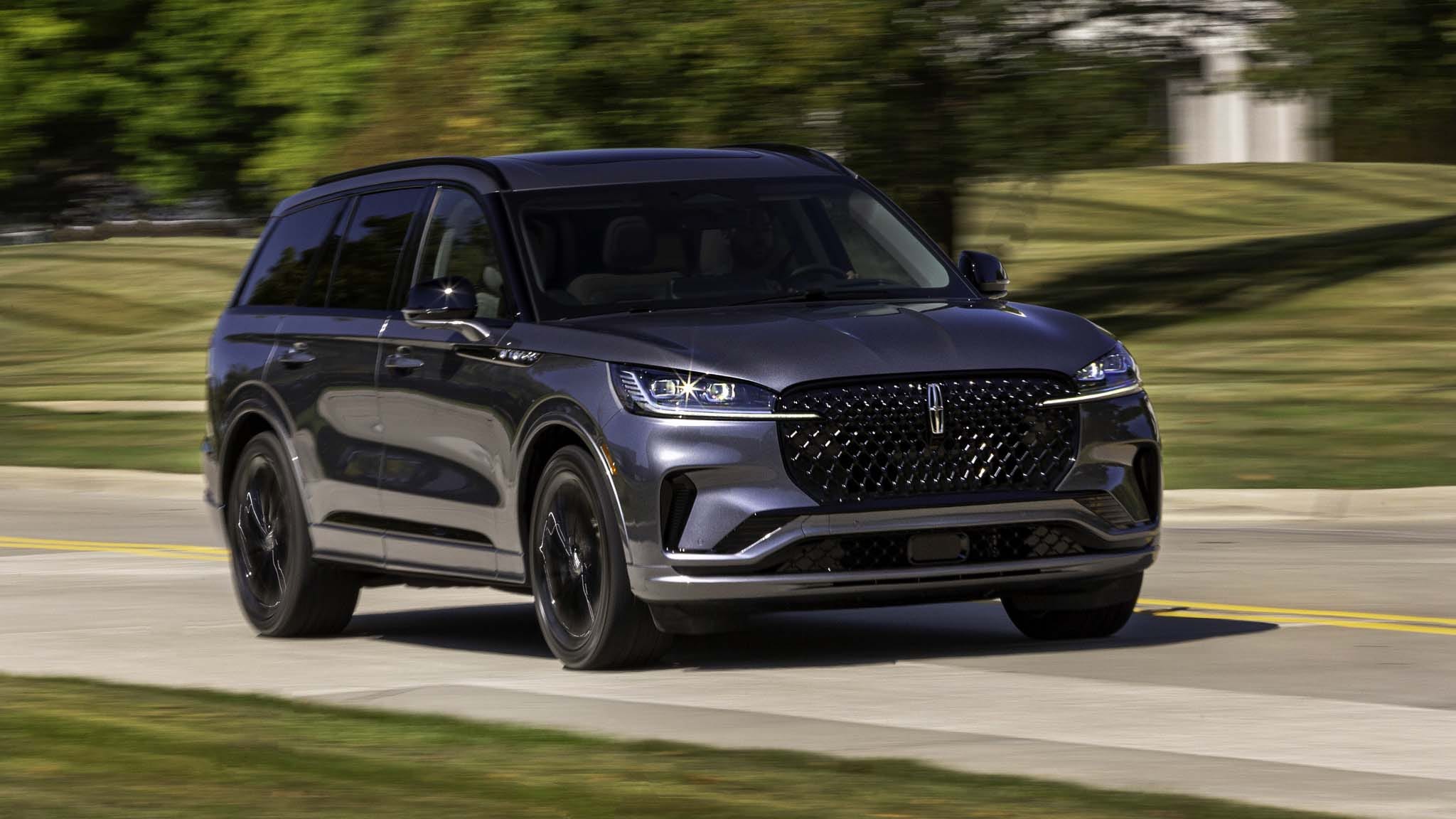
6. 2025 Lincoln Aviator Grand Touring AWD With the 3.0L Twin Turbo V6 Plug-In Hybrid
- Engine: 3.0L twin turbo V6 plug in hybrid
- Horsepower: 494 hp
- Torque: 630 lb ft
- Length and width: 199.3 in length, 79.6 in width
The Lincoln Aviator Grand Touring AWD occupies a distinctive position within the luxury sport utility segment by combining high output performance with plug-in hybrid technology. While it does not attract the same performance-centred attention as European rivals, its mechanical specification deserves serious consideration.
A 3.0 litre twin turbocharged V6 works alongside an electric motor to produce a combined system output of 494 horsepower and an exceptional 630 pound feet of torque, figures that surpass many larger displacement engines.
Torque delivery defines the character of this vehicle. Producing 630 pound-feet from a six-cylinder engine assisted by electric power places the Aviator in a class of its own among three-row luxury sport utility vehicles. For comparison, several naturally aspirated V8 engines with capacities exceeding six litres produce considerably less torque.
The hybrid system allows immediate electric assistance from a standstill, delivering strong forward motion without delay. Acceleration performance reflects this advantage. The Aviator Grand Touring AWD reaches sixty miles per hour in approximately 4.9 seconds under standard driving conditions.
When placed in Sport mode, electric torque engagement sharpens response, improving launch behaviour. For a vehicle capable of seating up to seven occupants with luggage, this level of performance places it ahead of every naturally aspirated V8-powered three-row luxury model currently offered in the American market.
The plug-in hybrid system adds everyday practicality. The electric-only driving range stands at around twenty-one miles, enough to cover most daily commuting requirements for owners who charge regularly. During these trips, petrol consumption is effectively eliminated.
Once the battery is depleted, the vehicle continues to operate as a hybrid, achieving around twenty-three miles per gallon combined. Comparable V8-powered alternatives often return figures closer to fifteen miles per gallon, creating a clear cost advantage over extended ownership periods.
Annual fuel savings can be substantial. At fifteen thousand miles per year with consistent charging, the difference in fuel expenditure compared with a large displacement V8 can exceed one thousand five hundred dollars, depending on fuel prices. This financial benefit comes without reducing performance capability or interior comfort.
Pricing positions the Aviator Grand Touring AWD competitively within the luxury market. Starting at roughly seventy-one thousand dollars, it sits alongside full-size luxury sport utility vehicles that rely on traditional V8 engines. Many of those rivals deliver lower torque figures while lacking any form of electric efficiency. Lincoln instead offers a balanced package that prioritises strong acceleration, refined ride quality, and reduced fuel use.
Ride comfort remains a central focus. Suspension tuning favours stability and smoothness, making long-distance travel relaxed for both driver and passengers. Cabin design reflects Lincoln’s emphasis on comfort, with supportive seating, generous space across all rows, and a calm interior atmosphere suited to daily use or extended journeys.
For buyers seeking a three-row luxury sport utility vehicle that delivers serious torque, quick acceleration, and meaningful fuel efficiency without a V8, the Aviator Grand Touring AWD presents a persuasive option. Its specification demonstrates how hybrid technology can enhance performance rather than dilute it, offering a modern alternative to traditional large engine solutions.
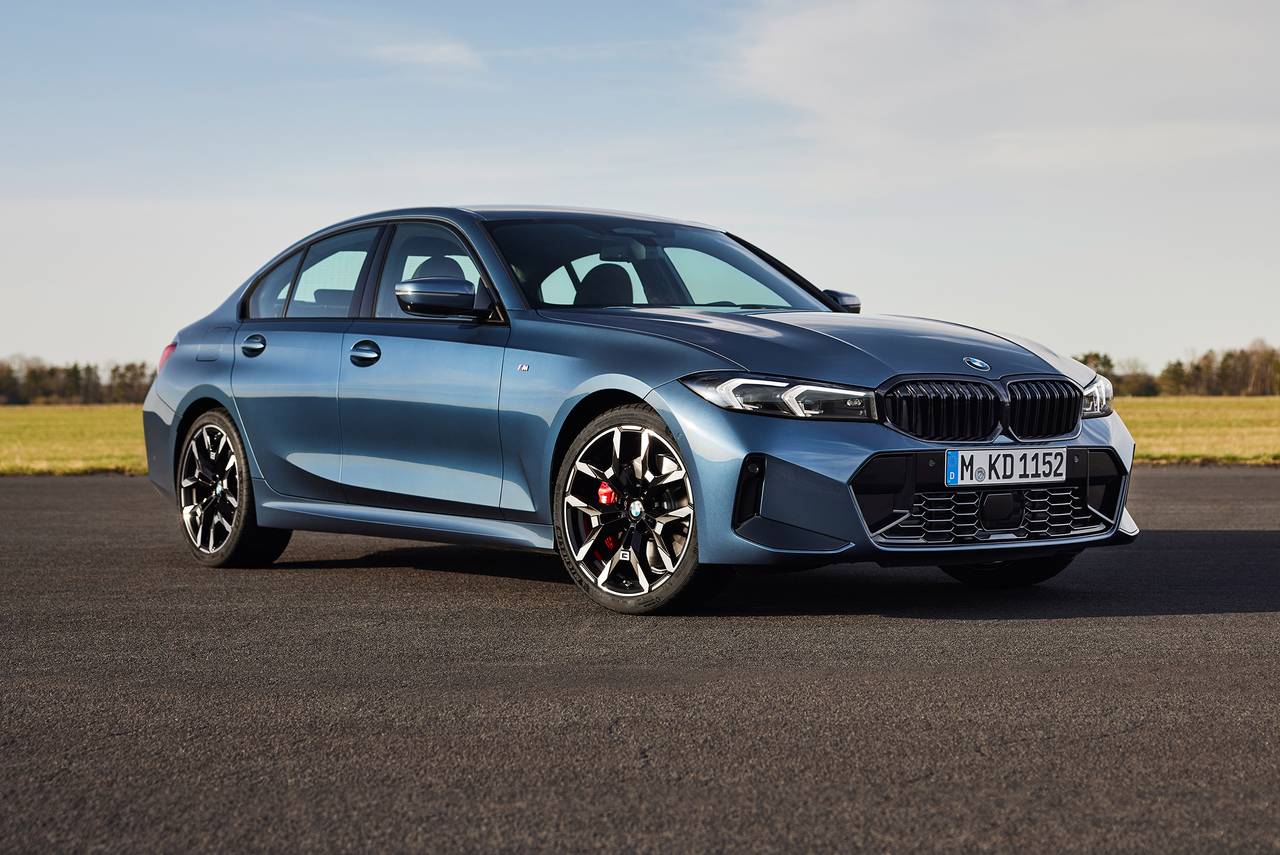
7. 2025 BMW M340i xDrive Sedan With the 3.0L Twin-Turbo Inline-Six S58 Architecture Derivative
- Engine: 3.0L turbocharged inline 6
- Horsepower: 382 hp
- Torque: 369 lb ft
- Length and width: 185.7 in length, 71.9 in width
BMW’s B58 3.0-liter twin-scroll turbocharged inline-six is not technically a twin-turbo in the traditional two-separate-turbocharger sense. It uses a twin-scroll single turbocharger with divided exhaust gas entry to minimize lag and maximize low-rpm torque delivery.
In the interest of addressing the substance of what makes a six-cylinder outperform V8 rivals, the B58’s performance story belongs in this discussion because its output, character, and competitive positioning accomplish exactly that against multiple V8 alternatives in its segment.
Producing 382 horsepower and 369 lb-ft of torque in M340i specification, the B58 drives the 2025 BMW M340i xDrive Sedan to 60 mph in approximately 4.2 seconds, which places it ahead of several V8-powered competitors including certain configurations of the Lexus IS 500 F Sport Performance (which uses a naturally aspirated 5.0-liter V8 producing 472 horsepower) in real-world timed acceleration events, because the BMW’s all-wheel drive traction advantage and low-rpm torque availability translate launch physics more effectively than the rear-wheel-drive IS 500’s higher horsepower can exploit at maximum acceleration.
Fuel economy from the B58 in the M340i xDrive reaches approximately 27 miles per gallon combined, compared to approximately 17 miles per gallon combined for the IS 500’s naturally aspirated V8 in rear-wheel-drive configuration. At 15,000 miles annually and $3.50 per gallon, that difference saves approximately $1,155 per year.
The B58-powered BMW also weighs approximately 300 pounds less than the IS 500, contributing to the handling response and braking performance advantages that complement the engine’s power delivery. The starting MSRP for the 2025 BMW M340i xDrive Sedan sits around $60,000, compared to approximately $58,000 for the IS 500 F Sport Performance.
At essentially equivalent pricing, the six-cylinder BMW delivers faster real-world acceleration, better fuel economy, stronger all-weather capability through its xDrive all-wheel drive system, and a broader technology feature set.
Also Read: 9 Cars With Underpowered Engines Buyers Regret
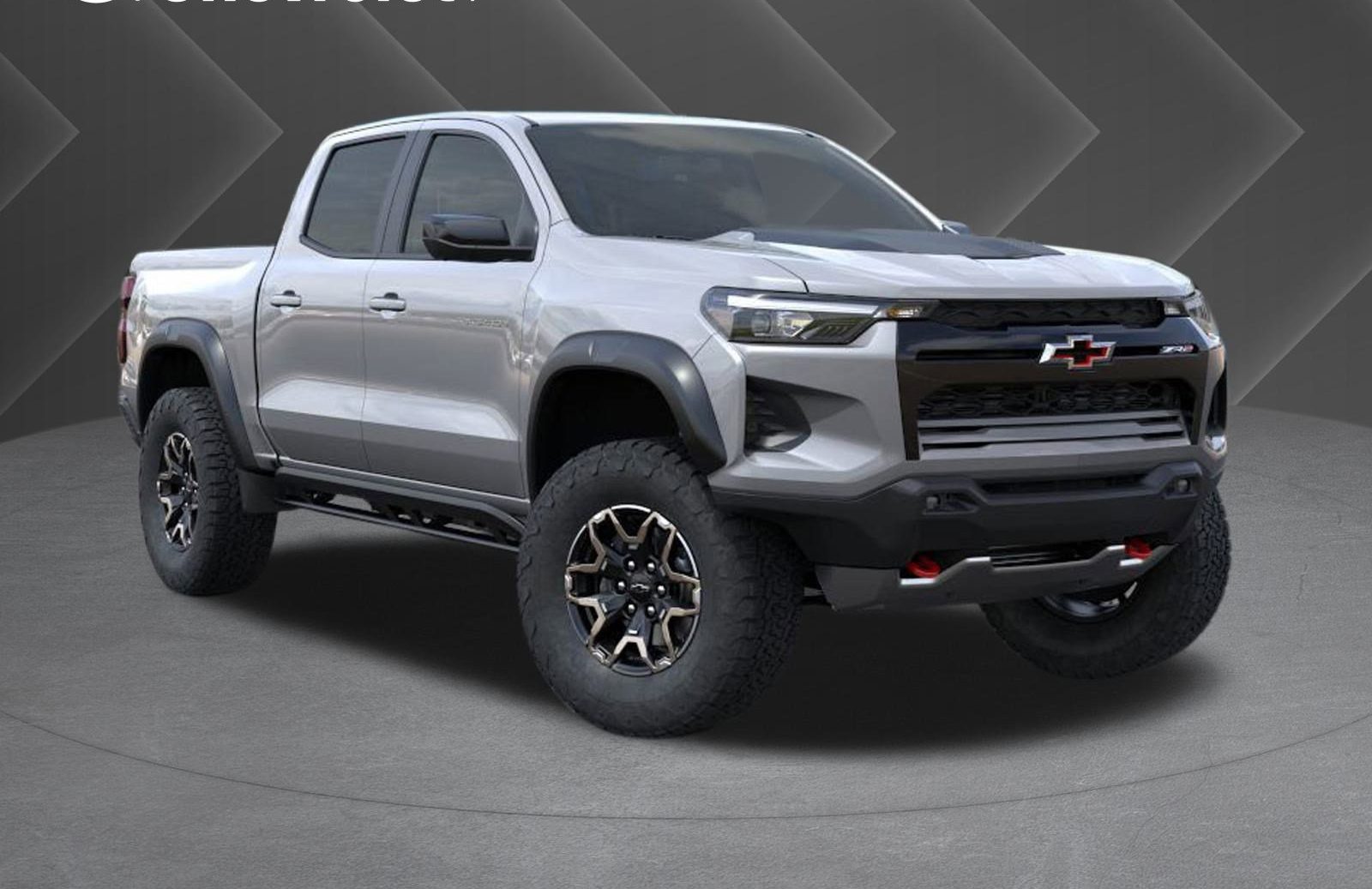
8. 2025 Chevrolet Colorado ZR2 4WD With the 2.7L Turbocharged Four-Turbo Architecture
- Engine: 2.7L turbocharged inline 4
- Horsepower: 310 hp
- Torque: 390 lb ft
- Length and width: 212.7 in length, 74.9 in width
Chevrolet’s Colorado ZR2 uses a 2.7-liter turbocharged four-cylinder producing 310 horsepower and 390 lb-ft of torque in its highest-output configuration. While not a twin-turbo V6 in the strict configuration sense, addressing it here serves a specific purpose: demonstrating how modern boosted engine architectures, regardless of cylinder count, are delivering the torque figures and towing capability that buyers historically required V8s to achieve, and doing so in a package that offers competitive fuel economy and lower weight.
Comparing 390 lb-ft of torque from a 2.7-liter four-cylinder against the V8 it replaced in the Colorado lineup, as well as against V8-equipped competitors in the midsize truck segment, reveals how completely turbocharging has changed the displacement-performance relationship.
A previous-generation Colorado with the 3.6-liter naturally aspirated V6 produced 308 horsepower and 275 lb-ft of torque. Chevrolet’s turbocharged four-cylinder produces more torque from 0.9 liters less displacement, and it produces that torque at lower rpm, where truck buyers use it for hauling and towing.
The maximum towing capacity for the Colorado ZR2 with the turbocharged engine reaches 7,700 pounds. Payload rating of 1,540 pounds covers the most common truck bed use cases. Fuel economy in combined driving runs approximately 19 to 22 miles per gallon, depending on driving conditions and load, which is meaningfully better than the V8 trucks from the full-size segment that buyers with similar capability requirements might have previously considered.
MSRP for the 2025 Chevrolet Colorado ZR2 4WD starts around $50,000, which positions it below the V8-powered full-size truck alternatives that deliver comparable towing capacity. For a buyer who needs legitimate truck capability in a more manageable package size, with better fuel economy and lower ownership cost than a V8 full-size alternative, the Colorado ZR2’s turbocharged architecture delivers on the promise that modern boosted engines have made to the performance and capability truck buyer.
