
Speed has always been part of Bugatti’s identity. Since the company first appeared in the early 1900s, the brand has chased one goal with relentless ambition: building machines that feel faster, stronger, and more dramatic than anything else on the road. From prewar masterpieces to modern hypercars packed with advanced engineering, Bugatti vehicles have carried an almost mythical reputation for performance and exclusivity.
A Bugatti is rarely just transportation. Every model carries a sense of occasion the moment the engine fires up. Some became legends because of race victories, while others earned fame through breathtaking top speed records that pushed automotive engineering into territory few companies could reach. Certain models were built in tiny numbers, making them highly prized collector machines decades later.
Horsepower figures have climbed at an astonishing pace throughout Bugatti’s history. Early models once shocked drivers with barely 200 horsepower. Modern creations now produce more than 1,500 horsepower while crossing speeds once thought impossible for production cars. That progress tells the story of how far automotive technology has advanced and how Bugatti remained at the center of that pursuit.
This ranking looks at some of the fastest and most powerful Bugatti models ever created, arranged by horsepower and top speed. Each vehicle brought something different to the table, whether it was groundbreaking engineering, elegant styling, track-focused brutality, or road-going luxury blended with extreme velocity.
Several changed the automotive industry forever, while others became rolling symbols of excess and innovation. Here is a closer look at the Bugatti machines that transformed speed into an art form.
1. 1936 Bugatti Type 57 SC Atlantic
Top Speed: 124 mph
- Engine: 3.3L supercharged inline-8
- Horsepower: 200 hp
- Torque: Approximately 280 Nm
- Length: 4150 mm
- Width: 1600 mm
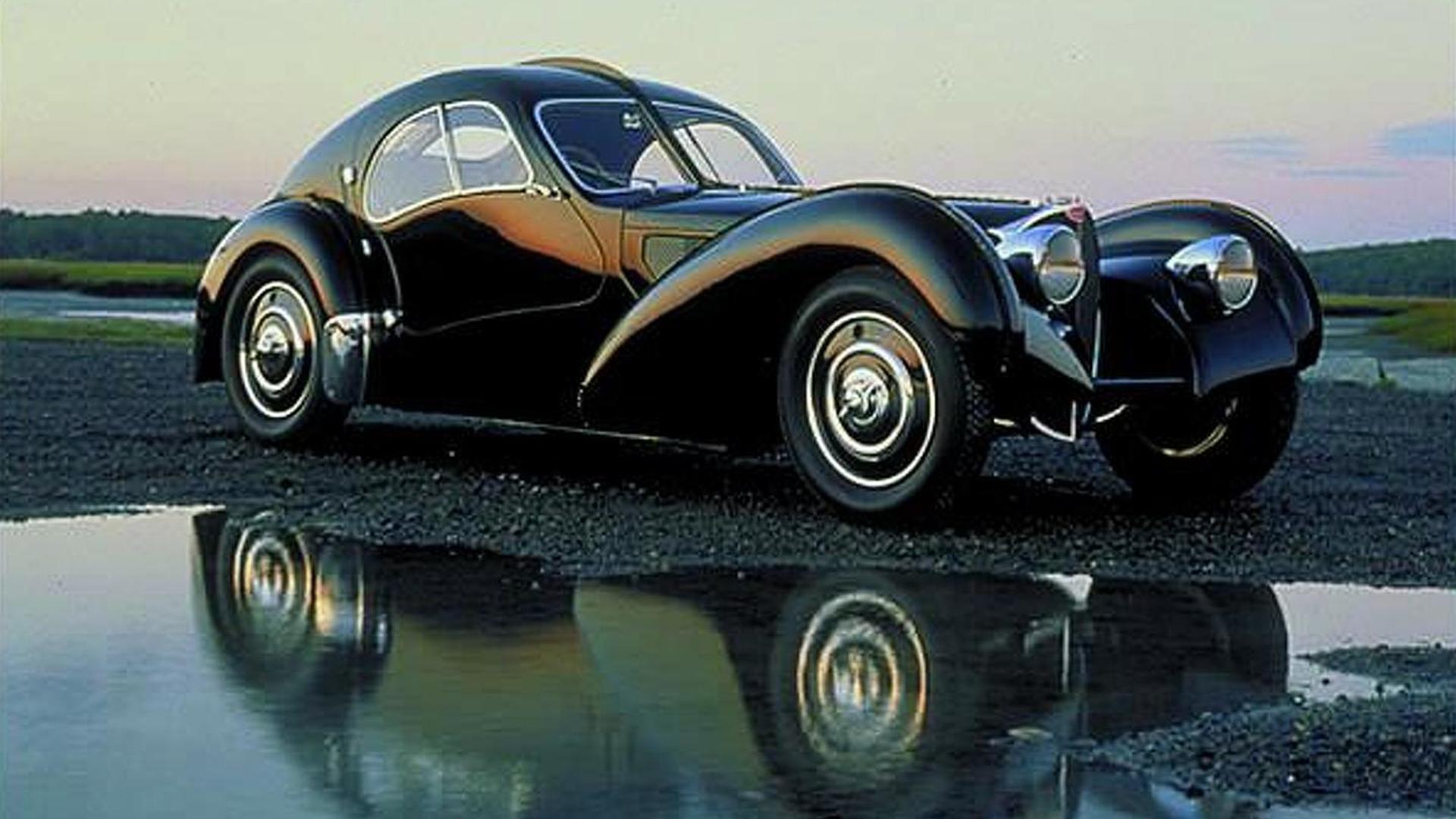
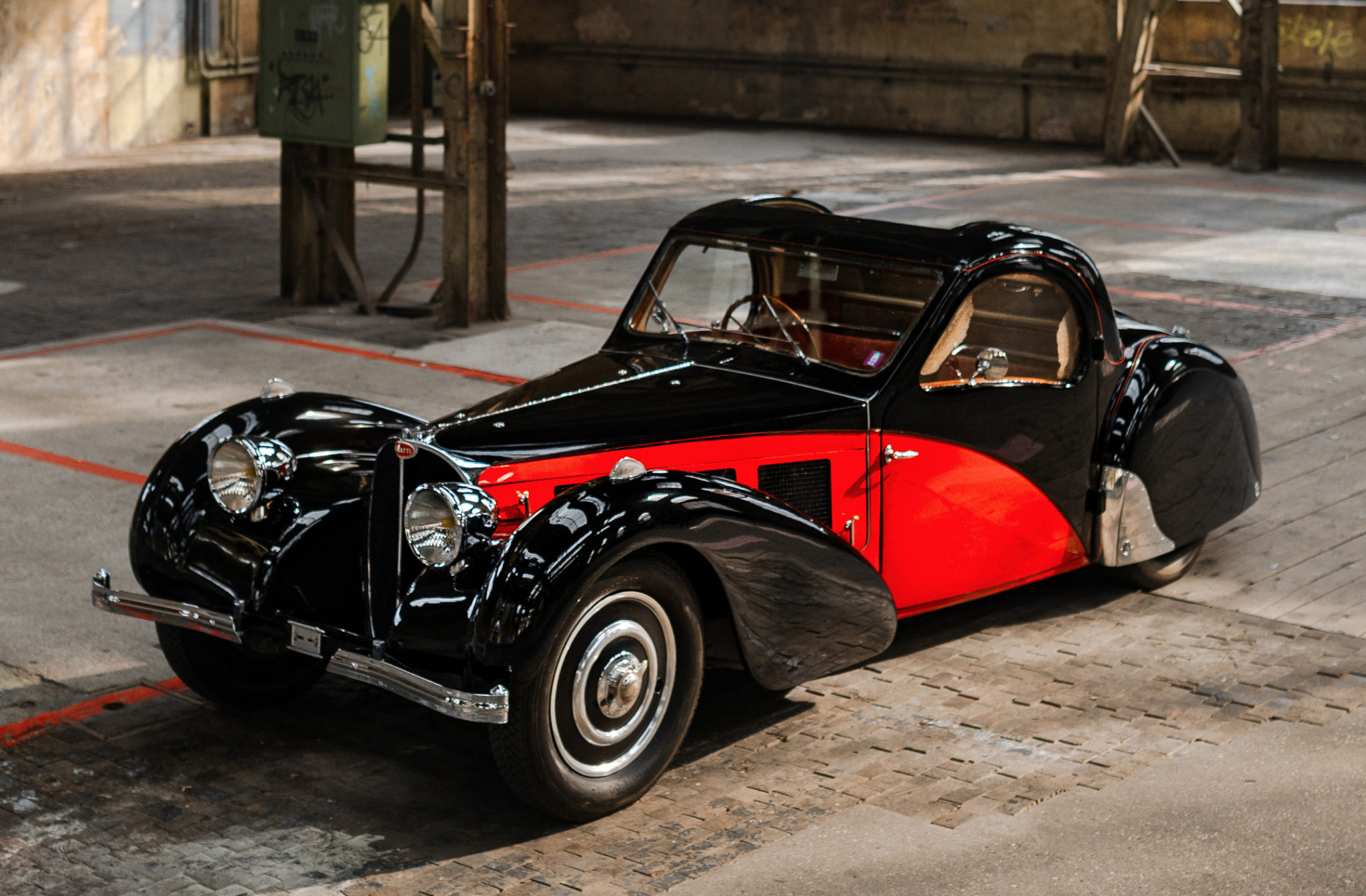
Long before Bugatti became associated with quad-turbocharged hypercars and record-setting speed runs, the company already had a reputation for building machines that felt years ahead of their era. The 1936 Bugatti Type 57 SC Atlantic stands as one of the clearest examples of that philosophy. Even today, the car looks astonishingly modern, with flowing bodywork, dramatic curves, and proportions that resemble rolling sculpture rather than transportation.
Jean Bugatti designed the Atlantic with aviation inspiration in mind. During the 1930s, aircraft engineering represented cutting-edge technology, and the Atlantic borrowed heavily from that aesthetic. Distinctive riveted seams stretched across the body because the lightweight Elektron magnesium alloy panels could not be welded safely. Instead of hiding the seams, Bugatti transformed them into one of the car’s defining styling elements.
Performance figures from that period may appear modest compared to present-day hypercars, yet a top speed of 124 mph during the 1930s bordered on unbelievable. Roads were rough, tire technology remained primitive, and braking systems lacked the sophistication drivers expect today. Reaching such speeds demanded courage as much as engineering talent.
Power came from a supercharged 3.3-liter inline-eight engine capable of delivering close to 200 horsepower. That output helped the Atlantic become one of the quickest road cars of its generation. Drivers experienced smooth acceleration paired with a refined mechanical character that separated Bugatti from several rivals focused purely on aggression.
Rarity also plays a massive role in the Atlantic’s legendary reputation. Only four examples were ever produced. Three survive today, while the missing fourth car has become one of the greatest mysteries in automotive history. Collectors and historians have spent decades discussing its possible whereabouts. Because of that scarcity, surviving examples are considered among the most valuable automobiles ever created.
Fashion designer Ralph Lauren owns one of the remaining Atlantics, and the vehicle regularly appears in prestigious concours events. Whenever one surfaces publicly, crowds gather instantly. Few automobiles command that level of attention nearly ninety years after production.
2. 1992 Bugatti EB 110 Super Sport SS
Top Speed: 218 mph
- Engine: 3.5L quad-turbocharged V12
- Horsepower: 610 hp
- Torque: 650 Nm
- Length: 4400 mm
- Width: 1940 mm
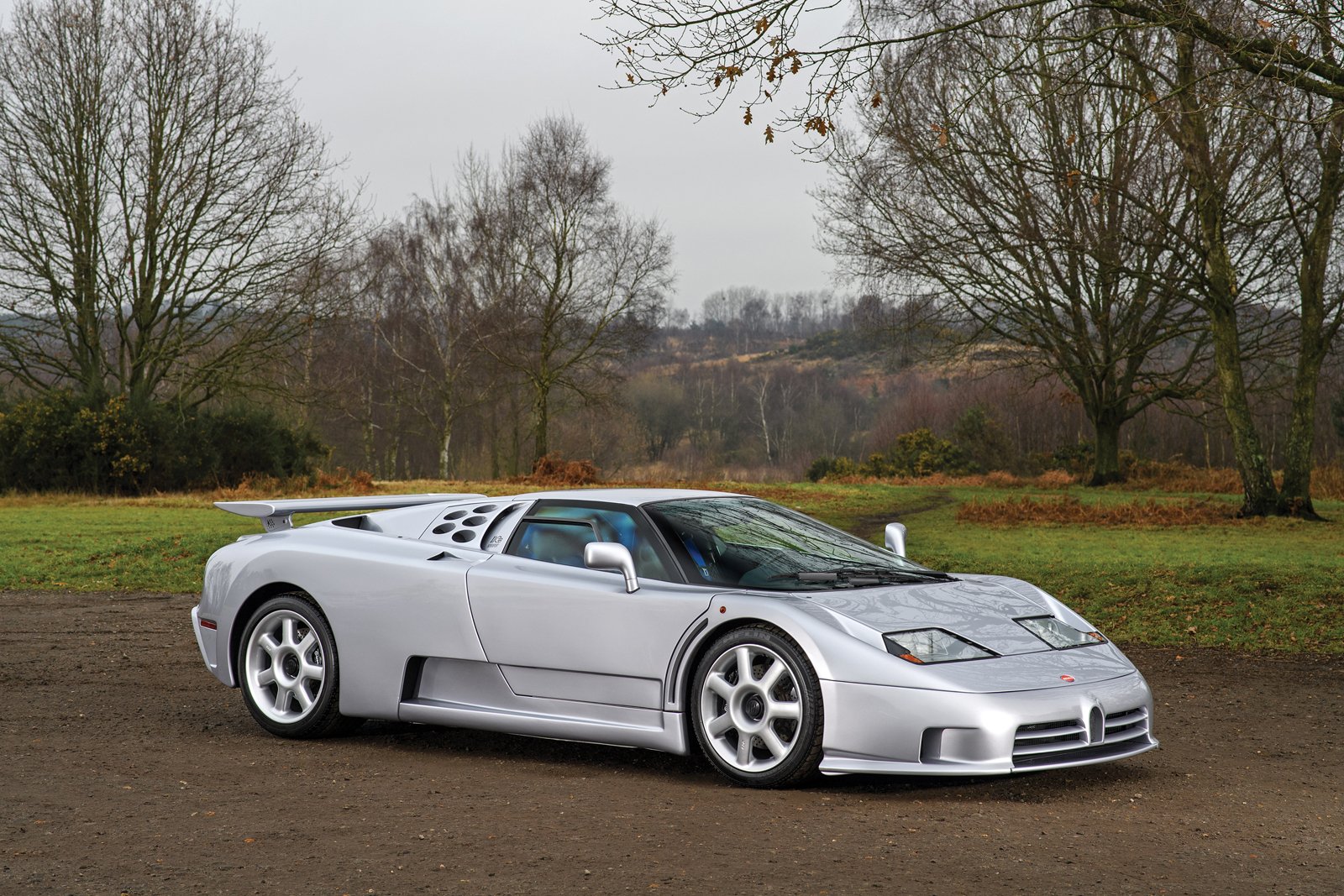
Bugatti disappeared for years before roaring back into public attention during the early 1990s with the astonishing EB 110 Super Sport SS. At a time when supercars were becoming increasingly aggressive and technologically advanced, Bugatti returned with a machine that immediately demanded respect from competitors across the industry.
Development of the EB 110 centered around one mission: proving Bugatti still belonged among elite performance manufacturers. Engineers approached the project with remarkable ambition. Instead of relying on traditional layouts, the company packed the car with advanced materials and engineering solutions rarely seen during that era.
A 3.5-liter quad-turbocharged V12 engine sat behind the cabin, producing an astonishing 610 horsepower in Super Sport form. Those numbers looked outrageous in 1992. Acceleration felt brutally quick, with the car launching from 0 to 62 mph in barely more than three seconds. Even modern performance cars still struggle to match that pace.
Four turbochargers helped the EB 110 deliver relentless power at high speeds. Drivers experienced a surge of acceleration that kept building aggressively as the speedometer climbed higher. Reaching 218 mph placed the EB 110 among the fastest production cars on Earth during its time.
Technology inside the car also separates it from rivals. Bugatti used a carbon-fiber monocoque chassis developed with aerospace-level precision. Today, that construction method appears common among exotic cars, though the EB 110 helped push the technology into mainstream supercar development.
All-wheel drive provided extra stability and traction, allowing the car to handle immense power with greater confidence. That system became one of the defining traits of later Bugatti hypercars as well. Even decades later, enthusiasts can trace Bugatti’s modern engineering philosophy directly back to the EB 110.
Styling gave the car a dramatic presence without becoming cartoonish. Sharp lines, wide air intakes, and low proportions made it appear purposeful from every angle. Traditional scissor doors added theatrical flair whenever the car arrived at an event or dealership.
Inside the cabin, Bugatti balanced performance with luxury. Leather upholstery, polished finishes, and carefully designed controls created a far more upscale atmosphere than several rival supercars from that era. Drivers could cruise comfortably despite the vehicle’s immense capabilities.
Financial problems eventually hurt Bugatti Automobili S.p.A., limiting production numbers and cutting short the company’s revival during the 1990s. Yet the EB 110 refused to fade into obscurity. Enthusiasts gradually recognized how advanced the car truly was for its time.
Also Read: 10 EVs That Accelerate Faster Than the Bugatti Chiron
3. 2021 Bugatti La Voiture Noire
Top Speed: 248 mph
- Engine: 8.0L quad-turbocharged W16
- Horsepower: 1500 hp
- Torque: 1600 Nm
- Length: 4990 mm
- Width: 2030 mm
Few cars command attention quite like the Bugatti La Voiture Noire. Even among ultra-exclusive hypercars, this machine exists in a category almost entirely by itself. Built as a one-off creation, the car combines staggering performance with styling that feels almost cinematic.
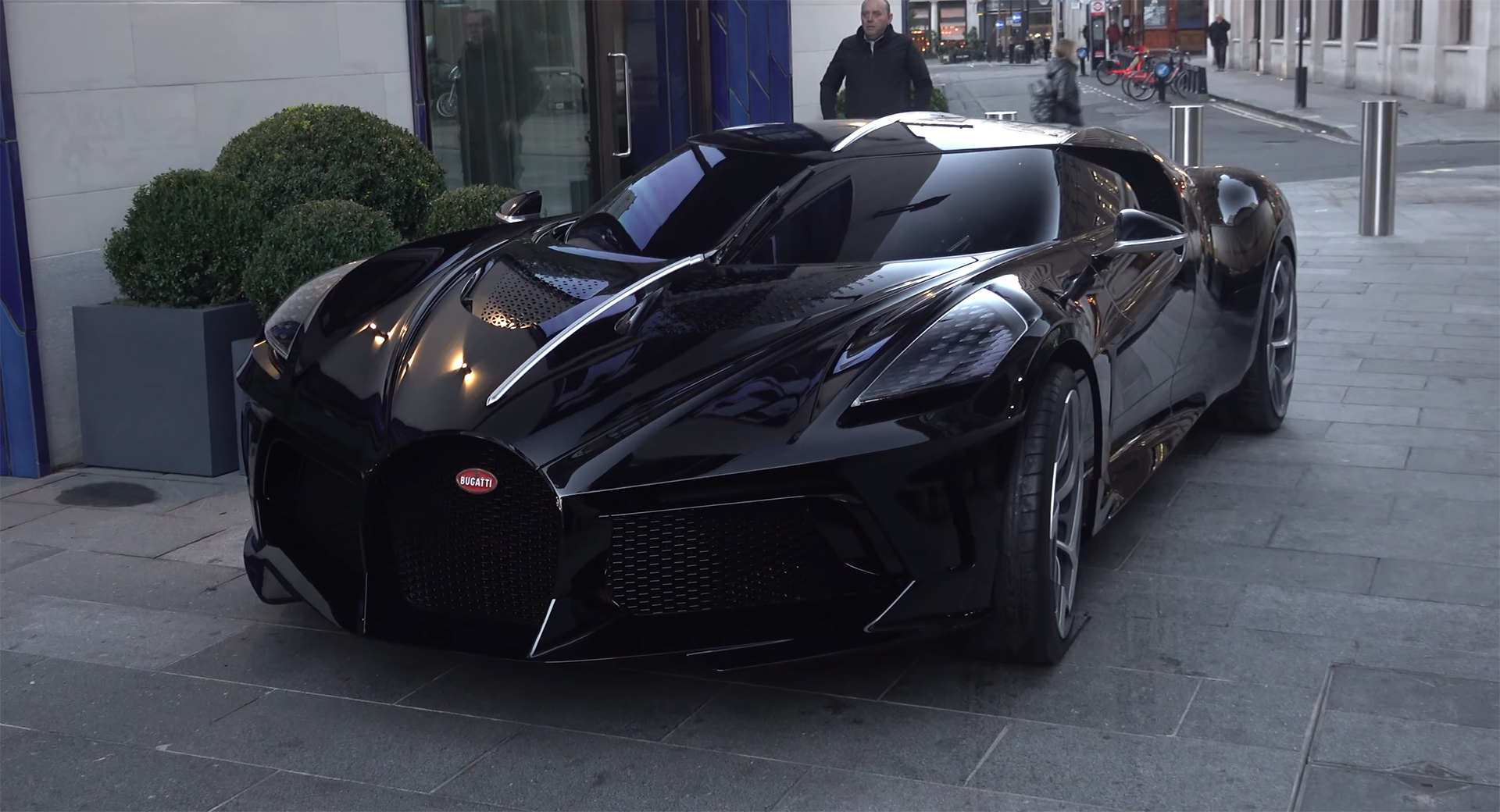
Translated from French, the name means “The Black Car,” and the vehicle fully embraces that identity. Deep gloss-black carbon fiber covers the bodywork from nose to tail, creating a sinister appearance unlike anything else wearing a Bugatti badge. Under sunlight, every curve reflects dramatically, giving the impression that the car was sculpted from liquid metal.
Bugatti drew inspiration from the legendary Type 57 SC Atlantic while shaping La Voiture Noire. That influence appears through the sweeping central spine running across the body and the elegant proportions flowing from front to rear. Yet the final result feels modern rather than retro.
Power comes from Bugatti’s famous 8.0-liter quad-turbocharged W16 engine. Producing 1,500 horsepower and 1,180 lb-ft of torque, the machine launches with astonishing violence despite weighing far more than lightweight track-focused hypercars. Acceleration happens with effortless brutality, making highway speeds appear almost instantly.
A top speed of 248 mph places La Voiture Noire among the quickest road cars ever produced. Engineers also refined the car for comfortable grand touring, allowing drivers to cruise calmly despite possessing enough power to embarrass nearly every vehicle on the planet.
Visual drama surrounds nearly every detail. The front fascia features razor-thin lighting signatures that stretch aggressively across the nose. Along the rear section, six exhaust outlets dominate attention immediately. That arrangement looks outrageous, though it perfectly suits the car’s extravagant personality.
Cabin materials reinforce the sense of exclusivity. Rich brown leather contrasts beautifully against the dark exterior, creating a warm atmosphere inside the cockpit. Polished aluminum accents and premium finishes appear throughout the interior without feeling excessive.
4. 2023 Bugatti W16 Mistral
Top Speed: 261 mph
- Engine: 8.0L quad-turbocharged W16
- Horsepower: 1578 hp
- Torque: 1600 Nm
- Length: 4750 mm
- Width: 2000 mm
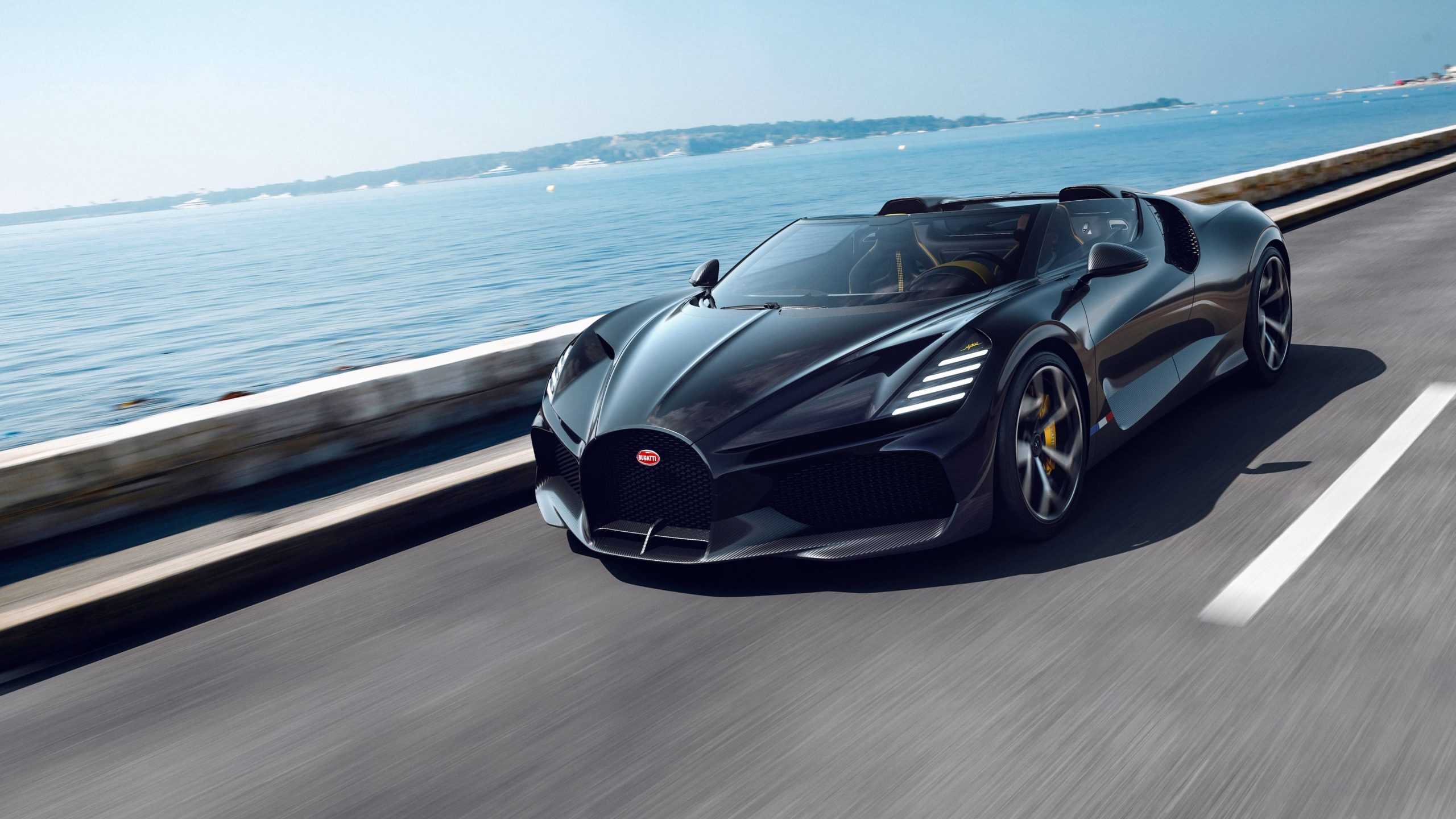
Open-top hypercars rarely chase outright speed records because removing a fixed roof usually creates aerodynamic compromises. Bugatti ignored that limitation completely with the 2023 W16 Mistral. Instead of building a relaxed grand touring roadster, the company engineered a machine capable of astonishing velocity while still delivering the thrill of open-air driving.
The W16 Mistral carries major importance for Bugatti because it marks the farewell chapter for the legendary quad-turbocharged W16 engine. After years of dominating headlines and rewriting performance expectations, the engine received one final showcase in a roadster that feels both celebratory and ferocious.
Bugatti designers shaped the Mistral with a smoother, more flowing appearance than several earlier models. Sweeping curves stretch across the bodywork, while the signature horseshoe grille remains firmly in place at the front. Slim LED lighting gives the car a sharp, modern identity without overwhelming the elegant proportions.
Behind the seats, dramatic roof-mounted air scoops channel airflow directly toward the massive engine. Those intakes serve a functional purpose, though they also give the car an aggressive visual personality. Every line appears carefully sculpted for aerodynamic efficiency at extreme speed.
Performance figures sound almost absurd. The 8.0-liter W16 generates 1,578 horsepower and 1,180 lb-ft of torque. Acceleration feels relentless from the instant the throttle opens. Reaching 60 mph takes barely more than two seconds, while the car continues pulling with astonishing force deep into triple-digit territory.
A verified top speed of 261 mph makes the W16 Mistral one of the quickest open-top production cars ever created. Experiencing that pace without a fixed roof transforms the drive into something almost surreal. Wind, sound, and vibration combine into a sensory overload few vehicles can deliver.
Inside the cabin, Bugatti balanced speed with craftsmanship. Rich leather upholstery covers nearly every surface, while polished metal details add sophistication throughout the cockpit. Drivers sit low inside the car, surrounded by premium materials that remind occupants this remains a luxury product despite its monstrous performance.
One especially memorable detail appears in the gear selector. Bugatti included an amber insert featuring Rembrandt Bugatti’s famous elephant sculpture. That artistic touch links the Mistral directly to Bugatti history while reinforcing the company’s obsession with craftsmanship.
Production numbers remain extremely limited, with all units reportedly sold before manufacturing even finished. Wealthy collectors recognized immediately that the W16 Mistral represented the closing chapter of an engine era unlikely to return.
5. 2010 Bugatti Veyron 16.4 Super Sport World Record Edition
Top Speed: 268 mph
- Engine: 8.0L quad-turbocharged W16
- Horsepower: 1200 hp
- Torque: 1500 Nm
- Length: 4462 mm
- Width: 1998 mm
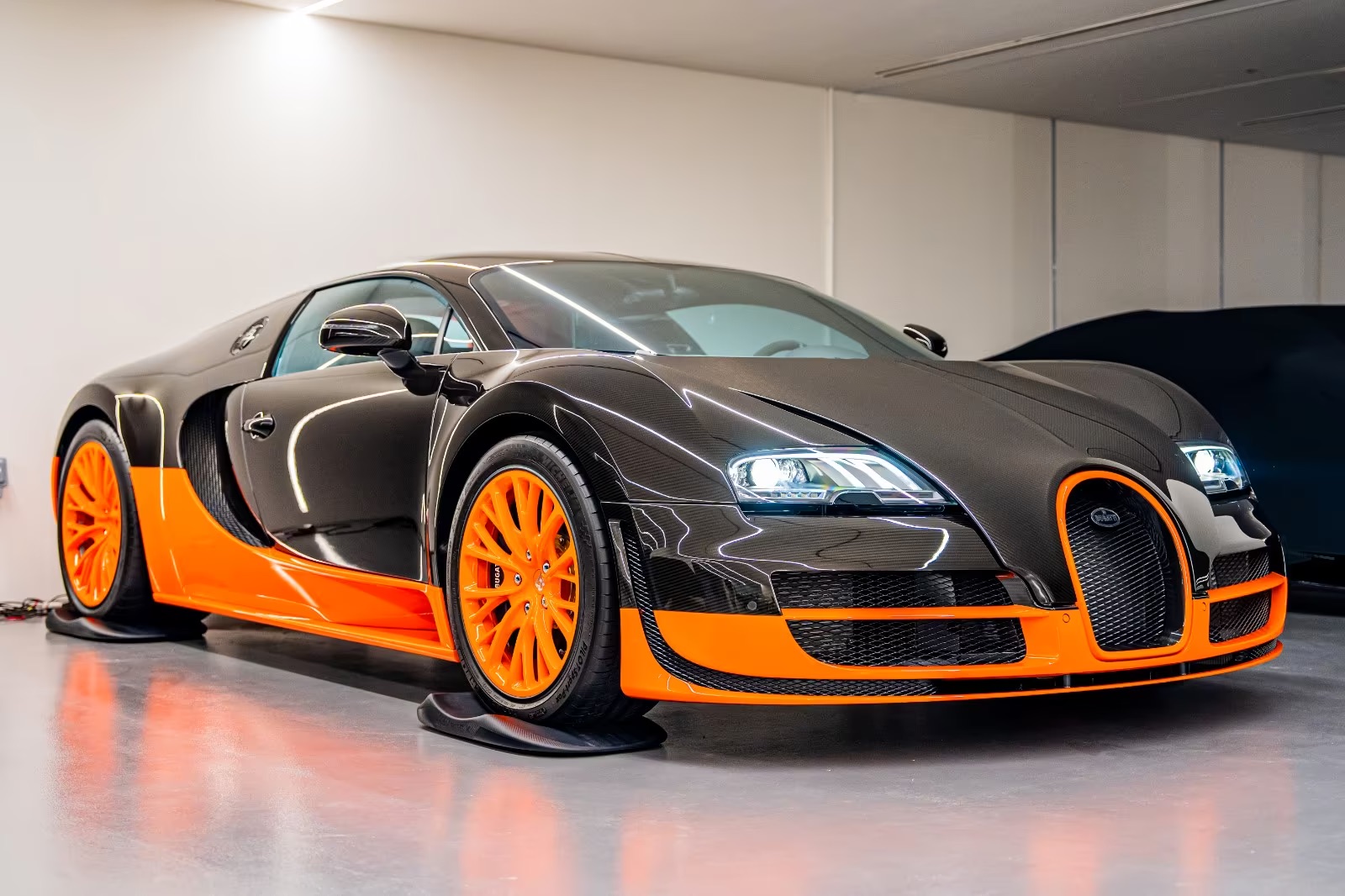
During the early 2000s, automotive companies competed aggressively to build faster and more powerful supercars. Bugatti ended the debate decisively when the Veyron arrived. Then the company raised the stakes even higher with the Veyron 16.4 Super Sport World Record Edition.
At launch, people struggled to believe the numbers attached to the car. A production vehicle producing 1,200 horsepower and reaching 268 mph sounded closer to science fiction than reality. Yet Bugatti delivered exactly that, shocking the automotive industry and changing expectations permanently.
Engineering the Super Sport required extraordinary effort. Standard performance solutions simply could not handle those speeds safely. Engineers developed specialized aerodynamics, reinforced drivetrain components, upgraded cooling systems, and advanced tire technology capable of surviving immense forces at maximum velocity.
Power came from the now-famous 8.0-liter quad-turbocharged W16 engine. The setup generated brutal acceleration at nearly any speed. Flooring the throttle transformed the car into a missile, with torque arriving instantly and continuously.
Bugatti also refined the bodywork for improved aerodynamic stability. The Super Sport featured revised air intakes, a stretched rear section, and enhanced airflow management. Those adjustments allowed the car to remain composed while approaching speeds most aircraft achieved during the early aviation era.
Public fascination exploded once the Veyron broke the production car speed record. News outlets across the globe covered the achievement, while automotive enthusiasts debated whether another manufacturer could realistically surpass it. For years, the Veyron represented the ultimate expression of automotive excess.
Unlike stripped-out track machines, the Veyron combined staggering speed with comfort. Drivers enjoyed leather-covered seats, premium audio systems, climate control, and luxurious craftsmanship while traveling at nearly 270 mph. That contradiction became part of the car’s magic.
A separate speed key unlocked the car’s highest velocity mode. Without activating that feature, electronic systems limited the top speed for safety purposes. Once engaged, the Veyron lowered its suspension and adjusted aerodynamic settings to prepare for maximum-speed driving.
Stopping power mattered just as much as acceleration. Massive carbon ceramic brakes paired with aerodynamic airbrakes helped the car slow down rapidly despite its enormous speed capabilities. Few vehicles before it required such extreme braking technology.
Production remained limited, increasing desirability among collectors. Each example demanded enormous attention during assembly, with Bugatti treating the process almost like aerospace manufacturing. Costs reportedly exceeded the vehicle’s selling price, showing how determined the company was to build the ultimate hypercar regardless of expense.
6. 2017 Bugatti Chiron
Top Speed: 285 mph
- Engine: 8.0L quad-turbocharged W16
- Horsepower: 1500 hp
- Torque: 1600 Nm
- Length: 4544 mm
- Width: 2038 mm
Replacing the Veyron seemed nearly impossible. Bugatti had already built a machine many considered unbeatable. Expectations surrounding the Chiron became enormous long before the first production model reached customers.
Rather than making minor adjustments, Bugatti redesigned nearly every aspect of the car. The result became the 2017 Chiron, a hypercar carrying more power, sharper styling, improved handling, and even greater refinement than its famous predecessor.
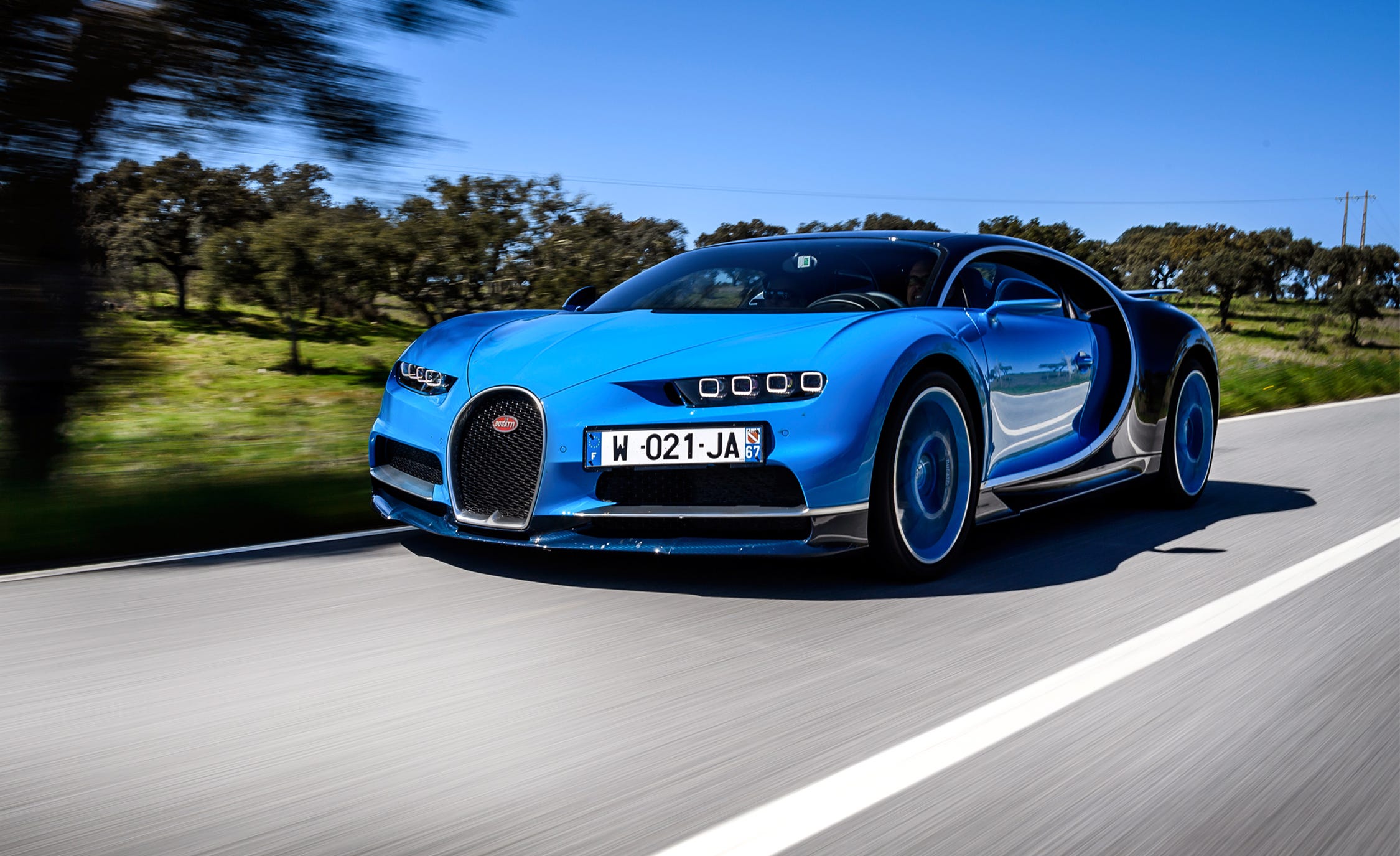
Immediately recognizable features include the dramatic horseshoe grille and sweeping C-shaped side profile. Those design elements gave the Chiron a cleaner and more elegant appearance compared to the Veyron’s rounded shape. Even parked, the car looks brutally fast.
Under the body sits an upgraded version of the quad-turbocharged 8.0-liter W16 engine. Output climbed to 1,500 horsepower and 1,180 lb-ft of torque. Acceleration feels violent yet strangely smooth because the power delivery remains incredibly controlled.
Bugatti claimed the Chiron could reach 285 mph with the limiter removed. Standard production models remained electronically restricted to lower speeds, though even the limited version delivered breathtaking performance far beyond ordinary supercars.
Reaching 60 mph required roughly 2.4 seconds. More shocking than the launch figures was the car’s ability to continue accelerating ferociously beyond 150 mph. Lesser performance cars begin fading at those speeds. The Chiron still felt hungry for more.
Engineering refinement separated the Chiron from several rivals chasing raw speed alone. Ride quality remained impressively comfortable during regular driving. Noise insulation, seating comfort, and interior craftsmanship created an experience closer to a luxury grand tourer than a stripped racing machine.
Inside the cabin, Bugatti emphasized quality rather than flashy gimmicks. Aluminum trim, premium leather, and carefully machined controls surrounded occupants in an atmosphere of understated luxury. Every switch and surface felt deliberate.
Cooling systems became a massive engineering challenge because the engine generated extraordinary heat. Bugatti used advanced airflow management and multiple radiators to keep temperatures under control during high-speed driving.
Braking performance also reached astonishing levels. Gigantic carbon ceramic discs and advanced aerodynamic systems allowed the Chiron to stop with remarkable stability despite weighing far more than lightweight track-focused exotics.
7. 2019 Bugatti Chiron Super Sport 300+
Top Speed: 304 mph
- Engine: 8.0L quad-turbocharged W16
- Horsepower: 1600 hp
- Torque: 1600 Nm
- Length: 4600 mm
- Width: 2040 mm
Crossing 300 mph once seemed impossible for a production car. Engineers, racing experts, and automotive journalists debated for decades whether tires, aerodynamics, and mechanical systems could realistically survive such speeds safely.
Bugatti answered the question emphatically with the Chiron Super Sport 300+. During a high-speed run at Germany’s Ehra-Lessien test track, the machine blasted past the 300 mph barrier, reaching 304 mph. That moment instantly became one of the greatest achievements in automotive history.
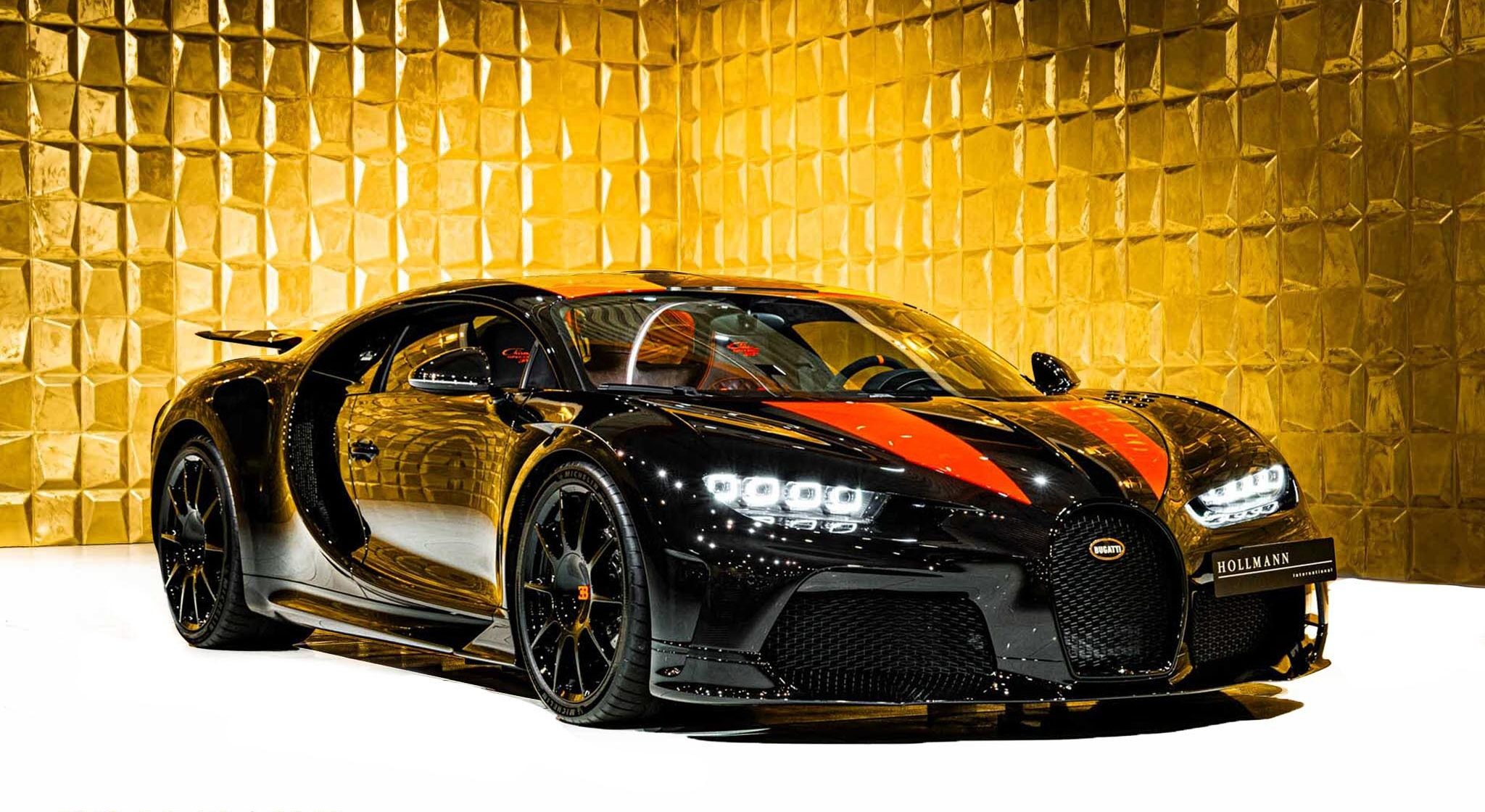
Unlike ordinary Chirons, the Super Sport 300+ featured extensive aerodynamic revisions. Engineers stretched the rear bodywork into a “longtail” configuration that improved airflow stability at extreme velocity. Small details across the exterior also reduced drag while increasing high-speed composure.
The quad-turbocharged W16 received upgrades, pushing output to 1,600 horsepower. Revised thermal management systems helped maintain performance during prolonged high-speed driving, while strengthened components ensured reliability under extraordinary stress.
Watching footage of the speed run remains astonishing today. The scenery blurred violently while the car appeared planted and stable despite traveling faster than some small aircraft during takeoff. Bugatti limited production heavily, making the Super Sport 300+ one of the most exclusive modern hypercars.
Each customer received a machine closely connected to one of the greatest speed achievements ever accomplished by a road-legal automobile. Visual styling reinforced the car’s special status. Bright orange racing stripes contrasted dramatically against exposed carbon fiber body panels, paying tribute to earlier Bugatti racing colors while creating a fierce modern appearance.
Despite its speed-focused mission, the cabin retained Bugatti’s luxurious character. Fine leather, polished metal surfaces, and premium materials surrounded occupants in an environment far more refined than most track-oriented exotics. Public fascination exploded after the 300 mph milestone became official.
Headlines spread worldwide because people understood they were witnessing automotive history. Breaking that barrier carried the same kind of emotional impact as earlier aviation or spaceflight achievements.
Also Read: 10 Fastest Cars That Can Destroy a Bugatti with Unmatched Speed and Acceleration
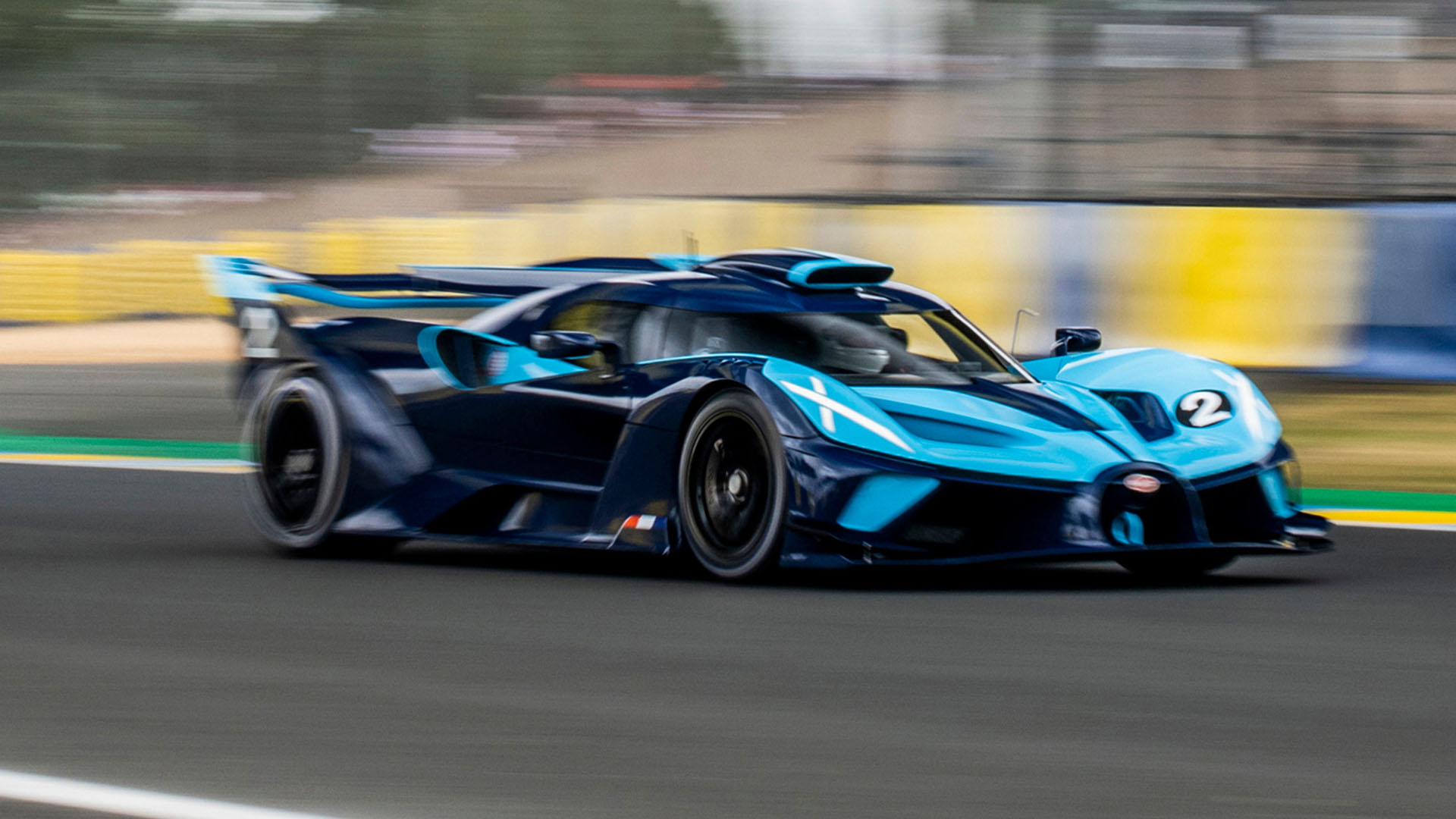
8. 2023 Bugatti Bolide
Top Speed: 311 mph
- Engine: 8.0L quad-turbocharged W16
- Horsepower: 1600 hp
- Torque: 1600 Nm
- Length: 4750 mm
- Width: 2000 mm
Pure insanity on four wheels. That description fits the 2023 Bugatti Bolide better than almost anything else. While several Bugatti models balance luxury with speed, the Bolide was created with one brutal purpose: maximum track performance at unimaginable velocity.
Bugatti stripped away nearly everything unnecessary and focused completely on lightweight engineering, aerodynamic efficiency, and race-inspired aggression. The result looks less like a traditional hypercar and more like a Le Mans prototype escaped from a futuristic motorsport series.
One glance at the Bolide makes its mission obvious. Massive air channels cut through the bodywork, the stance sits incredibly low, and the rear wing appears large enough to belong on a fighter jet. Every curve and vent exists to improve airflow, cooling, or downforce.
At the center of the machine sits Bugatti’s legendary 8.0-liter quad-turbocharged W16 engine. Engineers tuned the powerplant to produce 1,600 horsepower and 1,180 lb-ft of torque. Combined with the car’s dramatically reduced weight, performance reaches astonishing levels.
Bugatti simulations estimated the Bolide could achieve a top speed of 311 mph without electronic restrictions. Even with limitations in place, the car remains terrifyingly fast by any standard. Acceleration feels immediate and violent, delivering race-car intensity from the instant the throttle opens.
Unlike road-focused Bugattis loaded with luxury equipment, the Bolide embraces a far more extreme personality. Weight reduction became a major priority during development. Engineers used advanced carbon-fiber construction techniques similar to those seen in Formula 1 and endurance racing.
The cockpit reflects that motorsport influence clearly. Drivers sit inside a tight cabin surrounded by race-inspired controls, harness systems, and minimal distractions. Every element feels engineered for speed rather than comfort. Aerodynamics play a massive role in the Bolide’s capabilities.
At high velocity, the car generates enormous downforce that helps keep it stable during aggressive cornering. Bugatti claimed the vehicle could produce forces approaching race-car territory while attacking a circuit. Track capability separates the Bolide from nearly every Bugatti before it.
Several earlier models focused heavily on luxury grand touring with extraordinary speed added alongside refinement. The Bolide behaves differently. It exists to dominate closed circuits with ruthless efficiency. The engine sound also adds to the drama. The W16 roars with a savage intensity that feels sharper and angrier than the smoother tone heard in the Chiron or Veyron.
Every gear change sounds explosive, creating an experience that borders on sensory overload. Safety received enormous attention because of the extreme performance potential. FIA-inspired harness systems, advanced structural reinforcement, and race-oriented engineering solutions help protect occupants during high-speed driving sessions.
