
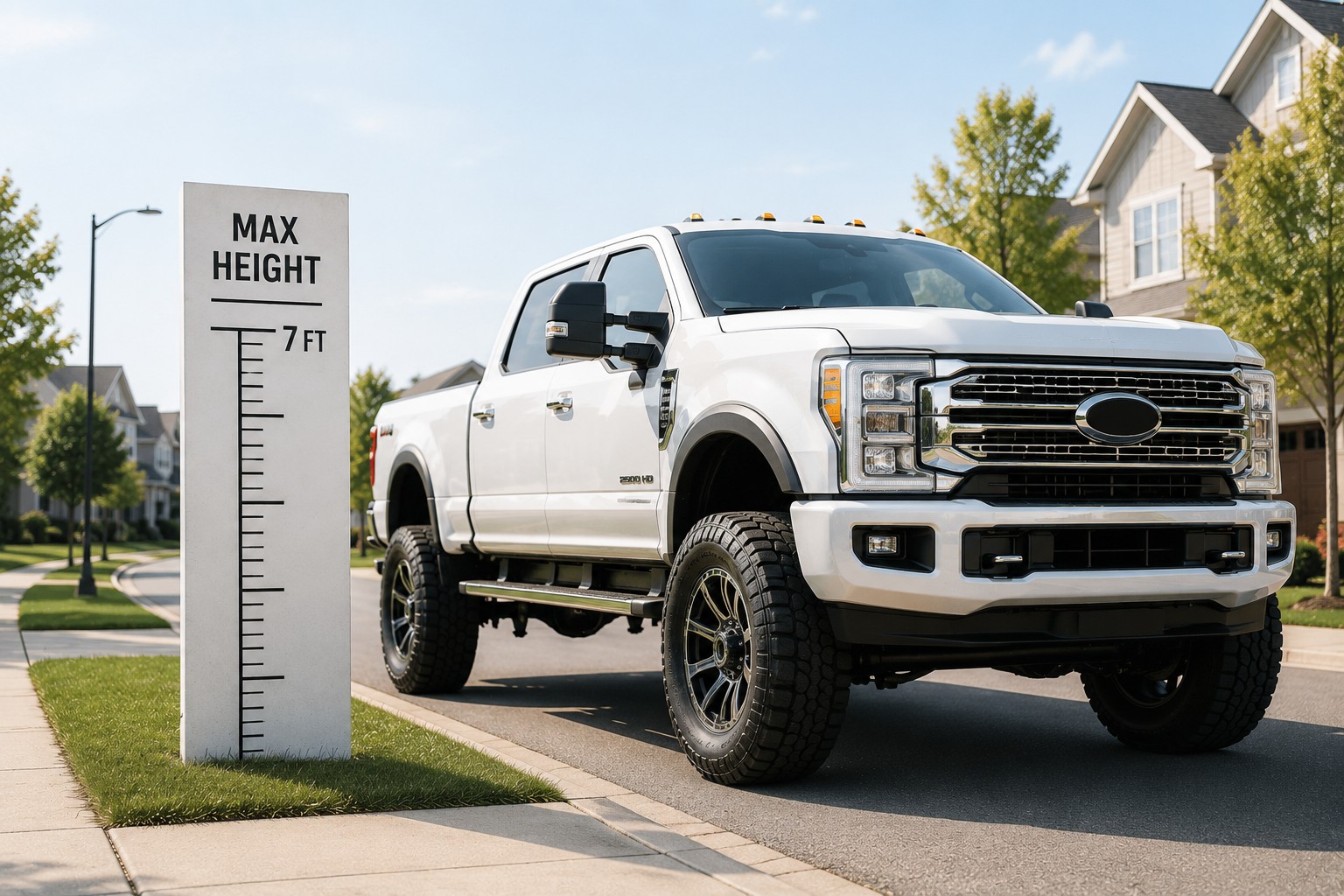
Pickup trucks have always been a symbol of American strength, utility, and independence. From the farms of the Midwest to the sun-baked highways of Texas, these vehicles carry a cultural weight that goes far beyond their payload capacity. They represent hard work, open roads, and a certain kind of freedom that is deeply woven into the national identity.
But something has quietly shifted over the past three decades. The trucks themselves have transformed into machines that would be barely recognizable to the farmers and tradespeople who first made them popular.
They have grown wider, taller, heavier, and longer with each new model year. What was once a practical workhorse built for dirt roads and job sites has become a towering urban presence that barely fits between lane markers.
Since 1990, the average pickup truck has gained over 1,300 pounds and grown significantly in footprint. Some current models stretch beyond 22 feet in length, weigh more than 8,500 pounds, and stand nearly seven feet tall at the roofline. These are not extreme outliers, they represent the mainstream direction of the entire industry.
Today, light trucks, including pickups, SUVs, and vans, account for roughly 75% of all new vehicle sales in the United States. Their average size and weight are at all-time highs. The question of whether there should be limits on how large these vehicles can grow is no longer a fringe debate. It is a serious public conversation rooted in safety data, urban planning realities, and a genuine tension between personal freedom and collective responsibility.
The Safety Crisis Nobody Wants to Talk About
The most urgent argument for capping truck size is not about aesthetics or parking frustration, it is about lives. Bigger trucks are statistically more dangerous, particularly for people who are not inside them. The numbers paint a picture that is hard to dismiss.
Pedestrians struck by a large pickup truck or SUV are approximately 50% more likely to die than those hit by a smaller passenger car. The reason is largely structural. Modern trucks feature tall, flat front ends that strike pedestrians at chest or head height rather than at the legs. This transfers lethal energy to the most vulnerable parts of the human body.
Hood heights on pickup trucks have increased by an average of at least 11% since the year 2000. On certain heavy-duty models, the front edge of the hood now sits 55 inches off the ground, roughly level with the roofline of a compact sedan. A pedestrian standing directly in front of such a vehicle can be completely invisible to the driver.
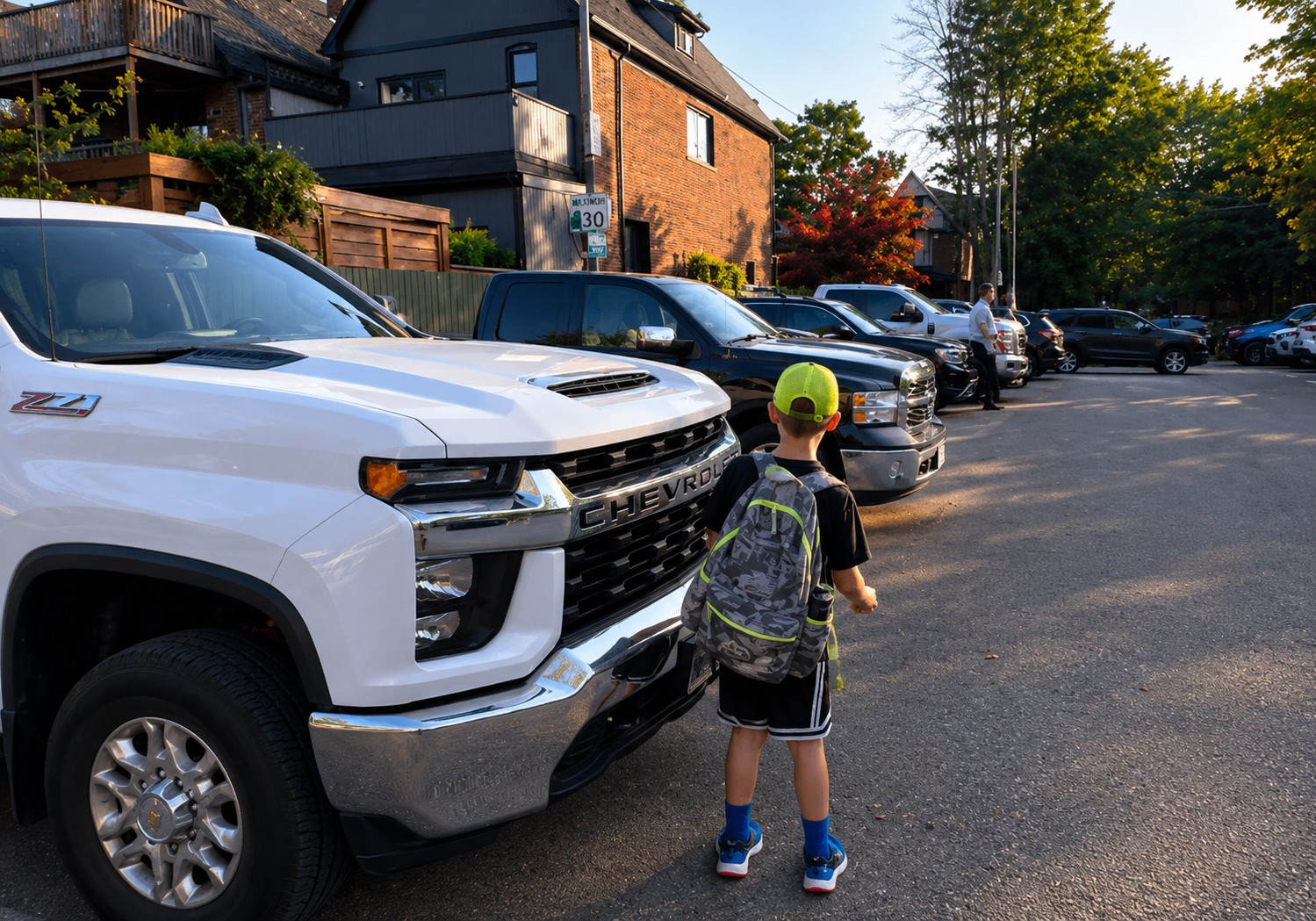
Large blind zones created by these tall hoods and wide front pillars severely reduce driver visibility. Children, cyclists, and wheelchair users are especially at risk. They can disappear entirely from a driver’s sightline before a vehicle even begins to move. This design flaw is not an accident, it is a consequence of prioritizing an aggressive, commanding aesthetic over forward visibility.
Pedestrian fatalities in the United States reached their highest level in over four decades in 2022. Bicycle deaths that same year were the worst since tracking began. Meanwhile, the share of pedestrian fatalities involving trucks and SUVs has grown from 22% to 44% since the mid-1980s. The rise of the oversized truck and the rise of pedestrian deaths are not coincidental trends they are connected.
Pickup trucks and SUVs are now two to three times more likely than smaller vehicles to cause fatal injuries when colliding with a pedestrian. Safety researchers, highway engineers, and public health experts have increasingly aligned on this end. The data is no longer ambiguous.
Trucks Are Outgrowing the World Around Them
Beyond the immediate human cost, oversized pickup trucks are quietly overwhelming infrastructure that was built for an entirely different era of vehicle design. Roads, bridges, guardrails, and parking structures across America were engineered decades ago for far smaller and lighter vehicles. They were never tested against the machines rolling off dealership lots today.
Crash research commissioned by the U.S. Army Corps of Engineers found that current highway guardrails are insufficient to contain modern heavy vehicles. These guardrails line tens of thousands of miles of American roads. They were designed with a baseline vehicle weight and profile in mind that the average new pickup truck now far exceeds. A guardrail that fails to redirect a vehicle is a guardrail that sends it into oncoming traffic or off a cliff.
Standard parking spaces in the United States were designed with vehicles from a much earlier era in mind. A 22-foot-long truck attempting to fit into an 18-foot parking stall creates problems that go beyond inconvenience.
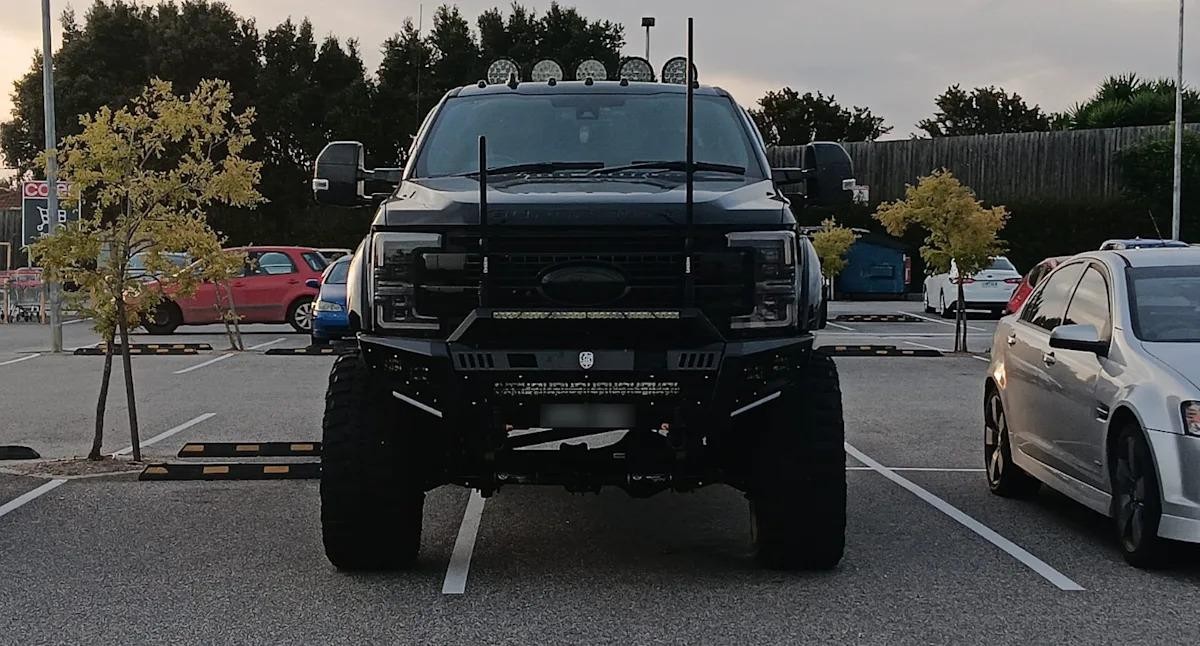
Overhanging vehicles block pedestrian walkways, obstruct the sight lines of adjacent drivers backing out, and reduce effective parking capacity across entire lots and garages.
Urban infrastructure is being stressed in ways that planners never anticipated. Multi-level parking structures have weight and height limits that a growing number of modern trucks simply exceed. Streets designed for two-way traffic with room for cyclists become dangerously narrow when dominated by vehicles nearly nine feet wide. Drive-through lanes, residential driveways, and even fire station doors are increasingly incompatible with the largest consumer trucks.
Cities around the world are beginning to push back. In the United Kingdom, pickup truck registrations nearly doubled between 2014 and 2024, prompting urban advocates to call on city leaders to take action against what they describe as vehicles creating parking chaos and visibility dangers on streets never designed for them. The problem is not uniquely American anymore, it is spreading wherever American-style truck culture has taken root.
The Other Side: Freedom, Function, and Fair Questions
Not everyone believes regulation is the right answer. The counterargument is grounded in genuine utility, economic reality, and legitimate concerns about government overreach into personal consumer choices.
For many Americans, a large truck is not a status symbol it is a working tool. Farmers hauling livestock trailers, contractors transporting lumber and heavy equipment, families pulling a horse trailer or boat across rural distances, these are real people with real needs.
A blunt regulatory cap on vehicle size could strip away the capability that is genuinely essential to how millions of people earn their living and manage their daily lives.
Manufacturers argue convincingly that size growth is driven by customer demand, not corporate vanity. Buyers request more cab space for larger families, more towing capacity for heavier loads, and more ground clearance for off-road work.
Automakers building electric truck models point out that larger battery packs also require larger frames. The market is responding to what people are actually asking for.
Technology has also made modern large trucks dramatically more capable without the fuel economy penalties of the past. Engineering advances have produced full-size trucks that achieve highway fuel efficiency figures that would have seemed impossible for vehicles of their size even twenty years ago. The argument that bigger automatically means worse for the environment is no longer as straightforward as it once appeared.
There is also a fundamental philosophical tension at the heart of this debate. In a free society, telling citizens what size vehicle they are permitted to purchase represents a meaningful government intervention. Any proposed regulation would need to be carefully and precisely constructed to avoid punishing rural workers and tradespeople who depend on large trucks for their livelihoods.
The most sensible path forward is probably not an outright size ban, but a serious overhaul of safety standards. Mandatory pedestrian detection systems, regulated maximum hood heights, redesigned front-end profiles, and stronger blind-zone requirements could address the deadliest aspects of oversized trucks without eliminating the genuine utility that made them indispensable in the first place. America may not need smaller trucks, but it urgently needs safer ones.
Also Read: Hyundai in Talks to Provide Waymo With 50,000 Ioniq 5 Robotaxis by 2028
