
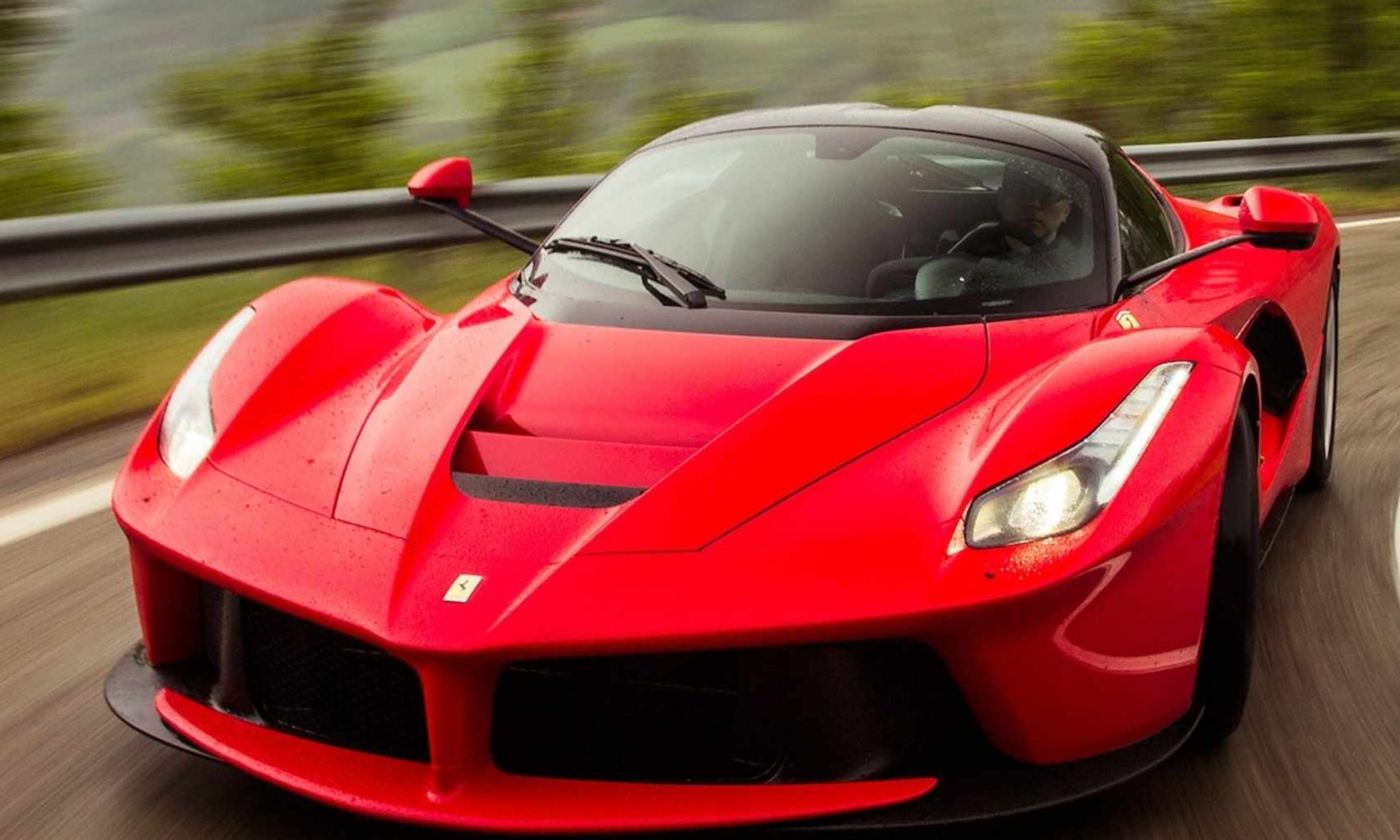
Ferrari has always been known for producing limited numbers of cars, protecting the exclusivity that surrounds the brand. However, some Ferrari models achieved surprisingly high production figures while still maintaining the prestige associated with the famous badge. These vehicles managed to attract thousands of buyers around the world without reducing the special feeling that comes with owning a Ferrari.
The reason behind their success came from longer production periods, wider market availability, and a focus on creating cars that could deliver exciting performance while remaining suitable for regular driving. Instead of being built only for collectors or track enthusiasts, these models appealed to a larger group of customers who wanted a Ferrari they could enjoy more often.
These are not the rarest Ferrari models ever produced, but they are among the most important because they introduced more drivers to the experience of owning and driving a Ferrari. From classic naturally aspirated V8 sports cars to newer twin-turbocharged models, each vehicle achieved strong demand for different reasons.
This list ranks the ten highest-production Ferrari lineups based on estimated worldwide sales figures. Along with their production numbers, each model includes important specifications that helped make it successful. These cars proved that Ferrari could expand its reach while still delivering the performance, style, and excitement expected from the brand.
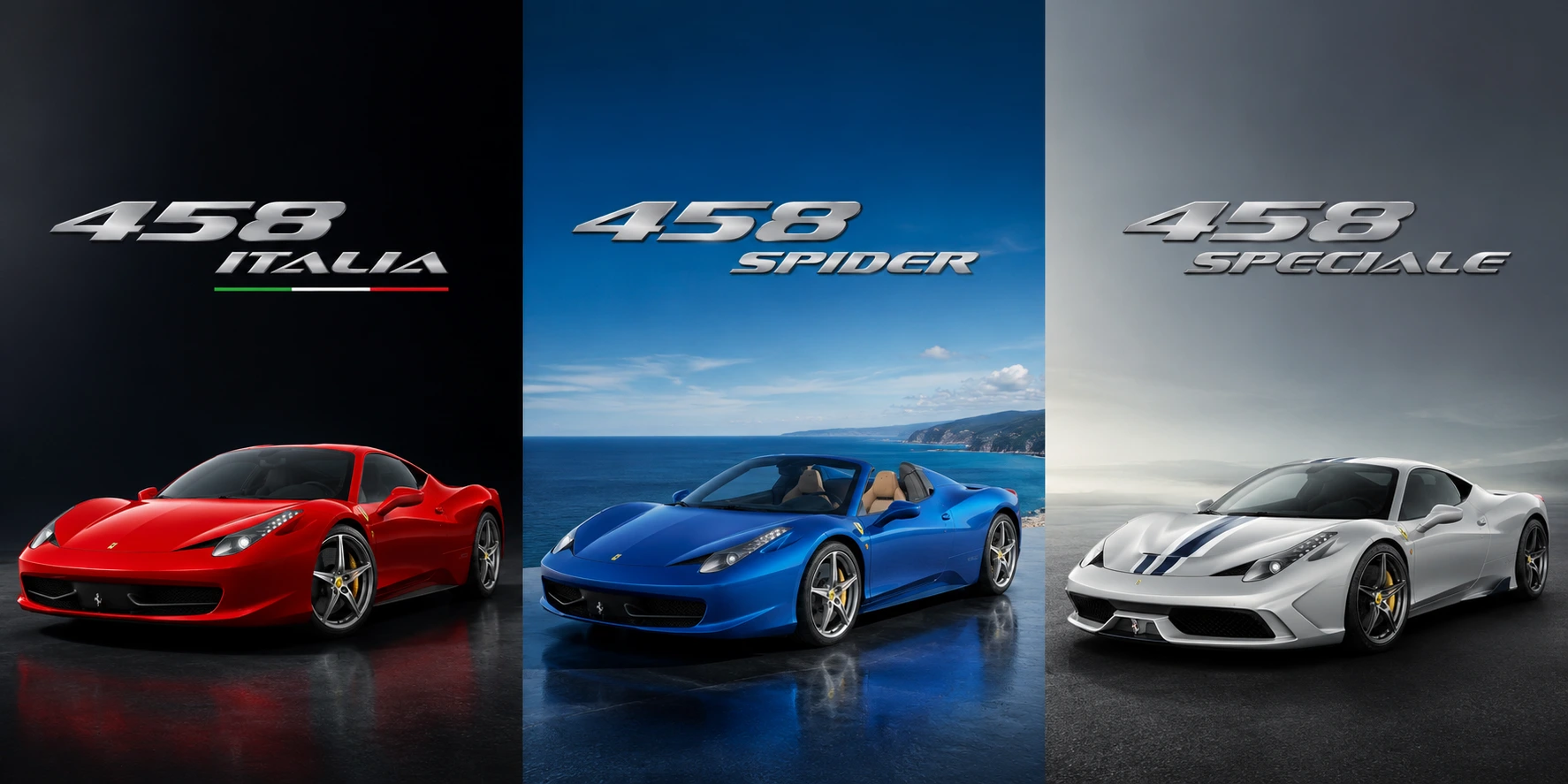
1. Ferrari 458 Lineup (Italia, Spider, Speciale)
Total Cars Sold: ~21,000 units
- Engine: 4.5L Naturally Aspirated V8
- Horsepower: 562 hp
- Torque: 398 lb-ft
- Size: 178.2″ L x 76.3″ W x 47.8″ H
Sitting comfortably at the top of this list, the 458 lineup represents something close to a perfect storm for Ferrari’s sales figures. Arriving with a screaming naturally aspirated V8 right before the industry-wide move toward turbocharging, this generation captured a specific moment in performance car history that collectors and daily drivers alike still talk about with genuine reverence.
Three distinct variants helped push that impressive 21,000-unit total. The Italia handled coupe duties as the volume leader, the Spider brought open-top thrills to buyers wanting wind in their hair alongside that howling exhaust note, and the Speciale pushed things further with track-focused sharpness for buyers chasing the most engaging version of the platform available.
That 4.5-liter V8 producing 562 horsepower remains one of the most celebrated naturally aspirated engines Ferrari ever built, revving with a linear, immediate response that turbocharged successors, however powerful, simply couldn’t replicate in the same visceral way. Enthusiasts frequently cite this exact engine as a genuine high point in the brand’s entire naturally aspirated history.
Dealer availability played a real role here too, expanding beyond Ferrari’s traditionally tighter allocation practices to meet genuinely strong global demand across North America, Europe, and rapidly growing markets in Asia. That broader accessibility, combined with the platform’s now-legendary reputation among enthusiasts, has only strengthened resale values in the years since production ended, cementing the 458 lineup as both a sales success story and a genuinely respected modern classic.
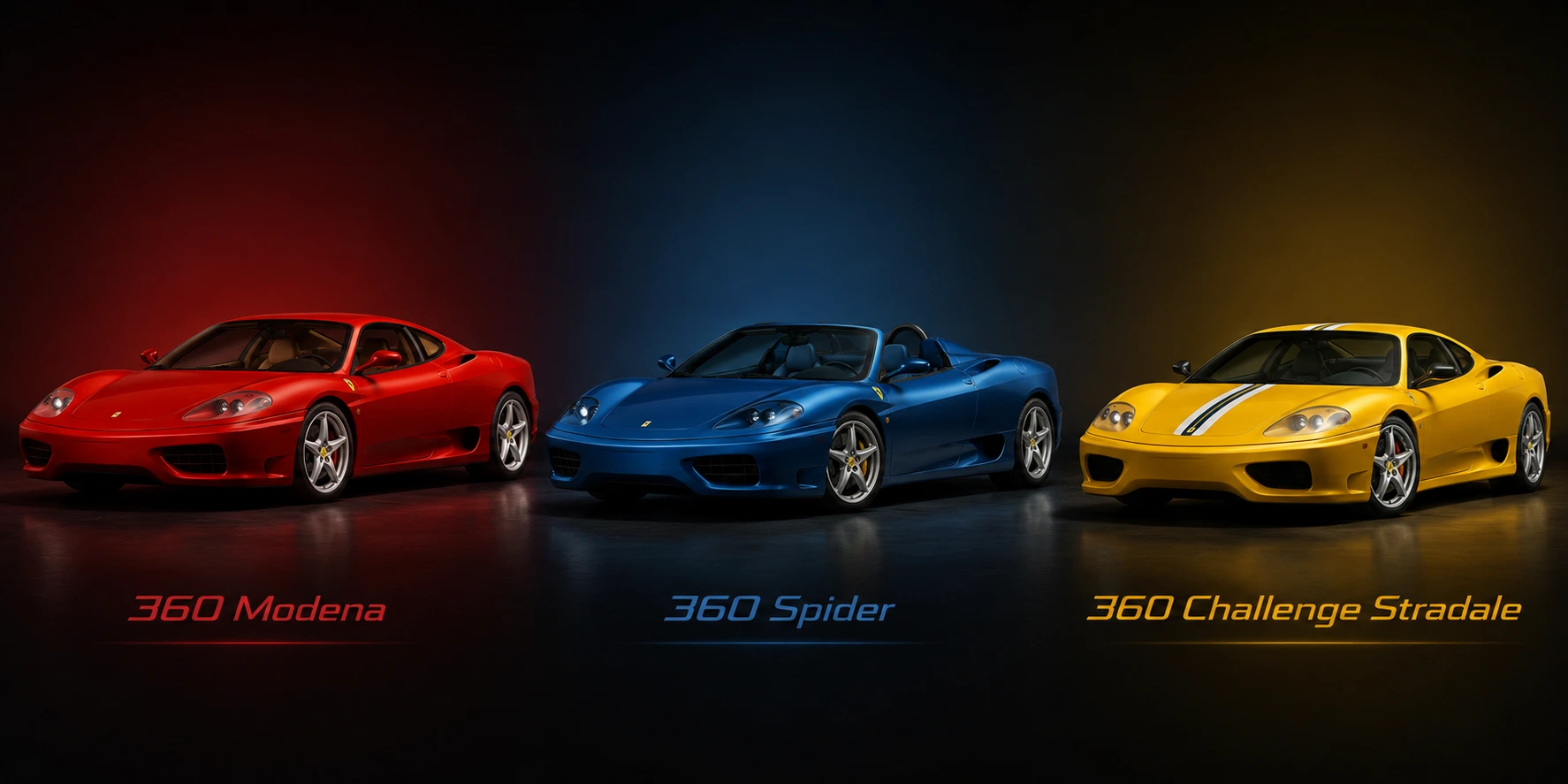
2. Ferrari 360 Lineup (Modena, Spider, Challenge Stradale)
Total Cars Sold: ~16,400 units
- Engine: 3.6L Naturally Aspirated V8
- Horsepower: 395 hp
- Torque: 275 lb-ft
- Size: 176.3″ L x 75.7″ W x 47.8″ H
Aluminum construction changed everything for this particular generation, and buyers responded enthusiastically. The 360 lineup introduced a considerably lighter chassis architecture compared to previous Ferrari V8 models, translating directly into sharper handling and a more responsive driving character that reviewers and owners praised consistently throughout its production run.
The Modena served as the standard coupe, offering accessible everyday performance without sacrificing the raw excitement buyers expected from the badge on the hood. Spider variants opened up the roof for open-air driving, while the track-focused Challenge Stradale stripped weight and sharpened responses even further for buyers chasing a more focused, purist driving experience closer to genuine competition machinery.
Nearly 16,400 units sold worldwide reflect genuinely strong demand across an era when Ferrari was actively working to expand its customer base beyond the ultra-wealthy collector crowd toward a broader group of genuine driving enthusiasts willing to stretch financially for the experience.
That 3.6-liter naturally aspirated V8, producing 395 horsepower, might look modest against today’s turbocharged power figures, yet the driving experience it delivered, that immediate throttle response and unmistakable high-revving sound, has aged remarkably well in the eyes of purists who often prefer this generation’s raw mechanical honesty over the more insulated, digitally managed feel of considerably newer Ferrari models.
Used examples today continue attracting genuine enthusiast interest specifically because of this reputation, helping the 360 lineup maintain relevance decades after its original production run concluded, standing as proof that lighter weight and mechanical simplicity often age better than raw horsepower figures alone.
Also Read: 10 Muscle Cars From the 1990s That Are Faster Than A Ferrari
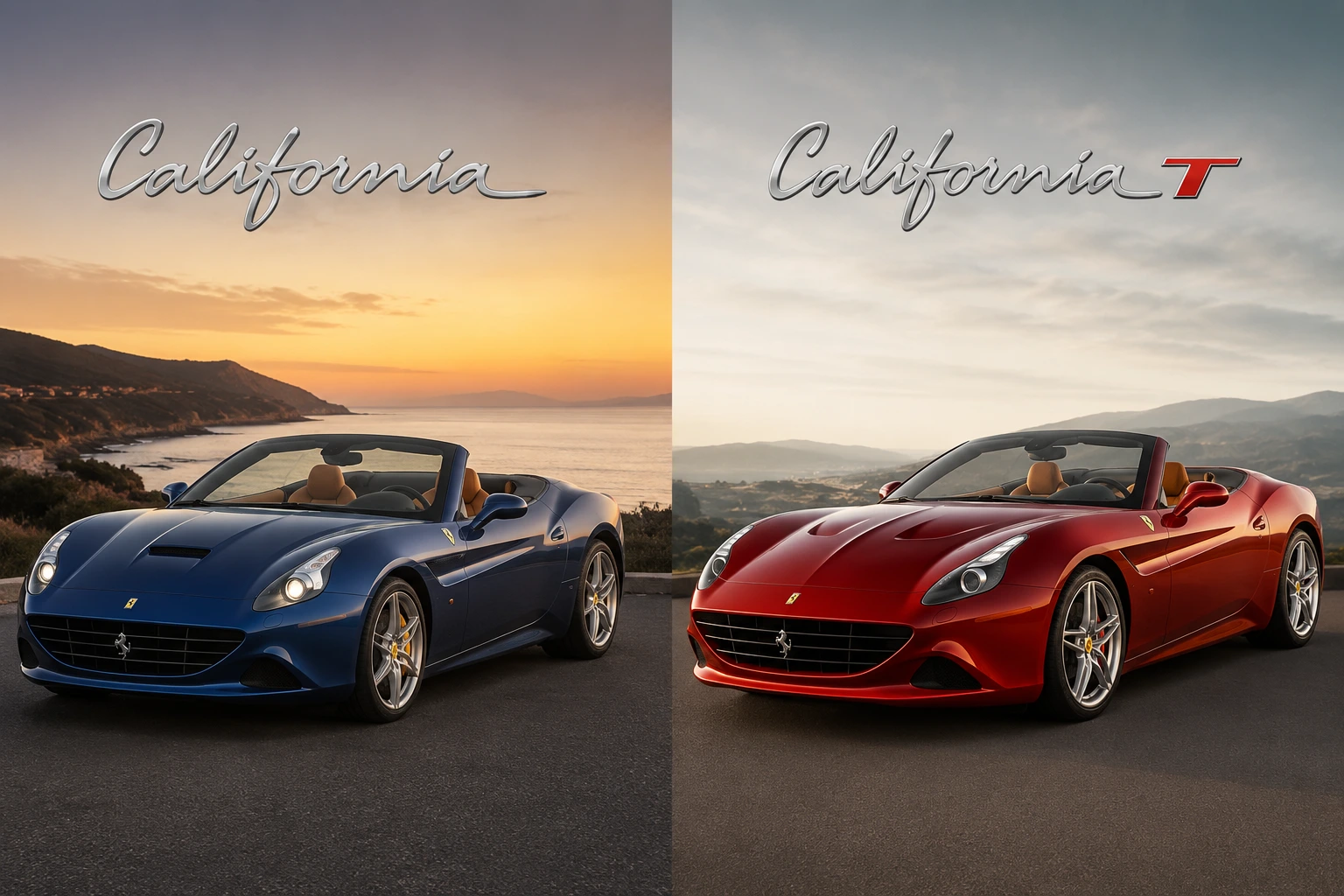
3. Ferrari California / California T Lineup
Total Cars Sold: ~17,000 units
- Engine: 4.3L Naturally Aspirated V8 / 3.9L Twin-Turbo V8
- Horsepower: 453 hp
- Torque: 357 lb-ft
- Size: 179.6″ L x 74.9″ W x 51.5″ H
Ferrari took a genuine gamble with this lineup, and it paid off handsomely in sales figures. Rather than building another razor-focused sports car chasing lap times, the California positioned itself as a genuine grand touring convertible, softer, more comfortable, and specifically designed to attract buyers who wanted the badge and the driving thrill without sacrificing everyday livability on longer trips.
That strategic pivot toward comfort-focused touring worked exactly as intended. Approximately 17,000 units sold worldwide place this lineup remarkably close to the top of the entire sales list, proof that Ferrari’s more accessible, grand touring approach genuinely resonated with a wider customer base than the brand’s traditionally track-focused models typically attracted.
Two distinct powertrain generations powered this success. Early California models relied on a naturally aspirated 4.3-liter V8, while the later California T introduced twin-turbocharging, boosting output considerably while actually improving real-world drivability thanks to the stronger low-end torque turbocharging naturally provides compared to a purely naturally aspirated setup.
A retractable hardtop roof added genuine everyday practicality rarely associated with the Ferrari badge, letting owners enjoy weatherproof, secure storage alongside open-top driving whenever conditions allowed. That combination of comfort, practicality, and unmistakable Ferrari performance credentials created a genuinely unique proposition within the brand’s lineup, one that clearly connected with buyers who wanted the experience without the compromises typically associated with more focused, purist sports car ownership.
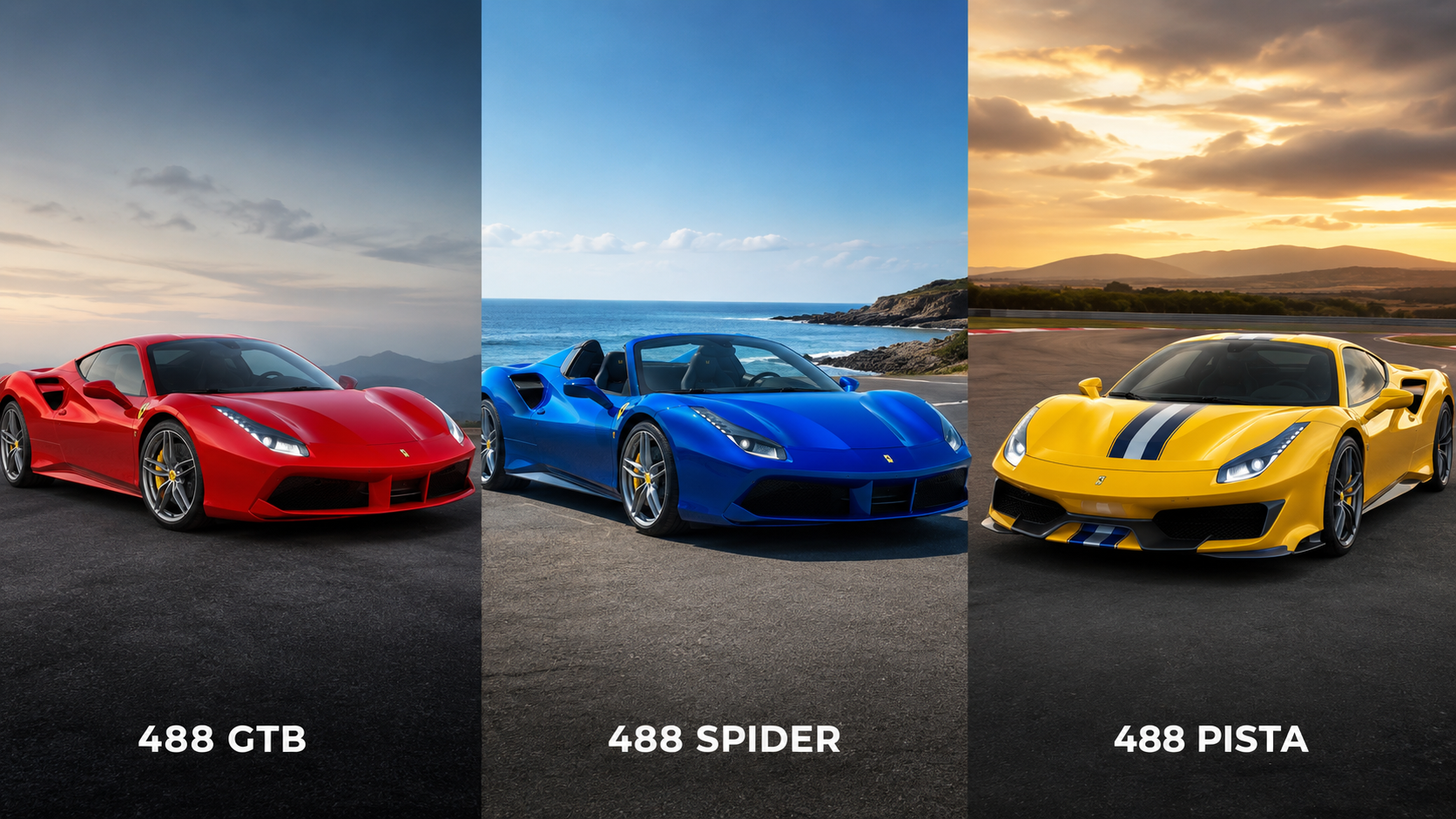
4. Ferrari 488 Lineup (GTB, Spider, Pista)
Total Cars Sold: ~16,000-17,000 units
- Engine: 3.9L Twin-Turbocharged V8
- Horsepower: 661 hp
- Torque: 561 lb-ft
- Size: 179.8″ L x 76.8″ W x 47.8″ H
The Ferrari 488 represented a major step for the brand as turbocharged technology returned to Ferrari’s mid-engine sports car lineup. Its twin-turbocharged 3.9-liter V8 engine delivered 661 horsepower, creating a huge performance improvement compared with the naturally aspirated 458 Italia it replaced. The strong demand for this model helped Ferrari achieve estimated global production figures between 16,000 and 17,000 units.
The 488 GTB served as the main coupe version, offering impressive speed, improved aerodynamics, and a refreshed design that gave it a different identity from the 458. Ferrari also introduced the 488 Spider, which used a retractable hardtop system while keeping the same powerful engine and performance abilities. For drivers wanting an even more focused experience, the 488 Pista provided extra track-oriented features and sharper performance.
Many Ferrari enthusiasts had concerns when the company moved away from naturally aspirated engines and introduced turbocharging. Some expected the turbo system to reduce the excitement and immediate response that Ferrari V8 engines were known for. However, Ferrari engineers developed the system carefully, reducing turbo lag and creating smooth power delivery that still provided an exciting driving experience.
The 488 gained respect because it combined strong acceleration with the precise handling Ferrari owners expected. The car delivered impressive performance without losing the connection between driver and machine that made previous models popular.
Today, the 488 lineup remains one of Ferrari’s most appreciated modern V8 models. Its combination of advanced turbocharged power, attractive design, and strong driving ability has helped it maintain interest among collectors and enthusiasts. The model also represents an important period when Ferrari successfully introduced turbo technology while keeping the performance standards associated with the brand.
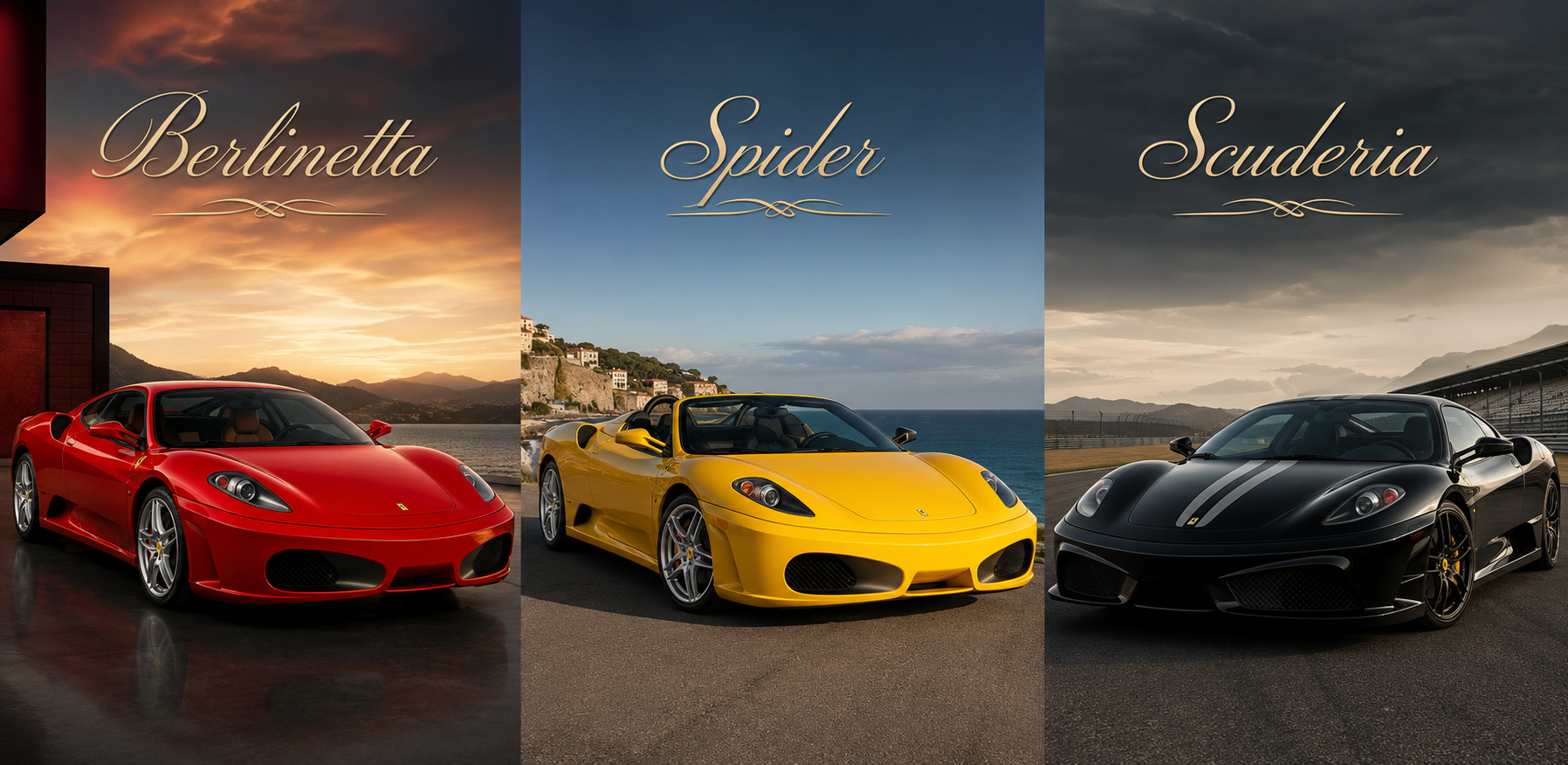
5. Ferrari F430 Lineup (Berlinetta, Spider, Scuderia)
Total Cars Sold: ~15,000 units
- Engine: 4.3L Naturally Aspirated V8
- Horsepower: 483 hp
- Torque: 343 lb-ft
- Size: 177.6″ L x 75.7″ W x 47.8″ H
Refinement, more than reinvention, defined this generation’s approach, and buyers clearly appreciated the results. Building directly on the 360’s aluminum architecture, the F430 sharpened nearly every aspect of the driving experience while boosting that naturally aspirated V8 to 483 horsepower, a meaningful jump that kept the platform genuinely competitive against rapidly improving rivals during its production run.
Roughly 15,000 units sold worldwide reflect a lineup that successfully balanced accessibility with genuine performance credibility. The Berlinetta served as the standard coupe offering, the Spider brought convertible thrills to buyers wanting open-air driving, and the track-focused Scuderia variant pushed weight savings and sharpened responses further for enthusiasts chasing the most engaging version of the platform.
Formula One technology transfer became a genuine talking point during this era, with Ferrari actively marketing the F430’s electronic differential and paddle-shift technology as direct descendants of lessons learned through the brand’s racing program.
That connection to genuine motorsport pedigree resonated strongly with buyers who valued authenticity alongside raw performance figures. Interior refinement improved considerably, too, compared to the outgoing 360, addressing criticisms that had occasionally surfaced regarding cabin quality and everyday usability in the previous generation.
That combination of sharper performance, genuine motorsport connections, and improved daily livability helped the F430 maintain strong demand throughout its production run, cementing its place as one of the more beloved naturally aspirated V8 Ferraris among enthusiasts who experienced ownership firsthand during the mid-2000s.
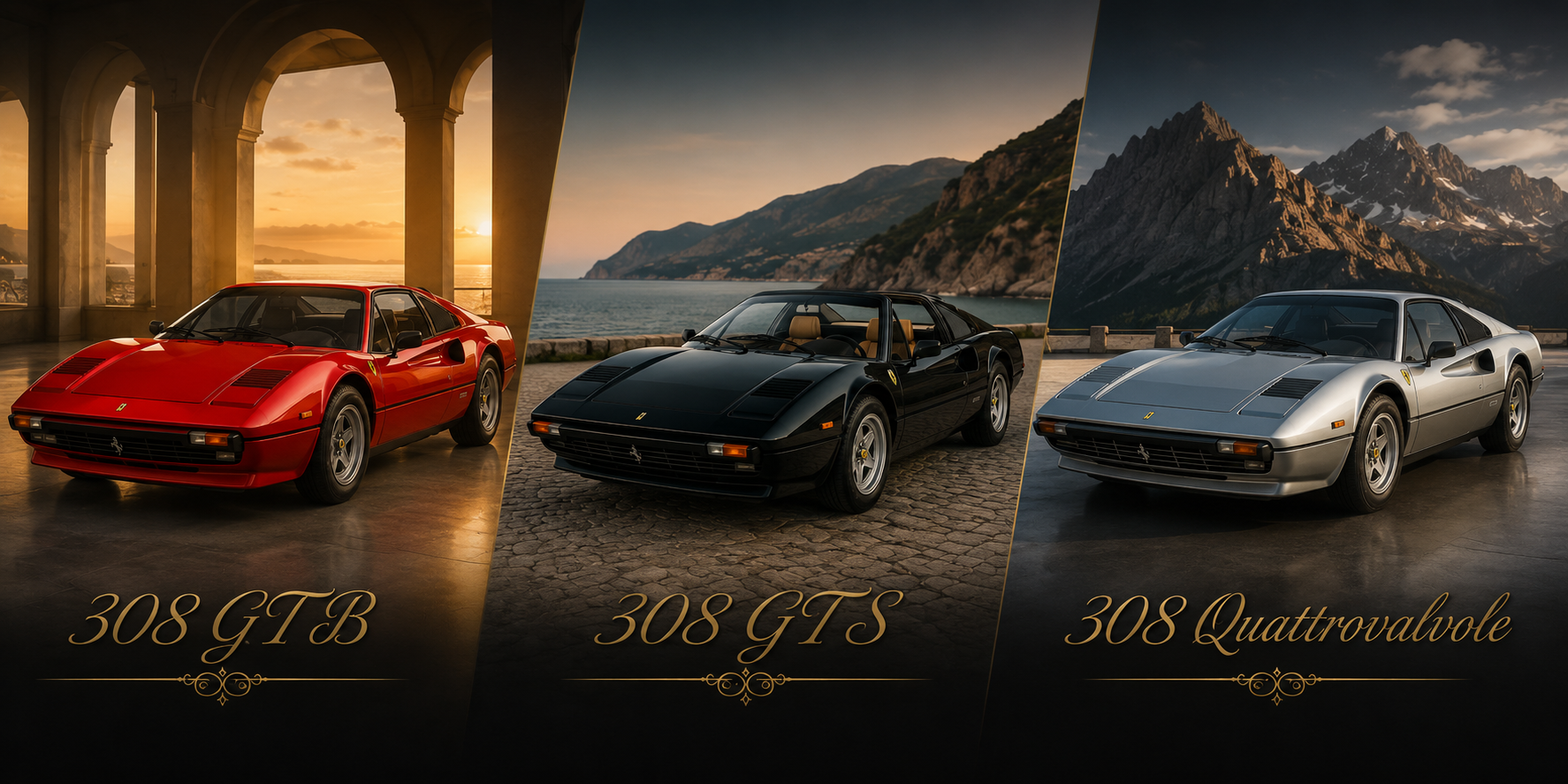
6. Ferrari 308 Lineup (GTB, GTS, Quattrovalvole)
Total Cars Sold: ~12,143 units
- Engine: 2.9L Naturally Aspirated V8
- Horsepower: 237 hp
- Torque: 184 lb-ft
- Size: 166.5″ L x 67.7″ W x 44.1″ H
The Ferrari 308 gained attention beyond the automotive world, with popular culture playing a major role in making the model widely recognized. Its appearance in a famous television series introduced the car to many people who had little knowledge of Ferrari before then. This extra exposure helped increase demand and contributed to production numbers exceeding 12,000 units globally, which was a strong achievement for a Ferrari from that period.
One of the reasons the 308 stood out was its compact size compared with many other Ferrari models. Measuring about 166.5 inches in length, the car offered a smaller and more agile driving experience. This made it attractive to buyers who wanted the excitement of a Ferrari without choosing a larger and more demanding grand touring model.
The 308 was produced in several versions during its lifetime. The GTB served as the traditional coupe model, while the GTS added a removable targa roof that allowed drivers to enjoy open-air motoring. Later, Ferrari introduced the Quattrovalvole version, which featured a four-valve-per-cylinder engine design that improved power delivery and refinement compared with earlier models.
Power came from a 2.9-liter naturally aspirated V8 engine producing 237 horsepower. While that figure may appear modest by current standards, the lightweight construction, responsive steering, and balanced chassis helped the 308 deliver an enjoyable driving experience during its era. The car focused more on driver involvement and character than simply chasing performance numbers.
Today, the Ferrari 308 remains one of the most recognised classic models from the company. Its sharp styling, cultural popularity, and approachable size have helped it maintain strong interest among collectors and enthusiasts. For many people, the 308 represents an attractive way to experience classic Ferrari ownership while enjoying one of the brand’s most memorable designs.
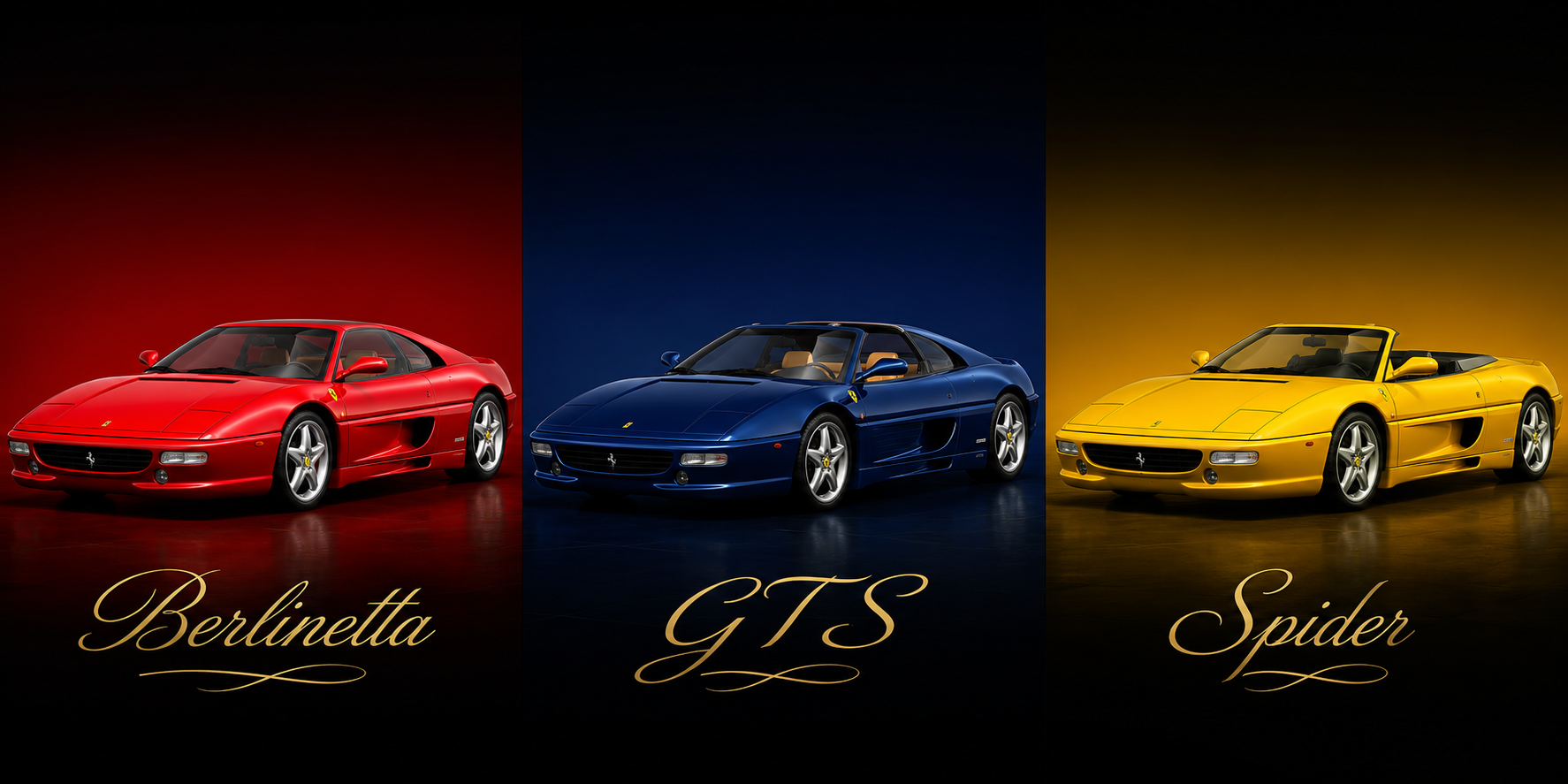
7. Ferrari F355 Lineup (Berlinetta, GTS, Spider)
Total Cars Sold: ~11,273 units
- Engine: 3.5L Naturally Aspirated V8
- Horsepower: 375 hp
- Torque: 268 lb-ft
- Size: 167.3″ L x 74.8″ W x 46.1″ H
The Ferrari F355 became one of the most respected V8 models from the brand, with about 11,273 units produced during its production run. Its popularity was not only because of the Ferrari badge but also because of the impressive engineering, exciting performance, and memorable driving experience it delivered. Many enthusiasts still consider it one of the best-handling Ferraris from its era.
At the heart of the F355 was a 3.5-liter naturally aspirated V8 engine that produced 375 horsepower. The engine featured five valves per cylinder, an advanced design at the time that helped improve airflow and performance. It was known for its strong, high-revving character, sharp response, and the unmistakable sound expected from a Ferrari V8.
The F355 was offered in three main body styles to suit different buyers. The Berlinetta served as the traditional coupe version, while the GTS featured a removable targa roof panel that allowed drivers to enjoy an open-air experience. The Spider provided a full convertible setup for those who preferred a completely open cabin.
Beyond the engine power, the F355 gained respect because of its excellent handling balance. The steering provided clear feedback, and the chassis delivered confidence during spirited driving. Many owners appreciated how connected the car felt, giving drivers a more personal experience compared with simply chasing speed figures.
Today, the F355 remains a highly desired Ferrari because it combines classic styling, a thrilling engine, and engaging driving qualities. Compared with many other Ferrari models, it also remains relatively accessible in the used market. For collectors and enthusiasts looking for a genuine Ferrari experience, the F355 continues to represent an appealing choice with strong character and lasting appeal.
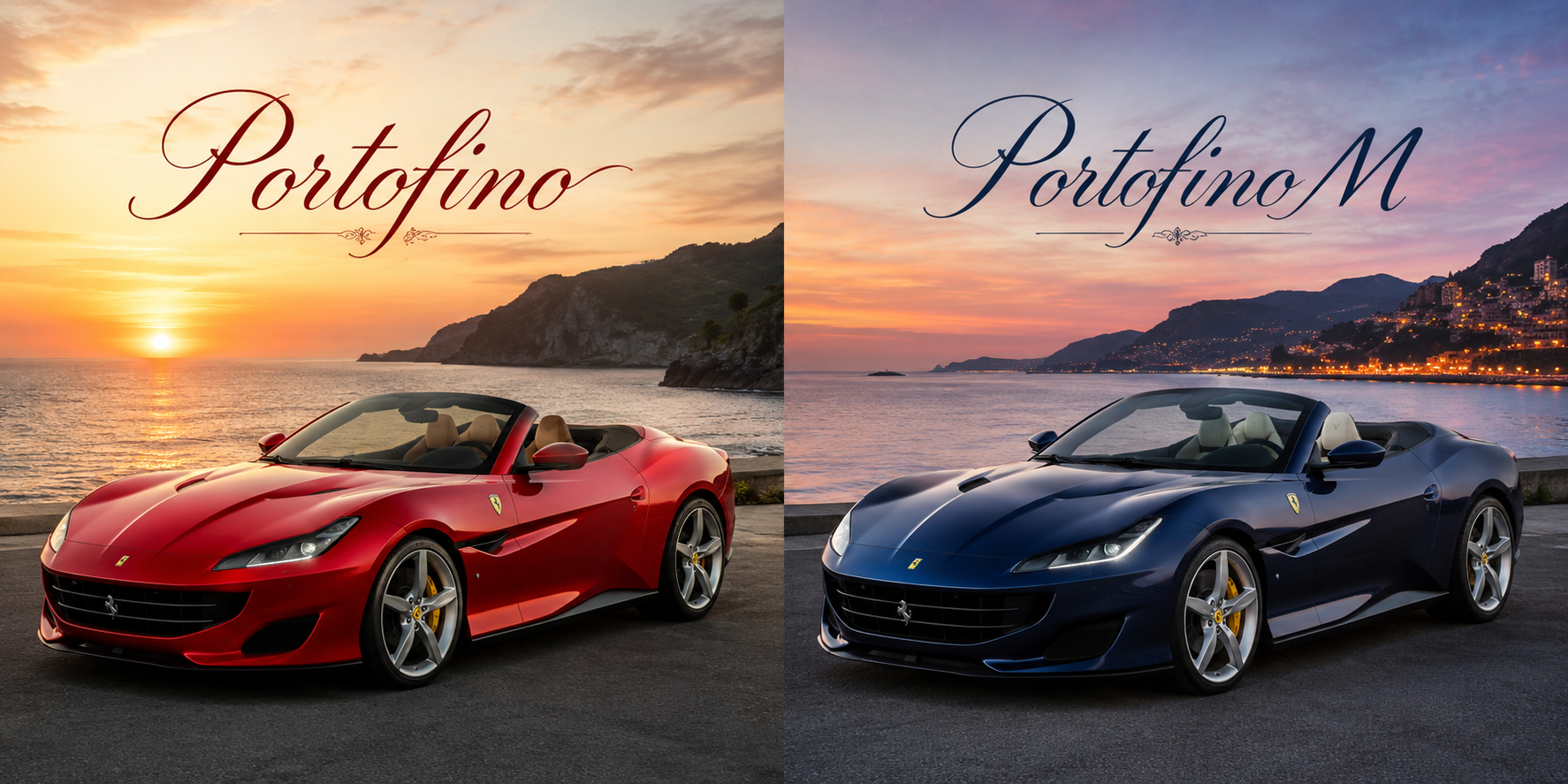
8. Ferrari Portofino / Portofino M Lineup
Total Cars Sold: ~11,000 units
- Engine: 3.9L Twin-Turbocharged V8
- Horsepower: 591 hp
- Torque: 561 lb-ft
- Size: 180.6″ L x 76.3″ W x 51.9″ H
Replacing the successful California T meant big expectations, and the Portofino largely delivered on them. Approximately 11,000 units sold worldwide reflect continued strong demand for Ferrari’s grand touring convertible formula, proving that the comfort-focused strategy pioneered by its predecessor still resonates strongly with buyers seeking everyday usability alongside genuine performance credentials.
That twin-turbocharged 3.9-liter V8, producing a genuinely strong 591 horsepower, gave this lineup considerably more urgency than the California T it replaced, while Ferrari’s engineers worked specifically to sharpen chassis dynamics and reduce the slightly softer, more relaxed character that some critics had noted in the outgoing generation.
A later mid-cycle update, badged Portofino M, pushed performance and sharpness even further, adding a specific “Race” driving mode borrowed from Ferrari’s more focused sports car lineup, giving buyers genuine access to sharper throttle response and quicker gearbox behavior whenever they wanted a more engaging driving character rather than the relaxed touring demeanor the platform typically prioritized.
Retractable hardtop convenience remained a defining strength throughout this lineup’s production run, offering genuine weatherproof security alongside open-top driving flexibility that rivaled convertible exotics from other brands frequently struggled to match with comparable everyday practicality.
Positioned as Ferrari’s genuine entry point into new ownership for many buyers, the Portofino lineup successfully balanced accessible pricing relative to other current Ferrari models with styling and performance credentials substantial enough to satisfy genuine enthusiasts. That balance helped maintain the strong sales momentum originally established by the California and California T generations before it.
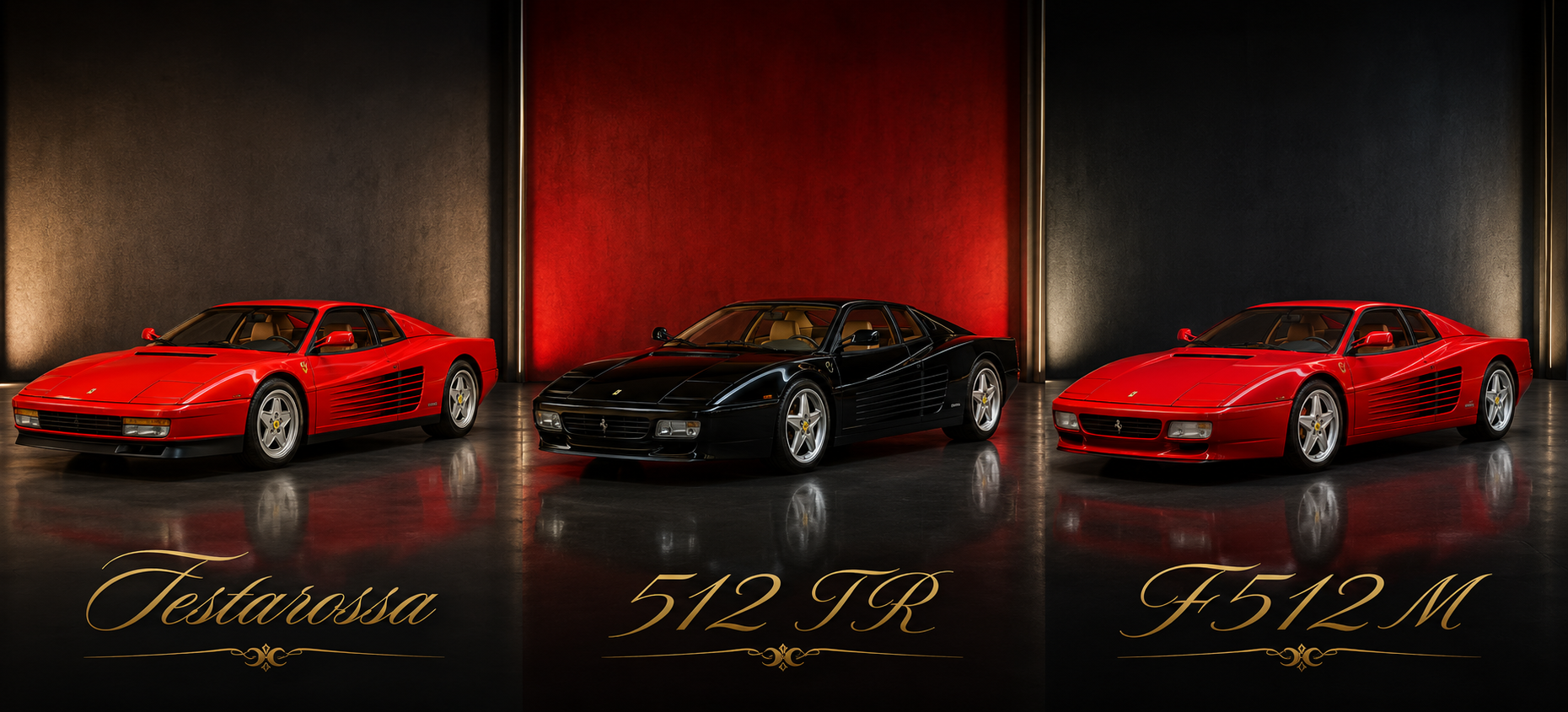
9. Ferrari Testarossa Lineup (Testarossa, 512 TR, F512 M)
Total Cars Sold: ~9,900 units
- Engine: 4.9L Naturally Aspirated Flat-12
- Horsepower: 385 hp
- Torque: 361 lb-ft
- Size: 176.6″ L x 77.8″ W x 44.5″ H
Few Ferrari silhouettes remain as instantly recognizable decades later as the Testarossa, with its dramatic side strakes and wide, low stance practically defining an entire decade of automotive design and popular imagination. Roughly 9,900 units sold worldwide reflect genuinely strong demand for a car that became something close to a cultural symbol far beyond typical automotive enthusiast circles.
That flat-12 engine configuration, a genuinely unusual choice compared to the V8 and V12 layouts more commonly associated with Ferrari’s broader lineup, produced a distinctive sound and remarkably low center of gravity that contributed meaningfully to the car’s confident high-speed stability, a genuine strength reviewers consistently praised throughout its production run.
Three distinct variants carried this lineup through its full production life. The original Testarossa established the formula and cultural presence that made this generation famous, the later 512 TR brought meaningful chassis and power refinements, and the final F512 M pushed output and mechanical sophistication even further as the lineup’s concluding, most refined iteration before production ended entirely.
Width became something of a defining characteristic for this generation, with those dramatic side strakes serving a genuine cooling function for side-mounted radiators while simultaneously creating one of the most dramatic, unmistakable profiles in automotive history, a silhouette still instantly recognizable to enthusiasts and casual observers alike, decades after the final example left the factory floor.
That combination of genuine cultural impact, distinctive flat-12 engineering, and dramatic styling has helped the Testarossa lineup maintain strong collector interest today, standing as proof that a Ferrari’s lasting legacy often extends considerably beyond raw sales figures or specification sheet numbers alone.
Also Read: 10 Most Expensive Ferrari Models Ever Made, Ranked
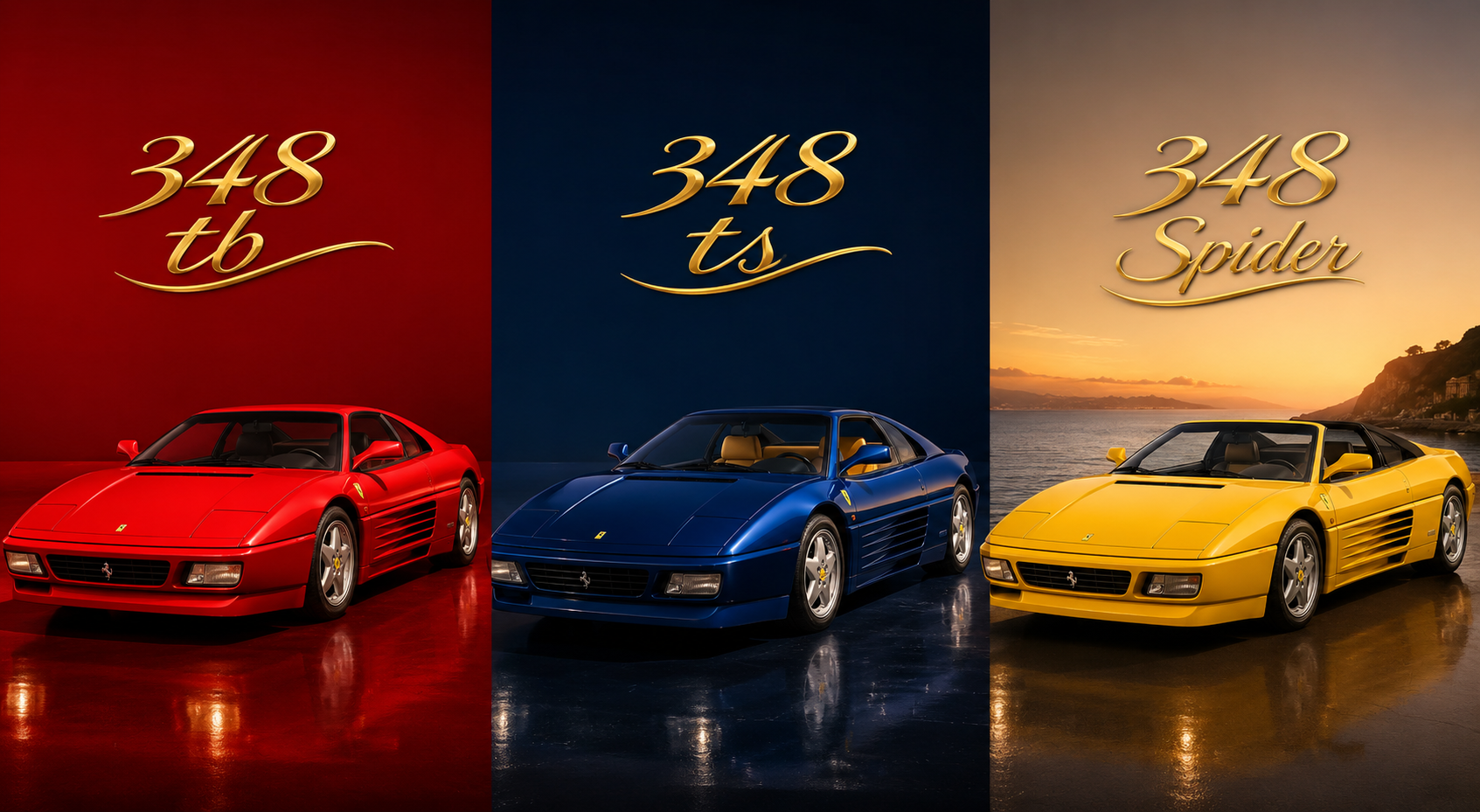
10. Ferrari 348 Lineup (tb, ts, Spider)
Total Cars Sold: ~8,844 units
- Engine: 3.4L Naturally Aspirated V8
- Horsepower: 296 hp
- Torque: 238 lb-ft
- Size: 166.5″ L x 74.6″ W x 46.1″ H
The Ferrari 348 marked the closing stage of Ferrari’s smaller V8 sports car series before the arrival of newer generations. During its production period, Ferrari built about 8,844 units globally, making it one of the lower-volume models on this list. Even so, the 348 played an important role by introducing several improvements while carrying the expectations that came with replacing the popular 308 family.
Three main versions formed the lineup, including the 348 tb coupe, 348 ts targa, and the 348 Spider convertible. The names followed Ferrari’s traditional approach, with the letters referring to the car’s technical layout and body style. The Spider added an open-top option for drivers who wanted a more relaxed and enjoyable driving experience.
Power came from a 3.4-liter naturally aspirated V8 engine producing 296 horsepower. Compared with the previous 308, the 348 offered stronger performance, improved suspension tuning, and updated mechanical parts designed to provide better handling. Ferrari engineers worked to improve areas where earlier models had received criticism, creating a more capable sports car for regular use and spirited road journeys.
The exterior design also moved away from the softer shape of the 308 and adopted sharper lines that matched the styling trends of the early 1990s. Despite these changes, the 348 kept the classic Ferrari identity with its low stance, mid-engine layout, and unmistakable appearance that attracted attention from sports car enthusiasts.
Although its production numbers were smaller than those of several other Ferrari models, the 348 remains an important vehicle for the company. It connected the older 308 generation with the later 355 model, helping Ferrari develop new engineering ideas that influenced future V8 sports cars. Today, many collectors appreciate the 348 for its place in Ferrari’s progress, unique design, and pure driving character.
