
The pursuit of speed has pushed engineers, racers, and inventors to attempt ideas that often seem impossible. While most high-performance cars rely on powerful piston engines, turbochargers, or electric motors, a select group of builders decided that conventional automotive technology simply was not enough.
Their solution was both dramatic and extreme: install a jet engine in a vehicle and unleash aircraft-level power on the ground.
Jet-powered cars occupy a unique place in automotive history. They are neither traditional cars nor airplanes. Instead, they represent a fascinating blend of aerospace engineering and land speed technology.
Some were built to break world records, others served as experimental prototypes, and a few were created primarily to demonstrate futuristic possibilities.
Jet-powered vehicles operate in a fundamentally different way from traditional performance cars. Instead of using wheels for propulsion, they produce thrust, which enables them to achieve speeds far beyond what most production cars are capable of.
However, this capability comes with significant drawbacks. The systems involved are highly complex, they consume fuel at extreme rates, and their operating demands are often closer to those of aircraft than standard automobiles.
Throughout the twentieth century and into the modern era, several remarkable jet-powered vehicles captured public attention. Some shattered speed records and rewrote engineering limits.
Others became famous because of their unusual designs, ambitious goals, or technological innovations. Regardless of their success, each contributed to the fascinating story of mankind’s obsession with speed.
Ranking these vehicles is not simply about top speed. Historical significance, engineering achievement, technological influence, and cultural impact all play important roles. Some cars on this list reached incredible velocities, while others earned recognition for pioneering concepts that inspired future projects.
The following ten jet-powered cars represent some of the most extraordinary machines ever built. From experimental concepts to world record holders, these vehicles demonstrate what happens when automotive engineers decide that even the most powerful conventional engines are not enough.
Also Read: 5 Land Rover Models Worth the Risk VS 5 To Avoid
10. Firebird I (1953)
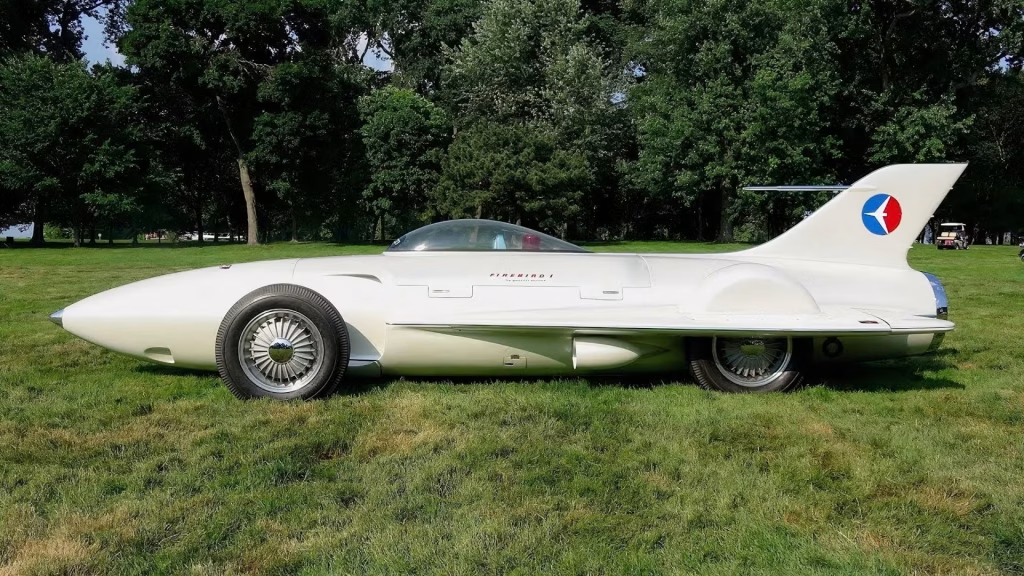
The General Motors Firebird I looked as though it had landed directly from the future. Introduced in 1953, it became the first gas turbine-powered concept vehicle developed by a major American automaker. At a time when most cars featured chrome-heavy styling and traditional V8 engines, the Firebird I resembled a fighter jet with wheels.
Its design was heavily influenced by aircraft technology. The single-seat cockpit sat beneath a clear canopy, while dramatic tail fins reinforced the aviation theme. General Motors wanted to demonstrate how gas turbine technology might eventually transform the automotive industry.
Compared to many concept cars that merely displayed styling ideas, the Firebird I was fully functional. Its Whirlfire Turbo-Power gas turbine engine produced substantial power and allowed the vehicle to operate under its own propulsion.
The concept generated enormous public interest because it suggested a future where automobiles might abandon conventional engines entirely.
The Firebird I never entered production, largely because turbine technology presented challenges involving fuel economy, heat management, and manufacturing costs. Nevertheless, the project demonstrated remarkable ambition. Engineers were investigating alternative propulsion systems decades before electrification became a major industry focus.
What makes the Firebird deserve a place on this list is its pioneering role. It showed that aircraft-inspired propulsion could function in a ground vehicle and encouraged future experimentation with turbine-powered transportation. While later jet-powered vehicles would achieve far greater speeds, few matched the Firebird I’s influence on automotive imagination.
The vehicle also helped establish a connection between aerospace engineering and automotive design that would inspire countless future concepts. Even today, the Firebird I remains one of the most recognizable concept cars ever created.
Its combination of futuristic styling, innovative engineering, and historical importance makes it a worthy starting point in any ranking of jet-powered cars.
Specifications
- Engine: Whirlfire Turbo-Power Gas Turbine
- Torque: Not officially rated
- Horsepower: Approximately 370 hp
- Length/Width: 192.5 in / 77.0 in
9. Firebird II (1956)
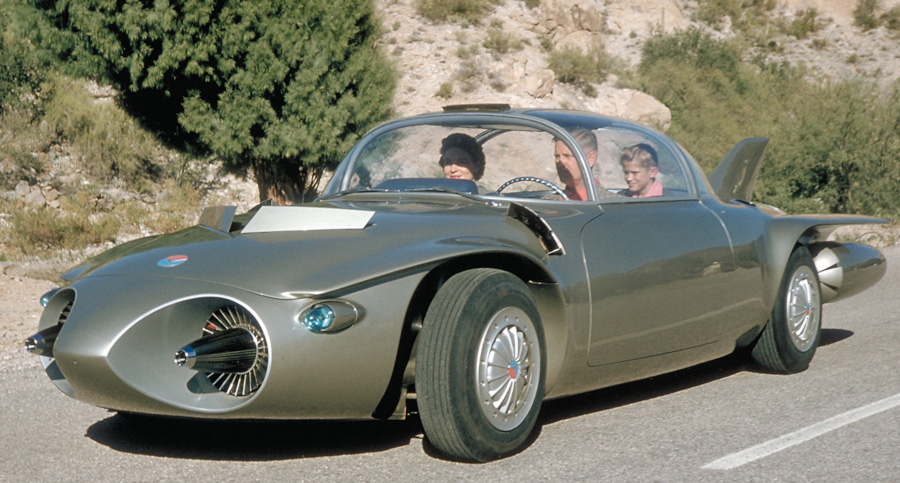
Three years after the debut of the original Firebird, General Motors returned with an even more ambitious vision. The Firebird II moved beyond being merely a turbine-powered showpiece and attempted to imagine how future families might travel.
While it retained a jet-inspired appearance, the vehicle incorporated technologies that seemed astonishingly advanced for the 1950s.
Differing from the single-seat Firebird I, the Firebird II accommodated multiple passengers. Its sleek body was constructed using titanium, an exotic material rarely associated with automobiles of the period. The use of lightweight aerospace materials reflected General Motors’ desire to push engineering boundaries as far as possible.
Power came from a gas turbine engine designed to provide smooth operation and reduced vibration compared with traditional piston engines. Engineers believed turbine technology might one day replace conventional automotive powerplants because of its ability to run on different fuel types and deliver impressive performance.
The Firebird II also introduced ideas related to automated driving. General Motors envisioned special highways equipped with electronic guidance systems that could direct vehicles automatically. This concept anticipated autonomous driving discussions by several decades, making the car remarkably forward-thinking.
While the Firebird II was not built to chase land speed records, it represented one of the most comprehensive attempts to integrate jet-age technology into automotive transportation. The project combined advanced materials, turbine propulsion, futuristic design, and automated mobility concepts into a single package.
Many of the vehicle’s predictions did not become reality exactly as envisioned, yet its influence remains undeniable. The Firebird II demonstrated how automakers were willing to think beyond immediate commercial concerns and imagine transportation decades into the future.
Its significance extends beyond speed alone. The car symbolized optimism, technological ambition, and a belief that aerospace innovation could reshape everyday transportation. Those qualities secure its place among the most important jet-powered vehicles ever created.
Specifications
- Engine: Whirlfire GT-304 Gas Turbine
- Torque: Not officially rated
- Horsepower: Approximately 200 hp
- Length/Width: 216.0 in / 77.4 in
8. Rover JET1 (1950)
Long before jet-powered cars became associated with land speed records and futuristic concepts, Rover was experimenting with turbine technology in Britain. The Rover JET1 holds an important place in automotive history because it was among the first successful gas turbine cars ever built.
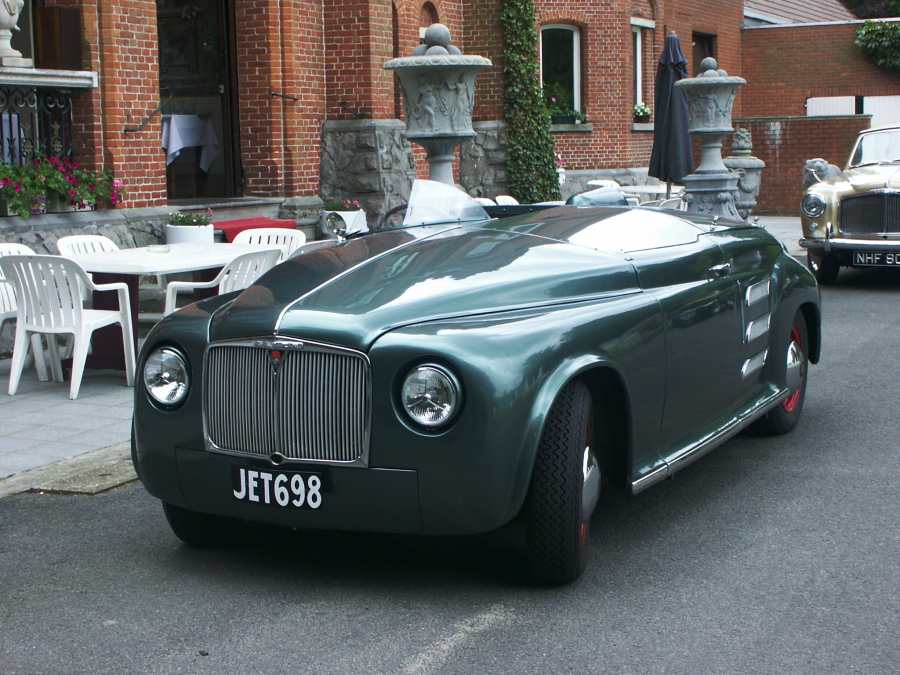
At a glance, the vehicle looked relatively conventional compared with later jet-inspired machines, but beneath its bodywork was technology that few people had ever seen in an automobile.
The project began as an engineering exercise intended to determine whether aircraft-style turbine engines could function effectively in road vehicles.
Rover engineers believed gas turbines offered several advantages, including smoother operation and fewer moving parts than traditional piston engines. The result was a sleek roadster featuring a rear-mounted turbine powerplant.
When first tested, the JET1 demonstrated that turbine propulsion could indeed move a passenger vehicle. Engineers continued refining the design, improving both performance and reliability. These efforts eventually paid off when the car achieved speeds exceeding 150 mph, an extraordinary figure for the era.
Contrary to many experimental vehicles that never left the laboratory, the JET1 received substantial public attention. It appeared at exhibitions and demonstrations, giving people a glimpse of what future transportation might look like. The car became a symbol of postwar technological optimism and innovation.
Its significance extends beyond speed. The JET1 proved that turbine-powered automobiles were technically feasible and encouraged further research throughout the industry. Manufacturers around the world began investigating similar concepts during the following decades.
Although gas turbine cars ultimately failed to replace conventional automobiles, the Rover JET1 remains an important milestone. It represented one of the earliest serious attempts to adapt aerospace technology for road use and laid the groundwork for future turbine-powered experiments.
For its pioneering role and engineering significance, the Rover JET1 earns a well-deserved place among the most remarkable jet-powered cars ever created.
Specifications
- Engine: Rover Gas Turbine
- Torque: Not officially rated
- Horsepower: Approximately 100 hp
- Length/Width: 167.0 in / 61.0 in
7. Chrysler Turbine Car (1963)
The Chrysler Turbine Car stands apart from nearly every other vehicle on this list because it came closer to production reality than most turbine-powered experiments.
Rather than building a one-off concept, Chrysler produced a limited fleet of functioning cars and placed them in the hands of ordinary drivers. This bold approach transformed the project from a technological demonstration into a real-world experiment.
Visually, the Turbine Car looked elegant and refined. It featured sophisticated styling that blended luxury with futuristic character. Yet its most fascinating feature remained hidden beneath the hood.
The turbine engine could operate on a surprisingly wide variety of fuels, including diesel, kerosene, and even some unconventional alternatives. This flexibility generated enormous interest during a period when fuel diversity was becoming an important topic.
Owners participating in Chrysler’s testing program praised the smoothness of the powertrain. The turbine produced minimal vibration and delivered a unique driving experience unlike any conventional automobile. Engineers viewed these characteristics as potential advantages over traditional piston engines.
The project generated worldwide publicity and demonstrated Chrysler’s willingness to pursue radical innovation. Few manufacturers would be willing to place experimental turbine-powered vehicles in the hands of the public, yet Chrysler embraced the challenge.
Despite promising results, the Turbine Car faced obstacles involving manufacturing costs, fuel efficiency, and emissions compliance. These challenges ultimately prevented mass production. Nevertheless, the program remains one of the most ambitious automotive experiments ever undertaken.
The vehicle’s legacy extends far beyond the number of units produced. It showed that turbine technology could function reliably in everyday driving situations and provided invaluable data regarding consumer reactions to alternative propulsion systems.
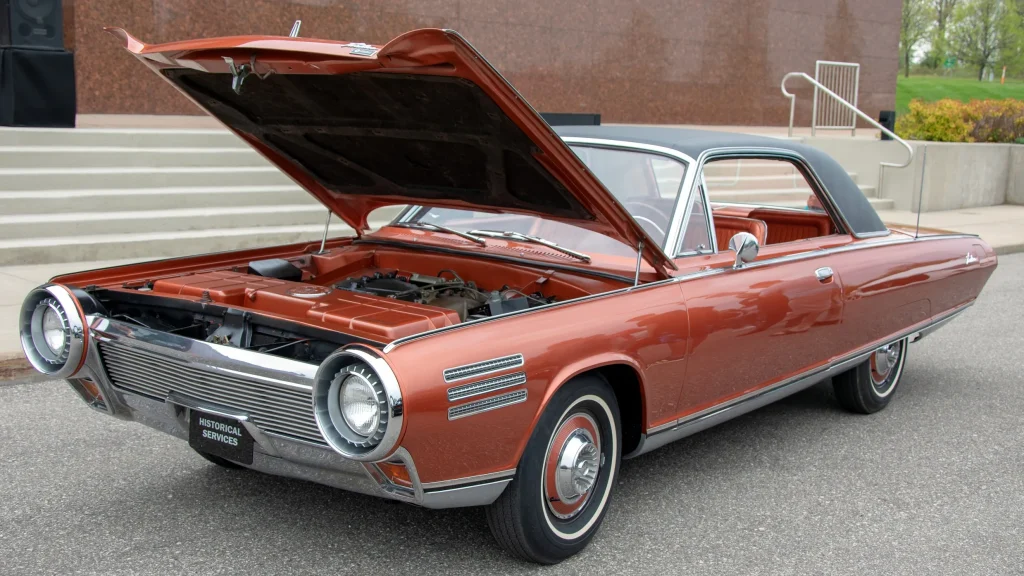
Today, the Chrysler Turbine Car is remembered as one of the most fascinating “what if” stories in automotive history. It represented a genuine attempt to revolutionize transportation and came closer than almost any other turbine-powered vehicle to changing the industry permanently.
Specifications
- Engine: Chrysler A-831 Gas Turbine
- Torque: Approximately 425 lb ft
- Horsepower: 130 hp
- Length/Width: 209.4 in / 75.6 in
6. Spirit of America Sonic I (1965)
By the mid-1960s, the pursuit of speed had evolved beyond traditional racing. Engineers and drivers were now focused on breaking barriers once thought impossible, and the Spirit of America Sonic I became one of the most ambitious vehicles ever created for that purpose.
In contrast to turbine-powered road cars designed to carry passengers, this machine had a single mission to go faster than anything that had ever traveled on land.
Designed by Craig Breedlove, the Sonic I looked more like a military aircraft fuselage than an automobile. The vehicle featured a narrow body, an aircraft-style cockpit, and a General Electric J79 turbojet engine borrowed from military aviation. Every element of the design focused on reducing drag and maintaining stability at extraordinary speeds.
The results were historic. In 1965, the Sonic I became the first land vehicle to exceed 600 mph. It achieved an official two-way average speed of 600.601 mph, setting a new world land speed record and capturing worldwide attention. This accomplishment represented a major milestone in the history of high-speed transportation.
What made the vehicle especially remarkable was the engineering challenge involved. At such speeds, issues such as aerodynamic lift, tire limitations, and directional stability became critical concerns. The Sonic I demonstrated that carefully designed jet-powered vehicles could overcome these obstacles and continue pushing speed boundaries.
The record established by the car inspired a new generation of land speed projects. Engineers around the world began pursuing even more ambitious goals, leading to increasingly advanced jet-powered vehicles in the decades that followed.
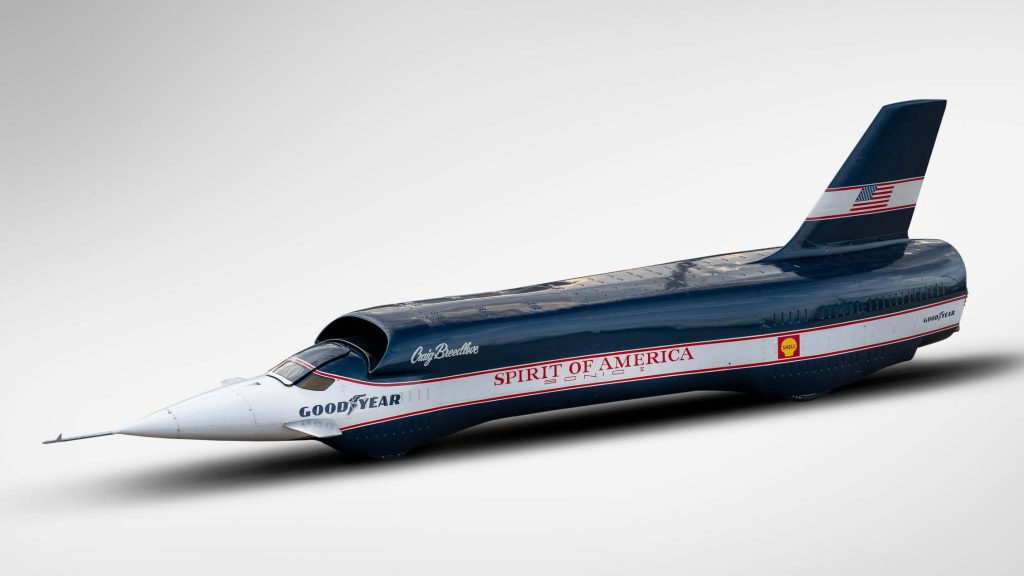
Although it was never intended for public roads, the Sonic I remains one of the most influential jet-powered machines ever built. Its success proved that aircraft technology could dramatically expand the limits of land-based speed and opened the door for future record-breaking vehicles.
Specifications
- Engine: General Electric J79 Turbojet
- Torque: Not applicable
- Horsepower: Approximately 15,000 hp equivalent
- Length/Width: 33.0 ft / 8.0 ft
5. Blue Flame (1970)
The Blue Flame occupies a special place in land speed history because it represented a different approach to achieving extreme velocity.
While many competitors relied solely on jet engines, the Blue Flame used a rocket-powered system that combined advanced engineering with a highly innovative fuel strategy. The result was one of the most famous high-speed vehicles ever constructed.
Developed by Gary Gabelich and his team, the Blue Flame featured a sleek aerodynamic body designed specifically for record attempts on the Bonneville Salt Flats. Its appearance reflected pure function. Every surface, curve, and component existed to maximize stability while minimizing resistance.
The vehicle’s greatest achievement came in 1970 when it established a new world land speed record of 622.407 mph. This performance surpassed previous benchmarks and demonstrated the incredible potential of rocket-powered ground vehicles. The accomplishment generated international headlines and cemented the Blue Flame’s place in automotive history.
Conventional racing cars, the Blue Flame operated in an entirely different performance category. Acceleration was violent, operating procedures were complex, and the engineering challenges resembled those faced by aerospace programs. Managing enormous thrust while maintaining directional control required extraordinary precision.
The project also highlighted the growing connection between automotive speed records and space-age technology. During an era defined by lunar missions and rapid aerospace advancements, the Blue Flame captured public imagination by bringing similar engineering concepts to the ground.
Its record stood for years and became one of the defining achievements of the land speed movement. Even today, enthusiasts regard the Blue Flame as one of the most iconic high-speed vehicles ever created.
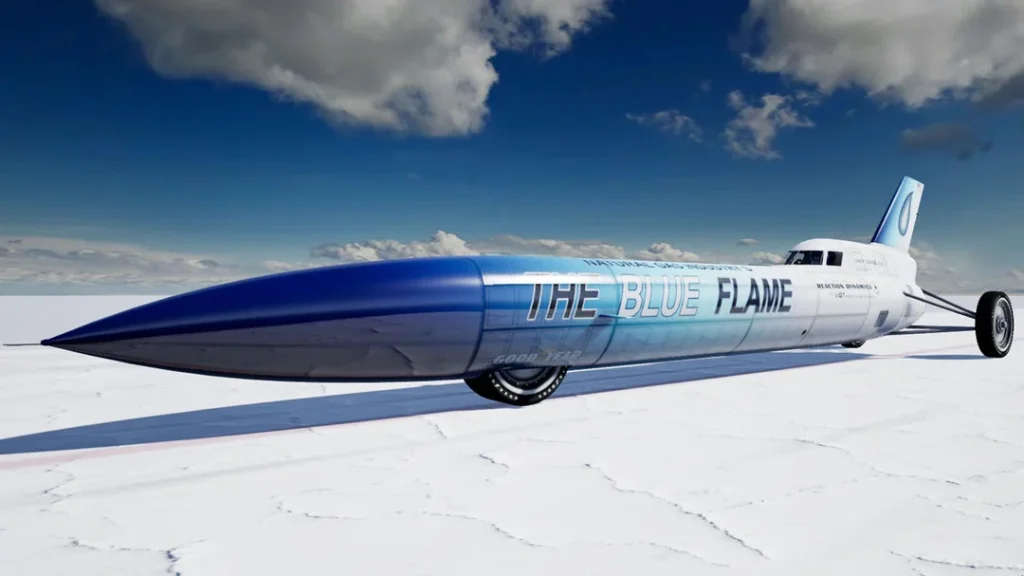
While technically rocket-powered rather than purely jet-powered, its influence on the evolution of extreme land speed machines is impossible to ignore. Few vehicles have done more to demonstrate how aerospace technology can redefine the limits of automotive performance.
Specifications
- Engine: Liquid-Fueled Rocket Engine
- Torque: Not applicable
- Horsepower: Approximately 22,000 hp equivalent
- Length/Width: 38.4 ft / 8.0 ft
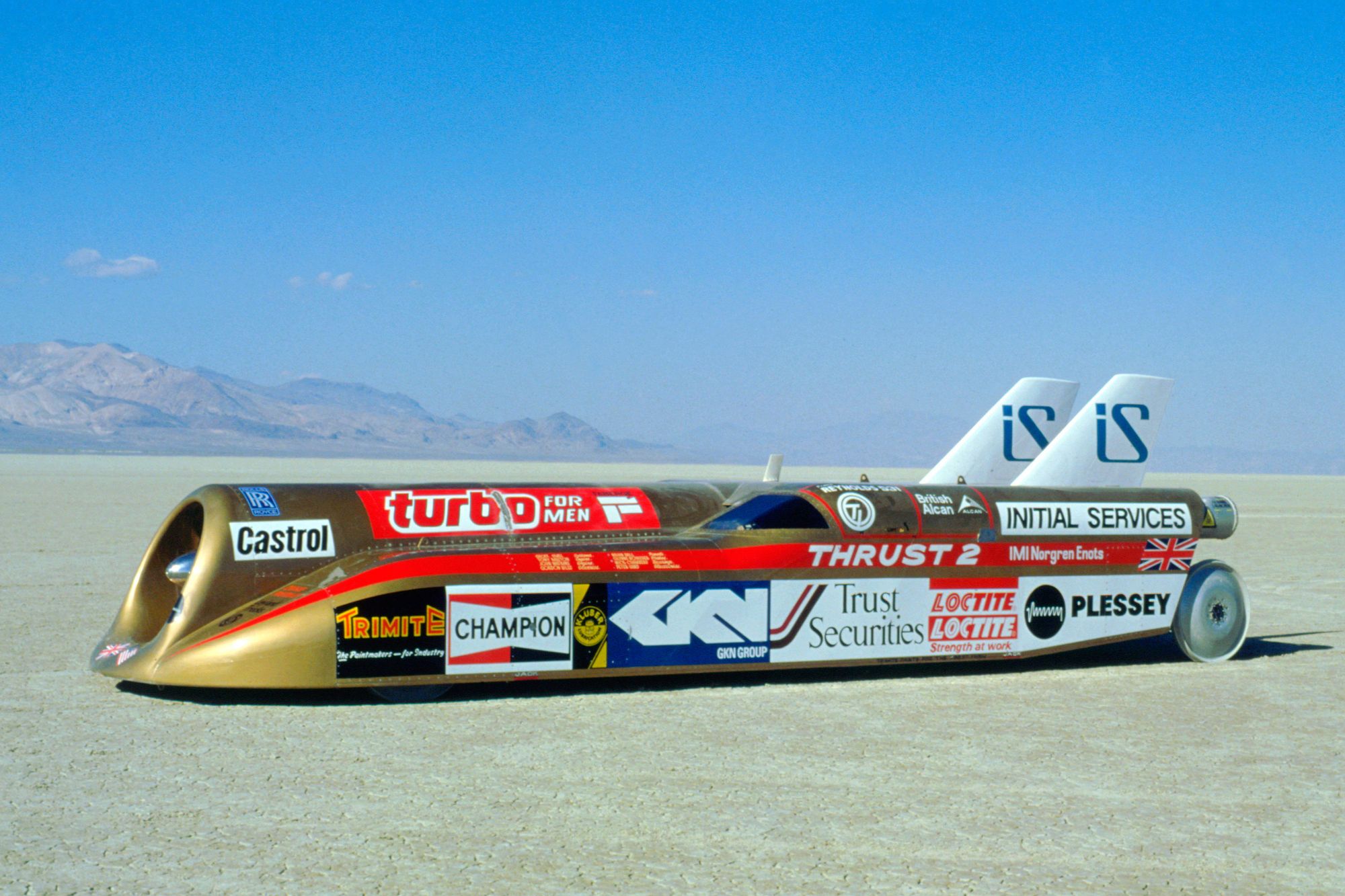
4. Thrust2 (1983)
By the early 1980s, the race for land speed records had become an international engineering battle. Britain entered the competition with Thrust2, a jet-powered vehicle designed by Richard Noble and a dedicated team determined to return the world land speed record to British hands. The result was one of the most successful and influential high-speed machines ever constructed.
Unlike many earlier record cars that appeared almost experimental, Thrust2 looked purposeful and refined. The vehicle featured a long, slender body optimized for stability at extreme speeds. Every component was carefully engineered to withstand conditions that ordinary automobiles would never encounter.
Power came from a Rolls-Royce Avon jet engine originally developed for military aircraft. This engine produced immense thrust, transforming the vehicle into a missile-like machine capable of extraordinary acceleration.
The engineering challenge involved more than generating speed. Maintaining stability while traveling across a desert surface at hundreds of miles per hour required meticulous aerodynamic development.
The breakthrough arrived in 1983 when Richard Noble drove Thrust2 to an average speed of 633.468 mph, setting a new world land speed record. This achievement ended years of American dominance and restored Britain’s position at the top of the record books.
One reason Thrust2 ranks so highly is its influence on future projects. The knowledge gained during its development directly contributed to the creation of later record-breaking vehicles. Engineers learned valuable lessons about aerodynamics, structural integrity, and high-speed control that would shape future land speed programs.
The vehicle also captured public imagination. Newspapers, television broadcasts, and automotive publications followed its progress closely, turning the record attempt into an international event. Thrust2 demonstrated that engineering excellence and determination could overcome enormous technical challenges.
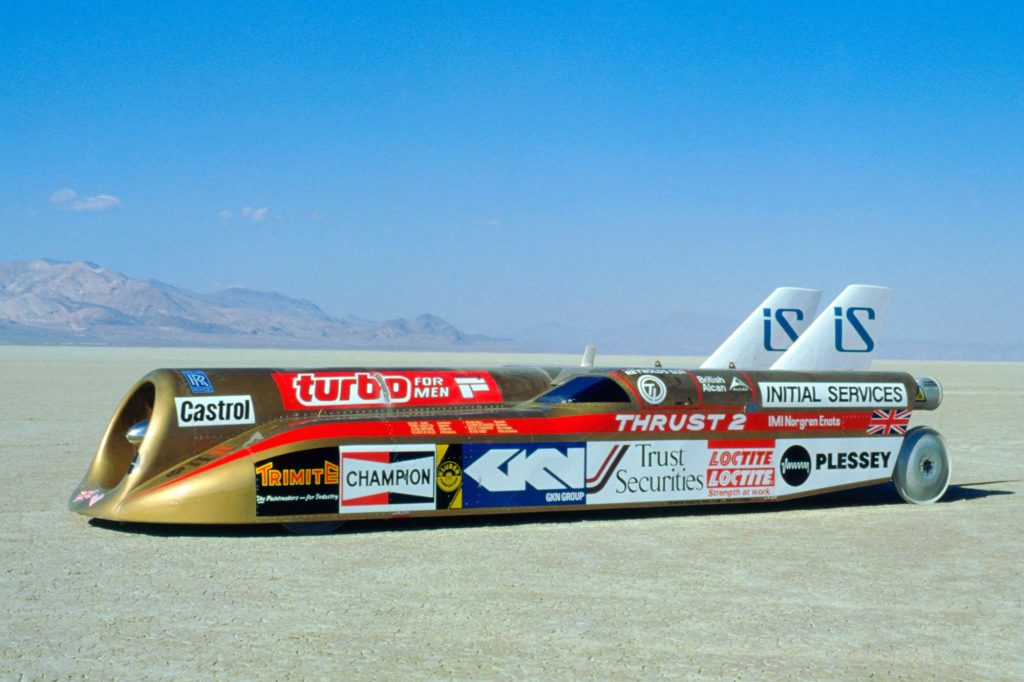
Its combination of record-setting performance, historical significance, and influence on future developments makes it one of the most important jet-powered vehicles ever built. Even decades later, Thrust2 remains a symbol of innovation and perseverance in the pursuit of speed.
Specifications
- Engine: Rolls-Royce Avon 302 Turbojet
- Torque: Not applicable
- Horsepower: Approximately 17,000 hp equivalent
- Length/Width: 30.0 ft / 7.0 ft
3. ThrustSSC (1997)
Few vehicles have changed automotive history as dramatically as ThrustSSC. Developed by Richard Noble, Ron Ayers, and Andy Green, the project pursued a goal that many considered impossible, becoming the first land vehicle to officially break the sound barrier.
At first glance, ThrustSSC looked more like a fighter aircraft without wings than a car. Measuring over 54 feet in length and powered by two Rolls-Royce Spey turbofan engines, it represented the ultimate fusion of aerospace and automotive engineering.
The machine generated an astonishing amount of thrust, placing it in a category far beyond conventional vehicles.
The challenges facing the team were unprecedented. No land vehicle had ever traveled at supersonic speed before. Engineers had to understand how shock waves, aerodynamic forces, and stability characteristics would behave when a vehicle exceeded Mach 1 while remaining in contact with the ground.
In October 1997, history was made in Nevada’s Black Rock Desert. Driven by Royal Air Force pilot Andy Green, ThrustSSC achieved an official two-way average speed of 763.035 mph, becoming the first car to break the sound barrier. The sonic boom generated during the run became one of the most memorable moments in land speed history.
The significance of this achievement extends beyond the record itself. ThrustSSC proved that a supersonic ground vehicle was possible, accomplishing a feat that had challenged engineers for decades.
The project combined advanced computer modeling, aerospace technology, and meticulous testing to achieve something once considered unattainable.
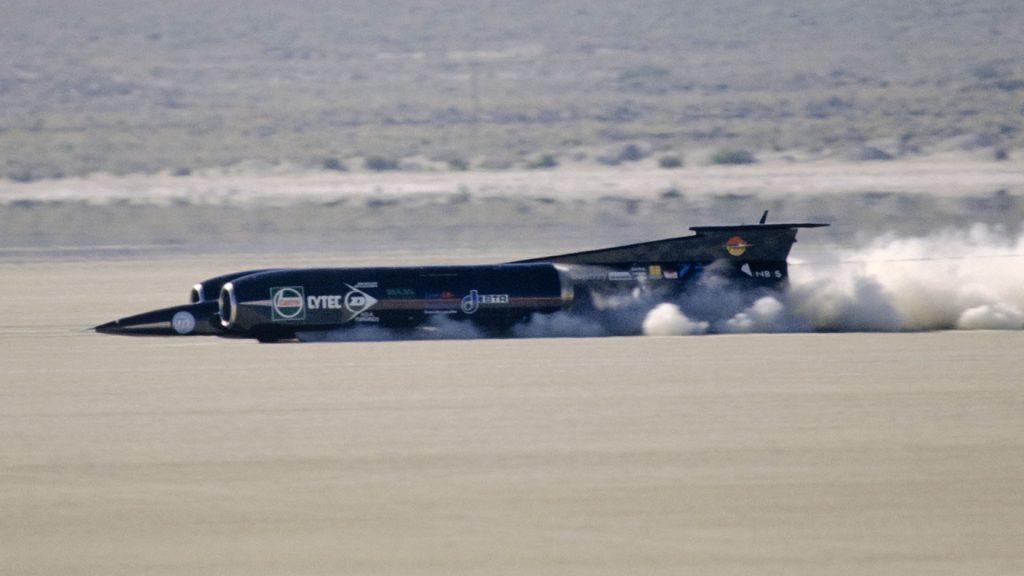
Its influence remains enormous. Every modern land speed project is measured against the benchmark established by ThrustSSC. The vehicle stands as one of the greatest engineering achievements in automotive history and remains the current holder of the official world land speed record.
For sheer historical importance and technological accomplishment, very few jet-powered vehicles can rival what ThrustSSC achieved in the Nevada desert.
Specifications
- Engine: Twin Rolls-Royce Spey 202 Turbofan Engines
- Torque: Not applicable
- Horsepower: Approximately 110,000 hp equivalent
- Length/Width: 54.0 ft / 12.0 ft
2. Bloodhound LSR
The Bloodhound LSR represents one of the most ambitious land speed projects ever attempted. Conceived as the spiritual successor to ThrustSSC, the vehicle was designed to achieve a goal that seemed almost unbelievable, exceeding 1,000 mph on land. Reaching such a speed would require engineering solutions unlike anything previously seen in automotive history.
From the beginning, Bloodhound was intended to be more than a record-breaking machine. The project also served as an educational initiative, inspiring students to pursue careers in science, technology, engineering, and mathematics. This broader mission helped distinguish it from earlier speed record programs.
Visually, the vehicle appears closer to a supersonic aircraft than a conventional car. Its long, narrow body was shaped through extensive aerodynamic testing. Engineers needed to ensure stability while operating at speeds where even minor disturbances could have catastrophic consequences.
Power came from a Eurofighter Typhoon jet engine. Later development plans also incorporated a hybrid rocket system, creating one of the most powerful land vehicles ever conceived. Combined output would have generated thrust levels far beyond those seen in traditional automotive applications.
Although Bloodhound has not yet achieved its ultimate target speed, the project completed high-speed testing in South Africa. During these runs, it demonstrated impressive performance and validated many of the engineering concepts developed by the team.
What earns Bloodhound such a high ranking is the scale of its ambition. Few projects have attempted to push the limits of land transportation as aggressively.
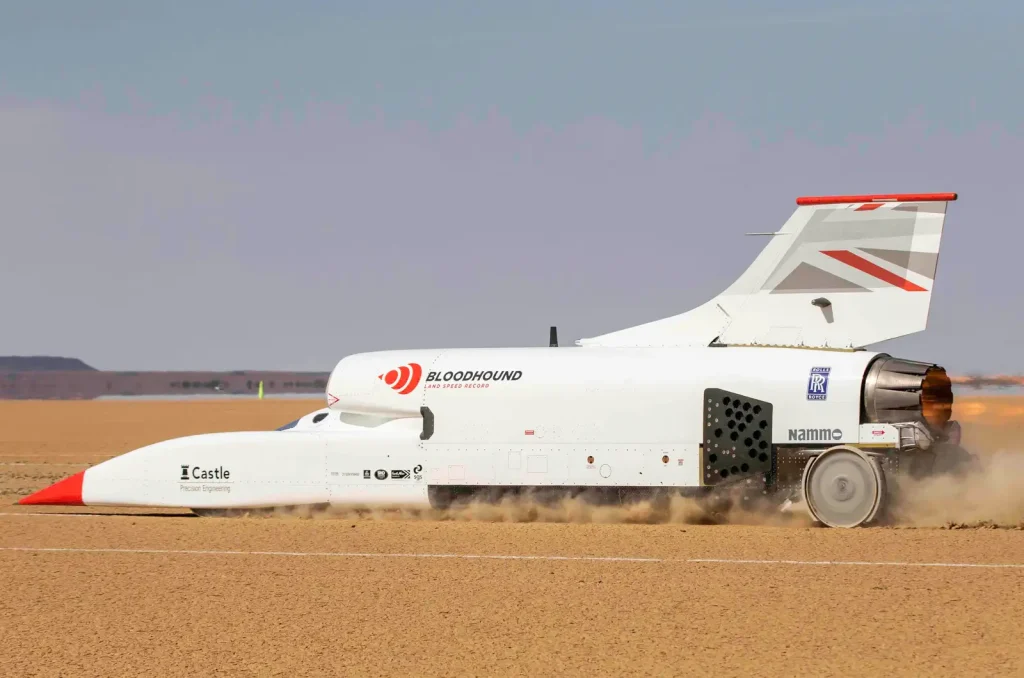
The vehicle represents the next evolutionary step in the quest for speed and showcases how modern computational tools, advanced materials, and aerospace engineering can be combined into a single machine.
Even without officially surpassing 1,000 mph, Bloodhound remains one of the most technologically advanced jet-powered vehicles ever created. Its engineering complexity and educational impact ensure its place among the greatest land speed machines in history.
Specifications
- Engine: Eurofighter EJ200 Jet Engine
- Torque: Not applicable
- Horsepower: Approximately 54,000 hp equivalent
- Length/Width: 44.0 ft / 11.0 ft
1. Spirit of America (1963)
At the top of this ranking sits a vehicle that fundamentally changed the world of land speed records. Craig Breedlove’s Spirit of America was not merely a fast machine. It redefined what a land vehicle could be and helped launch the jet-powered speed era that continues to inspire engineers today.
When Breedlove revealed the Spirit of America, many traditionalists questioned whether it should even qualify as a car. The vehicle featured three wheels and was powered by a surplus military jet engine rather than a conventional automotive powertrain. Yet those unconventional characteristics allowed it to achieve something extraordinary.
The design philosophy was simple but revolutionary. Instead of attempting to increase speed through larger piston engines or mechanical complexity, Breedlove embraced pure jet thrust. The streamlined body minimized aerodynamic drag, while the aircraft-derived propulsion system delivered levels of performance that traditional racing cars could never match.
The breakthrough came in 1963 when the Spirit of America set a new world land speed record exceeding 400 mph. Breedlove continued refining the vehicle, eventually pushing speeds beyond 500 mph. These achievements transformed public perceptions of what was possible on land.
More importantly, the Spirit of America established the blueprint for nearly every major jet-powered speed machine that followed. Vehicles such as Sonic I, Thrust2, ThrustSSC, and Bloodhound all owe part of their existence to the path Breedlove pioneered.
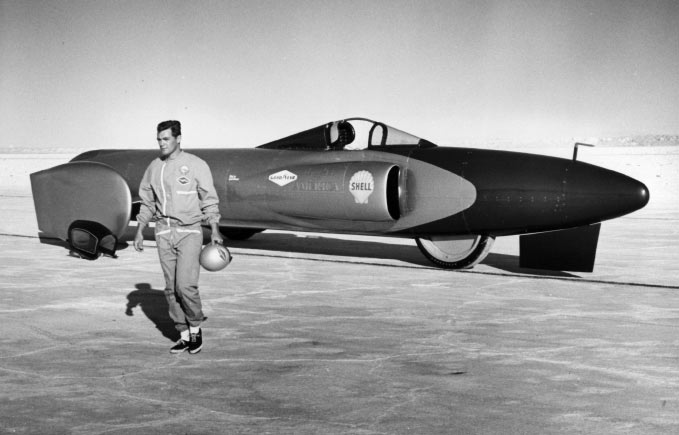
The machine also captured the imagination of an entire generation. During an era defined by space exploration and technological optimism, the Spirit of America embodied the same fearless pursuit of progress. It demonstrated that bold ideas could overcome seemingly impossible barriers.
While later vehicles achieved higher speeds, none had a greater influence on the development of jet-powered land vehicles. Its combination of innovation, historical significance, and record-breaking performance secures its position as the most important jet-powered car ever built.
Specifications
- Engine: GE J47 Turbojet
- Torque: Not applicable
- Horsepower: Approximately 10,000 hp equivalent
- Length/Width: 26.0 ft / 6.0 ft
Also Read: 10 Strangest Concept Cars & Ranked
