
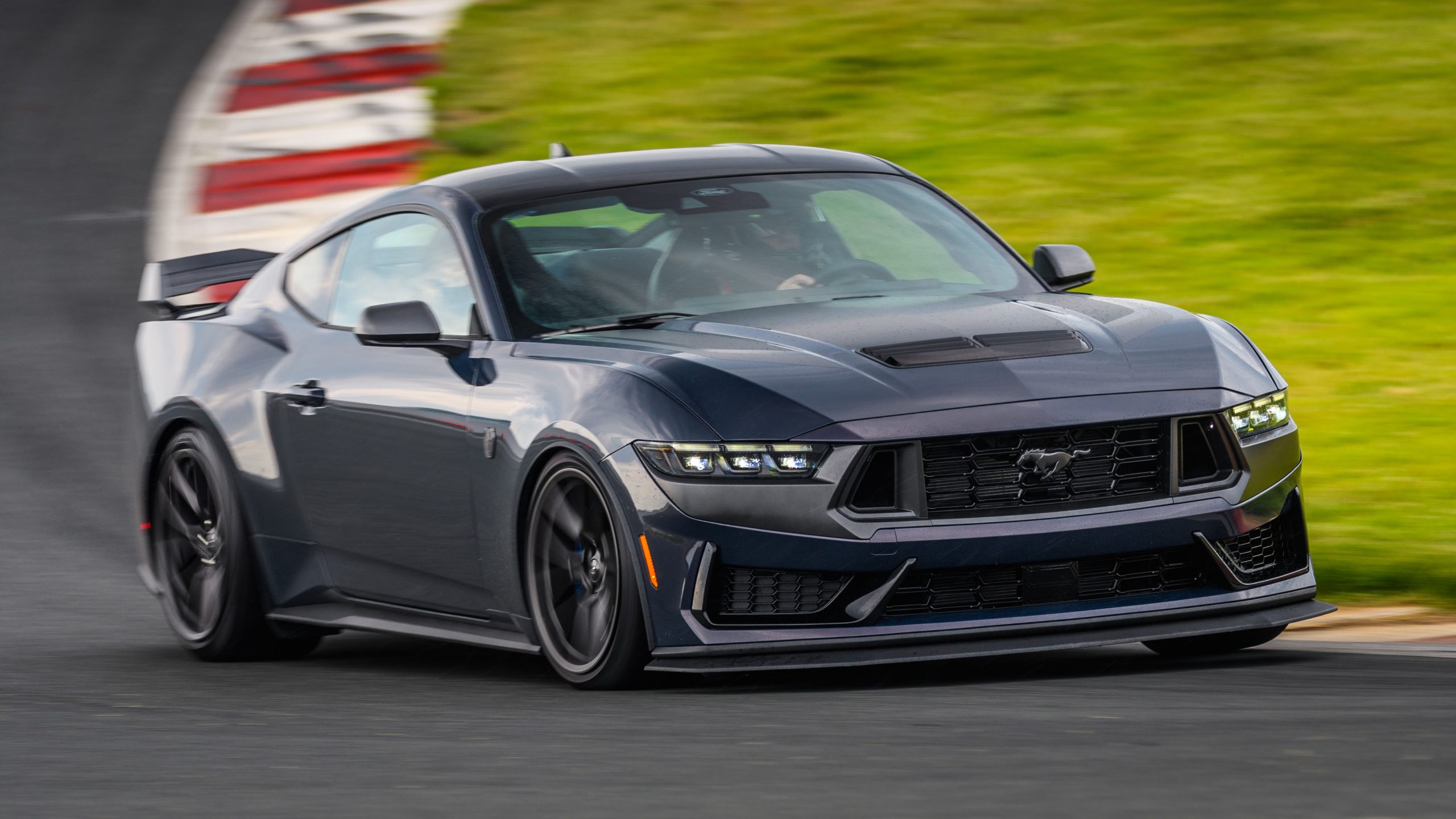
Ford has spent the better part of six decades improving the Mustang. Every generation has become faster, safer, more powerful, more refined, and more capable than the one before it. Looking strictly at the numbers, today’s Mustang is everything enthusiasts once dreamed about.
A modern Mustang GT produces nearly 500 horsepower, offers an available six-speed manual transmission, can carve through corners with genuine precision, and remains comfortable enough to drive every day.
Step up to a Dark Horse, and you’re looking at a machine capable of embarrassing sports cars that cost significantly more money. Compared to Mustangs from the 1980s, 1990s, or even the early 2000s, the current car feels like it arrived from another planet.
Yet something interesting happens whenever enthusiasts gather and start talking about their favorite Mustangs. The conversation rarely centers on the newest models.
Instead, people talk about Fox Bodies, Terminator Cobras, Boss 302s, Mach 1s, and Shelby GT500s from years past. These older cars are objectively worse in almost every measurable category, yet they continue to occupy a special place in the hearts of enthusiasts.
The reason is simple. The Mustang was never loved solely because it was fast. It was loved because it had personality. Earlier generations felt mechanical, unpredictable, and occasionally flawed. Those imperfections created an emotional connection that modern cars sometimes struggle to match.
That doesn’t mean today’s Mustang is a bad car. In fact, it may be the greatest Mustang Ford has ever built. The problem is that greatness and excitement are not always the same thing. In many ways, modern Mustangs are victims of their own success.
Also Read: Consumer Reports Names The Ford F-150 A Top Pick For 2026
Older Mustangs Felt Fast Even When They Weren’t
One of the biggest differences between older Mustangs and modern ones is the way they deliver speed. The numbers tell one story, but the driving experience often tells another.
Take the 1993 Fox Body Mustang GT as an example. With just over 200 horsepower, it would be completely outclassed by even an EcoBoost Mustang today. Put the two cars side by side, and the modern car would disappear into the distance. Yet anyone who has driven a Fox Body understands why it remains beloved decades later.
The steering constantly communicated with the driver. The chassis flexed over rough roads. The rear axle never let you forget it was there. Even moderate acceleration felt dramatic because the car always seemed to be working hard. It demanded attention and involvement in a way modern performance cars rarely do.
Now compare that experience with a 2025 Mustang GT. The newer car is dramatically faster, but it is also dramatically calmer. Ford’s engineers have spent years eliminating vibration, reducing noise, increasing chassis rigidity, and improving stability. The result is a car that can travel at speeds the Fox Body could never dream of while feeling almost effortless.
That refinement is impressive, but it comes with a trade-off. The modern Mustang often feels less exciting at everyday speeds because it is so composed. Drivers find themselves traveling much faster before the car begins to feel alive.
The Fox Body felt like an event every time you drove it. The modern Mustang often feels like it is barely breaking a sweat.
The Terminator Cobra Had Flaws That Became Part of Its Character
The 2003-2004 SVT Cobra, better known as the Terminator, remains one of the most celebrated Mustangs ever built. Its popularity is especially interesting because modern Mustangs outperform it in virtually every measurable way.
A Dark Horse corners better, brakes better, accelerates harder, and offers vastly superior technology. Yet Terminators continue to command strong prices and maintain a cult-like following.
Part of that appeal comes from the way the car delivered its performance. The supercharged 4.6-liter V8 wasn’t polished. It felt aggressive, mechanical, and occasionally intimidating. The blower whine became part of the experience. Every throttle input felt like an invitation to do something irresponsible.
Modern Mustangs are engineered to deliver power more efficiently. The throttle mapping is refined. The traction systems are sophisticated. Everything works exactly as intended.
While this creates a faster and safer car, it also removes some of the unpredictability that made older performance cars memorable. The Terminator wasn’t special because it was perfect. It was special because it felt alive.
Technology Has Made the Mustang Better and Less Involving
Few people would argue that technology hasn’t improved the Mustang. The introduction of advanced stability systems, adaptive suspension technology, electronic driving modes, and modern engine management has transformed the car into a world-class performance machine.
The problem is that technology often acts as a filter between the driver and the vehicle. When driving a Fox Body, an SN95 Cobra, or even an early S197 GT, every input felt direct. Drivers learned the car’s behavior through experience. Mistakes were obvious, and successes felt rewarding because they came from skill rather than software.
Modern Mustangs constantly assist the driver. Stability systems monitor traction. Electronic steering adjusts feedback. Drive modes alter throttle response. Active exhaust systems modify sound characteristics.
None of these features is inherently bad. In fact, they make the car significantly easier to drive quickly. However, they also reduce the sense of mechanical connection that defined many earlier generations. The car becomes smarter, but the driver often feels less involved.
The Boss 302 Represented a Sweet Spot That Ford May Never Repeat
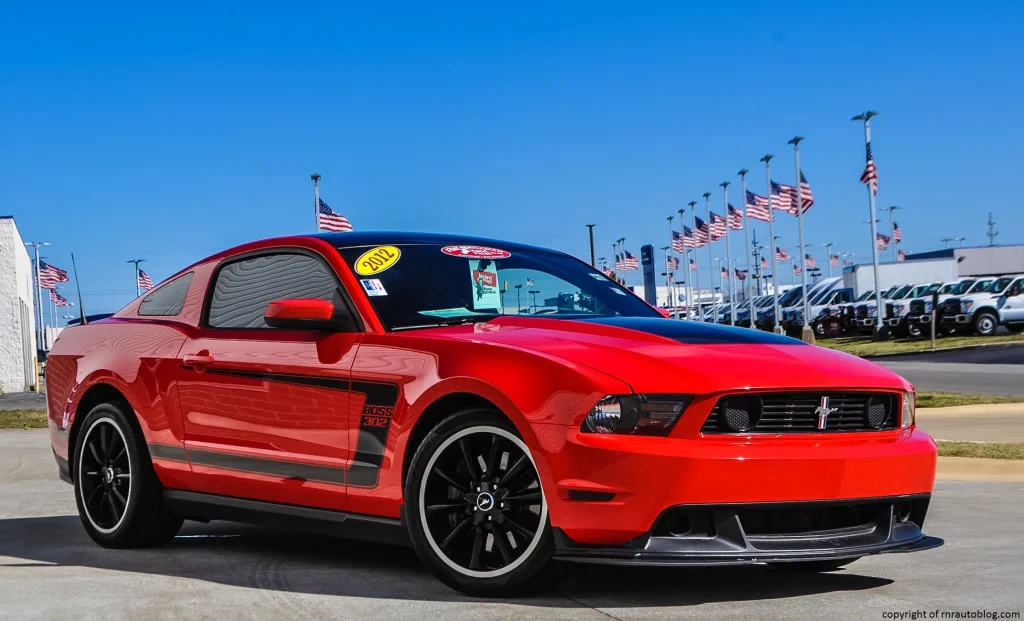
If there is one Mustang that perfectly illustrates the balance between old-school character and modern capability, it is the 2012-2013 Boss 302.
The Boss arrived before Ford fully embraced the highly digital philosophy seen in today’s cars. It featured modern engineering but retained a raw personality that enthusiasts immediately connected with.
The steering felt alive. The naturally aspirated V8 delivered a soundtrack that bordered on addictive. The suspension communicated constantly. Every drive felt engaging regardless of speed.
Compared with a modern Dark Horse, the Boss 302 is slower and less capable. Yet many enthusiasts would still choose the Boss for a back-road drive because it feels more interactive.
The boss required participation. The Dark Horse often feels like it is doing much of the work for you.
That distinction may explain why the Boss 302’s reputation continues to grow while newer Mustangs struggle to inspire the same emotional response.
The Mustang Became a Sports Car Instead of a Muscle Car
Perhaps the biggest turning point in Mustang history came with the arrival of the S550 generation in 2015.
For decades, Mustangs embraced certain compromises because they were traditional muscle cars. Straight-line performance mattered more than perfect handling. The solid rear axle became part of the car’s identity, even if it limited ultimate capability.
When Ford introduced an independent rear suspension, everything changed. The decision made the Mustang objectively better. Ride quality improved. Cornering stability improved. The car became competitive with European sports coupes in ways previous generations never could.
Yet something else happened during that transformation. The Mustang gradually stopped feeling like a rough-and-tumble muscle car and started feeling like a highly polished sports car.
Many buyers welcomed the change. Others missed the attitude that came with the old formula.
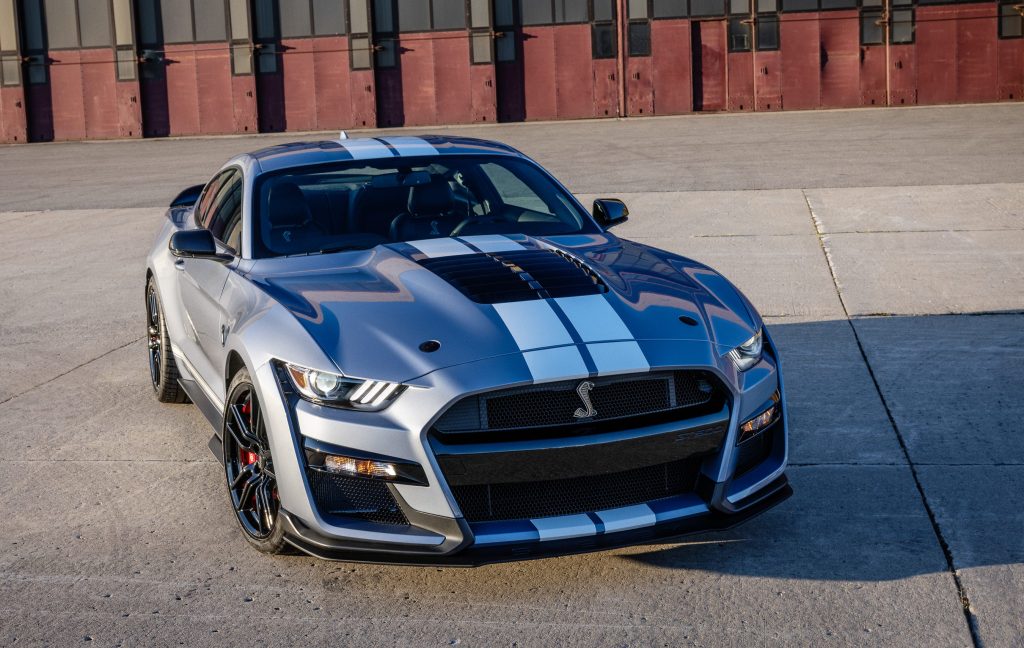
The S197 Shelby GT500 is a perfect example. It was often criticized for being unruly and difficult to manage near the limit. Today, those very traits are part of its appeal. It feels dangerous in a way that modern Mustangs rarely do.
The Digital Interior Says Everything
Nothing highlights the Mustang’s evolution more clearly than the dashboard. Sit inside a 1995 Cobra, a 2003 Mach 1, or a 2007 Shelby GT500, and the focus is immediately obvious. Analog gauges dominate the driver’s view. Physical controls are everywhere. The cabin exists primarily to support the driving experience.
Now step into a current Mustang. Large digital displays stretch across the dashboard. Menus replace many traditional controls. Technology takes center stage.
The system works well, but it also makes the Mustang feel similar to countless other modern vehicles. Screens are becoming universal. Analog gauges gave older Mustangs a sense of identity.
The interior perfectly reflects the broader evolution of the car itself. It offers more capability than ever before, but some of the individuality has been sacrificed in the process.
The Best Mustang and the Most Memorable Mustang Are Usually Different Cars
The uncomfortable truth for modern Mustang fans is that the best Mustang and the most memorable Mustang are rarely the same vehicle.
The Dark Horse is probably the best all-around Mustang Ford has ever produced. It combines immense power, outstanding handling, impressive braking, modern technology, and daily usability in a single package.
Yet when enthusiasts talk about the cars they remember most, the conversation often turns toward Fox Bodies, Terminators, Boss 302s, Mach 1s, and Shelby GT500s.
Those cars had weaknesses. They were noisier, rougher, slower, and less refined. Yet those shortcomings helped create personalities that remain unforgettable years later.
Modern Mustangs have solved most of those problems. In doing so, they may have also done away with some of the traits that made earlier generations so charming.
The modern Mustang is a remarkable achievement and a testament to how far Ford has pushed the platform. It is faster, safer, more capable, and more sophisticated than any Mustang that came before it. If the goal is building the ultimate performance Mustang, Ford has arguably succeeded.
But cars are rarely judged solely by performance. They are remembered because of the emotions they create.
A Fox Body GT felt dramatic despite modest power. A Terminator Cobra felt mechanical and aggressive. A Boss 302 felt eager to challenge its driver. An S197 Shelby GT500 felt slightly intimidating every time the engine fired to life.
The modern Dark Horse can outperform all of them. Yet many enthusiasts would still choose one of those older cars for a memorable Sunday morning drive.
That is why the phrase “Modern Mustangs Are Faster Than Ever And More Boring Than Ever” continues to resonate. It is not an attack on Ford’s engineering. It is a recognition that while performance has improved dramatically over the decades, personality has become much harder to preserve.
Sometimes the cars we love most are not the ones that do everything perfectly. They are the ones that make every drive feel like an occasion.
Also Read: BYD Says It Will Accept Responsibility for Crashes Involving Its Self-Driving Systems
