
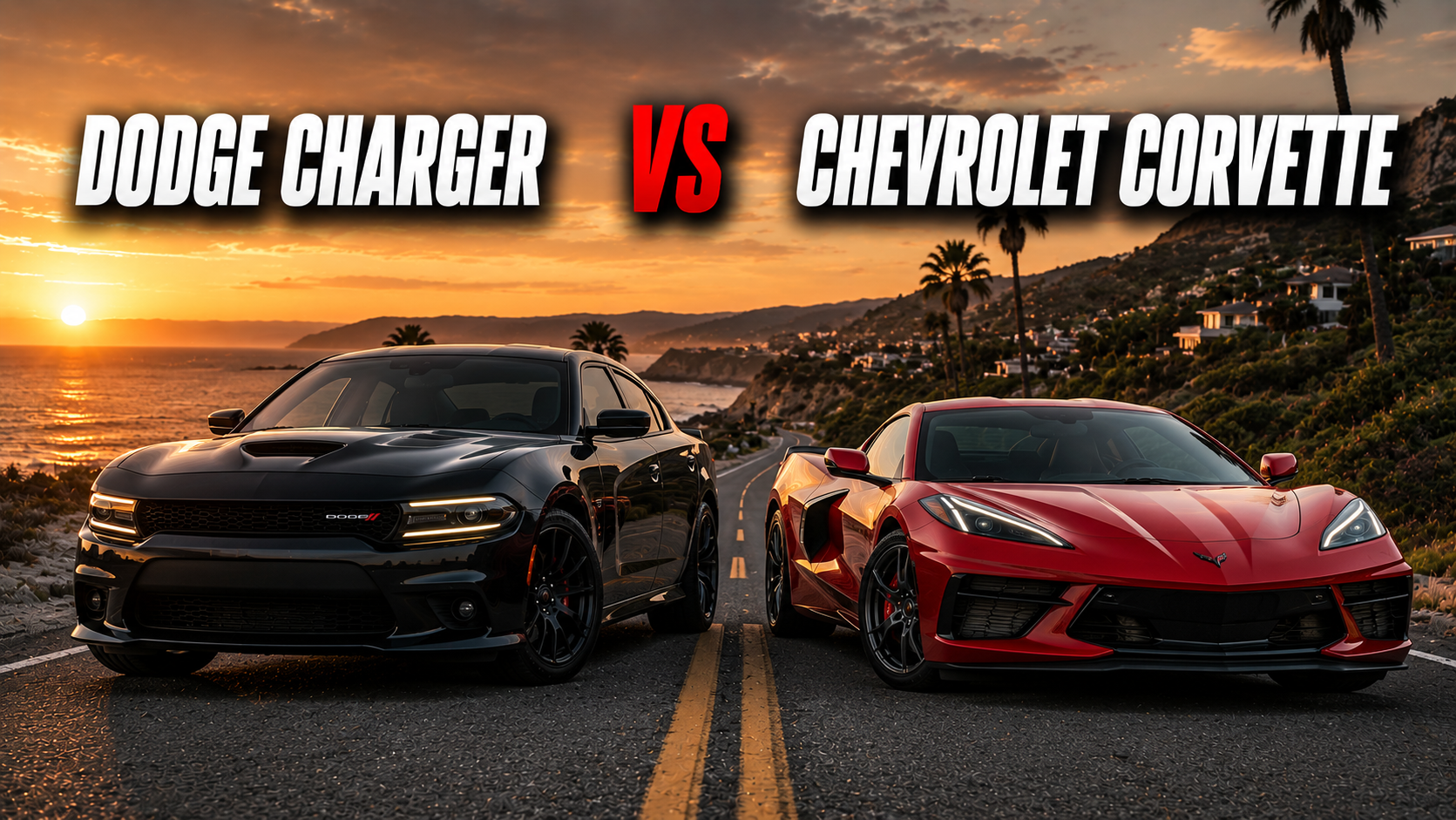
When it comes to American performance cars, few comparisons spark as much debate as the battle between the Dodge Charger and the Chevrolet Corvette. Both vehicles represent completely different philosophies of automotive engineering, yet they are often compared because they deliver thrilling speed, bold design, and strong brand identity.
The Dodge Charger is known for its muscular four-door practicality combined with raw V8 power, while the Chevrolet Corvette is a legendary two-seat sports car built for precision handling, lightweight performance, and track-focused engineering. Choosing between them is not simply about horsepower or price, but about lifestyle, driving preferences, and long-term ownership expectations.
The Dodge Charger appeals to drivers who want a powerful muscle car that can also function as a daily family vehicle. It offers spacious seating, modern technology, and a wide range of engine options, including some of the most powerful V8 engines in the muscle car segment.
On the other hand, the Chevrolet Corvette focuses on delivering supercar-level performance at a relatively accessible price point. With its mid-engine layout in recent generations, the Corvette has transformed into a world-class performance machine capable of competing with exotic European brands.
In today’s automotive market, both cars have evolved significantly. The Charger continues to dominate the muscle sedan category with aggressive styling and straight line speed, while the Corvette has redefined American sports car expectations with its advanced aerodynamics and precision handling.
This makes the comparison between them both exciting and complex. Buyers often find themselves torn between practicality and raw performance, comfort and track capability, or family usability and pure driving excitement.
This detailed guide will break down the key differences between these two iconic machines across multiple categories, including performance, design, practicality, comfort, and ownership value.
Each section will explore how these vehicles perform in real-world conditions as well as enthusiast scenarios. By the end, you will have a clear understanding of which car best fits your driving personality and lifestyle needs.
Whether you are a performance enthusiast, a daily commuter looking for excitement, or someone planning a dream garage, understanding the strengths and weaknesses of the Dodge Charger and Chevrolet Corvette is essential before making a decision. Let’s dive deep into this legendary American automotive rivalry.
Also Read: 10 Vintage Cars With More Features Than Modern Cars

Performance Comparison: Power, Speed, and Driving Dynamics
The performance difference between the Dodge Charger and the Chevrolet Corvette is one of the most striking aspects of this comparison. The Charger is designed around brute force and straight-line acceleration, especially in its high-performance variants.
Even the base models deliver respectable power, but the upper trims, particularly those with supercharged V8 engines, push the limits of what a four-door sedan can achieve. The driving experience is heavily focused on torque delivery, making it feel aggressive and dominant on highways and drag strips.
In contrast, the Corvette is engineered with precision as its core philosophy. The modern mid-engine layout significantly improves weight distribution, allowing the car to corner with exceptional stability and responsiveness.
Unlike the Charger, which prioritizes straight-line dominance, the Corvette is built for balanced performance across all driving conditions. Whether on winding roads or racetracks, it delivers a level of agility that few cars in its price range can match.
Acceleration is another major distinction. The Charger can deliver astonishing straight-line speed in its high-performance configurations, often producing thrilling launches that push drivers back into their seats.
However, the Corvette takes acceleration further by combining lightweight construction with advanced aerodynamics. This allows it to achieve faster 0 to 60 times in many trims while maintaining better control and composure at high speeds.
Handling is where the gap becomes even more noticeable. The Charger, being a larger and heavier sedan, is not designed for sharp cornering. While modern suspension improvements have enhanced its stability, it still cannot match the precision of the Corvette.
The Corvette feels like it is carved for corners, offering sharp steering feedback and minimal body roll, which makes it far more engaging on technical roads.
Braking performance also favors the Corvette due to its track-oriented engineering. The braking system is designed to withstand repeated high-speed stops without fading, which is essential for performance driving. The Charger performs well for a muscle sedan but lacks the endurance and finesse of the Corvette in extreme driving situations.
Performance comes down to intent. The Charger delivers emotional, aggressive power with a focus on daily usability and straight-line fun. The Corvette delivers refined, track-ready performance that prioritizes agility, speed consistency, and driving precision.
Design and Styling: Muscle Sedan vs Exotic Sports Car Identity
Design plays a huge role in how both the Dodge Charger and Chevrolet Corvette are perceived. The Charger follows a traditional American muscle car aesthetic with a modern twist. It has a wide stance, an aggressive front grille, and bold body lines that emphasize strength and road presence. Even though it is a four-door sedan, its design manages to retain coupe-like aggression, making it visually unique in its segment.
The Chevrolet Corvette, on the other hand, adopts a completely different design philosophy. With its mid-engine layout, the proportions are dramatically different from traditional American sports cars. The cabin is pushed forward, and the rear is wide and sculpted to optimize airflow and cooling.
This gives the Corvette a supercar-like appearance that draws inspiration from exotic European models while maintaining its American identity.
Inside the Charger, the design is focused on practicality and driver comfort. The cabin is spacious, with enough room for passengers in both the front and rear seats.
The dashboard layout is modern and functional, prioritizing ease of use and accessibility. While it may not feel as futuristic as some competitors, it delivers a comfortable and familiar driving environment suitable for long journeys and daily commuting.
The Corvette interior is much more driver-focused and compact. Since it is a two-seater sports car, everything is designed around the driver’s experience. The cockpit is tight, immersive, and performance-oriented. High-quality materials and advanced digital displays enhance the feeling of being in a high-end performance machine. However, it sacrifices practicality for engagement, which is a key difference compared to the Charger.
Exterior aerodynamics also separates the two vehicles significantly. The Charger is designed with a balance of performance and road usability, meaning it does not prioritize extreme aerodynamic efficiency. The Corvette, however, is heavily sculpted to reduce drag and increase downforce. Every curve and vent serves a functional purpose, improving stability at high speeds and enhancing track performance.
The Charger represents bold American muscle design with practical usability, while the Corvette embodies exotic sports car aesthetics with a focus on aerodynamic precision and visual drama.

Practicality and Comfort: Daily Usability and Lifestyle Fit
Practicality is one of the biggest deciding factors between these two vehicles. The Dodge Charger stands out as a rare performance-oriented sedan that still offers genuine everyday usability.
With four doors, a large trunk, and comfortable seating for multiple passengers, it is one of the few muscle cars that can realistically serve as a family vehicle. This makes it appealing to drivers who want power without sacrificing convenience.
The Chevrolet Corvette, however, is built with a completely different purpose. It is strictly a two-seater sports car with limited storage space. While it does offer small front and rear storage compartments, it cannot match the cargo capacity or passenger flexibility of the Charger. This makes it more suitable as a secondary or weekend vehicle rather than a primary daily driver for most people.
Comfort in the Charger is another strong advantage. The suspension is tuned to absorb road imperfections while still maintaining sporty characteristics.
This allows for a smoother ride on long highway journeys. The seating position is relaxed, and the cabin noise is relatively controlled, especially in lower-performance trims. This balance of comfort and power is one of the Charger’s biggest strengths.
The Corvette prioritizes performance over comfort, although modern versions have improved significantly in ride quality. The seating position is low and performance-focused, which enhances driving engagement but can make entry and exit less convenient. Road feedback is more pronounced, which is ideal for enthusiasts but may feel stiff for casual drivers.
Technology and infotainment systems are fairly advanced in both vehicles, but the Charger tends to offer more convenience features aimed at families and daily use. The Corvette focuses more on performance telemetry and driving data, catering to enthusiasts who want detailed feedback from their driving experience.
The Charger is the clear winner in practicality and comfort, while the Corvette is designed for those who prioritize driving excitement over everyday convenience.
Also Read: 10 Hidden Features in the Mercedes GLE
Value, Ownership Experience, and Long-Term Appeal
When evaluating value, the Dodge Charger offers a strong combination of performance and affordability. It provides multiple engine options across different price ranges, allowing buyers to choose according to budget and needs. Maintenance and insurance costs can vary depending on the model, but it is considered more accessible compared to high-performance sports cars.
The Chevrolet Corvette, while more expensive, offers exceptional performance value for its price category. In many cases, it delivers performance that competes with cars that cost significantly more. This makes it a strong contender for enthusiasts seeking supercar-level capability without paying exotic car prices.
Fuel efficiency is another important consideration. The Charger, especially in V8 configurations, tends to consume more fuel due to its weight and engine size. The Corvette, despite its performance focus, benefits from modern engineering and lighter construction, which can result in relatively better efficiency in certain driving conditions.
Reliability and maintenance costs depend heavily on usage and driving style. The Charger is generally easier and cheaper to maintain due to its more conventional design and widespread parts availability. The Corvette, while highly engineered, may require more specialized servicing, especially in newer mid-engine models.
Resale value tends to favor the Corvette due to its iconic status and strong demand among enthusiasts. It holds its value well over time, especially for limited or high-performance trims. The Charger also maintains decent resale value, particularly in performance variants, but it does not typically match the long-term desirability of the Corvette.
The Charger offers broader accessibility and practicality, while the Corvette delivers higher long-term enthusiast appeal and performance value. Choosing between them depends on whether the buyer prioritizes everyday usability or pure driving prestige.
| Category | Winner | The Edge |
|---|---|---|
| Performance (Track & Handling) | Chevrolet Corvette | Superior cornering, lighter weight, mid-engine balance, track-focused engineering |
| Straight-Line Power | Dodge Charger | Higher raw torque in V8 trims, brutal acceleration feel, muscle car character |
| Daily Practicality | Dodge Charger | Four doors, more passenger space, larger trunk, easier daily usability |
| Design & Styling | Chevrolet Corvette | Exotic supercar proportions, aerodynamic mid-engine layout, aggressive modern look |
| Comfort | Dodge Charger | Softer ride, more spacious cabin, better for long-distance cruising |
| Fuel Efficiency | Chevrolet Corvette | Lighter structure and more efficient performance tuning in comparison |
| Affordability | Dodge Charger | Lower entry price and wider range of budget options |
| Prestige & Enthusiast Appeal | Chevrolet Corvette | Strong heritage, supercar-level performance reputation, and higher desirability |
| Maintenance & Ownership Ease | Dodge Charger | Simpler servicing, more widespread parts availability |
| Resale Value | Chevrolet Corvette | Strong long-term demand and better value retention in most trims |
