
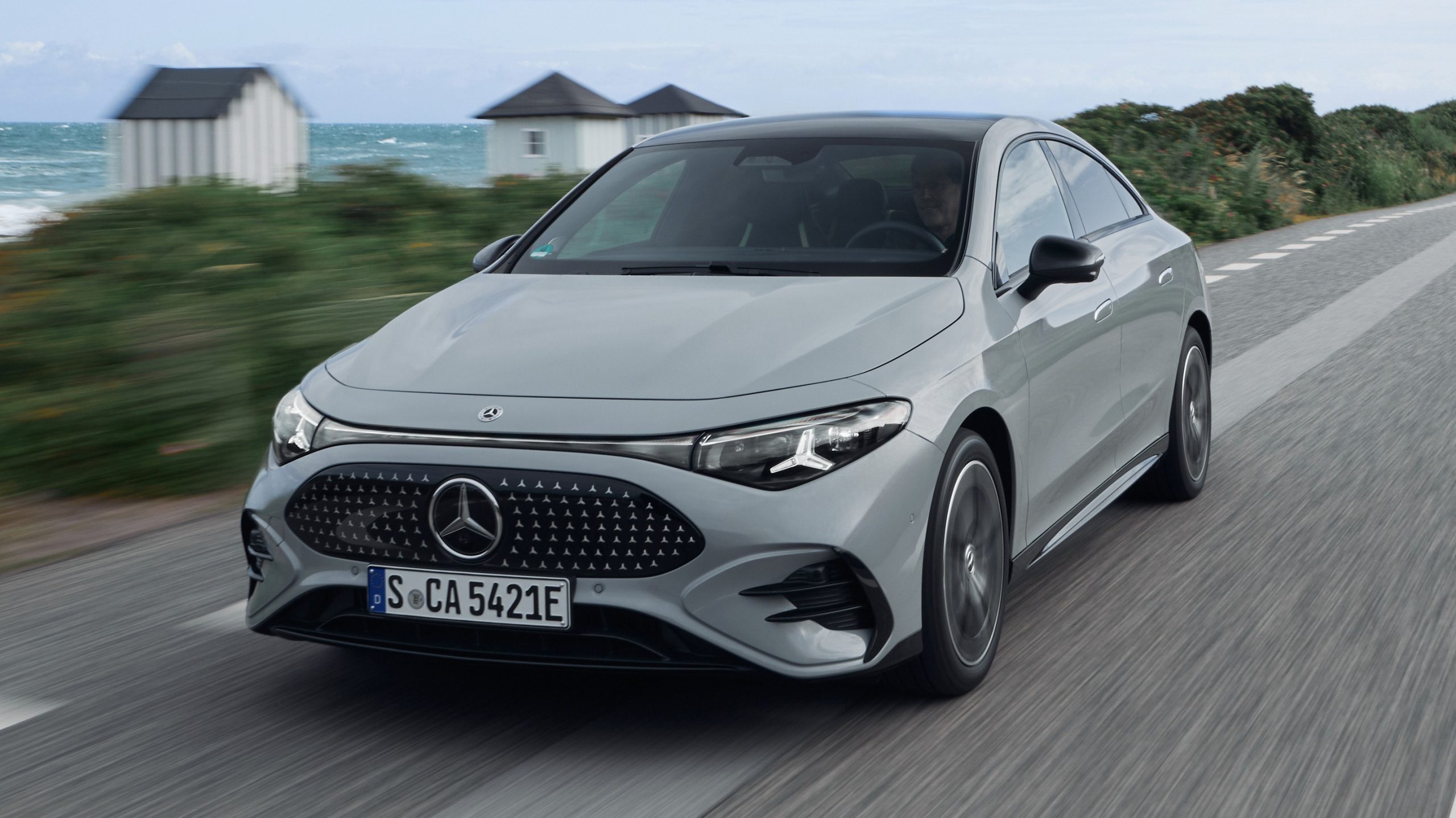
Mercedes-Benz built its reputation on luxury sedans and engineering excellence. Yet the brand has repeatedly experimented with affordable, entry-level models aimed at younger or budget-conscious buyers. These cars carried the three-pointed star at a fraction of the cost of an S-Class.
Some became huge sales successes. Others, like the original A-Class, became infamous before they became respected. Each one represents a different chapter in Mercedes trying to balance prestige with affordability.
This list ranks the eight cheapest Mercedes-Benz models ever produced, based on historical launch pricing and market positioning. We start with the most affordable and work toward the relatively pricier end of this budget-friendly group. Every entry includes real specifications.
These aren’t generic summaries pulled from spec sheets alone. Each car has a story. Some changed Mercedes engineering forever. Others quietly sold over a million units without much fanfare.
From the controversial W168 A-Class to the compact CLA coupe, this list covers more than three decades of Mercedes trying to make luxury accessible. Buckle up for a deep look into Stuttgart’s most affordable creations.
1. Mercedes-Benz A-Class W168 (1997)
The original A-Class remains Mercedes’ boldest affordability experiment. It was the brand’s first front-wheel-drive production car ever. That alone broke nearly a century of rear-wheel-drive tradition.
Styled by Steve Mattin, the W168 used a radical “sandwich floor” platform. This unique sandwich concept allowed the A-Class to reach the spaciousness and safety level of a medium-sized saloon despite its tiny footprint. The engine sat at an angle beneath the cabin.
It became infamous almost immediately. During Sweden’s notorious “elk test,” early cars tipped onto two wheels, sparking a media storm that threatened the reputation of both the model and the Mercedes-Benz brand.
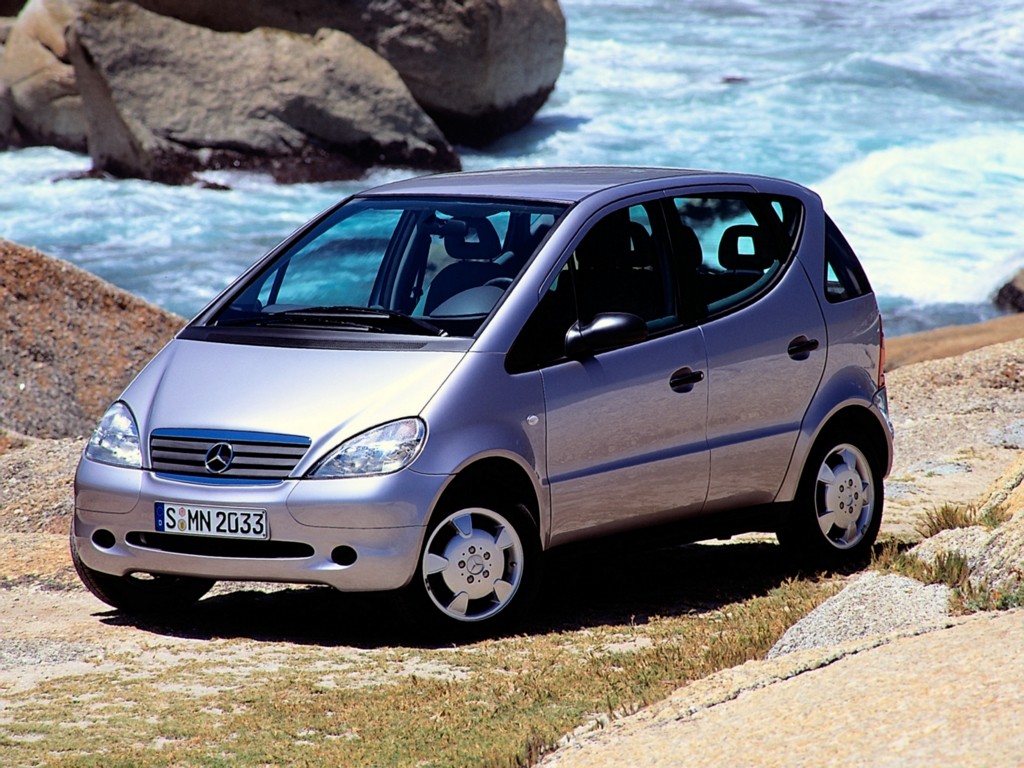
Mercedes responded aggressively. Production was halted, and over 130,000 cars were recalled, with engineers reworking the suspension and widening the track. Every A-Class then got standard ESP, a first for the segment.
Despite the rocky start, it sold remarkably well. Between 1997 and 2004, 1.1 million first-generation A-Class models were sold, though Daimler reportedly lost €1,440 per vehicle produced.
Engine choices were modest and practical. At launch, the lineup consisted of compact inline-four engines: the A 140 (1.4-liter, 82 PS) and A 160 (1.6-liter, 102 PS), both driving the front wheels.
Specifications:
- Engine: 1.4L or 1.6L inline-four petrol (M166 series)
- Horsepower: 82–102 PS (60–75 kW)
- Torque: Approximately 126–140 Nm depending on variant
- Length: 3,575 mm (140.7 in)
- Width: 1,719 mm (67.7 in)
Real-world pricing confirms its budget status today. The lowest recorded sale price tracked for the A-Class was just $5,800, for a 1999 Mercedes-Benz A190 Avantgarde. That makes the W168 a genuine modern classic bargain.
2. Mercedes-Benz 190 (W201) (1982)
Known affectionately as the “Baby Benz,” the W201 was Mercedes’ first compact-class sedan. It arrived to fill a major gap below the S-Class and W123 in the lineup.
The reasoning was strategic and economic. European and American buyers were increasingly looking toward more compact, fuel-efficient cars after the 1970s fuel crisis, prompting Mercedes to enter this smaller segment.
Designed by Bruno Sacco, the W201 looked conservative but hid serious engineering. It introduced a 5-link rear suspension that was later used across both E-Class and C-Class models. This suspension became an industry benchmark.
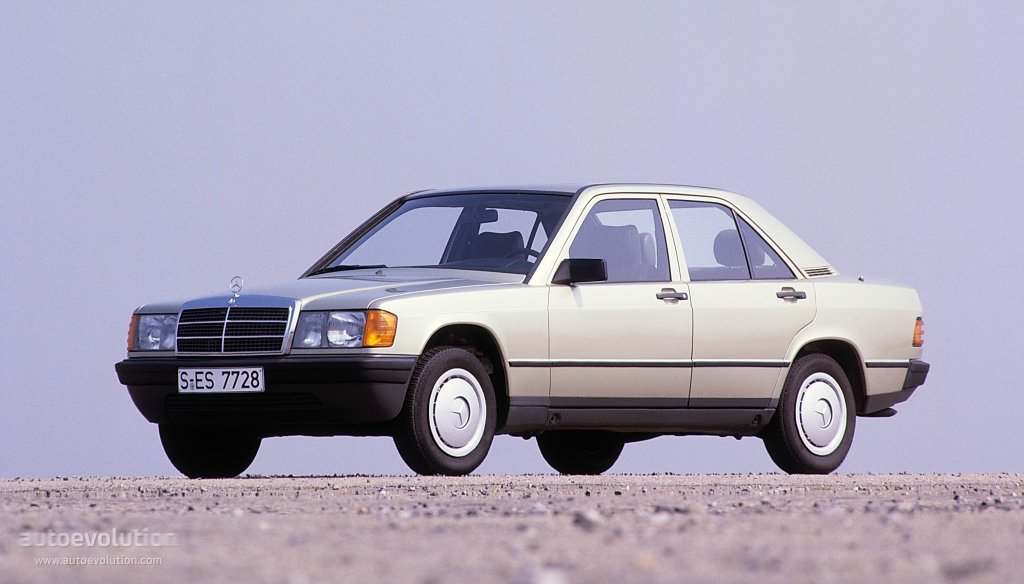
Production numbers were staggering for an entry-level Mercedes. Manufactured in both Bremen and Sindelfingen, total production reached 1,879,629 over its eleven-year model life. Few “cheap” Mercedes models matched that longevity.
Base engines were genuinely humble. The 190 was fitted with an M102.921 engine producing just 90 PS (66 kW), while the slightly sportier 190 E used a 120 PS version of the same 2.0-liter unit.
Safety engineering exceeded its price class significantly. Extensive use of lightweight, high-strength steel allowed it to withstand a concrete barrier offset crash at 35 mph without serious passenger injury or cabin deformation.
Specifications:
- Engine: 1.8L–2.0L inline-four petrol/diesel (M102/OM601 series)
- Horsepower: 90–122 PS (66–90 kW) for base variants
- Torque: Approximately 150–165 Nm
- Length: 4,420 mm (174.0 in), later 4,448 mm
- Width: 1,678 mm (66.1 in), later 1,690 mm
3. Mercedes-Benz A-Class W169 (2004)
The second-generation A-Class matured the formula considerably. It grew in every dimension while keeping the sandwich-floor safety concept that defined its predecessor.
Practicality improved noticeably over the outgoing model. Cargo capacity in the W169 increased by 15 percent compared to the W168, giving families genuinely usable space.
Engine variety expanded across the range, too. Seven four-cylinder engines were offered: four petrol variants (A 150, A 170, A 200, A 200 Turbo) and three diesel options (A 160 CDI, A 180 CDI, A 200 CDI).
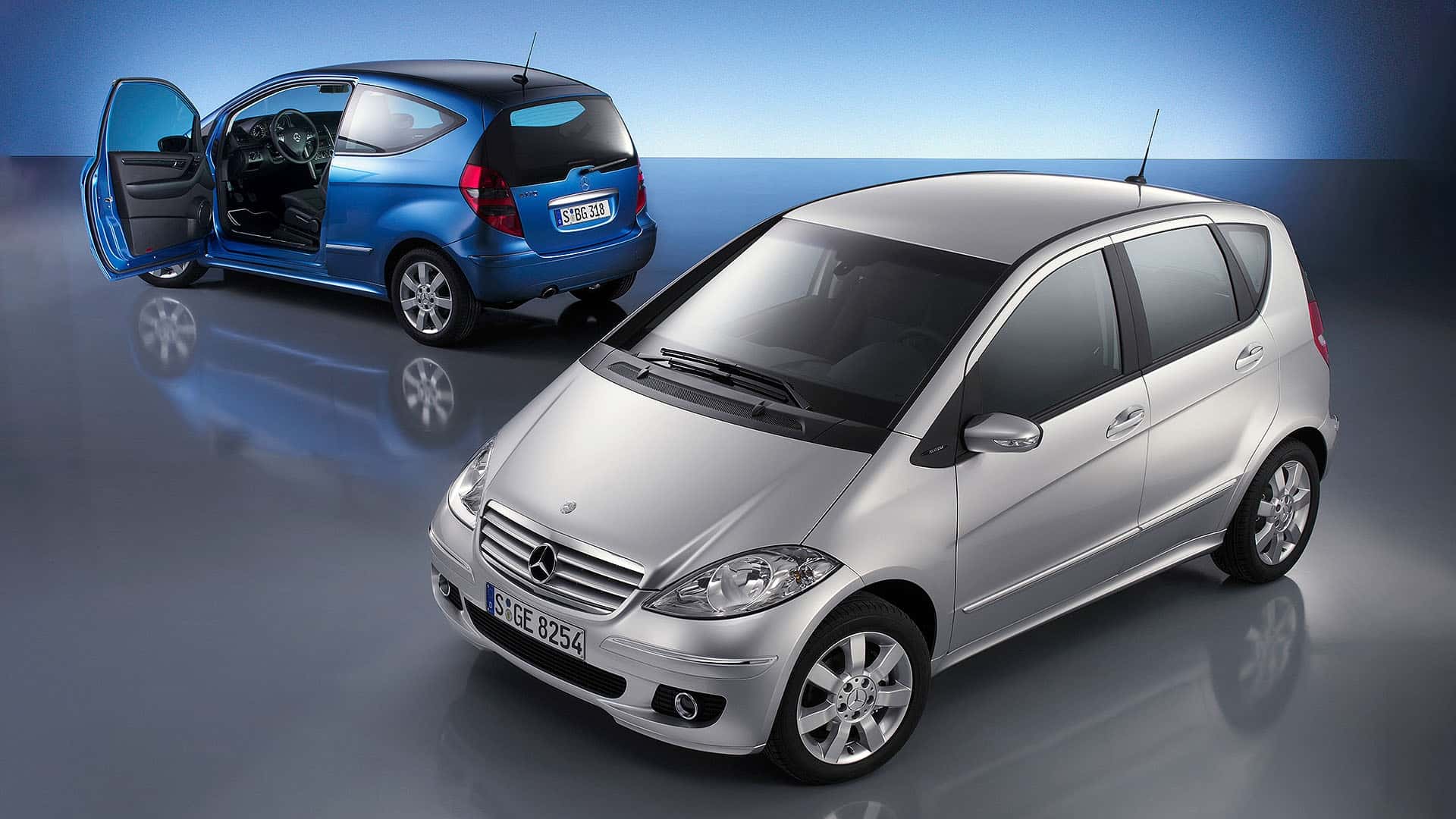
The top performer was genuinely quick for an entry-level hatch. The petrol A 200 Turbo delivered 193 hp (144 kW) and 280 Nm of torque, reaching 100 km/h in 8.0 seconds with a top speed of 218 km/h.
Diesel buyers got strong torque figures too. The A 200 CDI diesel produced 140 hp (104 kW) alongside a healthy 300 Nm of torque, thanks to a common-rail direct injection system.
This generation also introduced an automatic transmission option. A continuously variable transmission called “Autotronic” was offered as an optional feature alongside five- or six-speed manuals.
Specifications:
- Engine: 1.5L–2.0L inline-four petrol or CDI diesel
- Horsepower: Ranges from roughly 95 PS up to 193 PS (A 200 Turbo)
- Torque: 280 Nm (A 200 Turbo) / 300 Nm (A 200 CDI)
- Length: Approximately 3,838 mm (151.1 in)
- Width: Approximately 1,764 mm (69.4 in)
4. Mercedes-Benz B-Class W245 (2005)
The original B-Class took the A-Class concept and stretched it into a compact MPV. It was Mercedes’ answer to the growing demand for practical, family-friendly small cars.
The platform connection was direct and deliberate. Based on the underpinnings of the smaller A-Class W169, the B-Class combined the practicality of a compact family car with comfort and technology typically found in larger Mercedes models.
Visually, it punched above its size and price. Despite being as small as a Volkswagen Golf and on the less expensive side of the market, the front end featured an oversized version of the iconic three-pointed star.
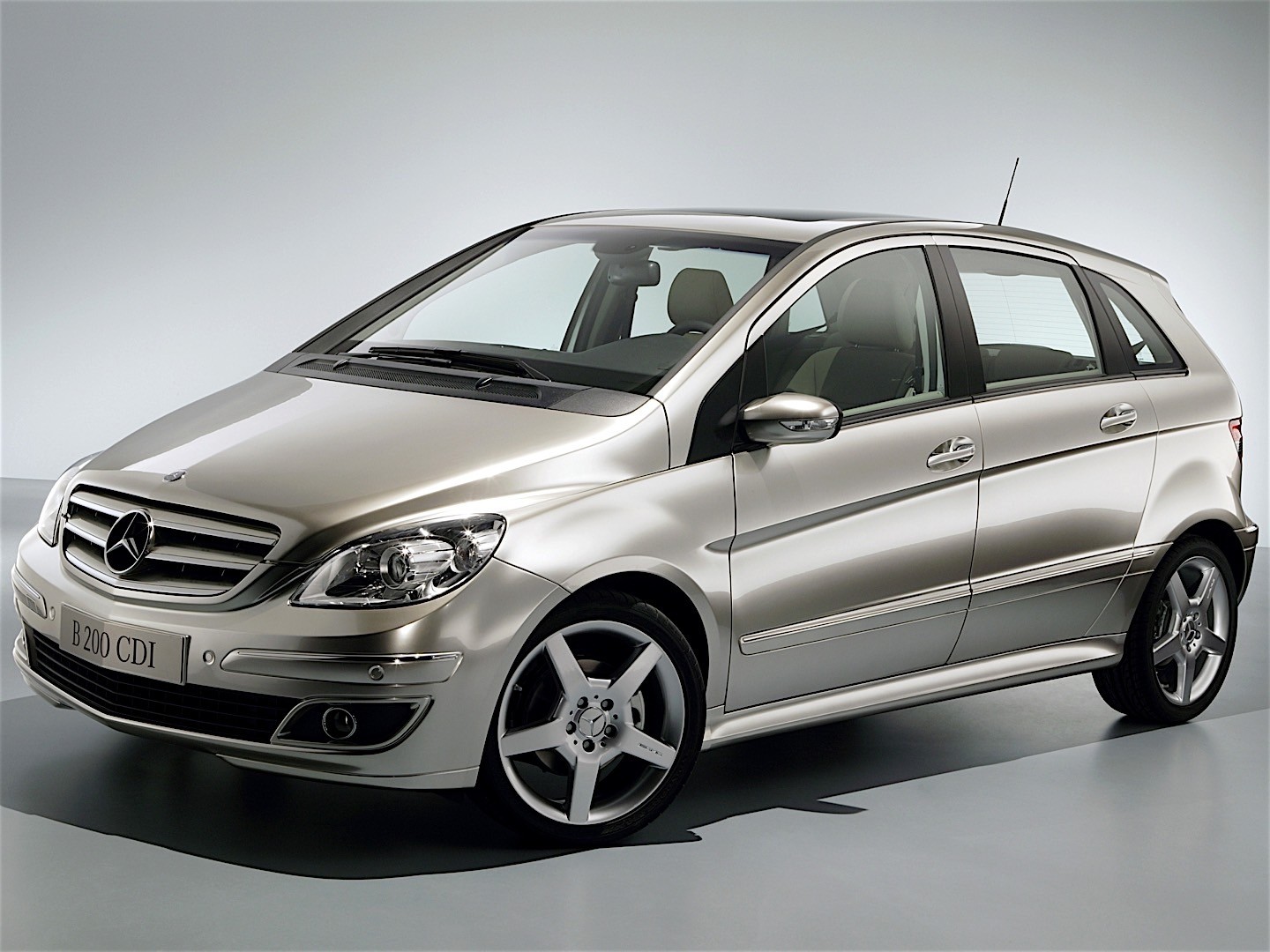
Safety engineering carried over from the A-Class, too. Due to its small size, the B-Class used a sandwich floor for safety, with the engine and transmission positioned at a tilted angle to slide beneath the cabin during a frontal impact.
Engine choices stayed sensible and efficient. Post-facelift gasoline engines for the B 150/B 170/B 200 ranged from 95 PS to 143 PS, while diesel B 160 CDI/B 180 CDI/B 200 CDI units produced 90 PS to 140 PS. Transmission options remained straightforward for buyers. A 5-speed manual or optional 5-speed automatic CVT covered the entire range.
Specifications:
- Engine: 1.5L–2.0L inline-four petrol or CDI diesel
- Horsepower: 95–143 PS (petrol), 90–140 PS (diesel)
- Torque: Approximately 148–220 Nm depending on engine
- Length: Approximately 4,270 mm (168.1 in)
- Width: Approximately 1,777 mm (70.0 in)
Also Read: 10 Gadgets That Make Any Old Car Feel Modern
5. Mercedes-Benz A-Class W176 (2012)
The third-generation A-Class abandoned everything that made its predecessors quirky. Mercedes ditched the tall sandwich-floor design entirely for a sleek, low-slung hatchback shape.
The shift was a complete architectural rethink. With the W176, Mercedes abandoned the sandwich floor approach entirely, creating a new low-slung shape that sat 160 mm lower than the W169.
Design inspiration came from a striking concept car. Its aggressive, wedge-shaped profile was inspired by concepts like the A-Class Concept Style Coupe, featuring an upright diamond grille and narrow, swept-back headlamps with LED accents.
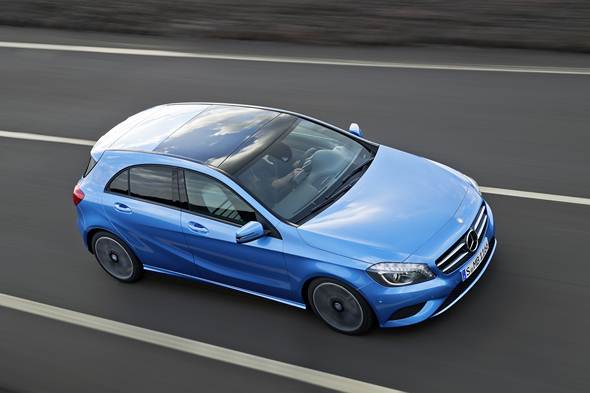
This generation finally targeted younger, style-conscious buyers successfully. The W169’s tall proportions had limited styling freedom for years. The W176 fixed that with genuinely sporty lines.
It also formed the basis for the GLA crossover. In 2013, this platform spawned a larger five-door model that was imported to the US for the first time as the GLA-Class crossover.
Build quality and refinement jumped considerably from earlier generations. The interior finally felt premium rather than merely adequate, matching rivals from Audi and BMW more directly.
Specifications:
- Engine: 1.5L–2.0L turbocharged inline-four petrol or diesel
- Horsepower: Ranges from approximately 109 PS to 360+ PS (AMG variants)
- Torque: Approximately 200–450 Nm depending on the engine
- Length: Approximately 4,292 mm (169.0 in)
- Width: Approximately 1,780 mm (70.1 in)
6. Mercedes-Benz CLA C117 (2013)
The original CLA brought four-door coupe styling to Mercedes’ entry-level lineup. It was positioned as the most affordable way into a Mercedes-Benz sedan in many markets, including the US.
Sharing its platform with the A-Class kept costs controlled. The CLA used the same front-wheel-drive MFA architecture, but wrapped it in a sleeker, more aerodynamic three-box silhouette.
It quickly became a sales phenomenon for the brand. The swooping roofline and aggressive front end appealed strongly to buyers who wanted Mercedes badges without Mercedes-sized payments.
Engine options mirrored the A-Class lineup closely. Base petrol units used small-displacement turbocharged four-cylinders, while diesel CDI variants targeted fuel-conscious European buyers.
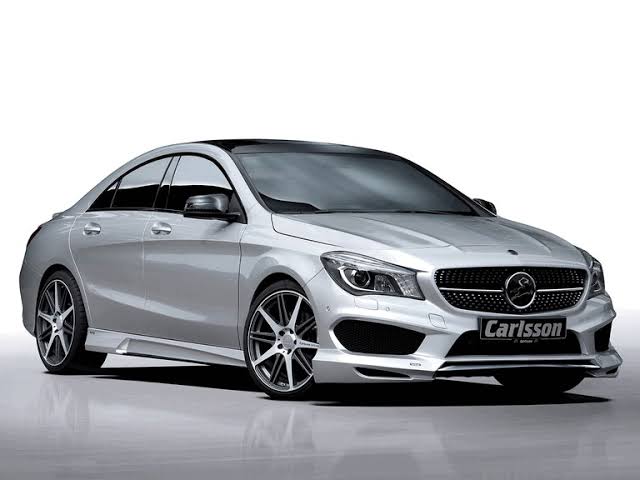
The CLA’s coupe-like roofline did compromise rear headroom somewhat. Buyers traded some practicality for style, a fair exchange given the dramatically lower price compared to the C-Class sedan.
Specifications:
- Engine: 1.6L–2.0L turbocharged inline-four petrol or CDI diesel
- Horsepower: Approximately 122–355 PS (AMG CLA 45)
- Torque: Approximately 200–450 Nm depending on variant
- Length: Approximately 4,630 mm (182.3 in)
- Width: Approximately 1,777 mm (70.0 in)
7. Mercedes-Benz CLA C118 (2019)
The second-generation CLA refined the formula with sharper proportions and a tech-forward cabin. It pushed the four-door coupe concept even further toward genuine GT-car styling.
Mercedes described its design philosophy clearly for this generation. The C118 took the four-door coupe concept even more seriously than before, with a long hood, compact greenhouse, and pronounced GT-style rear end that was cleaner, lower, and more elegant.
Entry-level engines kept things accessible and efficient. The CLA 180 used a 1,332 cc inline-four producing 136 PS, while weighing approximately 1,398 kg.
Performance versions catered to enthusiasts within the same affordable family. At launch, the CLA 250 offered a 2.0-liter four-cylinder with 225 hp and 350 Nm of torque, paired with a 7G-DCT dual-clutch transmission.
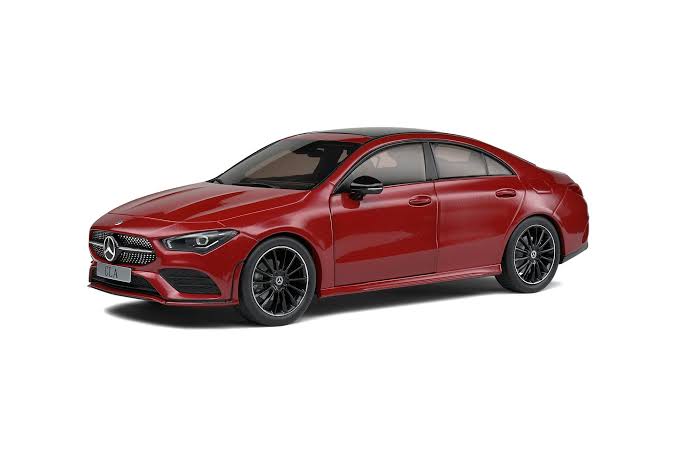
Diesel buyers still had a strong option, too. The CLA 180 d used a 1,461 cc diesel producing 116 PS, reaching 100 km/h in 10.9 seconds with a top speed of 127 mph.
Dimensions grew noticeably over the original CLA. The CLA has a total length of 469 cm and a width of 183 cm, positioning it alongside rivals like the Audi A3 Sedan and BMW 2 Series Gran Coupé.
Specifications:
- Engine: 1.3L–2.0L turbocharged inline-four petrol or CDI diesel (M139 in AMG)
- Horsepower: 136–421 PS (CLA 45 S AMG)
- Torque: 220 Nm (CLA 180) up to 500 Nm (CLA 45 S)
- Length: 468.8 cm (184.6 in)
- Width: 183.0 cm (72.0 in)
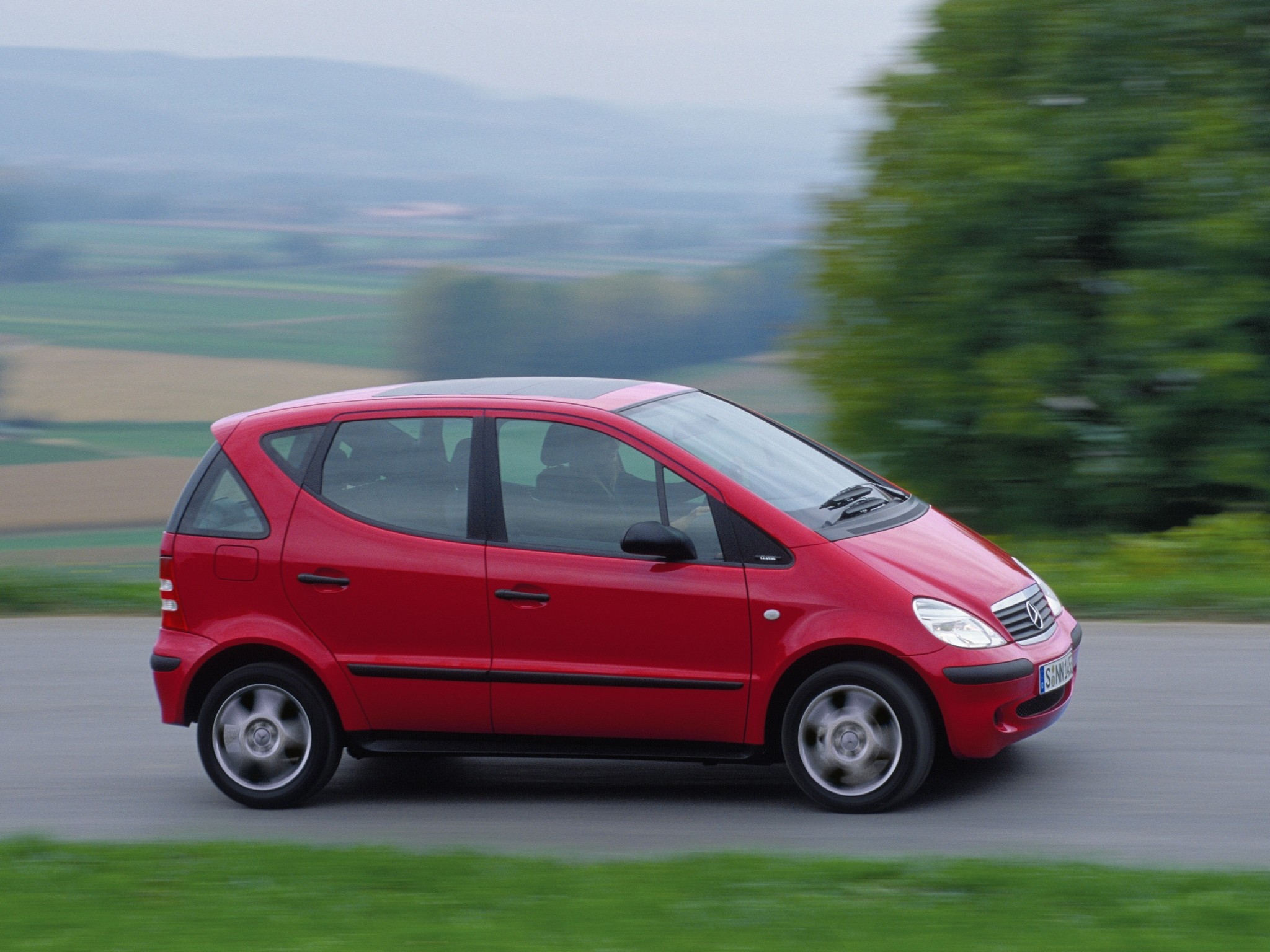
8. Mercedes-Benz A-Class W168 Facelift (2001)
The facelifted W168, sold from 2001 to 2004, deserves separate mention as a distinct and improved budget option. It addressed many criticisms leveled at the original launch car.
Mercedes used the facelift to fix lingering quality complaints. The refresh brought a noticeable step up in both quality and technology, with Mercedes upgrading most materials and fitting more refined plastics to counter early criticism of cabin durability.
Styling changes were deliberately subtle but effective. The bumpers were reshaped for a more contemporary look, while the grille and headlights were slightly revamped to align with Mercedes’ evolving design language.
Technology improved meaningfully for an entry-level car of its era. The refresh introduced updated versions of the Comand infotainment system and optional multifunction steering wheels.
Safety kept advancing even on this budget model. Safety features were further expanded with improved side airbags and new seatbelt tensioning systems across the lineup.
By this point, the engine range had also broadened considerably. The largest unit available was a 2.1-liter, giving buyers genuine flexibility between economy and performance within the same affordable chassis.
Specifications:
- Engine: 1.4L–2.1L inline-four petrol or 1.7L CDI diesel
- Horsepower: 82–140 PS depending on variant
- Torque: Approximately 126–280 Nm depending on the engine
- Length: 3,575 mm (140.7 in)
- Width: 1,719 mm (67.7 in)
Also Read: 10 Best Dash Cams For Every Budget
