
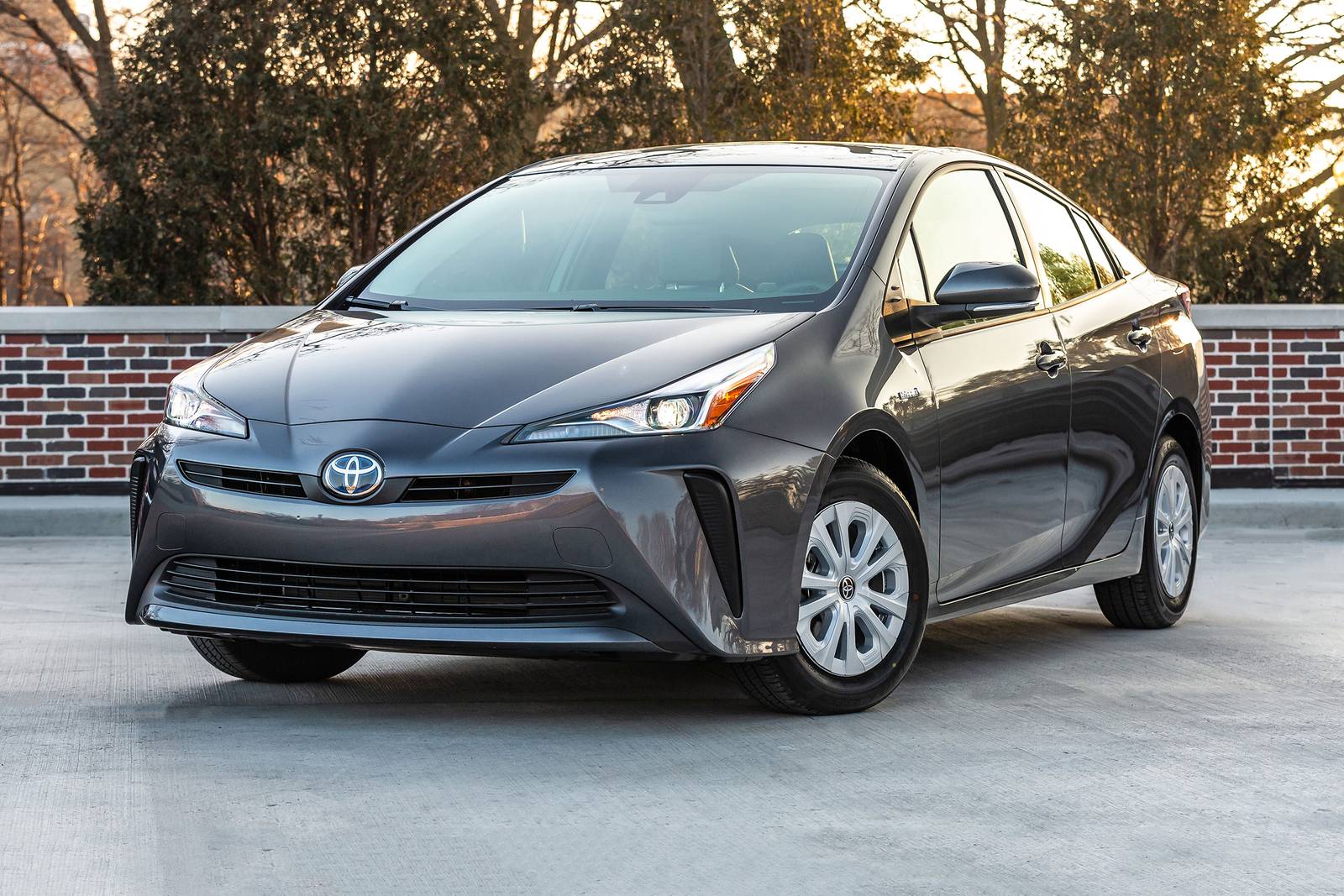
For drivers under the age of 25, car insurance is often one of the largest ownership expenses. Insurance companies generally view younger motorists as higher-risk customers because they have less driving experience and statistically file more claims than older drivers.
Fortunately, choosing the right vehicle can make a noticeable difference in annual insurance premiums. Cars with excellent safety ratings, moderate repair costs, reliable engineering, and lower theft rates are typically less expensive to insure than high-performance or luxury models.
Insurers evaluate dozens of factors before determining premiums, including vehicle value, repair expenses, crash-test performance, engine power, claim history, and the availability of replacement parts. A practical sedan or compact SUV with advanced safety technology usually receives more favorable insurance rates than a sports car with a similar purchase price.
Modern driver-assistance systems such as automatic emergency braking, lane-keeping assistance, adaptive cruise control, and blind-spot monitoring can also contribute to lower insurance costs by reducing accident risk.
Another advantage of choosing an affordable-to-insure vehicle is the lower total cost of ownership. Savings on insurance can offset maintenance, fuel, and registration expenses over several years, making ownership much more manageable for students, young professionals, and first-time buyers.
The following ten vehicles consistently rank among the most insurance-friendly choices for drivers under 25.
They combine strong safety records, dependable reliability, practical performance, and reasonable repair costs, helping young owners keep insurance premiums as low as possible while still enjoying comfortable and dependable transportation.
Also Read: 10 Hidden Features in the Kia Telluride
1. Honda Civic Sedan
Insurance companies reward predictability, and few vehicles have built a reputation as consistently dependable as the Honda Civic sedan. For decades, the Civic has been one of the most popular choices among first-time buyers because it balances affordability, fuel efficiency, reliability, and excellent safety performance.
These qualities help keep insurance costs relatively low compared with many similarly priced vehicles, making it an attractive option for drivers under 25.
One of the Civic’s biggest strengths is its outstanding crash-test performance. Modern vehicles include advanced driver-assistance features such as automatic emergency braking, lane departure warning, lane-keeping assistance, adaptive cruise control, and traffic sign recognition.
These technologies reduce the likelihood of collisions, an important factor when insurance companies calculate premiums.
Repair costs also remain manageable. Honda has produced millions of Civic models, ensuring replacement parts are widely available and repair procedures are familiar to independent shops and dealership technicians alike.
Lower repair expenses generally translate into lower insurance claim costs, benefiting policyholders through more competitive premiums.
The Civic also avoids excessive engine output that might otherwise increase insurance rates. Even the turbocharged variants focus on efficiency and smooth daily driving rather than aggressive performance, making them less risky in the eyes of insurers.
Combined with excellent fuel economy and strong resale value, the Civic offers one of the lowest long-term ownership costs in its class.
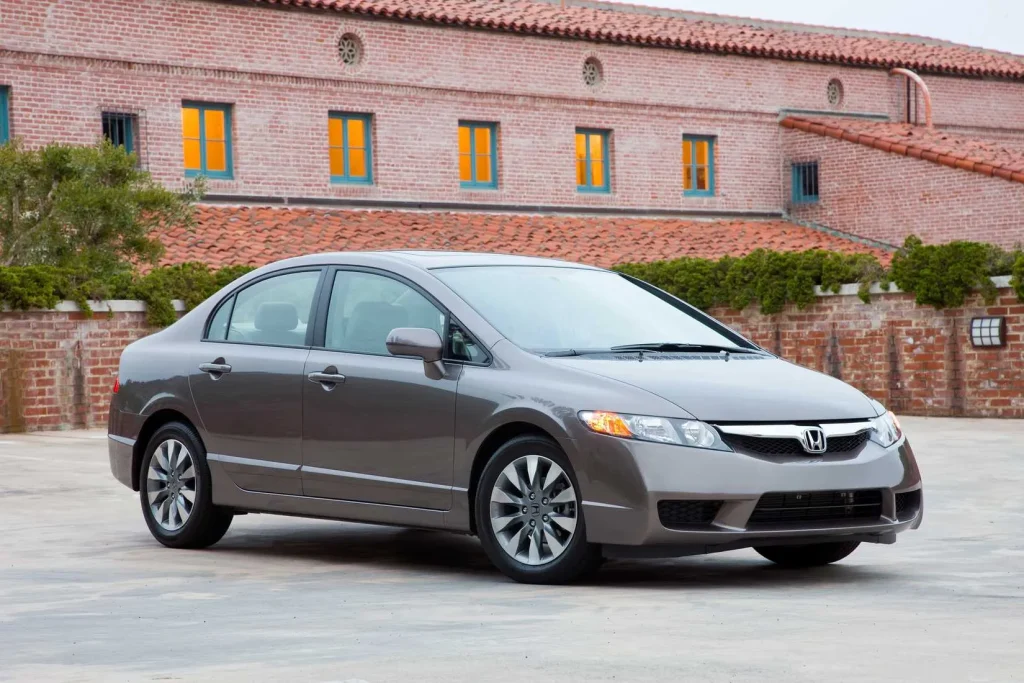
Young drivers appreciate the Civic because it feels modern, comfortable, and enjoyable without encouraging unnecessary risk. Parents also value its reputation for durability and safety.
Those combined qualities explain why the Honda Civic continues to rank among the smartest insurance-friendly sedans available for drivers beginning their ownership journey.
Specifications
- Engine: 2.0 liter Naturally Aspirated Inline 4
- Torque: 133 lb-ft
- Horsepower: 150 hp
- Length/Width: 184.0 inches / 70.9 inches
2. Subaru Impreza
Weather conditions, safety ratings, and repair history all influence insurance premiums, and the Subaru Impreza performs well in each of these areas. Unlike many compact cars that reserve all-wheel drive for expensive trims or omit it entirely, the Impreza includes Subaru’s symmetrical all-wheel-drive system as standard equipment.
That added traction can reduce accident risk in rain, snow, and icy conditions, helping make the vehicle an attractive choice for younger drivers and insurance providers alike.
The Impreza has consistently earned strong crash-test scores while offering a comprehensive suite of driver-assistance technologies. Depending on the model year and trim, features such as automatic emergency braking, lane centering, adaptive cruise control, and pre-collision braking are available through Subaru’s EyeSight safety system.
These systems actively assist drivers in avoiding collisions, which insurers often view favorably when assessing risk.
Another reason insurance costs remain reasonable is the vehicle’s practical engineering. The naturally aspirated boxer engine is tuned for reliability and fuel efficiency rather than outright speed.
Since insurers generally associate moderate horsepower with lower claim frequency than high-performance vehicles, the Impreza benefits from comparatively affordable premiums.
Owners also appreciate Subaru’s reputation for longevity. Many examples remain dependable well beyond 200,000 miles with routine maintenance, and replacement parts are readily available across North America. Repair facilities are familiar with the platform, helping keep repair costs within a manageable range after minor collisions.
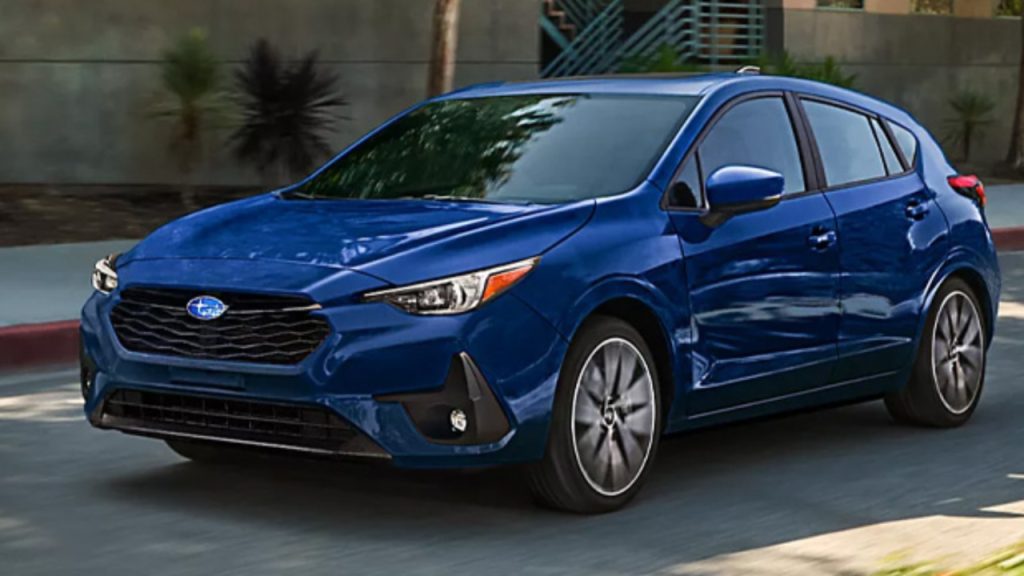
The Impreza appeals to students, commuters, and young professionals seeking year-round confidence without purchasing a larger SUV. Its blend of safety, predictable handling, practical ownership costs, and dependable engineering makes it one of the most insurance-friendly compact cars available for drivers under 25.
Specifications
- Engine: 2.0-liter Naturally Aspirated Boxer 4
- Torque: 145 lb-ft
- Horsepower: 152 hp
- Length/Width: 176.2 inches / 70.1 inches
3. Toyota Corolla
Few vehicles have earned the trust of both drivers and insurance companies quite like the Toyota Corolla. For generations, it has built a reputation around dependable engineering, low operating costs, and impressive safety performance.
Those strengths contribute directly to affordable insurance premiums, making the Corolla one of the smartest choices for younger motorists looking to reduce the total cost of ownership.
Toyota equips the Corolla with an extensive collection of active safety technologies through its Safety Sense package. Automatic emergency braking, lane departure alert, lane tracing assistance, adaptive cruise control, road sign recognition, and automatic high beams help drivers avoid common accidents before they occur.
Insurance providers recognize that vehicles equipped with advanced collision-prevention systems often experience fewer claims, supporting lower premiums.
Mechanical simplicity also benefits owners financially. The Corolla’s naturally aspirated four-cylinder engine has developed an excellent reputation for durability while remaining inexpensive to maintain.
Routine servicing is straightforward, replacement parts are plentiful, and repair costs following minor accidents are generally lower than those of many competing vehicles in the same segment.
Another important factor is driver behavior. The Corolla emphasizes smooth, comfortable transportation rather than high-speed performance. Its modest power output and predictable handling characteristics encourage responsible driving habits, which align well with the risk assessments used by insurance companies.
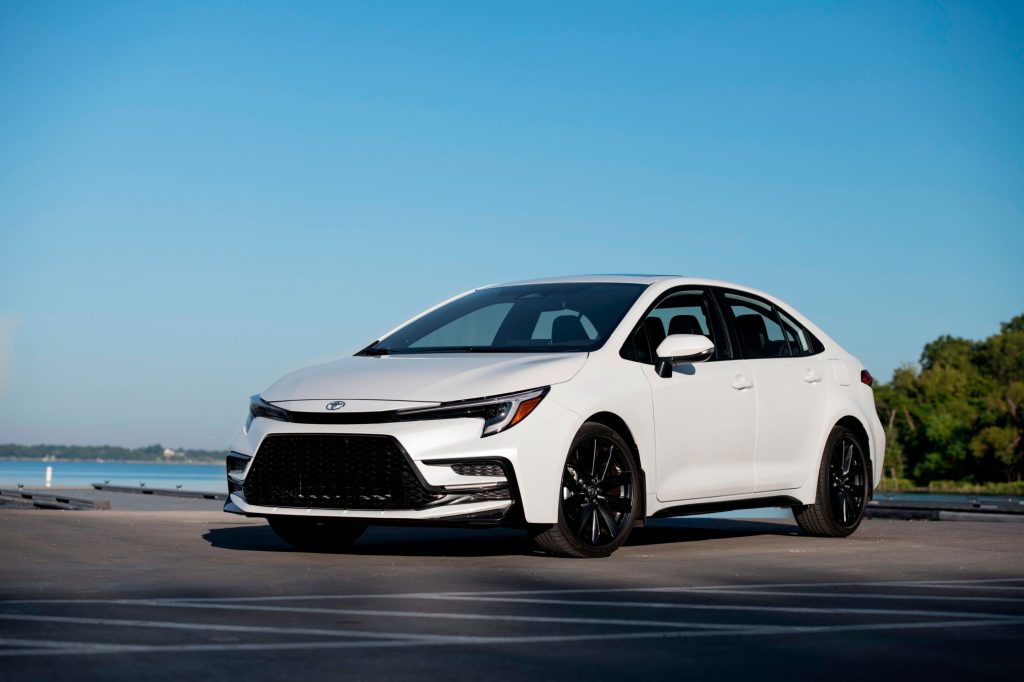
Young buyers frequently discover that choosing a Corolla allows them to save money beyond the purchase price. Lower fuel consumption, dependable reliability, strong resale value, and affordable insurance combine to create one of the least expensive ownership experiences available in today’s compact sedan market.
These qualities continue to make the Corolla a leading recommendation for first-time car owners and drivers under the age of 25.
Specifications
- Engine: 2.0 liter Naturally Aspirated Inline 4
- Torque: 151 lb-ft
- Horsepower: 169 hp
- Length/Width: 182.5 inches / 70.1 inches
4. Mazda3 Sedan
Not every affordable car sacrifices driving enjoyment to achieve lower insurance costs. The Mazda3 sedan demonstrates that a vehicle can remain engaging behind the wheel while still appealing to insurance providers.
Its combination of strong safety ratings, refined engineering, and moderate performance helps keep premiums reasonable for drivers under 25, especially when compared with similarly priced sporty compact cars.
Mazda has invested heavily in active and passive safety technologies throughout the Mazda3 lineup. Features such as Smart Brake Support, Lane Departure Warning, Lane Keep Assist, Blind Spot Monitoring, Rear Cross Traffic Alert, and Driver Attention Alert work together to reduce the likelihood of accidents.
Insurance companies recognize the benefits of these systems because they can lower claim frequency and repair expenses.
The standard naturally aspirated engine also contributes to affordable premiums. Rather than emphasizing extreme acceleration, it delivers smooth and predictable performance suitable for daily commuting.
Insurers generally classify vehicles with moderate horsepower more favorably than high-output sports models, particularly when younger drivers are involved.
Interior quality further strengthens the Mazda3’s value proposition. Premium materials, supportive seats, a quiet cabin, and intuitive controls create a near-luxury experience without carrying luxury-brand insurance costs. Buyers receive an upscale driving environment while maintaining practical ownership expenses.
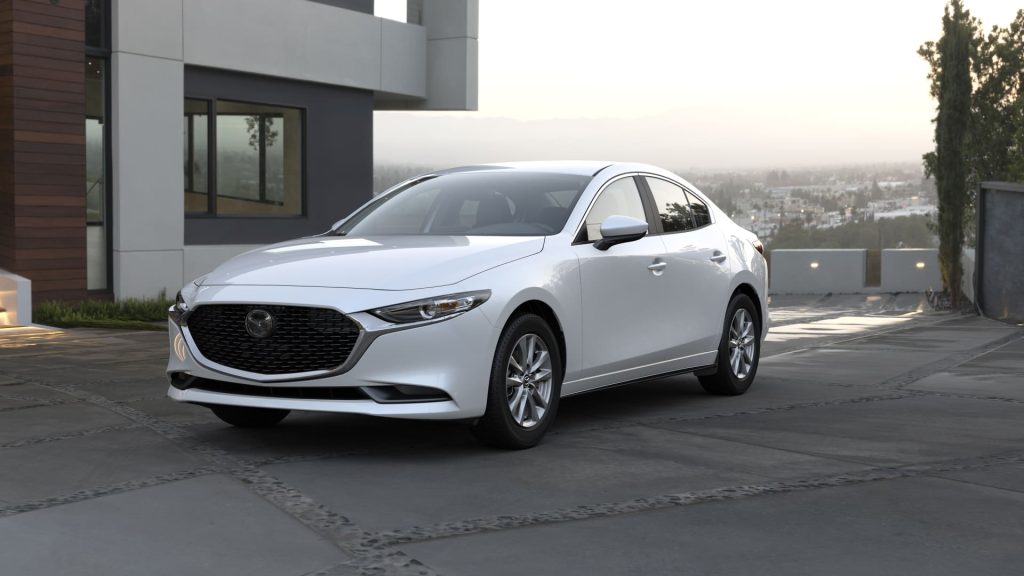
Repair costs remain relatively reasonable thanks to Mazda’s straightforward engineering and broad availability of replacement components. Routine maintenance is uncomplicated, and the vehicle has developed a reputation for long-term reliability when serviced regularly.
For younger drivers seeking something more stylish than the average compact sedan without facing expensive insurance premiums, the Mazda3 offers an excellent balance. It proves that affordability, refinement, and enjoyable driving characteristics can comfortably exist in the same package.
Specifications
- Engine: 2.5-liter Naturally Aspirated Inline 4
- Torque: 186 lb-ft
- Horsepower: 191 hp
- Length/Width: 183.5 inches / 70.7 inches
5. Hyundai Elantra
Insurance affordability often depends on more than a vehicle’s purchase price, and the Hyundai Elantra has steadily improved its standing by combining modern safety technology with dependable everyday performance.
For drivers under 25, it represents one of the more economical compact sedans to insure because it emphasizes accident prevention, manageable repair costs, and practical ownership rather than outright performance.
One of the Elantra’s strongest advantages is its comprehensive list of standard safety equipment. Hyundai includes technologies such as forward collision avoidance assist, lane keeping assist, lane following assist, driver attention warning, high beam assist, and rear occupant alert on many trims.
These systems actively help reduce collision risks, making the vehicle more attractive from an insurance perspective.
The Elantra also avoids excessive operating costs. Its naturally aspirated four-cylinder engine prioritizes fuel economy and reliability, while maintenance requirements remain relatively modest.
Widely available replacement parts and an expanding dealer network help control repair expenses after minor accidents, another important consideration for insurers.
Young owners frequently appreciate the Elantra’s spacious interior and advanced technology. Large digital displays, smartphone integration, comfortable seating, and user-friendly controls create a modern driving experience without requiring a luxury-car budget.
Those features make it particularly appealing to students and young professionals purchasing their first new vehicle.
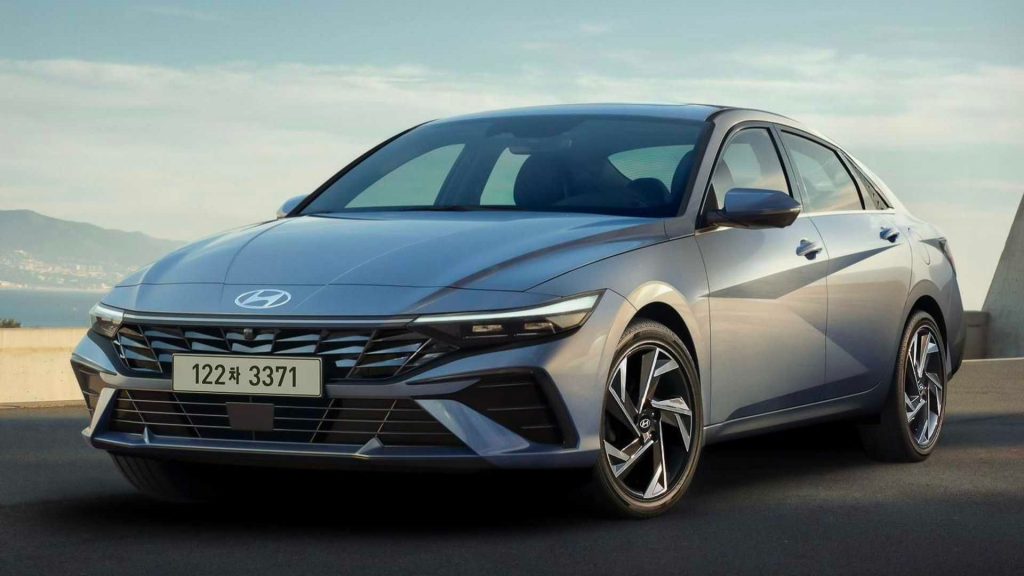
Unlike performance-oriented compact sedans that often carry significantly higher premiums, the Elantra encourages relaxed daily driving.
Combined with competitive pricing, excellent fuel efficiency, and a solid reliability record, it offers one of the lowest total ownership costs in its class. That balance of practicality and affordability continues to make it a sensible, insurance-friendly choice for younger drivers.
Specifications
- Engine: 2.0 liter Naturally Aspirated Inline 4
- Torque: 132 lb-ft
- Horsepower: 147 hp
- Length/Width: 184.1 inches / 71.9 inches
6. Nissan Sentra
Choosing a vehicle with reasonable insurance costs does not require giving up comfort or modern technology, and the Nissan Sentra proves that point well.
Over recent generations, the Sentra has evolved from a basic commuter car into a refined compact sedan with a strong emphasis on safety. That transformation has helped it become one of the more affordable vehicles to insure for drivers under 25.
Insurance providers place considerable importance on accident prevention, and the Sentra comes equipped with an impressive collection of standard safety systems.
Nissan Safety Shield 360 includes automatic emergency braking with pedestrian detection, blind spot warning, rear cross-traffic alert, lane departure warning, rear automatic braking, and high-beam assist. These technologies reduce the likelihood of common accidents while improving driver awareness in heavy traffic.
Mechanical simplicity also contributes to lower insurance costs. The Sentra uses a naturally aspirated four-cylinder engine that delivers dependable everyday performance without excessive horsepower.
Since insurers generally associate lower-powered family sedans with fewer severe claims than performance-oriented models, premiums remain relatively competitive.
The sedan’s solid construction and favorable crash-test performance provide another advantage. Strong occupant protection reduces injury risk during collisions, something insurance companies evaluate carefully when establishing rates.
Repair expenses also remain manageable because replacement parts are widely available and service procedures are familiar to repair facilities across the country.
The Sentra’s spacious cabin, comfortable ride quality, and excellent fuel economy make it particularly attractive to students, commuters, and young professionals who spend significant time behind the wheel.
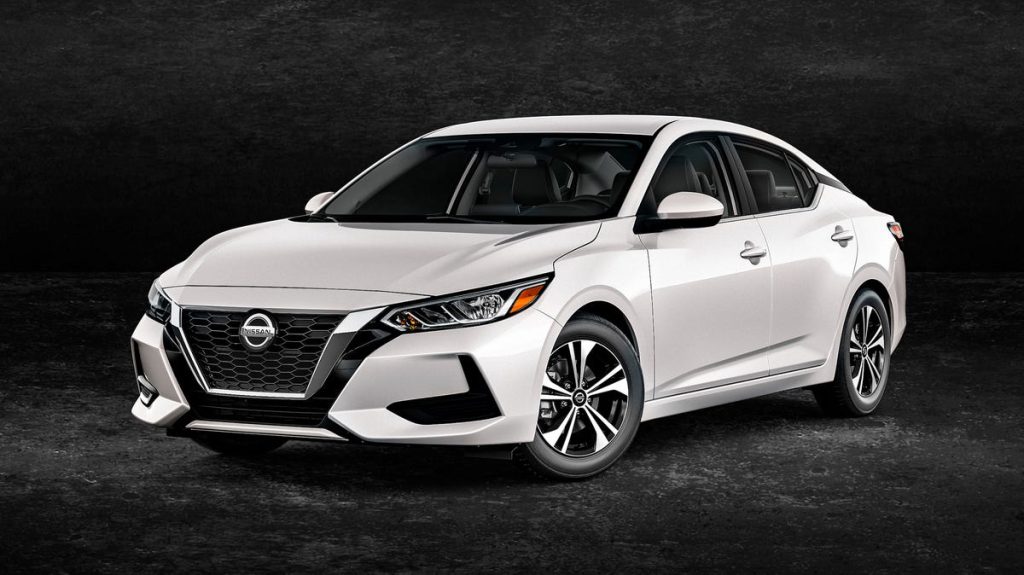
Combined with affordable maintenance and dependable reliability, these characteristics help reduce total ownership expenses well beyond the monthly insurance payment.
For young buyers searching for practical transportation without facing premium insurance costs, the Nissan Sentra remains one of the strongest values available in the compact sedan segment.
Specifications
- Engine: 2.0 liter Naturally Aspirated Inline 4
- Torque: 146 lb-ft
- Horsepower: 149 hp
- Length/Width: 182.9 inches / 71.5 inches
7. Kia Forte
Many first-time buyers focus primarily on purchase price, but insurance costs often have an equally significant impact on long-term affordability.
The Kia Forte has established itself as an excellent choice because it combines a competitive purchase price with safety features and operating costs that help keep insurance premiums within reach for drivers under 25.
A major reason the Forte performs well with insurers is its extensive list of available driver-assistance technologies.
Depending on trim level, buyers receive forward collision avoidance assist, lane keeping assist, lane following assist, blind spot collision warning, rear cross traffic collision avoidance assist, and smart cruise control. These systems actively support safer driving by helping prevent common collision scenarios.
The standard naturally aspirated engine is designed for efficiency and reliability rather than high-speed performance.
Moderate horsepower reduces the vehicle’s risk profile, allowing insurance companies to classify it more favorably than many sportier alternatives aimed at younger buyers. Routine maintenance is also inexpensive, helping owners control ownership expenses throughout the vehicle’s life.
The Forte’s cabin offers generous passenger space, intuitive infotainment features, and impressive warranty coverage, giving younger owners additional confidence after purchase. Its practical design appeals to commuters and college students who need dependable transportation without unnecessary operating costs.
Repair expenses generally remain reasonable because replacement components are readily available and Kia has expanded its dealership and service network substantially in recent years.
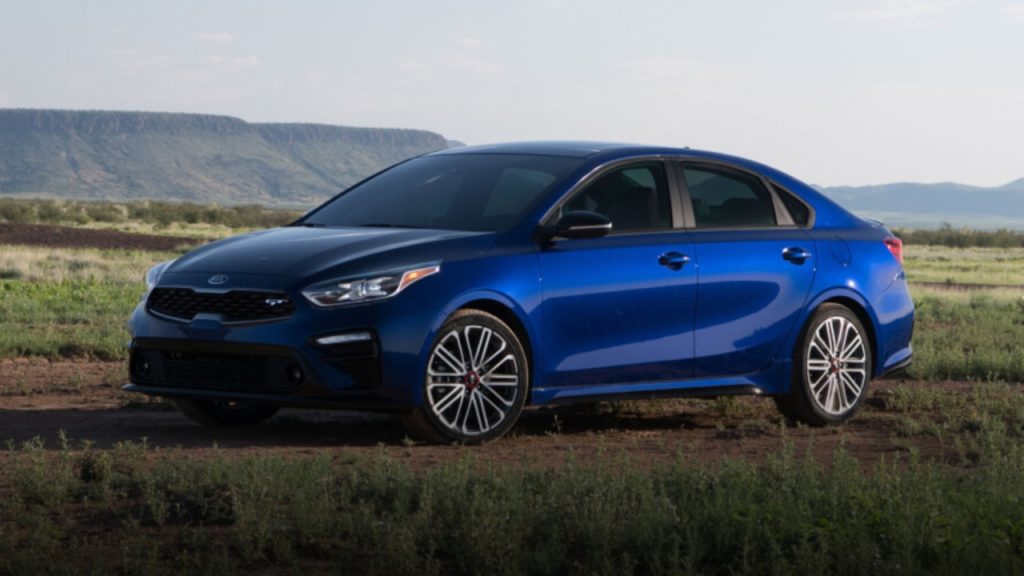
Combined with solid reliability and competitive safety ratings, these factors contribute to insurance premiums that are frequently lower than those of many similarly equipped compact sedans.
Drivers under 25 often discover that the Forte delivers an appealing mix of value, comfort, efficiency, and manageable insurance costs, making it a practical long-term ownership decision.
Specifications
- Engine: 2.0 liter Naturally Aspirated Inline 4
- Torque: 132 lb-ft
- Horsepower: 147 hp
- Length/Width: 182.7 inches / 70.9 inches
8. Volkswagen Jetta
Insurance companies look beyond the purchase price when determining premiums, and the Volkswagen Jetta benefits from a balanced combination of safety, predictable performance, and reasonable repair costs.
While it delivers a more European driving character than many compact sedans, it avoids the high insurance rates often associated with luxury German vehicles. For drivers under 25, that balance makes the Jetta an appealing option.
The Jetta’s turbocharged engine is tuned for efficiency and smooth everyday driving rather than aggressive acceleration. It provides enough power for confident highway merging while maintaining excellent fuel economy.
Because the vehicle is not marketed as a performance sedan, insurers generally place it in a more affordable rating category than sport-oriented alternatives.
Volkswagen equips the Jetta with an extensive range of safety technologies. Features such as Forward Collision Warning, Autonomous Emergency Braking, Blind Spot Monitoring, Rear Traffic Alert, Adaptive Cruise Control, and Lane Assist contribute to accident prevention.
These advanced systems can reduce the frequency and severity of claims, making the vehicle more attractive from an insurance standpoint.
Another strength is its solid structural engineering. The Jetta consistently performs well in crash testing, providing excellent occupant protection during frontal, side, and rollover impacts.
Combined with a stable chassis and responsive steering, the sedan offers predictable handling that inspires confidence among less experienced drivers.
Ownership costs remain competitive because maintenance schedules are straightforward and commonly replaced components are widely available. Many independent repair facilities are also experienced with Volkswagen’s compact platform, helping control repair expenses after routine wear or minor collisions.
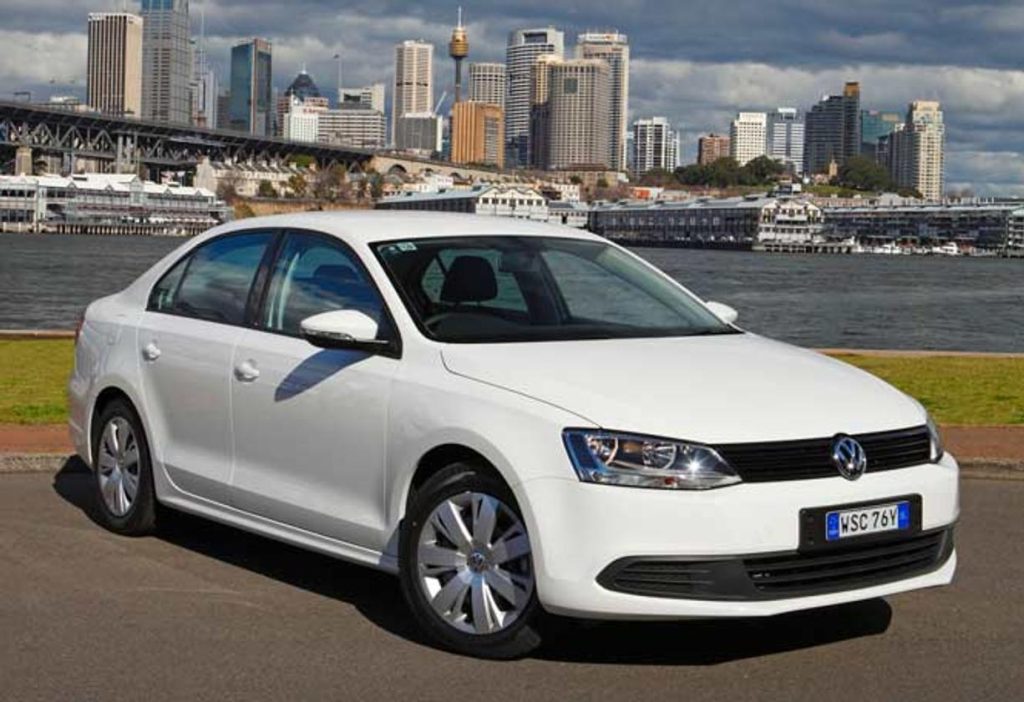
For younger motorists who appreciate refined driving dynamics without stepping into the premium insurance brackets of luxury brands, the Volkswagen Jetta delivers an excellent compromise between affordability, comfort, and long-term ownership value.
Specifications
- Engine: 1.5-liter turbocharged inline-4
- Torque: 184 lb-ft
- Horsepower: 158 hp
- Length/Width: 186.5 inches / 70.8 inches
9. Chevrolet Malibu
Insurance affordability is often associated with compact cars, but the Chevrolet Malibu demonstrates that a midsize sedan can also deliver reasonable premiums for younger drivers.
Its emphasis on comfort, predictable handling, and comprehensive safety technology has helped it remain one of the more economical full-size family sedans to insure despite offering additional interior space.
The Malibu’s turbocharged four-cylinder engine focuses on smooth power delivery rather than outright performance. It produces enough acceleration for confident everyday driving while avoiding the high horsepower figures that typically lead to increased insurance costs.
This balanced approach allows insurers to classify the sedan more favorably than many larger or sportier alternatives.
Safety remains another important advantage. Depending on the trim, buyers receive automatic emergency braking, forward collision alert, lane keep assist, lane departure warning, front pedestrian braking, IntelliBeam automatic headlights, and a following distance indicator.
These technologies actively assist drivers in avoiding accidents while improving awareness in heavy traffic.
The Malibu also benefits from relatively straightforward maintenance requirements and broad parts availability throughout North America. Because Chevrolet maintains one of the largest dealer and service networks in the country, repair costs after common accidents generally remain competitive. Lower repair expenses contribute directly to favorable insurance pricing.
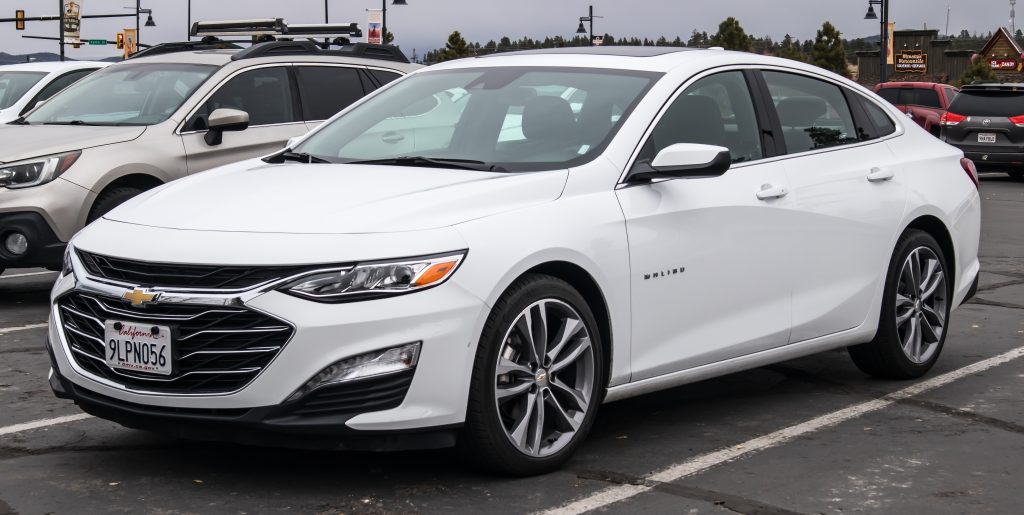
Inside, the cabin emphasizes comfort with supportive seating, generous rear passenger space, and intuitive infotainment controls. Long highway trips remain relaxing, making the Malibu particularly attractive to students and young professionals with lengthy daily commutes.
By combining practicality, safety, comfort, and manageable operating expenses, the Chevrolet Malibu offers a compelling ownership experience while helping younger drivers keep insurance costs under control.
Specifications
- Engine: 1.5-liter turbocharged inline-4
- Torque: 184 lb-ft
- Horsepower: 163 hp
- Length/Width: 194.2 inches / 73.0 inches
10. Toyota Prius
For young drivers focused on minimizing ownership costs, the Toyota Prius remains one of the strongest choices available. While it is widely recognized for exceptional fuel efficiency, it also performs extremely well when insurance affordability is considered.
Insurance companies generally view the Prius as a low-risk vehicle because it emphasizes safety, reliability, and responsible driving rather than high-speed performance. These characteristics often translate into lower premiums for drivers under 25.
Toyota equips the Prius with an extensive suite of safety technologies, including a Pre-Collision System with Pedestrian Detection, Lane Departure Alert, Lane Tracing Assist, Adaptive Cruise Control, Blind Spot Monitor, and Rear Cross Traffic Alert.
Combined with excellent crash-test ratings, these features help reduce accident risk and improve the vehicle’s standing with insurers.
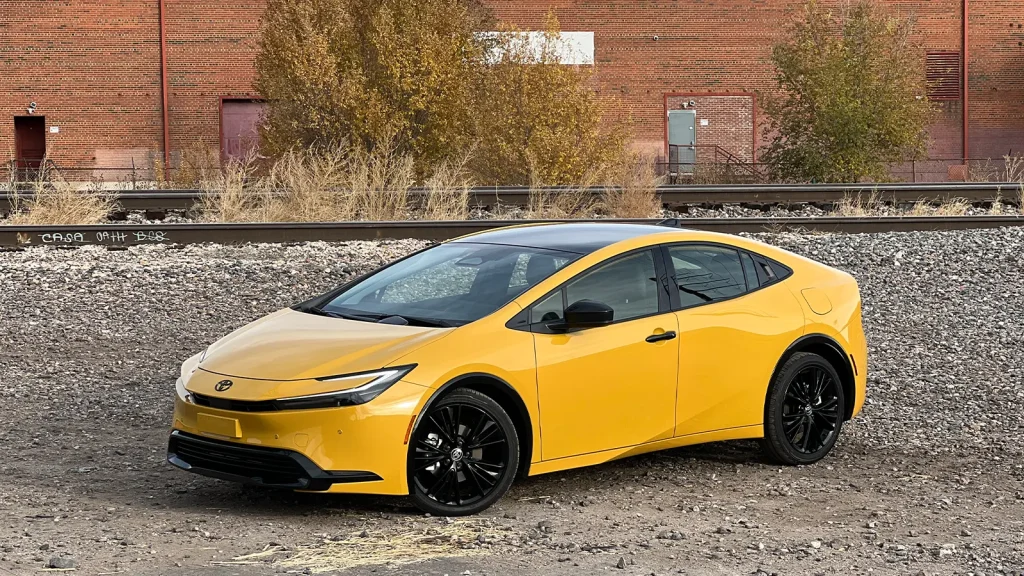
The hybrid powertrain delivers smooth acceleration while prioritizing efficiency over aggressive performance. Routine maintenance requirements are modest, and Toyota’s reputation for long-term reliability keeps repair and ownership costs manageable.
Replacement parts are widely available, and the Prius has proven capable of delivering hundreds of thousands of miles with proper care.
Specifications
- Engine: 2.0-liter Hybrid Inline 4
- Torque: 139 lb-ft (engine)
- Horsepower: 196 hp (combined hybrid system)
- Length/Width: 181.1 inches / 70.2 inches
Also Read: 10 Best Dash Cams For Every Budget
