
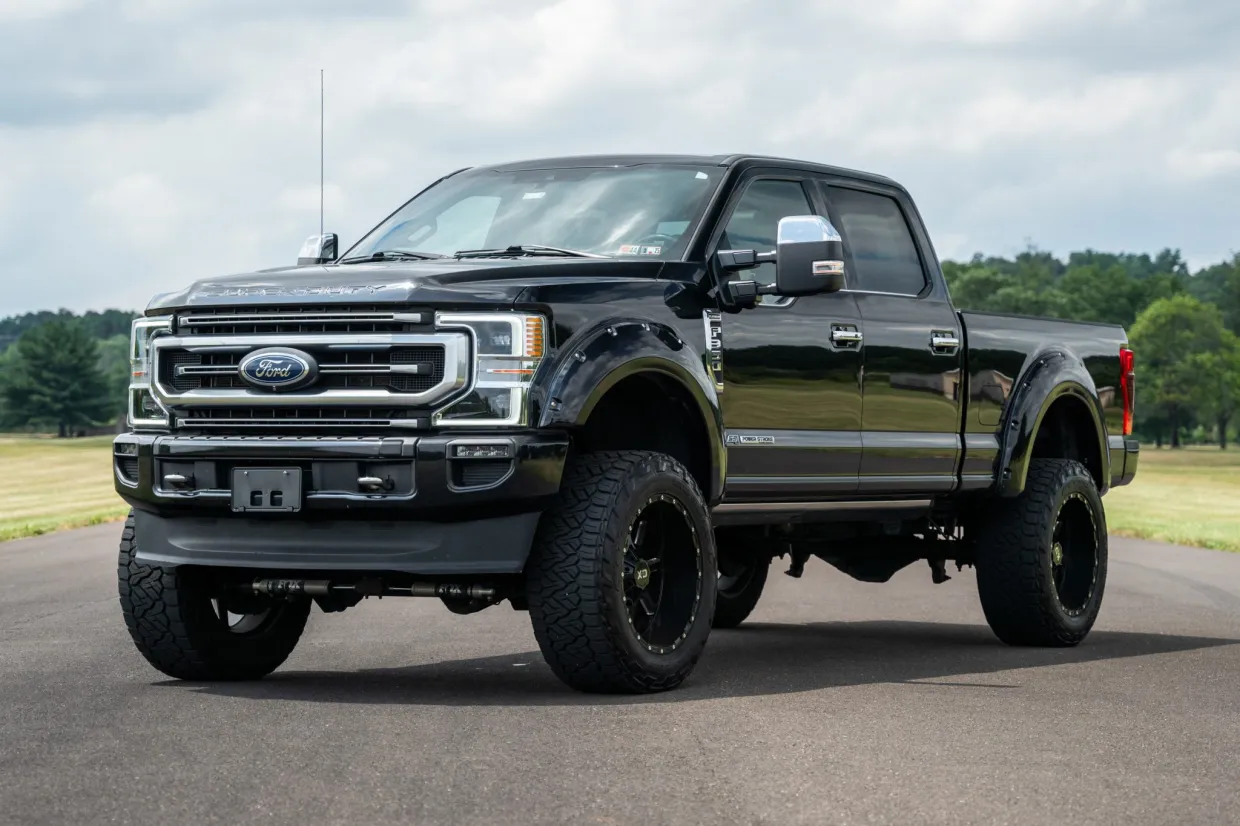
Fuel tank capacity has always played an important role in long-distance driving, especially before today’s widespread network of fuel stations and advanced navigation systems.
A larger fuel tank allows drivers to travel greater distances between fill-ups, making cross-country trips, remote off-road adventures, and commercial transportation far more convenient.
While modern manufacturers often focus on fuel efficiency and electrification, there was a time when engineers simply increased fuel tank size to maximize driving range.
The largest fuel tanks have traditionally been found in full-size SUVs, heavy-duty pickup trucks, luxury touring sedans, and specialty off-road vehicles. These models were designed to carry heavy loads, tow trailers, travel through isolated regions, or provide exceptional highway cruising range.
Some manufacturers even offered optional extended-range fuel tanks that significantly increased driving distance without requiring aftermarket modifications.
It is important to distinguish between factory-installed fuel tanks and aftermarket auxiliary tanks. This article focuses exclusively on production vehicles that left the factory with exceptionally large fuel tanks. These capacities represent some of the biggest ever fitted to passenger vehicles throughout automotive history.
From legendary American SUVs to luxury European grand tourers and heavy-duty trucks, the following vehicles stand among the largest factory-equipped fuel tank champions ever produced. Their enormous tanks allowed owners to cover hundreds of miles between fuel stops, making them unique milestones in automotive engineering.
Also Read: 10 Beginner Motorcycles That Hold Their Value Best
1. Ford Excursion 6.8 V10
Few production SUVs have ever matched the sheer size of the Ford Excursion. Built on Ford’s Super Duty truck platform, the Excursion was created for buyers who needed maximum passenger capacity, heavy towing ability, and outstanding long-distance capability.
One of the reasons it excelled at highway travel was its enormous factory fuel tank, which held approximately 44 gallons (166.6 liters). At the time, this ranked among the largest factory-installed fuel tanks ever fitted to a production passenger vehicle.
The massive tank complemented the SUV’s intended purpose perfectly. Owners frequently used the Excursion to tow large campers, horse trailers, boats, and commercial equipment across long distances where fuel stations could be widely spaced.
Reducing the number of refueling stops saved valuable time during extended trips while improving convenience in remote regions.
Its substantial fuel capacity was especially important because the available V10 engine consumed considerably more fuel than smaller SUVs. Rather than forcing frequent stops, Ford compensated by giving the vehicle one of the largest tanks in the industry.
Combined with comfortable seating for up to nine passengers and impressive towing capability, the Excursion became a favorite among large families and recreational vehicle owners.
Although later SUVs focused more heavily on efficiency and downsizing, the Excursion represented an era when capability took priority over fuel economy. Today, examples remain popular among enthusiasts who appreciate their exceptional towing performance and remarkable highway range.
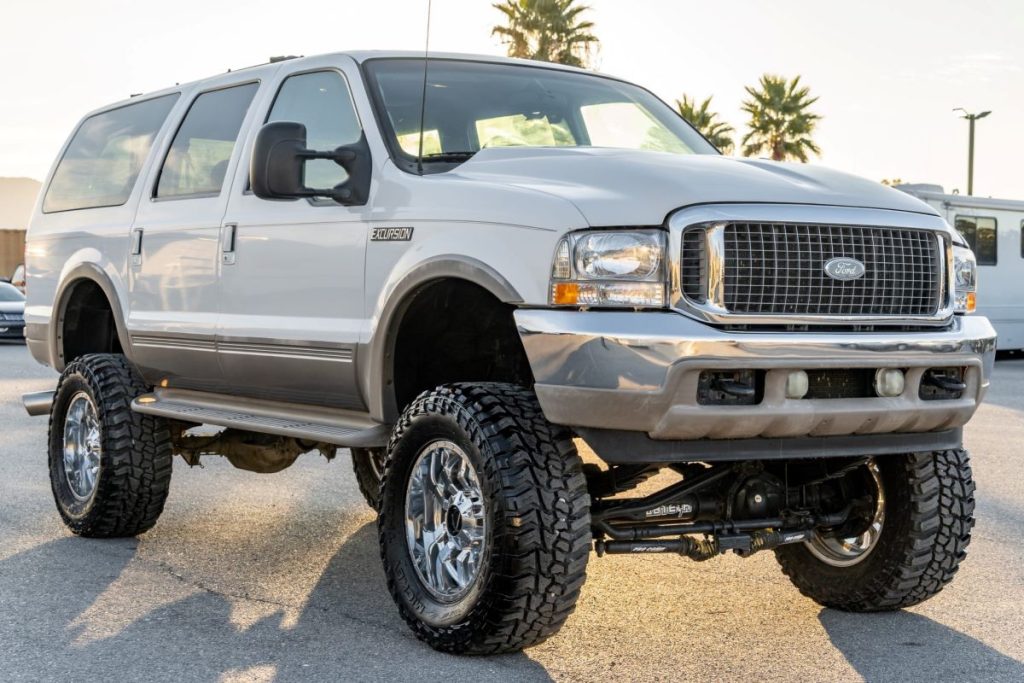
The combination of truck-based durability, enormous passenger space, and a factory-installed 44-gallon fuel tank ensures the Ford Excursion remains one of the most significant vehicles in the history of long-range gasoline-powered transportation.
Specifications
- Engine: 6.8-liter Triton V10
- Torque: 425 lb-ft
- Horsepower: 310 hp
- Length/Width: 226.7 in / 80.0 in
2. Chevrolet Suburban 2500
Long before full-size SUVs became luxury family vehicles, the Chevrolet Suburban 2500 was engineered primarily for heavy-duty work and long-distance hauling.
Built on a robust truck chassis, it offered exceptional towing capability, impressive cargo capacity, and one of the largest factory fuel tanks ever installed in a passenger vehicle. Equipped with the available 39-gallon (147.6-liter) fuel tank, the Suburban 2500 was capable of covering enormous distances before requiring a refueling stop.
The large tank proved especially valuable for owners towing travel trailers, construction equipment, or horse trailers. Heavy loads dramatically increase fuel consumption, but Chevrolet reduced the inconvenience by allowing drivers to carry substantially more fuel than most SUVs of the same era.
This feature made the Suburban particularly attractive for commercial operators and families who regularly traveled across multiple states.
Another advantage is remote travel. Outdoor enthusiasts showing national parks, mountain regions, or sparsely populated highways appreciated the confidence that came with such generous fuel reserves. Instead of constantly searching for fuel stations, drivers could focus on the journey itself.
Despite its enormous size, the Suburban maintained excellent passenger comfort. Multiple seating rows, generous cargo capacity, and dependable V8 power made it equally capable of serving as a family road-trip vehicle or a serious tow rig. This versatility contributed significantly to its enduring popularity.
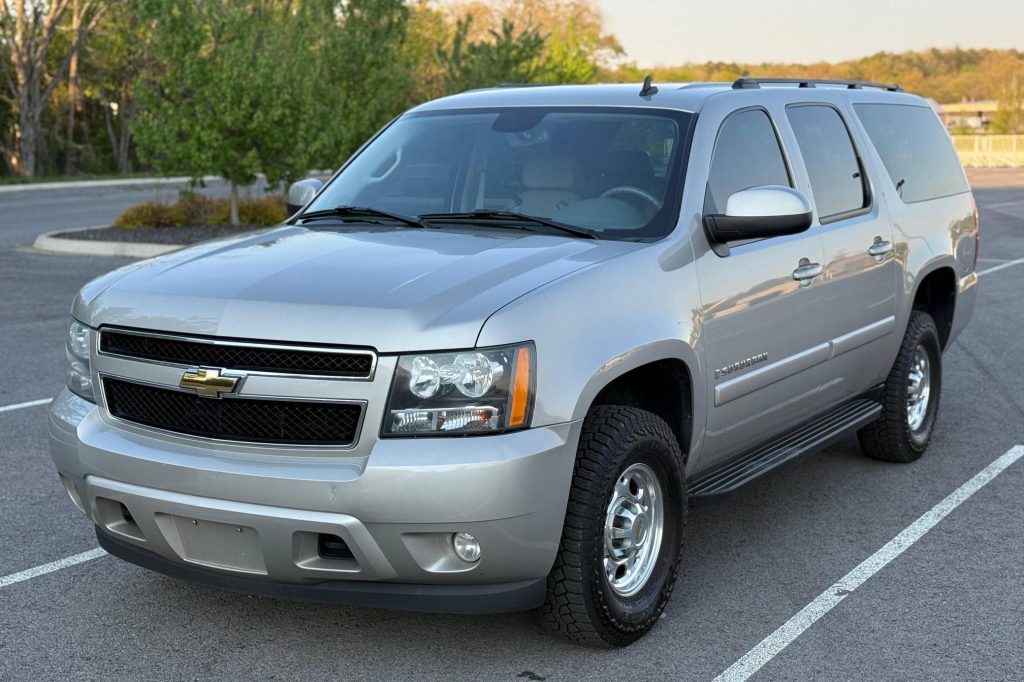
Even as manufacturers shifted toward smaller turbocharged engines and improved efficiency, few production SUVs have matched the Suburban 2500’s combination of heavy-duty capability and substantial factory fuel capacity.
It remains one of the most memorable examples of an era when maximizing driving range simply meant installing a much larger fuel tank.
Specifications
- Engine: 8.1-liter V8
- Torque: 455 lb-ft
- Horsepower: 340 hp
- Length/Width: 219.3 in / 79.8 in
3. Dodge Ram 3500 Mega Cab
When Dodge introduced the Ram 3500 Mega Cab, the objective was simple: build a pickup capable of handling demanding commercial work while offering exceptional comfort for long-distance travel.
One of the truck’s most practical features was its enormous 50-gallon (189.3-liter) factory fuel tank available on certain diesel configurations, making it one of the largest fuel tanks ever fitted to a production pickup.
That tremendous capacity was not included merely for bragging rights. Heavy-duty diesel trucks frequently spend their lives towing fifth-wheel campers, horse trailers, heavy machinery, or construction equipment across vast distances.
Under these demanding conditions, fuel consumption rises significantly. A 50-gallon tank allows drivers to continue working or traveling for much longer before searching for a fuel station, reducing downtime during commercial operations.
The Cummins turbo diesel engine paired perfectly with the oversized tank. Diesel engines naturally deliver strong fuel economy under load, so combining efficient operation with a massive fuel reserve results in a remarkable driving range. Many owners routinely traveled hundreds of miles while towing without needing to stop for fuel.
Inside, the Mega Cab provided one of the roomiest cabins in the heavy-duty pickup segment. Rear passengers enjoyed generous legroom, while additional storage compartments increased practicality for contractors and long-distance travelers carrying valuable equipment.
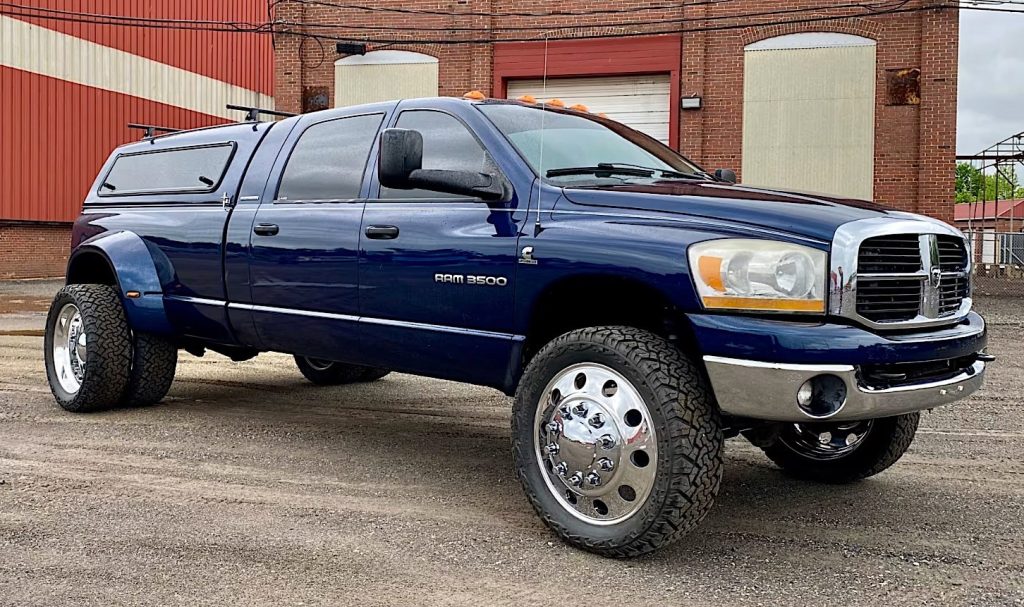
Even years after production, the Ram 3500 Mega Cab remains highly respected among towing enthusiasts because it combines exceptional hauling capability with outstanding highway range.
Its factory-installed 50-gallon tank continues to rank among the largest ever offered in a production pickup, highlighting an era when manufacturers prioritized endurance for serious work rather than focusing exclusively on fuel economy.
Specifications
- Engine: 6.7-liter Cummins turbo diesel inline-six
- Torque: 1,075 lb-ft
- Horsepower: 420 hp
- Length/Width: 259.4 in / 79.1 in
4. Ford F-350 Super Duty
The Ford F-350 Super Duty has long served ranchers, construction companies, fleet operators, and recreational towing enthusiasts who routinely travel great distances with heavy loads.
Recognizing that these customers value extended driving range, Ford offered certain configurations with a factory-installed 48-gallon (181.7-liter) fuel tank, placing the truck among the production vehicles with the largest fuel capacities ever available.
The enormous tank dramatically reduces the number of refueling stops required during demanding towing assignments. Pulling large trailers places a substantial load on the engine, increasing fuel consumption considerably.
With nearly fifty gallons of fuel available, drivers can complete longer stretches of highway travel before needing to locate a diesel station, saving valuable time on commercial jobs and cross-country trips.
Another advantage appears in remote operating environments. Farmers, utility companies, and energy-sector workers often travel through rural regions where fuel stations may be separated by many miles. The F-350’s generous fuel capacity provides confidence that the truck can continue working without frequent interruptions.
The truck’s impressive towing capability complements its long-range design. Combined with a durable frame, advanced trailer-assist technology, and powerful diesel performance, the F-350 remains one of the preferred choices for transporting heavy equipment across North America.
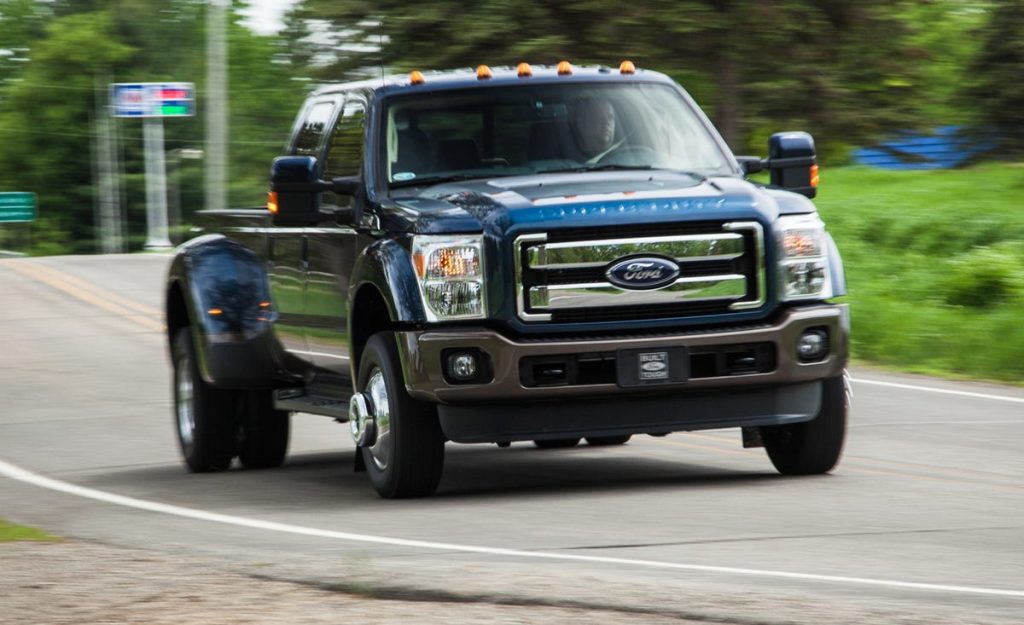
Although modern pickup trucks now incorporate more sophisticated electronics and improved efficiency, very few production models have matched the F-350’s combination of commercial capability and exceptional fuel capacity.
The available 48-gallon factory tank remains one of the defining features that helped establish the Super Duty as a benchmark for long-distance heavy-duty transportation.
Specifications
- Engine: 6.7-liter Power Stroke turbo diesel V8
- Torque: 1,200 lb-ft
- Horsepower: 500 hp
- Length/Width: 266.2 in / 80.0 in
5. Mercedes-Benz S600 Pullman
Luxury limousines are rarely associated with enormous fuel tanks, yet the Mercedes-Benz S600 Pullman was engineered for heads of state, diplomats, and executives who often traveled long distances with minimal interruptions.
To support its role as an ultra-premium chauffeur-driven limousine, Mercedes-Benz equipped the Pullman with a factory fuel tank of approximately 26.4 gallons (100 liters). While smaller than those found in heavy-duty trucks, this was exceptionally large for a luxury passenger sedan and provided impressive touring range when paired with refined engineering.
The Pullman’s extended wheelbase and lavish interior were designed for comfort above everything else. Rear passengers enjoyed airline-style seating, premium materials, advanced climate control, and exceptional ride quality.
Long highway journeys were a routine part of the vehicle’s mission, making a generous fuel reserve an important advantage for professional chauffeurs and government fleets.
Its smooth V12 engine delivered effortless performance despite the limousine’s considerable size and weight. Rather than producing aggressive acceleration, the powertrain emphasized quiet operation and relaxed cruising at highway speeds.
Combined with the large fuel tank, the Pullman could cover substantial distances before requiring a refueling stop, reducing interruptions during official travel.
Another benefit involved international touring. Vehicles used for diplomatic transport frequently crossed long rural stretches where convenient fuel stations were not always available. Carrying more fuel increased operational flexibility while maintaining the comfort expected from Mercedes-Benz’s flagship limousine.
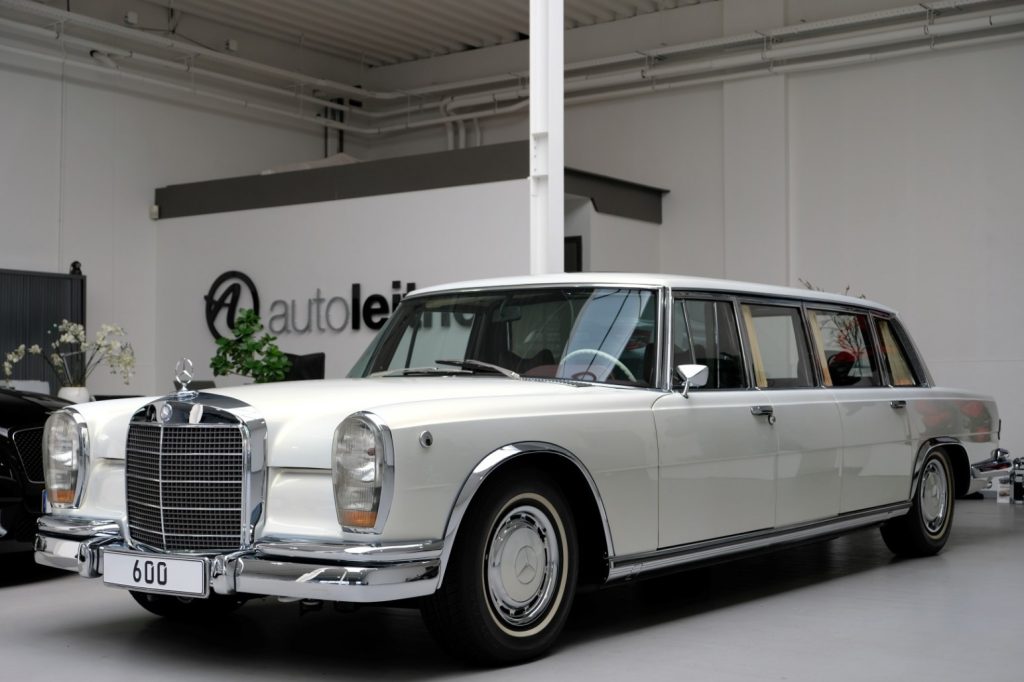
Although modern luxury sedans now emphasize hybrid technology and improved efficiency, the S600 Pullman remains an excellent example of an era when manufacturers increased fuel capacity to maximize long-distance convenience.
Its spacious cabin, prestigious status, and substantial factory fuel tank helped establish it as one of history’s most capable grand touring limousines.
Specifications
- Engine: 6.0-liter twin-turbocharged V12
- Torque: 612 lb-ft
- Horsepower: 523 hp
- Length/Width: 248.5 in / 74.8 in
6. Toyota Land Cruiser 200 Series
The Toyota Land Cruiser has built its reputation by traveling confidently through some of the world’s most remote environments. Whether crossing deserts, mountain trails, or isolated highways, reliability and driving range have always been central to its design philosophy.
To support those demanding missions, many versions of the 200 Series Land Cruiser were equipped with a factory fuel tank holding approximately 24.6 gallons (93 liters), while some international dual-tank variants offered an even greater combined capacity.
Large fuel storage was especially valuable for owners operating far from populated areas. Expeditions into remote regions often required hundreds of miles between service stations, making every additional gallon important.
Combined with Toyota’s renowned reliability, the generous fuel capacity allowed drivers to travel with greater confidence in challenging conditions.
The Land Cruiser’s robust V8 engine was engineered to prioritize durability over outright fuel economy. While the engine consumed more fuel than smaller SUVs, the sizable tank helped compensate by extending driving range considerably.
This balance made the vehicle popular with humanitarian organizations, mining companies, government agencies, and adventure travelers around the globe.
Beyond off-road capability, the Land Cruiser also excelled as a comfortable long-distance touring vehicle. A spacious interior, supportive seating, and exceptional ride quality allowed passengers to remain comfortable during journeys lasting many hours. The ability to reduce fuel stops only enhanced that experience.
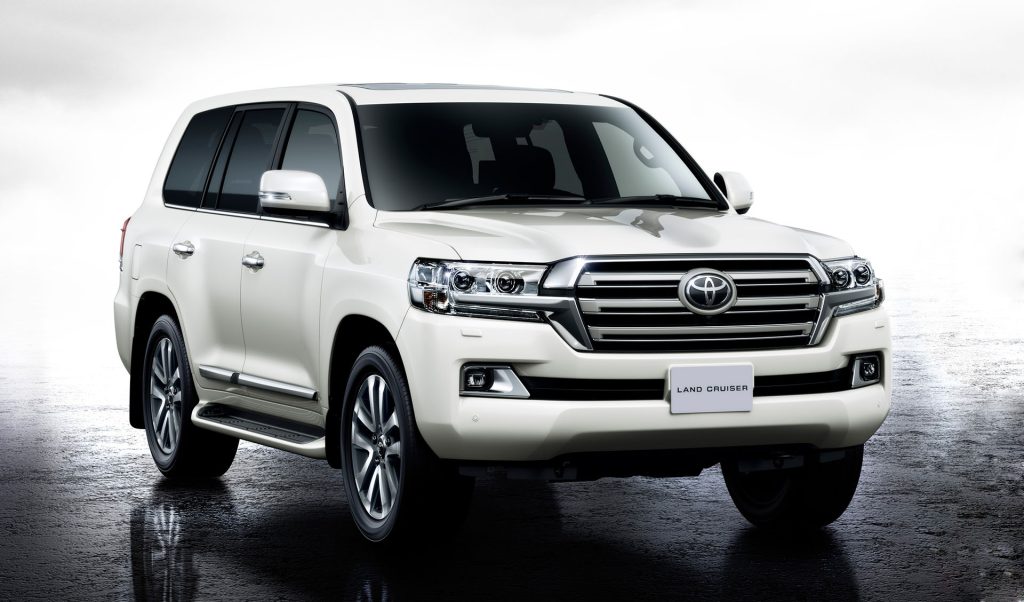
For decades, the Land Cruiser has represented dependable transportation in places where reliability can be more important than luxury. Its substantial factory fuel tank played a major role in that reputation, helping establish it as one of the world’s most respected long-range production SUVs.
Specifications
- Engine: 5.7-liter naturally aspirated V8
- Torque: 401 lb-ft
- Horsepower: 381 hp
- Length/Width: 194.9 in / 78.0 in
7. Nissan Patrol Y62
The Nissan Patrol has long been regarded as one of the world’s premier long-distance off-road vehicles, particularly in regions where fuel stations can be separated by hundreds of miles.
To support that role, the Y62 Patrol was equipped with a factory 36-gallon (140-liter) fuel tank in many international markets, making it one of the largest-capacity production SUVs ever built.
This generous fuel reserve allows the Patrol to travel remarkable distances before requiring a refill, an advantage that has made it especially popular in desert environments.
Its substantial fuel capacity works hand in hand with the Patrol’s rugged engineering. The naturally aspirated V8 engine delivers smooth, dependable power whether towing heavy loads, climbing steep terrain, or cruising across highways.
Although such an engine consumes more fuel than smaller powerplants, the large tank significantly extends the vehicle’s practical operating range.
The Patrol has earned widespread respect among expedition travelers, government agencies, and emergency services because it can confidently operate in isolated regions where refueling opportunities are scarce.
Drivers crossing deserts or remote mountain routes benefit from carrying enough fuel to complete demanding journeys without relying on auxiliary tanks.
Passenger comfort was never sacrificed in pursuit of capability. A spacious cabin, premium materials, advanced climate control, and excellent ride quality allow occupants to remain comfortable during extended trips.
These qualities transformed the Patrol into more than just an off-road machine. It became a true long-distance touring SUV.
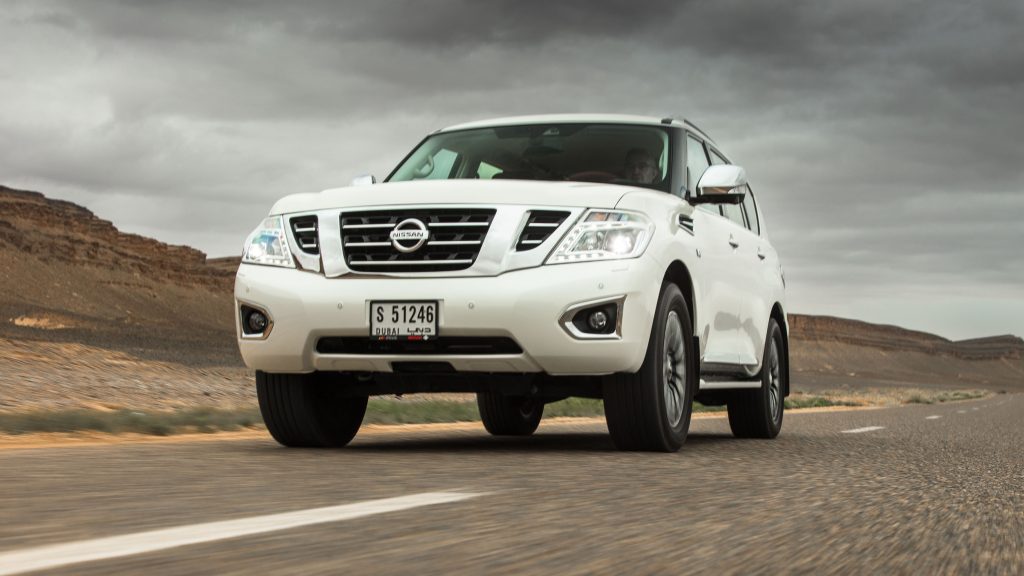
Even as modern vehicles increasingly prioritize efficiency, the Patrol continues representing a philosophy centered on endurance and self-sufficiency.
Its factory-installed 36-gallon fuel tank remains one of the largest ever fitted to a production SUV, reinforcing its reputation as a vehicle engineered for serious adventure rather than frequent visits to the fuel station.
Specifications
- Engine: 5.6-liter naturally aspirated V8
- Torque: 413 lb-ft
- Horsepower: 400 hp
- Length/Width: 203.9 in / 78.4 in
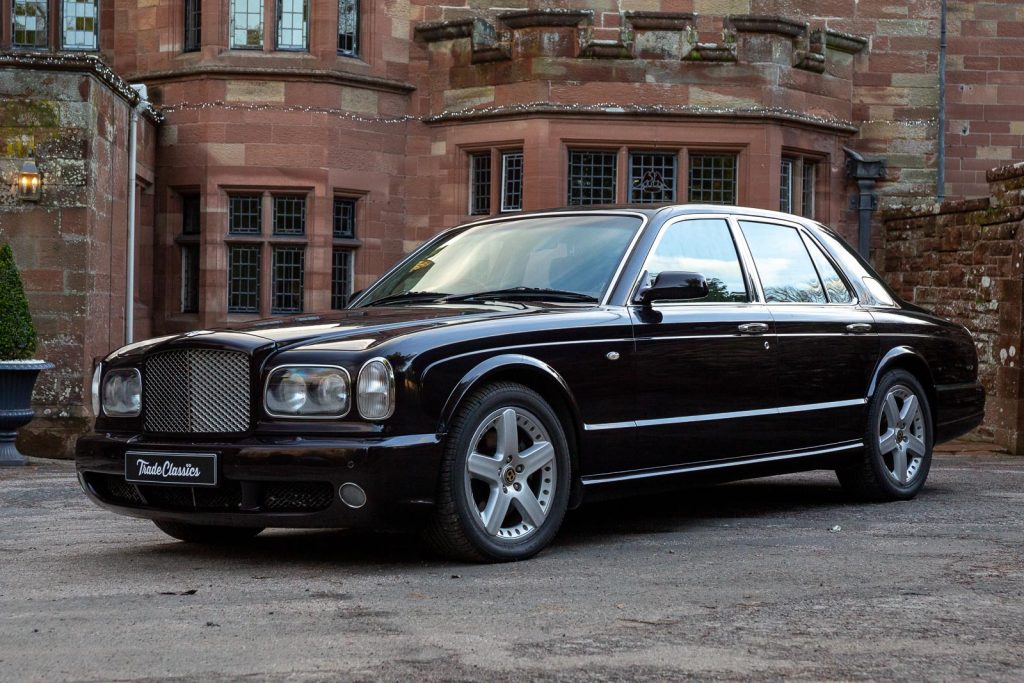
8. Bentley Arnage
The Bentley Arnage approached long-distance travel from an entirely different perspective. Rather than crossing deserts or towing heavy equipment, it was designed to transport passengers across countries in exceptional comfort and refinement.
Supporting that mission was a factory 26.4-gallon (100-liter) fuel tank, one of the largest ever installed in a luxury sedan. Combined with effortless V8 performance, the Arnage offered an impressive touring range suitable for extended highway journeys.
The twin-turbocharged engine delivered substantial low-end torque, allowing the large sedan to accelerate smoothly despite its considerable weight.
Long motorway drives required minimal effort from both the vehicle and its occupants, while the generous fuel capacity reduced interruptions during travel. Chauffeurs and owners alike appreciated being able to cover long distances between refueling stops.
Inside the cabin, handcrafted leather, polished wood veneers, and exceptional sound insulation created an atmosphere more closely resembling a private lounge than a conventional automobile.
The fuel tank’s large capacity complemented this experience by allowing passengers to enjoy uninterrupted travel over extended distances.
Bentley also engineered the Arnage to maintain composure at high cruising speeds. Sophisticated suspension tuning and substantial weight contributed to remarkable highway stability, making the sedan a favorite among buyers who regularly traveled across Europe.
Although luxury vehicles today increasingly adopt hybrid systems to improve efficiency, the Arnage represents a period when exceptional range was achieved simply by carrying more fuel.
Its combination of handcrafted luxury, effortless power, and a substantial factory fuel tank helped establish it as one of the finest grand touring sedans ever produced.
Specifications
- Engine: 6.75-liter twin-turbocharged V8
- Torque: 738 lb-ft
- Horsepower: 500 hp
- Length/Width: 212.6 in / 74.7 in
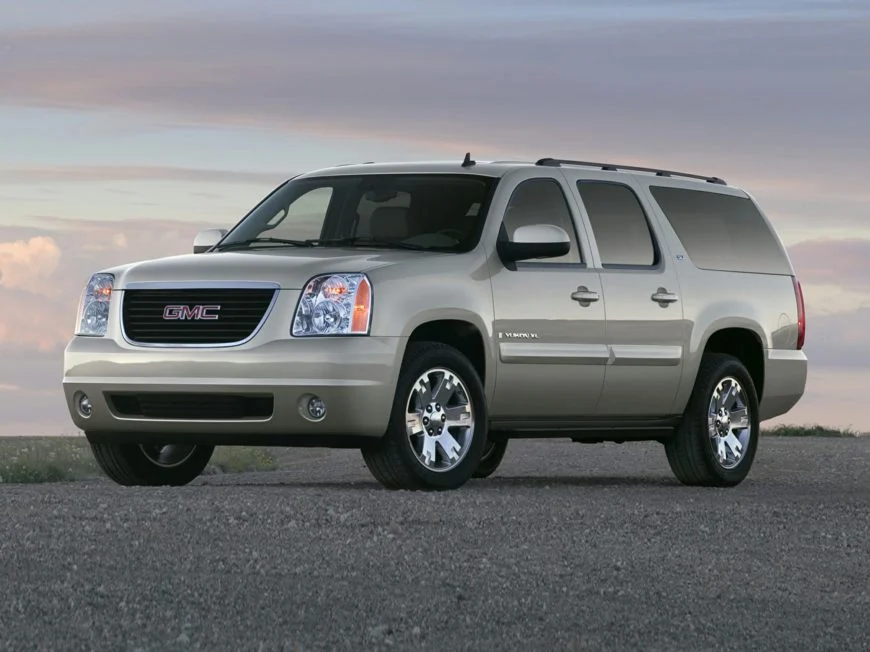
9. GMC Yukon XL 2500
The GMC Yukon XL 2500 was created for drivers who demanded maximum passenger space, heavy-duty towing capability, and exceptional long-distance practicality. Sharing much of its engineering with General Motors’ heavy-duty truck lineup, the SUV was available with a factory 39-gallon (147.6-liter) fuel tank.
That impressive capacity placed it among the largest fuel tanks ever fitted to a production passenger vehicle and made it an outstanding choice for families, businesses, and recreational towing enthusiasts.
Large trailers place tremendous demands on fuel consumption, particularly when climbing steep grades or traveling at highway speeds. GMC addressed this challenge by allowing owners to carry nearly forty gallons of fuel, significantly reducing the number of refueling stops required during extended trips.
Whether towing a travel trailer, transporting boats, or hauling equipment across multiple states, the Yukon XL 2500 was designed to keep moving for longer stretches.
Its available big-block V8 engine complemented the truck-based chassis with abundant torque for demanding workloads. Although fuel economy was never the vehicle’s primary objective, the oversized fuel tank compensated by providing impressive driving range under both loaded and unloaded conditions.
Passenger comfort also played an important role. Three rows of seating, generous cargo capacity, and a smooth highway ride made the Yukon XL 2500 equally suitable for large families embarking on cross-country vacations. The ability to travel farther between fuel stops helped make those long journeys considerably more convenient.
Today, vehicles with factory fuel tanks approaching forty gallons have become increasingly uncommon as manufacturers prioritize lighter construction and improved efficiency.
The Yukon XL 2500 remains one of the best examples of an era when maximum capability and long-range travel were achieved by pairing powerful V8 engines with exceptionally large factory fuel tanks.
Specifications
- Engine: 8.1-liter naturally aspirated V8
- Torque: 455 lb-ft
- Horsepower: 340 hp
- Length/Width: 219.3 in / 79.8 in
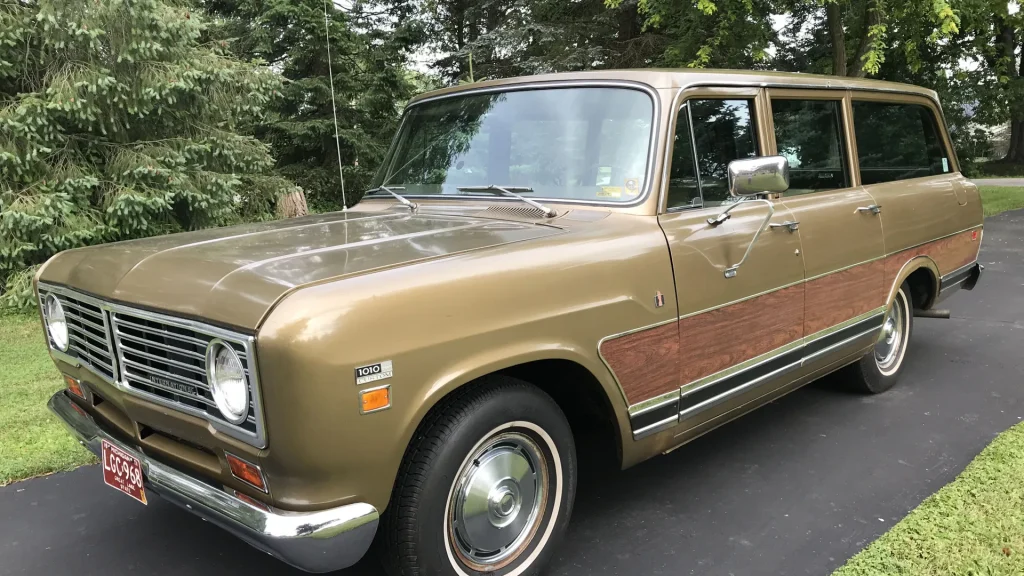
10. International Harvester Travelall 1210
Long before modern full-size SUVs dominated American highways, the International Harvester Travelall established itself as one of the earliest vehicles capable of carrying large families and substantial cargo over extraordinary distances.
Built with heavy-duty truck engineering, later Travelall models such as the 1210 were available with a factory fuel tank of approximately 40 gallons (151.4 liters), making them among the largest-capacity passenger vehicles ever produced during their era.
The oversized fuel tank reflected the Travelall’s intended purpose. Owners frequently used these vehicles for agricultural work, commercial transportation, camping, hunting expeditions, and cross-country travel where fuel stations were often separated by great distances.
Carrying forty gallons of gasoline greatly extended operating range and reduced interruptions during demanding journeys.
Power came from large-displacement V8 engines engineered for durability rather than outright efficiency. These robust engines comfortably handled heavy payloads, trailers, and rough terrain, while the substantial fuel reserve compensated for their higher fuel consumption.
The combination made the Travelall particularly popular in rural America, where dependable long-distance transportation was essential.
Its spacious body offered generous seating and cargo flexibility years before the modern SUV segment emerged. Families appreciated the practical interior, while businesses valued its ability to transport both people and equipment in a single vehicle.
Although today’s sport utility vehicles feature more advanced technology, sophisticated safety systems, and dramatically improved efficiency, the International Harvester Travelall remains an important milestone in automotive history.
Its truck-derived construction and exceptionally large factory fuel tank demonstrated an unwavering focus on endurance and utility, securing its place among the production vehicles with the largest fuel tanks ever installed by a manufacturer.
Specifications
- Engine: 392 cubic-inch naturally aspirated V8
- Torque: 318 lb-ft
- Horsepower: 193 hp
- Length/Width: 213.0 in / 79.0 in
Also Read: 10 Vehicles With the Largest Standard Touchscreens in 2026
