
Lamborghini has never been shy about extremes. Every few years, the brand releases something that pushes price tags into territory that most supercars never touch. These are not ordinary Aventadors or Huracáns. They are one-of-one masterpieces, one-of-one commissions, and anniversary specials built for a tiny circle of collectors.
Each car on this list represents a different chapter of Lamborghini’s obsession with rarity. Some were built to celebrate anniversaries. Others were track-only experiments in carbon fiber. A couple was commissioned by a single wealthy client with very specific demands. What unites them is scarcity, engineering ambition, and price tags that reach into the millions.
This ranking looks at the eight most expensive Lamborghini models ever produced, based on their sale price, auction value, or commissioned cost. Each entry includes real specifications pulled from manufacturer data and verified sources.
Horsepower, torque, engine layout, and dimensions are included for every car. These numbers tell the real story behind the price. A V12 producing over 750 horsepower, a carbon fiber body weighing under 2,300 pounds, or a production run of single digits all justify why collectors pay what they pay. Let’s go through the ranking, starting with the most expensive Lamborghini ever created.
1. Lamborghini Egoista
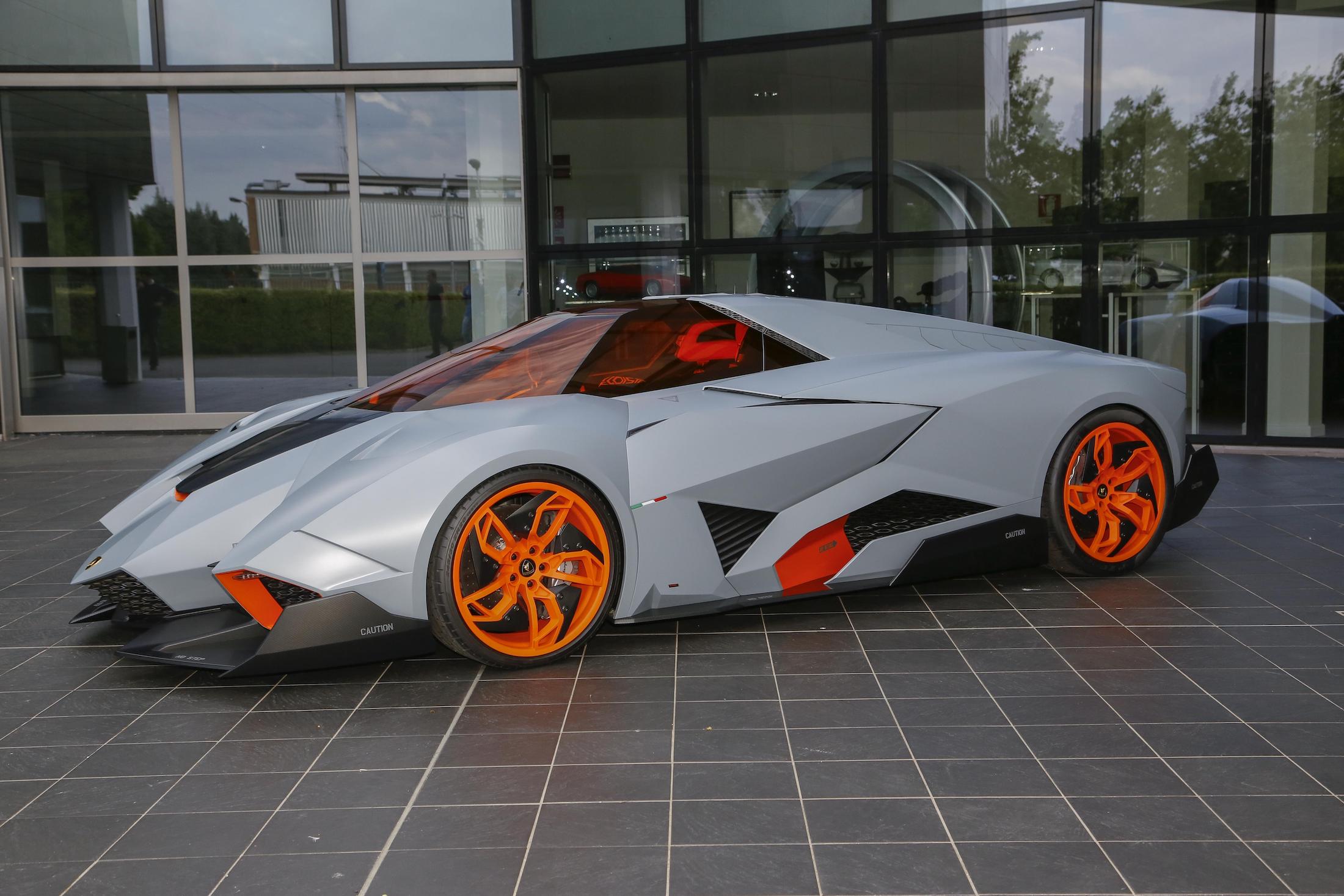
The Lamborghini Egoista, revealed in 2013, was originally created as a one-off concept to celebrate the brand’s 50th anniversary. Designed by Walter de Silva, the vehicle was intended as a “gift from Lamborghini to Lamborghini” and served as a centerpiece exhibit at the brand’s museum in Sant’Agata Bolognese for over a decade.
Inspired by Apache helicopters and fighter jet cockpits, the Egoista features an extreme single-seat layout, which is reflected in its name, Italian for “selfish”. The supercar is powered by a 5.2-liter V10 engine, derived from the Gallardo, producing approximately 600 horsepower.
Despite being a fully functional machine, it was never homologated for street use and lacks traditional doors, instead utilizing a canopy-style hatch for entry.
In early 2025, reports emerged suggesting that this masterpiece had finally left the factory after being sold to a private collector. While many media outlets have circulated a staggering sale price of $117 million, this figure remains an unverified, albeit highly publicized, rumor. Lamborghini has never officially confirmed the sale or the price.
Speculation among enthusiasts has linked the purchase to Swiss collector Albert Spiess, though this also remains unconfirmed. If the reported valuation were accurate, it would establish the Egoista as the most expensive Lamborghini ever sold, significantly eclipsing the previous auction record held by the Veneno Roadster. Currently, the car’s exact status and location remain subjects of intense speculation within the automotive community.
Specifications:
- Engine: 5.2L naturally aspirated V10
- Horsepower: 600 hp
- Torque: 413 lb-ft
- Length: Not officially disclosed (estimated at 4,600 mm)
- Width: Not officially disclosed (estimated at 2,100 mm)
2. Lamborghini Veneno Roadster
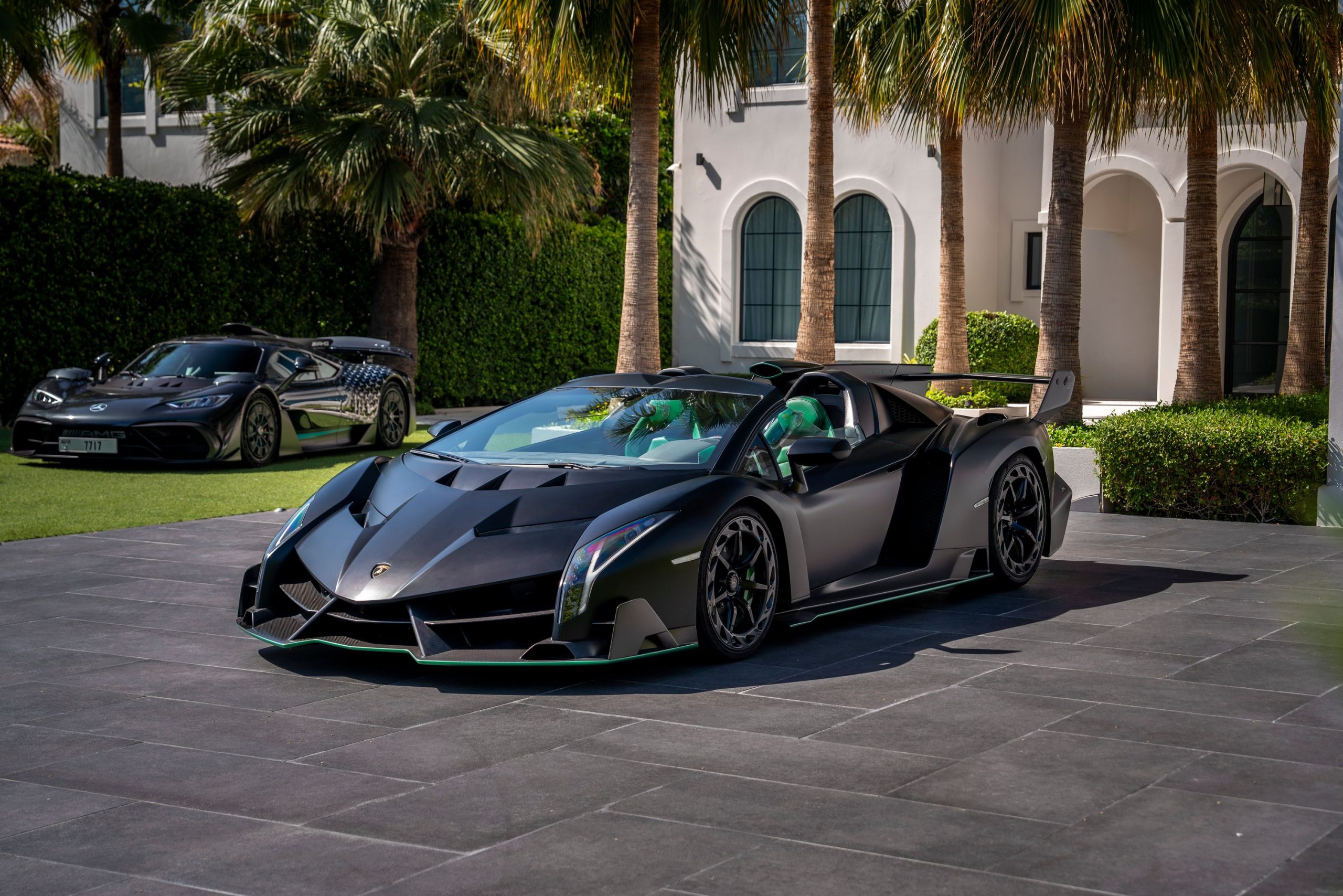
The Veneno Roadster looks like a Le Mans prototype that wandered onto public streets. It remains the most expensive Lamborghini ever sold at a public auction.
Lamborghini built just nine units in 2013 and 2014. Each one was fully customizable to the buyer’s taste. The base price was set at $4.5 million when new. By 2019, one example sold at auction for a record $8.3 million.
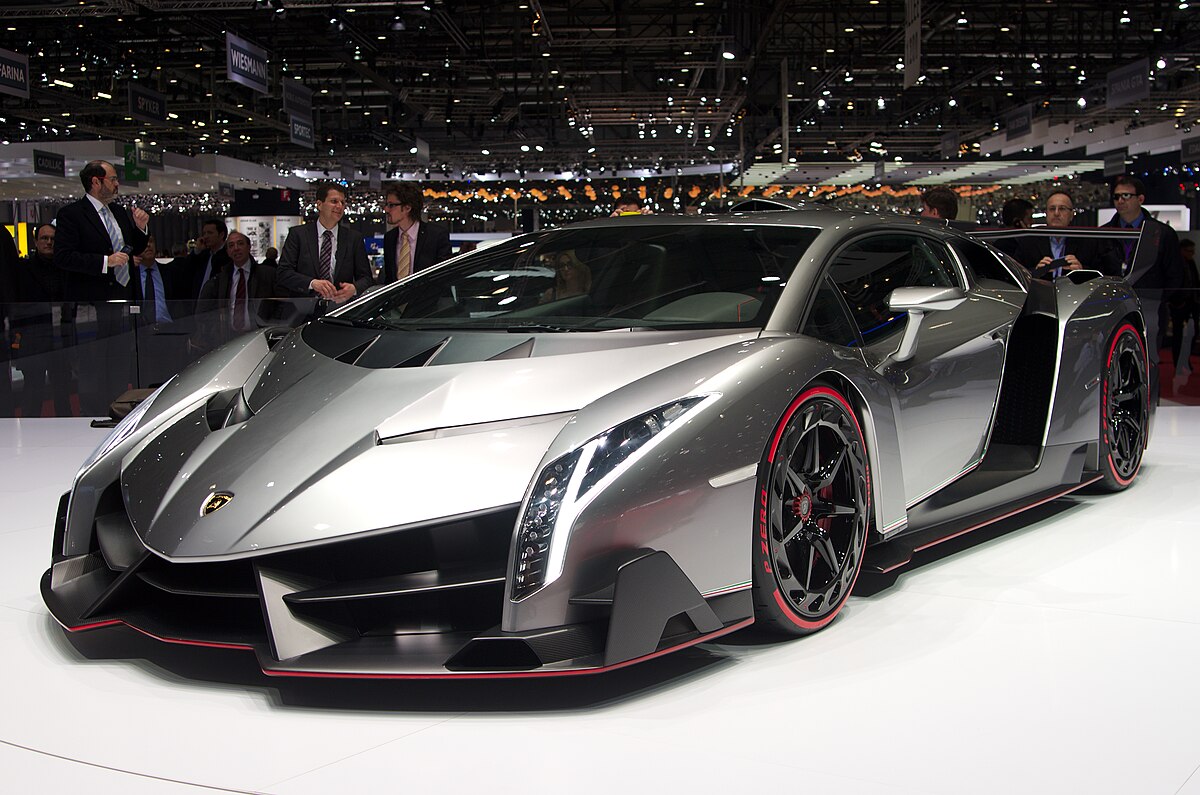
Its design borrows the Y-shaped elements from the Aventador. The rear wheel arches pay tribute to the classic Countach. Underneath the aggressive bodywork sits a tuned version of the Aventador’s V12. Lamborghini increased power by enlarging the air intakes and reworking the exhaust.
The car accelerates from 0-60 mph in just 2.8 seconds. Top speed comes in at 221 mph, putting it among the fastest cars Lamborghini has ever built. Every panel is finished in exposed carbon fiber. The extreme aerodynamic shaping isn’t just visual; it genuinely improves high-speed stability.
Specifications:
- Engine: 6.5L naturally aspirated V12
- Horsepower: 740 hp
- Torque: 509 lb-ft
- Length: 5,020 mm (197.6 in)
- Width: 2,075 mm (81.7 in)
3. Lamborghini SC18 Alston
The Lamborghini SC18 Alston stands as a landmark achievement in the brand’s history, representing the first one-off model ever developed by Lamborghini’s motorsport division, Squadra Corse.
Commissioned by a single, private client in close collaboration with Lamborghini Centro Stile, the project was designed to push the boundaries of track performance while maintaining street-legal certification.
Built upon the high-performance chassis of the Aventador SVJ, the SC18 Alston serves as a bridge between road-going supercars and pure racing machinery.
Its aggressive aerodynamics were derived directly from Squadra Corse’s competitive experience, incorporating elements such as hood intakes inspired by the Huracán GT3 EVO and fins and scoops reminiscent of the Huracán Super Trofeo EVO. A massive, manually adjustable carbon fiber rear wing allows for three distinct configurations, optimizing the car for any circuit.
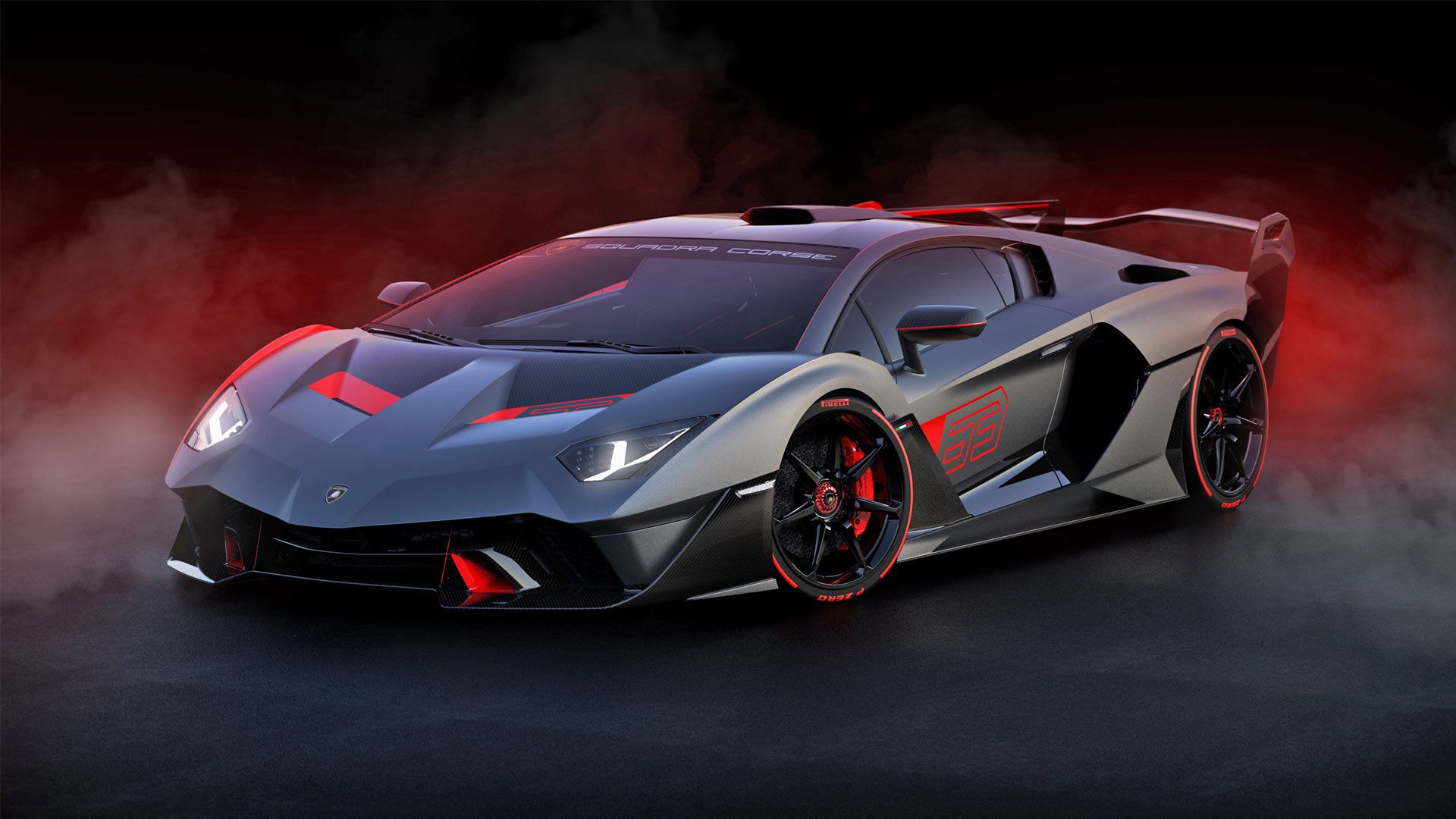
Mechanically, the SC18 Alston retains the formidable 6.5-liter naturally aspirated V12 engine from its donor car, delivering 770 hp and 531 lb-ft of torque. While media speculation has often attached a $7 million price tag to the commission, Lamborghini has never officially confirmed the cost.
The name “Alston” is a tribute to the nickname of Bob Wallace, a legendary Lamborghini test driver who played a vital role in the brand’s early development. Though track-focused, the car remains fully road-legal, offering a unique fusion of extreme racing aesthetics and mechanical prowess.
Specifications:
- Engine: 6.5L naturally aspirated V12
- Horsepower: 759 hp
- Torque: 531 lb-ft
- Length: Approximately 4,780 mm (188.2 in)
- Width: Approximately 2,030 mm (79.9 in)
4. Lamborghini Sián Roadster
The Sián Roadster is the open-top version of Lamborghini’s first hybrid supercar. It represents the brand’s most powerful production road car engine to date.
Lamborghini limited the Roadster to just 19 units. Every single one sold out before the public revealing. Original pricing sat close to $3.6 million, but resale listings have pushed values past $4.9 million. Scarcity keeps demand well above supply.
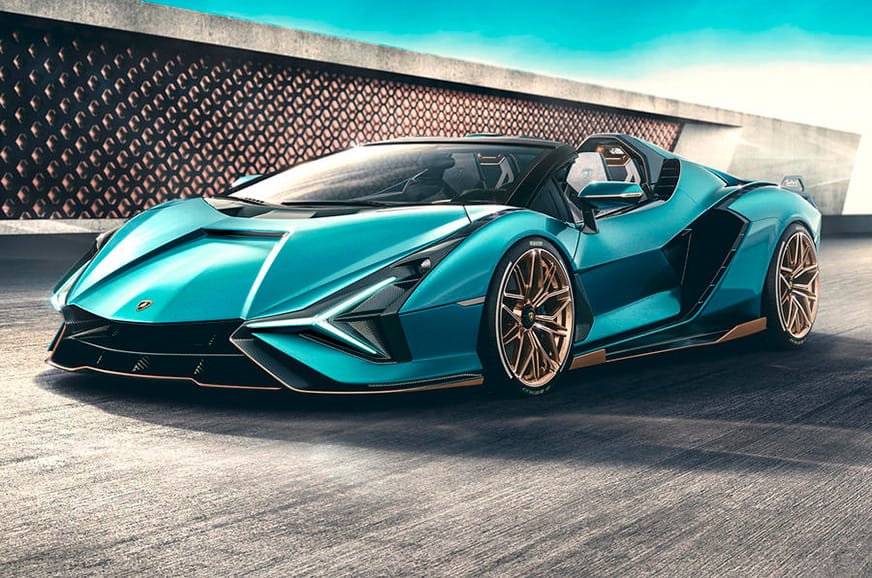
Unlike typical hybrids, the Sián uses a supercapacitor instead of a lithium-ion battery. This system stores energy far more efficiently for short, explosive bursts.
Its naturally aspirated V12 works alongside a 48-volt electric motor. Combined output reaches over 800 horsepower, making it the strongest engine Lamborghini has ever fitted to a road car.
Design cues borrow heavily from the Countach. Sharp creases and a low, wedge-shaped silhouette define its exterior. The name “Sián” means “flash of lightning” in the Bolognese dialect. It’s a fitting reference to both its speed and its electrified powertrain.
Specifications:
- Engine: 6.5L naturally aspirated V12 + 48V electric motor (hybrid)
- Horsepower: 819 hp (combined)
- Torque: 531 lb-ft (combined)
- Length: 4,980 mm (196.1 in)
- Width: 2,080 mm (81.9 in)
Also Read: 8 Off-Road Vehicles That Can Handle Anything
5. Lamborghini Sián FKP 37
The coupe version of the Sián debuted first, in September 2019. It introduced Lamborghini’s supercapacitor hybrid technology to the world. Production was capped at 63 units. That number honors 1963, the year Lamborghini was founded.
Pricing started around $3.6 million per unit. All 63 examples were sold before the car was officially revealed to the public. The name “FKP 37” honors Ferdinand Piëch, the late Volkswagen Group chairman. His initials and birth year form the car’s suffix.
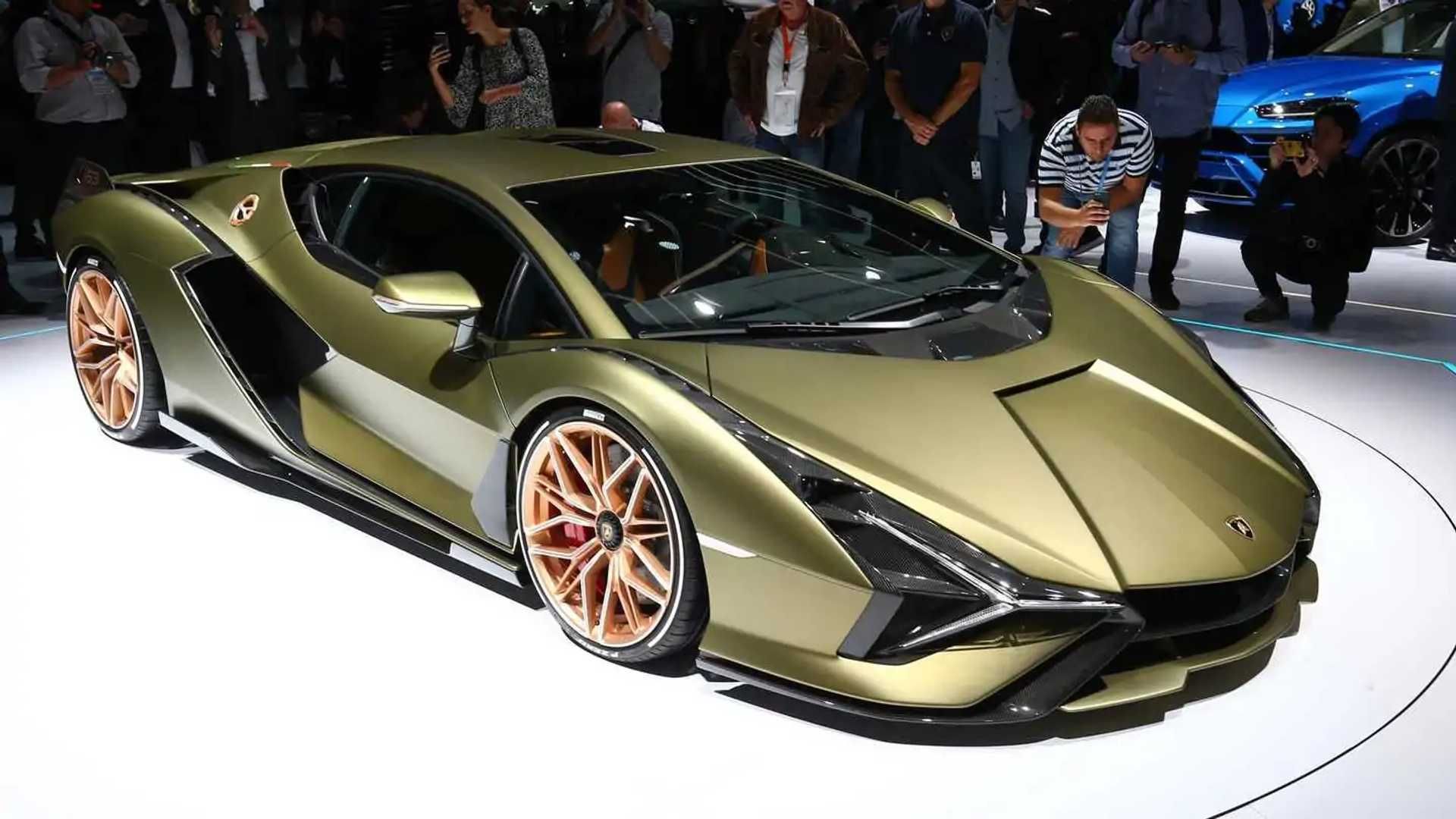
Its 48-volt hybrid system recovers energy under braking. That stored charge gets redeployed instantly under acceleration, filling in torque gaps. Terzo Millennio-inspired headlights hint at Lamborghini’s future design language.
The electrochromic roof panel is another rare touch for a production Lamborghini. Top speed is 218 mph, and the 0-62 mph sprint takes just 2.8 seconds. Few naturally aspirated V12s in history have matched this combination of output and response.
Specifications:
- Engine: 6.5L naturally aspirated V12 + 48V electric motor (hybrid)
- Horsepower: 819 hp (combined)
- Torque: 531 lb-ft (combined)
- Length: 4,980 mm (196.1 in)
- Width: 2,080 mm (81.9 in)
6. Lamborghini Sesto Elemento
The Sesto Elemento takes its name from carbon, the sixth element on the periodic table. Weight reduction was the entire point of this car’s existence.
Lamborghini built roughly 20 units, though some records suggest only 10 were completed. It was never approved for road use in most markets. Original pricing sat around $2.9 million per unit. Track-only status didn’t stop demand from wealthy collectors.
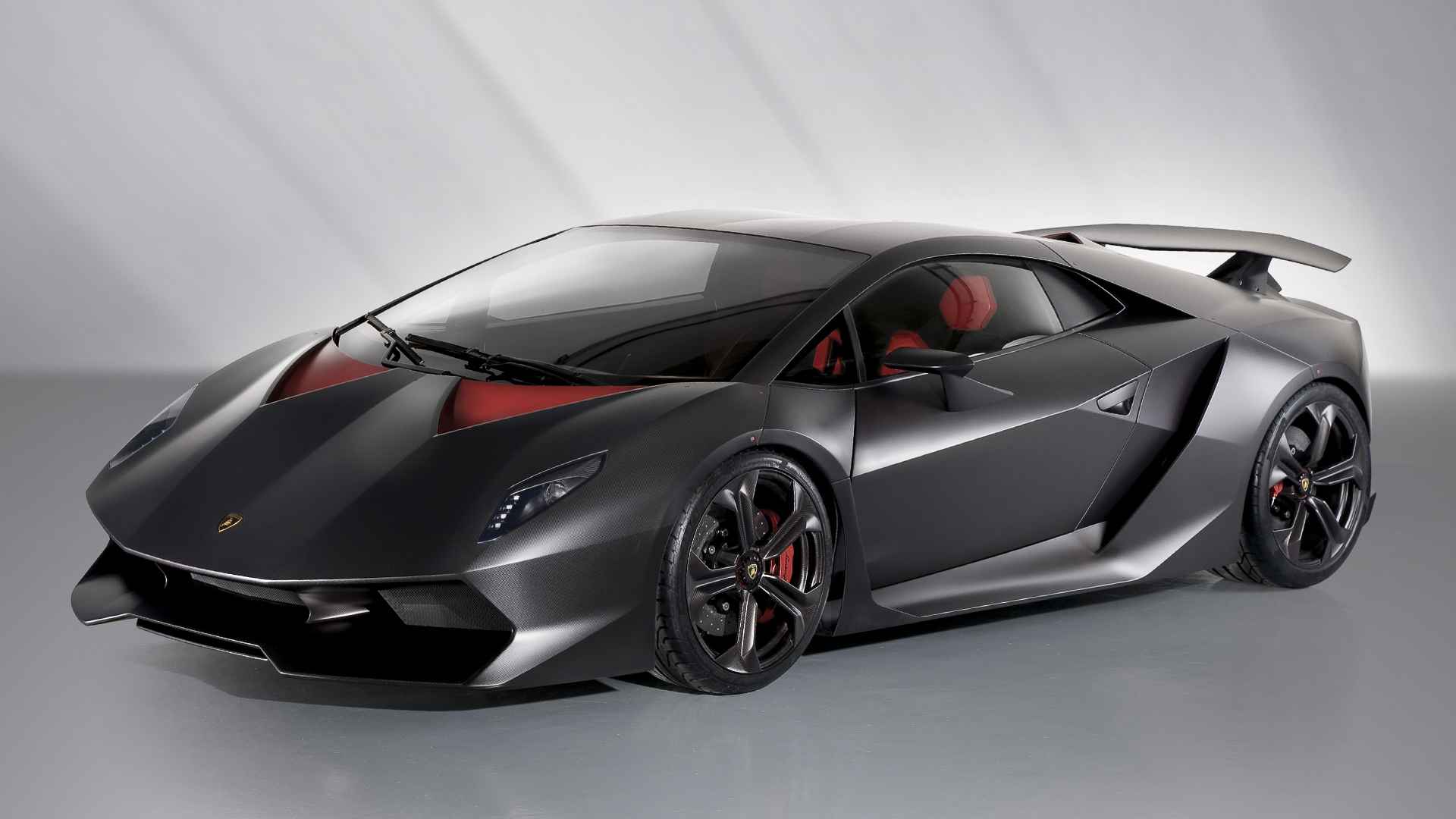
Around 80 percent of the car’s structure uses carbon fiber. That includes the chassis, body panels, drive shafts, and even the wheels. Total curb weight comes in at just 999 kg, or 2,202 pounds. That’s lighter than most economy hatchbacks on the road today.
Boeing actually assisted Lamborghini in developing the forged carbon fiber process used throughout the car. It marked the first automotive use of this specific composite technique. The interior skips typical comforts entirely. Seats are molded directly into the carbon monocoque rather than installed as separate components.
Specifications:
- Engine: 5.2L naturally aspirated V10
- Horsepower: 562 hp
- Torque: 398 lb-ft
- Length: Approximately 4,300 mm (169.3 in)
- Width: Approximately 1,945 mm (76.6 in)
7. Lamborghini Reventón Roadster
The Reventón Roadster takes design cues straight from stealth fighter jets. Lamborghini built it as the drop-top companion to the hard-top Reventón.
Just 15 Roadster units were produced between 2009 and 2010. Original pricing sat near €1.1 million, though actual transaction prices climbed toward $2.1 million due to demand.
Underneath the angular bodywork sits the Murciélago LP 670-4 SuperVeloce’s drivetrain. That gave the Roadster more power than its fixed-roof sibling.
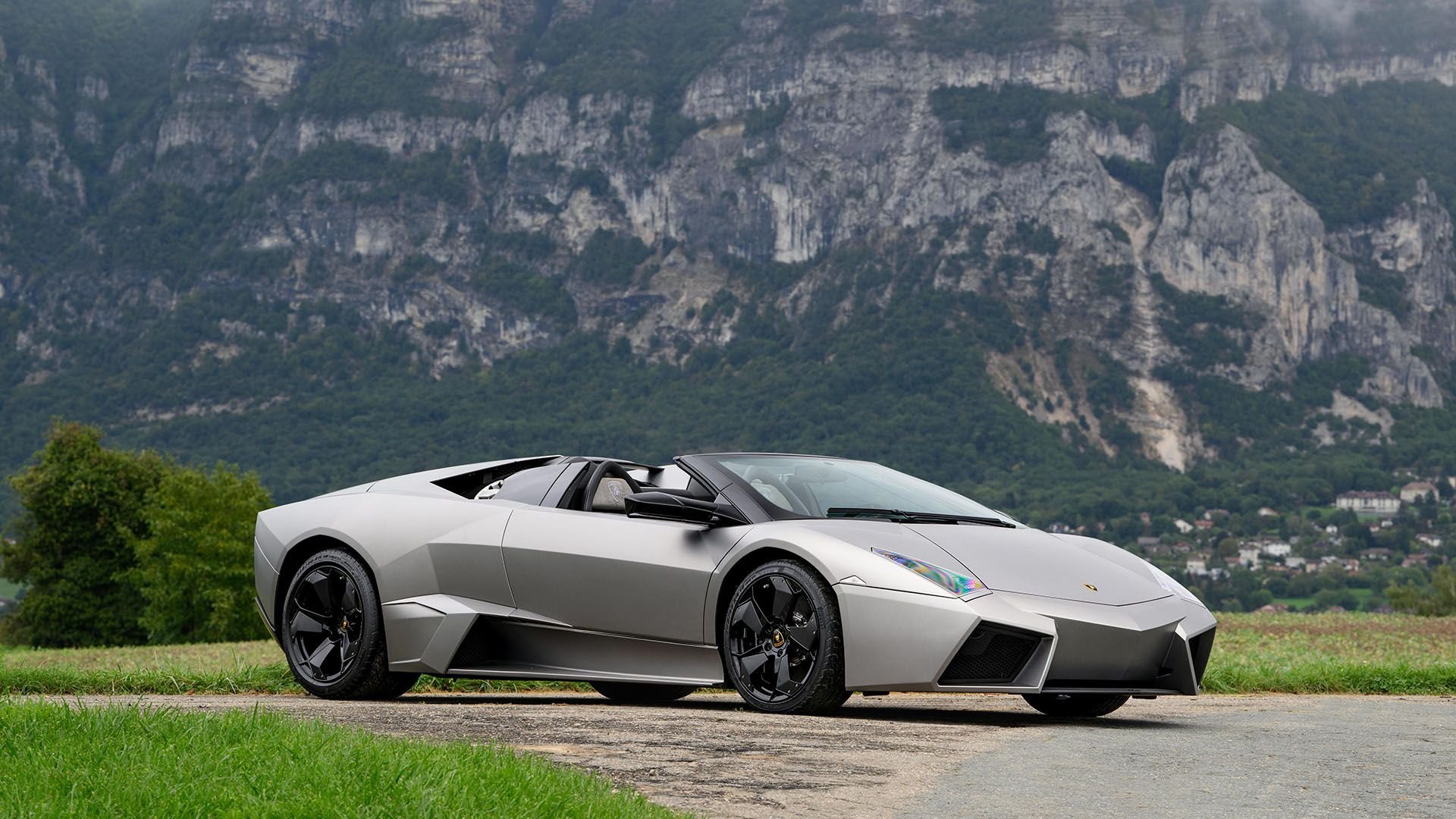
The car is named after a champion fighting bull, continuing a Lamborghini naming tradition. “Reventón” translates loosely to “burst” or “explosion” in Spanish.
Its dashboard uses transreflective LCD displays instead of analog gauges. Drivers could toggle between a digital readout and a more traditional dial layout.
Weight came in at 1,690 kg, just 25 kg heavier than the coupe. Chassis reinforcement compensated for the loss of a fixed roof. Top speed reaches 205 mph, slightly below the coupe’s figure. The 0-62 mph sprint remains identical at 3.4 seconds.
Specifications:
- Engine: 6.5L naturally aspirated V12
- Horsepower: 661 hp
- Torque: 487 lb-ft
- Length: 4,700 mm (185.0 in)
- Width: 2,058 mm (81.0 in)
8. Lamborghini Centenario
The Centenario closes out this list, built to honor founder Ferruccio Lamborghini’s 100th birthday. It debuted at the 2016 Geneva Motor Show. Lamborghini limited production to 40 total units.
Twenty coupes and twenty roadsters made up the full run. Original pricing landed around $1.9 million per unit. Later resale listings have approached $2.7 million for well-kept examples.
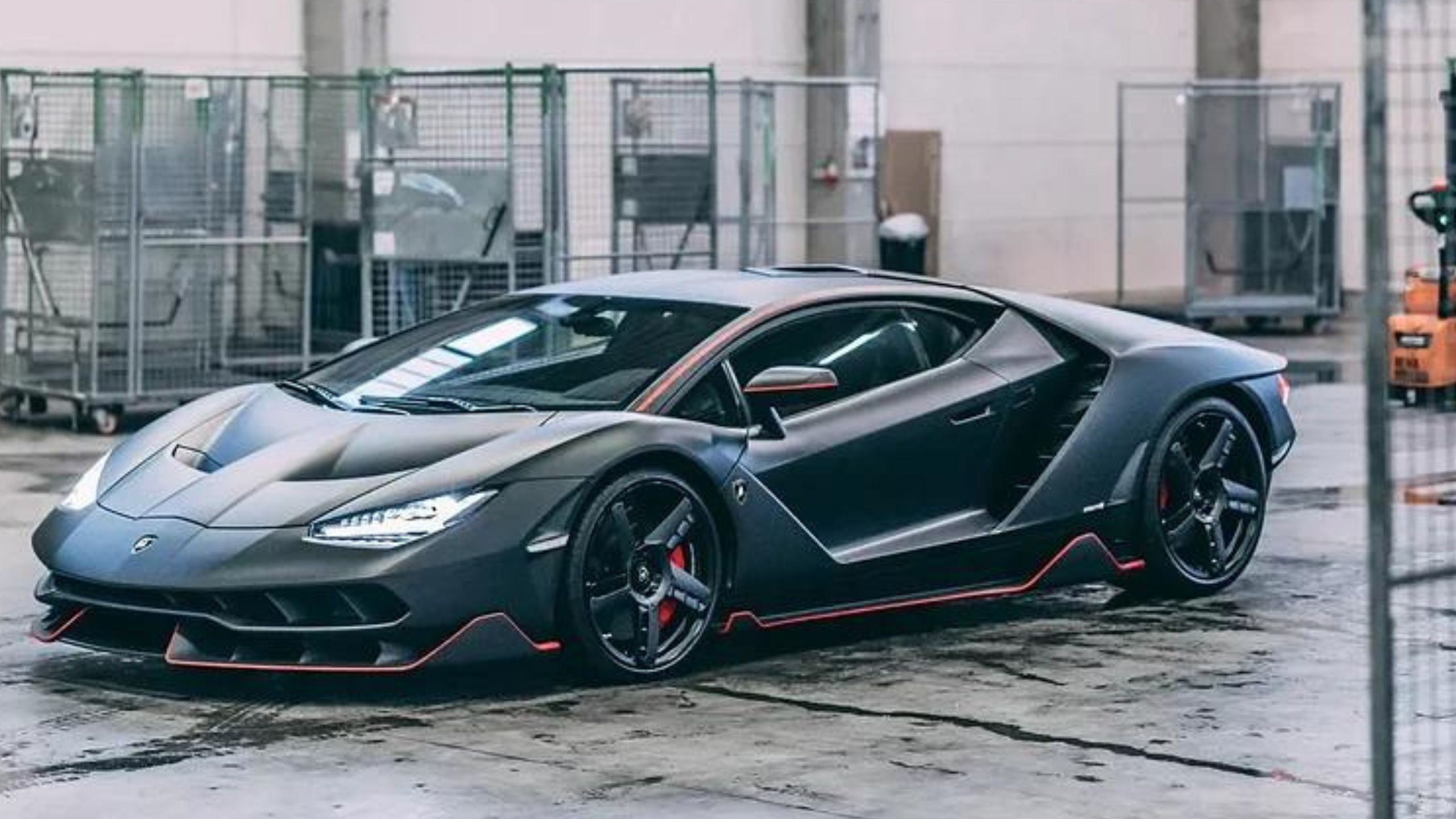
The Centenario was Lamborghini’s first model to feature rear-wheel steering. This system improves low-speed maneuverability and high-speed stability simultaneously.
It was also the first Lamborghini equipped with a portrait-oriented touchscreen infotainment system. That 10.1-inch display recorded telemetry and driving data in real time.
Power comes from a tuned Aventador SV engine, pushed slightly higher than in its donor car. The extra output made it one of the most powerful naturally aspirated V12s Lamborghini had built at the time.
Active aerodynamics, including a carbon fiber rear wing, adjust automatically based on driving conditions. This was a genuine engineering testbed for future Lamborghini models, not just a styling exercise.
Specifications:
- Engine: 6.5L naturally aspirated V12
- Horsepower: 759 hp
- Torque: 509 lb-ft
- Length: 4,924 mm (193.9 in)
- Width: 2,062 mm (81.2 in)
Also Read: 8 SUVs With Over 400 Horsepower for Under $60,000
