
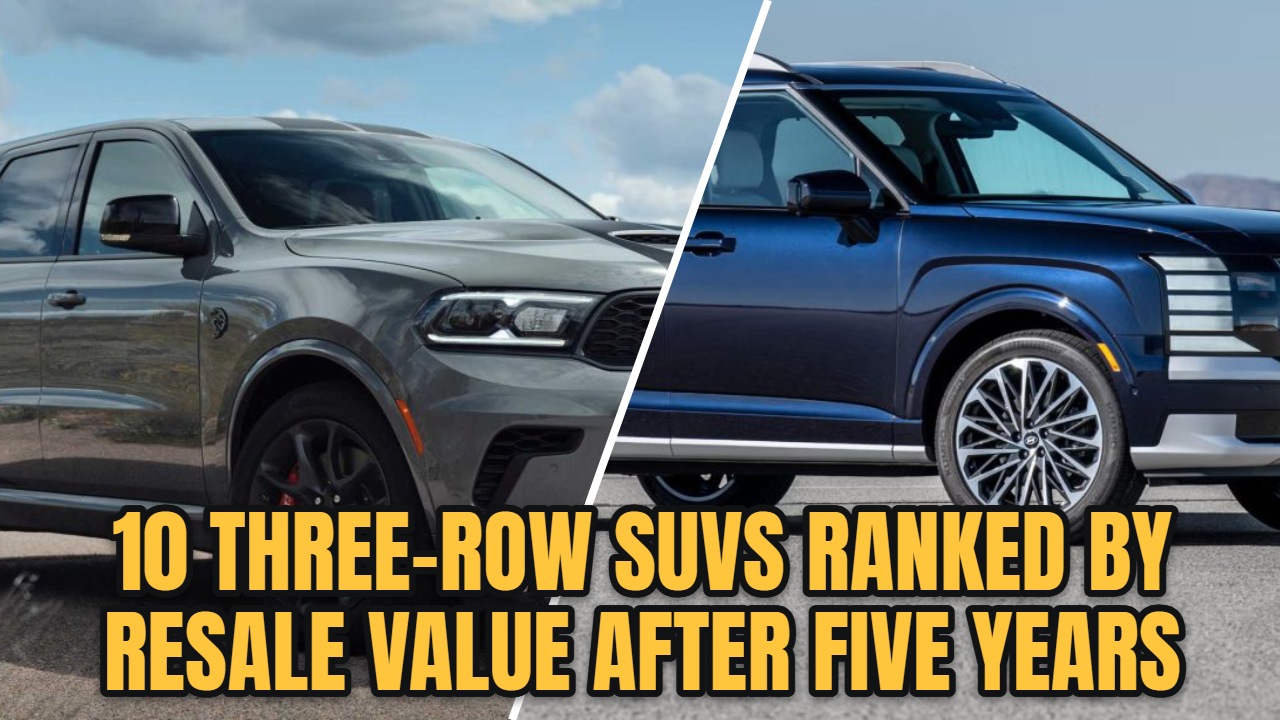
Buying a three-row SUV is often a major household expense, but the purchase price tells only part of the financial story. Depreciation can remove thousands of dollars from a vehicle’s value during the first five years, making resale strength an important factor for U.S. buyers who plan to trade or sell their SUV later.
Some family vehicles hold their value remarkably well, while others lose nearly half of their original value in the same ownership period.
This ranking uses iSeeCars’ 2026 resale-value data for SUVs with three rows. Its methodology analyzes more than 3 million vehicles to calculate five-year depreciation from MSRP. The category average retains 53.9 percent of its value after five years, providing a useful benchmark for separating stronger performers from ordinary depreciators.
The leaders are not simply the most expensive SUVs. Brand reputation, used-market demand, expected durability, supply, capability, and buyer interest can all influence what a five-year-old vehicle is worth. Toyota has a particularly strong presence near the top of the data-based ranking.
Here are 10 three-row SUVs ranked by five-year resale value, beginning with the vehicle projected to retain the greatest percentage of its original value.
Also Read: 10 Hidden Features in the GMC Yukon That Many Owners Miss
1. Toyota Grand Highlander: 69.6% Five-Year Resale Value
Few family SUVs make the depreciation argument as convincingly as the Toyota Grand Highlander. iSeeCars ranks it first among SUVs with three rows for resale value, estimating that it retains 69.6 percent of its value after five years.
That figure is 15.8 percentage points above the 53.9 percent category average. The ranking is based on iSeeCars’ statistical analysis of more than 3 million vehicles and five-year depreciation from MSRP.
What makes that percentage especially notable is the Grand Highlander’s role as a mainstream family vehicle rather than a limited-production specialty SUV. It was designed around passenger and cargo practicality, giving buyers a larger alternative to the regular Highlander.
Three-row usability matters in the secondhand market because families shopping used often want an SUV that can carry passengers without making the third row feel like an emergency-only space.
Powertrain variety also broadens the Grand Highlander’s potential buyer pool. For 2026, Toyota offers a turbocharged 2.4-liter gasoline engine, a fuel-focused hybrid, and the more powerful Hybrid MAX configuration.
The standard turbo gasoline engine produces 265 horsepower and 310 lb-ft of torque, while Toyota rates the Hybrid MAX at 362 net combined horsepower and 400 lb-ft of torque.
Strong resale value does not mean owners avoid depreciation completely. A 69.6 percent retention rate still represents a 30.4 percent loss after five years. Yet compared with the three-row SUV average, the Grand Highlander gives buyers substantially more projected value to carry into a future trade or private sale.
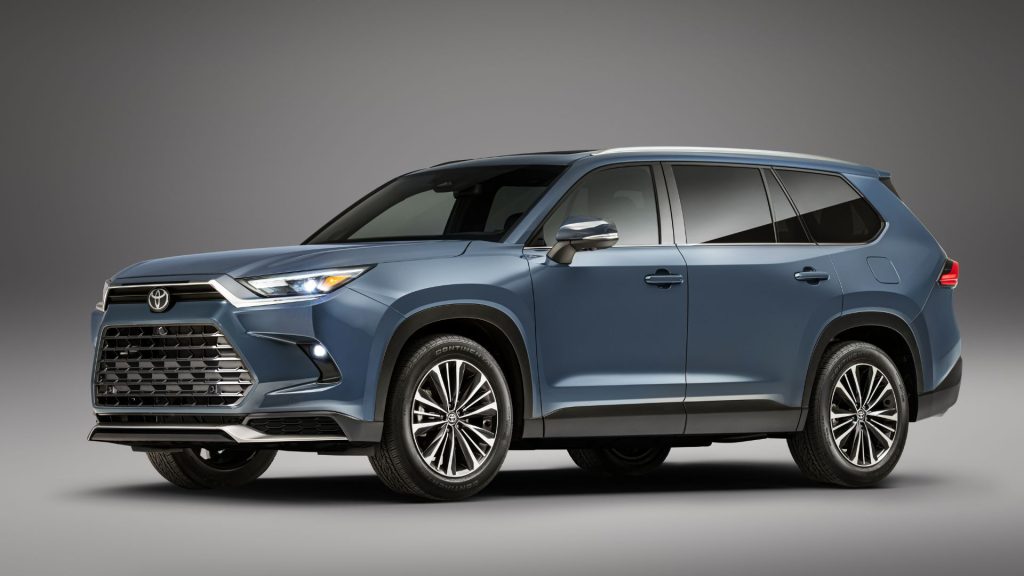
Its combination of Toyota demand, family-oriented packaging, multiple powertrains, and useful cabin space helps explain why it sits at the top of this data-driven ranking.
- Engine: 2.4-liter turbocharged inline-four
- Torque: 310 lb-ft
- Horsepower: 265 hp
- Length/Width: 201.4 inches / 78.3 inches
2. Toyota Land Cruiser: 68.9% Five-Year Resale Value
The second position requires an important distinction. iSeeCars places the Toyota Land Cruiser at number two in its 2026 “SUVs with 3 Rows” resale-value ranking, using historical model data that includes the previous U.S.-market Land Cruiser generation.
The current 2026 Land Cruiser sold in America seats five rather than offering three rows. For a ranking tied directly to iSeeCars’ published three-row category, however, the Land Cruiser’s 68.9 percent five-year retention figure is the applicable data point.
iSeeCars estimates that the Land Cruiser retains 68.9 percent of its original value after five years. The site’s data also lists an average price of $80,333 for five-year-old examples represented in the ranking. Its retention rate is 15 percentage points higher than the 53.9 percent average for three-row SUVs.
The Land Cruiser reaches this position through a very different market story than the Grand Highlander. Its name has decades of recognition in the United States, and used buyers frequently seek older Land Cruisers for their four-wheel-drive hardware, towing capability, durability reputation, and body-on-frame construction.
That creates a resale environment where age alone does not automatically eliminate buyer interest.
Toyota’s current U.S. Land Cruiser has changed mechanically and dimensionally from the older V8-powered model, as reflected in five-year used pricing. The 2026 SUV uses an i-FORCE MAX hybrid system built around a turbocharged 2.4-liter four-cylinder.
Combined output is 326 horsepower and 465 lb-ft of torque, and four-wheel drive is standard. Toyota also rates towing capacity at up to 6,000 pounds.
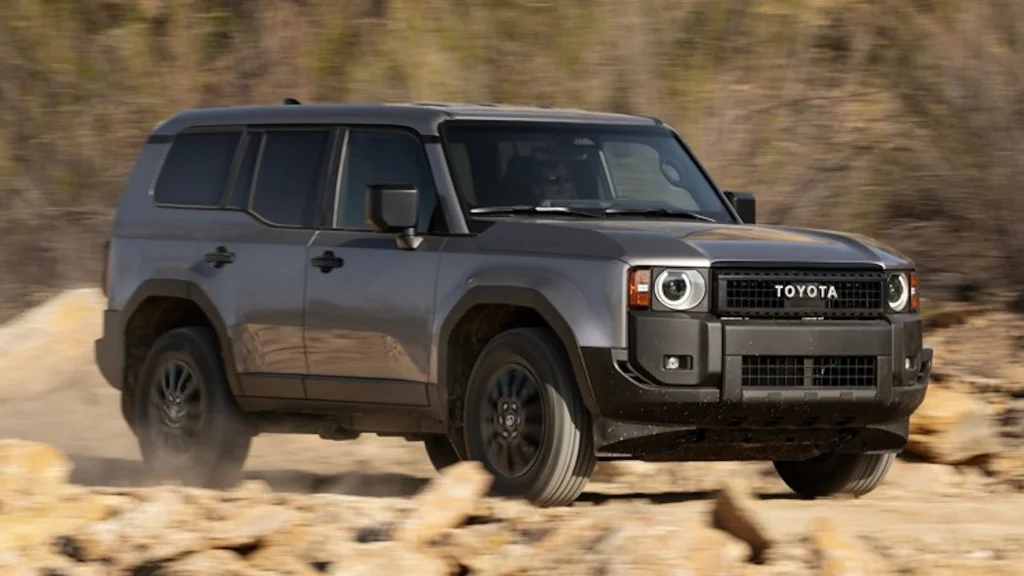
Its 68.9 percent retention rate shows the financial power of sustained used-market demand. Buyers should remember that resale studies are based on historical depreciation behavior and cannot guarantee a future selling price, but the Land Cruiser’s placement indicates that the model has surrendered value much more slowly than the typical SUV in the three-row dataset.
- Engine: 2.4-liter turbocharged four-cylinder i-FORCE MAX hybrid
- Torque: 465 lb-ft
- Horsepower: 326 net combined hp
- Length/Width: 193.8 inches / 77.9 inches
3. Toyota Sequoia: 67.7% Five-Year Resale Value
A full-size SUV can lose a painful amount of money as it ages, particularly when its original sticker price stretches well beyond mainstream crossover territory. The Toyota Sequoia moves against that pattern. iSeeCars ranks the Sequoia third among three-row SUVs for five-year resale value, with an estimated 67.7 percent of its original value retained.
The same dataset puts the average price of a five-year-old Sequoia at $50,221. These figures come from iSeeCars’ analysis of more than 3 million vehicles and depreciation from MSRP.
Its place near the top makes more sense when the Sequoia’s purpose is considered. This is a body-on-frame SUV aimed at buyers who need more than a third row and a large cargo area. Toyota says the 2026 model can seat up to eight people, while its maximum towing capacity reaches 9,520 pounds when properly configured.
That combination gives used examples continuing appeal among families, trailer owners, and buyers searching for truck-based capability.
The latest Sequoia also has a single, distinctly powerful powertrain story. Every 2026 model uses Toyota’s i-FORCE MAX twin-turbo V6 hybrid system.
Output stands at 437 horsepower and 583 lb-ft of torque, with a motor generator positioned between the engine and 10-speed automatic transmission. Toyota describes the system as being designed with heavy-duty performance demands in mind.
Resale strength here is particularly meaningful because a 67.7 percent retention rate leaves the Sequoia 13.8 percentage points above the 53.9 percent three-row SUV average calculated by iSeeCars.
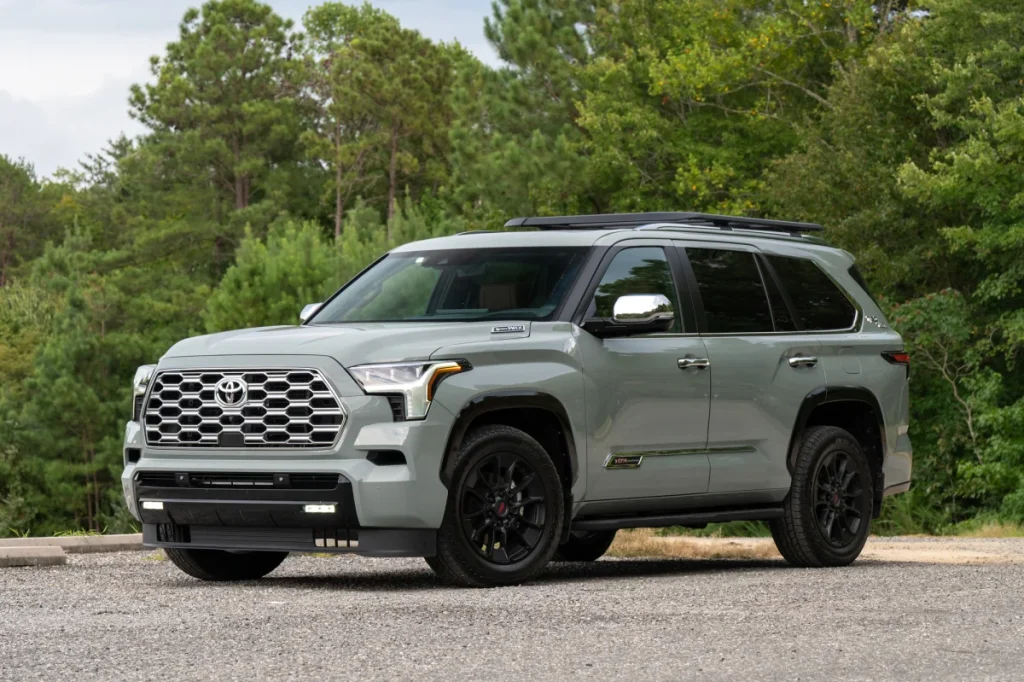
Rather than competing solely on fuel economy or urban convenience, the Sequoia preserves a distinct identity as a large, high-capability Toyota. That specialized role gives secondhand shoppers clear reasons to keep searching for the nameplate years after the first owner leaves the dealership.
- Engine: 3.4-liter twin-turbo V6 i-FORCE MAX hybrid
- Torque: 583 lb-ft
- Horsepower: 437 hp
- Length/Width: 208.1 inches / 79.6 inches
4. Toyota Highlander: 63.7% Five-Year Resale Value
The Toyota Highlander’s resale advantage comes from being familiar rather than extravagant. For years, the nameplate has occupied the heart of America’s three-row crossover market, offering seating for families without requiring buyers to move into a truck-based full-size SUV.
That long-established position is reflected in the numbers. iSeeCars estimates the Highlander retains 63.7 percent of its value after five years, placing it fourth in the site’s 2026 ranking of SUVs with three rows.
Put differently, the Highlander’s projected five-year depreciation is 36.3 percent. The three-row SUV category retains an average of 53.9 percent after the same period, so the Highlander keeps nearly 10 percentage points more of its original value than the category benchmark.
For a buyer comparing family crossovers on long-term ownership costs, that difference can matter just as much as a small advantage in fuel economy or equipment.
There is also a mechanical reason the Highlander reaches a wide range of shoppers. Toyota’s 2026 gasoline model uses a 2.4-liter turbocharged four-cylinder producing 265 horsepower and 310 lb-ft of torque.
All gas models now have standard all-wheel drive, and Toyota rates their towing capacity at 5,000 pounds. Buyers prioritizing fuel use can instead choose the Highlander Hybrid, which carries an EPA-estimated rating of up to 35 mpg combined.
Unlike the much larger Sequoia, the Highlander does not depend on extreme towing numbers or body-on-frame construction to maintain used-market interest. Its value is tied to broad usability. Toyota offers three-row seating, manageable exterior dimensions, gasoline and hybrid choices, and a well-established model name in one package.
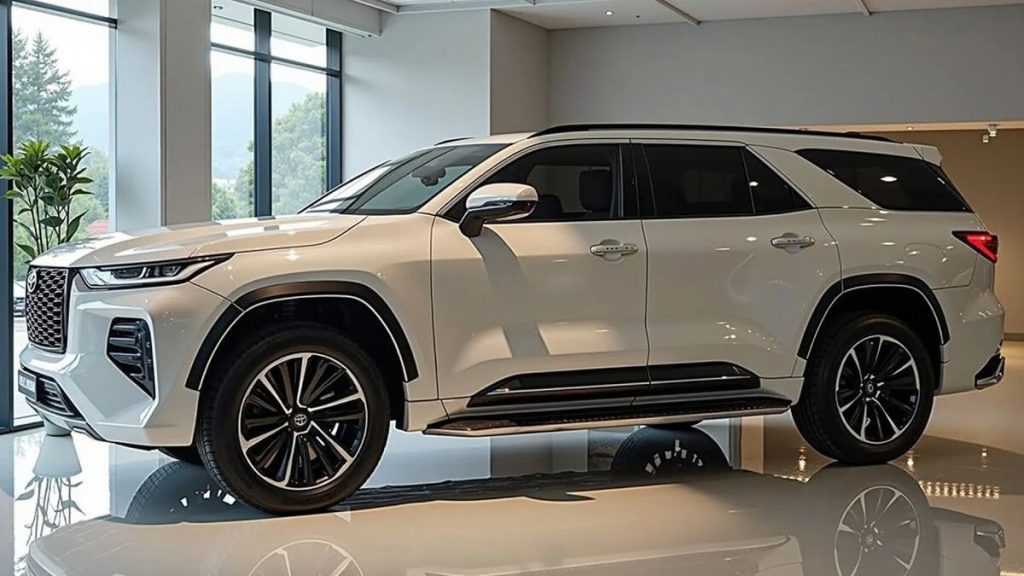
That broad relevance helps reduce the risk of a narrow resale audience. Five years after purchase, a Highlander can still appeal to commuters, growing families, and buyers replacing smaller crossovers. The 63.7 percent retention figure suggests that continued demand translates into considerably slower depreciation than the average three-row SUV.
- Engine: 2.4-liter turbocharged inline-four
- Torque: 310 lb-ft
- Horsepower: 265 hp
- Length/Width: 194.9 inches / 76.0 inches
5. Mazda CX-90: 56.9% Five-Year Resale Value
Breaking the Toyota streak, the Mazda CX-90 takes fifth place with a five-year resale value of 56.9 percent. iSeeCars’ model-specific depreciation data estimates that a new CX-90 loses 43.1 percent of its value during the first five years, leaving a projected resale value of $22,089.
That result is stronger than the 46.3 percent depreciation rate iSeeCars calculates for the midsize SUV category.
The CX-90 presents an unusual proposition in the mainstream three-row segment. Instead of relying exclusively on a turbocharged four-cylinder or a naturally aspirated V6, Mazda developed a longitudinally mounted 3.3-liter turbocharged inline-six with 48-volt mild-hybrid assistance.
The 2026 CX-90 3.3 Turbo produces 280 horsepower and 332 lb-ft of torque, while Turbo S versions increase output to 340 horsepower and 369 lb-ft when using recommended premium fuel. Every inline-six CX-90 also uses an eight-speed automatic transmission and standard i-Activ AWD.
That engineering layout gives the Mazda a distinctive identity among family SUVs. A used shopper considering a CX-90 is not merely choosing another three-row crossover with interchangeable mechanical specifications.
The rear-biased vehicle architecture, inline-six engine availability, standard all-wheel drive, and upscale cabin positioning can keep the model relevant to buyers who want family space but are reluctant to pay luxury-brand prices.
There is another point worth considering when reading the 56.9 percent figure. The CX-90 is a relatively young nameplate in the United States, yet iSeeCars still places it fifth in its 2026 three-row SUV resale ranking. Its retention rate also sits three percentage points above the 53.9 percent category benchmark.
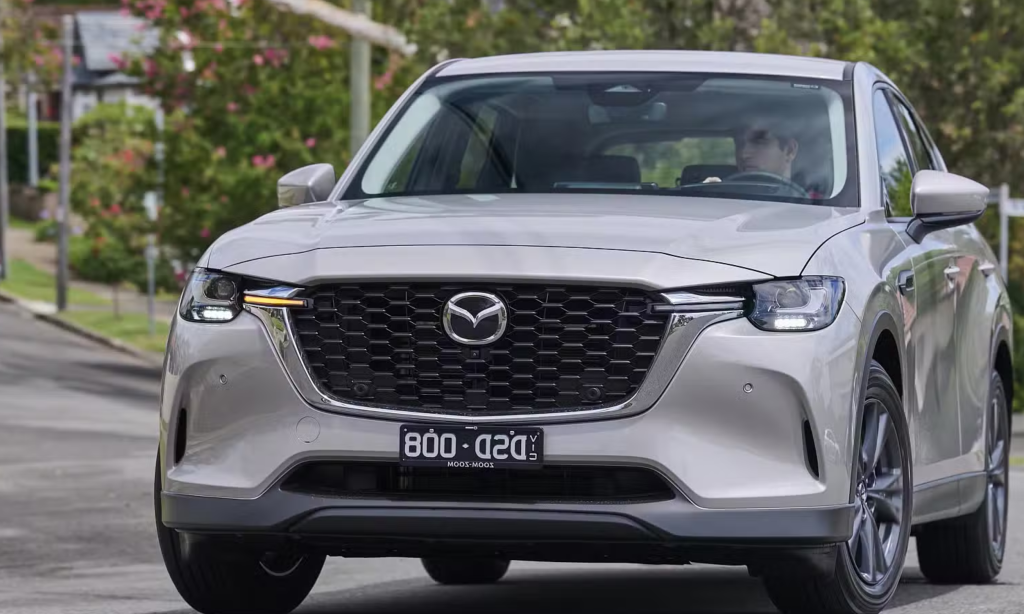
For owners, the data suggests Mazda’s largest three-row SUV has a stronger five-year value outlook than the typical vehicle in this class. The CX-90 earns its position through a very different formula from the Toyota models above it, making fifth place particularly significant.
- Engine: 3.3-liter turbocharged inline-six with M-Hybrid Boost
- Torque: 332 lb-ft
- Horsepower: 280 hp
- Length/Width: 201.6 inches / 77.5 inches
6. Honda Pilot: 55.9% Five-Year Resale Value
Longevity in the marketplace can be valuable when resale time arrives. The Honda Pilot has been sold in the United States for more than two decades, and used SUV shoppers already know what the badge represents: three-row seating, a V6 engine, and a family-focused layout.
In iSeeCars’ 2026 ranking, that established market presence helps place the Pilot sixth among SUVs with three rows, with 55.9 percent of its original value retained after five years.
Looking at depreciation from the opposite direction makes the financial picture clearer. iSeeCars calculates a 44.1 percent five-year value loss for a new Honda Pilot and estimates a remaining resale value of $23,590.
The midsize SUV category, by comparison, loses 46.3 percent during five years. The pilot, therefore, depreciates at a slower rate than its broader segment benchmark.
Honda has also kept the Pilot’s mechanical specifications straightforward. Every 2026 version uses a 3.5-liter V6 producing 285 horsepower at 6,100 rpm and 262 lb-ft of torque at 5,000 rpm.
Buyers are not forced to understand several radically different engine families when searching the used market. Honda’s official specifications confirm the same horsepower and torque ratings across the listed Pilot trims.
Practical demand is central to the pilot’s resale case. This SUV serves buyers who need genuine three-row accommodation but may not want the dimensions, purchase price, or truck-based construction of a full-size model.
The TrailSport also extends the Pilot’s reach toward shoppers interested in a more rugged factory configuration, while conventional trims remain focused on daily family transportation.
Its 55.9 percent retention rate is less dramatic than the percentages posted by the Toyota leaders. Still, sixth place matters because the pilot competes in a crowded part of the U.S. market.
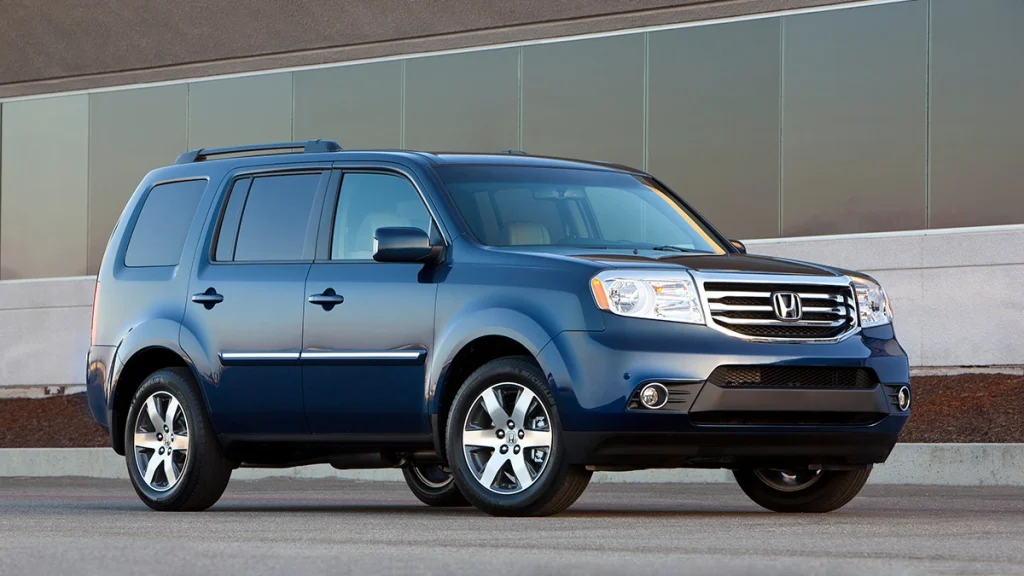
A familiar name, standardized V6 power, broad family usefulness, and continued secondhand demand give it enough strength to remain above the three-row SUV resale average after five years.
- Engine: 3.5-liter naturally aspirated V6
- Torque: 262 lb-ft
- Horsepower: 285 hp
- Length/Width: 199.9 inches / 78.5 inches
7. Volkswagen Tiguan: 55.8% Five-Year Resale Value
Seventh place comes with a model-year detail that matters. iSeeCars lists the Volkswagen Tiguan at number seven in its 2026 ranking of SUVs with three rows, and its model depreciation analysis shows 44.2 percent value loss after five years.
That translates to 55.8 percent value retention and an estimated resale value of $17,203. The ranking reflects historical Tiguan configurations, including the previous U.S. generation that was available with a small third row. The redesigned 2026 Tiguan sold in the United States is a five-passenger SUV.
That context does not erase the resale figure. Instead, it explains why the Tiguan appears in this specific data category even though a shopper entering a Volkswagen showroom today will find a two-row configuration.
Depreciation studies look backward at market transactions and historical vehicle specifications, so category placement can occasionally outlive a seating-layout change.
From a value perspective, the Tiguan retains slightly more than the 53.9 percent average iSeeCars calculates for three-row SUVs. Its 55.8 percent result is not separated from the benchmark by a huge margin, but it is enough to earn seventh position in the published ranking.
Volkswagen has also substantially changed the Tiguan’s performance profile. The standard 2026 U.S. model uses a turbocharged 2.0-liter four-cylinder producing 201 horsepower and 207 lb-ft of torque.
The SEL R-Line Turbo raises output to 268 horsepower and 258 lb-ft, with all-wheel drive standard on that high-output version. Volkswagen lists an EPA-estimated 29 highway mpg for the SEL R-Line Turbo.
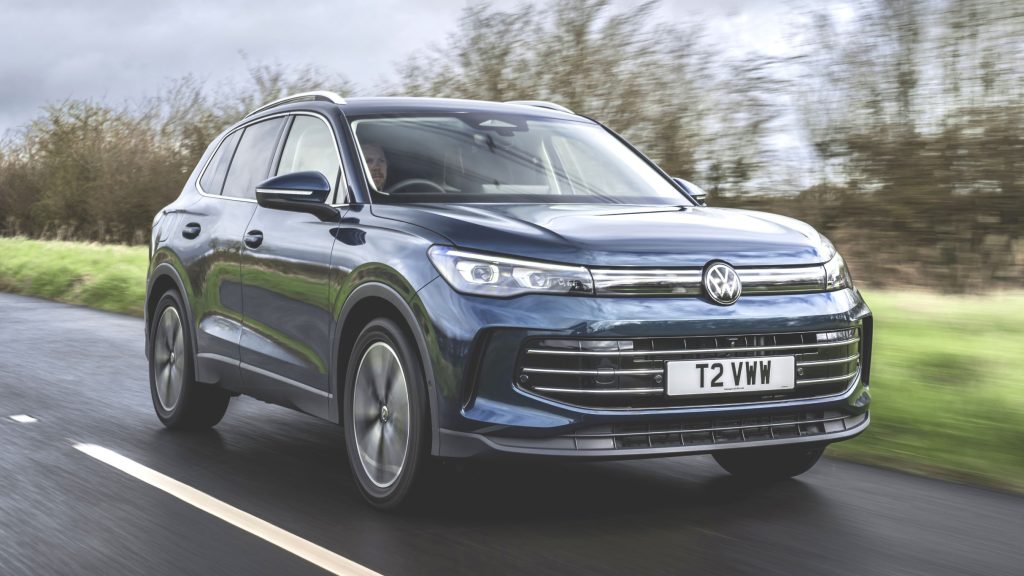
The Tiguan’s resale position is therefore best read as evidence of the nameplate’s historical depreciation performance, not a promise that every trim will return exactly 55.8 percent after five years.
Mileage, condition, accident history, drivetrain, and regional demand still influence an individual vehicle’s selling price. Within iSeeCars’ data, however, the Tiguan loses value slowly enough to remain ahead of more than two dozen models in the three-row SUV ranking.
- Engine: 2.0-liter turbocharged inline-four
- Torque: 207 lb-ft
- Horsepower: 201 hp
- Length/Width: 184.4 inches / 72.8 inches
8. Jeep Wagoneer L: 55.6% Five-Year Resale Value
Size is usually expensive at the dealership, but the Jeep Wagoneer L shows that an extended-length SUV can still preserve a meaningful portion of its original value. iSeeCars places it eighth among three-row SUVs for 2026, assigning the model a five-year resale value of 55.6 percent.
In simple depreciation terms, the Wagoneer L is estimated to surrender 44.4 percent of its original value during that period.
The reason buyers seek the Wagoneer L is visible before the engine even starts. This was Jeep’s stretched full-size SUV, created for households that wanted three seating rows without accepting the cargo compromise commonly found behind the third row.
That specific combination of passenger capacity and extra body length gives a used Wagoneer L a different purpose from smaller midsize crossovers.
Capability adds another layer to its secondhand appeal. The Wagoneer L used Jeep’s 3.0-liter Hurricane twin-turbocharged inline-six, producing 420 horsepower and 468 lb-ft of torque in the standard-output application.
The powertrain is paired with an eight-speed automatic transmission. These numbers place the engine far beyond the output of a typical family crossover and help the Wagoneer L serve buyers interested in towing and heavy-duty family travel as well as passenger space.
There is also an unusual timing factor behind this ranking. Jeep changed its large-SUV naming strategy for the 2026 model year, consolidating the Wagoneer family under the Grand Wagoneer name.
As a result, the Wagoneer L’s 55.6 percent retention figure belongs to a distinct model identity that is no longer marketed in the same form in the current U.S. lineup.
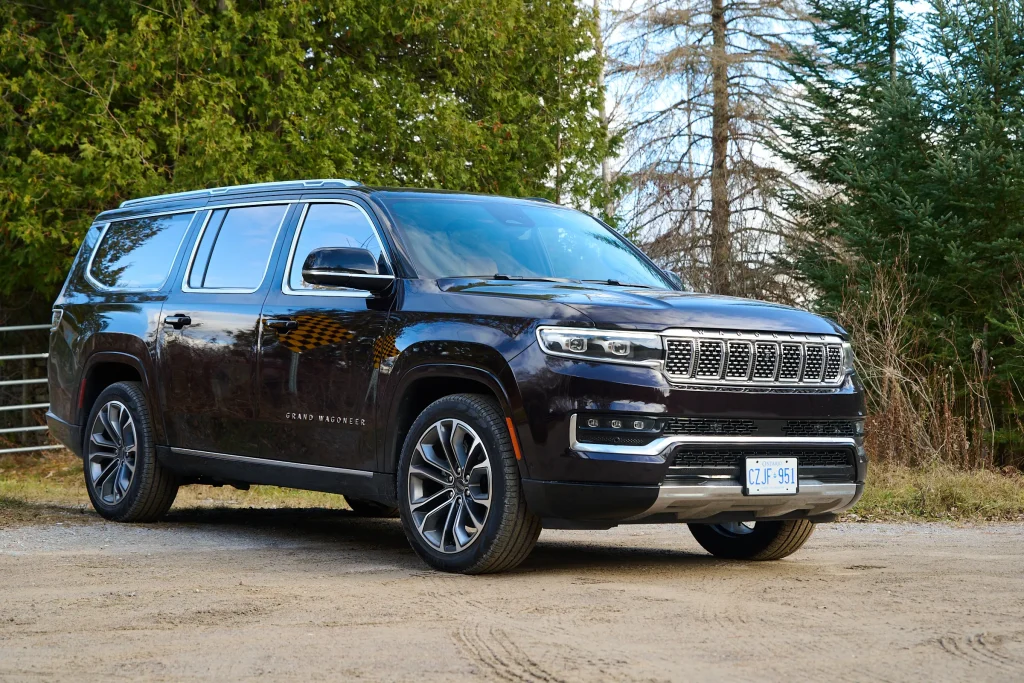
Even with that change, iSeeCars’ ranking is based on depreciation data rather than future nameplate speculation. At 55.6 percent retained value, the Wagoneer L remains 1.7 percentage points above the three-row SUV average of 53.9 percent.
Its combination of extended dimensions, eight-passenger potential, strong Hurricane engine output, and towing-focused positioning gives used buyers reasons to consider it beyond price alone. That helps the Wagoneer L secure eighth place in this five-year resale ranking.
- Engine: 3.0-liter Hurricane twin-turbocharged inline-six
- Torque: 468 lb-ft
- Horsepower: 420 hp
- Length/Width: 226.7 inches / 83.6 inches
9. Hyundai Palisade: 54.7% Five-Year Resale Value
The Hyundai Palisade entered the U.S. market much later than several rivals on this list, yet it has already developed enough used-market strength to secure ninth place. iSeeCars’ 2026 data estimates that the Palisade retains 54.7 percent of its original value after five years.
The research also lists an average price of $26,244 for five-year-old examples. That retention figure sits slightly above the 53.9 percent average for three-row SUVs.
Rather than relying on decades of nameplate history, the Palisade has built its position around passenger space and family-oriented equipment. The redesigned 2026 U.S. model is larger and continues to offer three-row seating.
Hyundai’s specifications list a 3.5-liter V6 producing 287 horsepower and 260 lb-ft of torque, paired with an eight-speed automatic transmission.
Resale value is particularly relevant for the Palisade because it competes in one of America’s most crowded SUV segments. Used buyers have numerous alternatives, so a vehicle must continue attracting demand after its first owner moves on.
A 45.3 percent five-year depreciation rate puts the Palisade slightly ahead of the 46.3 percent midsize SUV depreciation benchmark calculated by iSeeCars.
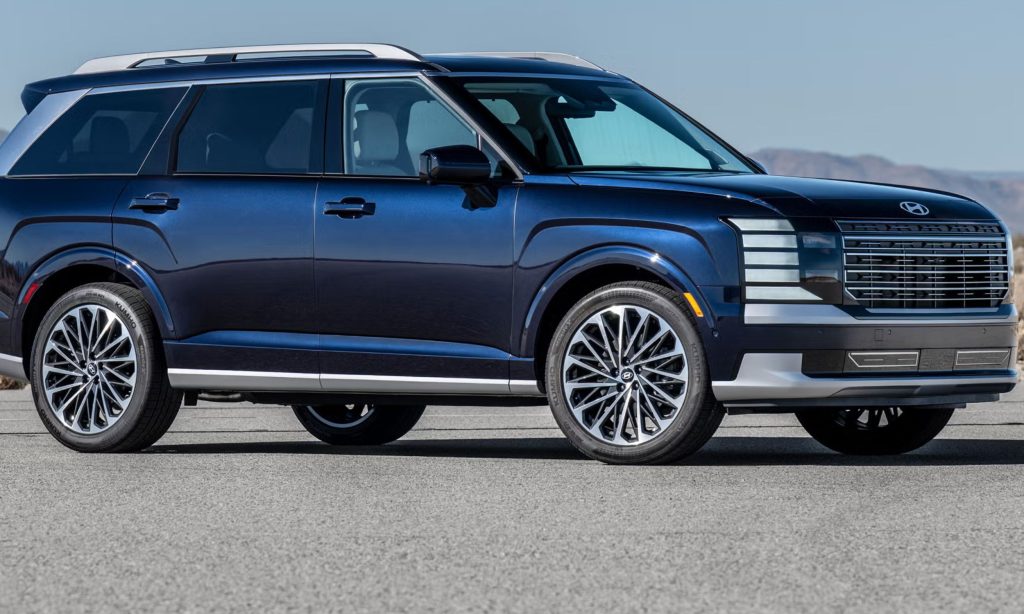
The Palisade’s ninth-place result shows that newer nameplates can establish respectable residual value quickly. Cabin practicality, three-row accommodation, and continuing demand help it remain just above the category average after five years.
- Engine: 3.5-liter naturally aspirated V6
- Torque: 260 lb-ft
- Horsepower: 287 hp
- Length/Width: 199.4 inches / 78.0 inches
10. Dodge Durango: 54.5% Five-Year Resale Value
Closing the top 10 is an SUV that approaches the three-row market from a performance-focused direction. The Dodge Durango retains an estimated 54.5 percent of its value after five years, according to iSeeCars’ 2026 ranking.
Five-year-old examples have an average price of $30,593 in the site’s data, while model-specific depreciation analysis calculates a 45.5 percent loss during the first five years.
The Durango’s resale case is tied closely to its unusual position in the market. Many modern three-row crossovers have moved toward smaller turbocharged engines and hybrid systems.
For 2026, Dodge instead made the Durango a V8-only model. The entry GT uses a 5.7-liter HEMI V8 producing 360 horsepower and 390 lb-ft of torque. Dodge also offers more powerful 6.4-liter and supercharged 6.2-liter V8 configurations.
That mechanical identity gives used buyers a clear reason to search specifically for a Durango. It is not simply another family crossover competing through interior screens and fuel economy. Performance, towing capability, rear-wheel-drive-based architecture, and available high-output engines separate it from much of the three-row field.
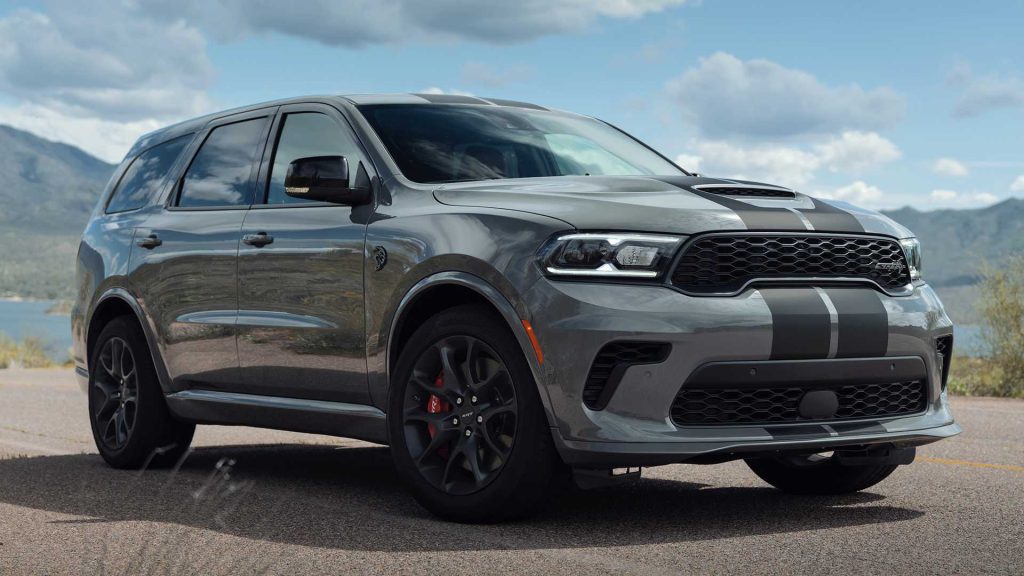
Its 54.5 percent five-year retention rate narrowly exceeds the 53.9 percent category average. The margin is small, but it is enough to place the Durango tenth in iSeeCars’ published ranking.
For buyers concerned about depreciation, the data suggests that the Durango’s distinctive character still carries financial value. Its combination of three-row practicality and V8 power keeps the nameplate relevant in the used market, securing the final position in this top 10.
- Engine: 5.7-liter HEMI V8
- Torque: 390 lb-ft
- Horsepower: 360 hp
- Length/Width: 200.8 inches / 75.8 inches
Also Read: 8 Motorcycles Known to Pass 100,000 Miles
