
Pedestrian fatalities in the United States have risen significantly over the past decade, making pedestrian protection one of the most important areas of modern vehicle safety. In response, automakers have invested heavily in automatic emergency braking systems capable of detecting pedestrians during both daytime and nighttime driving.
These systems use combinations of cameras, radar sensors, and increasingly sophisticated software to identify people in or near the vehicle’s path and automatically apply the brakes when the driver does not react.
The Insurance Institute for Highway Safety (IIHS) evaluates these technologies through its Pedestrian Front Crash Prevention tests, which simulate common real-world situations involving adults and children crossing roads or walking along traffic lanes.
Vehicles that earn a Good rating demonstrate the strongest ability to avoid or significantly reduce collisions across these scenarios. Since 2025, a Good or Acceptable pedestrian crash prevention rating has also become a requirement for earning an IIHS Top Safety Pick or Top Safety Pick+ award, making these evaluations more important than ever.
This list highlights eight vehicles that have earned the highest IIHS pedestrian-detection performance through their Good-rated systems.
Rather than focusing on styling or performance, these vehicles are recognized because their advanced driver assistance technologies consistently perform well in one of today’s most demanding independent safety evaluations.
Also Read: 10 Vehicles With the Smallest Gap Between New and Used Prices
1. Hyundai Ioniq 5
Among today’s electric vehicles, the Hyundai Ioniq 5 stands out not only for its charging technology but also for its exceptional safety performance. The IIHS awarded the Ioniq 5 a Good rating in its Pedestrian Front Crash Prevention evaluation, allowing it to qualify for the organization’s highest safety honors.
The vehicle successfully detected pedestrians across multiple daytime and nighttime test scenarios, demonstrating the effectiveness of Hyundai’s latest forward collision avoidance system.
The system combines a forward-facing camera with radar sensors to continuously monitor the roadway. When a pedestrian unexpectedly enters the vehicle’s path, visual and audible warnings are issued before automatic emergency braking intervenes if the driver fails to respond.
IIHS testing evaluates adult pedestrians crossing from both directions, children entering the roadway, and adults walking in the same direction as traffic. The Ioniq 5 performed strongly across these challenging situations.
Beyond pedestrian detection, the Ioniq 5 also earned high marks in IIHS crashworthiness evaluations, including the updated side impact and small overlap front tests required for Top Safety Pick+ recognition. This demonstrates that Hyundai paired strong crash avoidance with excellent occupant protection.
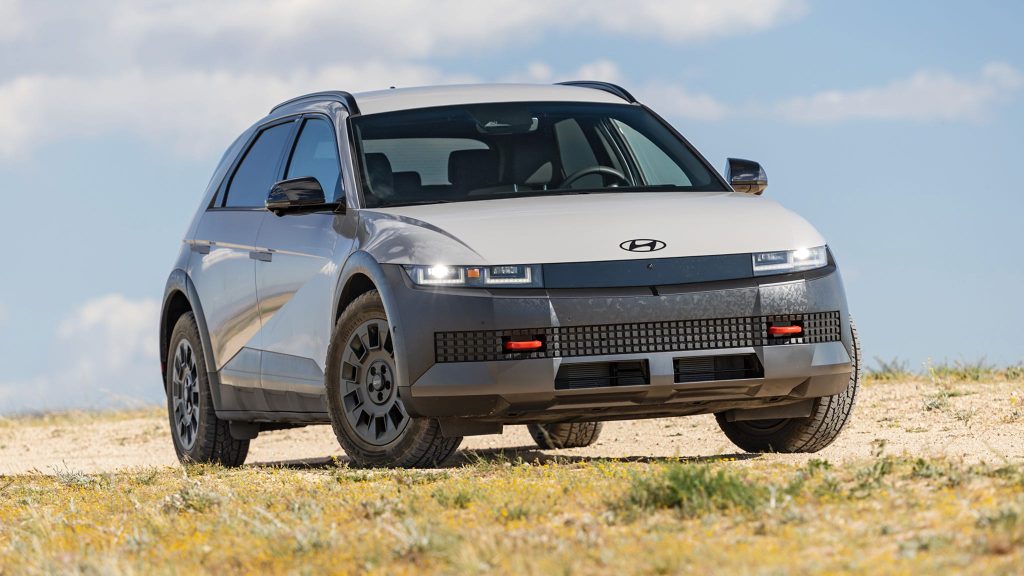
Owners also benefit from Highway Driving Assist, Blind-Spot Collision-Avoidance Assist, Rear Cross-Traffic Collision-Avoidance Assist, Lane Following Assist, and Intelligent Speed Limit Assist. Together, these technologies provide multiple layers of protection during daily driving.
For buyers prioritizing pedestrian safety, the Ioniq 5 represents one of the strongest choices currently available in the American market because its driver assistance systems have been independently validated under demanding IIHS testing protocols.
Specifications
- Engine: Dual permanent-magnet electric motors
- Torque: 446 lb-ft
- Horsepower: 320 hp
- Length/Width: 183.3 inches / 74.4 inches
2. Subaru Forester
Subaru has built its reputation around safety, and the Forester continues that tradition with one of the strongest pedestrian detection systems evaluated by the IIHS.
Equipped with the latest generation of Subaru’s EyeSight Driver Assist Technology, the Forester earned a Good rating in the IIHS Pedestrian Front Crash Prevention evaluation, meeting the highest standard for pedestrian detection performance in both daytime and nighttime testing.
EyeSight relies primarily on dual forward-facing cameras that create a stereoscopic view of the road ahead, allowing the system to recognize pedestrians, cyclists, lane markings, and other vehicles with impressive accuracy.
During IIHS testing, the Forester successfully avoided or substantially mitigated collisions in scenarios involving adults crossing from either side of the road, children entering traffic, and pedestrians walking in the same direction as the vehicle.
The Forester’s pedestrian protection is complemented by strong crashworthiness performance. It also earned high ratings in IIHS front, side, and roof-strength evaluations, helping it qualify for Top Safety Pick recognition in recent model years.
The combination of collision avoidance and occupant protection makes it one of the safest compact SUVs sold in the United States.
Additional safety technologies include blind-spot detection, rear cross-traffic alert, lane centering, adaptive cruise control, lane departure prevention, and automatic emergency steering on certain trims. These systems continuously assist the driver while reducing the likelihood of common roadway accidents.
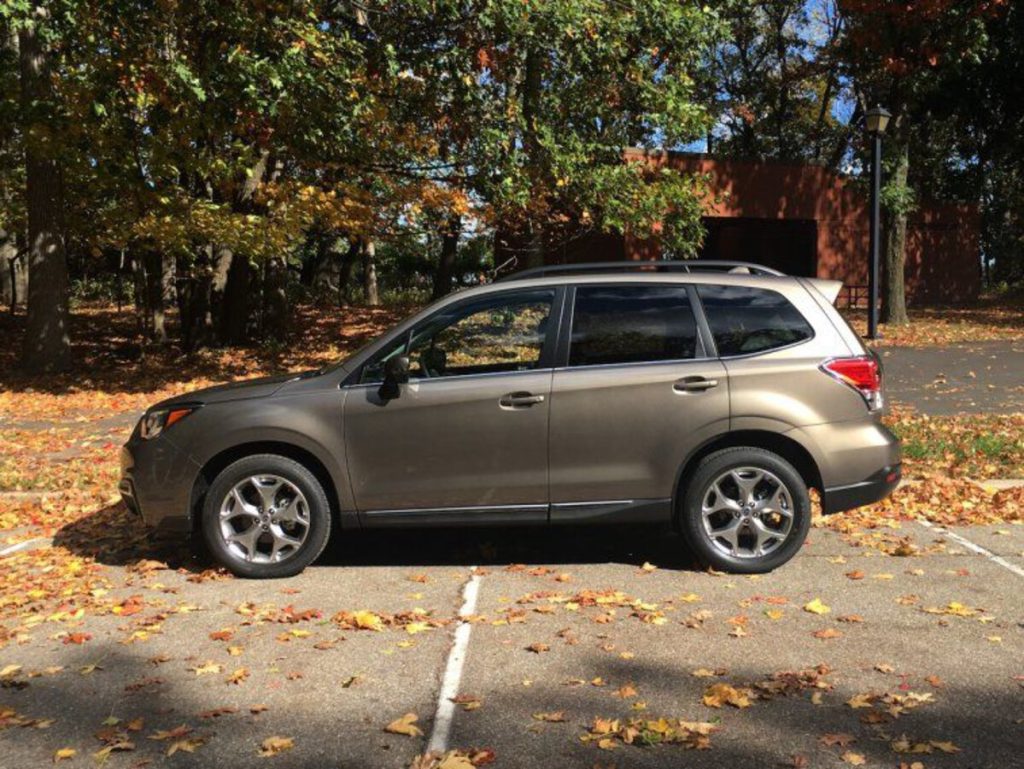
While many manufacturers now offer pedestrian detection, the Forester distinguishes itself through consistently strong independent testing results and Subaru’s long-standing emphasis on active safety. Buyers seeking a compact SUV with proven real-world pedestrian detection capability will find the Forester among the segment’s leaders.
Specifications
- Engine: 2.5-liter naturally aspirated flat-four
- Torque: 178 lb-ft
- Horsepower: 180 hp
- Length/Width: 183.3 inches / 72.0 inches
3. Toyota Camry
The Toyota Camry has long been known for reliability and value, but its safety technology has become equally noteworthy.
Equipped with Toyota Safety Sense 3.0, the latest Camry achieved a Good rating in the IIHS Pedestrian Front Crash Prevention test, demonstrating excellent performance in detecting pedestrians under challenging conditions required by the institute’s modern evaluation program.
Toyota’s system combines a forward-facing camera with millimeter-wave radar to monitor traffic ahead. If a pedestrian is detected in the vehicle’s projected path, the system first provides audible and visual warnings.
When the driver fails to react in time, the pre-collision system with pedestrian detection can automatically apply the brakes to help avoid or reduce the severity of an impact.
IIHS testing places vehicles through demanding scenarios that include adult pedestrians crossing during daylight, nighttime crossings, children entering the roadway between parked vehicles, and pedestrians traveling in the same direction as traffic.
The Camry demonstrated strong performance across these situations, helping it earn one of the institute’s highest ratings for pedestrian crash prevention.
The Camry also performs well beyond pedestrian protection. It has consistently received excellent crashworthiness ratings and offers a comprehensive package of driver assistance features, including Full-Speed Range Dynamic Radar Cruise Control, Lane Tracing Assist, Road Sign Assist, Automatic High Beams, and Proactive Driving Assist.
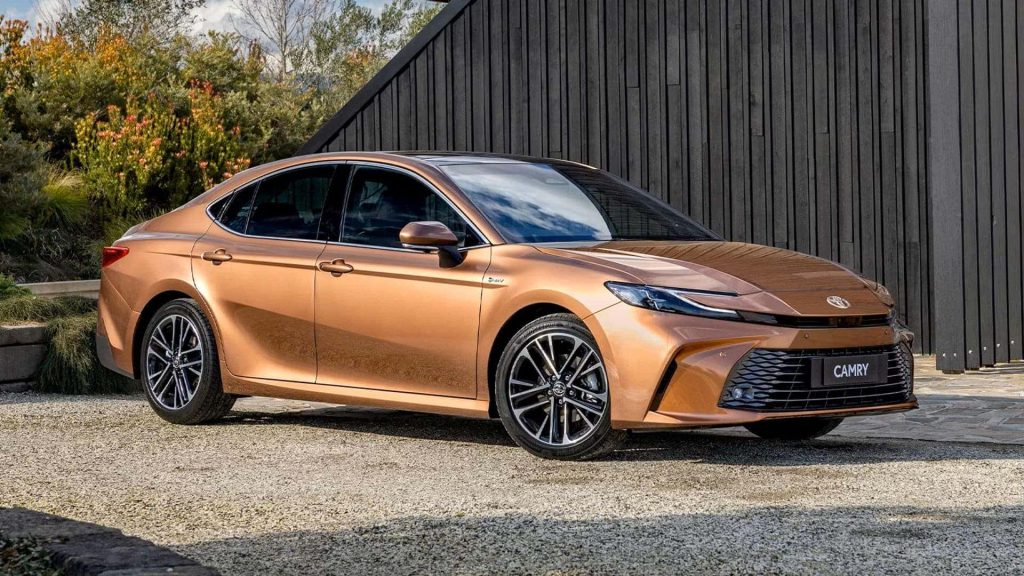
For families and commuters, these technologies add a layer of protection without changing the vehicle’s reputation for dependable everyday transportation. Its combination of verified pedestrian detection capability, strong crash performance, and long-term reliability makes the Camry one of the safest midsize sedans available in the U.S. market.
Specifications
- Engine: 2.5-liter naturally aspirated hybrid four-cylinder
- Torque: 163 lb-ft
- Horsepower: 225 hp (FWD)
- Length/Width: 193.5 inches / 72.4 inches
4. Mazda CX-90
Mazda has steadily built a reputation for combining engaging driving dynamics with excellent safety engineering, and the three-row CX-90 is one of the brand’s strongest achievements. In IIHS testing, the CX-90 earned a Good rating for its Pedestrian Front Crash Prevention system, allowing it to qualify for the institute’s highest safety awards.
The result reflects Mazda’s commitment to developing driver assistance systems that perform reliably in demanding real-world scenarios.
Rather than depending on a single sensor, the CX-90 integrates a forward-facing camera with millimeter-wave radar to continuously monitor the roadway. This combination allows the Smart Brake Support system to recognize pedestrians crossing from either direction, individuals walking parallel to traffic, and other potential hazards.
During IIHS evaluations, the vehicle successfully avoided or substantially reduced impacts across the institute’s daytime and nighttime pedestrian scenarios, demonstrating excellent detection capability.
Safety extends beyond automatic emergency braking. The CX-90 also performs exceptionally well in IIHS crashworthiness tests, earning top marks in the updated side-impact, small overlap, and moderate overlap evaluations required for Top Safety Pick+ recognition.
These results indicate that the SUV not only works to prevent crashes but also provides outstanding occupant protection if a collision cannot be avoided.
Mazda further equips the CX-90 with blind spot monitoring, rear cross traffic alert, lane keep assist, driver attention alert, adaptive cruise control with stop and go, and traffic sign recognition. Together, these systems create multiple layers of active safety designed to reduce driver workload while improving awareness.
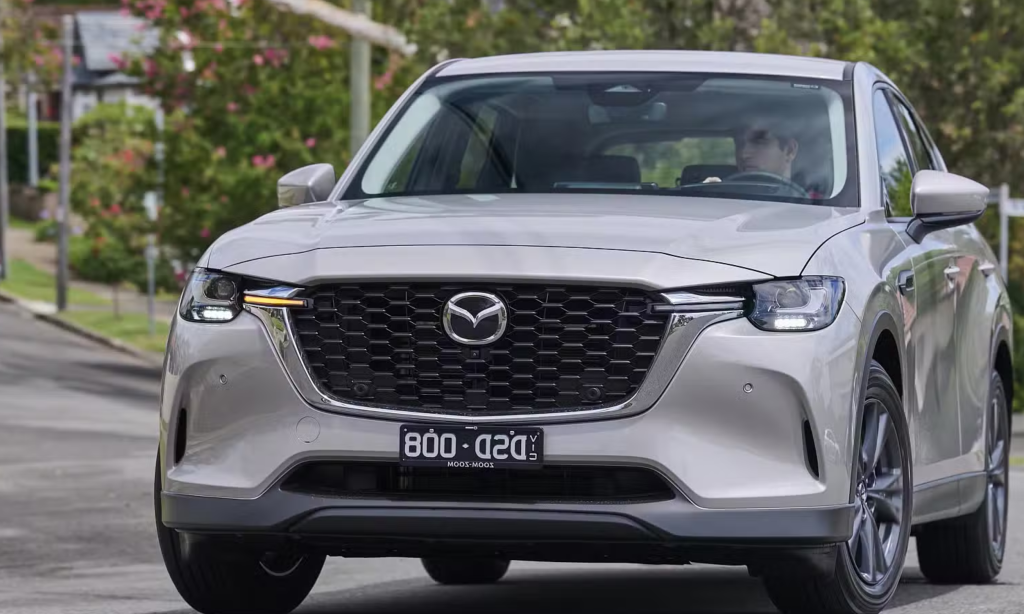
For buyers seeking a family SUV with independently verified pedestrian detection performance, the CX-90 ranks among the safest choices currently available in the U.S. market.
Specifications
- Engine: 3.3-liter turbocharged inline-six
- Torque: 369 lb-ft
- Horsepower: 280 hp
- Length/Width: 201.6 inches / 78.5 inches
5. Honda Accord
Honda redesigned the Accord with safety as a primary objective, and the latest generation demonstrates that focus through outstanding performance in IIHS evaluations. Equipped with the newest version of Honda Sensing, the Accord received a Good rating in the IIHS Pedestrian Front Crash Prevention test.
This rating reflects the sedan’s ability to recognize pedestrians and automatically intervene before or during a potential collision in both daytime and nighttime scenarios.
The Accord’s Collision Mitigation Braking System combines a forward-facing camera with radar sensors to monitor traffic ahead. When the system identifies a pedestrian entering the vehicle’s path, it first alerts the driver through visual and audible warnings.
If no corrective action is taken, automatic emergency braking is applied to reduce speed or avoid the collision altogether. During IIHS testing, the Accord performed strongly in multiple pedestrian scenarios, including adults crossing from either side of the road, children entering traffic, and pedestrians traveling in the same direction as the vehicle.
The sedan also excels in occupant protection. It has earned top scores in the IIHS small overlap front, moderate overlap front, and updated side-impact tests, making it eligible for Top Safety Pick+ recognition.
Honda’s Advanced Compatibility Engineering body structure further enhances crash protection by distributing impact forces more effectively during a collision.
Additional driver assistance technologies include Adaptive Cruise Control with Low-Speed Follow, Lane Keeping Assist, Road Departure Mitigation, Traffic Sign Recognition, Traffic Jam Assist, and Blind Spot Information on most trims.
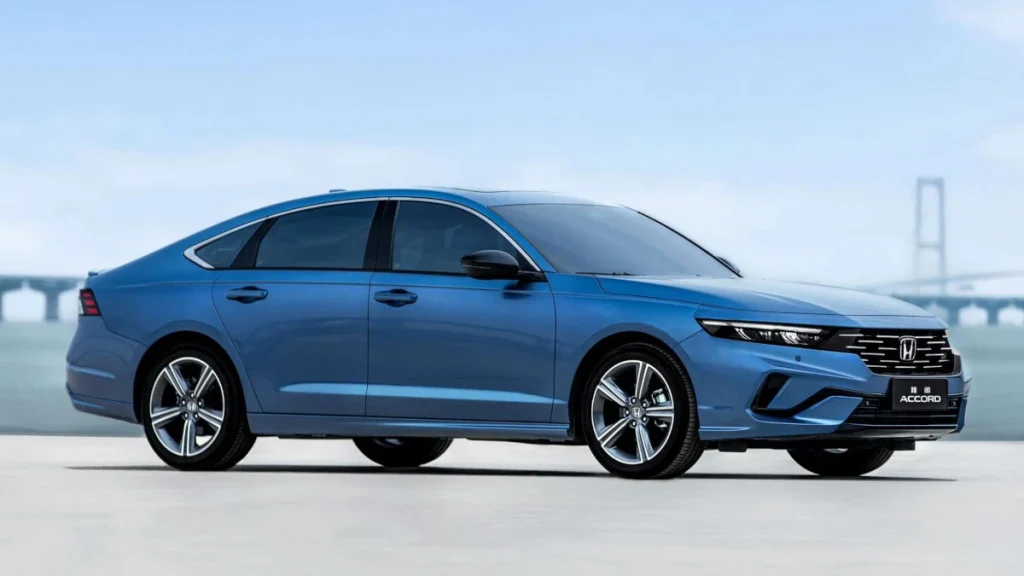
For buyers looking for a midsize sedan with independently verified pedestrian detection performance and a comprehensive suite of advanced safety technologies, the Honda Accord remains one of the strongest choices available in the American market.
Specifications
- Engine: 2.0-liter hybrid four-cylinder
- Torque: 247 lb-ft
- Horsepower: 204 hp
- Length/Width: 195.7 inches / 73.3 inches
6. Genesis GV70
Luxury SUVs are expected to provide premium comfort, but the Genesis GV70 demonstrates that advanced safety technology can be just as impressive.
The IIHS awarded the GV70 a Good rating in its Pedestrian Front Crash Prevention evaluation, confirming that Genesis’ forward collision avoidance system performs exceptionally well during the institute’s demanding pedestrian detection tests.
The SUV’s Forward Collision-Avoidance Assist integrates high-resolution cameras with front radar sensors to monitor the road continuously. If a pedestrian is detected crossing ahead or walking in the vehicle’s travel lane, the system warns the driver before automatically applying the brakes when necessary.
IIHS testing included several realistic situations involving adults and children in both daylight and darkness, and the GV70 consistently delivered strong collision avoidance performance.
The GV70’s safety credentials extend beyond crash prevention. It has also earned excellent crashworthiness ratings in the updated IIHS front and side-impact evaluations required for Top Safety Pick+ recognition. This combination of active and passive safety provides confidence whether driving through busy urban streets or traveling on the highway.
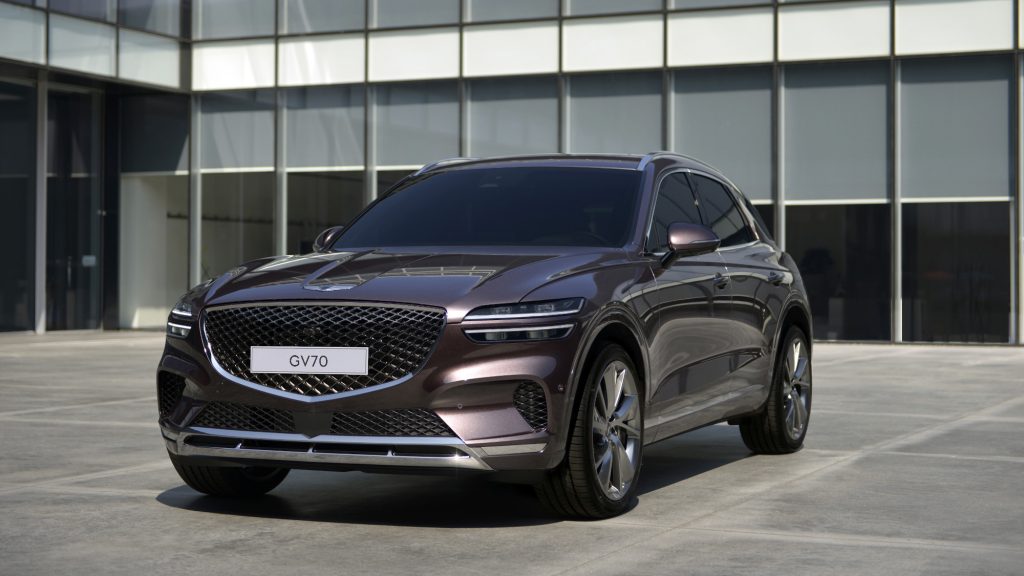
Genesis complements these capabilities with an extensive list of standard driver assistance features, including blind-spot collision-avoidance assist, rear cross-traffic collision-avoidance assist, highway driving assist, lane following assist, safe exit assist, and driver attention warning. These technologies work together to reduce the likelihood of many common accident scenarios.
For shoppers seeking a compact luxury SUV, the GV70 stands out because it combines premium refinement with one of the best pedestrian-detection systems independently evaluated by the IIHS, making safety one of its strongest competitive advantages.
Specifications
- Engine: 2.5-liter turbocharged inline-four
- Torque: 311 lb-ft
- Horsepower: 300 hp
- Length/Width: 185.6 inches / 75.2 inches
7. Mercedes-Benz E-Class
Mercedes-Benz has long been a leader in developing driver assistance technologies, and the latest E-Class continues that tradition with one of the most capable pedestrian detection systems tested by the IIHS.
The sedan earned a Good rating in the IIHS Pedestrian Front Crash Prevention evaluation, demonstrating excellent performance in avoiding or mitigating collisions involving pedestrians under both daytime and nighttime conditions.
The E-Class uses an advanced network of forward-facing cameras, radar sensors, and sophisticated processing software as part of its Active Brake Assist system. These components continuously scan the roadway for pedestrians, cyclists, and other vehicles.
If the system determines that a collision is likely, it first warns the driver before automatically applying the brakes when necessary. During IIHS testing, the E-Class successfully handled scenarios involving adults crossing from either side of the road, pedestrians walking along the roadway, and nighttime encounters that challenge many safety systems.
Mercedes also equips the E-Class with numerous complementary safety technologies. Active Steering Assist, Active Lane Keeping Assist, Blind Spot Assist, Evasive Steering Assist, and Adaptive Cruise Control all work together to reduce driver workload while improving awareness in heavy traffic.
Crash protection is equally impressive. The E-Class performs strongly in IIHS crashworthiness testing, allowing it to qualify for the organization’s highest safety awards when properly equipped. This means occupants benefit from excellent structural protection in addition to advanced crash avoidance technology.
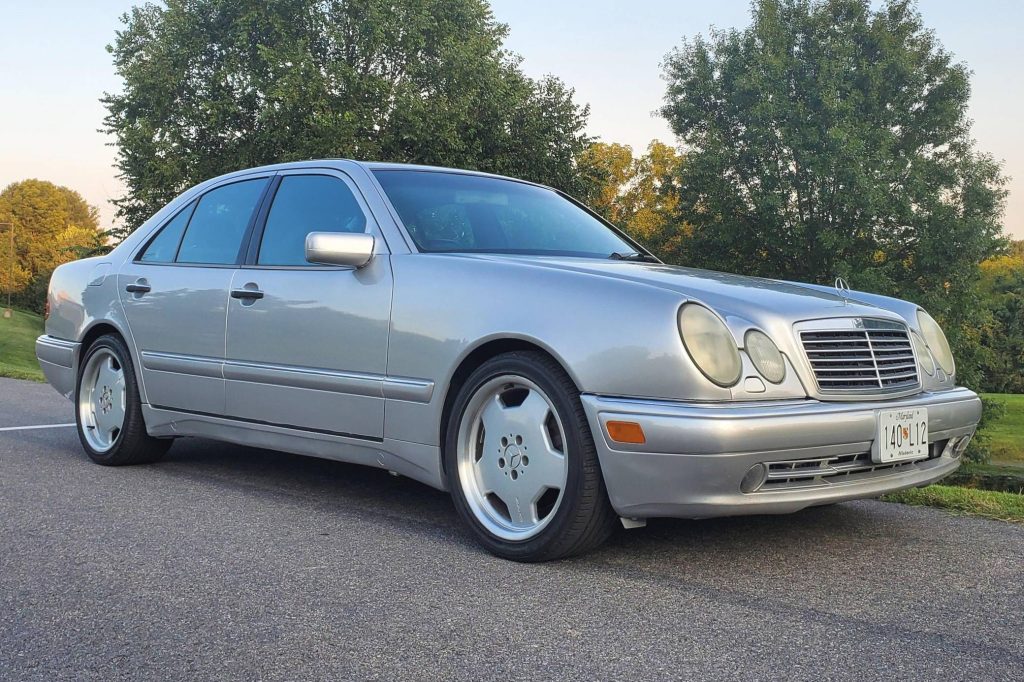
For drivers seeking a luxury sedan that combines comfort with independently verified pedestrian protection, the Mercedes-Benz E-Class stands among the strongest performers in the American market.
Specifications
- Engine: 3.0-liter turbocharged inline-six with mild hybrid assistance
- Torque: 413 lb-ft
- Horsepower: 375 hp
- Length/Width: 194.9 inches / 74.8 inches
8. Toyota Grand Highlander
Families often prioritize safety above every other consideration, and the Toyota Grand Highlander was engineered with that objective in mind.
Equipped with Toyota Safety Sense 3.0, the SUV earned a Good rating in the IIHS Pedestrian Front Crash Prevention evaluation, placing it among the top performers in one of the industry’s most demanding independent safety tests.
Toyota’s pedestrian detection technology combines a forward-facing camera with millimeter-wave radar to monitor the road ahead. The system can recognize pedestrians crossing intersections, individuals walking in the same direction as traffic, and other potential hazards.
When a collision risk is detected, it alerts the driver and automatically applies the brakes if the driver does not respond in time. In IIHS evaluations, the Grand Highlander demonstrated strong performance across both daytime and nighttime pedestrian scenarios, helping it achieve the institute’s highest pedestrian crash prevention rating.
The SUV also excels in occupant protection. It earned excellent scores in the updated IIHS crashworthiness evaluations, including side-impact and moderate-overlap front tests required for Top Safety Pick+ recognition. Combined with its spacious three-row interior, this makes it an attractive choice for families seeking both practicality and safety.
Additional driver assistance technologies include Full-Speed Dynamic Radar Cruise Control, Lane Tracing Assist, Road Sign Assist, Blind Spot Monitor, Rear Cross-Traffic Alert, Proactive Driving Assist, and Automatic High Beams. These systems provide continuous support during city driving and long highway trips.
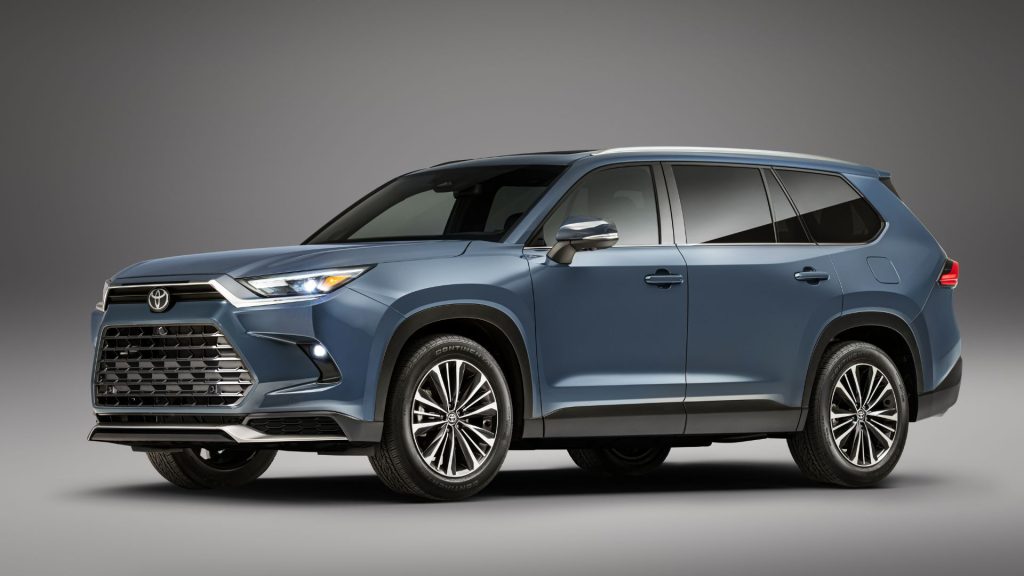
For buyers who need a spacious three-row SUV without compromising on pedestrian protection, the Toyota Grand Highlander ranks among the safest vehicles available in the United States.
Specifications
- Engine: 2.5-liter hybrid four-cylinder
- Torque: 177 lb-ft
- Horsepower: 245 hp
- Length/Width: 201.4 inches / 78.3 inches
Also Read: 10 Cars Loved By Enthusiasts But Hated By Critics
