The Toyota Land Cruiser has earned a legendary reputation for durability, off-road capability, and long-term reliability. It has been trusted by families, adventurers, humanitarian organizations, and government fleets across the world for decades.
The latest U.S.-market Land Cruiser continues that tradition with a turbocharged hybrid powertrain, full-time four-wheel drive, locking center differential, and a suite of modern safety technologies. For many buyers, it remains one of the most capable all-around SUVs available.
However, no vehicle is the undisputed leader in every category. While the Land Cruiser excels at balancing comfort, reliability, and trail performance, several competitors outperform it in specific measurable areas.
Some offer significantly more horsepower or towing capacity, while others provide greater cargo space, superior luxury appointments, quicker acceleration, or more advanced off-road hardware. A few even deliver better efficiency or more cutting-edge technology.
This comparison focuses on objective data rather than personal opinion. Every SUV included here surpasses the Land Cruiser in at least one important category using verified U.S. specifications, manufacturer data, or independent testing.
That does not make these vehicles universally better. Instead, it highlights situations where buyers with particular priorities may find another SUV better suited to their needs.
If maximum towing, premium luxury, extreme off-road performance, or class-leading technology matters more than the Land Cruiser’s balanced approach, these ten SUVs deserve serious consideration.
Also Read: 10 Vehicles With the Smallest Gap Between New and Used Prices
1. Ford Bronco Raptor
The Toyota Land Cruiser is exceptionally capable on challenging trails, but buyers seeking maximum factory off-road performance will find the Ford Bronco Raptor operating on another level.
Developed by Ford Performance, the Bronco Raptor incorporates hardware specifically engineered for high-speed desert running and technical rock crawling, allowing it to outperform the Land Cruiser in several measurable categories.
Its biggest advantage is suspension travel. FOX Live Valve internal bypass dampers, heavy-duty control arms, reinforced axles, and 37-inch all-terrain tires provide considerably greater wheel articulation and obstacle clearance than the Land Cruiser’s standard setup.
The Bronco Raptor also offers wider track dimensions for improved stability during aggressive off-road driving. Approach, breakover, and departure angles exceed those of the Land Cruiser, making it more capable on steep climbs and technical terrain.
Power is another strength. Ford’s twin-turbocharged EcoBoost V6 produces substantially more horsepower than Toyota’s hybrid four-cylinder, resulting in stronger acceleration both on pavement and loose surfaces.
Advanced terrain management modes, front and rear locking differentials, disconnecting sway bar capability, and Baja mode further reinforce its position as one of America’s most capable factory-built off-road SUVs.
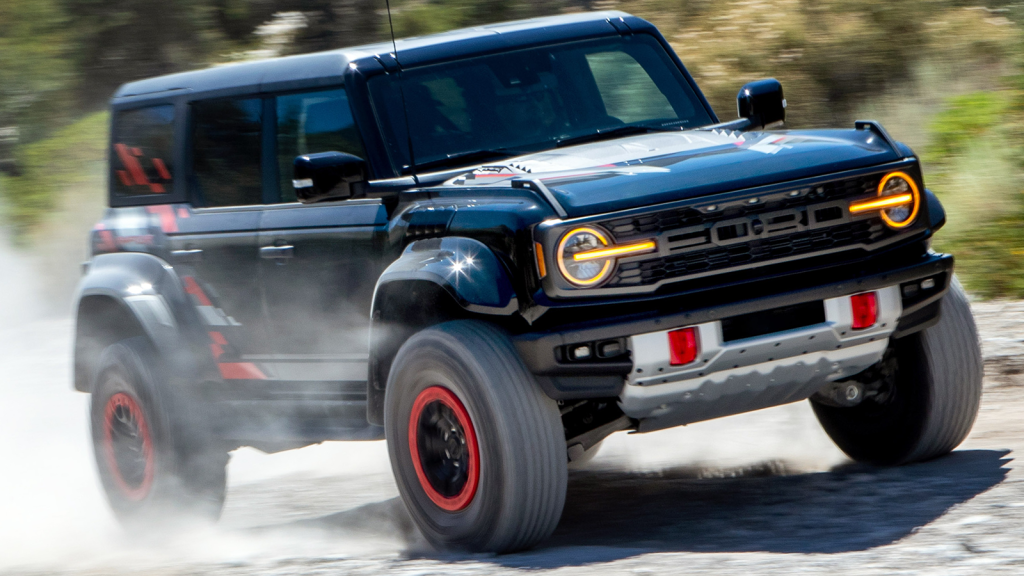
The Land Cruiser remains quieter, more refined, and likely more economical over many years of ownership. However, when the comparison centers strictly on factory off-road hardware and extreme trail performance, the Bronco Raptor clearly holds the advantage.
Buyers whose adventures regularly involve deep sand, large rocks, or demanding off-road parks will benefit from the Bronco’s specialized engineering.
Specifications
- Engine: 3.0-liter twin-turbocharged V6
- Torque: 440 lb-ft
- Horsepower: 418 hp
- Length/Width: 191.0 inches / 86.9 inches
2. Chevrolet Tahoe Z71
The Toyota Land Cruiser emphasizes maneuverability and off-road balance, but families requiring maximum passenger room and cargo capacity will find the Chevrolet Tahoe Z71 a significantly more practical choice.
Built on General Motors’ full-size SUV platform, the Tahoe provides substantially more interior space while retaining genuine off-road capability through its Z71 package.
The most obvious advantage is size. The Tahoe offers a considerably larger cargo area behind the third row, making it easier to transport luggage, camping equipment, sports gear, or large household items. Passenger accommodations also favor the Chevrolet, particularly in the third row, where adults enjoy noticeably greater legroom and headroom than in the Land Cruiser.
The Tahoe also exceeds the Land Cruiser’s towing capacity. Properly equipped models can tow up to 8,400 pounds, compared with the Land Cruiser’s maximum rating of approximately 6,000 pounds. This additional capability benefits owners pulling larger travel trailers, boats, or enclosed cargo trailers.
Off-road performance remains respectable thanks to all-terrain tires, skid plates, hill descent control, and a two-speed transfer case. While it cannot match the Land Cruiser on extremely technical trails because of its larger dimensions, it performs well on forest roads, snowy conditions, and moderate off-road terrain.
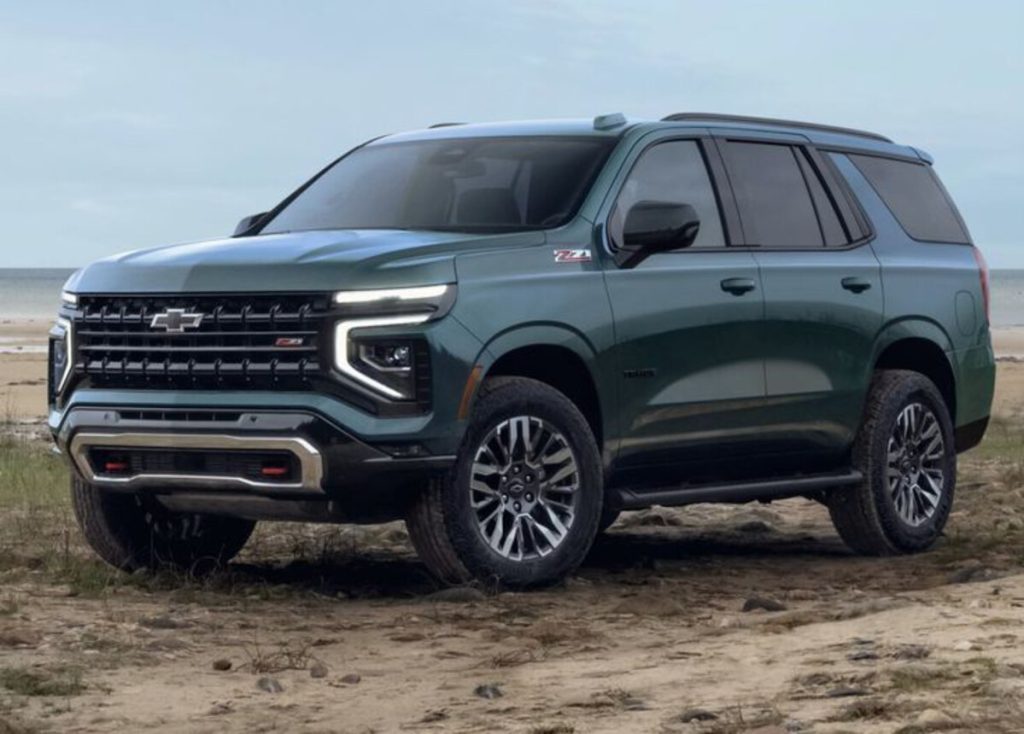
For buyers whose priorities include family transportation, cargo versatility, and towing capability without abandoning occasional off-road use, the Tahoe Z71 presents a compelling alternative. It demonstrates that practicality can outweigh compact trail agility when daily usability is the primary objective.
Specifications
- Engine: 5.3-liter naturally aspirated V8
- Torque: 383 lb-ft
- Horsepower: 355 hp
- Length/Width: 210.7 inches / 81.0 inches
3. Rivian R1S
The Toyota Land Cruiser has long been admired for its blend of off-road capability and durability, but when the comparison shifts to acceleration, electric performance, and advanced software, the Rivian R1S establishes a clear advantage.
As one of the most capable electric SUVs on the American market, the R1S combines genuine trail capability with performance figures that traditional gasoline-powered SUVs cannot match.
Its greatest strength is outright power. Depending on the configuration, the R1S delivers well over 500 horsepower, while higher-performance versions exceed 800 horsepower. Even the Dual-Motor model accelerates substantially faster than the Land Cruiser, reaching 60 mph in roughly 4.5 seconds.
Quad-motor and tri-motor versions reduce that figure even further, placing the R1S among the quickest production SUVs sold in the United States.
Off-road performance remains impressive despite the electric powertrain. An adjustable air suspension provides generous ground clearance, while independent electric motors deliver precise torque distribution to individual wheels.
Unlike conventional four-wheel-drive systems that rely on mechanical differentials, the R1S can instantly vary power delivery for improved traction on rocks, mud, snow, and loose terrain.
Technology is another category where Rivian moves ahead. Frequent over-the-air software updates introduce new features and performance improvements without requiring dealership visits.
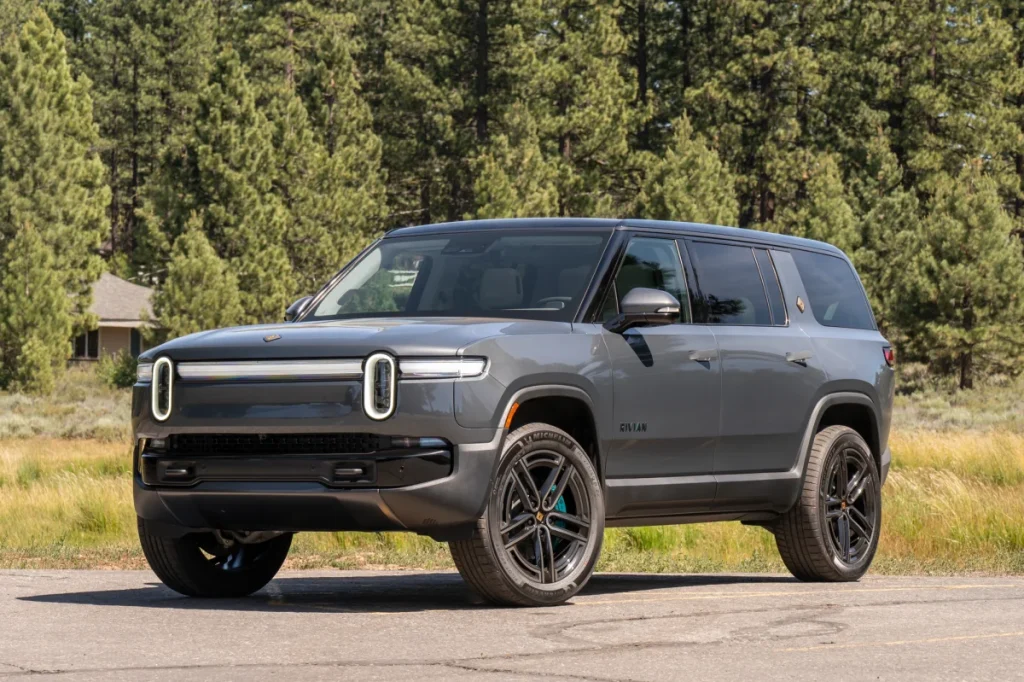
A fully digital interface, advanced driver assistance systems, multiple drive modes, and integrated adventure-focused storage solutions reinforce the SUV’s modern approach.
The Land Cruiser continues to offer simpler mechanical engineering and an outstanding reputation for long-term reliability. However, buyers prioritizing acceleration, software innovation, and cutting-edge electric technology will find the Rivian R1S outperforming Toyota’s legendary SUV in several measurable categories.
Specifications
- Engine: Dual electric motors
- Torque: 610 lb-ft
- Horsepower: 533 hp
- Length/Width: 200.8 inches / 79.3 inches
4. Toyota Sequoia TRD Pro
Comparing the Toyota Sequoia TRD Pro with the Land Cruiser creates an interesting situation because both vehicles share Toyota’s i-Force MAX hybrid powertrain. Although they are closely related mechanically, the Sequoia targets buyers who need greater towing capability and interior space while retaining respectable off-road ability.
One of its biggest advantages is towing capacity. Properly equipped Sequoia models can tow up to 9,020 pounds, dramatically exceeding the Land Cruiser’s approximately 6,000-pound maximum rating. This difference makes the Sequoia a better choice for owners who regularly tow larger campers, horse trailers, or heavy recreational boats.
Passenger and cargo space also favor the Sequoia. Built on Toyota’s full-size truck platform, it offers a wider cabin and significantly more third-row room than the Land Cruiser. Families traveling with multiple passengers often appreciate the additional shoulder room and cargo flexibility during long road trips.
The TRD Pro trim retains serious off-road credentials through FOX internal bypass shocks, skid plates, a locking rear differential, Multi-Terrain Select, Crawl Control, and all-terrain tires. While its larger size limits maneuverability on tight trails compared with the Land Cruiser, it remains highly capable on rough terrain.
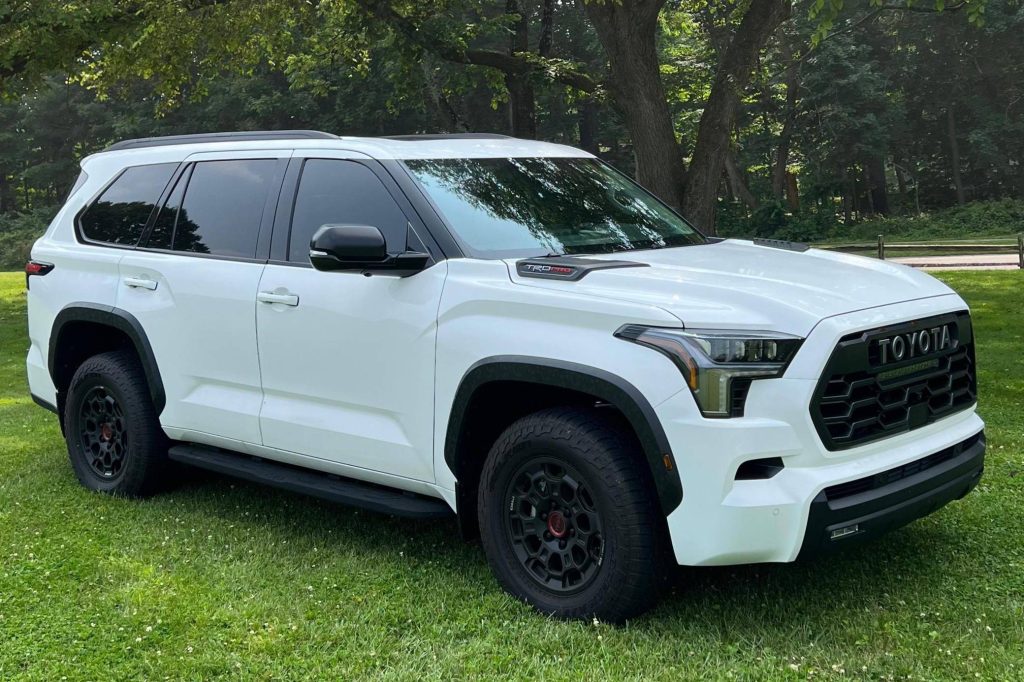
Because both SUVs share the same hybrid twin-turbocharged V6, performance differences are relatively small. Instead, the Sequoia distinguishes itself by offering more utility without sacrificing Toyota’s reputation for dependability.
Buyers needing maximum towing, greater passenger capacity, and truck-like versatility will find the Sequoia TRD Pro better suited to those specific requirements than the Land Cruiser.
Specifications
- Engine: 3.4-liter twin-turbocharged hybrid V6
- Torque: 583 lb-ft
- Horsepower: 437 hp
- Length/Width: 208.1 inches / 79.8 inches
5. Lexus LX 700h
The Lexus LX 700h and Toyota Land Cruiser are closely related beneath the sheet metal, sharing the same TNGA-F body-on-frame architecture. However, Lexus transformed the platform into a flagship luxury SUV by focusing on refinement, premium technology, and occupant comfort.
For buyers who spend most of their time on paved roads but still want genuine off-road capability, the LX 700h clearly surpasses the Land Cruiser in several measurable categories.
Cabin quality is the most obvious advantage. Semi-aniline leather upholstery, available massaging front seats, premium wood trim, enhanced sound insulation, and a sophisticated Mark Levinson audio system create an environment that rivals many European luxury SUVs.
Rear-seat passengers also benefit from additional comfort features and higher-grade materials throughout the cabin.
Technology is another area where the Lexus moves ahead. The infotainment system offers larger displays, more advanced camera views for off-road driving, additional driver customization options, and upgraded convenience features unavailable on the Land Cruiser.
Adaptive Variable Suspension further improves ride quality by automatically adjusting damping characteristics according to road conditions.
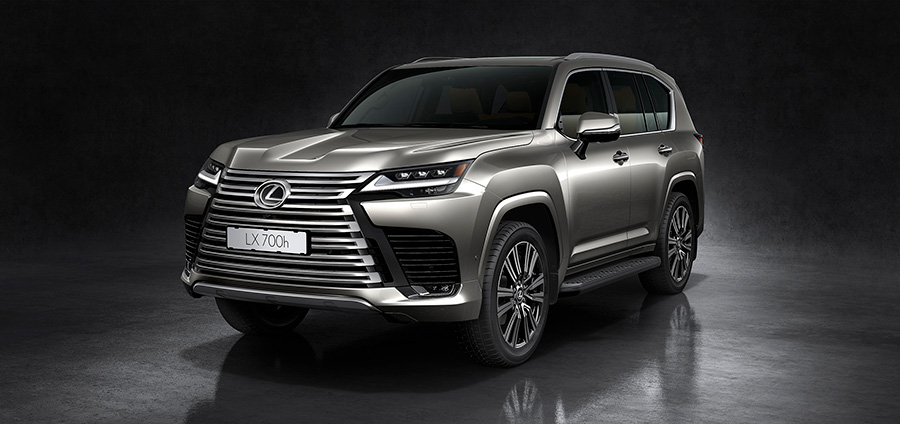
The LX 700h retains the same basic hybrid powertrain architecture but packages it within a more refined luxury experience. It also includes advanced crawl systems, Multi-Terrain Select, a locking center differential, and full-time four-wheel drive, allowing it to remain highly capable once the pavement ends.
The Land Cruiser delivers exceptional value by providing much of the same mechanical capability at a significantly lower price. However, buyers seeking maximum luxury, quieter highway cruising, superior interior craftsmanship, and flagship-level comfort will find the Lexus LX 700h occupying a higher class.
Specifications
- Engine: 3.4-liter twin-turbocharged hybrid V6
- Torque: 583 lb-ft
- Horsepower: 457 hp
- Length/Width: 200.0 inches / 78.3 inches
6. Land Rover Defender 130
The Toyota Land Cruiser has long represented one of the world’s most capable adventure vehicles, yet the Land Rover Defender 130 demonstrates that practicality and technology can be combined with equally impressive off-road credentials.
Designed to accommodate larger families without sacrificing trail performance, the Defender 130 exceeds the Land Cruiser in passenger flexibility and several advanced capability features.
Its most immediate advantage is seating capacity. While the Land Cruiser is configured for five passengers in the current U.S. market, the Defender 130 offers available three-row seating for up to eight occupants. This makes it a better choice for large families or buyers who regularly travel with additional passengers.
The Defender also benefits from an advanced electronic air suspension capable of automatically raising ride height when extra ground clearance is required. Terrain Response 2 continuously analyzes driving conditions and adjusts throttle response, transmission behavior, traction control, and differential settings with minimal driver input.
Wade Sensing technology assists during water crossings by displaying water depth in real time, a feature unavailable on the Land Cruiser.
Luxury and convenience also receive significant attention. The Defender 130 features a spacious interior, premium materials, multiple digital displays, and one of the most sophisticated off-road camera systems currently available.
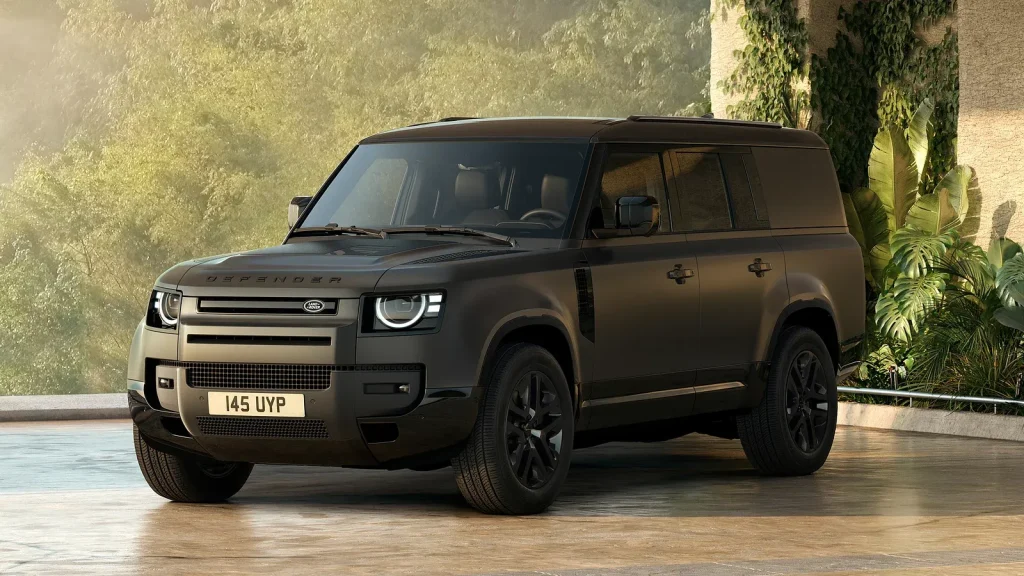
The Land Cruiser maintains an edge in long-term reliability, reputation, and simpler mechanical engineering. Nevertheless, buyers who value seating capacity, advanced terrain management, adjustable air suspension, and cutting-edge off-road technology may find the Defender 130 better aligned with their specific priorities.
Specifications
- Engine: 3.0-liter turbocharged inline-six with mild hybrid assistance
- Torque: 406 lb-ft
- Horsepower: 395 hp
- Length/Width: 210.7 inches / 79.1 inches
7. Mercedes-Benz G-Class
Few SUVs possess the global reputation of the Mercedes-Benz G-Class. Originally developed as a military vehicle, it has evolved into one of the most luxurious off-road SUVs sold in the United States while retaining exceptional trail capability.
Compared with the Toyota Land Cruiser, the G-Class excels in several measurable areas, particularly power, luxury, and advanced drivetrain technology.
Performance is one of the clearest differences. The G 550 uses a handcrafted twin-turbocharged V8 that produces considerably more horsepower than the Land Cruiser’s hybrid powertrain.
Acceleration is noticeably quicker, giving the Mercedes stronger passing performance on highways and a more effortless driving experience when fully loaded with passengers or cargo.
Off-road hardware remains impressive despite its luxury focus. The G-Class comes standard with three locking differentials, low-range gearing, permanent four-wheel drive, and generous ground clearance. Very few production SUVs offer factory front, center, and rear locking differentials, allowing the G-Class to maintain traction in extremely challenging terrain.
Inside the cabin, Mercedes raises the standard even further. Premium leather upholstery, advanced digital displays, multicontour seats with massage functions, ambient lighting, and one of the industry’s most sophisticated infotainment systems provide a level of refinement beyond what the Land Cruiser offers.
Noise insulation is also outstanding, making long-distance highway travel exceptionally comfortable.
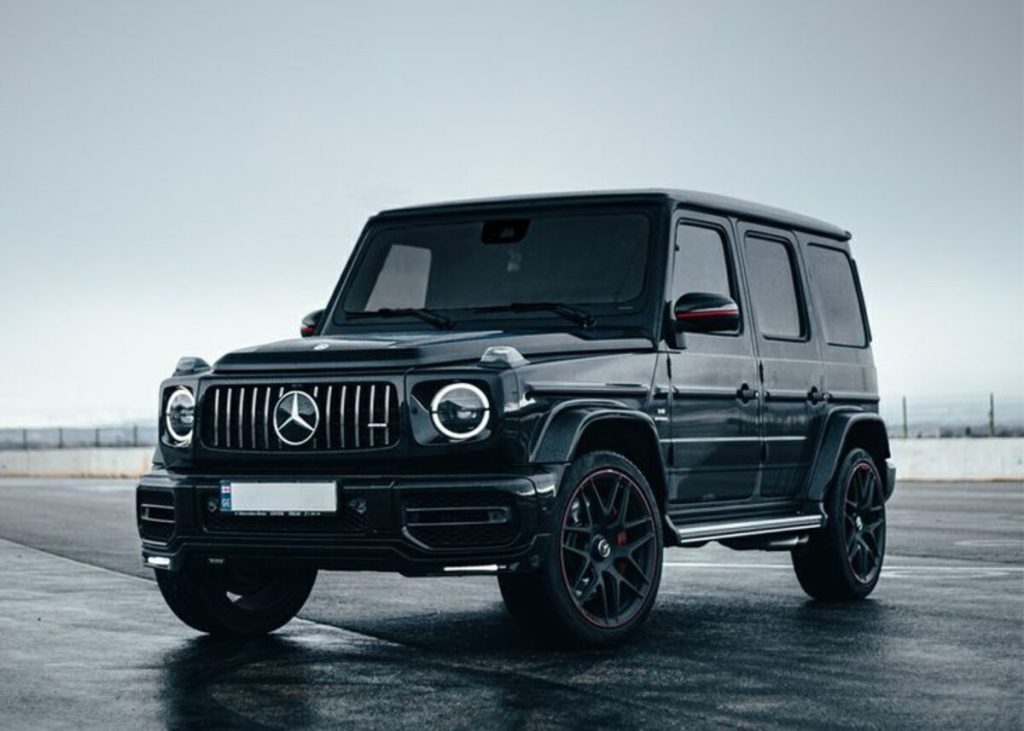
The Land Cruiser remains the better value and is widely recognized for lower long-term ownership costs. However, buyers prioritizing premium craftsmanship, substantially higher performance, and flagship luxury will find the G-Class outperforming Toyota’s iconic SUV in those specific categories.
Specifications
- Engine: 4.0-liter twin-turbocharged V8
- Torque: 627 lb-ft
- Horsepower: 443 hp
- Length/Width: 191.9 inches / 86.1 inches
8. Nissan Armada PRO-4X
The Nissan Armada PRO-4X takes a different approach from the Toyota Land Cruiser by combining traditional body-on-frame construction with a naturally aspirated V8 and a focus on value.
For buyers wanting strong towing capability, generous interior space, and factory off-road equipment without moving into the luxury price bracket, the Armada PRO-4X offers several measurable advantages.
One of its biggest strengths is towing. Properly equipped Armada models can tow up to approximately 8,500 pounds, comfortably exceeding the Land Cruiser’s maximum tow rating. Owners hauling larger travel trailers, boats, or utility equipment benefit from the additional capacity without stepping up to a heavy-duty pickup truck.
Interior space also favors the Nissan. The Armada provides a spacious third row, generous shoulder room, and a large cargo area that better accommodates growing families or extended road trips. Its body-on-frame platform contributes to a solid, confident feel when carrying passengers and luggage over long distances.
The PRO-4X trim adds practical off-road equipment, including all-terrain tires, skid plates, an electronic locking rear differential, hill descent control, and multiple terrain modes. These features allow the Armada to tackle rough trails while remaining comfortable enough for daily driving.
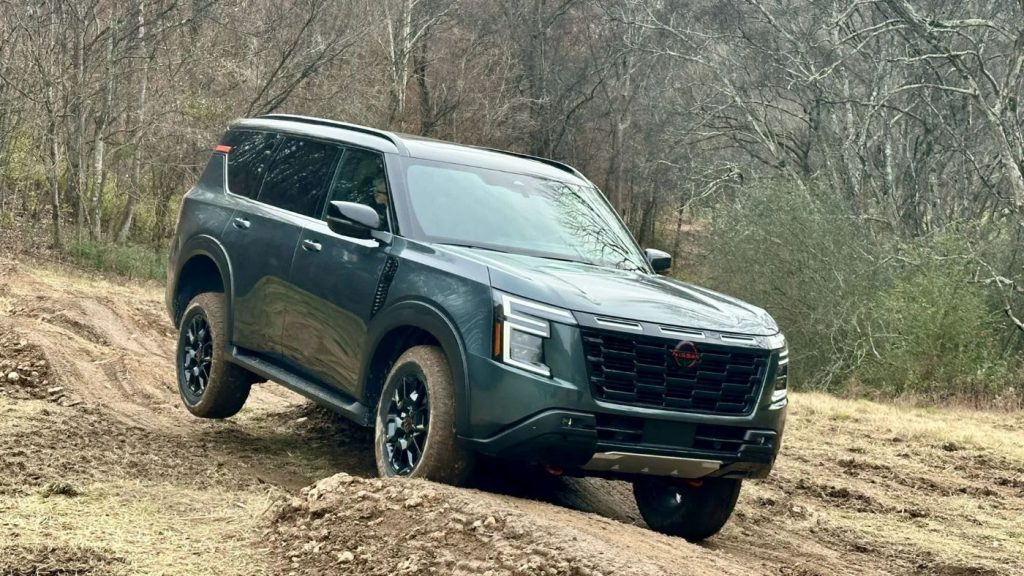
Toyota’s Land Cruiser still holds a clear advantage in fuel efficiency, resale value, and long-term reliability. Even so, drivers who place greater importance on towing, passenger capacity, and value for money will find the Armada PRO-4X outperforming the Land Cruiser in those practical categories.
Specifications
- Engine: 3.5-liter twin-turbocharged V6
- Torque: 516 lb-ft
- Horsepower: 425 hp
- Length/Width: 209.6 inches / 83.3 inches
9. GMC Yukon AT4 Ultimate
The Toyota Land Cruiser is designed as a midsize off-road SUV that balances trail capability with everyday usability. The GMC Yukon AT4 Ultimate, by contrast, targets buyers who need full-size utility without giving up premium comfort.
In categories such as passenger space, cargo capacity, towing capability, and long-distance comfort, the Yukon clearly surpasses the Land Cruiser using measurable specifications.
Its biggest advantage is interior volume. The Yukon offers three spacious rows with adult-friendly third-row seating, making it a far better option for large families.
Cargo capacity behind the third row is also significantly greater, allowing owners to carry luggage, camping gear, or sports equipment without folding seats. When maximum storage is needed, the Yukon provides substantially more total cargo room than the Land Cruiser.
The AT4 Ultimate trim is equipped with features that enhance both comfort and capability. Adaptive air ride suspension adjusts ride height for improved ground clearance off-road while delivering a smoother highway ride.
Magnetic Ride Control continuously adapts suspension damping, reducing body movement over uneven pavement. The SUV also offers Super Cruise on compatible highways, one of the most advanced hands-free driving assistance systems available in the United States.
Towing is another area where GMC holds the advantage. Properly equipped Yukon models can tow up to approximately 8,200 pounds, comfortably exceeding the Land Cruiser’s maximum rating.
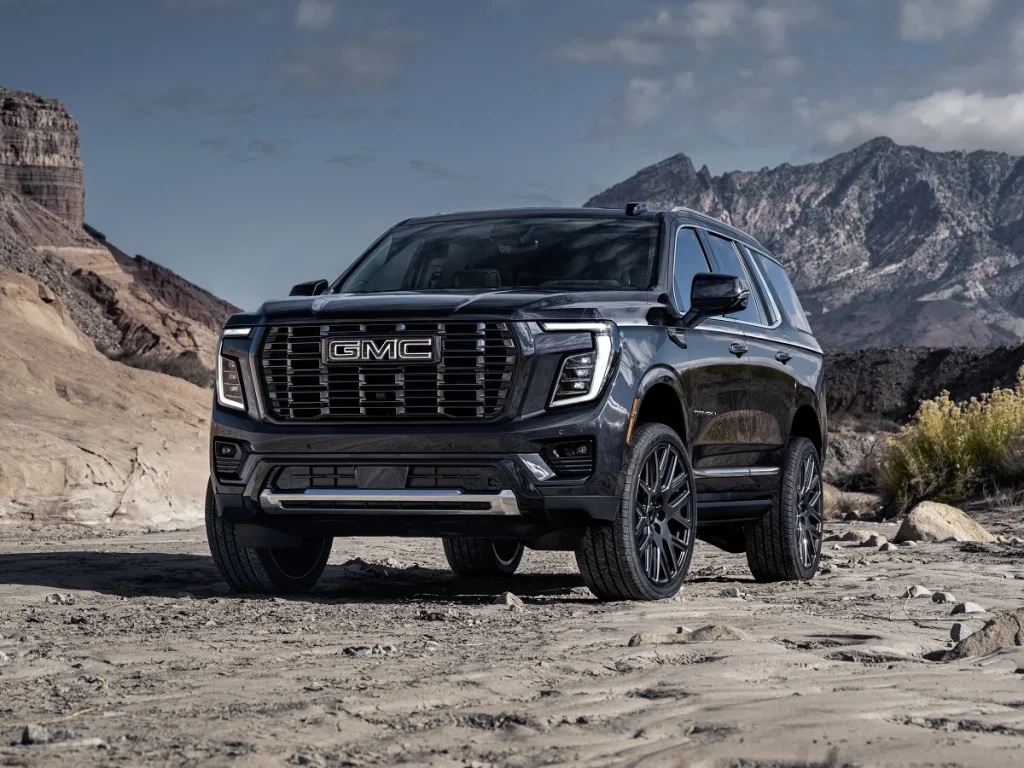
The Land Cruiser remains easier to maneuver on narrow trails and has a stronger reputation for long-term durability. However, buyers who prioritize space, towing, ride comfort, and premium technology will find the Yukon AT4 Ultimate better suited to those specific needs.
Specifications
- Engine: 6.2-liter naturally aspirated V8
- Torque: 460 lb-ft
- Horsepower: 420 hp
- Length/Width: 210.1 inches / 81.0 inches
10. Jeep Wrangler Rubicon 392
The Toyota Land Cruiser is among the most capable factory-built off-road SUVs available, yet the Jeep Wrangler Rubicon 392 is engineered with one primary objective: conquering the toughest trails possible.
When the comparison focuses strictly on technical off-road performance, several factory specifications place the Wrangler ahead of Toyota’s legendary SUV.
Power is the first difference drivers notice. Jeep’s naturally aspirated 6.4-liter HEMI V8 produces substantially more horsepower than the Land Cruiser’s hybrid turbocharged four-cylinder. The abundant torque provides immediate response during steep climbs, deep sand, and rock crawling while also delivering impressive acceleration on pavement.
The Rubicon 392’s hardware is equally specialized. Heavy-duty Dana 44 solid axles, electronically locking front and rear differentials, an electronically disconnecting front sway bar, low-range gearing, and aggressive all-terrain tires give it exceptional wheel articulation and traction on uneven terrain.
Its approach, breakover, and departure angles also exceed those of the Land Cruiser, allowing it to clear larger obstacles with less risk of body damage.
Another advantage is aftermarket support. The Wrangler platform has one of the largest off-road aftermarket ecosystems in North America, giving owners access to thousands of suspension, armor, recovery, and overlanding upgrades.
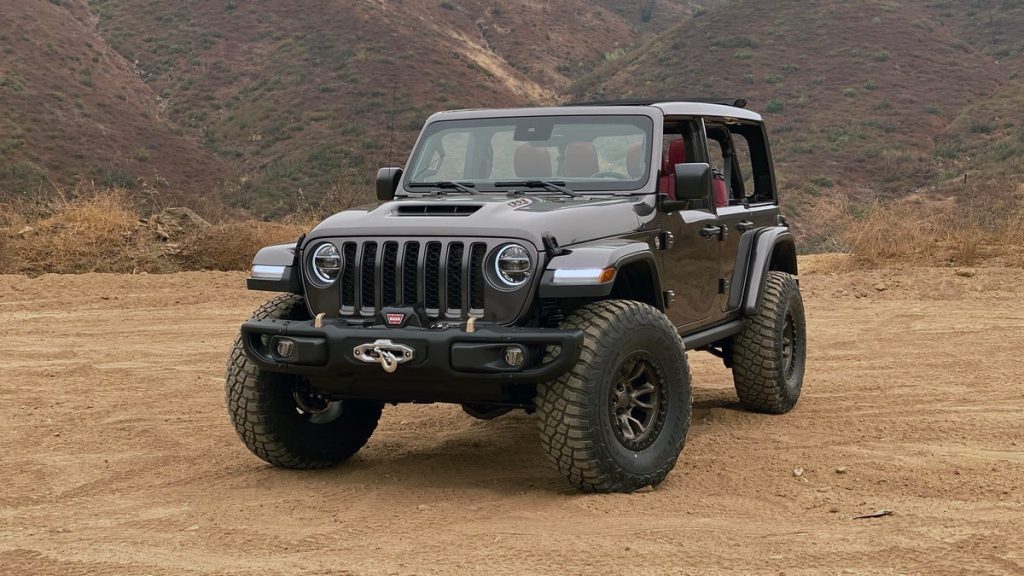
The Land Cruiser provides greater comfort, superior highway refinement, and a stronger history of long-term reliability. However, for buyers whose primary goal is maximum factory rock-crawling capability and trail performance, the Wrangler Rubicon 392 outperforms the Land Cruiser in several objective off-road categories.
Specifications
- Engine: 6.4-liter naturally aspirated HEMI V8
- Torque: 470 lb-ft
- Horsepower: 470 hp
- Length/Width: 188.4 inches / 79.3 inches
Also Read: 10 Cars Loved By Critics But Hated By Buyers