
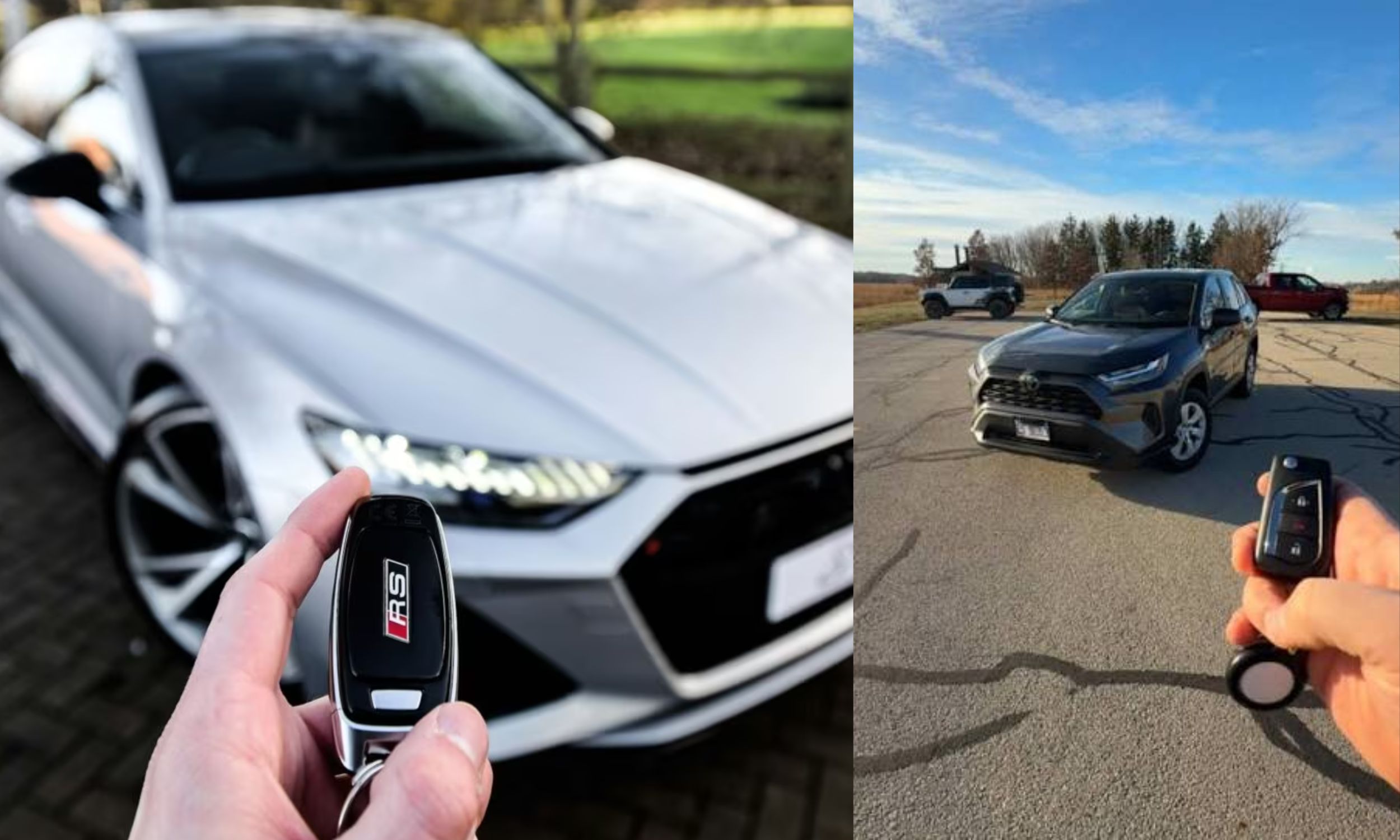
Many drivers assume every new vehicle now comes with push-button start, but that is not entirely true. Several brand-new models still use a traditional ignition key that you insert and turn to start the engine. While modern smart key systems have become common, many buyers continue to appreciate the simplicity and dependability of a mechanical ignition, especially when reliability and lower ownership costs matter more than added convenience.
There are practical reasons this system continues to survive. Replacing a standard key is much cheaper than buying and programming an electronic key fob, making it a smart choice for fleet operators, work truck owners, and budget-conscious buyers.
Mechanical ignitions are also valued for their straightforward design and ease of use. The vehicles featured here prove that the traditional key has not disappeared. They continue offering this familiar setup while delivering the performance, capability, and everyday practicality buyers expect from a brand-new vehicle.
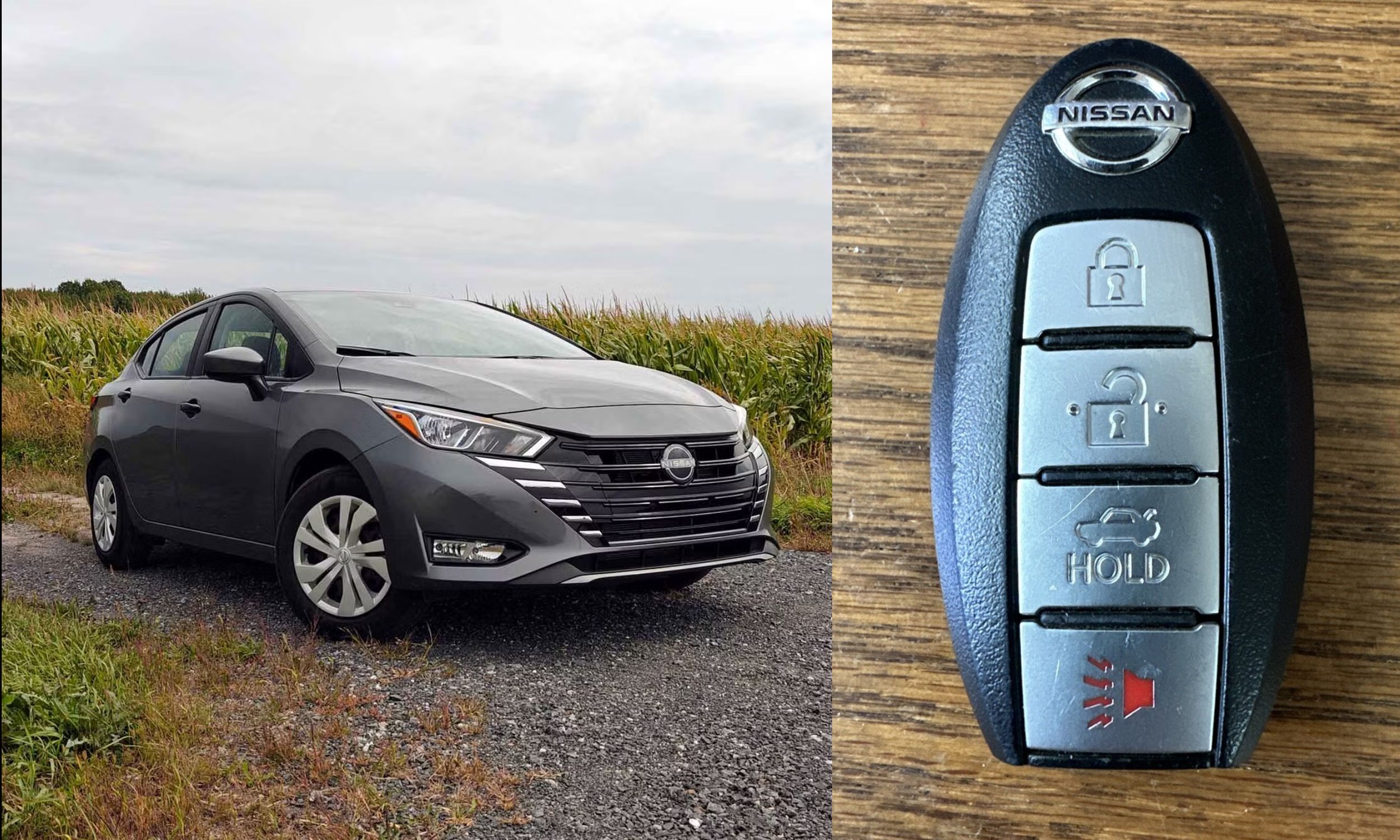
1. Nissan Versa S
Ignition Detail: The base Versa S retains a traditional physical ignition key, while higher trims receive Intelligent Key with push-button start.
- Engine: 1.6-liter Naturally Aspirated Inline-4
- Horsepower: 122 hp
- Torque: 114 lb-ft
- Size: 177.0″ L x 68.5″ W x 57.5″ H
Anyone searching for one of the least expensive brand-new cars in America will quickly notice that the Nissan Versa S still starts with a traditional metal ignition. That decision is intentional. Nissan designed this entry-level trim for buyers who want dependable transportation without paying extra for convenience features that raise the purchase price.
The Versa S is powered by a naturally aspirated 1.6-liter engine producing 122 horsepower. While those figures are not meant for spirited driving, they suit the car’s purpose very well. It provides dependable performance for daily commuting, running errands, and helping first-time buyers own a new vehicle without stretching their budget. For many people, low running costs matter far more than extra power.
Moving up to the next trim changes things completely. Buyers get Nissan’s Intelligent Key system and push-button start, making it clear that the traditional ignition is reserved for the most affordable version. It is simply one of the ways Nissan keeps the base model within reach of people watching every dollar.
Measuring about 177 inches in length, the Versa is easy to drive through busy streets and simple to park in tight spaces. That makes it an excellent choice for students, young professionals, and anyone buying their first car. Replacing a mechanical ignition is also much cheaper than replacing and programming an electronic fob.
For buyers who value affordability, dependable transportation, and lower ownership costs, the Versa S proves that simple engineering still has a place in today’s new car market.
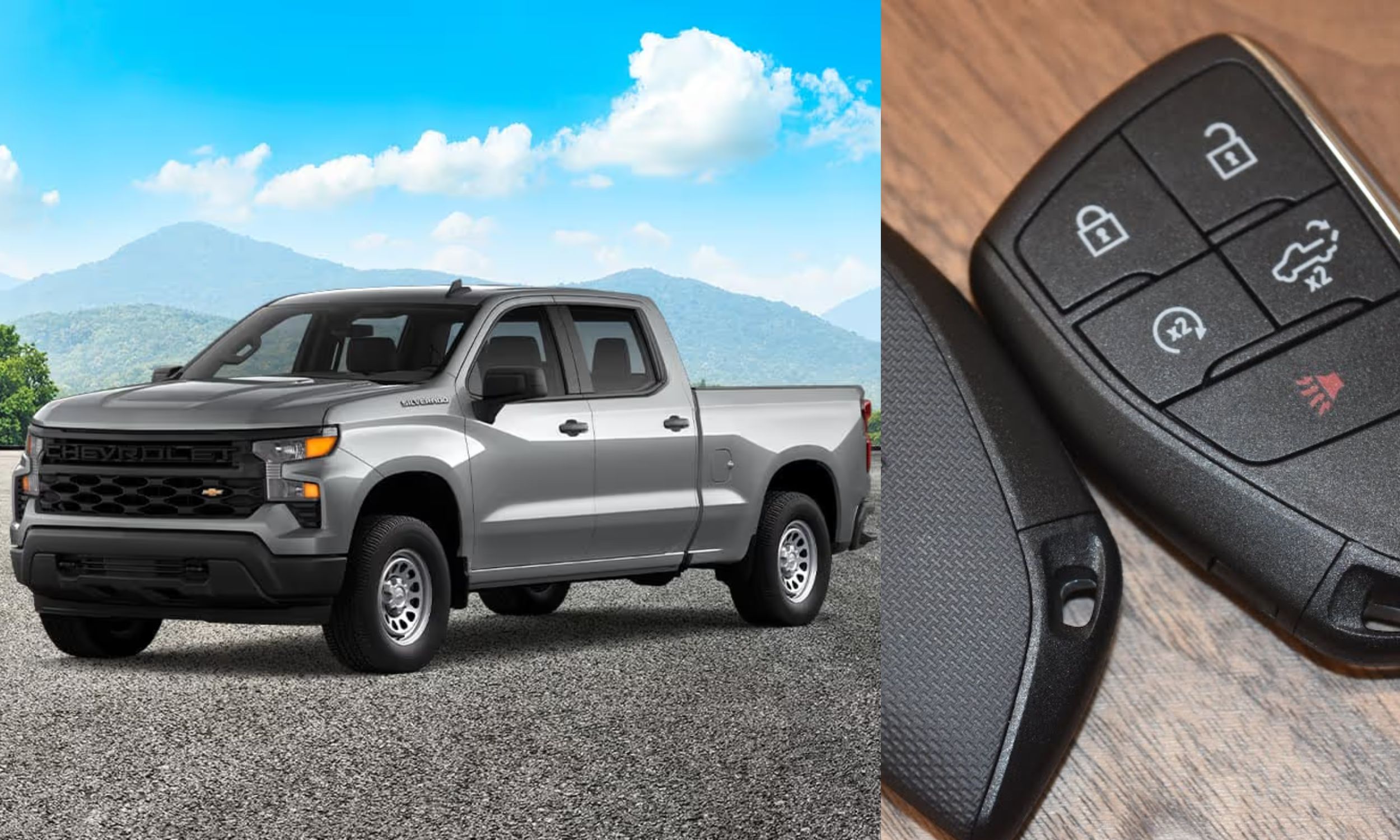
2. Chevrolet Silverado 1500 WT
Ignition Detail: The Work Truck trim continues using a conventional ignition key for fleet and commercial customers.
- Engine: 2.7-liter TurboMax Inline-4
- Horsepower: 310 hp
- Torque: 430 lb-ft
- Size: 231.9″ L x 81.2″ W x 75.6″ H
Work trucks exist to work, not to impress anyone with fancy technology, and Chevrolet’s Work Truck trim reflects that philosophy directly through its continued use of a conventional ignition key rather than push-button convenience features.
That turbocharged 2.7-liter engine delivers genuinely impressive numbers for a four-cylinder, producing 310 horsepower alongside a substantial 430 lb-ft of torque, proving this base-level trim doesn’t skimp on actual towing and hauling capability even while keeping the ignition setup deliberately straightforward.
Fleet managers specifically appreciate this simplicity for genuinely practical reasons. When a company operates dozens, sometimes hundreds, of identical work trucks, replacing a lost physical key costs a fraction of what reprogramming an electronic fob would require, a genuine operational savings that adds up considerably across a large commercial fleet.
Construction crews, utility companies, and municipal buyers consistently choose this exact configuration, valuing genuine mechanical reliability over convenience technology that offers little practical benefit in a work environment where trucks change hands between multiple drivers throughout any given shift.
Massive dimensions, stretching nearly 232 inches long, give this truck genuine cargo and towing capability that matches its serious commercial mission, while that straightforward key-based ignition system reduces potential points of electronic failure that could otherwise sideline a truck during a genuinely critical workday.
The Silverado 1500 WT is designed for businesses that value durability, capability, and operating costs over consumer-oriented convenience features. It provides the towing performance fleet operators require while retaining a straightforward and dependable ignition system chosen for its proven reliability and practical benefits rather than modern styling or added complexity.
Also Read: 8 Cheapest New Cars You Can Buy In 2027
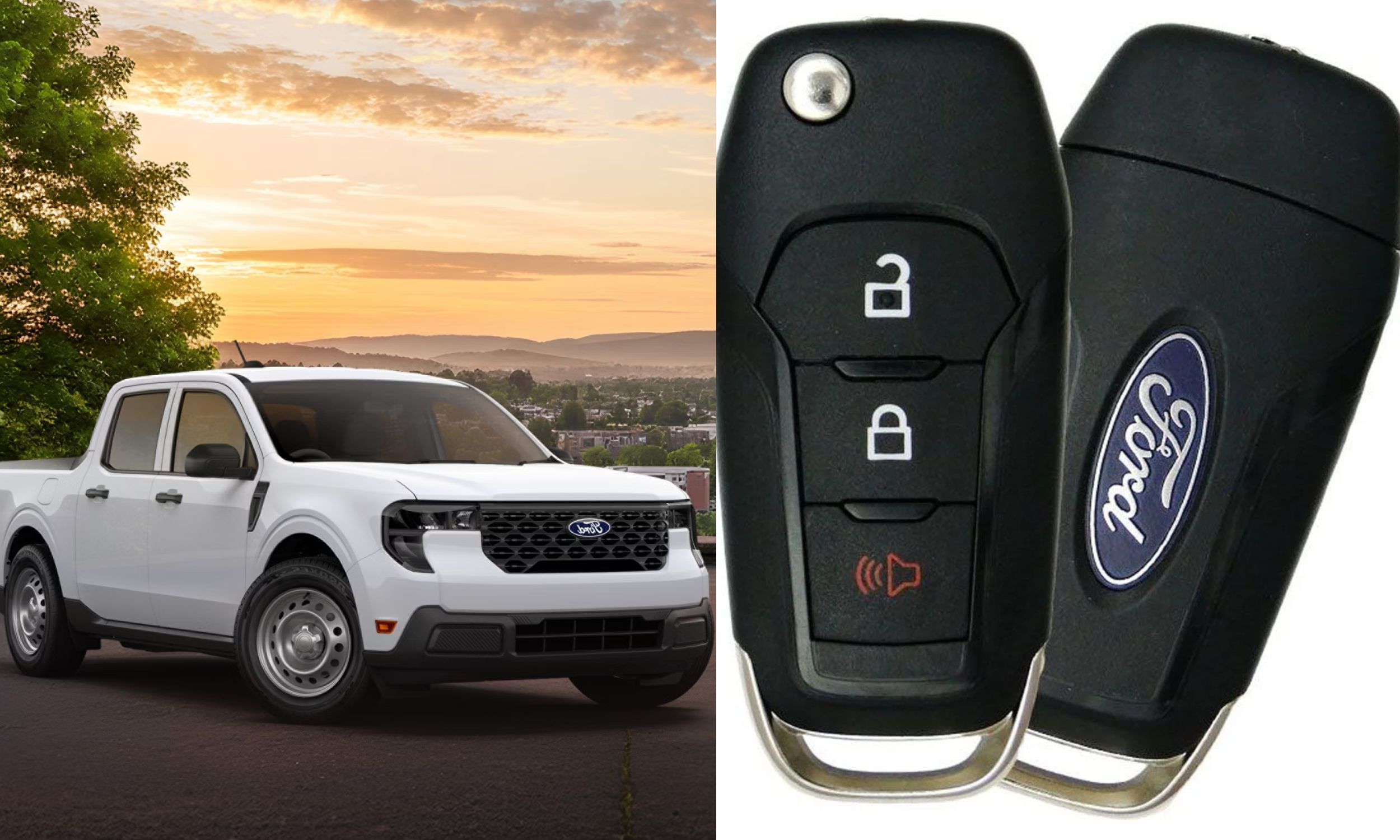
3. Ford Maverick XL
Ignition Detail: The entry-level XL uses a physical key instead of a push-button start.
- Engine: 2.0-liter EcoBoost Turbocharged Inline-4
- Horsepower: 238 hp
- Torque: 277 lb-ft
- Size: 199.7″ L x 72.6″ W x 68.7″ H
Compact trucks have surged in popularity recently, and Ford’s Maverick has led that charge convincingly, yet its entry-level XL trim quietly keeps things genuinely simple with a physical ignition key rather than jumping straight to push-button technology found on pricier configurations.
That turbocharged 2.0-liter EcoBoost engine produces a genuinely strong 238 horsepower and 277 lb-ft of torque, giving this compact truck real everyday capability, confident acceleration, and genuine towing potential that belies its relatively modest footprint compared to full-size truck alternatives.
Small business owners and budget-conscious buyers specifically gravitate toward this XL configuration, appreciating both the truck’s inherent versatility and the genuine cost savings that come from skipping electronic key technology entirely at this particular trim level.
Compact exterior dimensions, just under 200 inches long, make the Maverick genuinely easy to park in tight urban environments while still delivering real pickup truck utility, a combination that’s resonated strongly with buyers who don’t necessarily need a full-size truck’s considerable bulk for their daily hauling needs.
Ford’s broader Maverick lineup does offer push-button start on higher trims, meaning this key-based ignition specifically signals the truck’s most affordable configuration, similar to the pattern seen across other entries on this list where automakers reserve keyless technology as an upgrade incentive rather than standard equipment across every available trim.
For buyers specifically wanting genuine truck capability at the lowest possible price point, without sacrificing meaningful performance or practicality, the Maverick XL offers a compelling combination: real towing muscle wrapped in a genuinely affordable package that still starts the old-fashioned way.
4. Nissan Frontier S
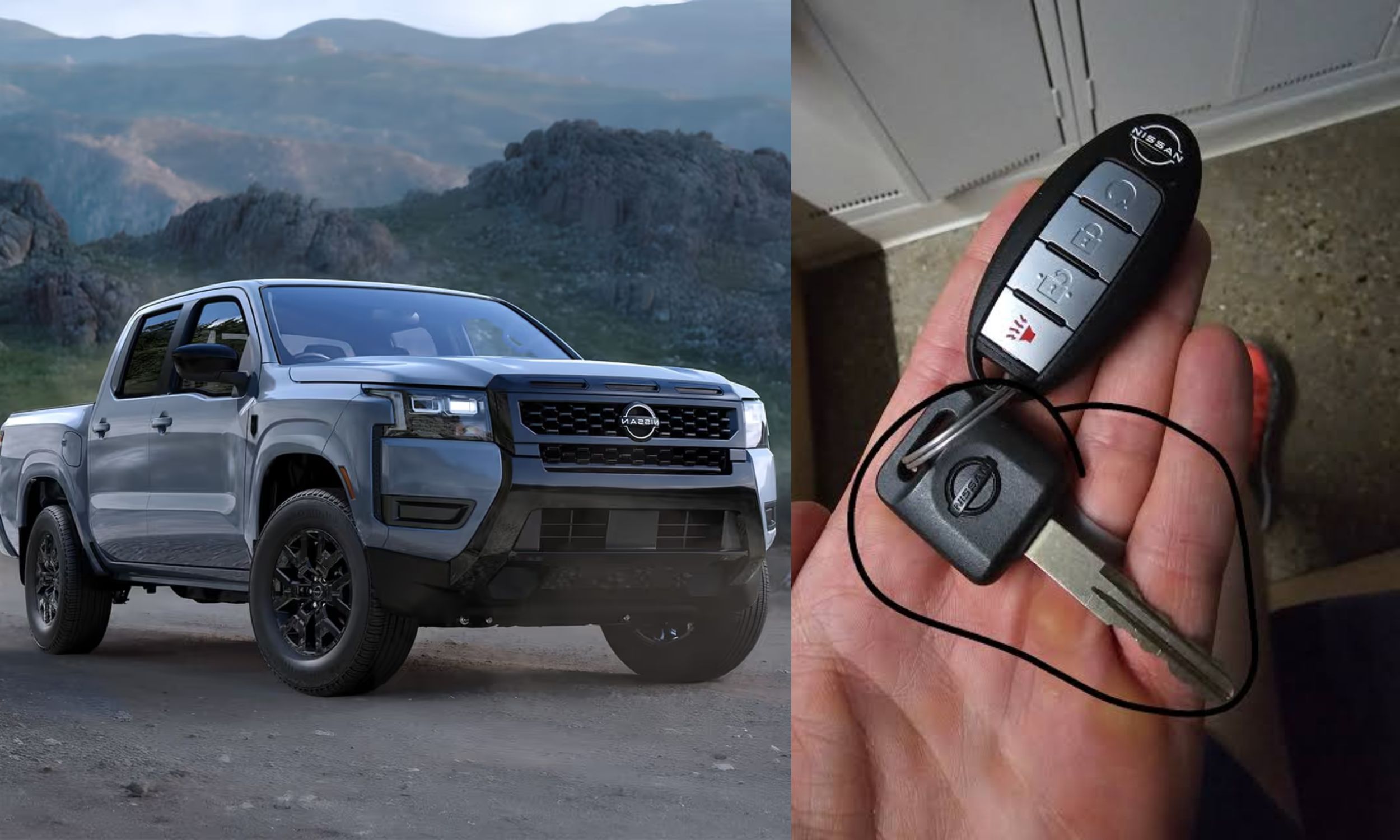
Ignition Detail: The base Frontier S retains a traditional ignition key.
- Engine: 3.8-liter Naturally Aspirated V6
- Horsepower: 310 hp
- Torque: 281 lb-ft
- Size: 210.2″ L x 73.0″ W x 72.9″ H
For buyers who want something between a compact pickup and a full-size truck, the Nissan Frontier S fits the bill very well. It delivers the extra capability many drivers need without becoming too large for daily use. To help keep the entry price affordable, Nissan continues using a traditional mechanical ignition instead of fitting the base model with a push-button starter.
Power comes from a naturally aspirated 3.8-liter V6 engine producing 310 horsepower. That gives the Frontier strong performance for towing trailers, carrying heavy loads, and handling everyday driving with confidence. Buyers do not have to move to a more expensive trim before getting an engine that feels capable enough for demanding tasks.
People who depend on their trucks for work also appreciate this simple approach. A traditional ignition is easier and cheaper to replace if it gets lost, which can be helpful for contractors, technicians, and tradespeople who spend long hours moving between different job locations. Fewer electronic components also mean fewer items that may require attention later.
With a length of more than 210 inches, the Frontier has a solid road presence while remaining easier to manage than many full-size pickups. It offers stronger towing ability than smaller trucks without becoming difficult to park or drive in busy areas.
Nissan designed the S trim for buyers who value affordability and dependable performance. Its traditional ignition suits that purpose perfectly, giving owners a capable midsize truck without paying extra for features they may not consider necessary during everyday use.
5. Chevrolet Express 2500
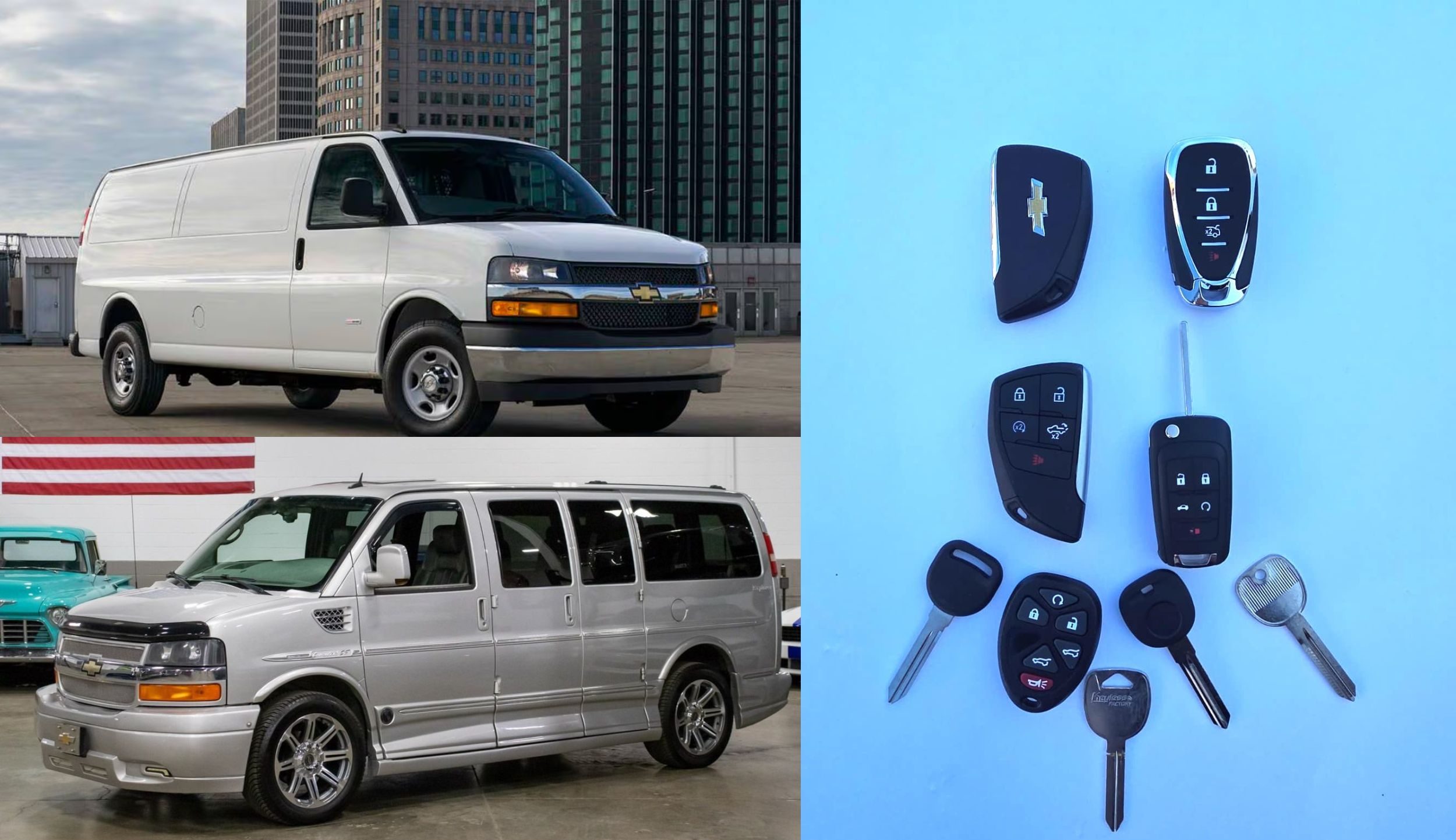
Ignition Detail: Chevrolet continues using a physical ignition key on this commercial van.
- Engine: 4.3-liter V6 (or available V8)
- Horsepower: 276 hp
- Torque: 298 lb-ft
- Size: 224.1″ L x 79.4″ W x 84.0″ H
Commercial vans exist purely for functional purposes, hauling cargo, transporting equipment, serving as mobile workshops, and the Express 2500 embraces that straightforward mission entirely, retaining a genuine physical ignition key throughout its current production run rather than chasing consumer-oriented convenience features.
Standard power comes from a 4.3-liter V6 producing 276 horsepower, with a more powerful V8 option available for buyers specifically needing additional towing or hauling capability, giving fleet operators genuine flexibility depending on their particular operational demands and budget considerations.
Delivery companies, contractors, and mobile service businesses consistently choose vans like this one specifically because operational simplicity translates directly into lower long-term costs. A lost physical key costs almost nothing to replace compared to reprogramming sophisticated electronic security systems across potentially dozens of vehicles within a single commercial fleet.
Towering dimensions, standing 84 inches tall, reflect this van’s genuine cargo-hauling mission, offering considerable interior space for equipment, inventory, or specialized commercial upfits that transform this platform into everything from a plumbing service vehicle to a mobile catering operation.
General Motors has maintained this particular platform’s mechanical simplicity deliberately, understanding that commercial buyers genuinely prioritize reliability and straightforward serviceability over cutting-edge technology that offers little practical benefit within a genuinely utilitarian work environment where multiple drivers might operate the same vehicle throughout any given week.
For businesses specifically needing dependable commercial cargo capacity without unnecessary technological complexity, the Express 2500 continues delivering exactly that proven, straightforward formula that’s served fleet buyers reliably for years across countless commercial applications nationwide.
6. GMC Savana 2500
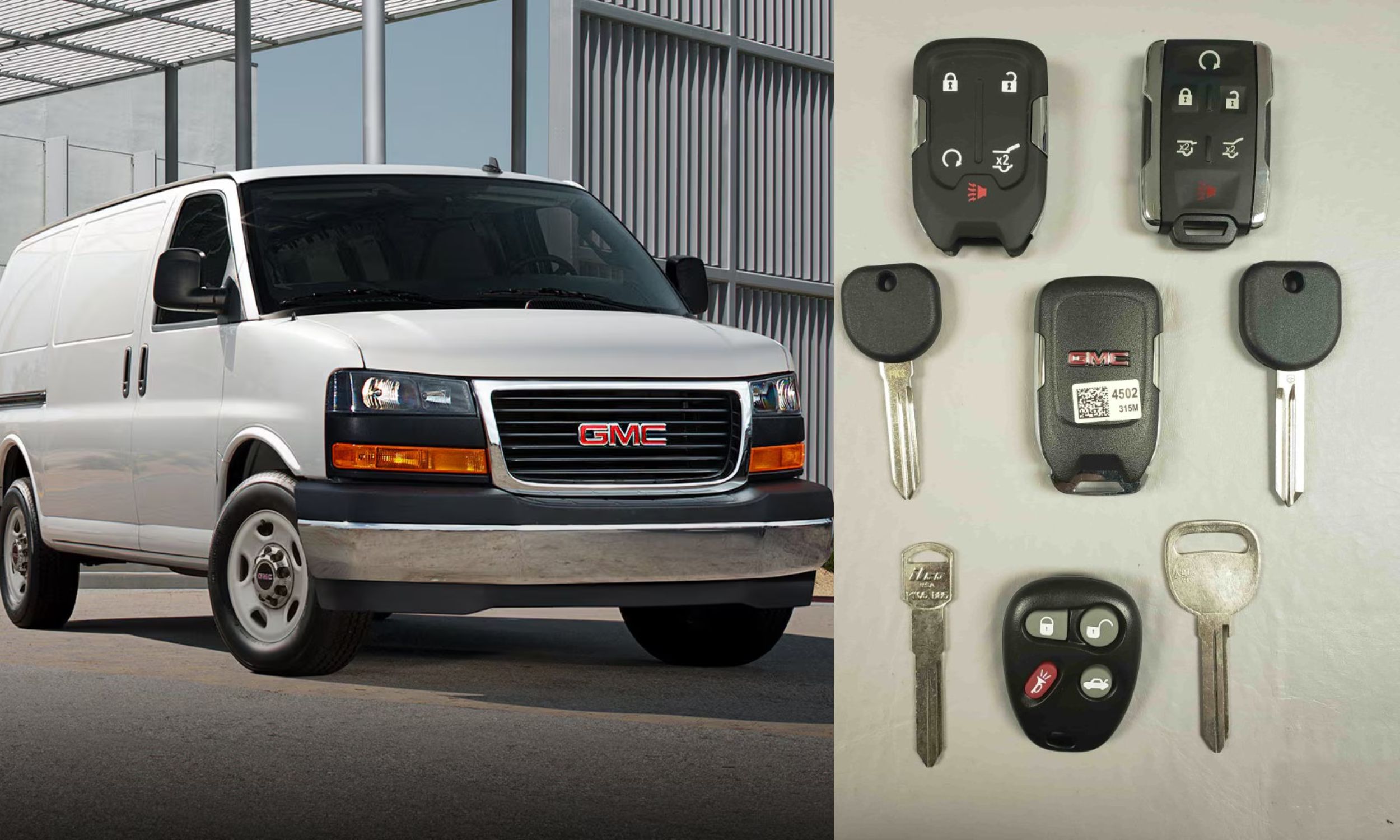
Ignition Detail: Like the Express, the Savana keeps a conventional ignition for commercial use.
- Engine: 4.3-liter V6 (or available V8)
- Horsepower: 276 hp
- Torque: 298 lb-ft
- Size: 224.1″ L x 79.4″ W x 84.6″ H
Nearly identical to its Chevrolet sibling underneath a slightly different badge, the Savana 2500 carries forward that same conventional ignition key setup, reflecting General Motors’ broader commercial van strategy of prioritizing genuine reliability over consumer-focused convenience technology across both brands equally.
Matching power figures connect these two vans directly, with 276 horsepower available through the standard V6 configuration, alongside that same optional V8 upgrade path for buyers specifically requiring additional capability for heavier commercial applications or more demanding towing situations.
GMC has traditionally positioned itself as the slightly more premium alternative within General Motors’ broader lineup, yet that premium positioning clearly doesn’t extend into unnecessary ignition technology for this particular commercial platform, where genuine functional simplicity takes clear priority over any perceived luxury upgrade.
Businesses specifically choosing GMC over Chevrolet often cite dealer relationships, financing terms, or simple brand preference rather than any meaningful functional difference between these two nearly identical commercial vans, since the underlying mechanical platform, including that conventional key-based ignition, remains essentially the same regardless of which specific badge sits on the grille.
Considerable interior height, matching its Chevrolet counterpart at over 84 inches, gives commercial buyers genuine standing room for cargo organization and equipment access, exactly the kind of practical consideration that matters far more to actual working buyers than whether their van features push-button start technology.
For fleet buyers specifically comparing GMC against Chevrolet’s nearly identical Express alternative, the Savana 2500 offers genuinely comparable commercial capability, proving these platform-sharing arrangements between GM’s van offerings extend directly into their shared, deliberately straightforward approach toward ignition technology as well.
7. Chevrolet Silverado 2500HD WT
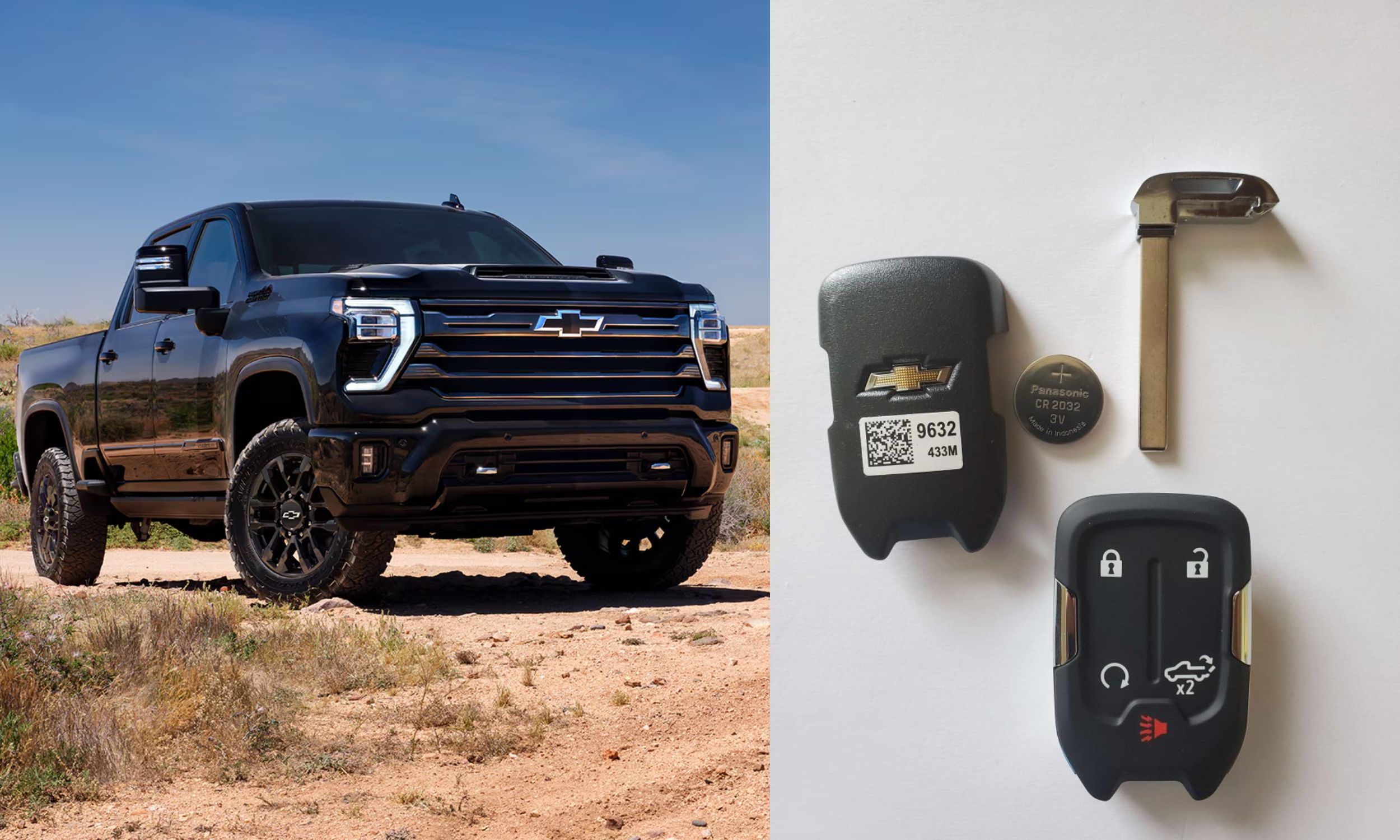
Ignition Detail: The base Work Truck trim continues with a physical ignition key.
- Engine: 6.6-liter V8 Gasoline
- Horsepower: 401 hp
- Torque: 464 lb-ft
- Size: 235.5″ L x 81.9″ W x 79.8″ H
When it comes to heavy-duty pickups, dependability usually comes before extra convenience features. That is exactly the approach Chevrolet takes with the Silverado 2500HD Work Truck. Instead of using a push-button starter, this trim continues with a traditional mechanical ignition, giving commercial users a simple system they can rely on every day.
Under the hood is a 6.6-liter gasoline V8 that delivers 401 horsepower and 464 lb-ft of torque. Those figures provide the strength needed for demanding towing and hauling jobs. Whether it is pulling heavy equipment, transporting building materials, or handling agricultural work, this truck is built to perform without unnecessary distractions. Buyers looking for a dependable workhorse often place durability ahead of luxury features.
Business owners running large truck fleets also appreciate this straightforward setup. A mechanical ignition removes extra electronic components that could develop faults, helping reduce downtime during busy work schedules. When a truck is expected to stay on the road every day, reliability carries more value than features designed mainly for comfort or appearance.
Measuring more than 235 inches in length, the Silverado 2500HD Work Truck is designed for demanding commercial duties rather than daily commuting. Construction firms, farming operations, and government agencies continue choosing this version because it offers dependable performance and easier servicing. Its traditional ignition matches the truck’s practical design, proving that modern heavy-duty pickups do not always need advanced starting systems.
For buyers who place durability, towing strength, and dependable mechanical engineering above extra technology, this Chevrolet remains an excellent choice.
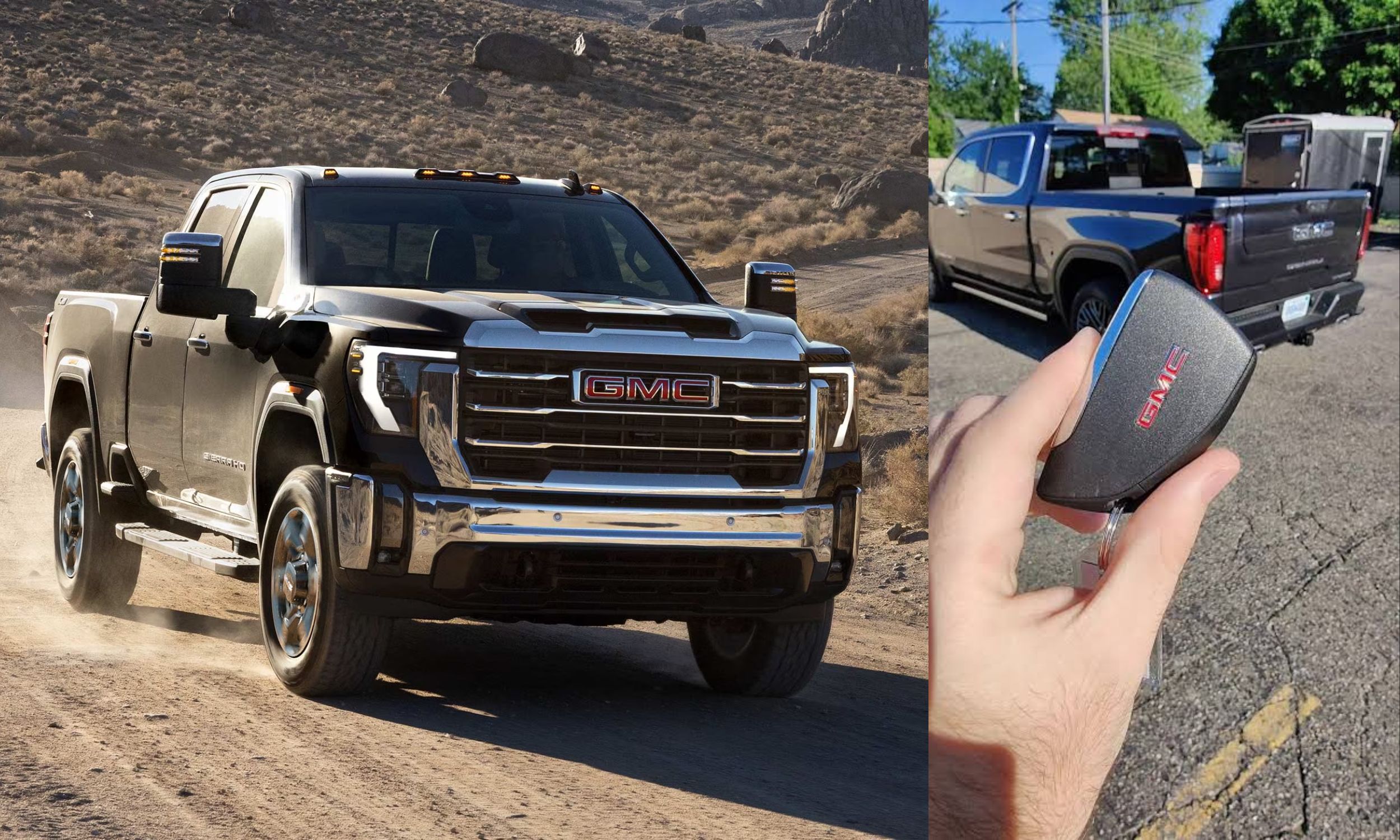
8. GMC Sierra 2500HD Pro
Ignition Detail: The Pro trim uses a traditional key ignition for fleet buyers.
- Engine: 6.6-liter V8 Gasoline
- Horsepower: 401 hp
- Torque: 464 lb-ft
- Size: 235.5″ L x 81.9″ W x 79.8″ H
Sharing its mechanical foundation directly with the Silverado 2500HD covered just above it, the Sierra 2500HD Pro trim carries forward that same traditional key ignition, specifically targeting fleet buyers who value genuine operational simplicity over GMC’s typically more premium consumer positioning found on higher trim levels.
Identical performance figures connect these two heavy-duty trucks precisely, both delivering 401 horsepower and 464 lb-ft of torque through that same substantial 6.6-liter gasoline V8, proof that GMC’s fleet-focused Pro trim doesn’t sacrifice any genuine mechanical capability despite skipping consumer-oriented ignition technology.
Fleet management companies specifically favor this exact configuration when equipping commercial operations, appreciating how straightforward key replacement genuinely simplifies logistics across large vehicle fleets compared to managing potentially dozens of electronic proximity fobs requiring specialized programming equipment.
Considerable size, matching its Chevrolet sibling at over 235 inches long, gives fleet buyers genuine heavy-duty capability regardless of whether they specifically prefer GMC’s badge over Chevrolet’s nearly identical Work Truck alternative covered earlier in this list.
GMC’s broader lineup typically emphasizes premium styling and additional convenience features compared to Chevrolet’s more value-focused positioning, yet this particular Pro trim specifically strips away that premium emphasis, focusing instead on genuine fleet practicality including that traditional key-based ignition system rather than chasing unnecessary consumer convenience technology.
For commercial fleet buyers specifically weighing GMC against Chevrolet’s comparable Work Truck offering, the Sierra 2500HD Pro delivers essentially identical practical value, proving genuine fleet-focused simplicity extends consistently across General Motors’ entire heavy-duty truck lineup regardless of which specific badge ultimately ends up on the tailgate.
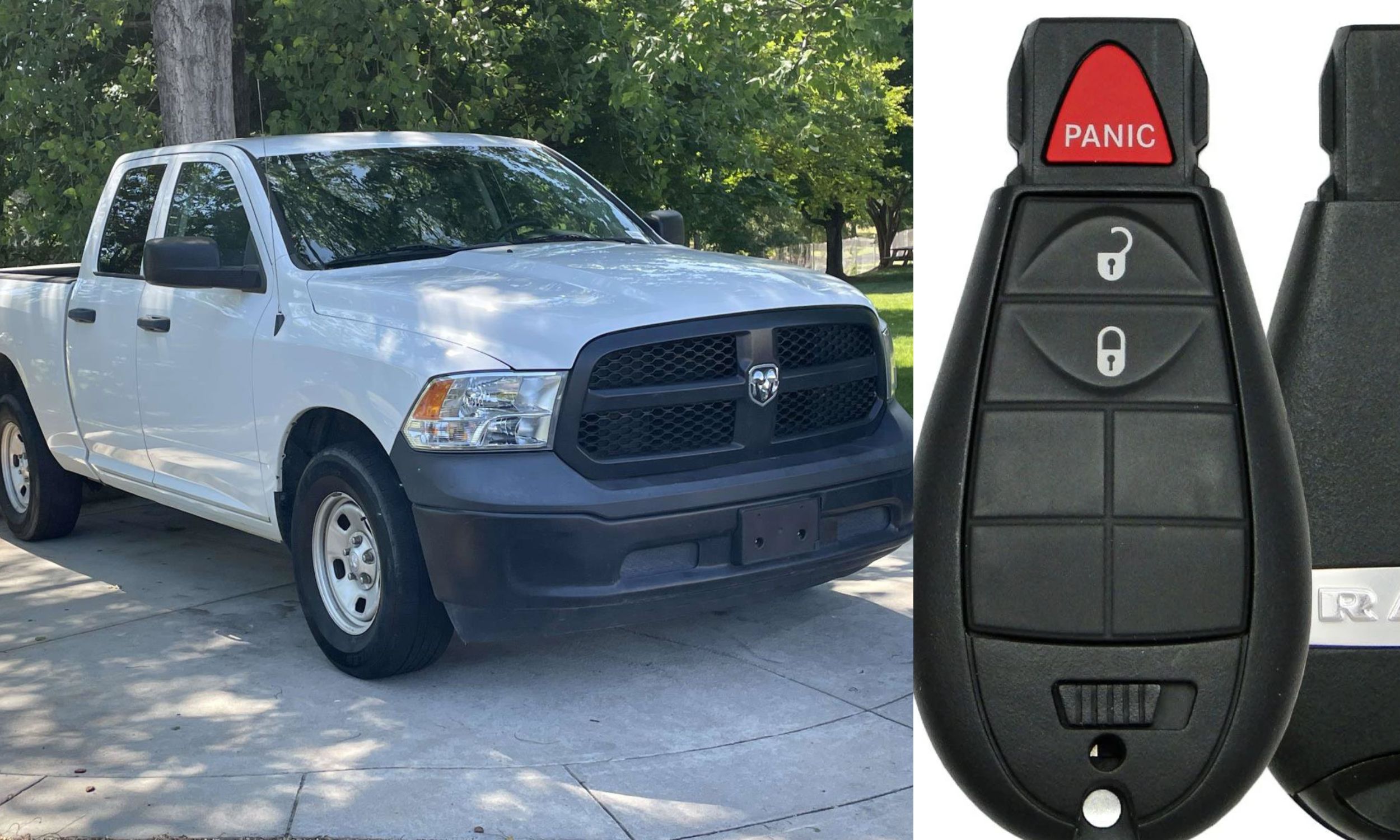
9. RAM 1500 Classic Tradesman
Ignition Detail: Uses the familiar key fob that inserts into and turns within the ignition switch.
- Engine: 3.6-liter Pentastar V6
- Horsepower: 305 hp
- Torque: 269 lb-ft
- Size: 229.0″ L x 79.4″ W x 77.2″ H
Ram’s continued production of the Classic body style alongside its newer, redesigned truck lineup gives budget-conscious buyers genuine access to proven mechanical reliability, including that familiar key fob design that physically inserts into and turns within a traditional ignition switch rather than requiring push-button technology.
That naturally aspirated 3.6-liter Pentastar V6 delivers a genuinely respectable 305 horsepower, giving this half-ton truck confident everyday performance and reasonable towing capability without requiring buyers to step up toward pricier, more technologically advanced trim levels within Ram’s broader current lineup.
Fleet buyers and value-focused commercial customers specifically appreciate this Classic Tradesman configuration precisely because it maintains proven mechanical simplicity throughout, understanding that this particular platform has accumulated years of genuine reliability data that newer, more electronically complex alternatives simply haven’t had time to establish yet.
Solid dimensions, stretching 229 inches long, give this truck genuine half-ton capability suited toward everyday work applications, towing light trailers, hauling equipment, and general commercial duty that doesn’t necessarily demand the considerably more expensive heavy-duty alternatives covered elsewhere on this list.
Ram’s decision to continue offering this Classic body style alongside its newer lineup gives buyers genuine choice between cutting-edge technology and proven, straightforward mechanical simplicity, a decision that clearly resonates with commercial buyers specifically prioritizing dependability and lower upfront costs over the latest available convenience features.
For fleet operators and budget-conscious truck buyers specifically wanting genuine half-ton capability without unnecessary technological complexity, the Ram 1500 Classic Tradesman continues delivering exactly that proven, straightforward value proposition that’s earned genuine loyalty among commercial buyers throughout its extended production run.
Also Read: 8 New Cars That Kept Physical Climate Buttons
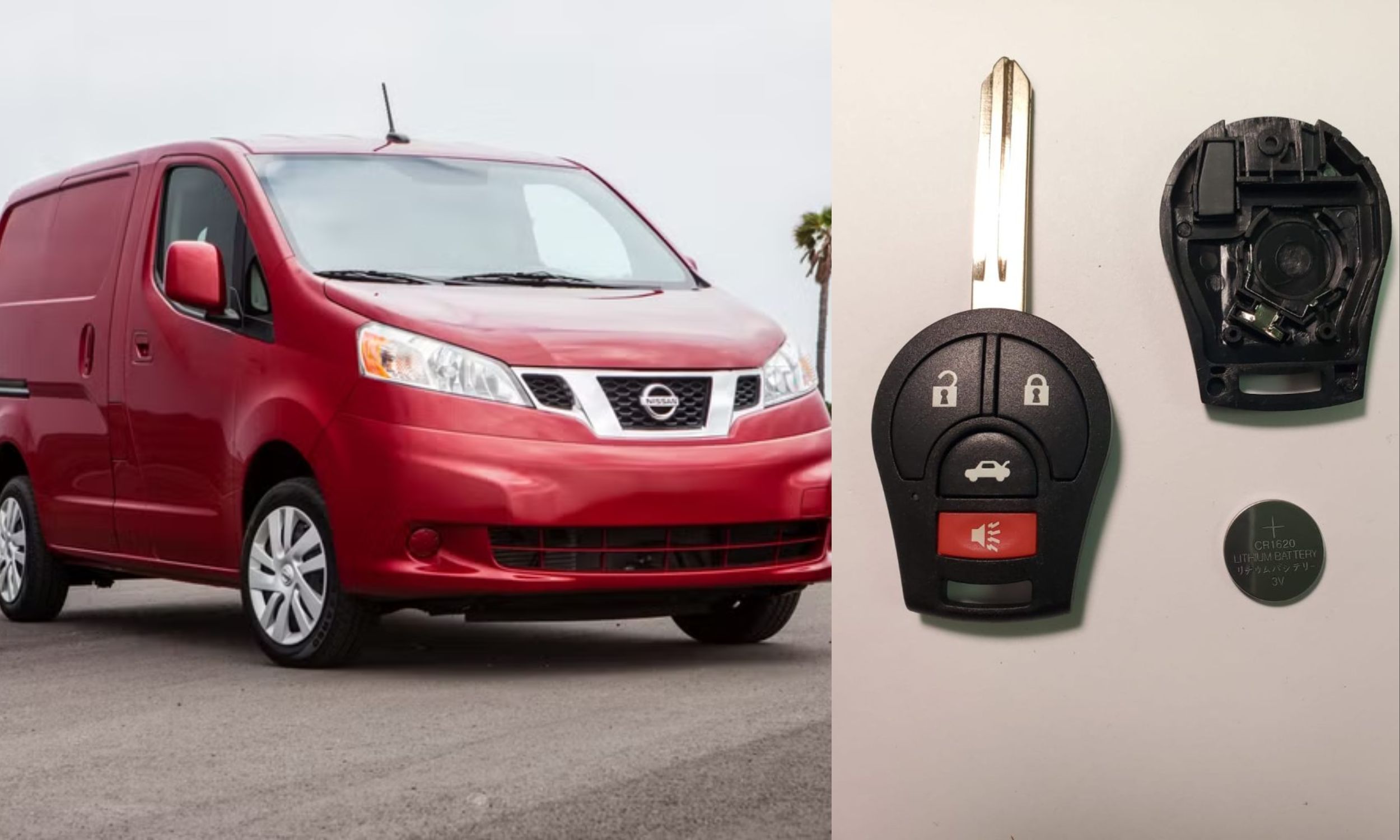
10. Nissan NV200 (Fleet markets where it was still sold)
Ignition Detail: Uses a conventional mechanical ignition key.
- Engine: 2.0-liter Inline-4
- Horsepower: 131 hp
- Torque: 139 lb-ft
- Size: 186.3″ L x 68.1″ W x 73.7″ H
Built with commercial users in mind, the Nissan NV200 remains a dependable choice in fleet markets where it is still sold. Rather than using push-button technology, this compact cargo van sticks with a traditional mechanical ignition, staying true to its simple design and practical purpose.
Power comes from a 2.0-liter engine producing 131 horsepower, which is more than enough for its intended duties. Daily delivery runs, mobile repair services, and other light commercial jobs do not demand high performance. What business owners value more is dependable operation, reasonable fuel use, and affordable maintenance.
Many small companies prefer the NV200 because its compact size makes daily work much easier. Parking in busy areas, driving through narrow streets, and accessing crowded loading points become less stressful than they would with larger commercial vans. That practical advantage saves both time and effort during a busy workday.
Although this van is mainly supplied to fleet operators, making it less common for private buyers, businesses continue to rely on it for dependable service. Measuring slightly above 186 inches in length, it delivers excellent maneuverability where space is limited. Its conventional ignition also appeals to operators who prefer dependable mechanical parts instead of extra electronic features that may increase repair costs.
