
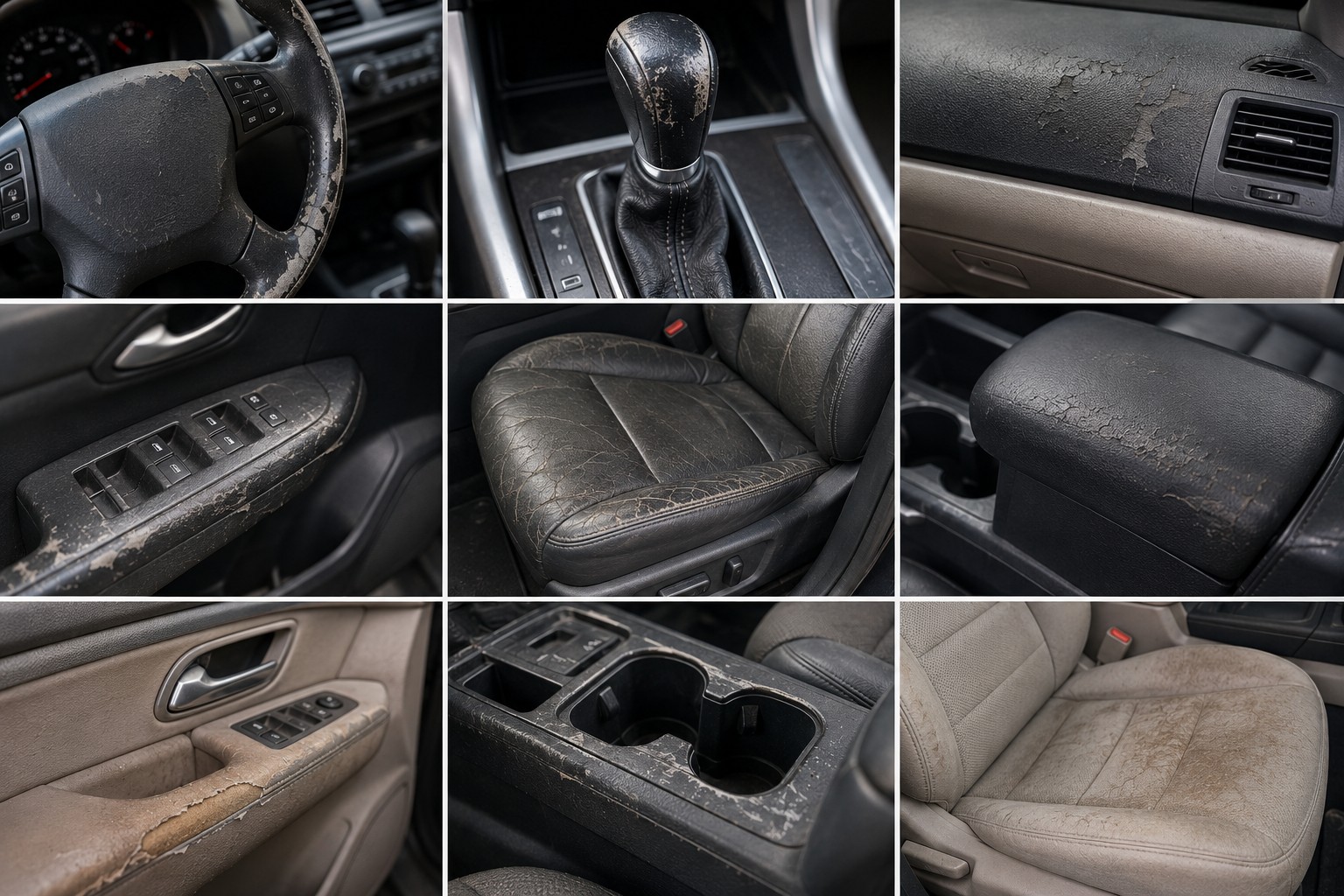
Not every car that drives well ages gracefully on the inside. Some vehicles roll off the lot with cabins that look decent in the showroom. But cheap plastics, thin leather, and poorly bonded trim start showing their true colors fast.
Owners report peeling steering wheels within the first year. Dashboards crack under sun exposure well before the warranty runs out. Seats bolster wear, fabric pills, and trim rattles loose long before the odometer hits six figures.
This list focuses on eight models with a documented pattern of premature interior degradation. These aren’t vague complaints about “cheap feel.” These are specific, repeated owner reports of cracking, peeling, rattling, and fading often starting well under 60,000 miles.
Some of these cars are otherwise solid mechanically. Others struggle on multiple fronts. But all eight share one thing in common: their cabins don’t hold up the way a modern car’s interior should.
If you’re shopping used, mileage alone won’t tell the whole story. The condition of the dashboard, seats, and trim can reveal just as much about how a car was engineered. Here’s a closer look at eight vehicles where interior durability became a real complaint, not just an internet rumor.
1. Nissan Sentra
The Nissan Sentra built its reputation on affordability. That affordability shows up inside the cabin fast. Owners across multiple generations report seat bolsters flattening early. Fabric wears thin at the driver’s side bolster well before 60,000 miles.
Steering wheel leather and vinyl are frequent complaint points too. Multiple owners describe bubbling or peeling material within the first year of ownership.
The CVT transmission compounds the problem for many owners. Shuddering and rough operation start as early as 60,000 miles, adding vibration that accelerates trim wear.
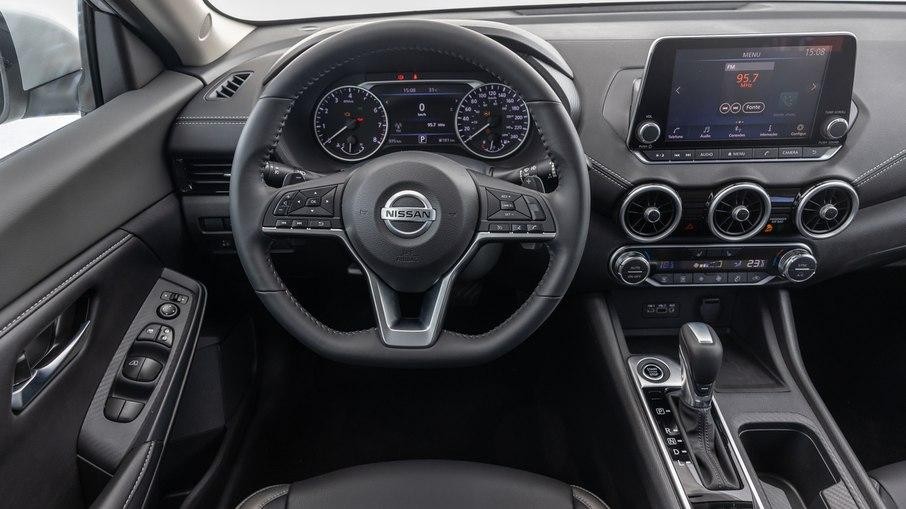
Interior trim pieces around the climate controls and door panels also loosen with regular use. Rattles develop over rough pavement, especially near the dashboard.
Forum threads describe rattling static noises from the steering column area. Some owners report swerving sensations tied to steering assembly wear, which compounds the sense of cabin fragility.
Specifications (Nissan Sentra)
- Engine: 1.8L inline-4
- Horsepower: 130 hp
- Torque: 128 lb-ft
- Length: 182.1 in
- Width: 69.3 in
2. Ford Fiesta
The Fiesta, especially the sporty ST trim, earned praise for handling. Its interior earned a very different reputation. Journalists and owners alike describe the plastics as scratchy and hollow-feeling. Panels flex and creak when pressed, even on nearly new examples.
Rattles are a defining trait of Fiesta ownership. Owners describe the cabin sounding like it will “disassemble” over rough pavement. Trim pieces around the shifter and door panels loosen early. Many owners resort to aftermarket sound-deadening material just to quiet the cabin.
The infamous PowerShift dual-clutch transmission adds mechanical shudder to the mix. That vibration transfers into an already loose-fitting interior, accelerating squeaks and rattles.
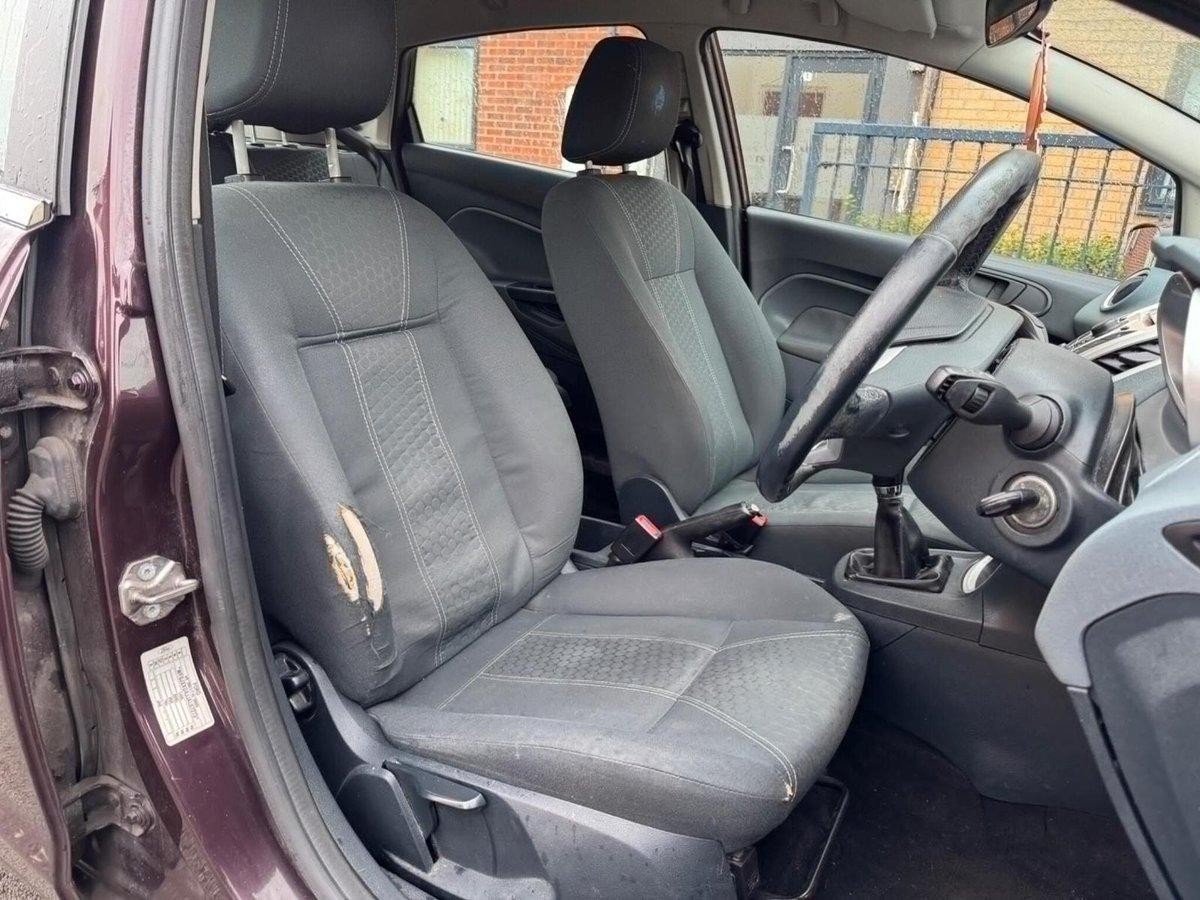
Class-action litigation followed the transmission problems. But the interior complaints, while less publicized, appear just as consistently in long-term owner reviews.
Fiesta owners frequently note that the cabin feels its age far faster than the drivetrain does. By 60,000 miles, many describe a noticeably looser, noisier interior than day one.
Specifications (Ford Fiesta)
- Engine: 1.6L inline-4
- Horsepower: 120 hp
- Torque: 112 lb-ft
- Length: 173.6 in
- Width: 66.8 in
3. Jeep Compass
The Jeep Compass looks rugged outside. Inside, owners describe a different story entirely. Interior trim panels and dashboard components show wear and looseness within a few years. Buttons and switchgear develop play well before higher mileage marks.
Trim coating peeling is a well-documented issue across model years. Owners on Jeep forums describe finish flaking off interior surfaces on both older and newer Compass models.
Rattling from door panels and dashboard mounts is another recurring theme. Owners trace the noise to loose clips and fasteners that don’t stay secure.
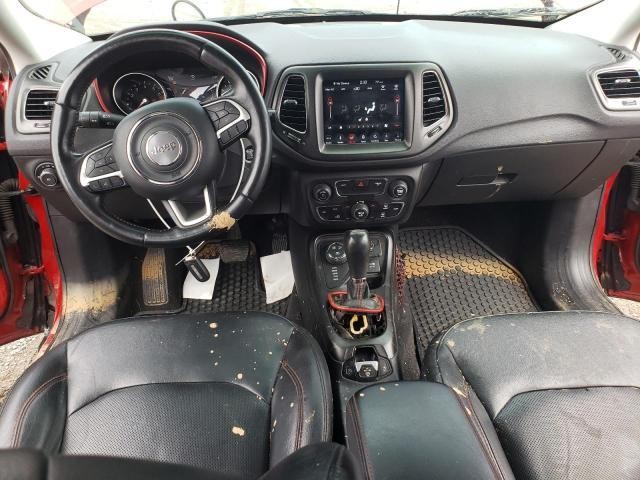
Water leaks into the cabin have also been reported on certain model years. That moisture accelerates trim degradation and can warp interior panels over time.
Legal filings from consumer lemon-law firms specifically cite interior rattling and water intrusion as common Compass complaints. That’s a strong signal the issue is widespread, not isolated.
Jeep has made incremental improvements in newer Compass generations. Even so, older and mid-generation models remain notorious for interiors that feel loose well before 60,000 miles.
Specifications (Jeep Compass)
- Engine: 2.4L inline-4
- Horsepower: 180 hp
- Torque: 175 lb-ft
- Length: 173.4 in
- Width: 73.8 in
4. Dodge Journey
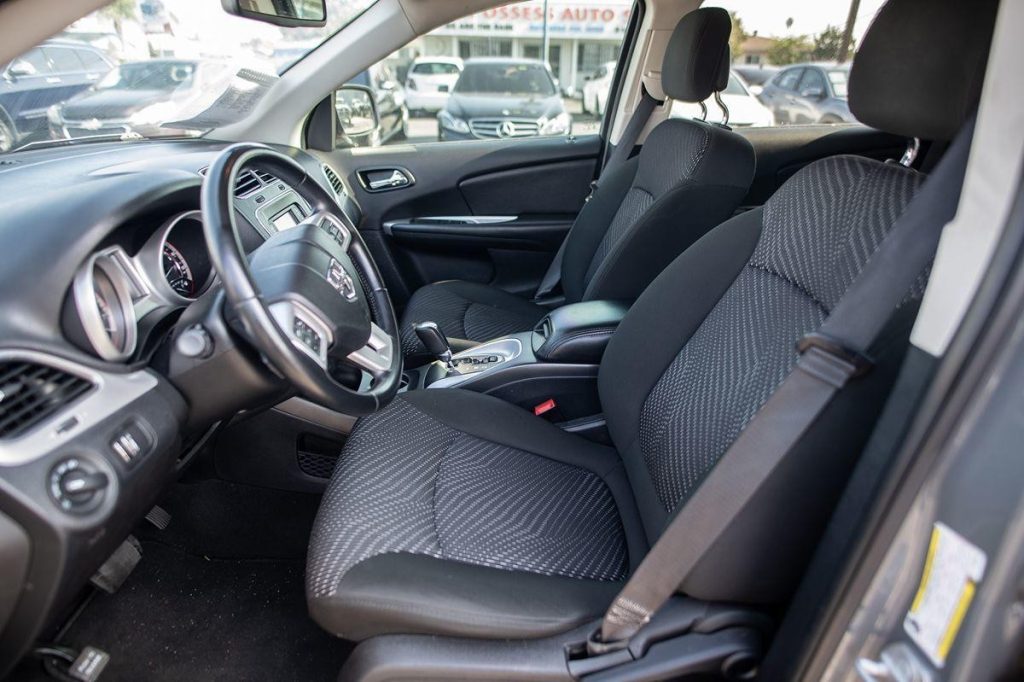
The Dodge Journey offered three-row seating at a bargain price. That bargain shows up in the cabin materials. Owner reviews consistently describe shiny, hard black plastic throughout the interior. Reviewers note the design isn’t bad, but the material choices feel cut-rate.
One owner specifically described seat belts as “weirdly thin,” comparing them unfavorably to much older vehicles. That’s a telling detail about build quality.
Kelley Blue Book review summaries are blunt on this point. Comfort and styling rank as the Journey’s strongest traits, while quality consistently ranks as its weakest across nearly every model year.
Mechanical issues compound the interior wear. Owners report plastic components failing outright by 100,000 miles, including coolant reservoirs and housings, suggesting broader material-quality shortcuts.
Trim and dashboard rattles show up commonly in long-term ownership threads too. Interior noise complaints appear across nearly a decade of Journey production, from 2009 through the model’s discontinuation.
Buyers looking at a used Journey should inspect seat bolsters and dashboard seams closely. Many examples show visible wear well before the 60,000-mile mark.
Specifications (Dodge Journey)
- Engine: 2.4L inline-4
- Horsepower: 173 hp
- Torque: 166 lb-ft
- Length: 192.4 in
- Width: 72.2 in
Also Read: 10 SUVs That Changed the Automotive Industry Forever
5. Mitsubishi Mirage
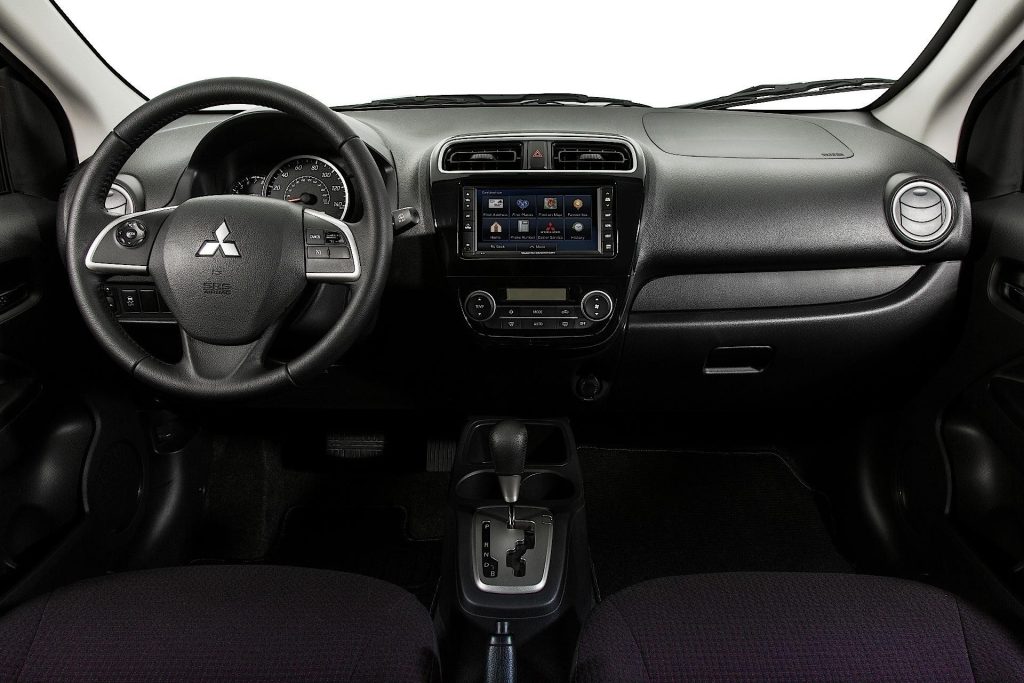
The Mitsubishi Mirage is built to a price point above almost anything else on sale. The interior reflects that mission directly. Professional reviewers are consistent and blunt. The Car Connection describes hard plastics and cheap cloth “as far as the eye can see,” while U.S. News calls the cabin simply cheap.
Even higher trims don’t escape the criticism. Reviewers note that upper Mirage trims are still “awash in cheap interior plastics,” with only minor fabric accents breaking up the hard surfaces.
Owners themselves are split, but even fans tend to qualify their praise. Comments about “great fit and finish” are often followed by acknowledgments that materials are basic and utilitarian at best.
Paint and trim fading are also mentioned by long-term owners. One reviewer noted seeing two- and three-year-old Mirages with faded or peeling paint, despite regular waxing.
The three-cylinder engine’s coarse operation adds vibration into the cabin. That constant buzz can accelerate wear on trim clips and interior fasteners over time.
Given its rock-bottom price, some wear is expected. But the consistency of “cheap” as the top descriptor across nearly a decade of reviews points to a real pattern.
Specifications (Mitsubishi Mirage)
- Engine: 1.2L inline-3
- Horsepower: 78 hp
- Torque: 74 lb-ft
- Length: 154.7 in
- Width: 65.4 in
6. Chevrolet Cruze
The Chevrolet Cruze aimed for a more upscale small-car cabin than its rivals. Owners report that ambition didn’t always translate into lasting materials.
Forum discussions describe specific early wear points. The chrome trim around the shift knob is reported to wear through in as little as 20,000 to 30,000 miles.
Steering wheel leather is another frequent complaint. Owners describe the wrap looking “greasy” and worn at relatively low mileage. Dashboard and center console rattles are extremely common across Cruze ownership threads. One owner described a persistent buzz against the instrument cluster that required a technician ride-along to diagnose.
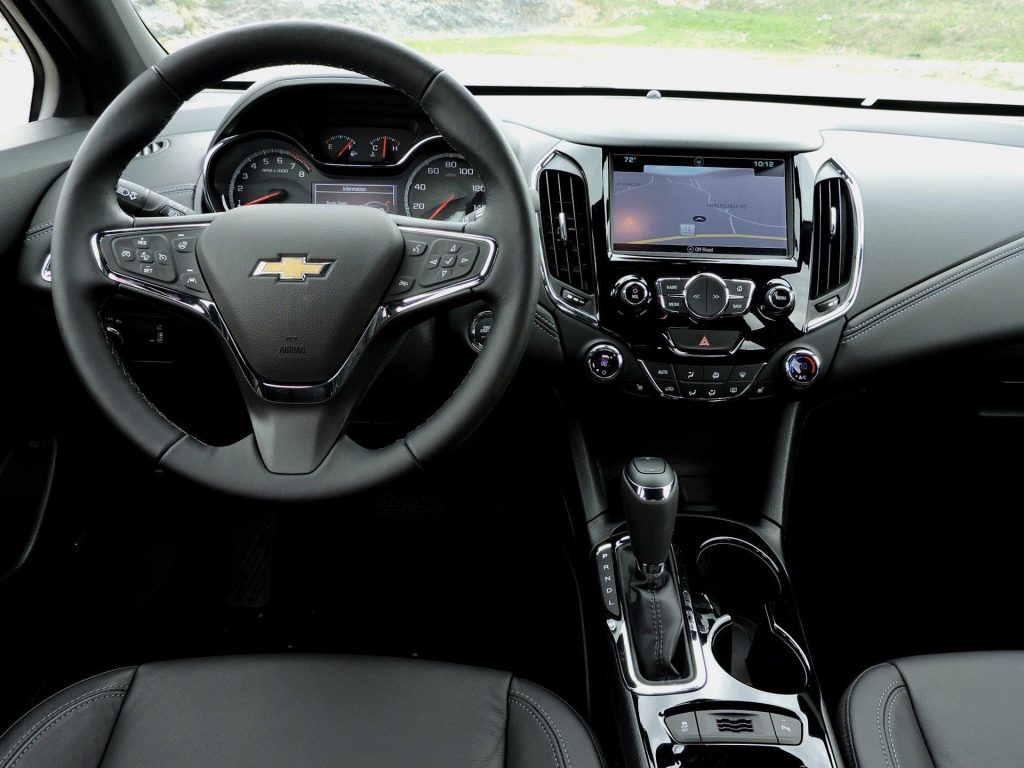
Seat creaking is another recurring issue, particularly with power-adjustable front seats. Owners note the noise appears during cornering and can take real effort to trace and fix.
An antifreeze odor inside the cabin is a widely reported complaint too, tied to coolant leaks. Multiple owners report the smell appearing around 33,000 miles, well within a typical ownership window.
GM addressed some rattle issues through technical service bulletins targeting the instrument panel area. That such bulletins exist confirms the complaints were widespread enough to warrant a fix.
Specifications (Chevrolet Cruze)
- Engine: 1.4L turbocharged inline-4
- Horsepower: 153 hp
- Torque: 177 lb-ft
- Length: 183.7 in
- Width: 70.5 in
7. Chrysler 200
The Chrysler 200 looked genuinely upscale in photos and showrooms. Owners say that impression faded fast in daily use. Common complaints are specific and consistent. Hard plastic trim scratches and cracks easily, while panel gaps show up around the console and dashboard.
One owner detailed a striking early failure. Their 200C’s steering wheel leather began fading and peeling at just 12,000 miles, and the replacement wheel showed the same issue by 29,900 miles.
Carpet peeling in the footwells was reported alongside the steering wheel problem. That kind of compounding failure suggests a deeper materials or adhesive issue, not an isolated defect.
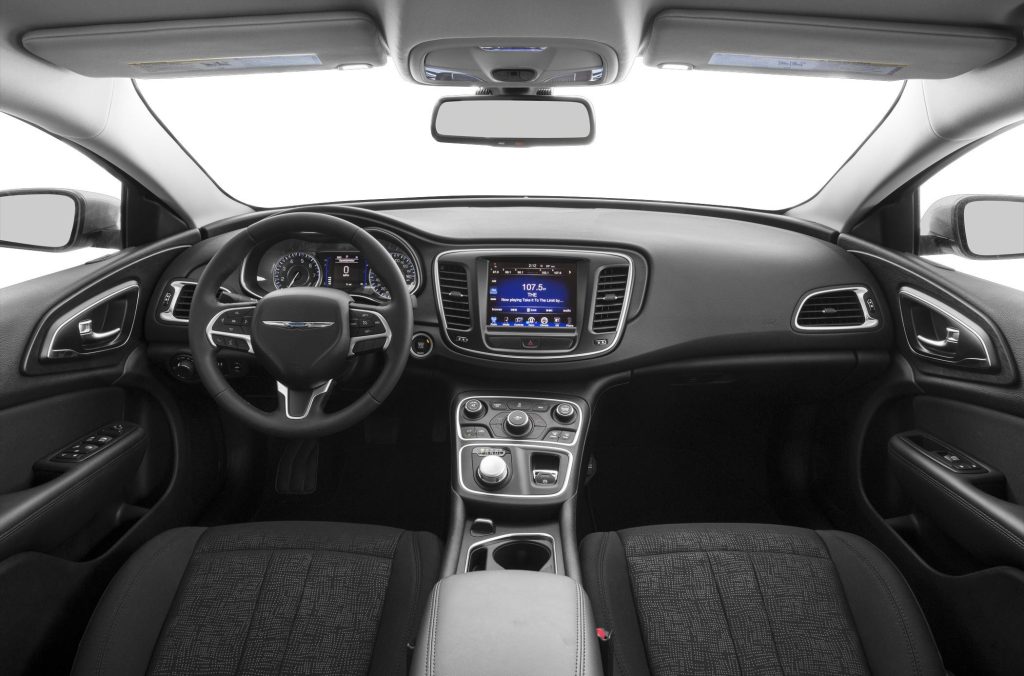
Leather seat upholstery is another frequent complaint area. Owners report creasing and cracking after only a few years of regular use, even on higher trims.
The problematic 9-speed automatic transmission adds extra vibration and harshness to the cabin experience. That mechanical roughness likely accelerates wear on trim fasteners and seat mounting hardware.
Reviewers acknowledge the 200’s design looked good on paper. But the gap between its styling ambitions and its actual material durability became one of the car’s defining weaknesses.
Specifications (Chrysler 200)
- Engine: 2.4L inline-4
- Horsepower: 184 hp
- Torque: 173 lb-ft
- Length: 192.3 in
- Width: 73.0 in
8. Nissan Versa
The Nissan Versa prioritizes low price and interior space over material quality. Reviewers have flagged this trade-off for over a decade. U.S. News summarized road tests bluntly. Reviewers reported knocking their knuckles on hard surfaces everywhere, with materials described as “hard, entry level, and cheap.”
Car and Driver made a similar point in period testing. They noted the dash and door panels used “rock-hard” plastic, despite a nicely grained appearance at first glance.
Recent model years haven’t fully escaped this reputation. Edmunds owner reviews of 2024 and 2025 Versas still describe door armrests and dash trim as “hard rough plastic,” with no soft-touch materials anywhere in reach.
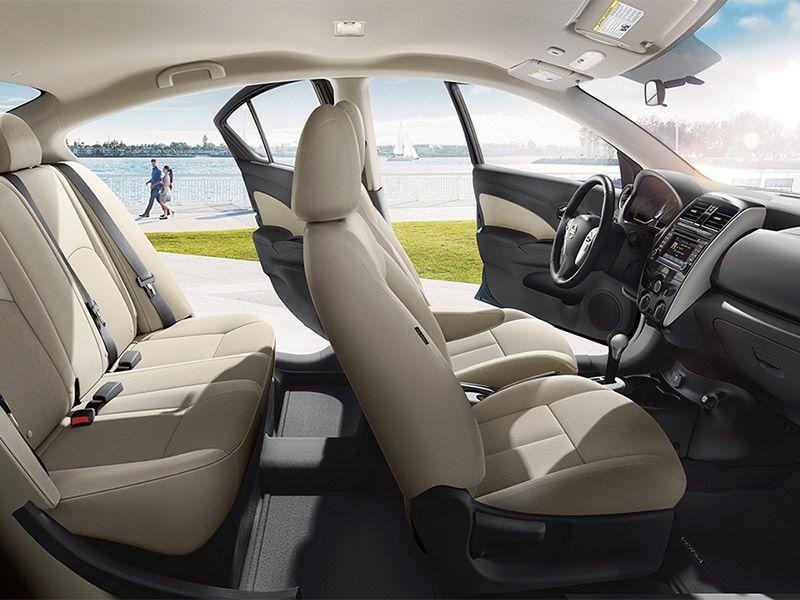
Seat fabric is another point of concern for some owners. Reports mention the material showing dirt and stains more readily than expected, requiring extra upkeep to keep the cabin looking presentable.
Minor rattles and squeaks are also documented on rougher roads. Owners attribute this to how interior panels are fitted, a common trait among vehicles built to a strict price target.
The Versa remains functional and spacious for its class. But its interior materials consistently rank as the car’s weakest attribute across nearly every generation reviewed.
Specifications (Nissan Versa)
- Engine: 1.6L inline-4
- Horsepower: 122 hp
- Torque: 114 lb-ft
- Length: 177.0 in
- Width: 68.5 in
Also Read: 8 Diesel Trucks Ranked by Resale Value
