
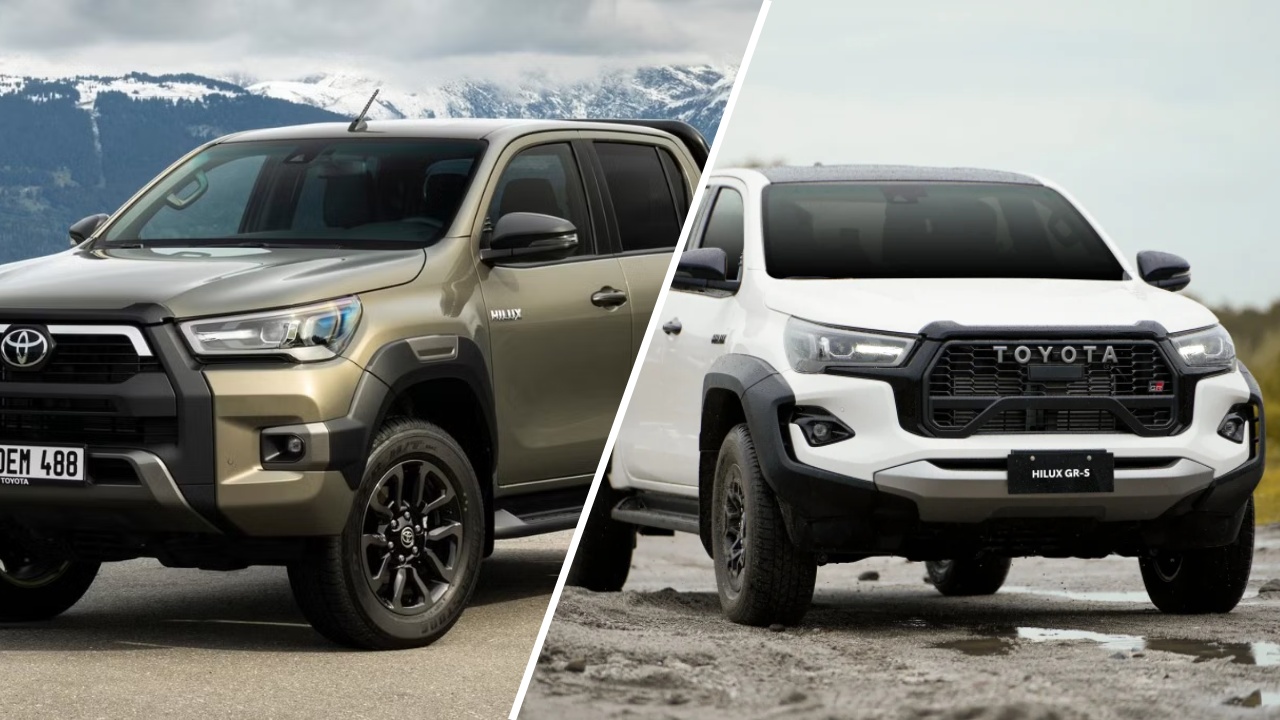
The Toyota Hilux has built a reputation as one of the toughest pickup trucks in the world. Whether it is working on construction sites, hauling trailers, tackling off-road trails, or serving as a dependable daily driver, the Hilux consistently ranks among the best-selling vehicles in markets such as Australia, Thailand, South Africa, and much of the Middle East.
Its durability is legendary, with many examples surpassing 300,000 miles when properly maintained.
Buying a Hilux, however, involves much more than paying the purchase price. Fuel, insurance, servicing, tires, registration, depreciation, and unexpected repairs all contribute to the real cost of ownership. While the Hilux is widely regarded as one of the least troublesome midsize pickups to own, it still requires careful budgeting over several years.
For this analysis, we’ll consider a typical Toyota Hilux 2.8-liter turbo diesel double cab driven approximately 9,300 miles (15,000 km) per year, resulting in about 46,500 miles after five years. Actual ownership costs vary by country, fuel prices, taxes, insurance premiums, and financing, but the full ownership trends remain remarkably consistent.
Also Read: 8 Hybrids With the Lowest Lifetime Fuel Costs, per EPA Data
Purchase Price, Depreciation, and the Biggest Hidden Expense
Most buyers focus on the showroom price, but depreciation is usually the single largest ownership cost over five years.
Depending on trim level and market, a new Toyota Hilux typically costs the equivalent of about US$37,000 to US$55,000 before optional accessories. Higher-grade models such as the SR5, Rogue, GR Sport, or Invincible command considerably higher prices because of added technology, four-wheel-drive systems, premium interiors, and off-road equipment.
According to CarExpert, current Hilux drive-away pricing in Australia ranges from roughly A$39,000 for entry-level Workmate models to well over A$70,000 for flagship variants.
Fortunately, Toyota’s resale values remain among the strongest in the pickup segment. According to Toyota Australia’s fleet ownership guidance, depreciation generally represents the largest long-term ownership expense for any vehicle, but vehicles with stronger resale values significantly reduce total ownership costs.
The company notes that many vehicles retain around 42 percent of their original value after three years, while Toyota utilities often perform better because of sustained demand in the used market.
The Hilux benefits from exceptional demand among commercial operators, farmers, outdoor enthusiasts, and export markets. Even examples with high mileage frequently command impressive resale prices compared with competing midsize trucks.
For many owners, depreciation over five years typically represents approximately 35 to 45 percent of the original purchase price, although market conditions can push this figure higher or lower.
During the global supply shortages of 2021 through 2023, used Hilux prices remained unusually strong. As production normalized, depreciation returned closer to historical trends.
Unlike many premium pickups that lose value rapidly, the Hilux continues attracting buyers well beyond 100,000 miles because of its reputation for longevity.
Running Costs Add Up Every Year
After depreciation, fuel becomes the next largest expense for most owners. The popular 2.8-liter four-cylinder turbo diesel generally delivers combined fuel consumption between 7.5 and 8.5 liters per 100 kilometers, depending on transmission, load, and driving conditions.
Heavy towing, frequent off-road driving, oversized tires, and city traffic can increase fuel consumption significantly.
Assuming average annual driving of about 9,300 miles and current diesel prices in many global markets, owners can expect to spend several thousand dollars on fuel over five years. Regional fuel prices make a substantial difference. Markets with higher diesel taxes naturally increase ownership costs despite the Hilux’s efficient engine.
Routine servicing is another predictable expense. Toyota schedules regular maintenance intervals to help preserve reliability, and sticking to these service schedules is critical. Oil changes, filters, brake inspections, coolant replacement, transmission servicing, and differential fluid changes become recurring expenses throughout ownership.
Independent workshops generally reduce servicing costs compared with dealerships once the factory warranty expires, although many owners continue using Toyota dealers to maintain complete service histories that strengthen resale values.
Tires deserve special consideration. A Hilux used primarily on paved roads may require one replacement set during five years, while vehicles frequently driven off-road or carrying heavy loads can wear tires considerably faster.
Choosing aggressive all-terrain tires also increases replacement costs compared with highway-oriented tires.
Insurance premiums vary dramatically depending on driver age, driving history, vehicle trim, location, and modifications. Adding steel bumpers, suspension lifts, winches, snorkels, roof racks, or larger wheels often increases insurance costs because replacement values rise substantially.
Registration, licensing fees, and taxes also differ widely by country and state but remain unavoidable annual ownership expenses.
Independent running-cost studies by Australia’s RACQ show that owning a modern diesel two-wheel-drive utility such as a Toyota Hilux involves thousands of dollars annually in combined finance, insurance, registration, fuel, and servicing expenses, illustrating how ongoing costs quickly exceed routine maintenance alone.
Reliability Keeps Long-Term Ownership Affordable
Where the Hilux truly distinguishes itself is long-term durability. Toyota has spent decades refining its diesel engines, drivetrains, cooling systems, and four-wheel-drive components. As a result, catastrophic mechanical failures remain relatively uncommon when vehicles receive scheduled maintenance.
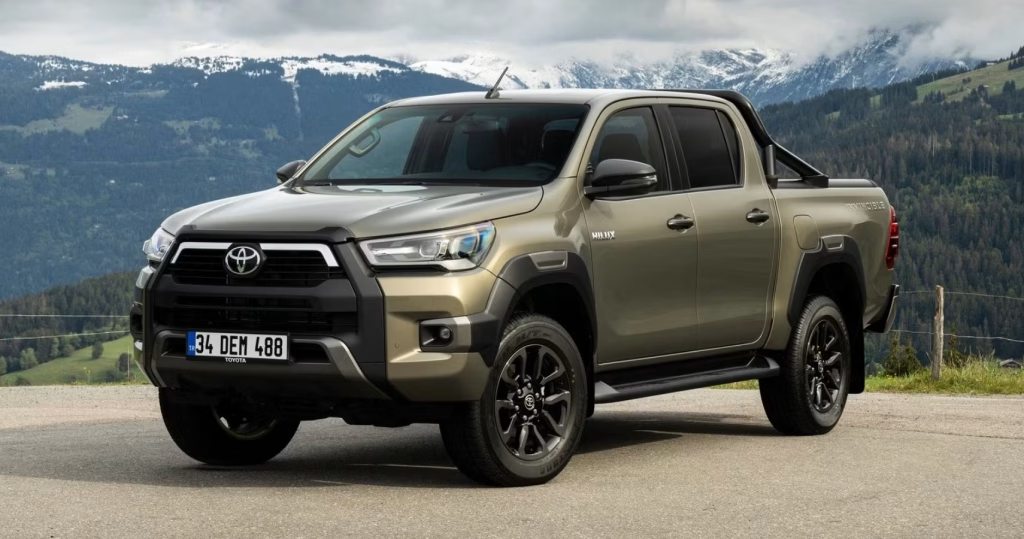
The 2.8-liter GD-series turbo diesel has generally earned positive reliability reviews, although some owners have experienced issues involving diesel particulate filters, injectors, EGR systems, and turbo-related components, particularly in vehicles subjected to repeated short trips or neglected maintenance.
Fortunately, these issues affect only a minority of owners, and Toyota has addressed several concerns through software updates, recalls, and service campaigns in various markets.
Suspension components naturally wear over time, especially on work vehicles that regularly haul heavy cargo or tow trailers. Brake pads, brake rotors, batteries, wheel alignments, belts, hoses, and shock absorbers eventually require replacement, but these are expected wear items rather than major reliability concerns.
One reason fleet operators continue choosing the Hilux is its predictable maintenance profile. Repair shops around the world are familiar with Toyota trucks, replacement parts are widely available, and aftermarket support remains among the strongest in the industry.
Evidence of the Hilux’s durability continues to emerge from high-mileage owners. Earlier this year, an Australian-owned 2010 Hilux attracted widespread attention after surpassing one million kilometers with only limited major mechanical repairs while following consistent maintenance schedules, reinforcing the model’s long-standing reputation for exceptional longevity.
Owners who neglect servicing, ignore warning lights, delay oil changes, or overload the vehicle continuously are naturally more likely to encounter expensive repairs regardless of brand.
For buyers who finance their vehicles, loan interest represents another important ownership cost that should not be overlooked. Financing can add several thousand dollars over a five-year ownership period depending on interest rates and down payment amounts.
When all ownership expenses are combined, a typical five-year Hilux budget generally includes the following:
- Initial purchase price
- Depreciation
- Fuel
- Scheduled servicing
- Tires
- Insurance
- Registration and licensing
- Occasional wear-item replacements
- Financing costs, if applicable
While the total investment can appear substantial, the Hilux frequently proves less expensive to own than many competitors because it combines strong fuel efficiency, excellent resale value, proven reliability, and relatively modest repair costs.
That combination explains why businesses, government fleets, emergency services, mining companies, and private buyers continue purchasing the Hilux in enormous numbers year after year.
The real cost of owning a Toyota Hilux for five years extends well beyond the window sticker, but it also delivers value in ways that many rivals struggle to match.
Its strong resale value offsets a significant portion of depreciation, routine servicing remains predictable, parts availability is excellent, and its reputation for reliability minimizes the likelihood of major unexpected repair bills.
While fuel, insurance, and maintenance still represent meaningful annual expenses, the Hilux consistently ranks among the most financially sensible midsize pickups for long-term ownership.
For buyers seeking a truck capable of handling demanding work while retaining its value and reputation, the Toyota Hilux remains one of the strongest total ownership propositions on the market.
Also Read: 10 Vehicles With the Longest Powertrain Warranties
