
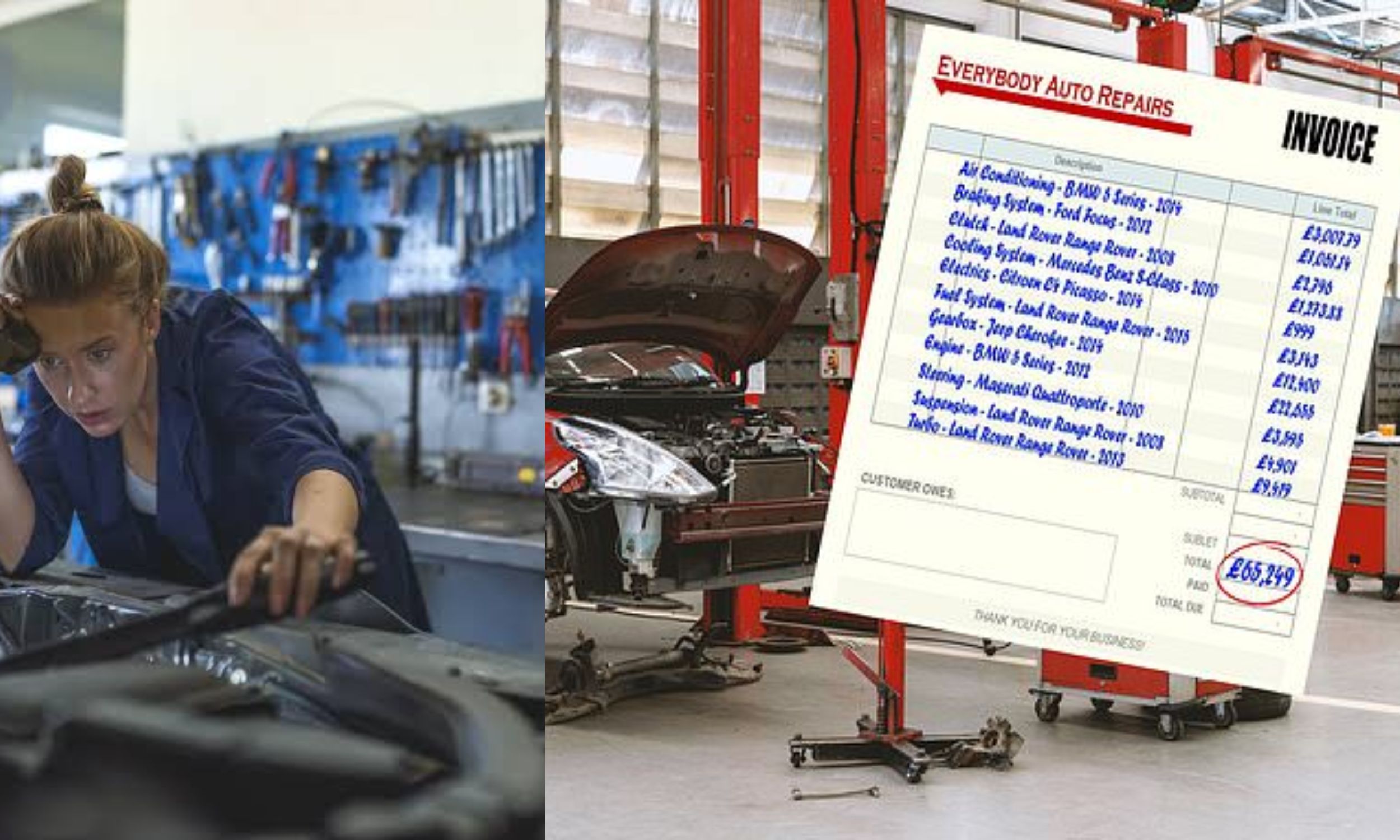
You’re standing in the service bay, staring at an estimate that just made your stomach drop. Sound familiar? Every car owner eventually faces this moment: the mechanic hands over a repair quote, and suddenly you’re doing mental math you never signed up for. The good news is you don’t have to guess your way through this decision.
There’s a genuinely simple formula that financial experts and mechanics both rely on, one that turns an emotional gut punch into a clear, numbers-based answer. It’s called the 50% rule, and once you know how to run it, you’ll never look at a repair estimate the same way again. Below, we’re breaking down exactly how the math works, when it applies, and when common sense should override the formula entirely.

The 50% Rule, Explained Simply
Here’s the entire concept in one sentence: if a single repair costs more than half of what your car is worth, it’s time to seriously consider selling instead of fixing. That’s it. No complicated spreadsheets, no financial degree required. The American Automobile Association treats a repair bill approaching half the vehicle’s value as a threshold worth a closer look, and that guidance has become something of an industry standard among mechanics and financial writers alike.
Ivan Drury, director of insights at Edmunds, calls it a good starting point, though he and other experts caution against treating it as an automatic, no-questions-asked trigger. Let’s put real numbers on it. Say Kelley Blue Book or Edmunds tells you your sedan is worth $8,000 in its current condition.
Your mechanic then quotes you $4,000 for a transmission rebuild. That repair sits at exactly 50% of the car’s value, which means it’s worth pausing to evaluate whether keeping the vehicle still makes financial sense. Now flip the script. If that same $4,000 repair were needed on a car worth $20,000, the ratio drops to just 20%, and fixing it becomes the obvious, easy choice.
The math only works, though, if both numbers going into it are accurate. That means pulling a real market value, not a nostalgic guess, and getting an actual written estimate rather than a rough verbal quote over the phone.
Getting Your Two Numbers Right
Running the 50% rule badly is worse than not running it at all, because bad inputs produce a false sense of confidence. The first number you need is your car’s actual market value, and this is not what you paid for it three years ago, and it’s definitely not what you feel it should be worth because you’ve kept it clean.
Pull up Kelley Blue Book or NADA Guides and look at the private party value in fair condition, since that tends to reflect the most realistic number a real buyer would pay. Trade-in values almost always come in lower, so don’t anchor yourself to those unless you’re specifically planning to trade the car in at a dealership. The second number is your repair estimate, and a verbal quote scribbled on a sticky note doesn’t count.
You need a detailed, written estimate from a shop you trust, itemized enough that you can see what’s labor and what’s parts. For anything approaching four figures, getting a second opinion from a different mechanic isn’t paranoid; it’s smart. Repair shops sometimes disagree wildly on both diagnosis and price, and a second quote can either confirm your first number or reveal you were about to overpay.
Once you have both figures, the division is simple. Repair cost divided by market value gives you a percentage. Anything creeping toward 50% deserves real consideration. Anything blowing past it, say a $6,000 repair on a $7,000 car, isn’t even a close call anymore. It’s confirmation that the math has already decided for you, whether you’re ready to accept it or not.

When the Rule Should Bend
No formula survives contact with every real situation, and the 50% rule has known exceptions worth understanding before you commit to selling. A car with a spotless maintenance history and genuinely low mileage for its age can sometimes justify breaking the rule.
If your vehicle has never let you down mechanically and a single repair, say a new air conditioning compressor, would restore it to full function for years to come, that spending can still be a smart move even if it technically crosses the halfway mark. Paid-off cars deserve their own version of this math entirely.
Rather than running a single repair against total value, financial writers suggest a broader approach here. Add up everything you’ve spent on repairs and maintenance over the past year, factor in what you’re likely to need soon, and turn that into a rough monthly cost of ownership.
Then compare that monthly figure against what a replacement vehicle would actually cost you each month, loan payment, insurance changes, and all. As one financial expert put it plainly, a paid-off car’s entire job is to cost less than the alternative, and the day it stops doing that job, it’s finished.
There’s also the upside-down scenario to watch for. If you owe more on your loan than the car is currently worth, selling doesn’t just mean losing the vehicle; it means potentially rolling negative equity into your next purchase, which can trap you in a worse financial position than simply paying for the repair. Before you sell based on math alone, make sure you know exactly where your loan balance stands.
Also Read: What It Costs to Repaint a Full-Size Truck
Beyond the Formula: Frequency and Safety
Math handles the dollars, but it doesn’t capture everything that matters when deciding whether to let a car go. Frequency counts for a lot here. A single expensive repair on an otherwise trouble-free car is a very different situation than a car that’s back in the shop every few months for something new.
If your trips to the mechanic have become so regular that you’ve started recognizing the service writer’s voice on the phone, that pattern itself is a signal worth listening to, even if no individual repair crosses the 50% threshold on its own. Safety concerns should override the spreadsheet entirely.
A vehicle that stalls unpredictably, loses power steering, or has brakes that feel less confident than they used to isn’t a math problem anymore; it’s a safety problem. Rising vehicle prices have pushed many owners to hold onto older cars longer than they might have a decade ago, and that’s a reasonable response to a tough market.
But holding on because a car is genuinely putting you or your passengers at risk is a different calculation altogether, one where the dollar amount on the repair bill matters far less than the peace of mind that comes from driving something you trust. Frequent breakdowns that leave you stranded, repeated visits for the same unresolved issue, or a mechanic who keeps saying “let’s just watch that for now” are all signs pointing toward the exit, regardless of what the 50% math says.
Also Read: Why a $400 Wheel Bearing Job Now Costs $1,200 With Recalibration

Running the Numbers Before You Decide
Selling a car you’ve grown attached to is never purely a financial decision, but arming yourself with real numbers takes a lot of the emotion out of it. Pull an honest market value, get a written repair quote, run the simple division, and be honest with yourself about how often you’ve been back in that service bay lately.
The 50% rule won’t answer every question a car owner faces, but it gives you a solid, defensible starting point instead of a gut feeling shaped by frustration or nostalgia. When the math and your daily experience with the car start pointing in the same direction, that’s usually a pretty reliable sign it’s time to start browsing listings instead of scheduling another repair appointment.
