
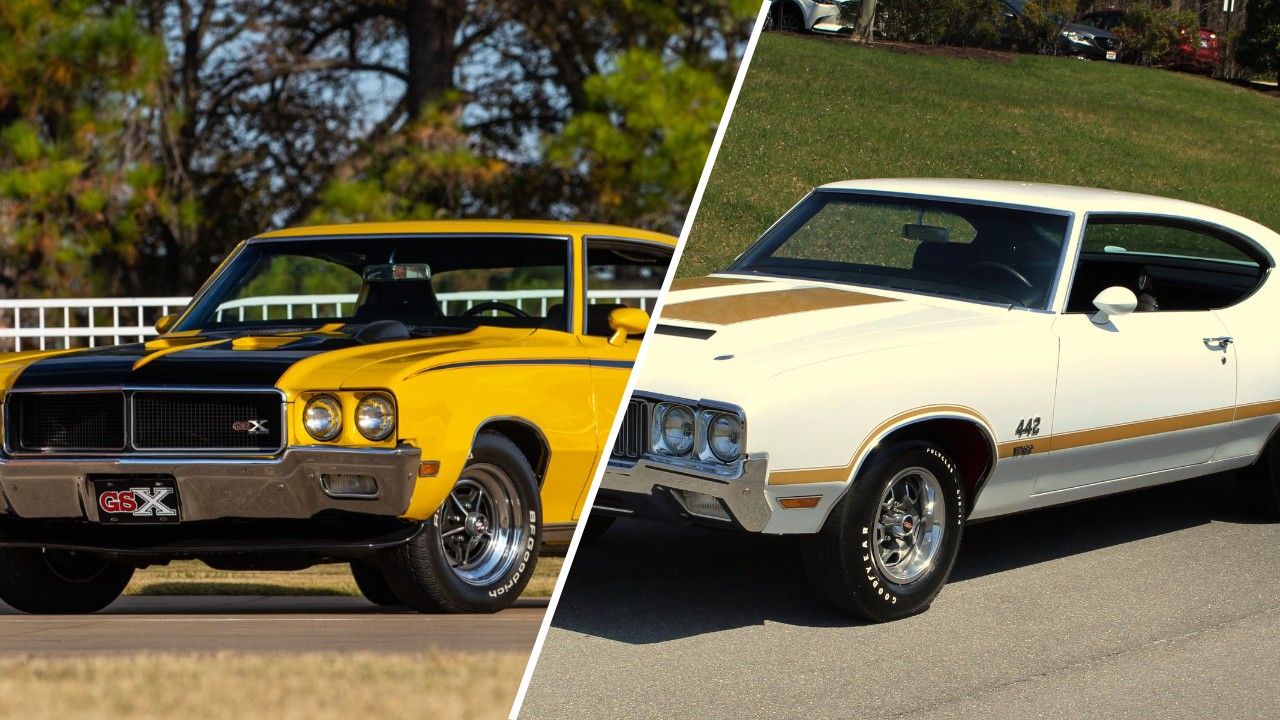
The classic car market has a habit of surprising collectors. While muscle cars like the Chevrolet Chevelle SS and Dodge Charger often dominate headlines, several overlooked Buicks and Oldsmobiles have quietly climbed in value over the past decade.
Auction results from Mecum, Barrett-Jackson, Bring a Trailer, and Hagerty Price Guide data show that collectors are paying significantly more for rare, well-preserved examples than they did just a few years ago.
Limited production numbers, distinctive engineering, factory performance packages, and growing nostalgia have transformed these once-forgotten American cars into legitimate investment-grade classics that deserve a closer look.
Also Read: 10 Motorcycles That Hold Value Better Than a Sportster
1. Buick GNX (1987)
When the Buick GNX debuted for the 1987 model year, many enthusiasts underestimated what appeared to be just another black Regal. That perception disappeared almost immediately once performance figures emerged.
Developed in partnership with ASC/McLaren, the GNX became the ultimate evolution of Buick’s turbocharged Grand National and remains one of the fastest American production cars of the 1980s. Only 547 examples were built, instantly making it one of General Motors’ rarest performance vehicles.
Factory ratings listed the turbocharged 3.8-liter V6 at 276 horsepower and 360 lb-ft of torque, although independent testing at the time suggested the engine produced substantially more.
Contemporary magazine testing recorded 0 to 60 mph times in approximately 4.7 to 5.0 seconds, allowing the GNX to outperform several contemporary Corvettes and even challenge European sports cars costing considerably more.
The proof that the GNX has become a valuable collector’s car is undeniable. Hagerty Price Guide has steadily increased valuation estimates during the past decade, while Mecum and Barrett-Jackson auctions have repeatedly produced six-figure sales for low-mileage examples.
Bring a Trailer has also documented multiple sales exceeding $200,000 for exceptionally preserved cars. Limited production, outstanding originality, and complete documentation have become major value drivers. Even higher-mileage cars routinely command prices well above $100,000 when properly maintained.
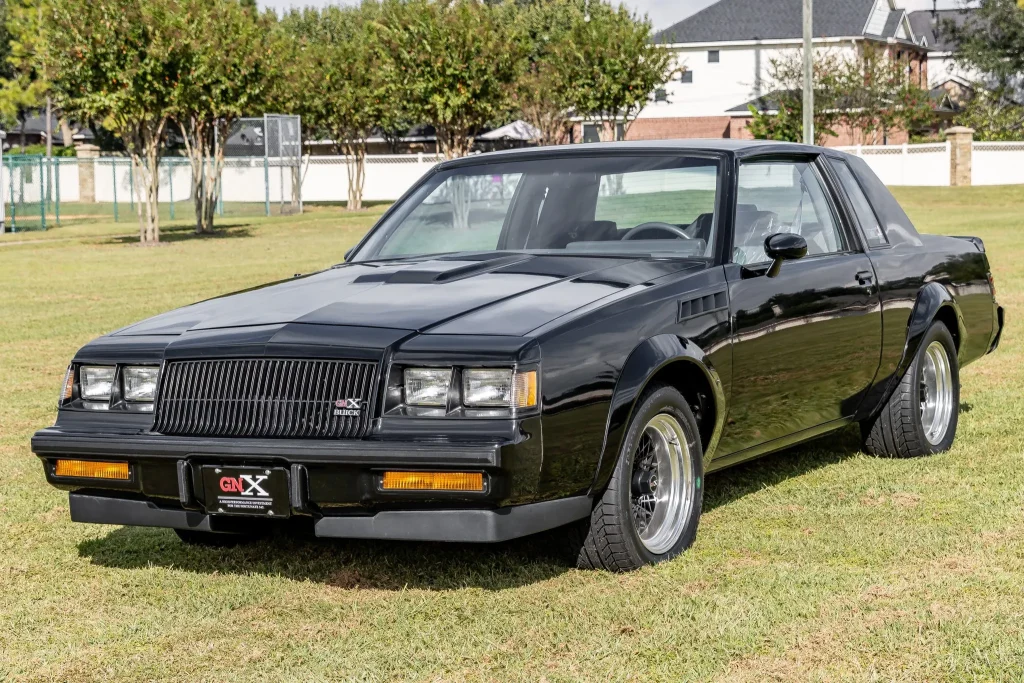
Collectors continue pursuing the GNX because it represents the peak of Buick’s turbocharged performance era and marks the final chapter before front-wheel-drive platforms replaced traditional rear-wheel-drive muscle.
Its rarity ensures demand continues to outpace supply, particularly for vehicles retaining their original drivetrain, paint, and factory documentation.
Specifications
- Engine: 3.8-liter Turbocharged V6
- Torque: 360 lb-ft
- Horsepower: 276 hp
- Length/Width: 200.0 inches / 71.0 inches
2. Oldsmobile 442 W-30 (1970)
The 1970 Oldsmobile 442 W-30 arrived during the peak of the American muscle car era, yet it often lived in the shadow of more famous competitors like the Chevelle SS 454 and Plymouth Road Runner.
Today, that perception has changed dramatically. Serious collectors recognize the W-30 package as one of the finest factory muscle car combinations General Motors ever produced, and auction prices reflect that growing appreciation.
Power came from Oldsmobile’s legendary 455 cubic-inch Rocket V8, officially rated at 370 horsepower and an impressive 500 lb-ft of torque. Like many performance engines of the era, actual output is widely believed to have exceeded factory ratings.
The W-30 package added a fiberglass air induction system, revised cylinder heads, hotter camshaft specifications, performance carburetion, and other upgrades that transformed the already potent 442 into a formidable street machine.
Evidence of its rising value is easy to verify. Hagerty’s valuation trends show consistent appreciation over the last decade, particularly for documented W-30 cars with matching numbers.
Mecum Auctions regularly reports sales well into six figures for restored or highly original examples, while rare convertibles and four-speed cars have exceeded $200,000. Production totals were relatively limited compared with competing muscle cars, making authentic W-30 examples increasingly difficult to locate.
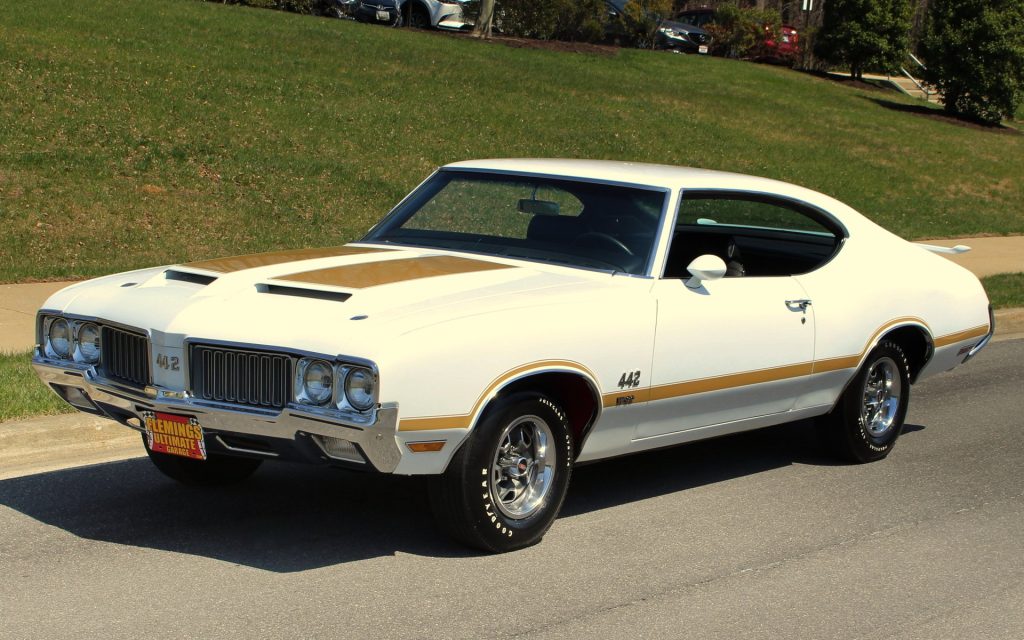
Collectors also appreciate the Oldsmobile’s blend of refinement and brute strength. Unlike some rivals that emphasized raw performance above all else, the 442 offered impressive comfort alongside exceptional acceleration.
Buyers searching today’s market should carefully verify factory documentation because cloned W-30 models have become increasingly common as genuine examples continue appreciating.
Specifications
- Engine: 455-cubic-inch Rocket V8
- Torque: 500 lb-ft
- Horsepower: 370 hp
- Length/Width: 203.2 inches / 76.6 inches
3. Buick Riviera GS (1965)
The 1965 Buick Riviera GS represents a turning point for Buick performance, yet it remained overshadowed for decades by more famous luxury coupes from Cadillac and Lincoln. That is beginning to change.
Collectors have increasingly recognized the first-generation Riviera for its clean Bill Mitchell styling, strong V8 performance, and relatively limited production. The Gran Sport package, introduced midway through the model’s first generation, made the Riviera even more desirable by pairing luxury appointments with genuine muscle.
Under the hood sat Buick’s massive 425 cubic-inch “Nailhead” V8. The Gran Sport package boosted output to 360 horsepower and a substantial 465 lb-ft of torque, giving the Riviera effortless highway performance.
Road tests from the period praised its smooth power delivery and quiet cabin, qualities that continue to distinguish it from many muscle cars of the same era.
The Riviera GS has steadily gained value, and auction data provides clear evidence. The Hagerty Price Guide has recorded consistent appreciation for well-preserved Gran Sport models, particularly those retaining original drivetrains and factory documentation.
Mecum Auctions has featured several restored GS cars selling well into the five-figure range, while exceptional low-mileage examples have crossed the six-figure mark. Bring a Trailer sales also show increasing buyer interest, especially for cars with documented ownership history and factory options.
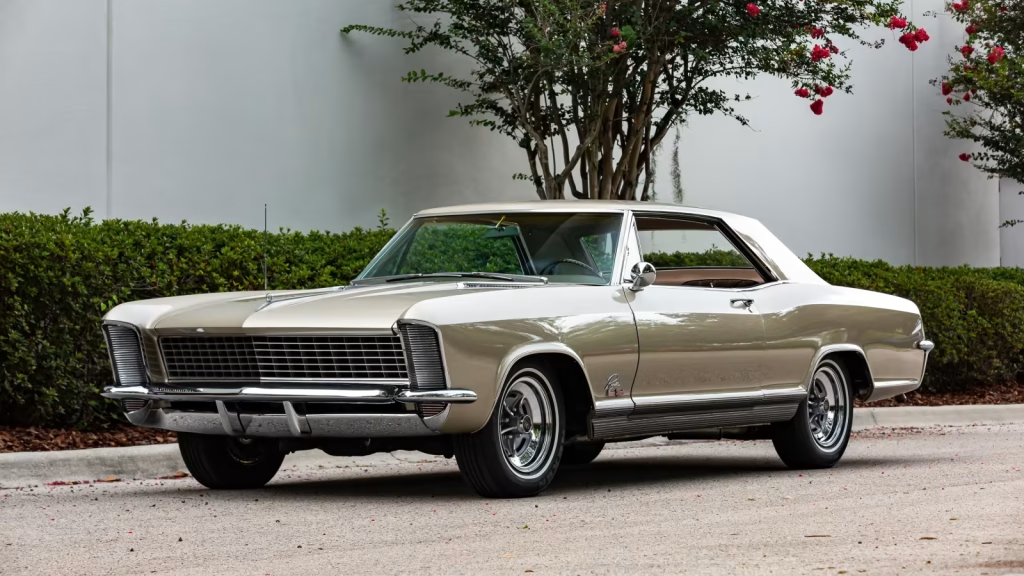
One reason values continue climbing is scarcity. Far fewer buyers preserved Rivieras than comparable Corvettes or GTOs, making original examples increasingly difficult to locate. Collectors also appreciate the combination of elegant styling and dependable Buick engineering.
Many high-performance cars of the 1960s demanded compromises, but the Riviera GS offered the best of both worlds: relaxed highway manners and thrilling acceleration when called upon. That rare combination has kept it as one of the smartest overlooked buys for classic car enthusiasts.
Specifications
- Engine: 425 cubic-inch Nailhead V8
- Torque: 465 lb-ft
- Horsepower: 360 hp
- Length/Width: 208.0 inches / 76.2 inches
4. Oldsmobile Toronado (1966)
Innovation often becomes more valuable with time, and the 1966 Oldsmobile Toronado proves exactly that. When it debuted, it shocked the automotive industry by becoming the first American-built front-wheel-drive personal luxury car since the 1930s.
Its futuristic engineering, hidden headlights, and dramatic fastback styling made it unlike anything else on American roads. Although sales were respectable, the Toronado spent decades undervalued before collectors finally began recognizing its historical importance.
Power came from Oldsmobile’s enormous 425 cubic inch Super Rocket V8, producing 385 horsepower and an incredible 475 lb-ft of torque.
Engineers developed an innovative unitized power package transmission that allowed this massive engine to drive the front wheels, an engineering achievement that earned widespread industry recognition.
Contemporary automotive publications praised both its straight-line performance and remarkable traction in poor weather.
Market evidence clearly shows growing demand. Hagerty valuation trends indicate that first-generation Toronados have appreciated steadily during the past several years, particularly highly original examples equipped with desirable factory options.
Mecum and Barrett-Jackson auctions regularly feature restored 1966 models, with excellent-condition cars bringing substantially more than they did a decade ago. Limited production of well-preserved examples and increasing appreciation for historically significant engineering continue driving values upward.
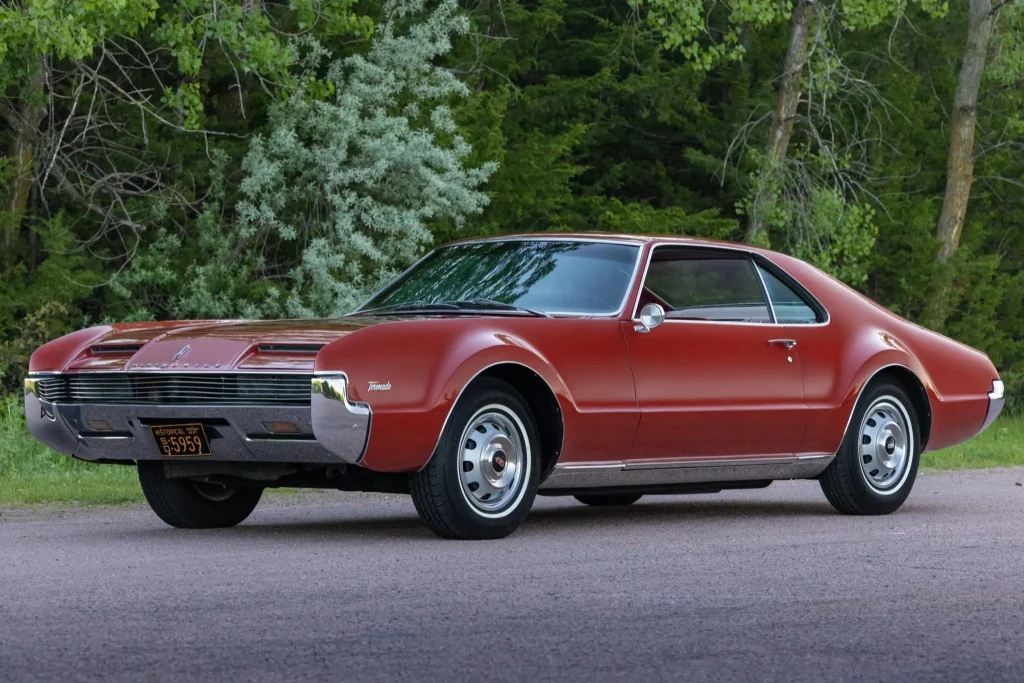
Collectors are also beginning to recognize that restoring a first-generation Toronado has become considerably more expensive, naturally increasing the value of already-restored cars. Vehicles retaining matching-number drivetrains, original interiors, and factory documentation command the strongest prices.
As appreciation for unique American engineering continues growing, the earliest Toronados are becoming far more than simply interesting classics. They have become serious collector investments.
Specifications
- Engine: 425 cubic-inch Super Rocket V8
- Torque: 475 lb-ft
- Horsepower: 385 hp
- Length/Width: 211.0 inches / 78.8 inches
5. Buick GSX (1970)
The Buick GSX arrived for only two model years, yet it has become one of the most sought-after muscle cars wearing the Tri-Shield badge. In 1970, buyers could order the GSX with the Stage 1 performance package, creating a car that combined understated Buick comfort with astonishing acceleration.
Because the GSX never achieved the same level of publicity as the Chevrolet Chevelle SS 454 or Plymouth Hemi ‘Cuda, many examples were overlooked for years. Today, that scarcity has become one of its greatest strengths.
Only 678 GSX models were produced for the 1970 model year, making it one of the rarest muscle cars from General Motors. The Stage 1-equipped 455 cubic-inch V8 carried a factory rating of 360 horsepower and an incredible 510 lb-ft of torque.
At the time, that was the highest torque rating of any American production car. Independent road tests consistently demonstrated quarter-mile times in the low-13-second range, remarkable performance for a luxury-oriented intermediate coupe.
Auction data confirms how dramatically values have risen. Hagerty Price Guide has steadily increased price estimates for authentic Stage 1 GSX models during the last decade. Mecum Auctions has recorded numerous six-figure sales, while exceptionally restored or unrestored low-mileage cars have sold for more than $200,000.
Barrett-Jackson has also featured GSX examples attracting intense bidding because collectors recognize their rarity and historical importance.
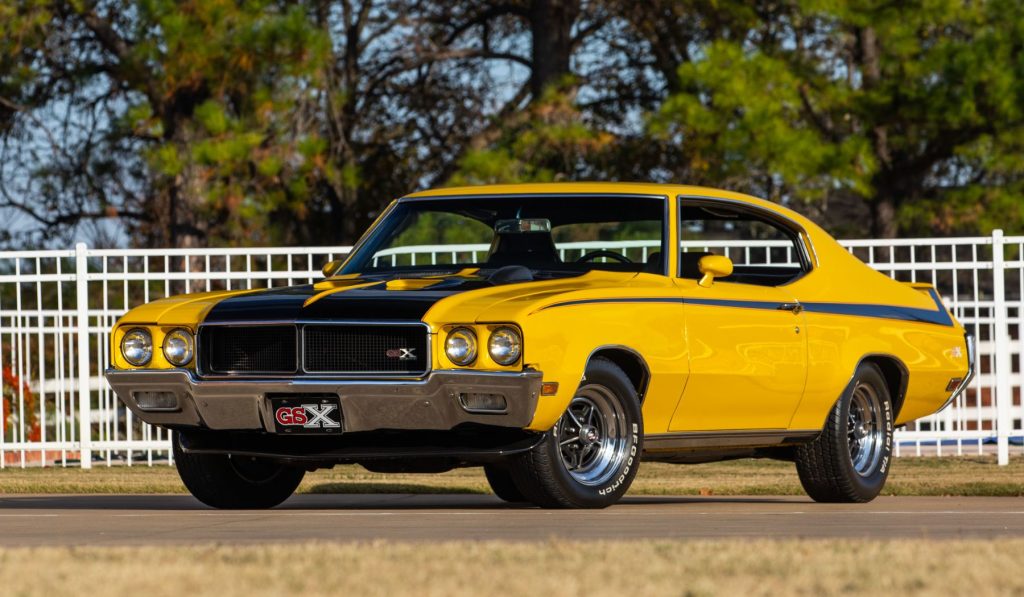
Authenticity plays a major role in value. Due to the limited production run, cloned GSX cars exist in the marketplace. Buyers pay substantial premiums for documented vehicles with matching numbers, original build sheets, and factory-installed Stage 1 equipment.
As demand for high-end American muscle continues to remain strong, the GSX has become one of Buick’s most valuable collector vehicles.
Specifications
- Engine: 455 cubic-inch Stage 1 V8
- Torque: 510 lb-ft
- Horsepower: 360 hp
- Length/Width: 203.2 inches / 76.6 inches
6. Oldsmobile Hurst/Olds (1968)
While many muscle cars of the era were defined simply by their big-block power, the 1968 Hurst/Olds took a different approach. Built through a collaboration between Oldsmobile and Hurst Performance, it offered a rare combination of factory engineering and performance modifications in a limited-production package.
While enthusiasts admired it when new, its values lagged behind comparable muscle cars for decades. That trend has changed significantly as collectors recognize its rarity and historical significance.
The car featured Oldsmobile’s powerful 455 cubic-inch Rocket V8, officially producing 390 horsepower and 500 lb-ft of torque. A special Hurst Dual-Gate shifter allowed drivers to choose either fully automatic operation or manual gear selection, an innovative feature that became one of the model’s defining characteristics.
Distinctive gold striping, fiberglass hood scoops, and exclusive badging further separated the Hurst/Olds from the standard 442.
Production remained extremely limited, with approximately 515 hardtops and 515 Holiday Coupes built for 1968. That scarcity has translated directly into higher collector values.
Hagerty valuation data shows consistent appreciation over recent years, while Mecum Auctions and Barrett-Jackson have documented numerous sales reaching well into six figures for restored examples. Cars retaining their original drivetrains, broadcast sheets, and factory documentation consistently command the strongest prices.
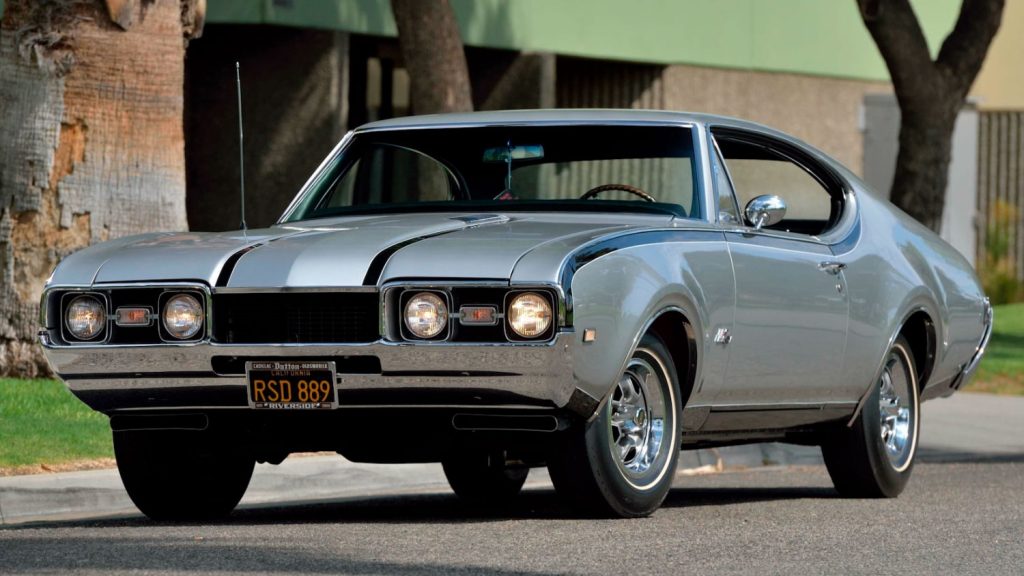
Another factor driving demand is historical importance. The 1968 model marked the return of the Hurst/Olds name after General Motors briefly restricted engine sizes in intermediate cars.
Because of that story, collectors view the car as an important milestone in the evolution of American muscle. Demand continues to rise as fewer authentic examples remain available on the open market.
Specifications
- Engine: 455-cubic-inch Rocket V8
- Torque: 500 lb-ft
- Horsepower: 390 hp
- Length/Width: 202.9 inches / 76.4 inches
7. Buick Wildcat GS (1967)
The Buick Wildcat is often overlooked because it occupied the full-size segment during an era dominated by midsize muscle cars. Yet the 1967 Wildcat GS quietly delivered serious performance wrapped in a premium package.
Buyers who wanted the comfort of a large coupe without sacrificing acceleration found exactly that, but collector interest remained modest for decades. As enthusiasts have broadened their appreciation beyond the traditional muscle car icons, the Wildcat GS has emerged as one of Buick’s hidden gems.
Power came from Buick’s 430 cubic-inch V8, producing a factory-rated 360 horsepower and an impressive 475 lb-ft of torque. Contemporary road tests praised the engine’s effortless power delivery, particularly during highway passing and long-distance cruising.
Many muscle cars chased performance through aggressive gearing and high-strung engines, but the Wildcat followed a different formula. Its deep reserves of low-end torque provided effortless power while keeping the driving experience comfortable and sophisticated.
The proof of its growing value can be seen through recent auction activity and collector pricing guides. Hagerty Price Guide has shown steady appreciation for well-preserved Wildcat GS models, especially convertibles and highly optioned hardtops.
Mecum Auctions has featured restored examples selling for significantly more than they would have commanded just ten years ago, while rare factory four-speed cars continue attracting premium bids. The biggest factor supporting appreciation is survival rate.
Many Wildcats served as everyday transportation, meaning far fewer original cars remain compared with equivalent Buick GS intermediates.
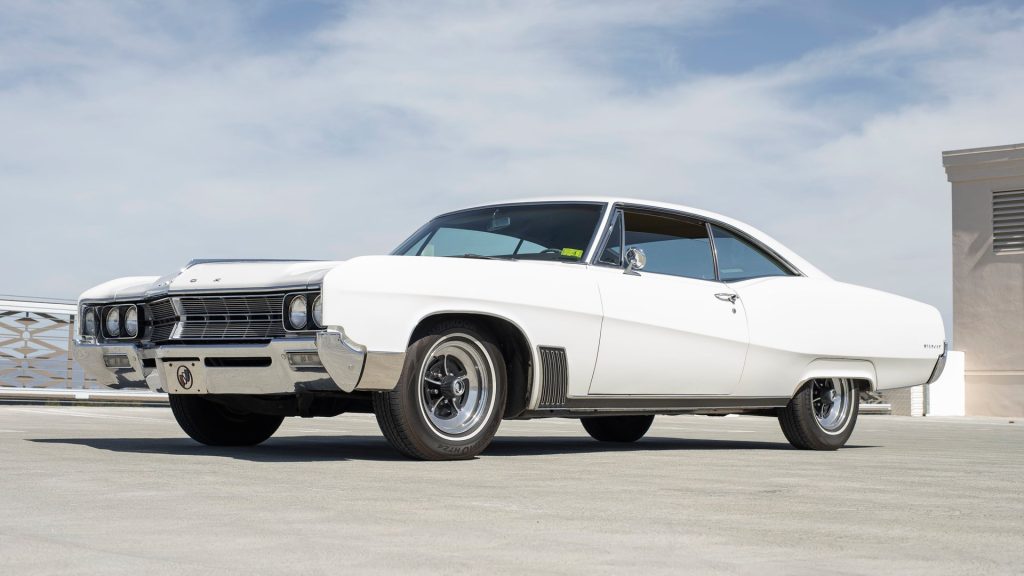
Collectors today appreciate the Wildcat because it offers rarity without the sky-high prices associated with Buick’s flagship muscle cars. Original paint, matching-number drivetrains, factory air conditioning, and complete documentation substantially increase value.
As interest in full-size American performance cars continues expanding, the Wildcat GS has become a legitimate investment-grade collector vehicle rather than simply an overlooked classic.
Specifications
- Engine: 430 cubic-inch V8
- Torque: 475 lb-ft
- Horsepower: 360 hp
- Length/Width: 218.2 inches / 79.7 inches
8. Oldsmobile Vista Cruiser 442 Wagon (1970)
Few collector vehicles have experienced a reputation change quite like the Oldsmobile Vista Cruiser. Long remembered primarily as a family station wagon, the model has gained significant recognition in recent years, especially examples equipped with the optional 455 cubic-inch V8 and 442-inspired performance equipment.
While not produced in the same numbers or marketed as a dedicated muscle car, these wagons have become highly desirable because they combine practicality, rarity, and surprising performance.
The 455 Rocket V8 delivered 365 horsepower and a massive 500 lb-ft of torque, giving the Vista Cruiser acceleration few family wagons could match during its era.
Combined with Oldsmobile’s distinctive raised roof featuring panoramic skylight glass, the wagon stood apart from virtually every other American family vehicle on the market. Many buyers used them exactly as intended, meaning very few survived in original condition.
Auction trends clearly support the increase in value. Hagerty Price Guide has steadily raised valuations for first-generation Vista Cruisers equipped with the 455 engine, while Bring a Trailer has documented competitive bidding on highly original examples.
Mecum Auctions has also demonstrated that restored big-block Vista Cruisers now command prices once reserved only for traditional muscle cars.
Wagons retaining factory documentation, matching numbers, and desirable options such as air conditioning or heavy-duty suspension packages consistently outperform ordinary examples.
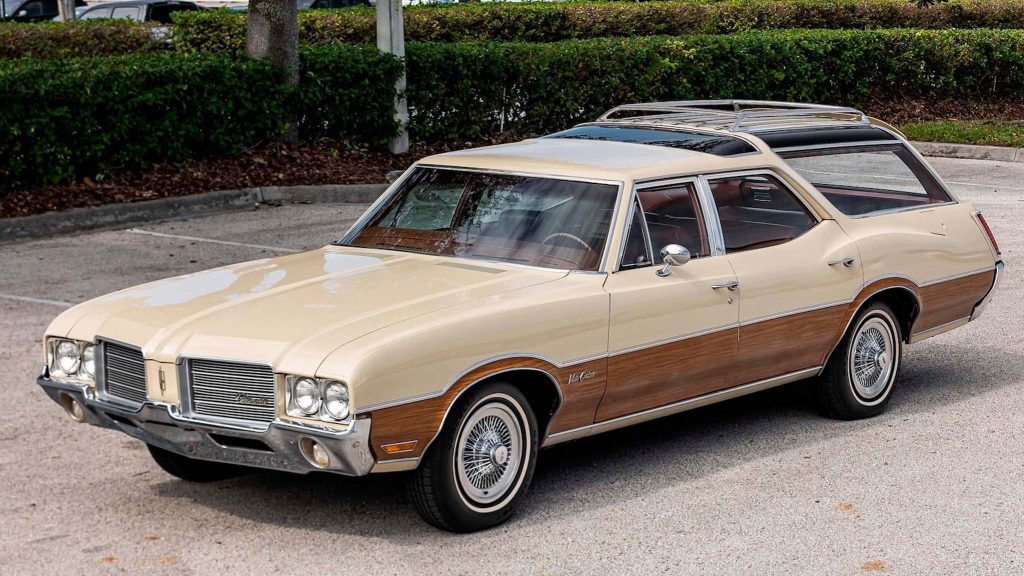
Part of the attraction comes from changing collector preferences. Enthusiasts increasingly seek unusual vehicles that stand out at shows rather than another common muscle coupe. The Vista Cruiser fills that role perfectly by combining rarity with genuine performance credentials.
As supply continues shrinking and nostalgia for classic American wagons grows, values are expected to remain strong for the best-preserved examples.
Specifications
- Engine: 455-cubic-inch Rocket V8
- Torque: 500 lb-ft
- Horsepower: 365 hp
- Length/Width: 213.0 inches / 78.5 inches
Also Read: 8 Supercars That Hold Value Better Than a Corvette
