
Automakers usually redesign their vehicles every five to seven years to keep pace with changing technology, safety regulations, and consumer preferences.
Yet a select group of cars proved so successful that manufacturers kept the same generation in production for a decade or longer with only minor updates. These extended production runs often reflected exceptional engineering, strong customer demand, or the high cost of replacing a winning formula.
The vehicles below are among the longest-running single-generation passenger cars sold in or relevant to the U.S. market, with production lengths verified through manufacturer production histories and industry records.
Also Read: 10 EVs Ranked by Charging Speed
1. Panther Platform Ford Crown Victoria (1998 to 2011)
When Ford introduced the redesigned Panther-platform Crown Victoria for the 1998 model year, few expected the same basic generation to remain in production until 2011. That 14-year production run made it one of the longest-lasting passenger car generations in modern American automotive history.
While annual updates included revised lighting, interior improvements, electronic upgrades, and safety enhancements, the underlying platform, body shell, and engineering remained fundamentally unchanged.
The reason Ford left the design largely untouched was simple. Fleet buyers loved it. Police departments, taxi operators, and government agencies valued the body-on-frame construction, rear-wheel-drive layout, durable suspension, and dependable 4.6-liter Modular V8.
Many Crown Victorias accumulated well over 300,000 miles in taxi and law enforcement service, proving the platform’s durability under demanding conditions.
Production figures also support its success. More than 1.5 million Crown Victorias were built during this generation, including civilian, police interceptor, and commercial fleet models. Its longevity allowed Ford to spread development costs across more than a decade while maintaining steady fleet sales.
Throughout its production life, Ford made incremental improvements rather than launching an expensive redesign because the target market continued demanding the same proven formula.
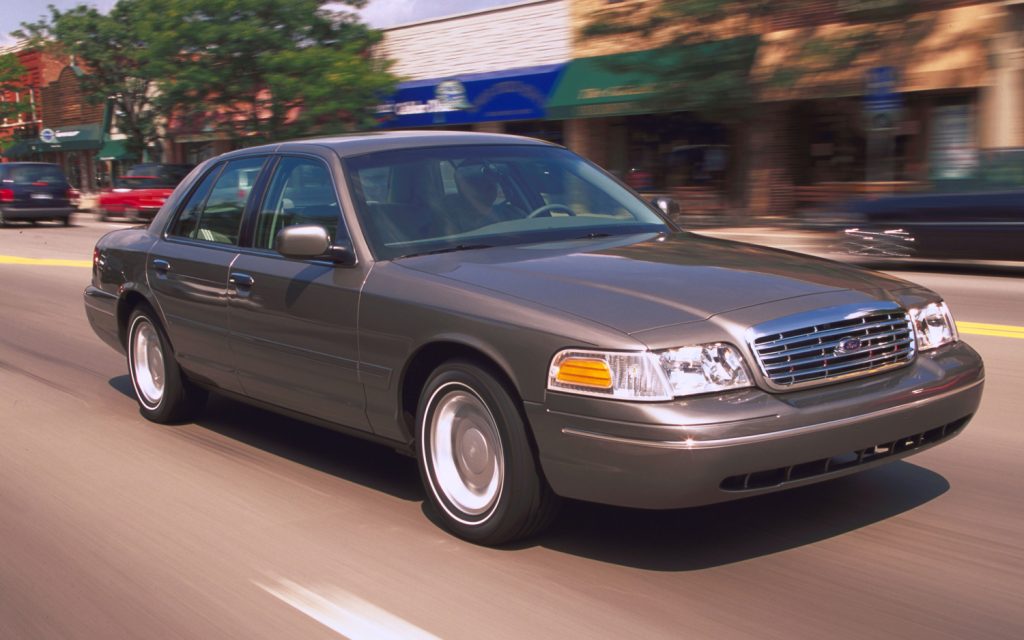
The final Crown Victoria rolled off the assembly line at Ford’s St. Thomas Assembly Plant in Canada during September 2011, officially ending both the model and the Panther platform after decades of service.
Today, surviving examples remain popular among collectors, former law enforcement agencies, and enthusiasts who appreciate one of America’s longest-running automotive generations.
Specifications
- Engine: 4.6-liter SOHC Modular V8
- Torque: 287 lb-ft
- Horsepower: 239 hp
- Length/Width: 212.0 inches / 78.2 inches
2. Lincoln Town Car (1998 to 2011)
Sharing its architecture with the Crown Victoria, the Lincoln Town Car followed an equally remarkable path. The third-generation model introduced for 1998 remained in production through the 2011 model year, giving it a 14-year uninterrupted production run.
While luxury sedans from Europe often received complete redesigns every six or seven years, Lincoln continued refining the same platform because its traditional buyers valued comfort, reliability, and familiarity over constant styling changes.
The Town Car became synonymous with executive transportation across the United States. Limousine companies, airport shuttle services, hotels, and funeral homes relied heavily on its body-on-frame construction because it could easily be stretched or modified without compromising structural integrity.
The spacious rear seat, smooth ride, and dependable V8 helped create one of the most recognizable luxury sedans in North America.
Its lengthy production was supported by strong commercial demand. Even as retail sales gradually declined during the late 2000s, fleet operators continued purchasing thousands of Town Cars each year.
Ford introduced updated steering systems, chassis revisions, improved safety equipment, and interior refinements during the generation, but the vehicle’s basic engineering remained unchanged. This approach minimized manufacturing costs while satisfying a loyal customer base.
The end arrived in 2011 when Ford closed the St. Thomas Assembly Plant, bringing production of both the Town Car and the Crown Victoria to a close.
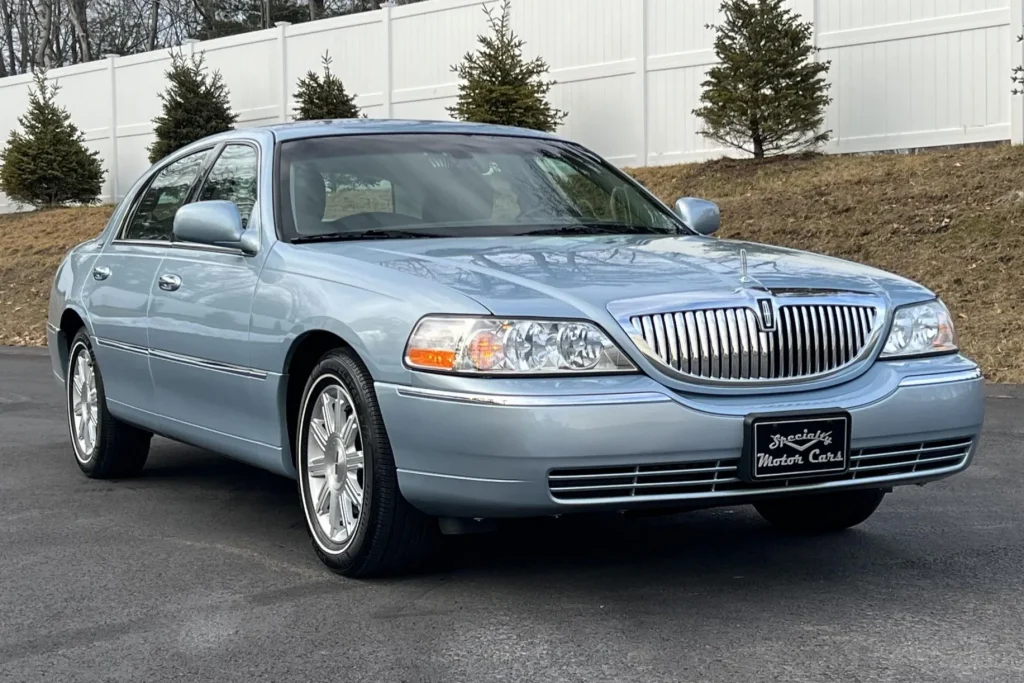
Few luxury cars have remained in production for such an extended period while retaining the same core architecture. That unique history has made well-maintained Town Cars increasingly appreciated by collectors seeking traditional American luxury.
Specifications
- Engine: 4.6-liter SOHC Modular V8
- Torque: 275 lb-ft
- Horsepower: 239 hp
- Length/Width: 215.4 inches / 78.2 inches
3. Chevrolet Express (2003 to Present)
Some vehicles stay in production because they dominate their segment, and the Chevrolet Express is one of the best examples.
The current generation debuted for the 2003 model year, and despite receiving powertrain updates, safety improvements, and interior revisions over the years, the same basic generation remains in production today.
That gives it a production run exceeding two decades, making it one of the longest-running passenger vehicle generations sold in the United States.
Unlike passenger cars that compete largely on styling, the Express serves commercial buyers who value durability above all else. Contractors, delivery companies, shuttle operators, ambulance services, and utility fleets depend on the van’s body-on-frame construction and proven mechanical components.
General Motors recognized that these customers prioritized reliability and low operating costs instead of dramatic styling changes, allowing the company to continue refining an already successful platform.
Production numbers demonstrate the van’s enduring popularity. Hundreds of thousands of Chevrolet Express vans have been sold during this single generation, and together with its GMC Savana sibling, total production reaches well into the millions.
Throughout its lifespan, GM introduced more efficient V6 and V8 engines, additional safety technologies, and updated infotainment systems while leaving the core structure largely unchanged.
This strategy kept manufacturing costs under control while maintaining compatibility with countless commercial upfit packages already designed for the platform.
The Express has become one of the few American vehicles to survive multiple decades without a complete redesign.
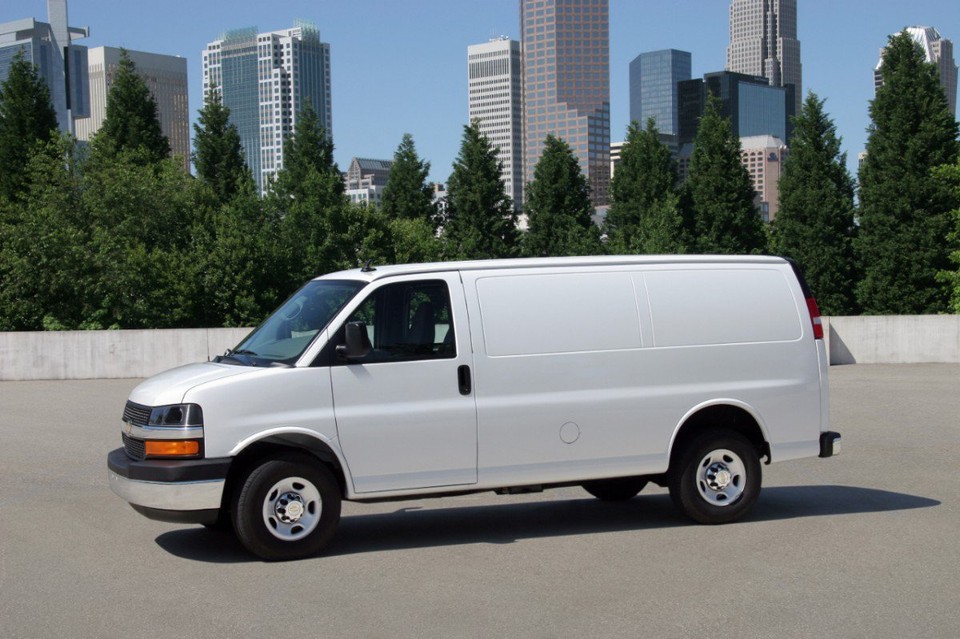
Fleet managers continue purchasing new examples because technicians are familiar with the mechanical systems, replacement parts remain widely available, and resale values stay relatively stable.
Its remarkable production longevity reflects consistent demand rather than a lack of innovation, proving that dependable engineering can outlast changing automotive trends.
Specifications
- Engine: 6.6-liter V8 (current gasoline model)
- Torque: 464 lb-ft
- Horsepower: 401 hp
- Length/Width: 224.1 inches / 79.2 inches
4. Dodge Challenger (2008 to 2023)
Modern muscle cars rarely remain unchanged for long, making the third-generation Dodge Challenger especially remarkable. Introduced for the 2008 model year, the same generation continued through the end of 2023, giving it a 16-year production run.
Although Dodge introduced countless trim levels, powertrain upgrades, special editions, and technology improvements, the underlying LC and later LA platform architecture remained fundamentally the same throughout production.
The Challenger’s long life resulted from a winning formula. Buyers appreciated its retro-inspired styling, spacious interior, and extraordinary engine lineup ranging from the Pentastar V6 to the supercharged Hellcat and Demon V8s.
Instead of replacing the platform every few years, Dodge continually enhanced performance, allowing the Challenger to remain competitive while preserving the familiar appearance enthusiasts loved.
Sales figures validate the strategy. During several model years, the Challenger outsold both the Chevrolet Camaro and Ford Mustang in the United States.
Dodge celebrated the platform with increasingly powerful variants, including the 717-horsepower Hellcat, the 797-horsepower Redeye, and the limited-production Demon 170, producing up to 1,025 horsepower on E85 fuel. These continual improvements kept customer interest high without requiring an expensive redesign.
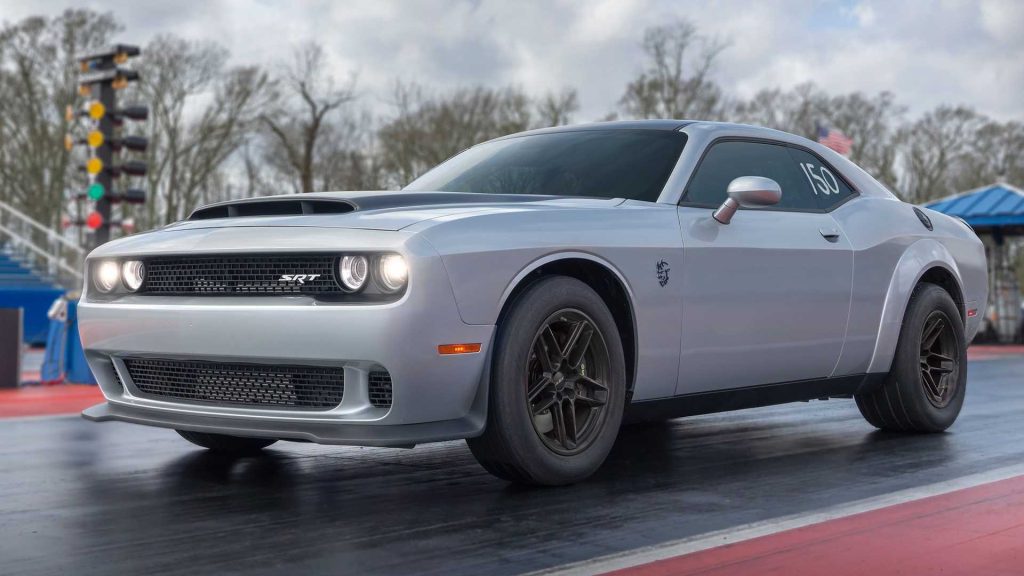
Production officially concluded in December 2023 at the Brampton Assembly Plant in Ontario, closing one of the longest-running modern American coupe generations. The final “Last Call” editions generated enormous collector interest, and many industry analysts expect special editions from this generation to remain highly desirable for years to come.
Its lengthy production run demonstrates how consistent engineering combined with continuous refinement can keep a platform successful far longer than traditional product cycles.
Specifications
- Engine: 6.2-liter Supercharged HEMI V8 (SRT Hellcat)
- Torque: 656 lb-ft
- Horsepower: 717 hp
- Length/Width: 197.9 inches / 75.7 inches
5. Volvo 240 (1975 to 1993)
Very few passenger cars have earned the reputation for durability enjoyed by the Volvo 240. Introduced in 1975, the same generation remained in production until 1993, resulting in an impressive 19-year production run.
While Volvo introduced minor styling revisions, updated safety equipment, improved interiors, and new engine options throughout those years, the platform itself remained fundamentally unchanged. That longevity reflected Volvo’s philosophy of refining a proven design instead of replacing it on a fixed schedule.
The 240 became famous in the United States for its exceptional crash protection and mechanical simplicity. Families appreciated its solid construction, while commercial operators valued its ability to accumulate hundreds of thousands of miles with routine maintenance.
By the late 1980s, many competing sedans had already undergone two or three complete redesigns, yet the 240 continued attracting loyal buyers who trusted its established engineering.
Production numbers underline its success. Volvo built approximately 2.86 million examples of the 240 series worldwide between 1975 and 1993, making it one of the company’s most successful vehicles.
The model also helped establish Volvo’s reputation as a leader in automotive safety through innovations such as reinforced passenger compartments, advanced crumple zones, and side-impact protection improvements introduced during its production life.
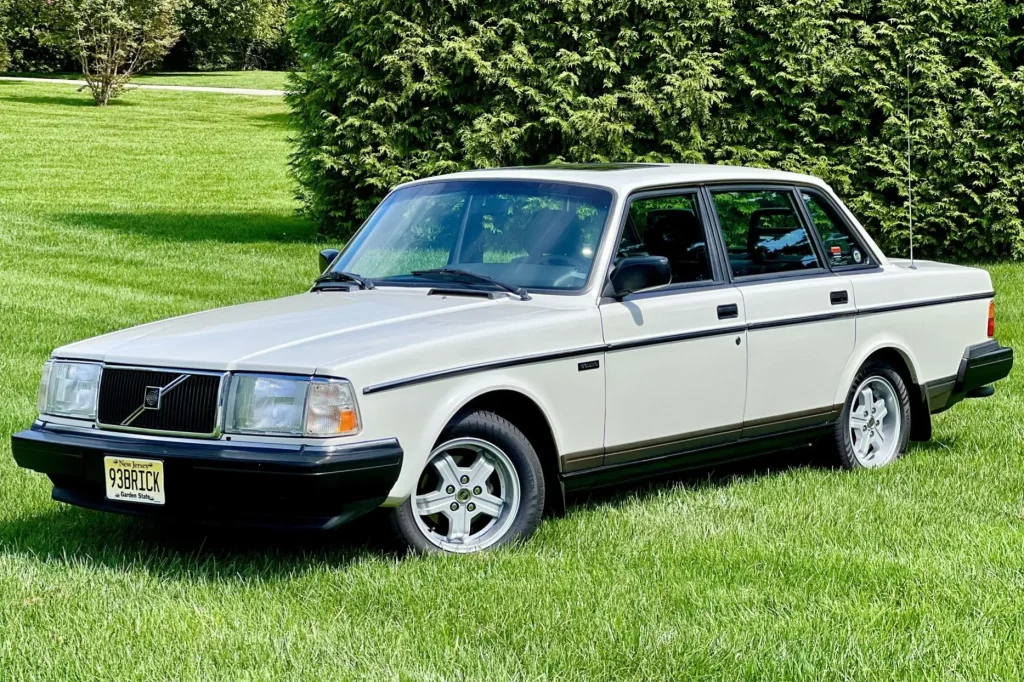
Collectors have increasingly embraced well-preserved 240 models because they represent a defining chapter in Volvo’s history. Wagons, turbocharged versions, and manual-transmission examples have become particularly desirable in recent years.
The remarkably long production cycle demonstrates how a carefully engineered platform can remain competitive for nearly two decades through thoughtful refinement instead of complete reinvention.
Specifications
- Engine: 2.3-liter Inline-4 (B230F)
- Torque: 136 lb-ft
- Horsepower: 114 hp
- Length/Width: 188.6 inches / 67.7 inches
6. Hindustan Ambassador (1958 to 2014)
Although designed primarily for the Indian market, the Hindustan Ambassador deserves recognition because it achieved one of the longest uninterrupted single-generation production runs in automotive history.
Built from 1958 until 2014 with the same basic body structure, the Ambassador remained in production for an extraordinary 56 years. While it was never widely sold through mainstream dealerships in the United States, automotive historians and collectors recognize it as one of the world’s most enduring passenger car designs.
The Ambassador originated from the Morris Oxford Series III, introduced in Britain during the 1950s. Hindustan Motors licensed the design and gradually updated engines, interiors, transmissions, and emissions equipment while leaving the recognizable exterior almost unchanged.
The car became synonymous with government service, taxi fleets, and private transportation throughout India, much as the Ford Crown Victoria became associated with American police departments and taxi operators.
Its production longevity is well documented through manufacturer production records and historical automotive publications. During its decades-long run, millions of Ambassadors were produced, serving as one of India’s most recognizable automobiles.
The platform survived numerous changes in regulations and consumer expectations because of its simple construction, spacious cabin, and low operating costs.
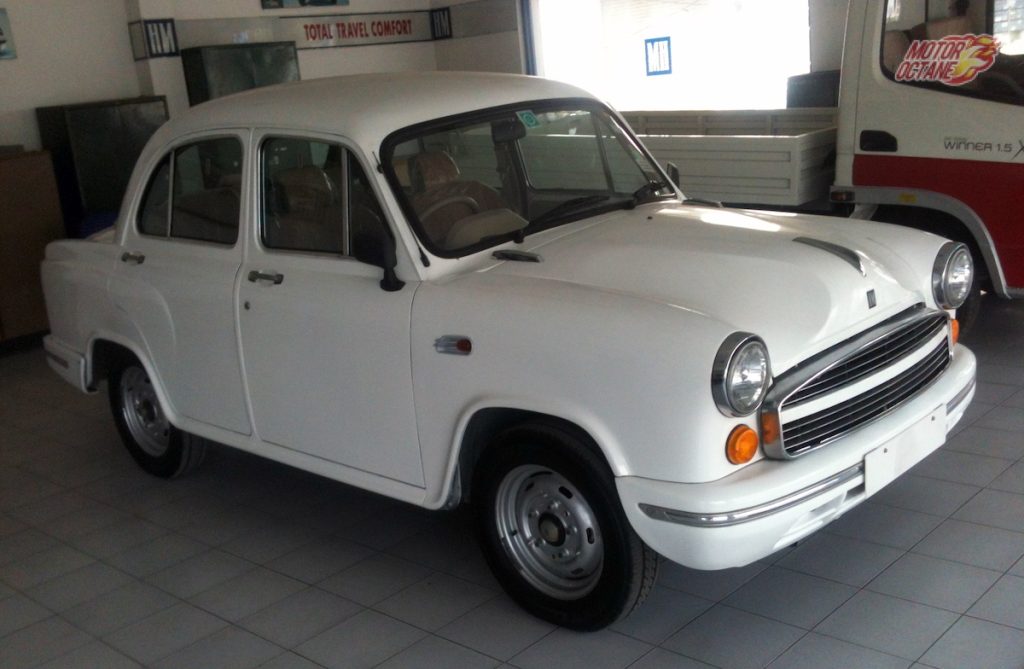
Today, restored Ambassadors have begun attracting international collector interest. Importers in the United States occasionally bring exceptional examples to enthusiast auctions, where buyers appreciate their historical significance and unmistakable styling.
Few automobiles anywhere in the world can match a production run spanning more than half a century while retaining the same fundamental architecture, making the Ambassador one of the most remarkable long-running passenger car generations ever built.
Specifications
- Engine: 2.0-liter Inline-4 Diesel (final production model)
- Torque: 108 lb-ft
- Horsepower: 52 hp
- Length/Width: 169.5 inches / 66.9 inches
7. Volkswagen Beetle (Type 1) (1949 to 2003)
Few automobiles have influenced the global automotive industry like the original Volkswagen Beetle. Although it received mechanical updates throughout its lifetime, the Type 1 retained the same unmistakable shape and fundamental engineering for more than five decades.
Production for the original generation began in the late 1940s and continued until July 2003, when the final car rolled off the assembly line in Puebla, Mexico. That remarkable 54-year run makes it one of the longest-produced passenger car generations in history.
The Beetle’s success came from simplicity. Its air-cooled, rear-mounted flat-four engine was easy to maintain, inexpensive to repair, and durable enough to handle a wide range of climates.
By the 1960s and 1970s, it had become one of America’s best-selling imported cars, helping Volkswagen establish a permanent presence in the U.S. market.
Even after more modern front-wheel-drive vehicles arrived, demand remained strong in many international markets, allowing Volkswagen to continue production long after European assembly had ended.
The numbers behind the Beetle are extraordinary. Volkswagen built more than 21.5 million Type 1 Beetles worldwide during its production life, making it one of the highest-volume passenger cars ever produced from a single basic design.
Its longevity is thoroughly documented through Volkswagen production records, automotive historians, and museum archives. The final Mexican-built examples have become particularly collectible because they mark the conclusion of one of the longest-running automotive generations ever manufactured.
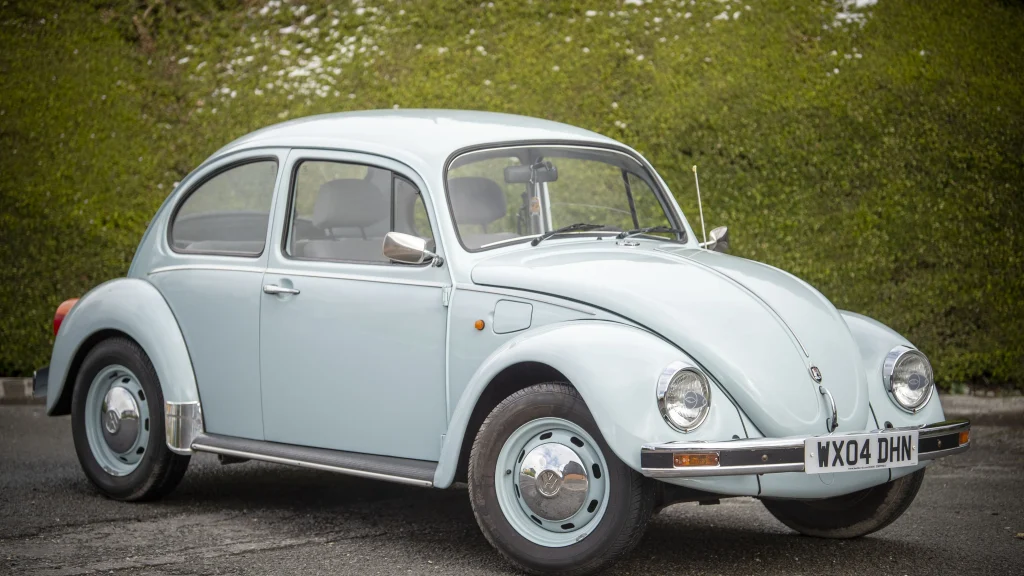
Collectors today value originality, especially on early German-built cars and final-production Mexican examples. Auction prices tracked by Hagerty, Bring a Trailer, and Mecum show increasing demand for preserved Beetles with matching numbers and factory documentation.
The Beetle’s combination of historic significance, mechanical simplicity, and unparalleled production longevity ensures its place among the most important automobiles ever built.
Specifications
- Engine: 1.6-liter Air-Cooled Flat-4 (final production)
- Torque: 81 lb-ft
- Horsepower: 46 hp
- Length/Width: 160.6 inches / 60.6 inches
8. Mercedes-Benz G-Class (W463) (1990 to 2018)
Luxury SUVs typically receive complete redesigns every decade, but the Mercedes-Benz G-Class followed an entirely different path. The W463 generation debuted in 1990 and remained in production until an all-new model arrived for 2019, giving it an impressive 29-year production run.
Throughout those years, Mercedes continually upgraded engines, electronics, safety systems, and interior materials while preserving the iconic box-shaped body and ladder-frame chassis that made the G-Class instantly recognizable.
Originally developed as a rugged off-road vehicle, the G-Class gradually transformed into one of the world’s most prestigious luxury SUVs. Buyers appreciated that Mercedes never abandoned the vehicle’s authentic off-road capability.
Three locking differentials, solid construction, and exceptional durability remained standard features even as premium leather interiors, advanced infotainment, and high-performance AMG powertrains were introduced.
The production timeline is supported by Mercedes-Benz historical records and industry documentation. During its nearly three decades, the W463 evolved from a niche utility vehicle into a global luxury icon without requiring a completely new body shell.
Continuous engineering improvements allowed the platform to meet increasingly demanding safety and emissions standards while retaining its unmistakable character. Few premium vehicles have remained competitive for such a long period using essentially the same structural architecture.
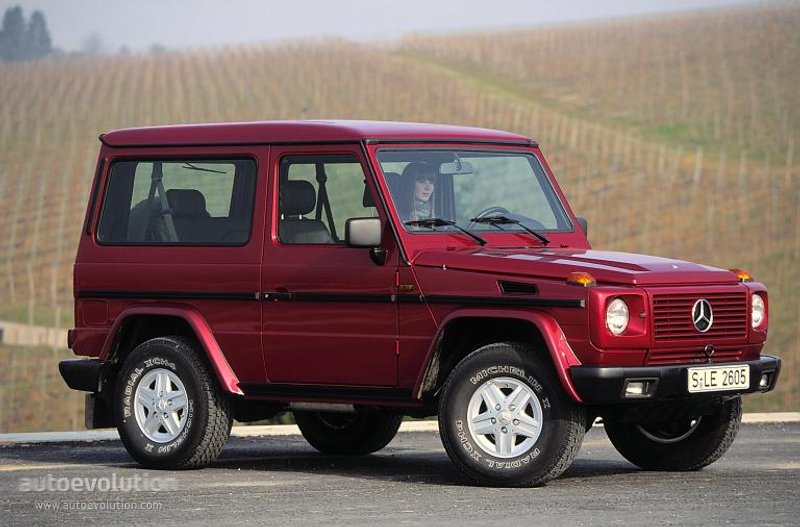
The W463 has also become a favorite among collectors. Early V8 models, limited-production editions, and AMG variants consistently command strong resale values. Auction platforms such as Bring a Trailer and major collector events regularly demonstrate rising demand, particularly for well-maintained, low-mileage examples.
The model’s extraordinary production lifespan reflects Mercedes-Benz’s confidence in a design that successfully balanced tradition with constant refinement.
Specifications
- Engine: 4.0-liter Twin-Turbocharged V8 (G550, final U.S. years)
- Torque: 450 lb-ft
- Horsepower: 416 hp
- Length/Width: 187.5 inches / 69.7 inches
9. Morgan Plus 4 (1950 to 2020)
In an era when manufacturers completely redesigned their cars every few years, the Morgan Plus 4 followed an entirely different philosophy. Introduced in 1950, the same basic generation remained in production until 2020, giving it an astonishing 70-year production run.
While Morgan periodically updated engines, transmissions, suspension components, and safety equipment, the car retained its hand-built aluminum body mounted on a traditional ash wood frame. That remarkable continuity makes it one of the longest-running passenger car generations ever produced.
The Plus 4 survived because Morgan never attempted to compete with mass-market sports cars. Instead, the British manufacturer focused on craftsmanship, lightweight construction, and timeless styling. Buyers appreciated the classic roadster appearance, responsive handling, and personalized production process.
Although annual production remained relatively low compared with major automakers, consistent demand allowed Morgan to keep refining the same platform rather than investing in an entirely new design.
Manufacturer records confirm the Plus 4’s extraordinary longevity. During its seven-decade lifespan, the model received engines from Standard, Triumph, Rover, and finally Ford, yet the recognizable silhouette changed very little.
Automotive historians frequently cite the Plus 4 as one of the longest-produced sports car generations in history. The final traditional Plus 4 ended production in 2020 before Morgan introduced the modern CX-Generation platform, officially concluding an era that lasted longer than many manufacturers have existed.
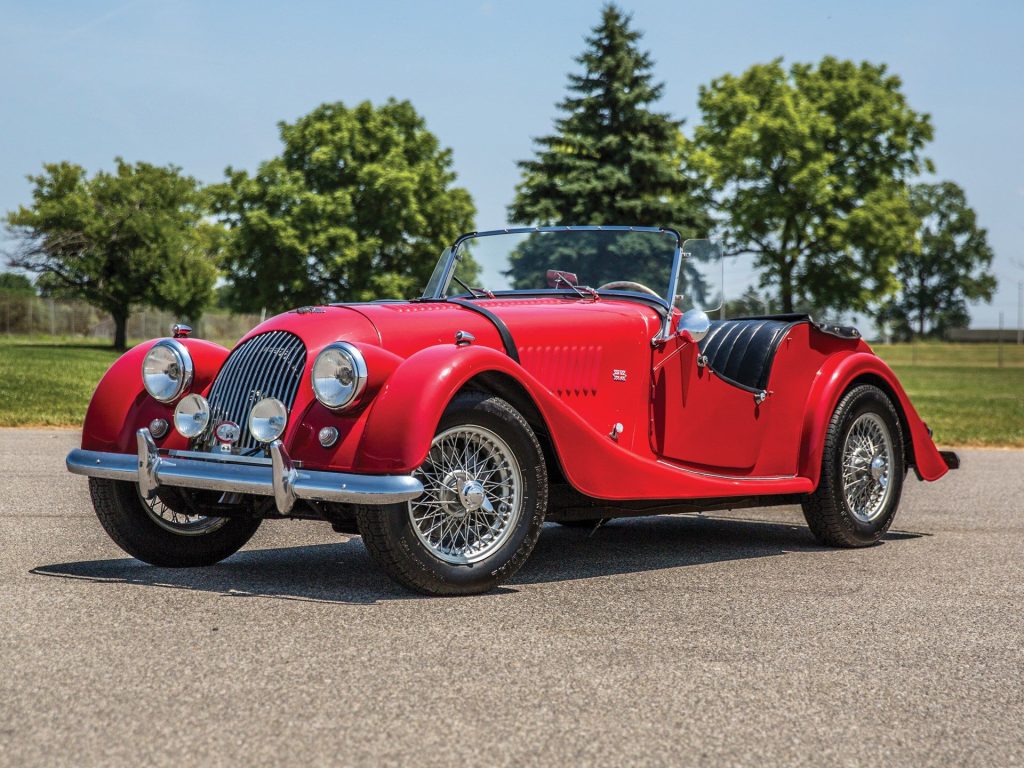
Collector demand has strengthened steadily during the past decade. Auction houses and enthusiast sales consistently show premium prices for well-preserved examples, particularly limited-production variants and cars equipped with desirable manual transmissions.
The Plus 4 demonstrates that thoughtful engineering, timeless styling, and careful refinement can keep a single automotive generation relevant for generations of enthusiasts.
Specifications
- Engine: 2.0-liter Ford GDI Inline-4 (final generation)
- Torque: 148 lb-ft
- Horsepower: 154 hp
- Length/Width: 154.0 inches / 67.0 inches
10. Lada Niva (1977 to Present)
Few vehicles illustrate engineering longevity better than the Lada Niva. Introduced in 1977, the original generation remains in production today in several markets despite receiving updated engines, interiors, and safety equipment over the years.
That gives the Niva a production run approaching five decades while retaining the same fundamental body structure and chassis layout.
Although it was never officially sold in large numbers in the United States, it is recognized worldwide by automotive historians as one of the longest-running passenger vehicle generations ever produced.
The Niva succeeded because its mission never changed. It was designed as an affordable four-wheel-drive vehicle capable of handling harsh terrain with minimal maintenance. Permanent four-wheel drive, a locking center differential, and short overhangs made it exceptionally capable off-road.
Instead of replacing the platform, AvtoVAZ continually modernized mechanical components while preserving the vehicle’s rugged architecture.
Production records from AvtoVAZ and historical industry sources document the uninterrupted lifespan of the original Niva platform. Millions have been built since 1977, serving customers across Europe, Asia, South America, and other regions.
Its continued production reflects the practicality of a design that has proven dependable in remote environments where simplicity is often more valuable than cutting-edge technology.
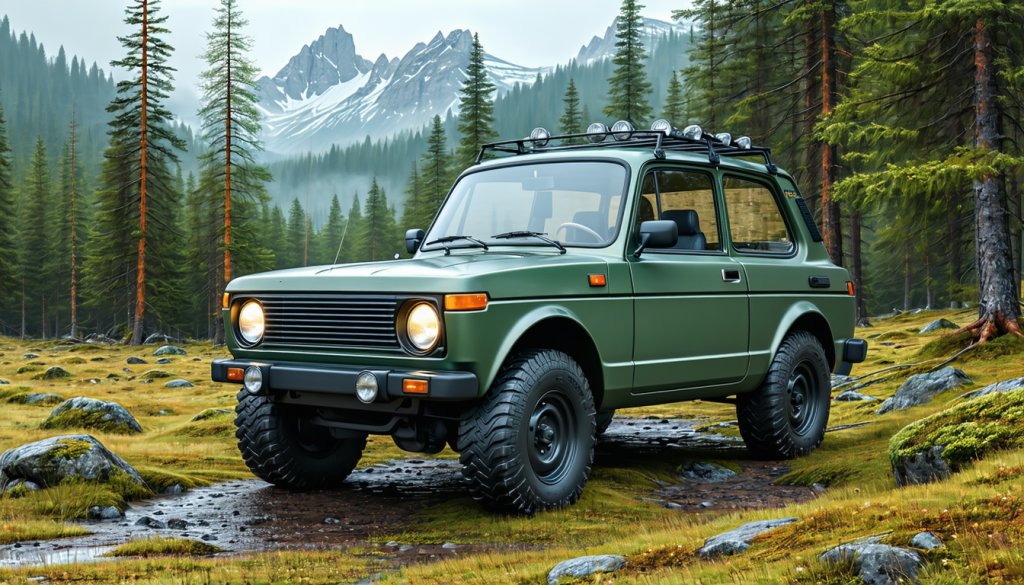
The Niva has also gained a following among collectors and off-road enthusiasts in North America through the 25-year import exemption. As more examples become legally importable into the United States, interest has steadily increased.
Well-preserved, rust-free vehicles command higher prices than they did only a few years ago because buyers recognize the Niva’s unique place in automotive history. Its extraordinary production lifespan ensures it remains one of the world’s most significant examples of a successful long-running vehicle generation.
Specifications
- Engine: 1.7-liter Inline-4
- Torque: 95 lb-ft
- Horsepower: 83 hp
- Length/Width: 146.1 inches / 66.9 inches
