During the late 1980s, General Motors had a clear performance pecking order. Anyone looking for the company’s quickest car naturally turned to the Chevrolet Corvette. As GM’s premier sports car, it represented the brand’s performance ambitions with its lightweight fiberglass construction and 5.7-liter V8 engine. That expectation changed when Buick unexpectedly introduced a car that challenged the Corvette’s dominance.
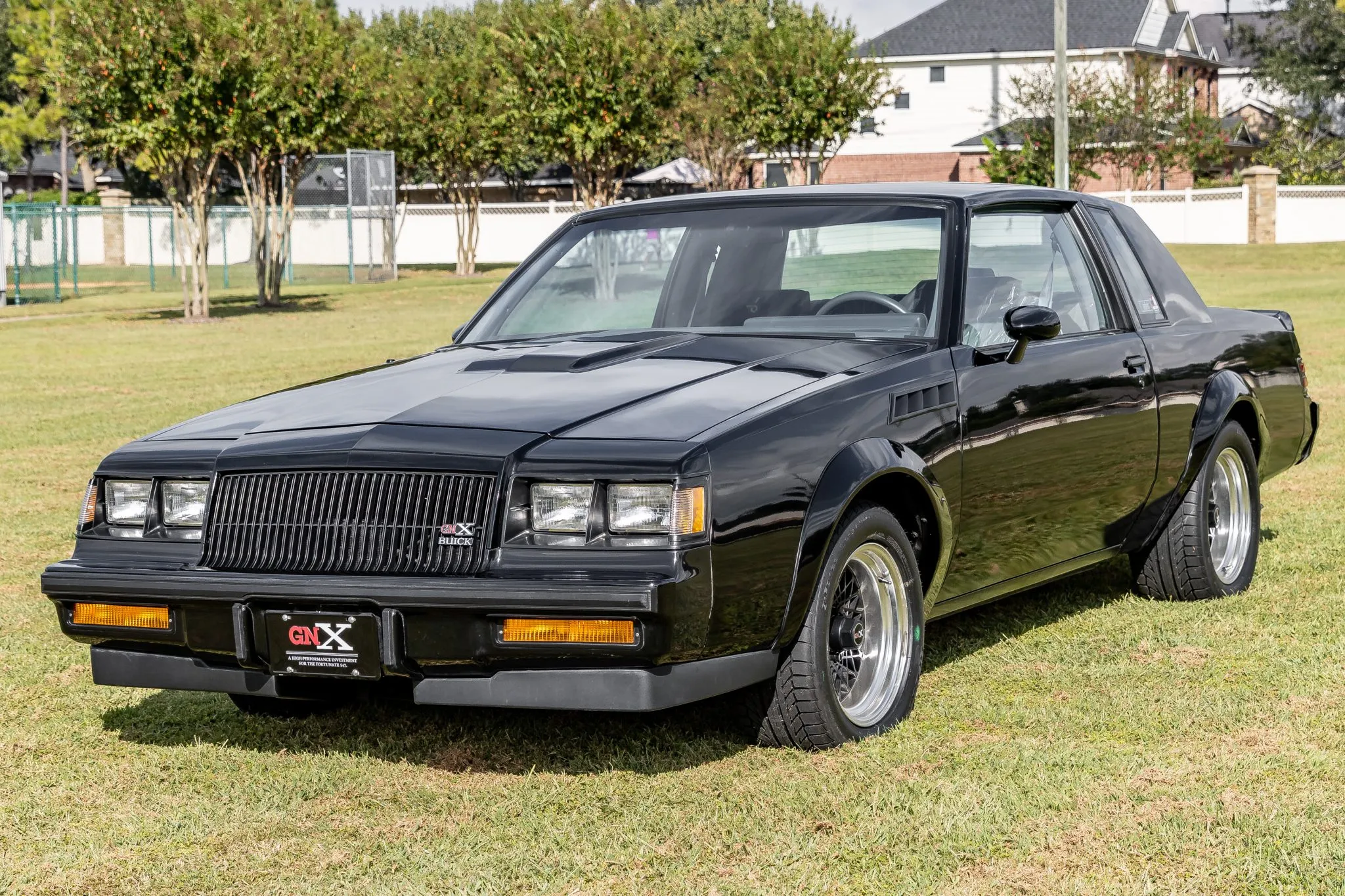
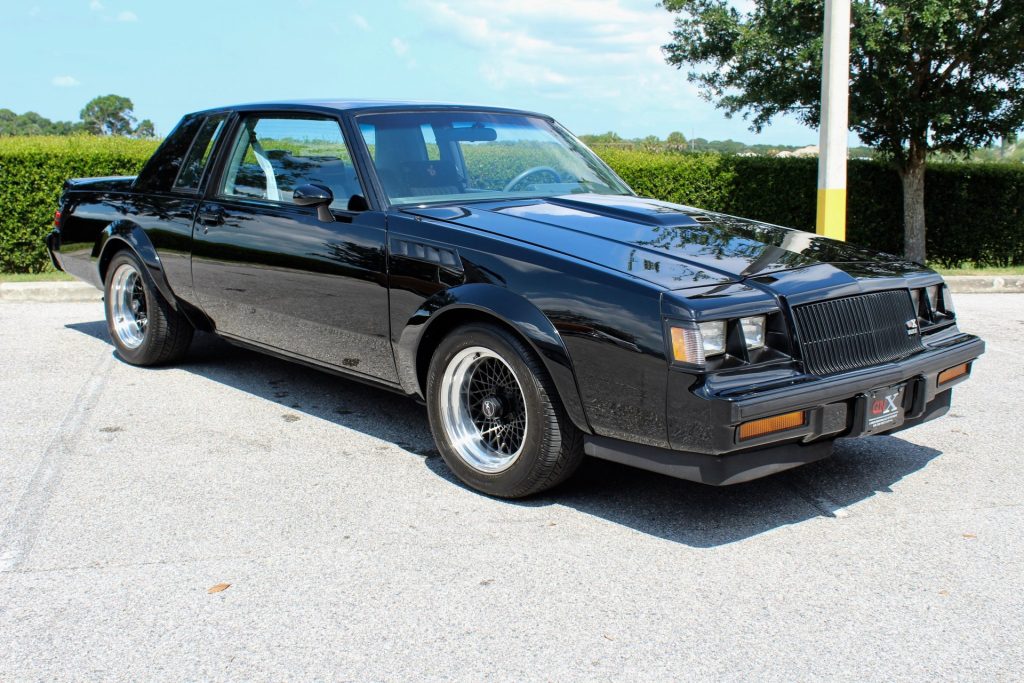
The 1987 Buick GNX, short for Grand National Experimental, arrived as the final evolution of the turbocharged Regal Grand National. It looked like an ordinary black midsize coupe to the untrained eye, but beneath the subtle exterior was one of the most formidable performance cars of its era.
Built in collaboration with ASC and McLaren Engines, the GNX was produced in extremely limited numbers, with only 547 examples leaving the factory. Every car carried a numbered dashboard plaque, instantly making it a collector’s item.
According to Buick and the official GNX Registry, the project was conceived as the ultimate farewell to the rear-wheel-drive Regal before the platform was discontinued.
What made the GNX legendary wasn’t simply its rarity. It was the fact that a turbocharged V6-powered Buick, based on a family sedan, could outperform every factory Corvette Chevrolet sold during the 1987 model year. That achievement cemented its place as one of the greatest sleeper cars in American automotive history.
Also Read: 8 Luxury SUVs With the Best Factory Warranties
A Turbocharged Regal That Rewrote GM’s Performance Rulebook
The Buick Grand National had already built a strong reputation by 1986. Its turbocharged 3.8-liter V6 proved that forced induction could compete with larger V8 engines, delivering tremendous low-end torque and surprising acceleration. But Buick engineers believed there was still untapped potential.
For the GNX project, Buick partnered with ASC and McLaren Engines to transform selected Grand Nationals into something far more serious.
Engineers fitted a larger Garrett AiResearch T-3 turbocharger, revised intercooling hardware, improved engine calibration, freer-flowing exhaust components, and a strengthened Turbo Hydramatic 200-4R automatic transmission.
Suspension revisions included a unique torque-arm rear suspension, revised rear axle location, upgraded bushings, and specially tuned shocks to improve traction during hard acceleration. According to GM, these upgrades were designed to create the quickest production Buick ever built while maintaining the comfort expected from the brand.
Officially, Buick rated the GNX at 276 horsepower and 360 lb-ft of torque. Those numbers already exceeded the standard 1987 Grand National’s 245 horsepower, but many enthusiasts and automotive journalists believed the ratings were intentionally conservative.
Independent testing and later engineering analysis suggested the engine likely produced closer to 300 horsepower and well over 400 lb-ft of torque, allowing Buick to avoid overshadowing Chevrolet’s halo sports car on paper.
Car and Driver famously estimated that early test vehicles were making around 290 horsepower despite their lower advertised rating.
Performance numbers quickly validated those suspicions. Contemporary road tests consistently recorded 0-to-60 mph times of approximately 4.6 to 4.7 seconds, with quarter-mile times in the low 13-second range. At a time when most American performance cars struggled to break the 15-second barrier, those figures were extraordinary.
The GNX’s advantage went beyond its horsepower figures. Its turbocharged V6 produced impressive torque early in the rev range, allowing the car to accelerate hard from a standstill. While naturally aspirated V8 engines typically needed more engine speed to reach their strongest performance, the Buick responded with strong acceleration almost immediately as turbo boost came on.
The result was a car that consistently embarrassed more expensive competitors during real-world acceleration tests.
Meanwhile, Chevrolet’s 1987 Corvette relied on a naturally aspirated 5.7-liter tuned port injection V8 producing 240 horsepower and 345 lb-ft of torque. While the Corvette remained an excellent sports car with superior handling and higher top speed, it simply couldn’t match the GNX in straight-line acceleration.
Period testing frequently showed the Buick reaching 60 mph several tenths of a second quicker than the standard Corvette, making it the fastest accelerating production car in General Motors’ lineup that year.
The contrast made the achievement even more remarkable. One vehicle was a purpose-built sports car designed for performance. The other was based on a midsize Regal coupe with comfortable seats, air conditioning, a spacious cabin, and understated styling that allowed it to blend into everyday traffic.
Why the GNX Became an Instant Legend
One reason the GNX has remained iconic is its rarity. Buick originally planned to build just 200 examples, but overwhelming demand convinced the company to increase production before ultimately stopping at 547 units.
Every GNX began life as a fully optioned Grand National before being shipped to ASC/McLaren for extensive mechanical and cosmetic upgrades.
Each received unique fender vents, black mesh 16-inch aluminum wheels, functional instrumentation from Stewart-Warner, and a numbered dashboard plaque identifying its place in the production run.
Despite carrying a sticker price approaching $30,000, a substantial premium over the standard Grand National, many dealers sold the cars above MSRP because demand greatly exceeded supply. Collectors immediately recognized the GNX as something special.
From the moment it went on sale, the GNX stood out as one of the most sought-after performance cars of its era. Rather than gaining recognition years later, it attracted intense demand while still in production. Hemmings notes that some buyers even paid thousands over the sticker price just to get one before supplies ran out.
The GNX also represented a technological shift during an era dominated by large-displacement V8 engines. Throughout the 1970s, tightening emissions regulations had dramatically reduced horsepower across the American industry.
Most manufacturers responded by increasing displacement or accepting lower performance. Buick instead embraced turbocharging, demonstrating that intelligent engineering could restore performance without relying on bigger engines.
Its success influenced later generations of forced-induction performance vehicles. Today, turbocharged engines dominate the automotive landscape, from affordable family sedans to exotic supercars. In 1987, however, Buick’s approach seemed revolutionary.
The GNX proved that a six-cylinder engine equipped with advanced turbocharging could outperform many larger V8-powered rivals while remaining civil enough for daily driving.
Another reason enthusiasts continue celebrating the GNX is its sleeper appearance. Aside from subtle wheel arch flares, functional fender vents, black wheels, and GNX badging, it looked remarkably similar to an ordinary Regal.
There were no oversized wings, bright graphics, or aggressive aerodynamic packages announcing its capabilities. Drivers who underestimated the Buick often discovered its true performance only after watching its taillights disappear.
The car’s legacy has only strengthened with time. Collector values have risen dramatically, with low-mileage examples regularly selling for several hundred thousand dollars at major auctions.
Originality has become especially important because every GNX was individually numbered, making authenticity easy to verify through the official registry. Surviving examples remain among the most sought-after American performance cars of the 1980s.
Perhaps the GNX’s greatest accomplishment was changing perceptions of Buick itself. Traditionally associated with comfortable family transportation and older buyers, the brand suddenly produced the quickest accelerating production car in General Motors’ portfolio.
That achievement remains one of the most surprising chapters in American automotive history.
Nearly four decades later, the numbers still tell the story. Only 547 cars were built, each powered by a turbocharged 3.8-liter V6 hidden beneath the body of a humble Regal. It wasn’t the loudest muscle car or the flashiest sports coupe, but when the traffic light turned green in 1987, no factory-built Chevrolet Corvette could keep up.
That unlikely combination of rarity, engineering innovation, and genuine performance is exactly why the Buick GNX continues to stand as one of the greatest sleeper cars ever produced.
Engineering Secrets That Made the GNX So Quick
The GNX’s astonishing acceleration was not the result of raw engine output alone. Buick engineers focused on maximizing traction and ensuring that every pound-foot of torque reached the pavement efficiently.
Among the GNX’s most important mechanical improvements was its specially engineered rear suspension, which was developed in partnership with ASC/McLaren. Instead of using the standard Regal setup, the GNX employed a torque-arm design paired with a Panhard rod. This configuration improved rear axle control and helped minimize axle hop during aggressive acceleration.
This helped the rear tires maintain better contact with the road, allowing the car to deliver its turbocharged power more effectively than many contemporary muscle cars.
The transmission also played a crucial role. Buick retained the four-speed Turbo Hydramatic 200-4R automatic but strengthened it internally to handle the engine’s immense torque. Combined with carefully chosen gear ratios and a limited-slip differential, the setup allowed the GNX to launch aggressively while remaining comfortable for everyday driving.
While many performance cars of its time relied on manual transmissions to deliver their best acceleration, the GNX proved that an automatic could be equally effective. Its transmission provided repeatable quarter-mile performance and allowed drivers with different levels of experience to tap into the car’s full capabilities without needing advanced shifting skills.
Automotive publications repeatedly praised how deceptively easy the GNX was to drive quickly. Motor Trend described it as one of the quickest production cars America had ever produced, while Car and Driver highlighted its relentless mid-range acceleration, noting that the surge of turbocharged torque felt unlike anything offered by traditional naturally aspirated V8s.
These independent tests helped solidify the GNX’s reputation far beyond Buick enthusiasts. Today, the GNX is widely recognized as one of the defining American performance cars of the 1980s.
Its influence can still be seen in modern turbocharged performance sedans and coupes that prioritize torque-rich acceleration over sheer engine displacement. More importantly, it proved that innovative engineering could outperform conventional thinking.
By combining advanced turbocharging, meticulous chassis tuning, and limited production exclusivity, Buick created a machine that not only humbled the Corvette in straight-line performance but also earned a permanent place among the greatest performance cars ever built by an American manufacturer.