
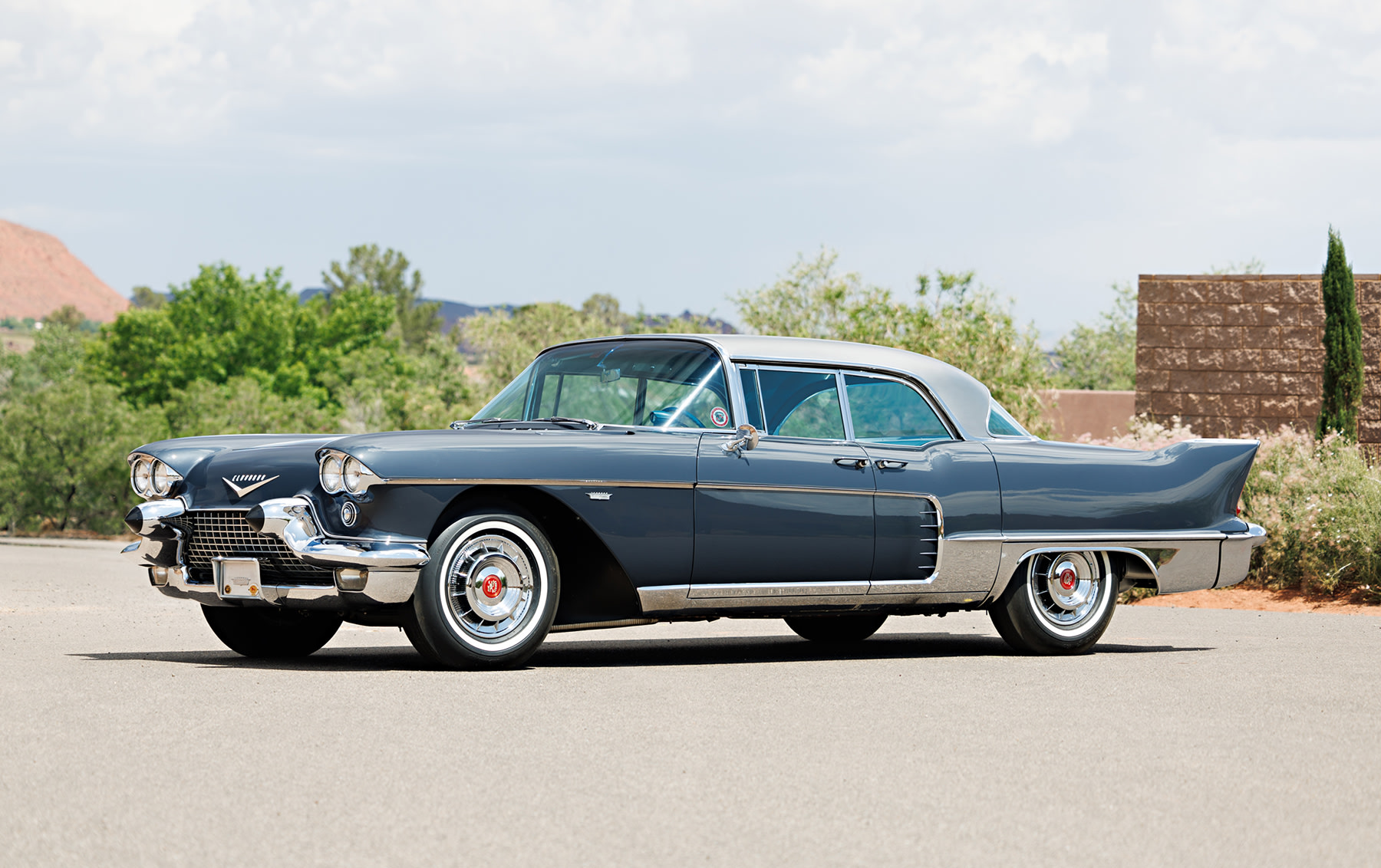
Luxury cars have always been symbols of wealth, craftsmanship, and technological innovation, but few have pushed the boundaries as dramatically as the 1957 Cadillac Eldorado Brougham.
During an era when Cadillac was already regarded as America’s premier luxury brand, General Motors approved a project with virtually no budget constraints. The goal was simple yet ambitious: build the finest production automobile in the world, regardless of cost.
The result was unlike anything the American auto industry had produced before. The Eldorado Brougham wasn’t merely Cadillac’s flagship. It became one of the most expensive production cars on the planet, carrying a staggering base price of $13,074 in 1957.
Remarkably, that figure exceeded the cost of several contemporary Rolls-Royce models sold in the United States, an almost unimaginable achievement for an American manufacturer at the time.
Adjusted for inflation, the Eldorado Brougham’s sticker price would exceed $145,000 in today’s money, placing it firmly in modern ultra-luxury territory.
According to the Cadillac Historical Collection and GM Heritage archives, the car was intended to showcase General Motors’ engineering and design capabilities rather than generate profit.
Only 704 examples were produced for the 1957 model year, making the Eldorado Brougham one of the rarest Cadillacs ever built. Its limited production, hand-finished construction, and extraordinary list of standard equipment have made it one of the most collectible American luxury cars of the postwar era.
Also Read: 10 States With the Roughest Roads, Per Federal Data
Cadillac Built a Car Without Counting the Cost
By the mid-1950s, Cadillac had firmly established itself as America’s leading luxury automaker, but company executives wanted to challenge the European elite directly. Rather than competing on price, they decided to compete on prestige, craftsmanship, and technology.
Development of the Eldorado Brougham drew heavily from Cadillac’s futuristic 1955 Park Avenue and Eldorado Brougham Town Car concept vehicles. Designers embraced clean, restrained styling that contrasted sharply with the large chrome fins becoming common on other American automobiles.
The production car featured rear-hinged “suicide” rear doors without a center pillar, creating an exceptionally elegant entrance for passengers. One of its most distinctive features was the brushed stainless-steel roof, a design element unlike anything else in American production at the time.
The roof not only enhanced durability but also created an unmistakable visual signature. Combined with handcrafted body panels and an impeccably finished interior, it reinforced Cadillac’s ambition to rival the world’s finest luxury automobiles.
Unlike most mass-produced Cadillacs, the Eldorado Brougham required substantial hand assembly. Fisher Body constructed the bodies using specialized manufacturing techniques before final assembly, and extensive manual finishing ensured each example met Cadillac’s exceptionally high quality standards.
According to GM Heritage documentation, production costs greatly exceeded the retail price, meaning General Motors lost thousands of dollars on every vehicle sold.
Power came from Cadillac’s 365-cubic-inch (6.0-liter) V8, producing 325 horsepower and 400 lb-ft of torque through a four-speed Hydra-Matic automatic transmission. While outright performance wasn’t the primary objective, the engine delivered effortless acceleration and exceptionally smooth operation, qualities expected of an ultra-luxury automobile.
The suspension represented another engineering milestone. The Eldorado Brougham became one of the first American production cars to feature a self-leveling air suspension as standard equipment. Instead of conventional steel springs, compressed air automatically maintained ride height regardless of passenger or luggage load.
Although the system proved mechanically complex and sometimes troublesome in service, it demonstrated Cadillac’s willingness to pioneer advanced technologies years before many competitors.
The cabin of the Eldorado Brougham represented the height of 1950s automotive opulence. Its interior featured premium leather seating, plush carpeting, elegant stainless-steel accents, power-adjustable seats, electric windows, automatic climate control, memory seat settings, a power-operated trunk release, electric door locks, and an advanced instrument panel that showcased Cadillac’s commitment to innovation and luxury.
Cadillac even included accessories rarely associated with automobiles. Every buyer received a matching set of magnetized drinking tumblers, housed inside a dedicated compartment to prevent movement while driving.
Additional standard items included a ladies’ cosmetic kit containing a compact, lipstick holder, powder dispenser, and perfume atomizer. These thoughtful touches reflected an era when manufacturers sought to deliver an ownership experience rather than simply transportation.
Why It Cost More Than a Rolls-Royce
The Eldorado Brougham’s $13,074 price tag stunned the automotive industry. To appreciate its significance, consider that the average new American car sold for roughly $2,700 in 1957, while the median U.S. household income was under $5,000 annually. Purchasing an Eldorado Brougham therefore required extraordinary wealth.
Even more astonishing was its comparison with Rolls-Royce. Several Rolls-Royce Silver Cloud models available in the American market carried lower base prices than Cadillac’s flagship.
Although Rolls-Royce still enjoyed unparalleled prestige, Cadillac had successfully positioned an American automobile above Britain’s most famous luxury marque in terms of purchase price. The explanation lay in production methods.
Rolls-Royce relied heavily on traditional coachbuilding techniques but produced vehicles in greater numbers than Cadillac’s ultra-exclusive flagship. Meanwhile, General Motors intentionally equipped the Eldorado Brougham with nearly every advanced feature it could develop, regardless of manufacturing expense.
The stainless-steel roof alone added considerable complexity. Air suspension significantly increased engineering costs. Hand-finishing required skilled labor uncommon on conventional production lines. Premium interior materials, custom trim pieces, and extensive electrical equipment further drove costs upward.
According to GM historians, executives understood from the beginning that the Eldorado Brougham would never become profitable. Instead, it functioned as a technological showcase designed to upgrade Cadillac’s brand image worldwide. The strategy largely succeeded.
Although only a few hundred customers purchased the car, the publicity generated by its engineering innovations and unmatched luxury reinforced Cadillac’s position as America’s flagship luxury manufacturer throughout the late 1950s.
A Legacy Built on Innovation Rather Than Sales
The Eldorado Brougham’s commercial performance never matched its engineering ambition. With only 704 units produced in 1957 and 304 additional examples built for 1958, production remained extremely limited.
Rising manufacturing costs eventually forced Cadillac to redesign the model for 1959, moving assembly to Italy through Pinin Farina while simplifying certain construction methods to reduce expenses.
Despite its financial shortcomings, the car introduced numerous features that later became commonplace across the luxury segment. Automatic ride-height adjustment inspired future suspension technologies.
Memory seating systems evolved into standard equipment on premium automobiles decades later. Power accessories, climate control, sophisticated electrical systems, and attention to passenger comfort all foreshadowed the direction luxury vehicles would take throughout the following half-century.
Collectors today recognize the Eldorado Brougham as one of the most historically significant American automobiles ever produced. Low-production numbers, groundbreaking engineering, and exceptional craftsmanship have made surviving examples highly desirable at prestigious auctions.
Well-preserved cars frequently command prices well into six figures, particularly those retaining their original air suspension components, stainless-steel roof, factory accessories, and matching documentation.
The car also represents a unique moment in General Motors’ history when prestige outweighed profitability. Rather than asking how inexpensively a luxury car could be built, Cadillac asked how extraordinary it could become if virtually every engineering and design idea were approved.
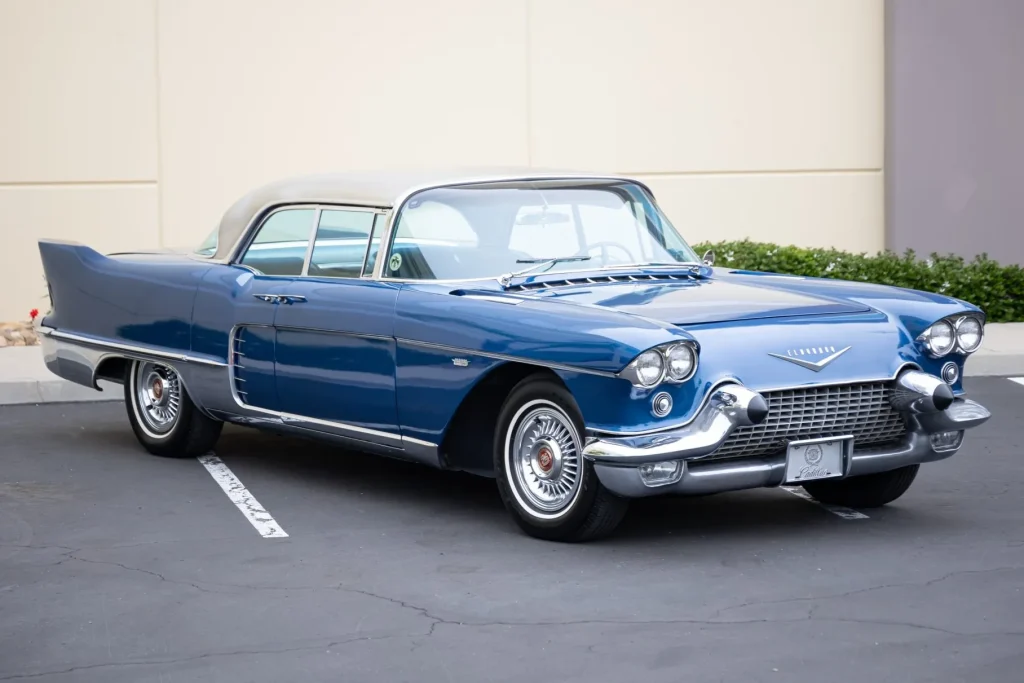
That philosophy produced one of the boldest automobiles America has ever seen. The 1957 Cadillac Eldorado Brougham wasn’t simply expensive. It was a statement that American engineering could compete directly with Europe’s finest luxury manufacturers.
With a remarkable $13,074 price, a brushed stainless-steel roof, advanced self-leveling air suspension, meticulous hand-built craftsmanship, and production capped at only 704 examples, the Eldorado Brougham pushed the boundaries of American luxury. It accomplished what few expected by creating a Cadillac that surpassed the price of a Rolls-Royce while setting a new standard for innovation and refinement in the postwar automotive era.
Why Collectors Still Consider the Eldorado Brougham One of Cadillac’s Greatest Achievements
The passage of nearly seven decades has only strengthened the Eldorado Brougham’s reputation.
While many luxury cars eventually fade into obscurity as technology advances, the 1957 Brougham remains a centerpiece at concours events and collector auctions because it represents a unique period when General Motors was willing to prioritize innovation over profitability.
According to the GM Heritage Center, the car introduced or popularized several technologies and luxury features that later became commonplace across Cadillac’s lineup and eventually spread throughout the automotive industry.
Its rarity also plays a major role in its desirability. With only 704 examples built for 1957, surviving cars are exceptionally scarce, particularly those retaining their factory-installed air suspension, original stainless-steel roof, and complete accessory package.
Many early owners replaced the complicated air suspension with conventional coil springs to improve reliability, making unrestored or correctly restored examples even more valuable today.
Collectors often pay a premium for cars that still include the original owner’s manuals, custom luggage, magnetic drinking tumblers, vanity kits, and factory documentation, as these accessories were unique to the Eldorado Brougham experience.
Auction results over the past decade demonstrate the car’s enduring appeal. Well-preserved examples have regularly sold for well into six figures, with exceptionally original or concours-quality cars commanding even higher prices.
Auction houses such as RM Sotheby’s, Mecum Auctions, and Barrett-Jackson consistently describe the Eldorado Brougham as one of the most historically significant postwar American luxury automobiles because of its limited production and engineering ambition.
Perhaps the Brougham’s greatest legacy is the confidence it gave Cadillac. The project proved that an American manufacturer could produce a hand-finished luxury automobile capable of standing alongside the world’s most prestigious marques in craftsmanship, technology, and exclusivity.
Although General Motors reportedly took a financial loss on each Eldorado Brougham produced, the car delivered a different kind of return. It elevated Cadillac’s reputation around the world and proved that true luxury was about more than status alone. By combining advanced engineering with exceptional craftsmanship, the Eldorado Brougham showed that innovation could be just as important as prestige.
Today, it remains one of the clearest examples of Detroit engineering at its most ambitious, a car built not to maximize profits but to showcase what was possible when cost was almost no object.
Also Read: BMW Recalls More Than 318,000 U.S. Vehicles Over Starter Motor Fire Risk
