
Trading in your current vehicle can make buying your next car easier, but it can also hide expensive financing mistakes. Many buyers believe they are using their trade-in as a down payment, only to discover later that much of its value disappeared into the new loan.
According to guidance from the Federal Trade Commission, Consumer Financial Protection Bureau, and major automotive finance experts, understanding every part of the transaction is essential because trade value, loan payoff, rebates, and financing are often combined into one deal.
This guide explains eight common trade-in practices that can reduce or completely erase the benefit of your down payment.
Also Read: 8 Summer Breakdowns That Spike in July, With Repair Costs
1. Rolling Negative Equity Into the New Loan
Many buyers walk into a dealership expecting their trade-in to lower the cost of their next vehicle. Instead, they leave financing thousands of dollars from their previous loan.
This happens when the amount owed on the trade-in exceeds its actual market value, creating what lenders call negative equity. Rather than requiring the customer to pay that difference upfront, many dealerships simply roll it into the new auto loan.
Consider a buyer whose SUV is worth $24,000 but still has a loan balance of $29,000. That creates $5,000 in negative equity. If the buyer purchases a new vehicle priced at $40,000, the new loan may quietly become $45,000 before taxes, registration fees, warranties, or other products are added.
The buyer may believe the trade-in served as a down payment, but in reality, it increased the amount financed.
Monthly payments often hide this issue because lenders can extend loan terms to 72 or even 84 months. While the payment may appear affordable, interest is now charged on the unpaid balance from the previous vehicle. This increases the total ownership cost substantially over the life of the loan.
Before agreeing to any trade-in, request separate numbers for your vehicle’s appraised value and the remaining loan payoff. Compare those figures independently before discussing the replacement vehicle.

Financial experts consistently recommend understanding negative equity before signing paperwork because it is one of the fastest ways to erase years of vehicle equity.
2. Inflating the Trade-In Value While Raising the New Vehicle Price
A dealership advertisement promising “Top Dollar for Your Trade” can sound attractive, but buyers should always evaluate the complete transaction rather than focusing on one number.
One common negotiation strategy involves increasing the trade-in allowance while simultaneously reducing or eliminating discounts on the replacement vehicle. The customer sees a larger trade value, yet the total financial outcome changes very little.
Imagine a dealership offering an additional $3,000 for your current vehicle. At first glance, that appears to be a significant gain.
However, if the selling price of the new vehicle is also increased by approximately the same amount compared with competing offers, the extra trade value has effectively disappeared. The buyer feels successful during negotiations while paying nearly the same total purchase price.
Consumer advocates recommend negotiating the purchase price of the new vehicle before discussing the trade-in. Separating each part of the transaction makes it easier to compare competing dealer offers and identify whether one figure is simply offsetting another.
Many pricing experts also suggest obtaining independent trade-in quotes from multiple dealerships or vehicle-buying services before entering negotiations.

A higher trade allowance is valuable only when the replacement vehicle remains competitively priced. Looking solely at one figure can distract buyers from the transaction’s total cost.
Reviewing every number independently allows shoppers to determine whether the dealership genuinely increased the trade value or simply shifted money from one column of the purchase agreement to another.
3. Using Manufacturer Rebates to Hide Negative Equity
Manufacturer incentives can reduce the purchase price of a new vehicle, but they can also make it harder to see how much negative equity is being financed. Cash rebates, bonus incentives, and loyalty discounts are legitimate savings, yet they sometimes mask the fact that money from the previous loan has been added to the new contract.
For example, suppose a buyer qualifies for a $4,000 manufacturer rebate on a new SUV. At the same time, the buyer has $4,000 in negative equity from the trade-in. On paper, the dealership may show that the rebate offset the previous loan balance.
The customer believes the rebate reduced the price of the new vehicle, but instead it simply covered debt carried over from the old loan. The purchase price effectively remains unchanged.
This situation becomes even more confusing because rebates are often listed alongside trade allowances, taxes, registration fees, and financing charges on the purchase contract. Unless every line item is reviewed carefully, buyers may assume they received a substantial discount when the incentive actually paid for previous debt.
Financial experts recommend asking one simple question: “If I had no trade-in, what would my selling price be after every available rebate?” Comparing that figure with the final contract quickly reveals whether incentives are lowering the vehicle price or merely offsetting negative equity.

Manufacturer rebates are valuable benefits, but buyers should make sure those savings reduce the cost of the new vehicle rather than covering old debt. Understanding exactly where every incentive is applied helps preserve the financial advantage that rebates are intended to provide.
4. Stretching the Loan Term to Make the Payment Look Affordable
A lower monthly payment often feels like a victory during negotiations, but it may come at a high long-term cost. One of the oldest financing techniques is extending the loan from 60 months to 72 or even 84 months.
While this reduces the monthly payment, it also increases the total interest paid and allows negative equity to remain hidden within the larger loan balance.
Suppose two loans finance the same amount. The 84-month loan may reduce the payment by more than $100 per month compared with a 60-month loan, depending on the interest rate.
Many buyers focus on the smaller payment and overlook the fact that they will be making payments for two additional years while paying interest over a much longer period.
Longer loan terms also increase the chance of becoming upside down again. Because vehicles typically depreciate fastest during the first several years, owners with extended loans often owe more than the vehicle is worth for a longer period. If they decide to trade again before the loan is paid off, the cycle of rolling negative equity into another loan can repeat itself.
Instead of asking only about the monthly payment, compare the total amount financed, the interest rate, and the total interest paid over the life of the loan. A slightly higher monthly payment with a shorter loan term often saves thousands of dollars while helping owners build equity faster.
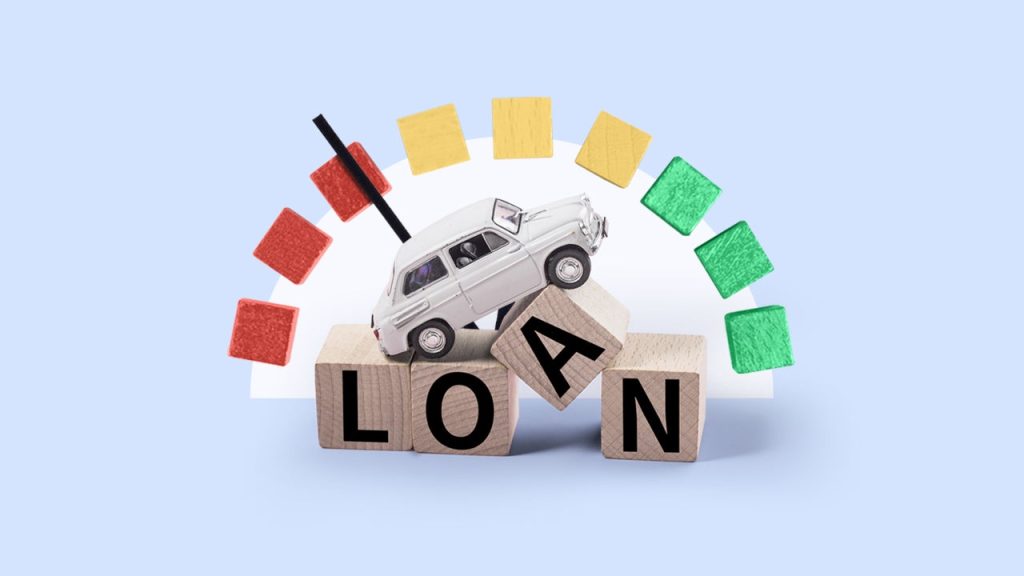
Monthly affordability matters, but understanding the complete financing picture prevents payment-focused negotiations from quietly eliminating the value of a hard-earned down payment.
5. Combining Every Number Into One Monthly Payment
One of the most effective ways to make a trade-in transaction difficult to evaluate is by discussing only the monthly payment. Instead of presenting the trade-in value, purchase price, taxes, fees, loan payoff, and financing separately, the dealership combines everything into a single payment figure.
While this approach may simplify the conversation, it also makes it much harder for buyers to determine where their down payment actually went.
For instance, a salesperson may ask, “What monthly payment are you comfortable with?” After hearing a target amount, the financing structure can be adjusted by changing the loan term, interest rate, down payment, or even the selling price.
The payment reaches the buyer’s goal, but the total amount financed may be thousands of dollars higher than expected.
Consumer finance experts consistently recommend negotiating each part of the deal individually. First, settle on the selling price of the new vehicle.
Next, determine the trade-in value. Then verify the remaining loan payoff, followed by financing terms and optional products. Breaking the transaction into separate components makes it much easier to identify hidden costs.
Another benefit of this method is the ability to compare offers from multiple dealerships. Two dealers may advertise the same monthly payment, yet one could require financing several thousand dollars more than the other.
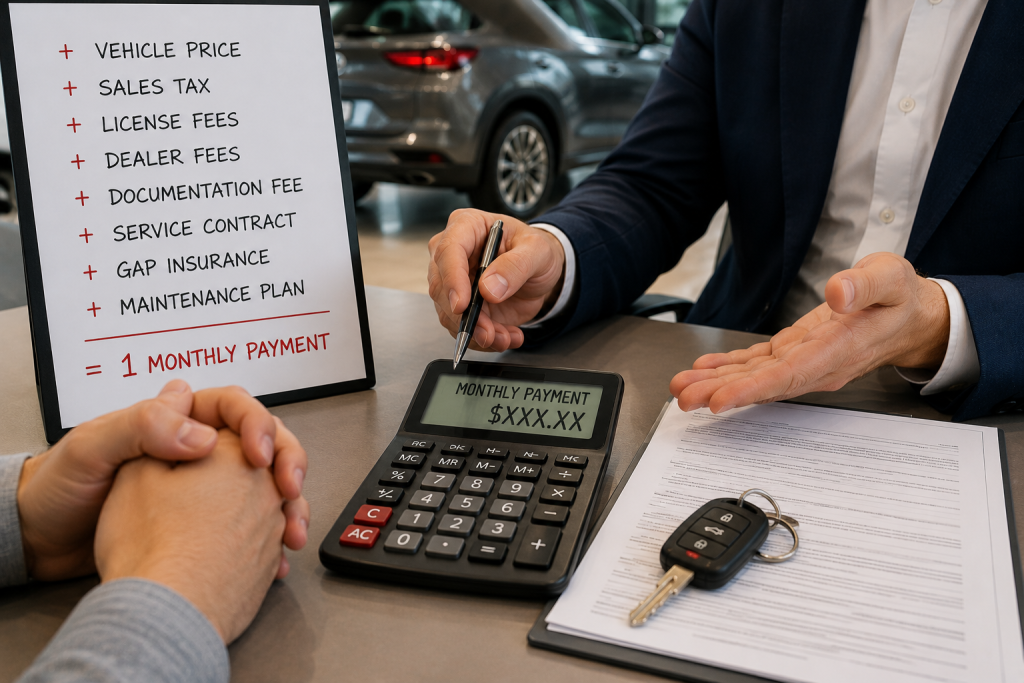
A monthly payment is only one piece of the transaction. Buyers who understand every figure on the purchase agreement are far less likely to see their trade equity disappear into a loan structure designed around affordability rather than total cost.
6. Adding Finance Products Without Explaining Their Impact
Trade-ins are not the only items that can increase the amount financed. Extended service contracts, GAP coverage, tire and wheel protection, paint protection, key replacement plans, maintenance packages, and other finance office products are often added during the paperwork process.
While many of these products have legitimate value, they also increase the loan balance and can quietly consume what buyers believed was their down payment.
Imagine bringing $6,000 in positive trade equity into a purchase. During the finance process, optional products totaling $5,000 are added to the contract. Even though the buyer technically used a down payment, nearly all of that equity has now been replaced by optional purchases financed over several years.
The issue is not that these products exist. GAP insurance, for example, can be worthwhile for buyers with small down payments or long loan terms. The concern arises when buyers do not realize how each product affects the total financed amount and the interest paid over time.
Before signing, review every optional item individually. Ask for the price of each product, whether it is optional, and how much interest it will generate over the life of the loan if financed. Declining unnecessary products or paying for certain items separately can significantly reduce borrowing costs.
A careful review of the finance contract ensures that the value of your trade-in is working toward reducing debt instead of funding products you may not have planned to purchase.
7. Giving a Trade-In Estimate Before the Vehicle Is Properly Appraised
Many buyers receive an attractive trade-in estimate online or over the phone before visiting the dealership. While these estimates can be useful starting points, they are often based on the assumption that the vehicle matches the condition described by the owner.
Once the dealership performs a physical inspection, the value may change because of tire wear, body damage, accident history, mechanical issues, or excess mileage.
Suppose an SUV receives an online estimate of $25,000. During the inspection, the dealer identifies worn tires, previous collision repairs, and overdue maintenance. The final trade-in offer drops to $22,500.
If the buyer has already negotiated the replacement vehicle assuming the higher value, the missing $2,500 often gets absorbed into the financing instead of being paid separately. That reduction can eliminate a significant portion of the intended down payment.
This situation becomes more complicated when buyers are focused on completing the purchase the same day. Rather than delaying the transaction or negotiating further, many simply accept the revised appraisal. The difference then increases the amount financed or reduces available equity.

To minimize surprises, obtain multiple appraisals before shopping. Independent offers from dealerships, used-car retailers, and vehicle-buying services provide a realistic market range. Arriving with several written valuations also strengthens your negotiating position if one appraisal comes in unexpectedly low.
A trade-in estimate should always be viewed as preliminary until the vehicle has been inspected. Confirming the final appraisal before calculating financing helps ensure that your expected down payment does not shrink during the final stages of the purchase process.
8. Signing the Contract Without Verifying the Amount Financed
The final paperwork is where every number comes together, making it the most important stage of the transaction. Buyers often spend hours negotiating the purchase price and trade-in value, yet only a few minutes reviewing the retail installment contract.
That is where financing mistakes, unexpected products, and rolled-over debt can quietly erase the benefit of a substantial down payment.
One of the first figures to verify is the amount financed. This number should match your expectations after subtracting the down payment, trade-in equity, rebates, and any cash paid at signing. If the amount financed is higher than anticipated, ask for a complete explanation before signing.
Next, compare the agreed selling price with the figure listed on the contract. Confirm that manufacturer incentives, trade allowance, taxes, registration fees, and optional products are all accurately reflected. Small discrepancies across several line items can add up to thousands of dollars over the life of the loan.
Financial experts also recommend reviewing the annual percentage rate, loan term, monthly payment, and total payments. Looking only at the monthly payment may cause buyers to overlook additional interest or financed products that significantly increase the total cost of ownership.

Taking ten extra minutes to review every page can prevent years of unnecessary debt. Once the contract is signed, correcting financing mistakes becomes much more difficult. Careful attention to the final paperwork protects both your trade-in equity and your long-term financial position.
A trade-in should reduce the amount you need to finance, not quietly increase it. Yet negative equity, extended loan terms, inflated trade allowances, bundled monthly payments, optional finance products, changing appraisals, and overlooked contract details can all reduce or eliminate the value of your down payment.
Guidance from the Federal Trade Commission and Consumer Financial Protection Bureau consistently encourages buyers to separate every part of the transaction, compare multiple offers, and read the financing agreement carefully before signing.
Understanding how each dollar moves through the deal helps you preserve your trade equity, borrow less, pay less interest, and make a more informed vehicle purchase.
Also Read: 8 Financing Traps Buyers Sign at the Used Car Desk