Buying a used car is not just about choosing the right vehicle. The financing office can have an even bigger impact on the total cost of ownership than the negotiated selling price.
Many buyers focus on the monthly payment and unknowingly agree to loan structures, optional products, or financing terms that add thousands of dollars over the life of the loan. Most dealerships operate ethically, but some sales tactics can make loans appear more attractive than they actually are.
Understanding these common financing traps helps buyers compare offers objectively, ask the right questions, and avoid paying substantially more than necessary for the same used vehicle.
Also Read: 8 Trucks and SUVs That Tow 10,000 Pounds Under $60,000
1. Payment Packing
The negotiation may seem complete once the vehicle price has been agreed upon, but one of the most common financing pitfalls occurs after that point. Payment packing is the practice of quoting a monthly payment that is higher than necessary and using the extra room to quietly add optional products or increase dealer profit.
Instead of discussing the actual loan amount, interest rate, and every individual fee, the conversation stays focused almost entirely on the monthly payment. For example, a buyer may have qualified for a payment of $465 per month, but the finance office presents a payment of $499.
The $34 difference may seem insignificant, especially over a long loan, but it can represent thousands of dollars in additional products or fees financed into the contract. Because many customers shop by monthly payment rather than total loan cost, this tactic can go unnoticed.
The best defense is to request a complete financing breakdown before signing anything. Buyers should review the purchase agreement line by line and verify the vehicle price, loan amount, annual percentage rate (APR), loan term, taxes, registration fees, and every optional product separately.
If any item is unfamiliar, ask whether it is required. In most cases, products such as service contracts, maintenance plans, GAP coverage, or tire protection are optional rather than mandatory.

A useful strategy is to negotiate the vehicle price first, arrange financing separately if possible, and compare the dealer’s financing offer with pre-approved financing from a bank or credit union. Looking beyond the monthly payment allows buyers to evaluate the true cost of the loan and avoid financing expenses they never intended to purchase.
2. Backend Product Stacking
The finance office is where dealerships commonly offer additional products after the vehicle price has already been negotiated. These products can provide value for some buyers, but problems arise when several are bundled together without clearly explaining their individual costs or benefits.
This practice, often called backend product stacking, can increase the financed amount by several thousand dollars within a matter of minutes.
Common products include extended service contracts, GAP insurance, prepaid maintenance plans, tire and wheel protection, paint protection, key replacement coverage, theft recovery systems, and interior protection packages.
Purchased individually after careful consideration, some of these products may make sense depending on the vehicle, warranty status, and financing terms. The issue occurs when buyers are encouraged to purchase multiple products together because the finance manager emphasizes only the small increase in the monthly payment.
For example, adding $3,500 worth of optional products to a 72-month loan may increase the payment by only a few dozen dollars each month. While that increase appears modest, the buyer also pays interest on those products for the life of the loan, making the actual cost even higher.

Consumers should ask for every optional product to be listed separately with its individual price. They should also ask whether each product is required to obtain financing. In most U.S. financing transactions, optional protection products are not required for loan approval.
Reading the retail installment contract carefully before signing provides another opportunity to identify unwanted additions. Comparing the financed amount with the negotiated vehicle price is one of the simplest ways to confirm that only the products intentionally selected are included.
3. Stretching the Loan Term to Lower the Payment
One of the easiest ways to make a used car appear more affordable is to extend the loan term. Instead of discussing a 48- or 60-month loan, the finance office may present a 72-, 84-, or even 96-month term because it produces a lower monthly payment.
While the smaller payment can fit a buyer’s budget more comfortably, it often comes at a high long-term cost. A longer loan means interest is charged over more months. Even if the interest rate stays the same, the buyer frequently pays thousands of dollars more in total finance charges.
In addition, used vehicles depreciate every year, so an extended loan increases the chance of owing more than the vehicle is worth. This situation, commonly called negative equity, makes trading or selling the vehicle much more difficult before the loan is paid off.
Consider a buyer financing $25,000. Choosing an 84-month loan instead of a 60-month loan may reduce the monthly payment substantially, but the total amount paid by the end of the contract can increase by several thousand dollars. The lower payment often distracts buyers from looking at the total repayment amount shown in the financing documents.

Before agreeing to any loan, compare the total finance charge, not just the monthly payment. Ask the finance manager to provide quotes for multiple loan terms such as 48, 60, and 72 months.
Many buyers discover that paying slightly more each month results in meaningful savings over the life of the loan. If the longer loan is the only way the payment fits the budget, it may be a sign that purchasing a less expensive vehicle is the safer financial decision.
4. Accepting a High APR Without Comparing Financing Offers
Many buyers spend hours negotiating the purchase price but devote only a few minutes to reviewing the interest rate. That can become one of the most expensive decisions made during the transaction. Even a small increase in the annual percentage rate can add hundreds or even thousands of dollars in interest during the life of a used car loan.
Dealership financing is often competitive, but it should never be accepted without comparison. Banks, credit unions, and online lenders frequently offer different rates based on credit history, loan amount, vehicle age, and loan term.
A buyer who walks into the dealership with a pre-approved loan has a benchmark that allows them to evaluate whether the dealer’s financing is truly competitive.
For example, financing $30,000 for 72 months at 6.5 percent instead of 8.5 percent can result in well over $2,000 in additional interest. Because the monthly payment changes gradually, many buyers focus only on affordability instead of the total borrowing cost.
Before signing the contract, ask the finance office for the exact APR, the total finance charge, the amount financed, and the total amount that will be repaid.
These figures appear on the Truth in Lending disclosure and should be reviewed carefully. If another lender offers better terms, many dealerships are willing to match or beat that rate to earn the financing business.
Comparing financing sources requires only a small amount of extra effort, yet it is one of the most effective ways to reduce the total cost of purchasing a used vehicle.
5. Rolling Negative Equity Into the Next Loan
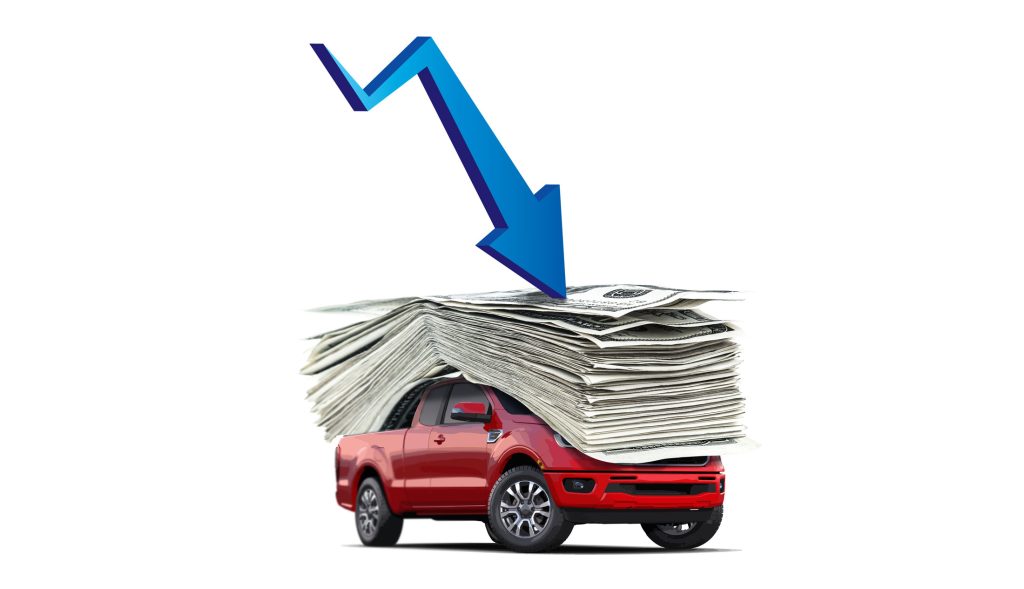
Trading in a vehicle before the current loan is paid off is common in the United States, but it can become financially risky when the existing loan balance exceeds the vehicle’s trade-in value. This difference is known as negative equity.
Rather than requiring the buyer to pay the shortfall separately, some financing arrangements simply add that unpaid balance to the new auto loan. While this makes the transaction easier to complete, it also means the buyer begins the next loan already owing more than the new vehicle is worth.
For instance, if a trade-in is worth $18,000 but the outstanding loan balance is $22,000, the remaining $4,000 may be rolled into the financing for the replacement vehicle. Instead of financing only the purchase price of the used car, the buyer is also paying interest on debt carried over from the previous loan.
This increases the total loan amount, raises monthly payments, and often extends the period of negative equity into the next ownership cycle.
Before agreeing to the transaction, request separate written figures showing the trade-in value, loan payoff amount, negative equity, purchase price, and total amount being financed. These numbers should never be combined into a single payment discussion.
Understanding exactly how much previous debt is being transferred allows buyers to make a more informed decision.
If the negative equity is substantial, delaying the purchase for several months while paying down the existing loan may be the better financial choice.
Selling the vehicle privately can also produce a higher selling price than a dealership trade-in, reducing the amount of debt that carries forward. A clear understanding of the numbers helps prevent one loan from creating problems for the next.
6. Focusing Only on the Monthly Payment
A monthly payment is important because it determines whether the loan fits comfortably within a household budget. However, concentrating exclusively on that single figure is one of the biggest financing mistakes buyers make at the used car dealership.
A payment can be reduced in several ways, including extending the loan term, increasing the down payment, adding a balloon payment in certain financing arrangements, or restructuring the loan. None of those changes necessarily reduce the total cost of the vehicle.
Imagine two financing offers that both appear affordable. One may have a slightly lower payment because it stretches the loan to 84 months instead of 60 months.
Another may include optional protection products financed in the contract while keeping the payment within the buyer’s target. Without reviewing the complete financing agreement, the buyer could unknowingly agree to pay thousands of dollars more.
A better approach is to evaluate several key figures together. Review the vehicle’s selling price, the amount financed, the annual percentage rate, the loan term, the total finance charge, and the total amount that will be paid by the end of the contract.
These numbers provide a complete picture of the financing arrangement rather than just one monthly figure.

Experienced financial advisors often recommend negotiating the vehicle price first, arranging financing second, and discussing the monthly payment only after every major number has been finalized.
This sequence keeps the focus on the true cost of the purchase and reduces the likelihood that important details become hidden behind an attractive payment amount.
7. Signing Without Reviewing Optional Protection Products
By the time buyers reach the finance office, they have often spent several hours selecting the vehicle, negotiating the price, and completing paperwork. Fatigue can make it tempting to sign documents quickly, which is exactly why optional protection products deserve careful attention.
Many of these products can provide legitimate value depending on the vehicle and ownership plans, but buyers should never assume they are required as part of the financing agreement.
Common add-ons include extended service contracts, GAP coverage, prepaid maintenance, wheel and tire protection, key replacement programs, windshield protection, and paint or fabric protection.
The problem arises when several of these products are bundled together or presented in a way that suggests financing approval depends on accepting them. Under normal lending practices in the United States, optional protection products are not required simply to qualify for an auto loan.
A good habit is to request an itemized list showing the price of every optional product before signing the retail installment contract. Ask what each product covers, how long the coverage lasts, what exclusions apply, and whether similar protection can be purchased elsewhere for less money.
Some manufacturer-backed extended service contracts may offer strong value, while others duplicate coverage that already exists through the factory warranty or personal auto insurance.

Another important step is comparing the negotiated vehicle price with the final amount financed. If the financed amount is unexpectedly higher, optional products may have been added to the contract.
Taking a few extra minutes to review every line of the paperwork can prevent hundreds or even thousands of dollars in unnecessary financing costs throughout the life of the loan.
8. Not Reading the Retail Installment Contract Before Signing
The final paperwork is the legally binding agreement that governs the entire vehicle purchase, yet many buyers spend less time reviewing it than they spent choosing the color of the car. Once the retail installment contract is signed, the loan terms become enforceable, making this document the single most important part of the transaction.
The contract contains far more than the monthly payment. It identifies the vehicle’s selling price, down payment, trade-in value, amount financed, annual percentage rate, finance charge, total of payments, payment schedule, optional products, taxes, registration fees, and lender information. Even a small error in one section can affect the total amount paid over several years.
Before signing, compare every figure with the numbers previously negotiated. Verify that the vehicle price matches the purchase agreement, confirm the APR is exactly what was promised, and ensure no unfamiliar fees or products appear in the contract.
If any item is unclear, ask for an explanation before signing. Reputable dealerships should be willing to explain every charge and provide copies of all signed documents.

Buyers should also avoid feeling pressured by statements such as “everyone signs this” or “we can fix it later.” It is much easier to correct a discrepancy before the paperwork is finalized than after the loan has been funded.
Reading the entire contract carefully may take only 15 to 20 minutes, but it can protect buyers from costly misunderstandings and ensure the financing agreement accurately reflects the deal they intended to accept.
Also Read: 8 Forgotten Buicks and Oldsmobiles Now Worth Real Money