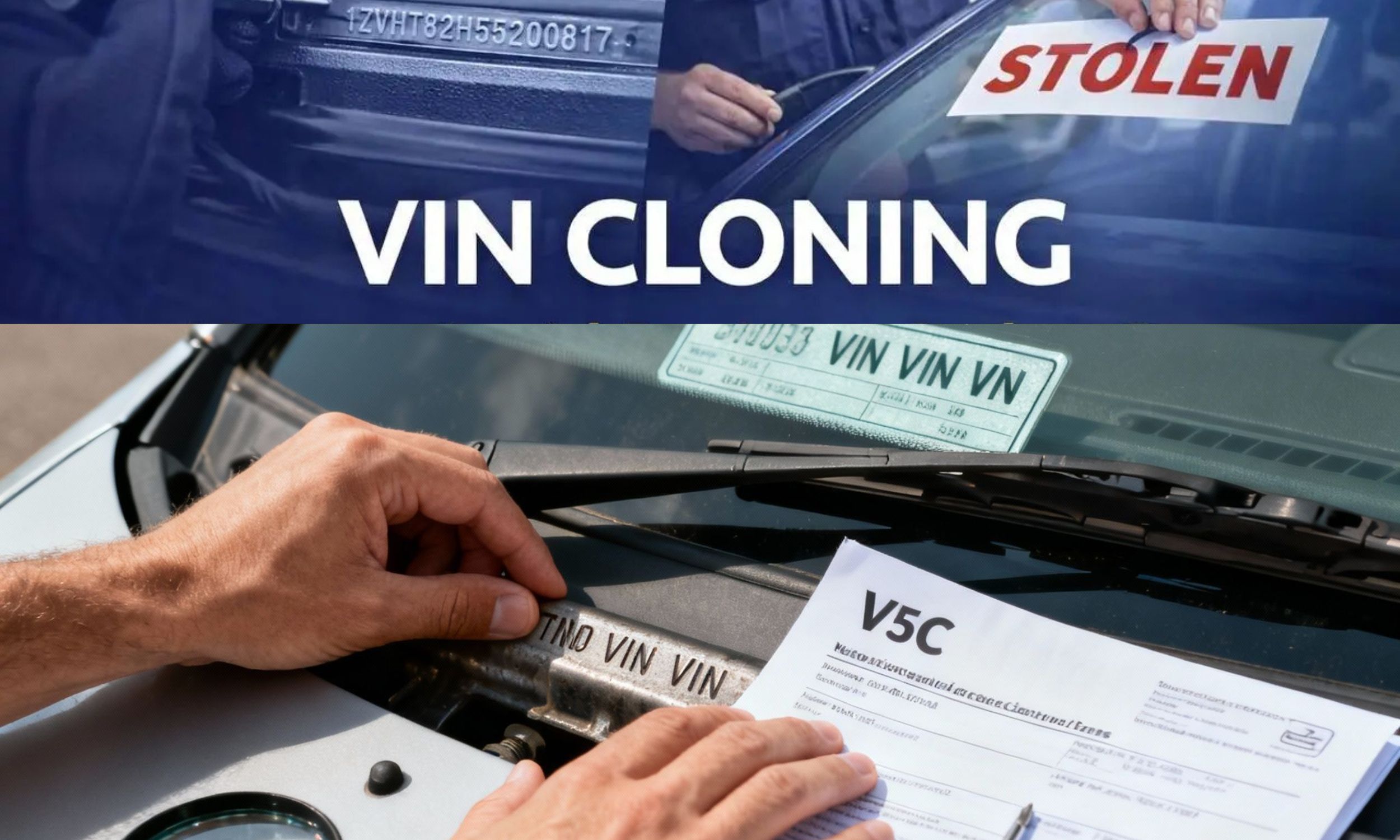
You spot a truck online that looks too good to pass up. The price is fair, the photos check out, and the seller even answers your calls. So you run the VIN, and everything comes back clean. What could go wrong? Quite a lot, actually. A growing number of Americans are discovering that the vehicle they bought in good faith was stolen weeks earlier, its identity swapped out like a passport photo.
This scheme is called VIN cloning, and it’s fooling everyday buyers, insurance companies, and even licensed dealerships. Here’s what’s really happening behind those clean vehicle history reports, and how you can avoid becoming the next victim.
What VIN Cloning Really Means
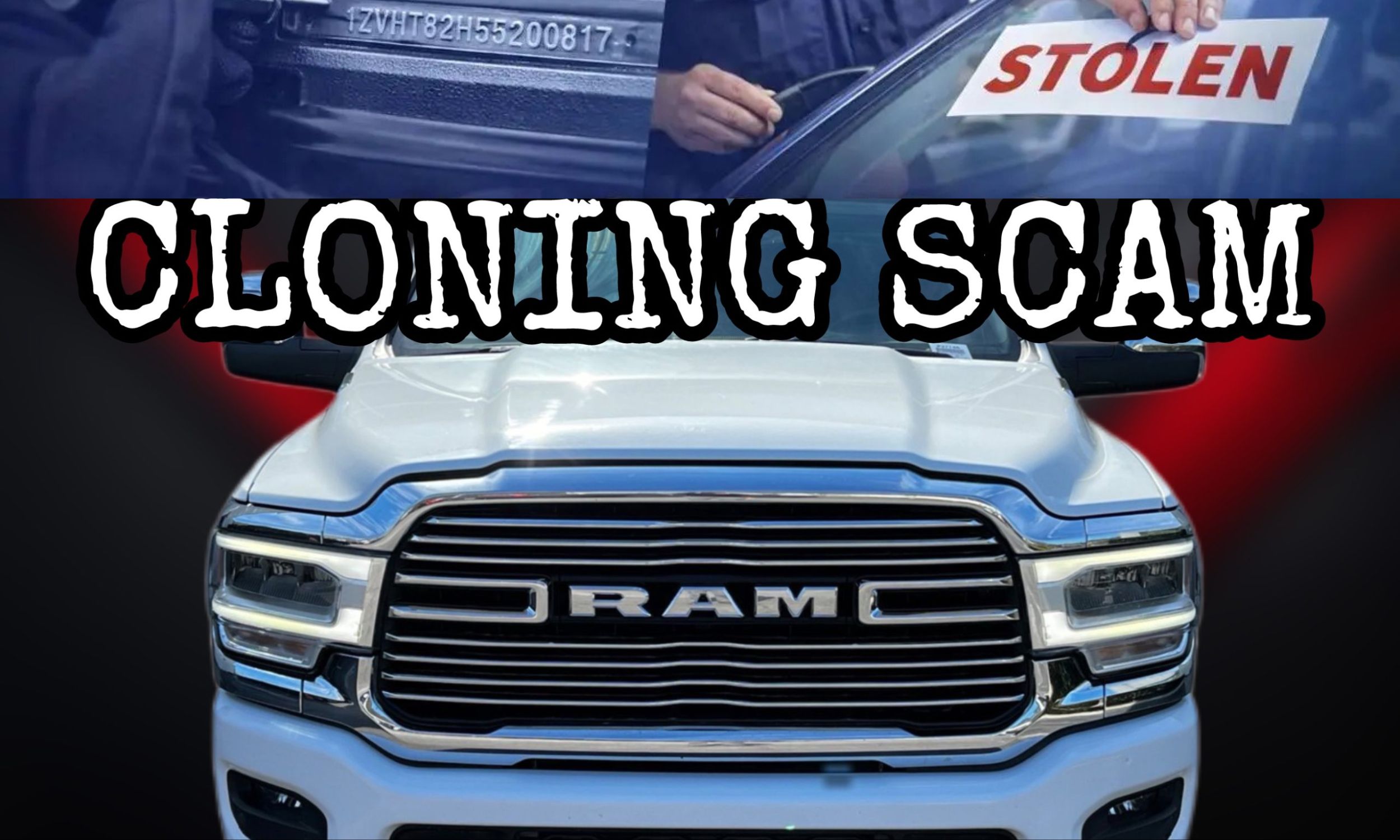
Every car built for US roads carries a 17-character Vehicle Identification Number stamped into its frame, printed on a door sticker, and etched into other spots a buyer rarely checks. Think of it as a fingerprint. No two vehicles are supposed to share one. Criminals have figured out how to break that rule.
Here’s the process, stripped down. A thief steals a car, then hunts for a legitimate vehicle of the same year, make, model, and color, usually one listed for sale somewhere far away. They copy that second vehicle’s VIN, print counterfeit plates and door stickers bearing the borrowed number, and physically attach them to the stolen car. Paperwork gets forged to match. The stolen vehicle now wears someone else’s clean identity.
Buyers who check the VIN against a history database see nothing alarming, because the number belongs to a real, legally owned car parked somewhere else entirely. The scam only becomes visible when both vehicles wearing the same number cross paths in a state motor vehicle system, which can take weeks or months, if it happens at all.
This isn’t a fringe operation run by a single crook in a garage. Investigators describe organized rings capable of producing factory-quality stickers, forged out-of-state titles, and fabricated service histories. Some operations run across state lines, and others move stolen VINs between the US and Canada, since those two systems don’t always share title records with each other, making cross-border cloning even harder to catch.
How Thieves Pull Off The Switch
Pulling off a convincing clone takes more effort than most buyers assume, which is exactly why so many people fall for it. Thieves typically start by browsing classified sites for a car matching the one they’ve stolen almost exactly, down to trim level and paint color. Once a donor VIN is chosen, the real work begins.
Printers and scanners capable of reproducing factory door stickers have become far more accessible than they once were, letting criminals recreate labels that look nearly identical to originals, right down to the font and placement. The physical VIN plate on the dashboard gets swapped or restamped. Odometer readings get altered so the mileage lines up with what a title application claims.
Fake IDs frequently accompany these sales. A buyer photographs a driver’s license for their own records, feeling responsible, only to learn later that the ID was counterfeit and the phone number belonged to a burner. Sellers often ask for cash, arrange a rushed meeting, or claim they just relocated from another state, all details that sound ordinary in isolation but form a pattern once you know to watch for it.
Out-of-state titles show up in the overwhelming majority of these cases, and for good reason. If a stolen car’s VIN is already registered in your home state, retitling it there triggers an instant flag. Bringing in paperwork from another state buys criminals time, since interstate systems eventually cross-check title records but rarely catch a duplicate before a sale closes.
The result is a vehicle that passes a test drive, a mechanic’s inspection, and a VIN lookup, all while hiding a stolen identity underneath.
Also Read: 5 Cars With Secure Wireless Keys and 5 That Can Be Cloned in Seconds
Why Cloned Cars End Up On Dealer Lots
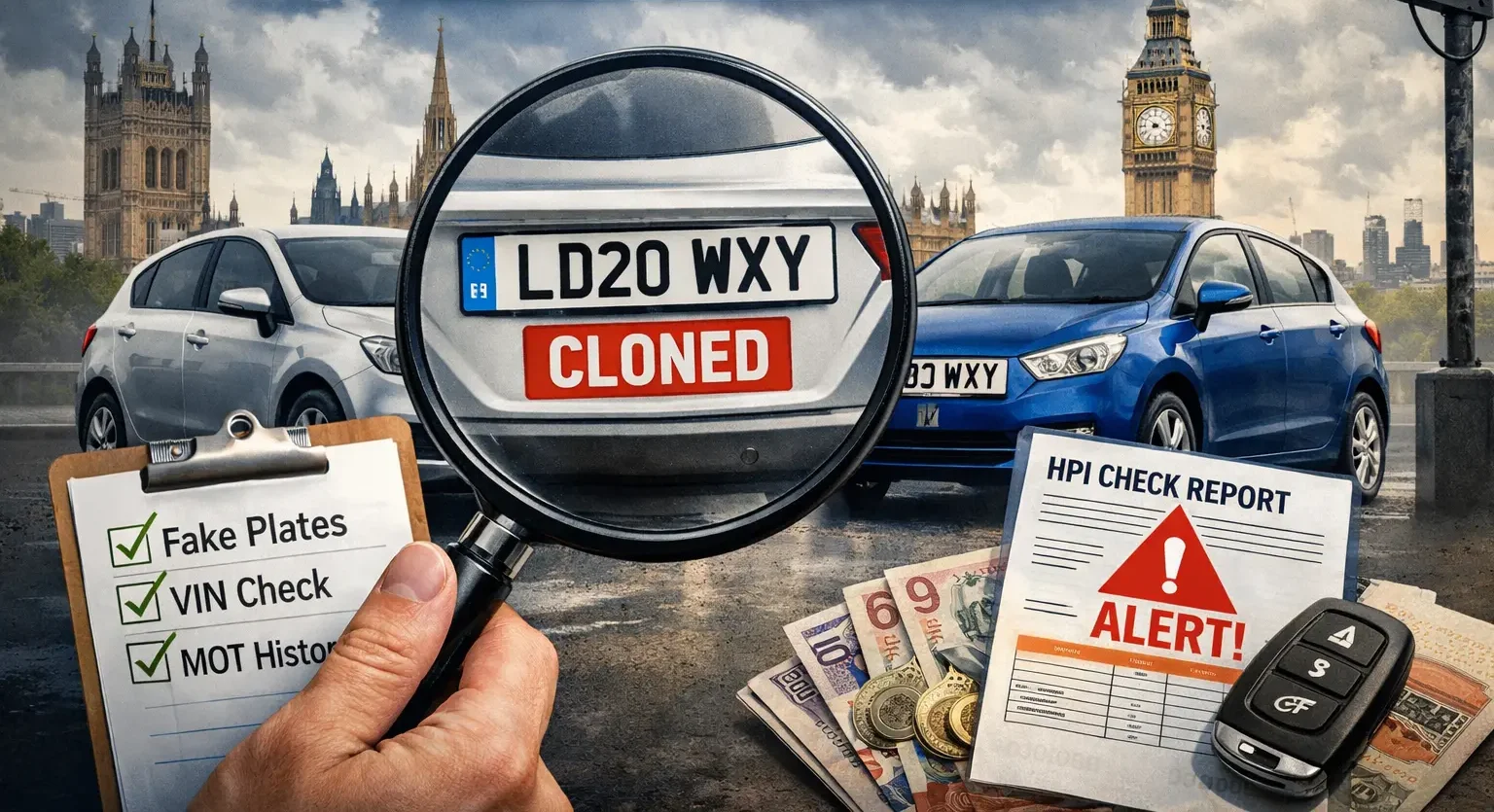
Private sellers aren’t the only ones getting fooled. Dealerships buy and trade vehicles constantly, often on tight timelines, and that pressure creates an opening. A criminal can drive a cloned vehicle straight onto a used car lot, sell it outright or trade it toward another purchase, and walk away with cash while the dealership unknowingly inherits a stolen car.
Dealers rarely have access to every manufacturer’s service records, especially when the trade-in is a different brand than what they sell. A Ford dealership taking in a Chevy trade doesn’t have the same visibility a Chevy dealer would, so a forged title and matching door sticker can sail through intake with little friction. Once that car sits on the lot, it looks exactly like every other pre-owned vehicle for sale, price tag and all.
This is precisely why the crime is so damaging. Buyers are taught to trust dealership purchases more than private sales, and for good reason, since dealers typically offer more legal protection if something goes wrong. But a dealer can only pass along what they were told was legitimate. If the paperwork fooled them, it will likely fool the next buyer too.
Cases have surfaced where a cloned vehicle got resold two or three times before anyone noticed the duplicate VIN sitting in a state database. Each sale added another layer of distance between the original theft and the eventual discovery, and another innocent buyer holding a loan on a car police could seize at any moment.
Warning Signs Every Buyer Should Know
Certain details tend to repeat across VIN cloning cases, and learning to spot them gives buyers a real fighting chance. A price sitting thousands of dollars below market value tops the list. Thieves want cars to move fast, so they often price them well under comparable listings, hoping buyers get excited and skip their homework.
Out-of-state titles deserve extra scrutiny, particularly when paired with a seller who mentions having just moved. That story shows up often enough in reported cases that it’s worth treating as a prompt to slow down rather than speed up.
Physical inspection matters as much as any online check. Look closely at every VIN sticker on the vehicle, on the dashboard, the driver’s door jamb, and under the hood. Genuine factory labels sit flush, use consistent fonts, and resist peeling. A label with rough edges, blurry text, or one that lifts easily at a corner is a red flag worth walking away from.
A seller’s name that doesn’t match the name on the title is another signal to ask hard questions. So is a rushed meeting, a request for cash only, or reluctance to meet somewhere public.
Buyers who used an OBD scanner to pull the VIN directly from the vehicle’s computer have sometimes caught clones that fooled every visual check, since altering the physical stickers is far easier for criminals than reprogramming onboard systems, though sophisticated rings have started finding workarounds for that too.
Also Read: 1966 Chevy Nova Clone with Modern Engine and Customization Potential
Steps To Protect Yourself Before You Buy
No single check guarantees safety, but stacking several together dramatically lowers your risk. Start by running the VIN through more than one history report service, and don’t stop there, since clean reports simply mean nobody has caught the clone yet.
Call a franchise dealer for the same brand and ask them to pull up service records tied to that VIN. Legitimate vehicles usually have a documented history somewhere. Contact your insurance provider before finalizing a purchase, since some fraudulent VINs get flagged during that process.
Meet the seller at their home address rather than a neutral parking lot, and pay attention to whether the surroundings match what they’ve told you about themselves. Photograph everything, including the seller’s ID, license plate, and any paperwork, and hold onto every receipt tied to the transaction. That kind of documentation has helped victims and investigators piece together fraud after the fact.
Buying through a licensed dealer offers more legal recourse than a private sale, even though dealers themselves aren’t immune to this scheme. If you do buy privately, consider having a trusted mechanic inspect the vehicle in person, and use a code reader to confirm the VIN stored in the car’s onboard computer matches everything on the paperwork.
Trust your instincts. If a deal feels rushed, if the price feels off, or if a seller dodges simple questions, step back. A few hours of caution costs far less than months spent fighting a bank, an insurer, and a police department over a truck that was never yours to keep.