
Production totals for classic muscle cars are not always straightforward. Manufacturers sometimes recorded domestic and export cars separately, while later registry discoveries have changed several accepted totals.
This ranking considers factory-built American muscle and pony cars according to model year, body style and original high-performance engine. It excludes prototypes, dealer conversions, race-only packages and one-of-one color or option combinations.
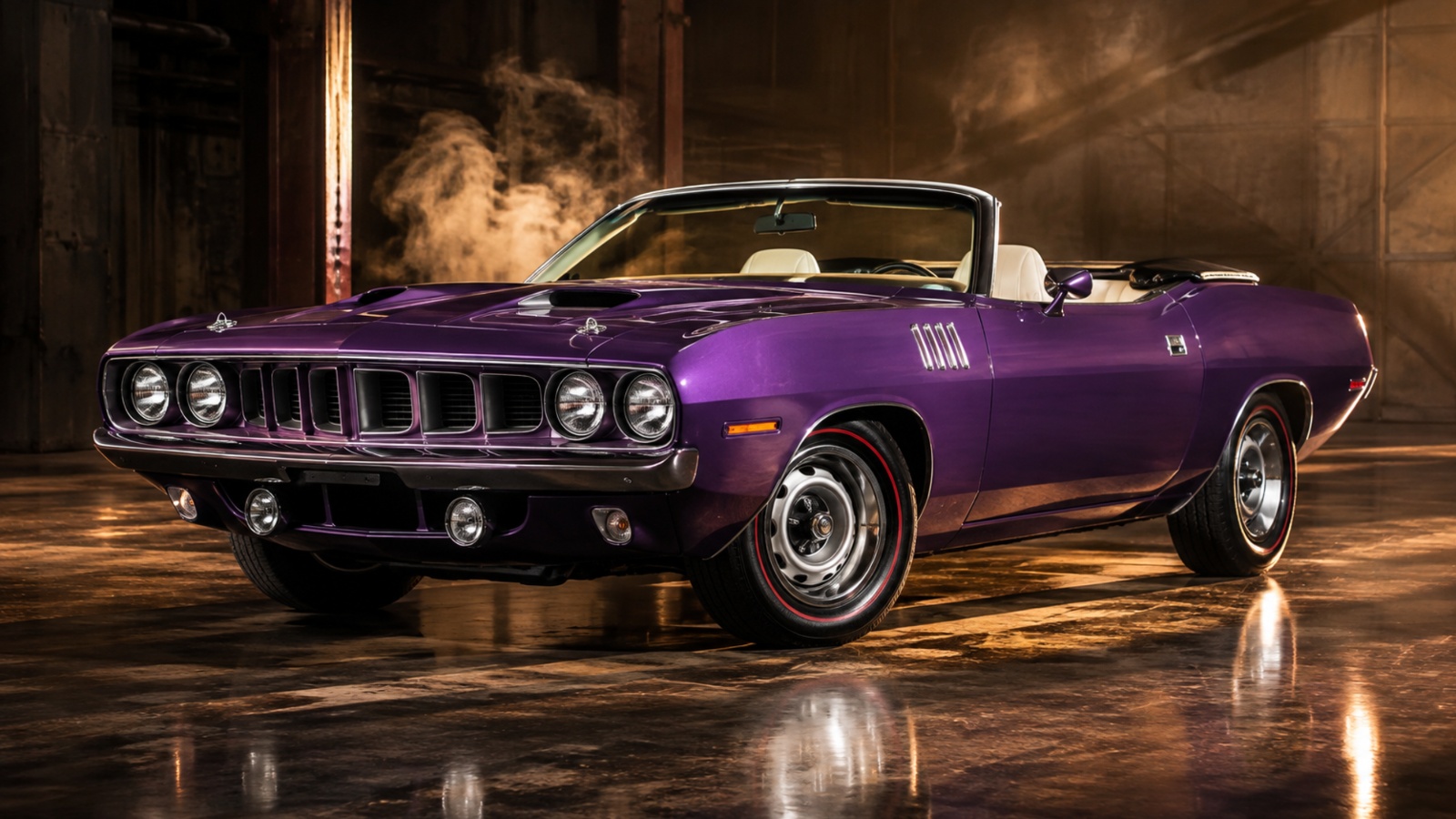
One important qualification concerns the 1971 Plymouth Hemi ’Cuda convertible. Older references commonly state that Plymouth produced 11, while more recent Hagerty and Mecum documentation places the total at 12. Both figures are acknowledged below rather than treating either number as undisputed.
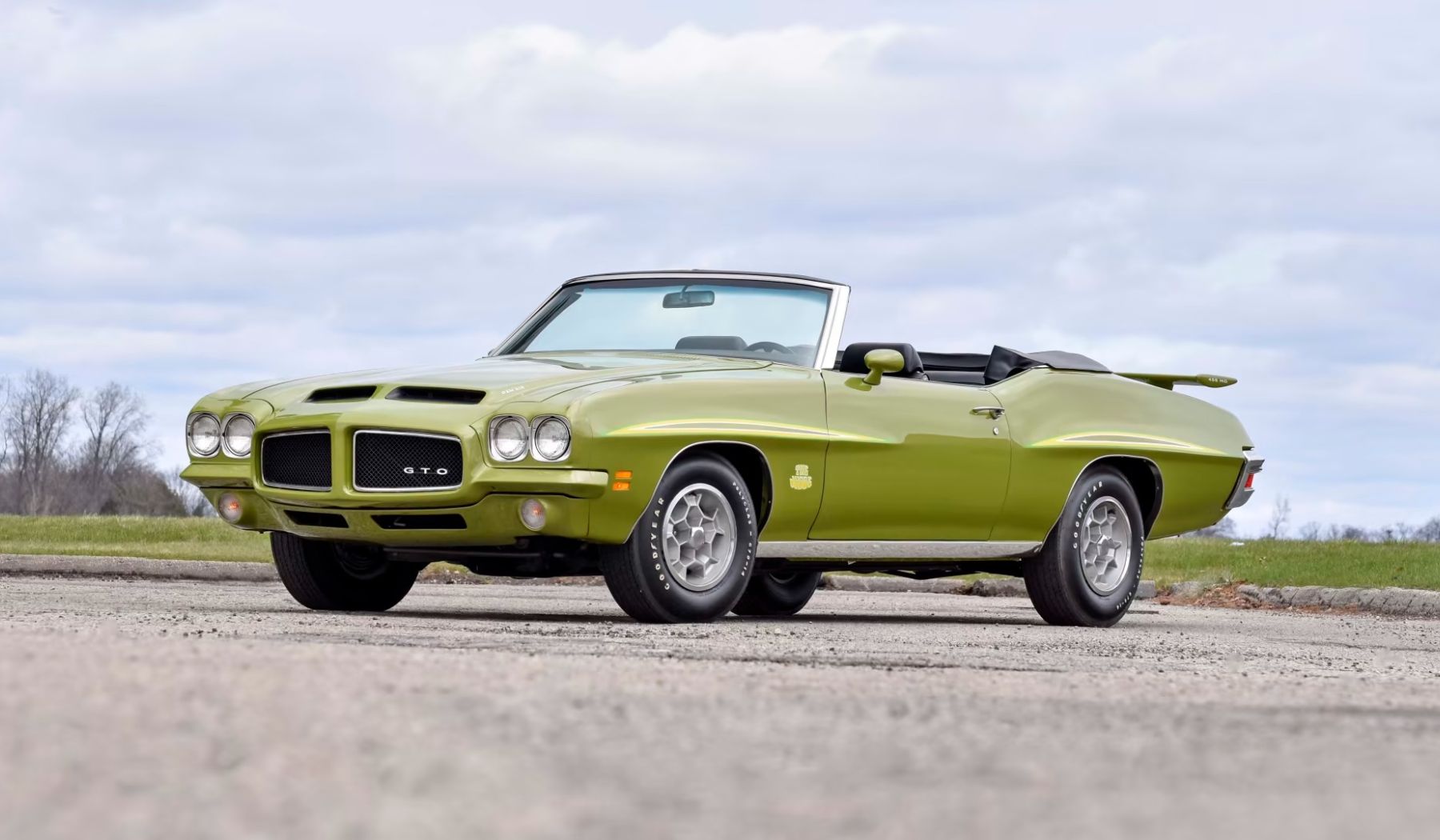
10. 1971 Pontiac GTO Judge Convertible – 17 Built
The 1971 Pontiac GTO Judge convertible represents the final chapter of one of the most recognizable performance packages of the original muscle-car era. Pontiac built only 17 Judge convertibles during the abbreviated 1971 production run. Another 357 Judges were constructed as hardtops, bringing total Judge production for the year to just 374 cars.
Every 1971 Judge convertible was powered by Pontiac’s 455-cubic-inch High Output V8. Factory-rated at 335 gross horsepower, the 455 HO used round-port cylinder heads, a functional Ram Air induction system and a high-performance camshaft.
The engine delivered strong low-speed torque even though General Motors was lowering compression ratios across its lineup to accommodate unleaded fuel and increasingly strict emissions requirements.
The Judge package added distinctive graphics, a rear spoiler, Rally II wheels and performance-oriented equipment. Buyers could select either a four-speed manual transmission or a three-speed Turbo Hydra-Matic automatic.
Despite its visual impact and considerable performance, the Judge had become difficult to sell. Insurance premiums were rising, fuel concerns were developing, and the market was shifting away from aggressively styled muscle cars.
Pontiac discontinued the Judge option partway through the 1971 model year. The GTO convertible itself also disappeared after 1971, making these 17 cars the last factory-built Judge convertibles.
Their rarity comes from more than the small production number. They combine the final Judge package, Pontiac’s formidable 455 HO engine and an open body style that was rapidly disappearing. As a result, documented examples are now among the most valuable production Pontiacs from the muscle-car era.
- Engine: 7.5-liter 455 H.O. naturally aspirated V8
- Torque: 480 lb-ft
- Horsepower: 335 hp
- Length/Width: 203.3 inches / 76.7 inches
9. 1967 Plymouth GTX Hemi Convertible – 17 Built
Plymouth introduced the GTX for 1967 as an upscale muscle car combining serious performance with a more refined interior and exterior than the less expensive performance models that followed it. The standard engine was already the powerful 440 Super Commando V8, but buyers seeking maximum performance could order Chrysler’s 426 Street Hemi.
Only 17 customers received the combination of the GTX convertible body and the Hemi engine during the model’s introductory year. The Hemi was factory-rated at 425 horsepower and 490 pound-feet of torque. It used hemispherical combustion chambers, large valves, dual Carter four-barrel carburetors and heavy-duty internal components developed from Chrysler’s racing programs.
Transmission choices included the A833 four-speed manual and the 727 TorqueFlite automatic. Hemi-equipped cars also received upgraded cooling, suspension and driveline components designed to survive the engine’s enormous output. The Hemi option was expensive, demanding and largely unnecessary for ordinary street driving, which explains why so few convertible buyers selected it.
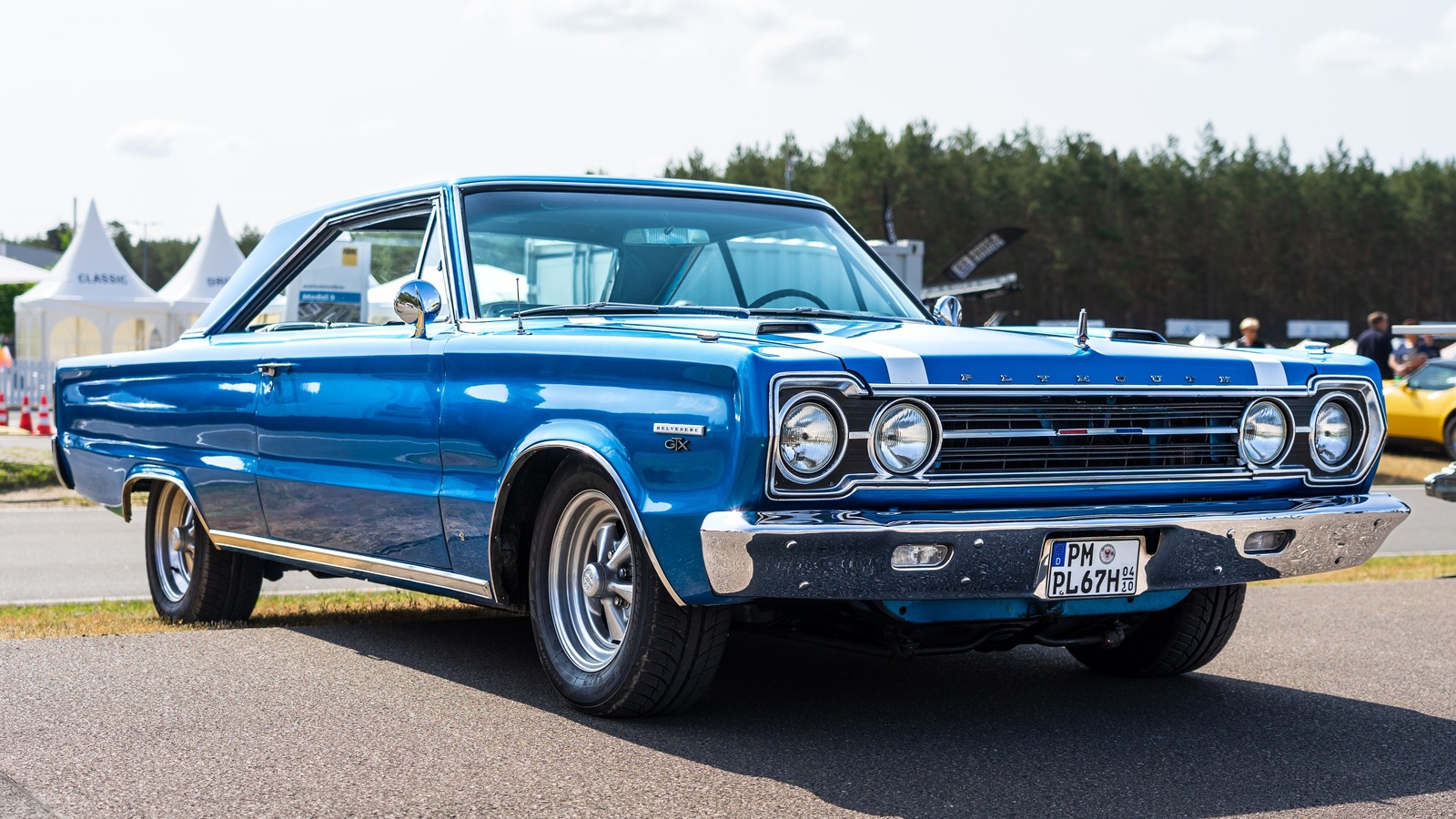
The GTX was marketed as a “gentleman’s muscle car.” It offered bucket seats, polished trim, special badging and a more luxurious personality than stripped-down drag-racing specials. In convertible form, however, the car carried additional weight and lacked the structural rigidity preferred by serious racers. Most performance-minded customers therefore selected the hardtop.
That combination of price, specialization and limited demand created one of the rarest Plymouths of the 1960s. A genuine 1967 Hemi GTX convertible must be carefully authenticated through its VIN, broadcast sheet and supporting documentation, since ordinary GTX convertibles have sometimes been fitted with replacement Hemi engines. Properly documented examples remain exceptionally desirable.
- Engine: 7.0-liter 426 Street Hemi V8
- Torque: 490 lb-ft
- Horsepower: 425 hp
- Length/Width: 200.5 inches / 76.4 inches
8. 1970 Dodge Coronet R/T 440 Six Pack Convertible – 16 Built
The dramatically styled 1970 Dodge Coronet R/T was already a low-production muscle car, and the 440 Six Pack convertible was its rarest regularly available configuration. Dodge produced only 16 R/T convertibles with the V-code 440 Six Pack engine: seven received four-speed manual transmissions and nine were equipped with TorqueFlite automatics.
The Six Pack engine used three Holley two-barrel carburetors mounted on an aluminum intake manifold. Under light throttle, the engine operated mainly through the center carburetor. When the driver demanded full power, the two outboard carburetors opened, allowing the 440-cubic-inch V8 to breathe through all six barrels.
Dodge rated the engine at 390 gross horsepower, placing it between the standard 375-horsepower 440 Magnum and the more expensive 425-horsepower Hemi. In real-world driving, the Six Pack’s abundant torque made it one of Chrysler’s most effective street engines. It delivered nearly Hemi-level straight-line performance while being less expensive and easier to maintain.
The 1970 Coronet’s distinctive front end used a divided, loop-shaped bumper surrounding the grille and headlights. Although unmistakable today, the styling was controversial when new, and Coronet R/T sales fell sharply. Dodge produced only 2,391 R/Ts of all body and engine configurations for the model year.
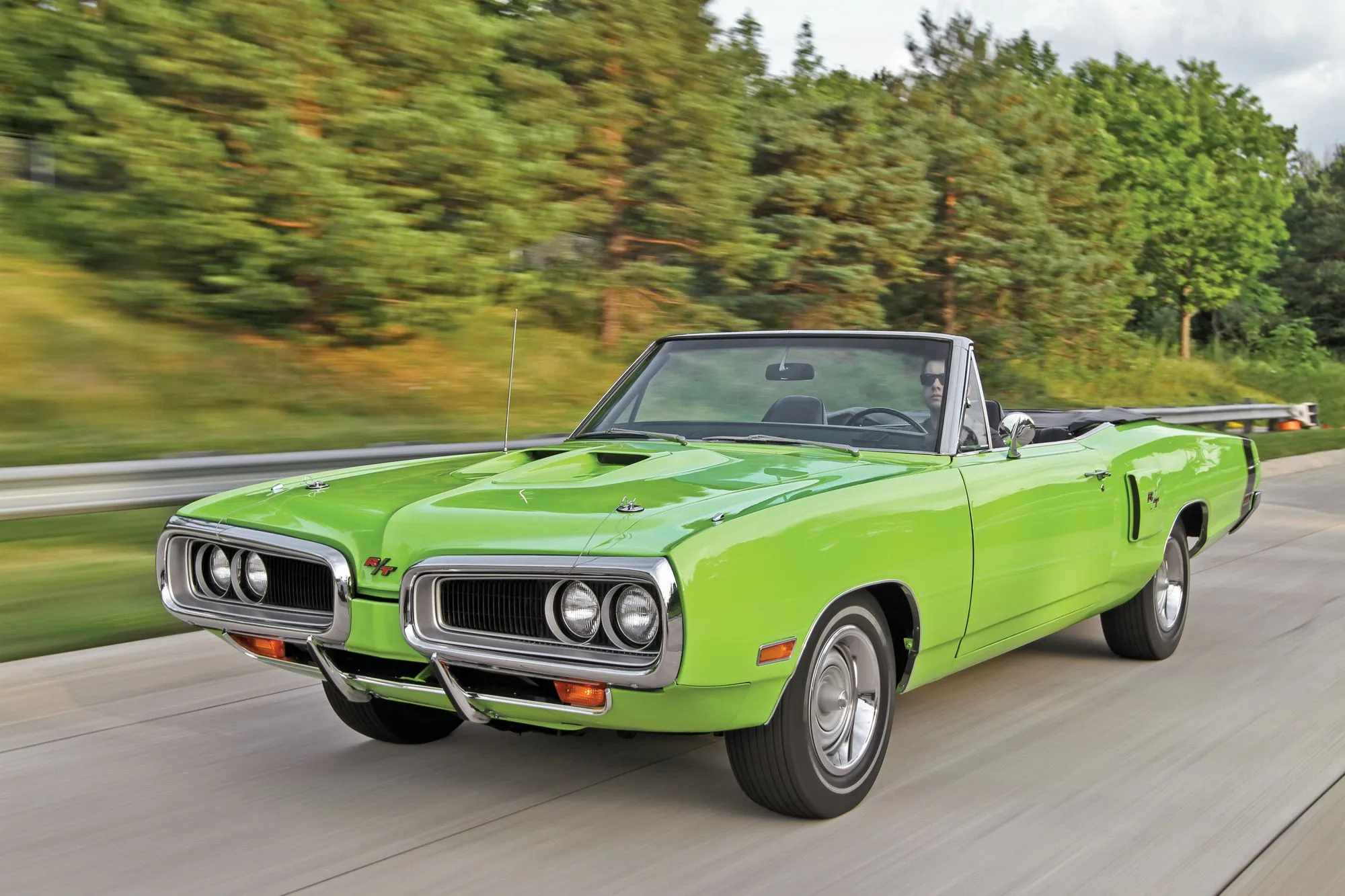
Convertible buyers typically prioritized appearance and comfort rather than maximum acceleration, while serious performance customers generally chose the lighter, stiffer hardtop. Consequently, just 16 people ordered the Six Pack convertible.
The two-door Coronet disappeared after 1970, making this a one-year body design and the final Coronet R/T convertible. Its unusual styling, triple-carburetor engine and extremely small production run have made authenticated examples important collector cars.
- Engine: 7.2-liter 440 Six Pack V8
- Torque: 490 lb-ft
- Horsepower: 390 hp
- Length/Width: 209.2 inches / 76.7 inches
7. 1970 Plymouth Hemi ’Cuda Convertible – 14 Built
When Plymouth redesigned the Barracuda for 1970, the performance-oriented ’Cuda finally received an engine compartment large enough to accommodate Chrysler’s biggest powerplants without compromise. At the top of the options list sat the 426 Street Hemi. Only 14 Hemi ’Cuda convertibles were constructed during the 1970 model year.
The 426 Hemi produced a factory-advertised 425 horsepower and 490 pound-feet of torque. Its defining characteristics included hemispherical combustion chambers, dual four-barrel carburetors and massive cylinder heads designed for exceptional airflow. Buyers could combine it with either the heavy-duty TorqueFlite automatic or an A833 four-speed controlled by Chrysler’s memorable pistol-grip shifter.
Hemi cars also received reinforced suspension and driveline components. Four-speed examples could be equipped with the Dana 60 rear axle and aggressive gearing, making them formidable acceleration machines. At the same time, the convertible body allowed buyers to order luxury and convenience features, creating an unusual mixture of open-air cruising and race-derived power.
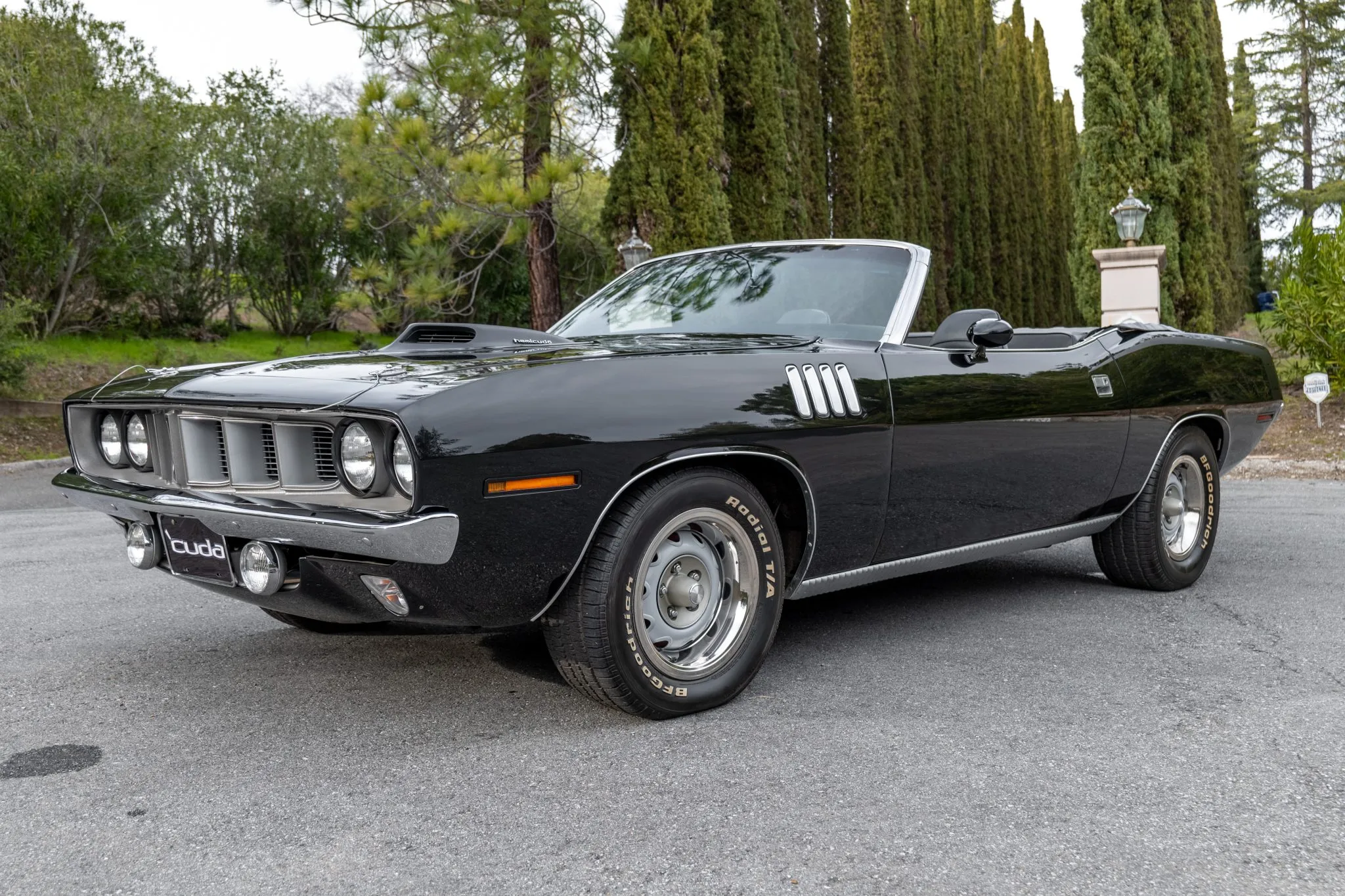
The rarity resulted largely from price. The Hemi added approximately $871 to the ’Cuda’s cost, a substantial amount when the entire car could be purchased for only a few thousand dollars. It also increased insurance premiums and required more maintenance than Plymouth’s 340, 383 or 440 engines.
Plymouth produced hundreds of Hemi ’Cuda hardtops in 1970, but very few buyers combined the expensive engine with the heavier convertible body. That decision created one of the most valuable factory muscle cars ever sold.
The 1970 version is slightly more common than its 1971 successor, but 14 units still represent an extraordinarily small worldwide production run. Original drivetrain components and factory documentation can dramatically affect the authenticity and value of surviving cars.
- Engine: 7.0-liter 426 Hemi V8
- Torque: 490 lb-ft
- Horsepower: 425 hp
- Length/Width: 186.7 inches / 74.9 inches
6. 1971 Plymouth Hemi ’Cuda Convertible – Traditionally 11 Built
The 1971 Plymouth Hemi ’Cuda convertible is frequently described as the ultimate collectible muscle car. For decades, published accounts stated that Plymouth built only 11: seven for the United States and four for export markets. More recent Hagerty and Mecum material reports 12 documented cars, meaning the production figure should now be presented as disputed rather than completely settled.
Regardless of whether the final number is 11 or 12, it remains extraordinarily rare. The car combined Plymouth’s redesigned 1971 grille, fender “gills,” available billboard graphics and convertible body with Chrysler’s legendary 426 Hemi.
The engine retained its factory rating of 425 gross horsepower and 490 pound-feet of torque. It was one of the few major muscle-car engines that avoided a significant compression reduction for 1971. Buyers could select a TorqueFlite automatic or the A833 four-speed manual, although the exact transmission breakdown also varies among published registry and auction references.
The Hemi option cost more than $1,200 by 1971, enough to purchase a respectable used car at the time. Insurance costs, fuel consumption, and changing market preferences made the combination almost impossible to justify financially. Plymouth discontinued both the convertible Barracuda and the street Hemi after the model year.
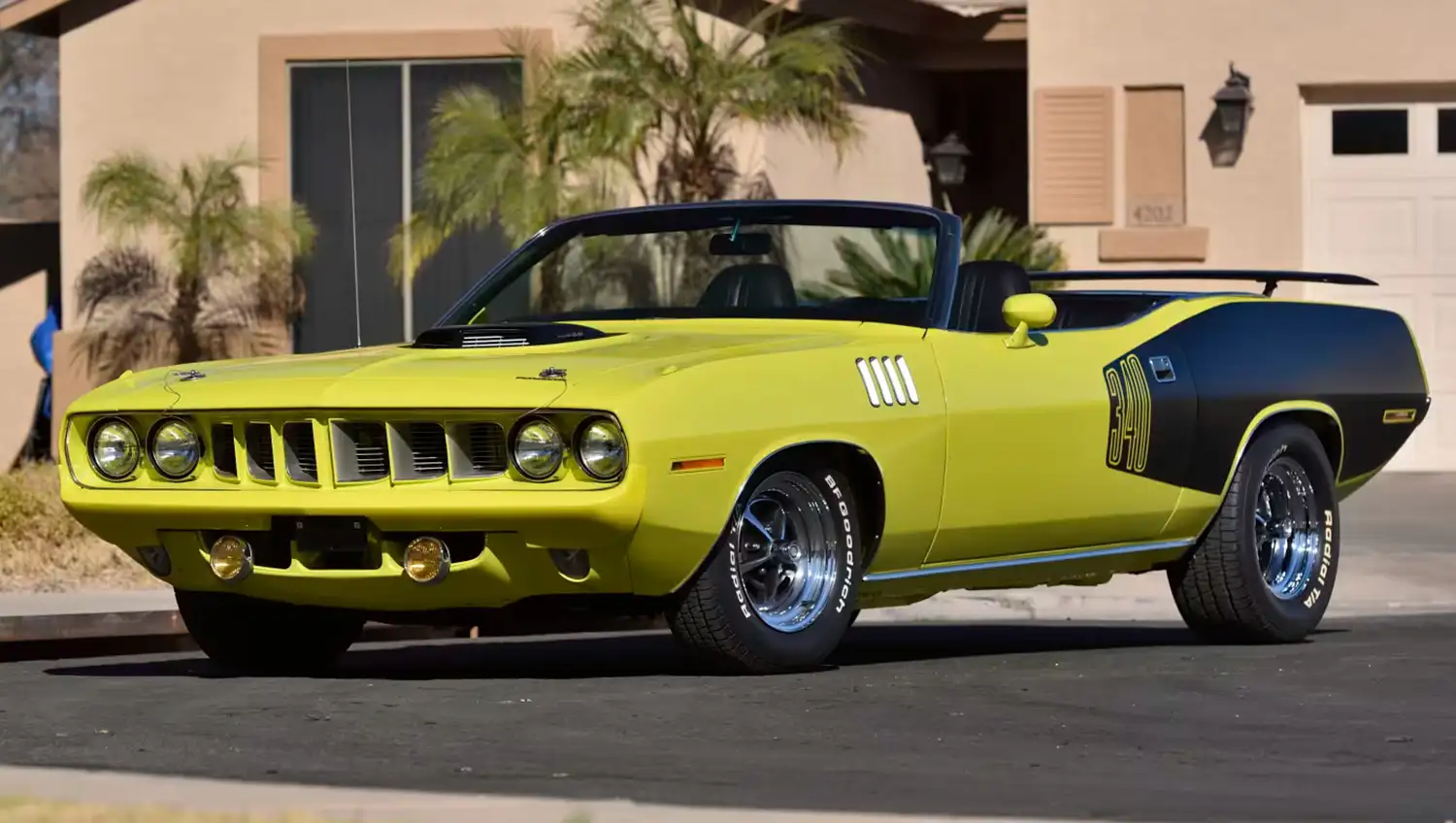
That historical position gives the car unusual significance. It was not merely a low-production option; it marked the end of the Hemi-powered convertible and the collapse of the unrestricted muscle-car market.
Documented cars have sold for several million dollars, particularly when equipped with a four-speed and their original drivetrains. Older sources support the familiar 11-car figure, while later sources increasingly use 12. The disagreement should be disclosed whenever the model is ranked by production.
- Engine: 7.0-liter 426 Street Hemi V8
- Torque: 490 lb-ft
- Horsepower: 425 hp
- Length/Width: 186.6 inches / 74.9 inches
Also read: 10 Cars With the Biggest Heat-Related Reliability Issues
5. 1968 Dodge Coronet R/T Hemi Convertible – 11 Built Worldwide
Dodge built only 11 Hemi-powered Coronet R/T convertibles for 1968 when Canadian production is included. Current registry-backed documentation divides the total into nine cars for the United States and two for Canada. Older advertisements occasionally describe the model as one of nine because they count only American-market production.
The 1968 Coronet introduced Dodge’s influential “Coke-bottle” body shape, with pronounced rear haunches, a recessed grille and cleaner proportions than the previous generation. R/T models received performance suspension, special trim and a standard 440 Magnum V8. Buyers willing to pay a considerable premium could substitute the 426 Street Hemi.
Rated at 425 horsepower, the Hemi used dual four-barrel carburetors and specialized cylinder heads with hemispherical combustion chambers. It could be paired with a four-speed manual or TorqueFlite automatic. Both combinations required strengthened driveline and cooling equipment.
The convertible body made the Coronet more stylish but less attractive to competition-oriented buyers. It was heavier than the hardtop, possessed less torsional rigidity and typically cost more. Ordering the Hemi further raised the price and insurance burden. Only a tiny number of buyers were prepared to combine all those characteristics.
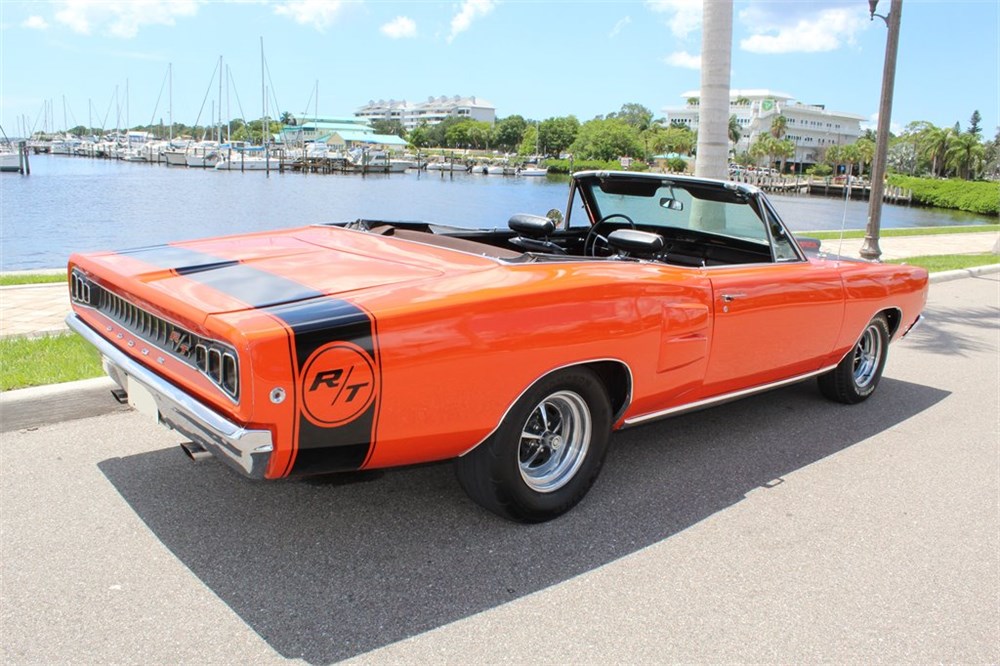
Survival figures are even lower than production totals. Chrysler Registry information cited by Mecum identifies only five known examples, although survivor counts can change as previously unknown cars or documentation emerge.
The Coronet R/T was one of Dodge’s primary intermediate muscle cars, yet its convertibles were always produced in far smaller numbers than hardtops. Adding the rarest available engine created an exceptionally limited model. Because ordinary Coronet convertibles can be converted into Hemi replicas, original fender tags, broadcast sheets and expert inspection reports are essential when establishing authenticity.
- Engine: 7.0-liter 426 Street Hemi V8
- Torque: 490 lb-ft
- Horsepower: 425 hp
- Length/Width: 206.6 inches / 76.7 inches
4. 1969 Dodge Coronet R/T Hemi Convertible – 10 Built
For 1969, Dodge produced only 10 Coronet R/T convertibles with the 426 Hemi. Four were equipped with the A833 four-speed manual transmission, leaving six with the TorqueFlite automatic. The total makes the 1969 edition rarer than both the 1968 Hemi convertible and most better-known limited-production muscle cars.
The Coronet R/T occupied a distinctive position in Dodge’s lineup. It combined the company’s midsize B-body platform with a standard 440 Magnum V8, upgraded suspension, heavy-duty brakes and prominent R/T identification. The optional Hemi transformed it into one of the most powerful factory cars available.
Chrysler continued to advertise the Hemi at 425 horsepower and 490 pound-feet of torque. Buyers received two four-barrel carburetors, competition-derived cylinder heads and an engine capable of excellent performance at high rpm. Four-speed cars commonly received a Dana rear axle as part of their heavy-duty driveline package.
The 1969 Coronet featured revised styling, including a divided grille and updated rear treatment. Dodge also offered numerous visually aggressive colors, stripes, scoops and performance packages across its range. However, the Hemi remained prohibitively expensive for most customers. One documented 1969 Hemi Coronet R/T convertible carried a sticker price approaching $4,900, placing it in expensive territory for an American intermediate.
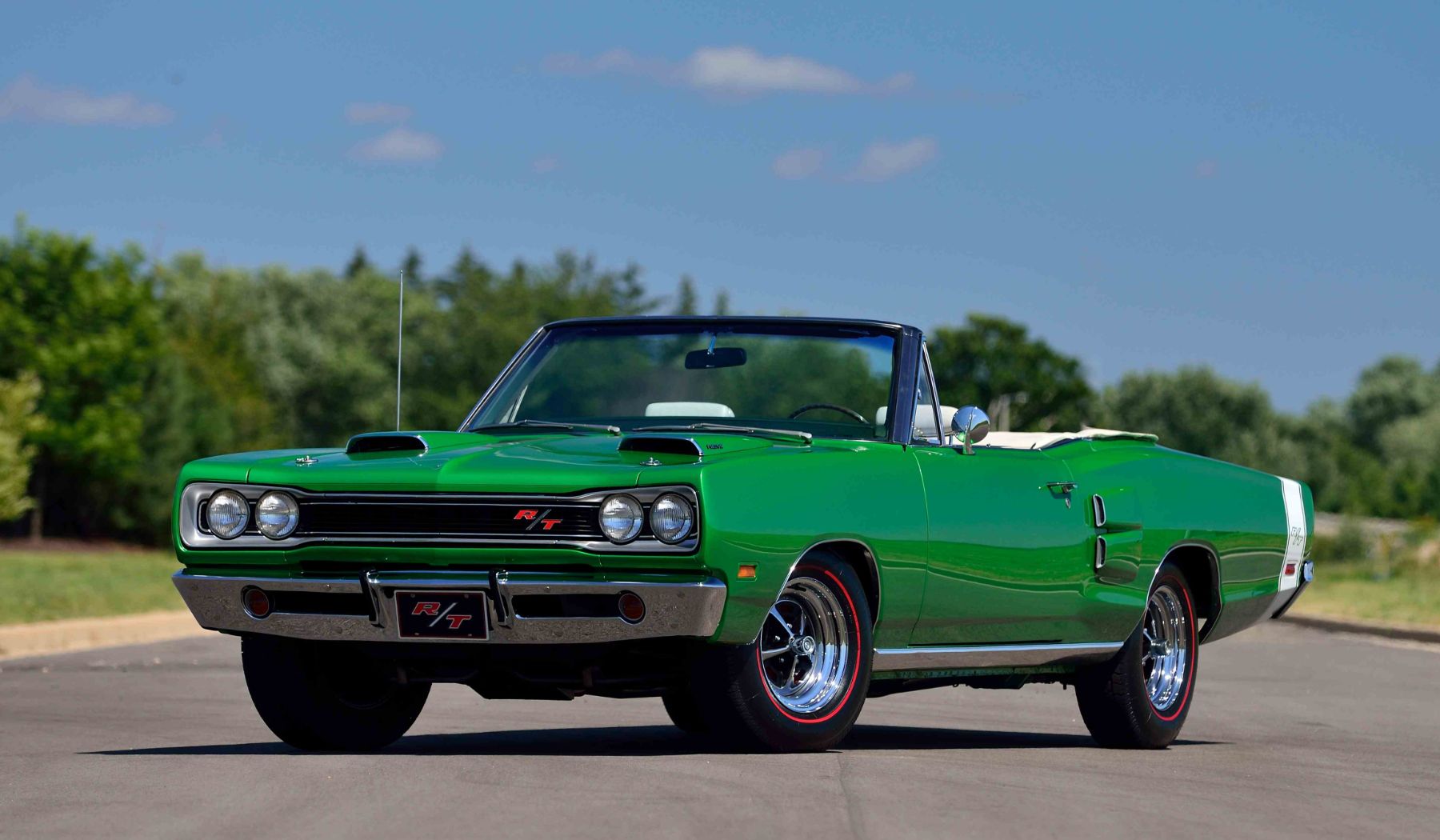
Convertible buyers were generally less interested in drag-strip performance than hardtop customers, while Hemi buyers often wanted the lightest and stiffest available body. That left almost no natural market for a Hemi convertible.
Today, proving that a car is one of the original 10 requires extensive documentation. The VIN confirms the Hemi engine, but broadcast sheets, original body numbers and expert registry records are also important because of the model’s value and the existence of convincing recreations.
- Engine: 7.0-liter 426 Street Hemi V8
- Torque: 490 lb-ft
- Horsepower: 425 hp
- Length/Width: 206.6 inches / 76.7 inches
3. 1970 Dodge Challenger R/T Hemi Convertible – 9 Built
Only nine 1970 Dodge Challenger R/T convertibles left the factory with the 426 Hemi. Of those, five were equipped with the four-speed manual transmission. The remaining cars used Chrysler’s heavy-duty TorqueFlite automatic.
The Challenger was Dodge’s entry into the pony-car market, but its E-body platform was intentionally designed to accommodate Chrysler’s complete engine lineup. Customers could order everything from a six-cylinder engine to the 440 Six Pack and 426 Hemi. In R/T form, the Challenger received performance-oriented equipment, upgraded trim and standard big-block power.
The Hemi stood at the top of the range. Its advertised output of 425 horsepower understated the engine’s reputation and competition-derived construction. Dual four-barrel carburetors supplied the hemispherical-head V8, while four-speed cars used the distinctive pistol-grip shifter that became one of the era’s most recognizable interior details.
Dodge built 963 Challenger R/T convertibles in 1970, but the vast majority used the standard 383 or optional 440 engines. The Hemi carried a steep purchase price, increased insurance expenses, and was not available with conveniences such as factory air conditioning.
A convertible was also heavier and less rigid than the hardtop, making it an unlikely choice for buyers primarily interested in quarter-mile performance. Nevertheless, nine customers selected the most expensive engine and the open body.
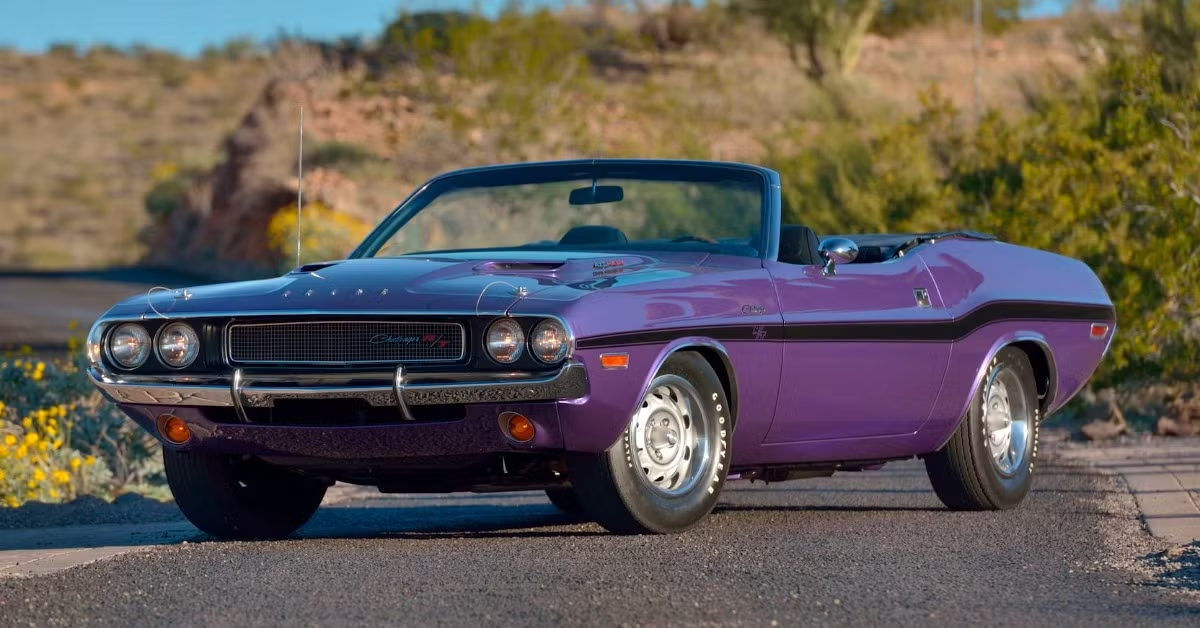
The Challenger convertible continued for 1971, but the R/T convertible combination did not return in the same form, and the Hemi disappeared after that year. The nine 1970 cars therefore represent a singular factory configuration.
Because Challenger convertibles are relatively easy to modify visually, genuine examples must retain convincing VIN, fender-tag and broadcast-sheet evidence. Documented four-speed cars are particularly prized because only five were originally produced.
- Engine: 7.0-liter 426 Hemi V8
- Torque: 490 lb-ft
- Horsepower: 425 hp
- Length/Width: 191.3 inches / 76.4 inches
2. 1969 Pontiac Trans Am Convertible – 8 Built
Pontiac built just eight Trans Am convertibles during the model’s 1969 introductory year. Four received manual transmissions, and four were equipped with automatics. After 1969, Pontiac discontinued the Firebird convertible body, making these eight cars the only factory-built first-generation Trans Am convertibles.
The Trans Am began as a performance and appearance package for the Firebird. Its Cameo White exterior was accented by Tyrol Blue stripes, a unique hood, functional air inlets, front-fender extractors, a rear spoiler and upgraded suspension components. Although its name referenced the Sports Car Club of America’s Trans-American racing series, Pontiac had to pay a licensing fee because the company did not own the name.
Convertible examples used Pontiac’s Ram Air III 400-cubic-inch V8, rated at 335 horsepower. The engine breathed through a functional induction system connected to the hood scoops. Buyers could choose a heavy-duty manual gearbox or the Turbo Hydra-Matic automatic.
Pontiac produced 697 Trans Ams in total for 1969, with 689 coupes and only eight convertibles. The extraordinarily small convertible count was partly a result of the Trans Am’s late introduction and limited advertising. Its white-and-blue appearance was also mandatory, giving customers virtually no opportunity to personalize the exterior.
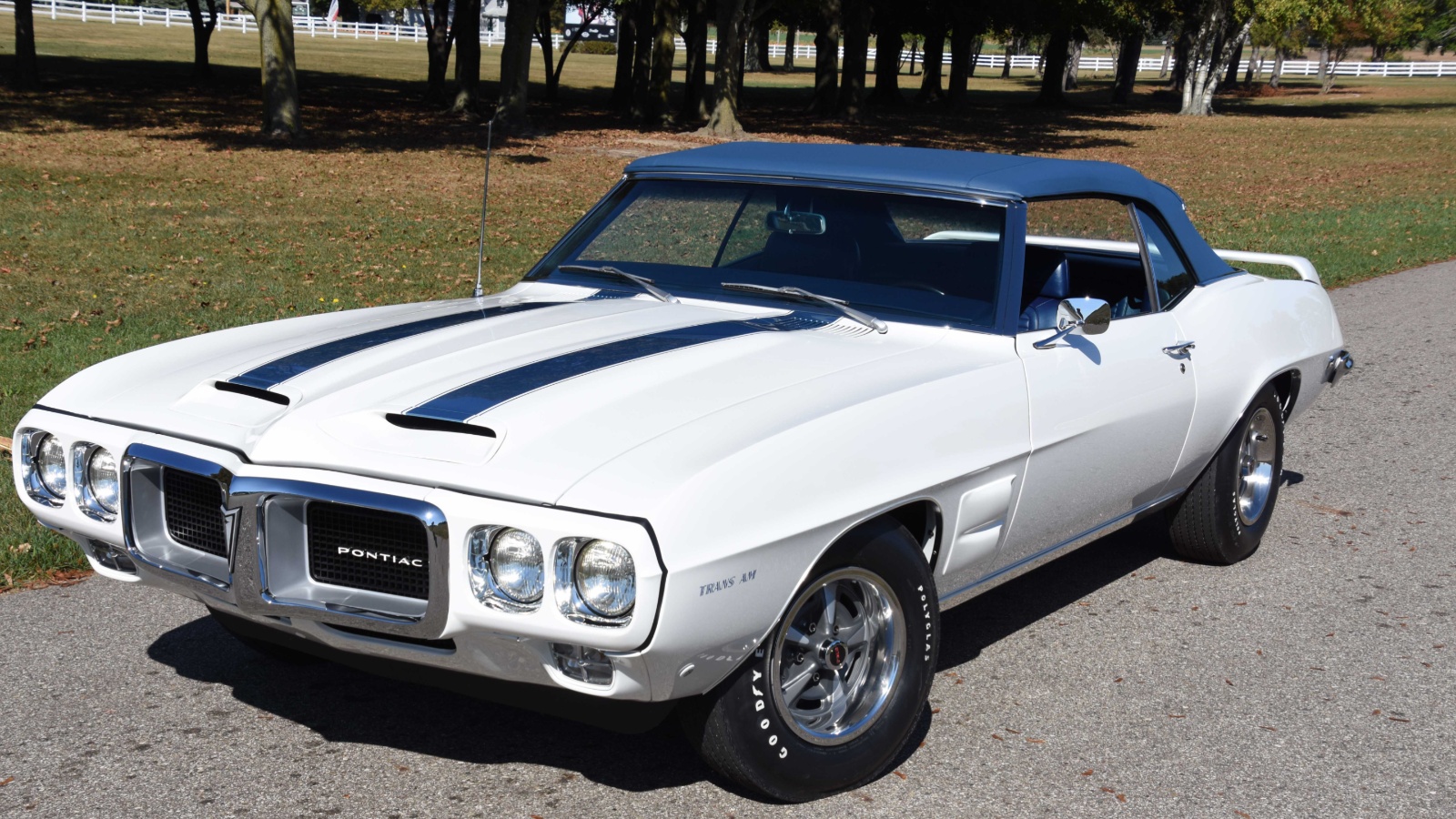
Unlike many rare muscle cars, the Trans Am convertible did not achieve its production total through an obscure engine combination. The entire body-style run consisted of eight cars, making each one part of a clearly defined group.
Individual examples possess additional distinctions. The eight include four manuals and four automatics, and certain interior or equipment combinations are unique. Their complete production histories have been heavily studied, allowing Pontiac Historical Services documentation and factory invoices to play an important role in authenticating them.
- Engine: 6.6-liter 400 Ram Air V8
- Torque: 430 lb-ft
- Horsepower: 335 hp
- Length/Width: 191.1 inches / 73.9 inches
1. 1967 Dodge Coronet R/T Hemi Convertible – 3 Built
The rarest regular-production combination in this ranking is the 1967 Dodge Coronet R/T Hemi convertible. Dodge constructed only three. Two were equipped with four-speed manual transmissions, while a single car received the TorqueFlite automatic.
The R/T designation appeared for the first time on the Coronet in 1967. Standing for “Road and Track,” the package transformed Dodge’s midsize model into a serious performance car. A 440-cubic-inch Magnum V8 was standard, along with heavy-duty suspension, upgraded brakes, performance tires and distinctive exterior identification.
The only optional engine was the 426 Street Hemi. Rated at 425 horsepower, it added nearly $910 to the price, an enormous premium during a period when a completely new economy car could cost less than $2,000. The engine featured dual four-barrel carburetors, hemispherical combustion chambers and specialized internal components derived from Chrysler’s racing experience.
Ordering the Hemi in a convertible made little practical sense. The open body was more expensive, heavier and structurally less suitable for competitive driving than the hardtop. Insurance, fuel and maintenance costs further restricted demand. As a result, just three buyers selected the combination.
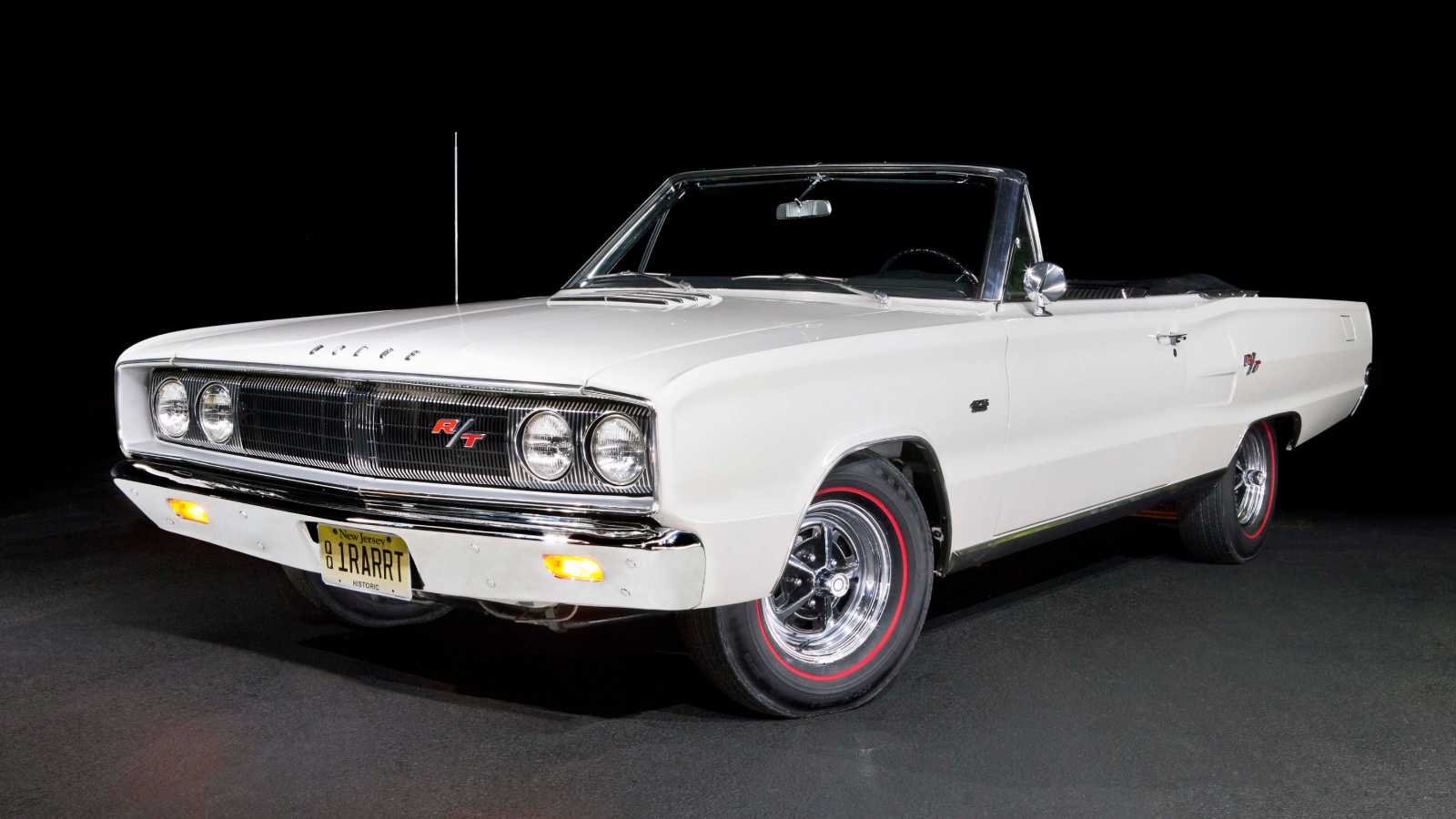
One of the surviving cars is notable as the only automatic example. The other two were factory four-speeds, making each transmission configuration exceptionally important in its own right.
The tiny production run was not an intentional limited edition. It was the natural outcome of combining an expensive racing-oriented engine with a luxury-oriented open body. That distinction separates the Coronet from prototypes and one-off promotional vehicles.
Authenticating one requires far more than finding the correct engine. Original VIN information, body stampings, documentation, and expert inspection are essential. With only three constructed, each genuine example represents an irreplaceable part of Dodge performance history.
- Engine: 7.0-liter 426 Street Hemi V8
- Torque: 490 lb-ft
- Horsepower: 425 hp
- Length/Width: 203.0 inches / 75.3 inches
Also read: 5 Cars With the Highest Theft Rates in Missouri, 5 With the Lowest
