When discussing powerful American automobiles, horsepower figures usually dominate the conversation. Yet many iconic performance cars earned their reputation through another measure of strength, the ability to generate tremendous torque. Torque is what gives an engine its pulling power at lower speeds, and during the peak years of American V8 performance, several legendary models produced torque ratings that were higher than their advertised horsepower numbers.
This comparison focuses on eight American cars whose factory specifications show torque figures that exceeded horsepower numbers. The list includes luxury cruisers, muscle cars, and performance models from the late 1960s and early 1970s. These vehicles relied on large-displacement naturally aspirated engines, long-stroke designs, and strong low-end power rather than chasing peak horsepower alone.
All engine ratings are based on period SAE gross figures, reflecting the way manufacturers advertised performance during that era. From Cadillac’s enormous 500-cubic-inch V8 to AMC’s high-output 390, these cars demonstrate how torque shaped the character of some of America’s most memorable engines.
1. 1970 Cadillac Fleetwood Eldorado
- Engine type: Naturally aspirated 500-cu-in, 8.2-liter OHV V8 with a four-barrel carburetor
- Torque: 550 lb-ft at 3,000 rpm
- Horsepower: 400 hp at 4,400 rpm, SAE gross
- Length: 221.0 inches
- Width: 79.8 inches
- Torque-over-horsepower difference: 150
Cadillac’s 1970 Fleetwood Eldorado was a personal-luxury coupe rather than a traditional muscle car, but its factory specifications made it one of the most torque-heavy American production automobiles of the era.
Cadillac enlarged its existing 472-cu-in engine to 500 cubic inches by increasing the stroke, producing an enormous 8.2-liter V8. The engine was initially exclusive to the front-wheel-drive Eldorado and was advertised at 400 horsepower and 550 lb-ft of torque.
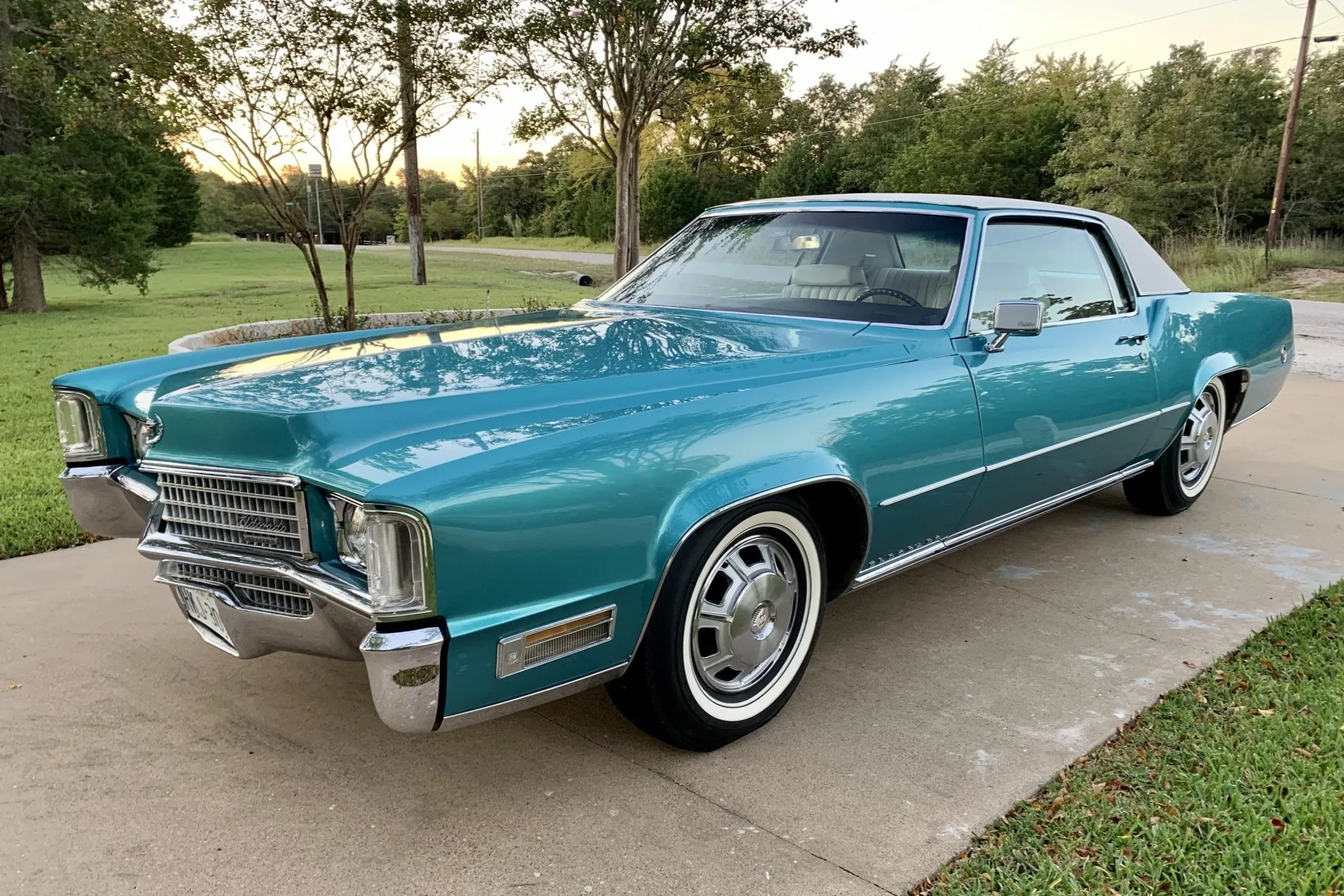
That 150-point numerical difference between torque and horsepower matched the largest gap among the vehicles in this ranking. More significantly, maximum torque arrived at only 3,000 rpm.
The Eldorado therefore did not have to operate near its horsepower peak to produce meaningful acceleration. Its long-stroke V8 delivered substantial low- and midrange force, characteristics well suited to moving a luxury coupe measuring 221 inches long and nearly 80 inches wide.
Power reached the front wheels through Cadillac’s three-speed Turbo Hydra-Matic transaxle. Although the drivetrain layout was unusual for an engine of this size, it gave the Eldorado a flat passenger compartment and helped distinguish it from Cadillac’s conventional rear-wheel-drive models.
The 500 was built for quiet, effortless movement rather than sustained high-rpm operation. Its large displacement allowed the Eldorado to accelerate without frequent transmission downshifts, while its torque reserve provided strong passing response at normal highway speeds.
The 1970 model arrived near the end of the high-compression, pre-emissions era, making its 400-horsepower and 550-lb-ft ratings an exceptional expression of Cadillac’s large-engine engineering philosophy.
2. 1970 Buick GSX Stage 1
- Engine type: Naturally aspirated 455-cu-in, 7.5-liter OHV Stage 1 V8 with a four-barrel carburetor
- Torque: 510 lb-ft at 2,800 rpm
- Horsepower: 360 hp, SAE gross
- Length: 202.2 inches
- Width: 77.3 inches
- Torque-over-horsepower difference: 150
The 1970 Buick GSX Stage 1 combined Buick’s reputation for refined automobiles with one of the most formidable torque ratings of the original muscle-car era. Its 455-cu-in Stage 1 V8 was officially advertised at 360 horsepower and 510 lb-ft of torque. Like the Cadillac Eldorado, it produced a 150-point numerical difference between the two factory ratings.
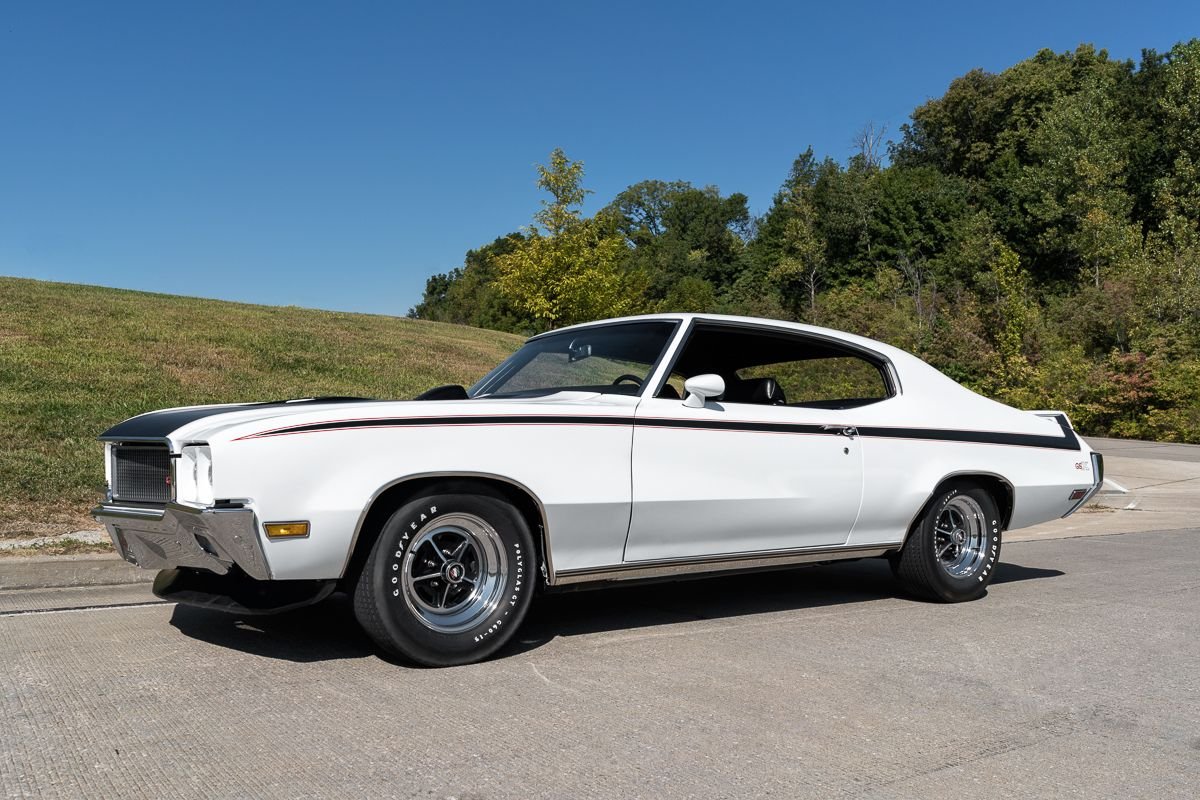
Buick’s standard 455 already generated 510 lb-ft, but the Stage 1 package added performance-oriented cylinder heads, larger valves, a more aggressive camshaft, revised carburetor calibration and other breathing improvements.
These modifications raised the horsepower rating while preserving the engine’s outstanding low-speed torque. Maximum torque arrived at approximately 2,800 rpm, making the engine exceptionally responsive during ordinary street driving.
The GSX package transformed the GS 455 with front and rear spoilers, prominent body stripes, a hood-mounted tachometer, wider tires, heavy-duty suspension components and other performance equipment. Despite its aggressive appearance, it retained Buick’s comparatively comfortable and well-equipped character.
At 202.2 inches long and 77.3 inches wide, the GSX was a substantial intermediate-size automobile. Its low-rpm torque helped overcome that size without requiring extreme axle ratios or constant high-rpm operation. The Stage 1 could pull strongly from low engine speeds, recover quickly after gear changes, and deliver immediate passing acceleration.
Buick’s published horsepower figure has often been described as conservative, but this list uses the documented factory rating rather than later dynamometer estimates. On the original specification sheet, the GSX Stage 1’s character is unmistakable: 360 horsepower supported by an extraordinary 510 lb-ft of torque.
3. 1970 Oldsmobile 4-4-2 W-30
- Engine type: Naturally aspirated 455-cu-in, 7.5-liter OHV Rocket V8 with four-barrel carburetion and forced-air induction
- Torque: 500 lb-ft at 3,600 rpm
- Horsepower: 370 hp at 5,400 rpm, SAE gross
- Length: 203.2 inches
- Width: 76.2 inches
- Torque-over-horsepower difference: 130
The 1970 Oldsmobile 4-4-2 W-30 was Oldsmobile’s most serious high-performance intermediate. Its 455-cu-in Rocket V8 produced a factory-rated 370 horsepower and 500 lb-ft of torque, giving it 130 more numerical units of torque than horsepower. Oldsmobile’s original specifications placed maximum torque at 3,600 rpm and maximum horsepower at 5,400 rpm.
General Motors had previously limited its intermediate models to engines no larger than 400 cubic inches, except for special cases. After that restriction was removed for 1970, Oldsmobile made the 455 standard in the 4-4-2. The regular engine was rated at 365 horsepower, while the W-30 package increased output to 370 horsepower without reducing the 500-lb-ft torque rating.
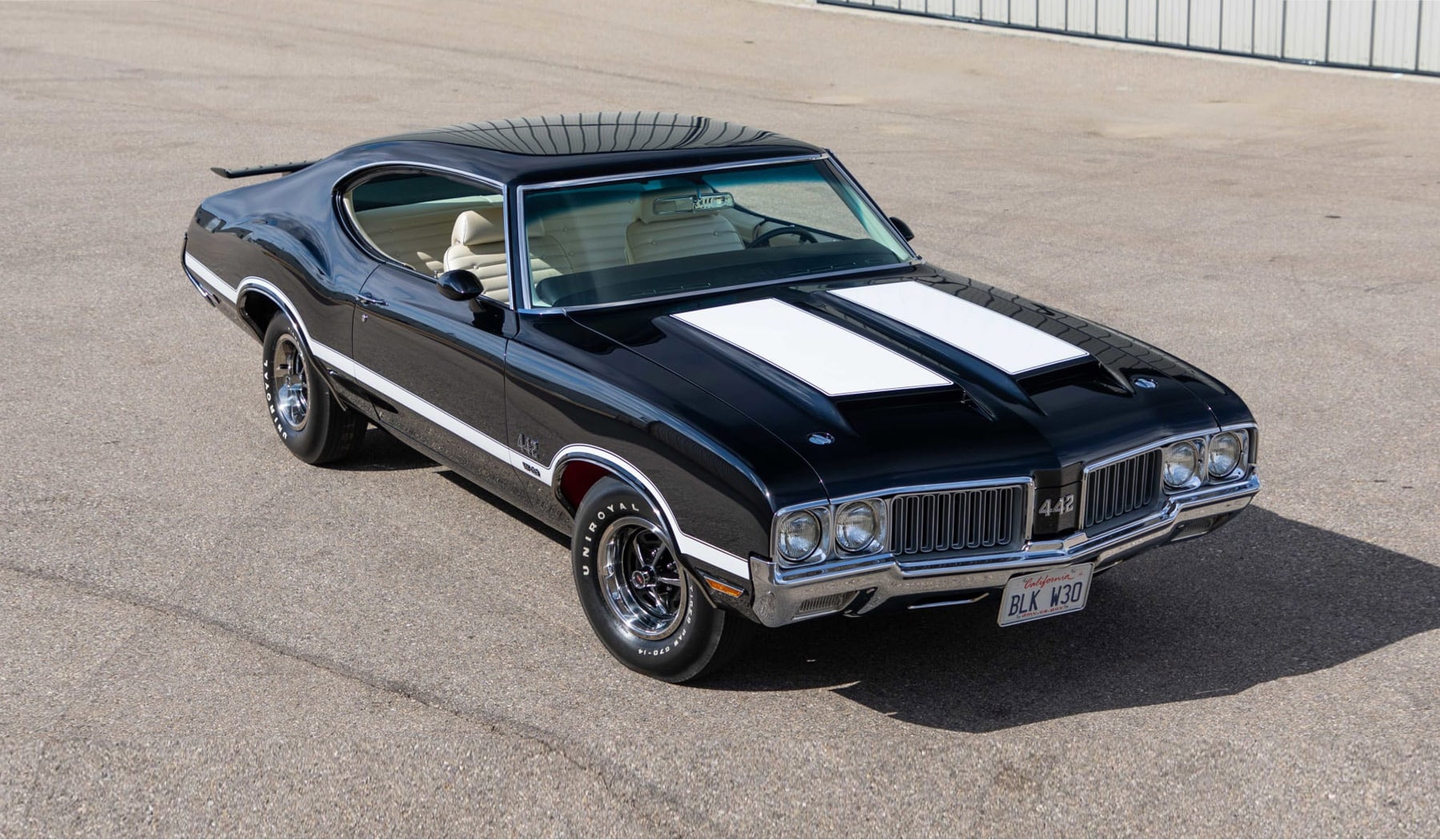
W-30 equipment included a functional forced-air induction system, a special air cleaner, an aluminum intake manifold, specific engine tuning, and a lightweight fiberglass hood. The air-induction system directed cooler outside air toward the carburetor, improving the engine’s ability to breathe during heavy acceleration. GM Heritage also identifies the 455 and forced-air system as defining components of the W-30 package.
The 4-4-2 measured 203.2 inches long and 76.2 inches wide in both Sports Coupe and Holiday Coupe configurations. Its 112-inch wheelbase and intermediate body gave the Oldsmobile enough size for comfortable street use while remaining more manageable than a full-size performance car.
The W-30’s advantage was its broad operating range. Five hundred pound-feet provided substantial launch and midrange force, while the improved induction and valvetrain allowed the 455 to continue producing power at higher engine speeds. It was therefore not merely a low-rpm torque engine, but a large-displacement V8 with enough breathing capacity to support serious performance throughout the rev range.
4. 1970 Pontiac GTO 455
- Engine type: Naturally aspirated 455-cu-in, 7.5-liter OHV V8 with a Rochester four-barrel carburetor
- Torque: 500 lb-ft at 2,700 rpm
- Horsepower: 360 hp at 4,300 rpm, SAE gross
- Length: 202.9 inches
- Width: 76.7 inches
- Torque-over-horsepower difference: 140
The 1970 Pontiac GTO could still be ordered with Pontiac’s familiar 400-cu-in V8s, but the newly available 455 gave the car a distinctly torque-centered personality. Pontiac’s performance literature rated the GTO’s 455 at 360 horsepower at 4,300 rpm and 500 lb-ft of torque at only 2,700 rpm. Torque therefore exceeded horsepower numerically by 140.
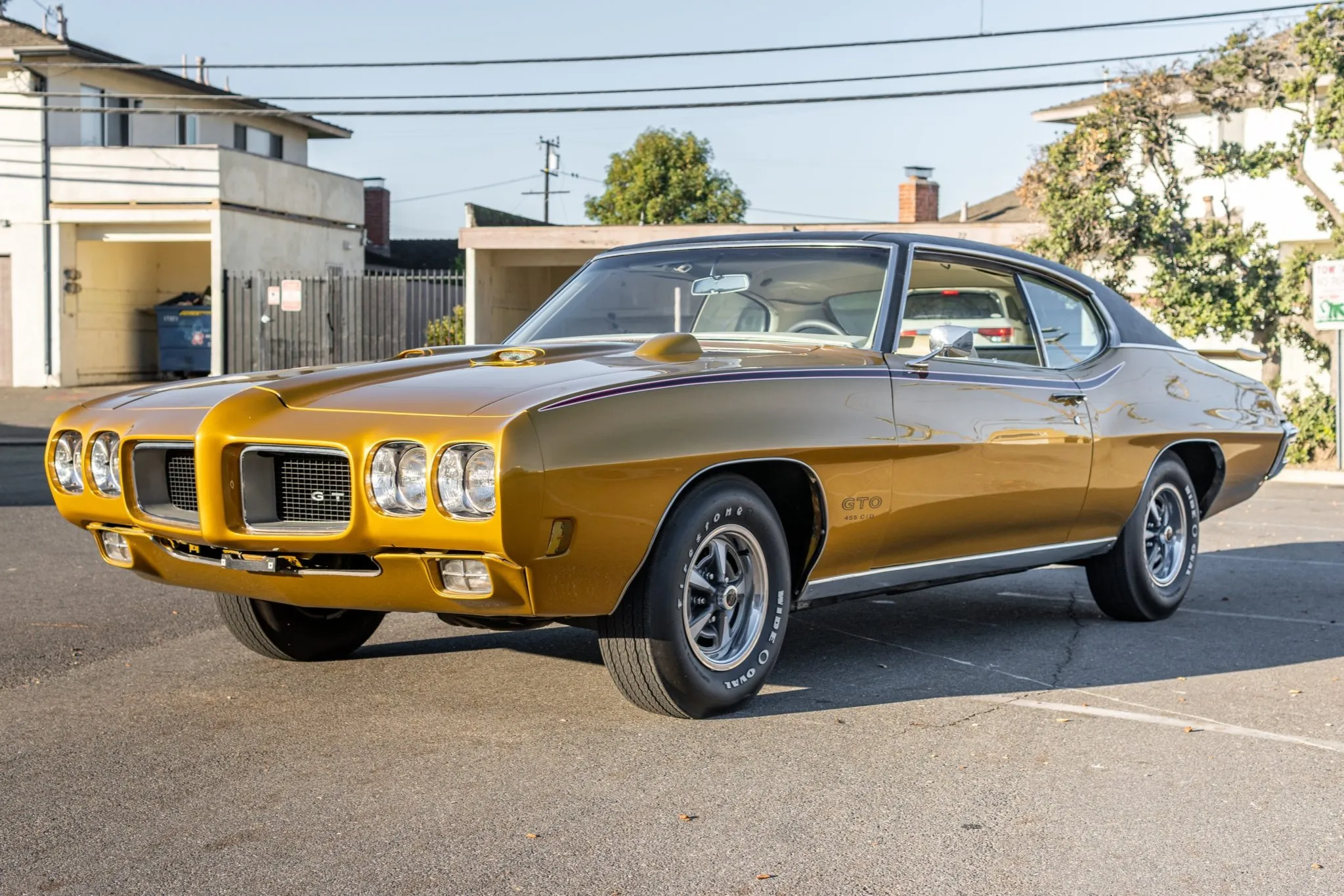
The 455 used a longer stroke than Pontiac’s 400, allowing it to produce greater cylinder-filling force at relatively low engine speeds. Compared with the higher-revving Ram Air IV 400, the 455 offered less advertised peak horsepower but considerably more torque. The Ram Air IV was rated at 370 horsepower and 445 lb-ft, whereas the 455 generated an additional 55 lb-ft and reached its torque peak much earlier.
That output made the 455 particularly suitable for street driving. It could accelerate strongly without being held near redline, required fewer transmission downshifts when passing, and provided immediate response from normal cruising speeds. Optional Ram Air induction was available, although Pontiac did not increase the official output rating when it was installed.
The GTO hardtop measured 202.9 inches long and 76.7 inches wide, with a 112-inch wheelbase. These dimensions made it slightly shorter and narrower than some of its Buick and Oldsmobile corporate relatives, although all three shared General Motors’ intermediate A-body architecture.
The 455 did not produce the GTO’s highest advertised horsepower figure for 1970. Instead, it offered one of the broadest and most accessible torque curves. Its 360-horsepower and 500-lb-ft ratings demonstrated that Pontiac was prioritizing everyday acceleration and midrange strength rather than simply pursuing the highest possible horsepower number.
Also Read: 10 Cars Dealers Can No Longer Sell as Certified
5. 1970 Chevrolet Chevelle SS 454 LS5
- Engine type: Naturally aspirated 454-cu-in, 7.4-liter OHV LS5 big-block V8 with a Rochester Quadrajet four-barrel carburetor
- Torque: 500 lb-ft at 3,200 rpm
- Horsepower: 360 hp at 4,400 rpm, SAE gross
- Length: 197.2 inches
- Width: 75.4 inches
- Torque-over-horsepower difference: 140
The 1970 Chevrolet Chevelle SS 454 is usually associated with the famous 450-horsepower LS6, but the less specialized LS5 is the engine that clearly fits this ranking. Chevrolet rated the LS5 at 360 horsepower at 4,400 rpm and 500 lb-ft of torque at 3,200 rpm. That created a 140-point numerical difference between torque and horsepower.
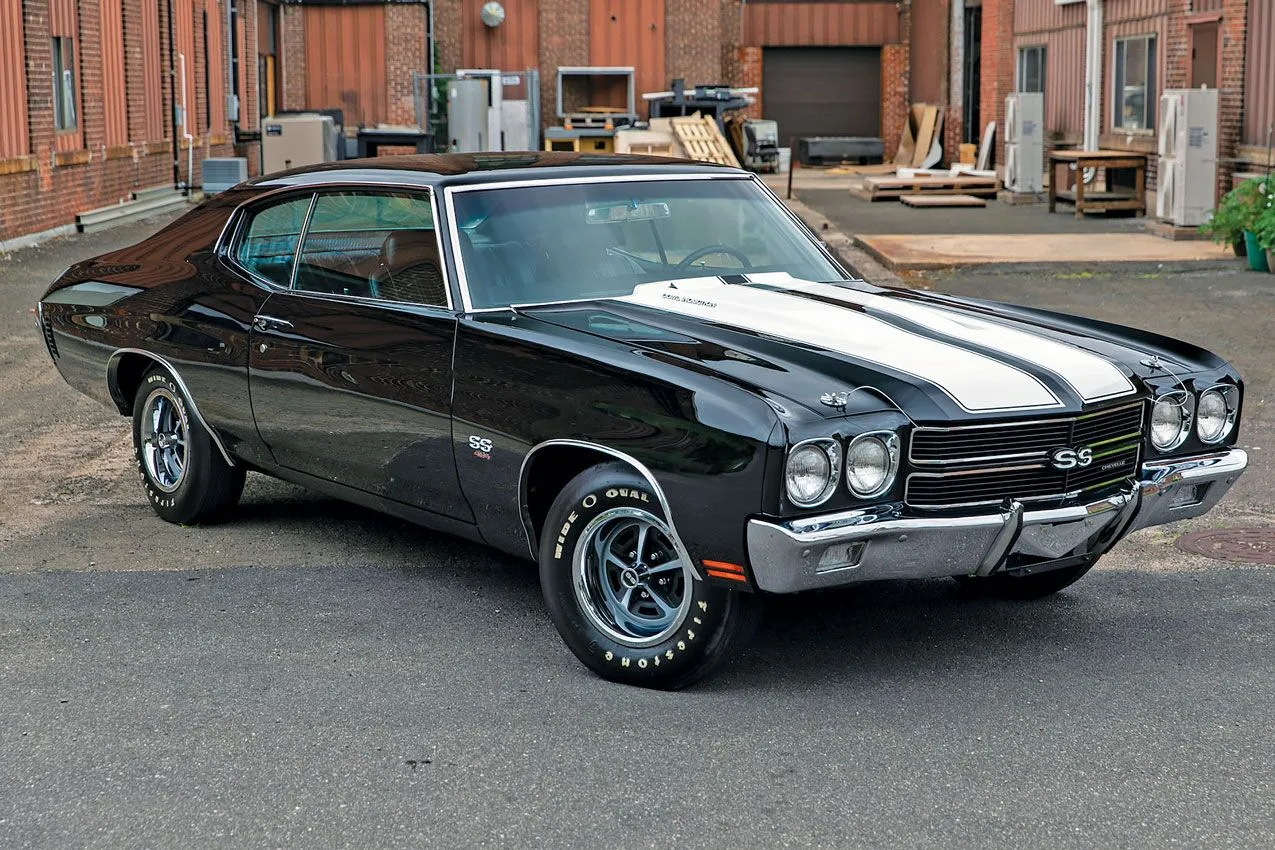
The LS5 was a 454-cu-in Mark IV big-block with a 4.25-inch bore and 4.00-inch stroke. It used hydraulic valve lifters, oval-port cylinder heads, a cast-iron intake manifold, and a Rochester Quadrajet four-barrel carburetor. Its 10.25:1 compression ratio reflected the high-octane fuel available when the car was introduced.
Compared with the LS6, the LS5 was designed for broader street usability. The LS6 employed more aggressive solid lifters, high-flow rectangular-port heads, and other competition-oriented components. Both engines were rated at 500 lb-ft, but the LS5 made 90 fewer advertised horsepower. That greater numerical gap makes the LS5 a stronger example of an engine whose specification sheet emphasized torque over peak horsepower.
The Chevelle SS 454 Sport Coupe measured 197.2 inches long and 75.4 inches wide. It was the shortest and one of the narrowest General Motors intermediates represented here, although its 112-inch wheelbase matched the GTO, GSX and 4-4-2.
With 500 lb-ft available at 3,200 rpm, the LS5 could provide substantial acceleration without the demanding high-rpm behavior of the LS6. It was capable of moving the Chevelle rapidly from low speeds, pulling strongly through the middle of each gear and delivering useful highway passing power. The LS5’s 360/500 rating remains one of the clearest torque-first combinations Chevrolet offered during the muscle-car period.
6. 1970 Plymouth GTX 440 Six Barrel
- Engine type: Naturally aspirated 440-cu-in, 7.2-liter OHV RB-series V8 with three Holley two-barrel carburetors
- Torque: 490 lb-ft at 3,200 rpm
- Horsepower: 390 hp at 4,700 rpm, SAE gross
- Length: 204.0 inches
- Width: 76.4 inches
- Torque-over-horsepower difference: 100
The 1970 Plymouth GTX was positioned as an upscale performance model, offering greater standard equipment and refinement than the more affordable Road Runner. Its optional 440 Six Barrel engine was advertised at 390 horsepower and 490 lb-ft of torque, leaving torque numerically 100 points higher than horsepower.
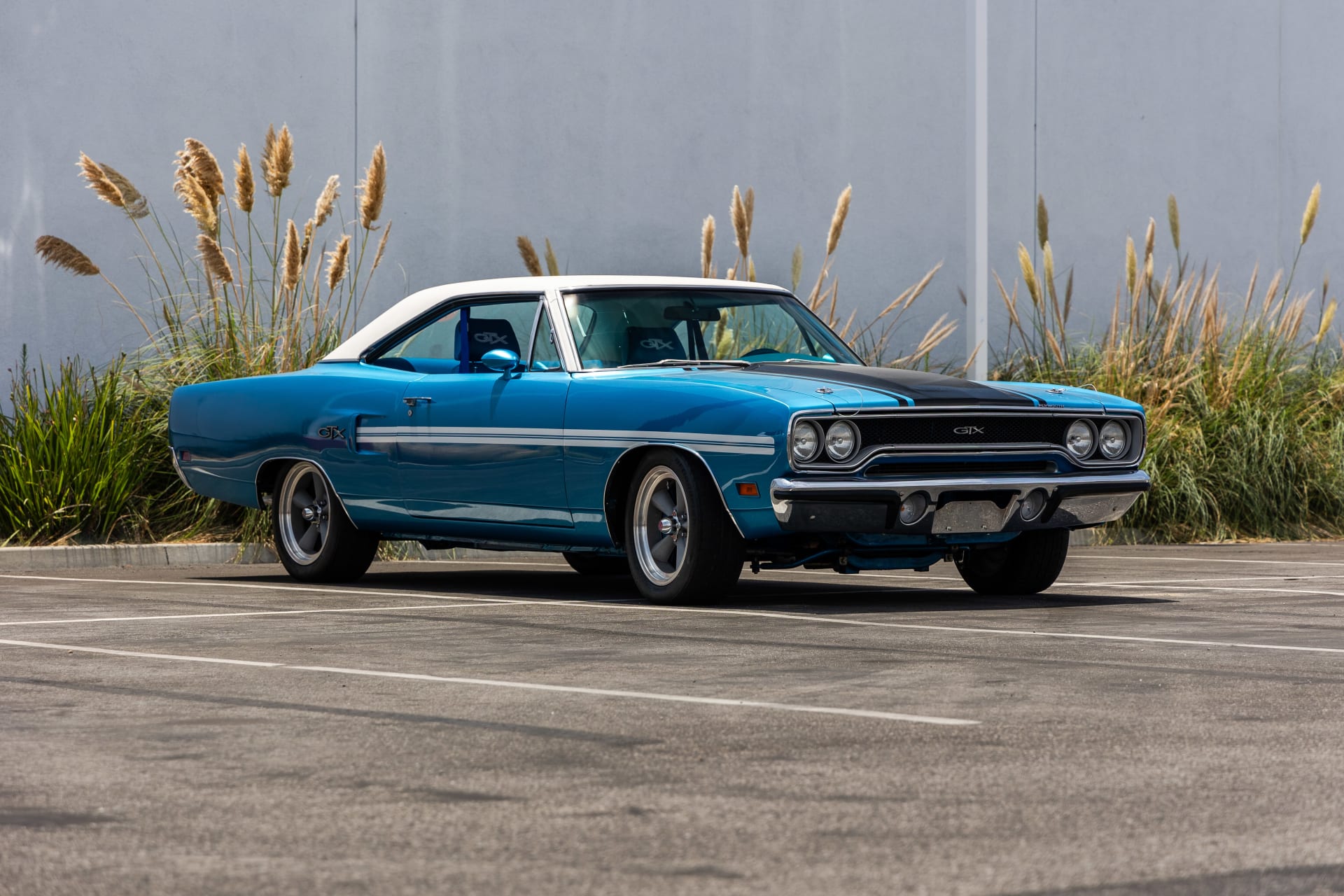
“Six Barrel” was Plymouth’s name for an induction system composed of three Holley two-barrel carburetors. Dodge called the same basic arrangement the Six Pack. During light driving, the center carburetor supplied most of the engine’s fuel and air. Under heavier throttle, the two outboard carburetors opened, giving the large V8 considerably more airflow.
The 440 Six Barrel occupied the middle position in Plymouth’s high-performance range. It produced more horsepower and torque than the standard 375-horsepower, 480-lb-ft 440 four-barrel, but it was less exotic and less expensive than the 426 Hemi. The Six Barrel matched the Hemi’s advertised 490-lb-ft torque figure while being designed around conventional wedge-shaped combustion chambers.
The GTX hardtop measured 204 inches long and 76.4 inches wide, riding on a longer 116-inch wheelbase. That made it larger than the contemporary GM intermediates and gave it substantial road presence.
Its 3,200-rpm torque peak meant the engine did not have to reach its 4,700-rpm horsepower peak to deliver strong acceleration. The 440 could provide immediate midrange thrust, while the progressive carburetor arrangement allowed reasonably controlled operation during normal driving.
When all six barrels opened, the engine could draw the airflow needed for sustained performance. The 390-horsepower, 490-lb-ft combination made the GTX a classic example of Mopar’s large-displacement, torque-heavy engineering approach.
7. 1970 Ford Torino Cobra 429 Cobra Jet
- Engine type: Naturally aspirated 429-cu-in, 7.0-liter OHV Cobra Jet V8 with a four-barrel carburetor and optional Ram Air
- Torque: 450 lb-ft at 3,400 rpm
- Horsepower: 370 hp at 5,400 rpm, SAE gross
- Length: 206.2 inches
- Width: 76.8 inches for the SportsRoof body
- Torque-over-horsepower difference: 80
Ford redesigned the Torino for 1970, giving it a longer, wider and more dramatically styled body. The performance-focused Torino Cobra came standard with Ford’s new 429-cu-in V8 family. In Cobra Jet specification, the engine was rated at 370 horsepower and 450 lb-ft of torque, producing an 80-point numerical advantage for torque.
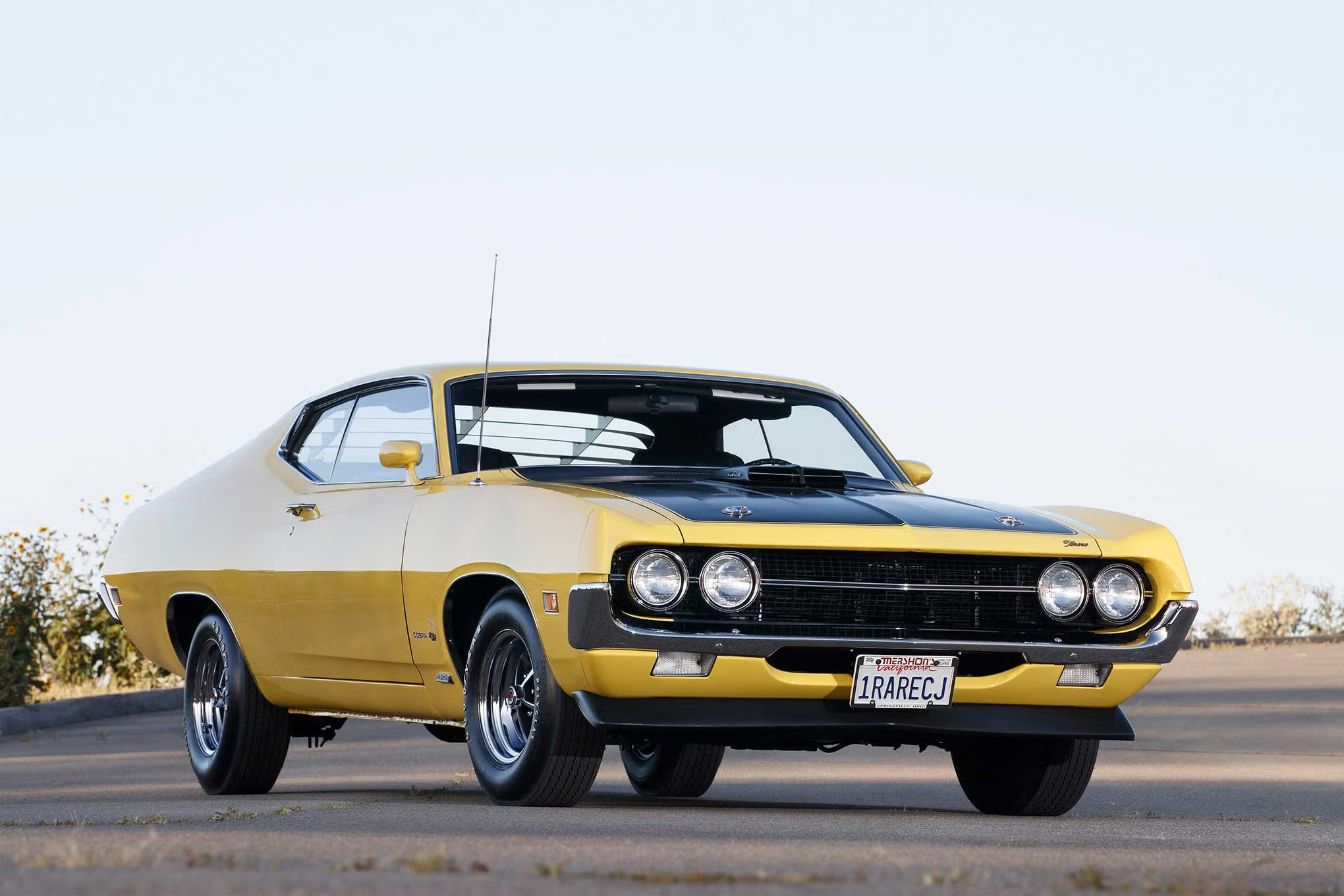
The 429 Cobra Jet used an overhead-valve layout, a four-barrel carburetor and large ports intended to support both midrange torque and high-rpm breathing. Buyers could select a functional Ram Air system with a hood-mounted shaker scoop. Ford retained the same 370-horsepower rating for the Ram Air version.
A more specialized 429 Super Cobra Jet was available through the Drag Pack option. The SCJ received competition-oriented internal components and was officially rated at 375 horsepower, but the standard Cobra Jet’s 370-horsepower and 450-lb-ft figures provide the clearer torque-over-horsepower comparison.
The Torino Cobra used the fastback-style SportsRoof body, which measured 206.2 inches long and approximately 76.8 inches wide. Its 117-inch wheelbase was longer than those of the General Motors intermediates and the Plymouth GTX, reflecting how large Ford’s midsize performance platform had become by 1970.
Despite the Torino’s considerable dimensions, the 429’s 450 lb-ft of torque gave it the low- and midrange strength needed to move the car effectively. Maximum torque arrived 2,000 rpm below maximum horsepower, creating a broad operating range rather than a narrowly focused high-rpm powerband. The result was a large muscle car that could deliver immediate street performance while retaining the airflow capacity and durability expected from Ford’s new Cobra Jet engine family.
8. 1970 AMC Rebel Machine
- Engine type: Naturally aspirated 390-cu-in, 6.4-liter OHV V8 with an Autolite four-barrel carburetor
- Torque: 430 lb-ft at 3,600 rpm
- Horsepower: 340 hp at 5,100 rpm, SAE gross
- Length: 197.0 inches
- Width: 77.2 inches
- Torque-over-horsepower difference: 90
The 1970 AMC Rebel Machine demonstrated that serious torque was not exclusive to General Motors, Ford, or Chrysler. American Motors equipped the Machine with a specially prepared 390-cu-in V8 producing 340 horsepower at 5,100 rpm and 430 lb-ft of torque at 3,600 rpm. The torque rating was numerically 90 points higher than the horsepower figure.
AMC upgraded the 390 with high-flow dogleg-port cylinder heads, a performance camshaft and valvetrain, a revised intake system, a four-barrel carburetor and freer-flowing exhaust equipment. It was the company’s highest-rated production engine when introduced.
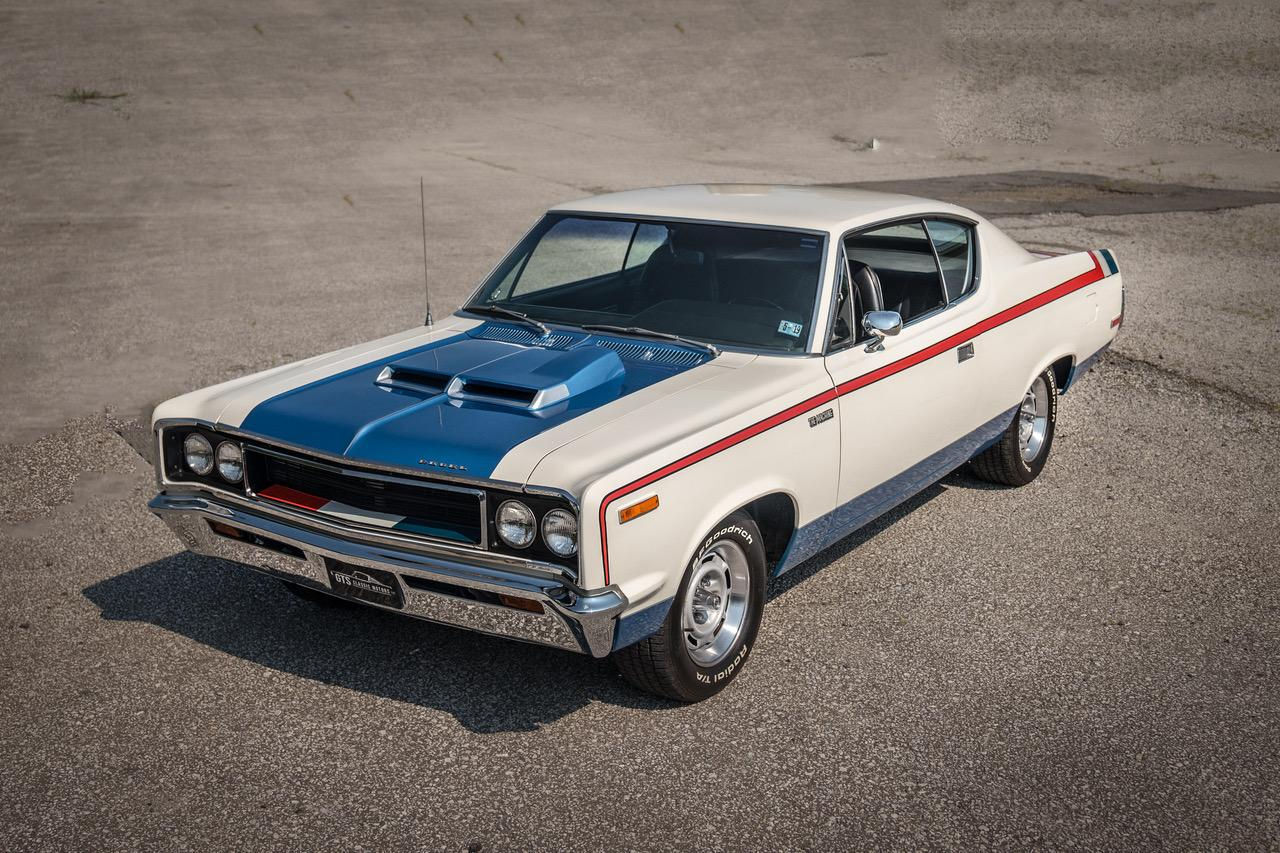
The Machine package extended beyond the engine. Standard and available equipment included heavy-duty suspension components, front disc brakes, performance wheels and tires, a stronger drivetrain and distinctive exterior trim. The standard four-speed manual transmission was paired with a heavy-duty clutch, while AMC’s automatic transmission was optional.
The Rebel Machine hardtop measured 197 inches long and 77.2 inches wide, with a 114-inch wheelbase. It was therefore relatively short compared with cars such as the Plymouth GTX and Ford Torino, but it was wider than several of its better-known competitors.
Its engine specifications show a balance between low-speed force and upper-rpm performance. The 430-lb-ft peak at 3,600 rpm gave the Machine substantial midrange acceleration, while the 5,100-rpm horsepower peak indicated that the 390 could continue breathing effectively as engine speed increased.
The Rebel Machine stood out with its prominent hood scoop, tachometer mounted on the hood, and the striking white, red, and blue color combination used on early promotional models. While its bold styling attracted attention, the car’s performance was backed by serious mechanical upgrades. With a factory rating of 340 horsepower and 430 lb-ft of torque, the Rebel Machine earned its place among the torque-focused American muscle cars of the 1970 model year.
Also read: 10 Cars That Need Specific Coolant and Not a Universal