
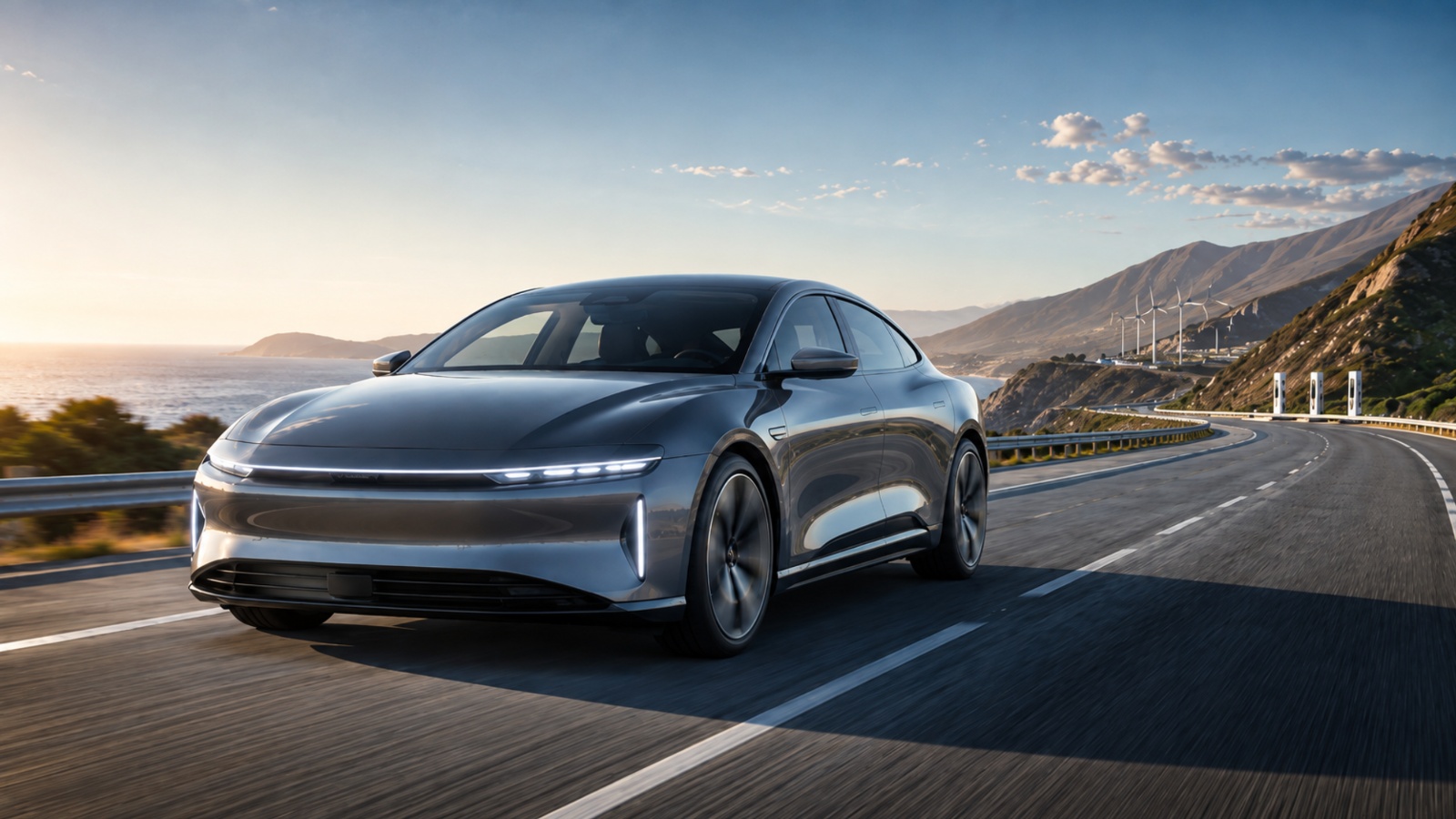
Electric vehicles capable of traveling more than 400 miles on a single charge are becoming increasingly common, thanks to advances in battery technology, aerodynamics, electric motors, and 800-volt charging systems. Rather than relying on oversized battery packs or concept designs, new sedans, SUVs, grand tourers, and passenger vans are delivering greater efficiency, longer driving range, and faster charging.
Most of these vehicles achieve over 400 miles under Europe’s WLTP testing cycle, while only a few are expected to exceed that mark under the stricter U.S. EPA standard. Because these testing methods differ, their results should not be directly compared.
Driving range is only one measure of an EV’s real-world capability. Charging performance, battery preconditioning, wheel size, weather, payload, and highway driving conditions all influence actual distance between charges. Accordingly, the following comparisons distinguish certified ratings from manufacturer estimates while preserving key specifications, including motor configuration, horsepower, torque, and dimensions, for practical evaluation.
1. BMW i3 50 xDrive – Up to 563 Miles WLTP
- Engine: Dual electric motors, all-wheel drive
- Torque: 645 Nm (476 lb-ft)
- Horsepower: 469 hp (345 kW)
- Length/width: 187.4/73.4 inches (4,760/1,865 mm)
The new BMW i3 50 xDrive carries the strongest published range figure on this list. BMW lists a WLTP span of 758 to 906 kilometers, equal to roughly 471 to 563 miles, depending on equipment and configuration. Production begins in Munich in August 2026, with initial European deliveries scheduled for the autumn.
Despite reviving the i3 name, this is a sports sedan positioned as the electric member of the 3 Series family and the second Neue Klasse production model after the iX3.
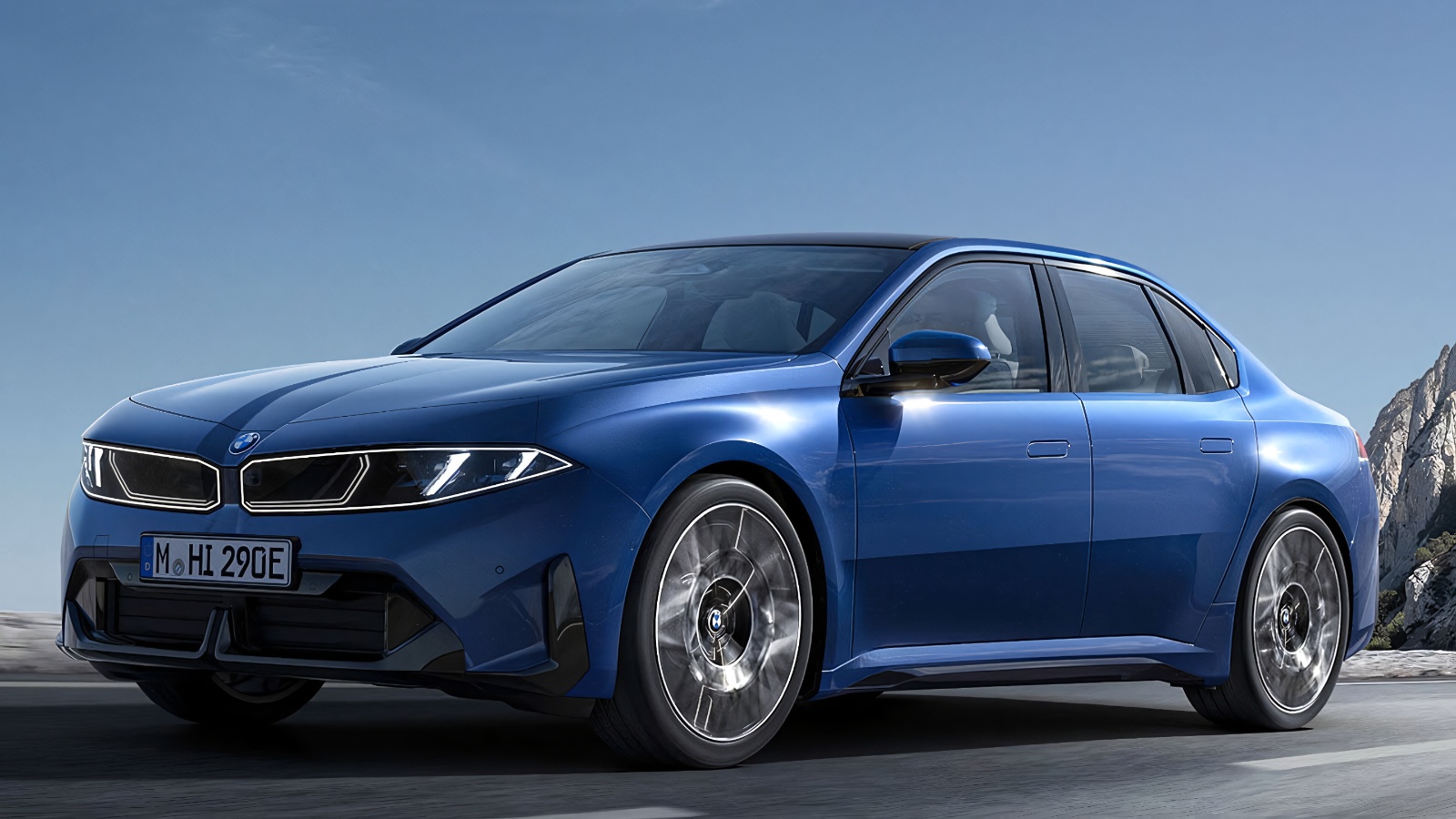
The launch version uses two motors and all-wheel drive. BMW’s sixth-generation electric system combines cylindrical battery cells, cell-to-pack construction, an 800-volt electrical architecture, and tightly integrated electronic controls.
Charging is another major strength. BMW lists a maximum DC rate of 400 kW and says the car can recover as much as 263 miles of WLTP range in ten minutes under suitable conditions. Actual charging performance will vary with battery temperature, charger capability, starting charge level, and weather.
Efficiency may be the car’s most important achievement. BMW quotes consumption as low as 13.5 kWh per 100 kilometers for the most efficient version. The maximum will not apply to every configuration, but the i3 appears positioned to become one of the longest-range electric sedans.
2. BMW iX3 50 xDrive – Up to 500 Miles WLTP
- Engine: Rear electrically excited synchronous motor and front asynchronous motor, all-wheel drive
- Torque: 645 Nm (476 lb-ft)
- Horsepower: 463 hp
- Length/width: 188.3/74.6 inches (4,782/1,895 mm)
The BMW iX3 is already beginning its global rollout, although it remains upcoming in several markets. BMW publishes a certified WLTP range of 679 to 805 kilometers, or approximately 422 to 500 miles. It is also the first production vehicle to introduce the company’s Neue Klasse platform and sixth-generation electric drivetrain.
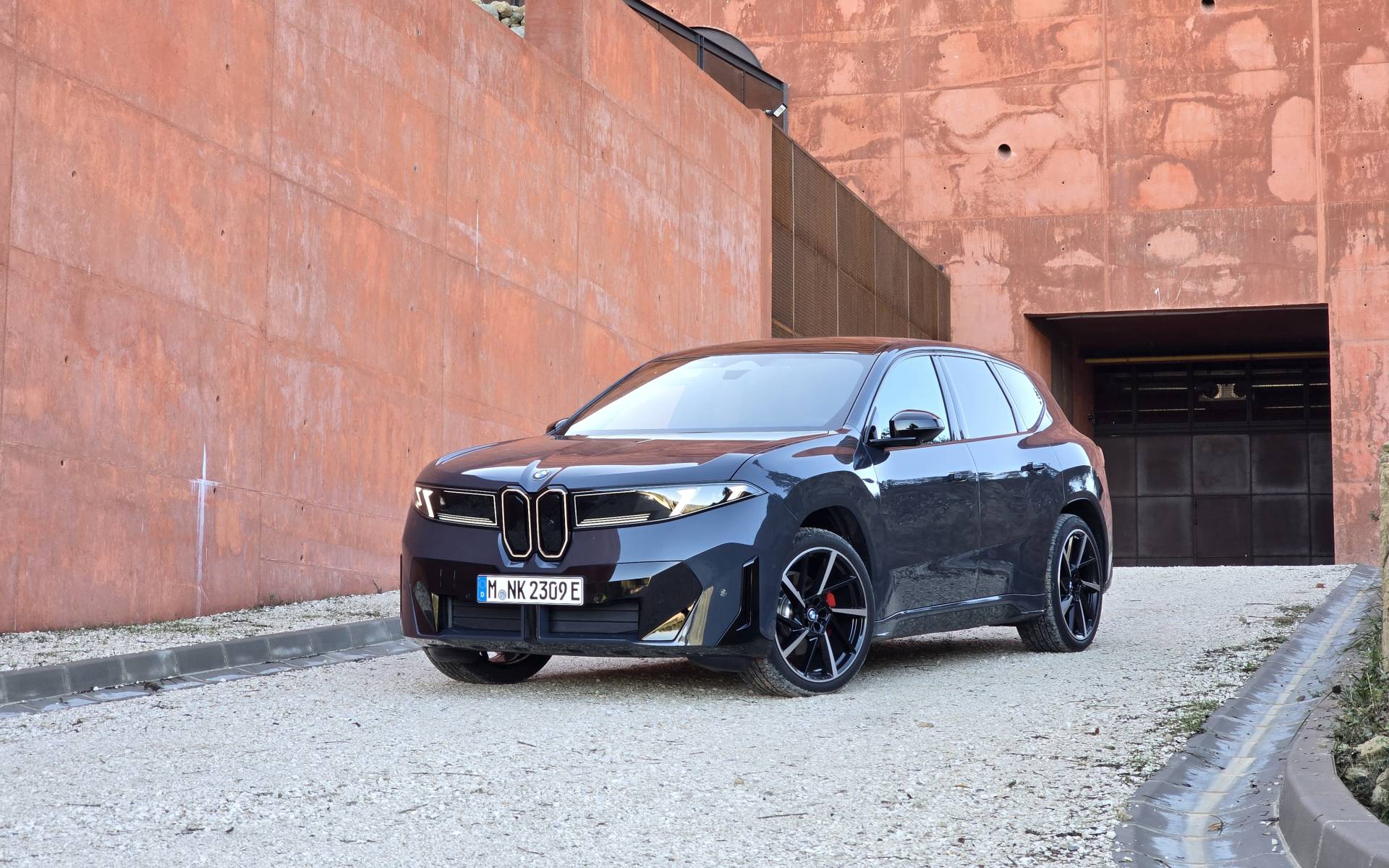
Its battery uses cylindrical cells integrated through a cell-to-pack design. BMW says the arrangement improves energy density, reduces unnecessary structural mass, and creates more efficient packaging. An 800-volt system supports DC charging at up to 400 kW when the battery and charger are prepared to accept that speed.
BMW quotes energy use as low as 15.1 kWh per 100 kilometers under WLTP testing, an unusually efficient result for a dual-motor premium SUV.
The iX3 also introduces BMW Panoramic iDrive. Information appears near the base of the windshield, while a central touchscreen controls navigation, charging, climate, and entertainment.
As with the i3, the maximum range represents the most efficient approved configuration rather than every version. Larger wheels, colder weather, higher cruising speeds, and heavier equipment can reduce distance. North American certification may also produce a lower result than the European figure. Even so, the iX3 represents a major range increase for midsize electric SUVs.
3. BMW iX5 60 xDrive – Up to 435 Miles, Preliminary EPA Estimate
- Engine: Rear electrically excited synchronous motor and front asynchronous motor, all-wheel drive
- Torque: 804 Nm (593 lb-ft)
- Horsepower: 570 hp
- Length/width: 196.6/78.7 inches (4,994/2,000 mm)
BMW’s first battery-electric X5 is one of the few vehicles here expected to exceed 400 miles using an EPA-style estimate instead of relying only on WLTP. BMW revealed the production iX5 in June 2026 and announced a preliminary 435-mile result based on its own testing under EPA procedures. Official certification is still pending.
U.S. production is assigned to BMW’s Spartanburg plant in South Carolina, with the electric model scheduled to arrive during the first quarter of 2027.
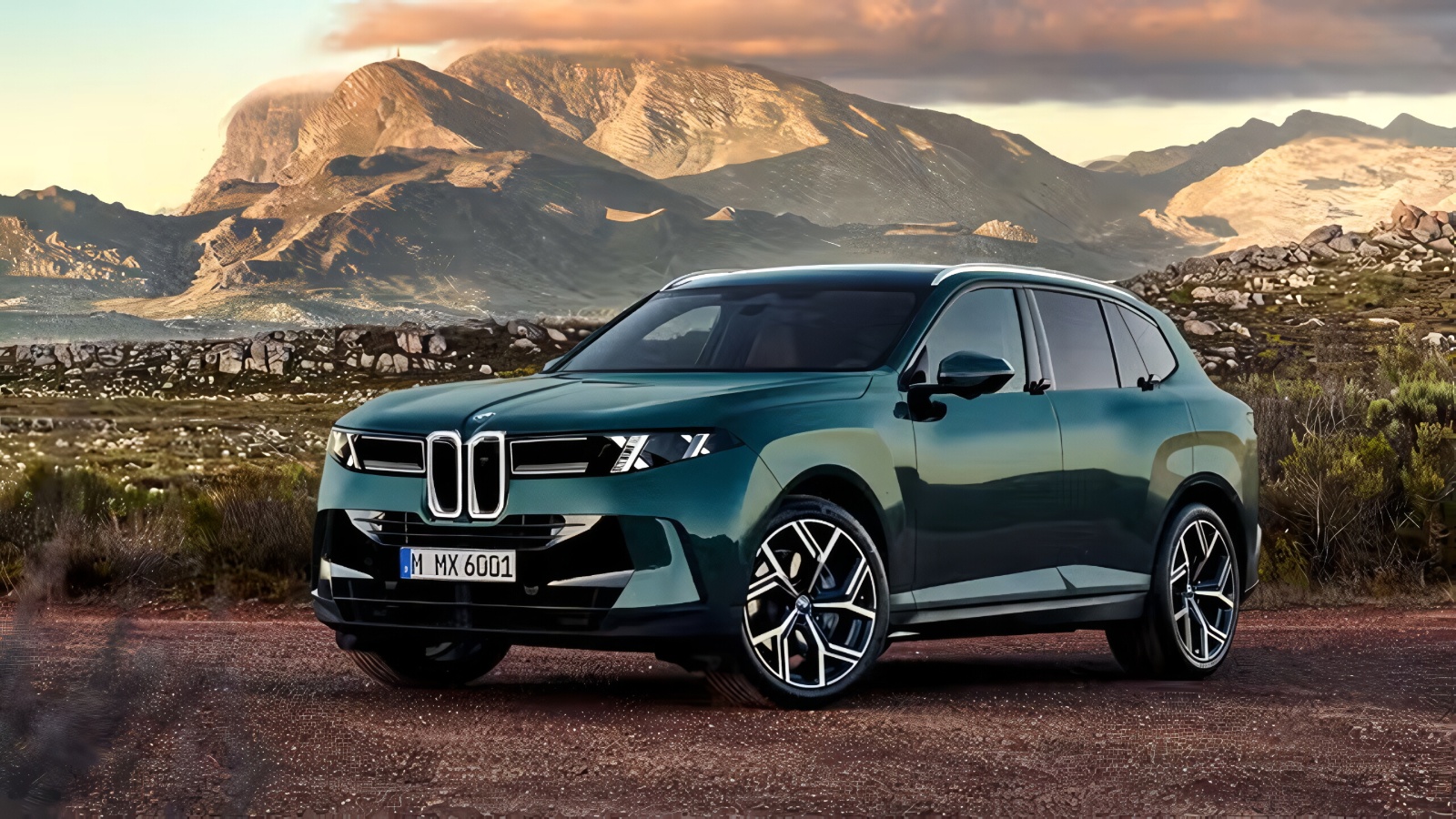
Its sixth-generation drivetrain uses cylindrical battery cells and an 800-volt electrical system. BMW lists peak DC charging of as much as 460 kW, higher than the maximum announced for the i3 and iX3. Preliminary figures suggest about 170 miles can be added in ten minutes, with a 10-to-80-percent charge taking roughly 22 minutes.
BMW estimates a 4.4-second sprint from zero to 60 mph, making the iX5 quicker than many conventional family SUVs despite its large battery.
Bidirectional charging is planned as well. The vehicle is designed to support vehicle-to-load, vehicle-to-home, and potentially vehicle-to-grid functions. BMW has announced a starting U.S. price of $79,800 before destination and options. A final rating near 435 miles would place it among America’s longest-range electric luxury SUVs.
4. Mercedes-Benz C-Class Electric – Up to 497 Miles WLTP
- Engine: Dual electric motors, 4MATIC all-wheel drive
- Torque: 800 Nm (590 lb-ft)
- Horsepower: 483 hp (360 kW)
- Length/width: 192.2/74.5 inches (4,883/1,892 mm)
The electric C-Class arrives with two long-range figures. Mercedes-Benz publishes as much as 762 kilometers, or roughly 473 miles, for the revealed C 400 4MATIC. A planned rear-wheel-drive version is expected to reach 800 kilometers, approximately 497 miles. The rear-drive figure remains a forecast rather than a completed certification result.
Mercedes developed the model as a dedicated electric sedan, with its proportions, drivetrain, electronics, and cabin designed around battery power.
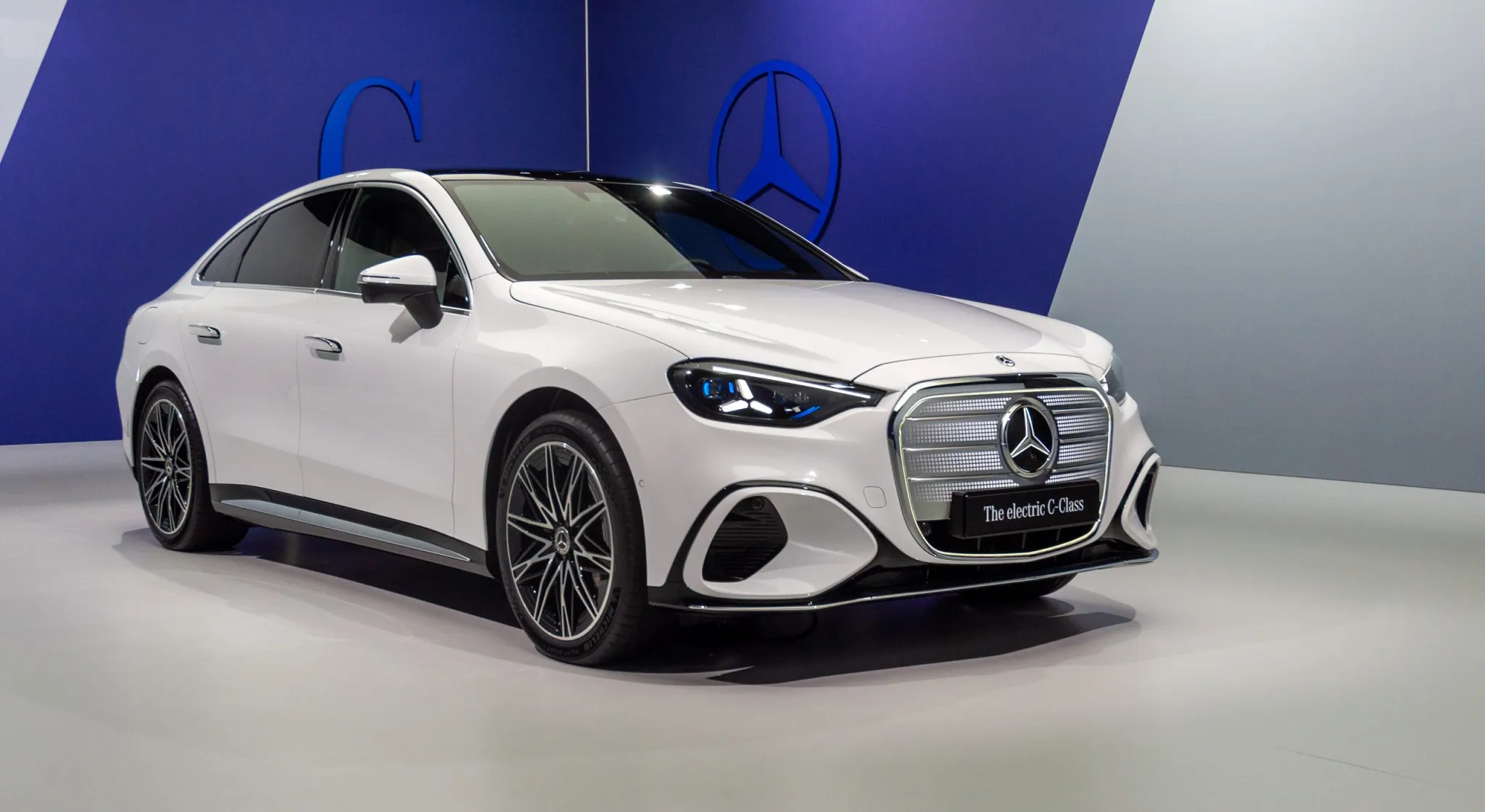
The C 400 4MATIC uses two motors, all-wheel drive, and a usable battery capacity of approximately 94.5 kWh. Total output is listed at around 360 kW, or 483 horsepower, with acceleration to 100 km/h taking just over four seconds.
An 800-volt electrical system supports DC charging at up to roughly 330 kW. Mercedes says around 325 kilometers, equal to about 202 miles of WLTP range, can be added in ten minutes under ideal conditions. Actual results depend on battery temperature, charger output, and starting charge level.
The sedan’s low profile and relatively small frontal area give it an efficiency advantage over comparable SUVs. A disconnect function reduces front-motor losses when all-wheel drive is unnecessary. The rear-wheel-drive model should improve efficiency further by eliminating the front motor. Until that version completes certification, however, 497 miles should be described as an expected WLTP maximum rather than a final rating.
5. Jaguar Type 01 – Up to 430 Miles EPA Target
- Engine: Tri-motor electric all-wheel drive
- Torque: More than 1,300 Nm (959 lb-ft)
- Horsepower: More than 986 hp (more than 1,000 PS)
- Length/width: Not officially disclosed as of August 3, 2026
Jaguar Type 01 has one of the most ambitious American-style range targets among unreleased luxury EVs. Jaguar projects as much as 430 miles under the EPA procedure and 770 kilometers, or approximately 478 miles, under WLTP. The production program is well advanced, but both numbers remain manufacturer targets awaiting certification.
The four-door Type 01 is the road-going counterpart to Jaguar’s Type 00 design study. It also marks Jaguar’s move toward a higher-priced, higher-performance market position.
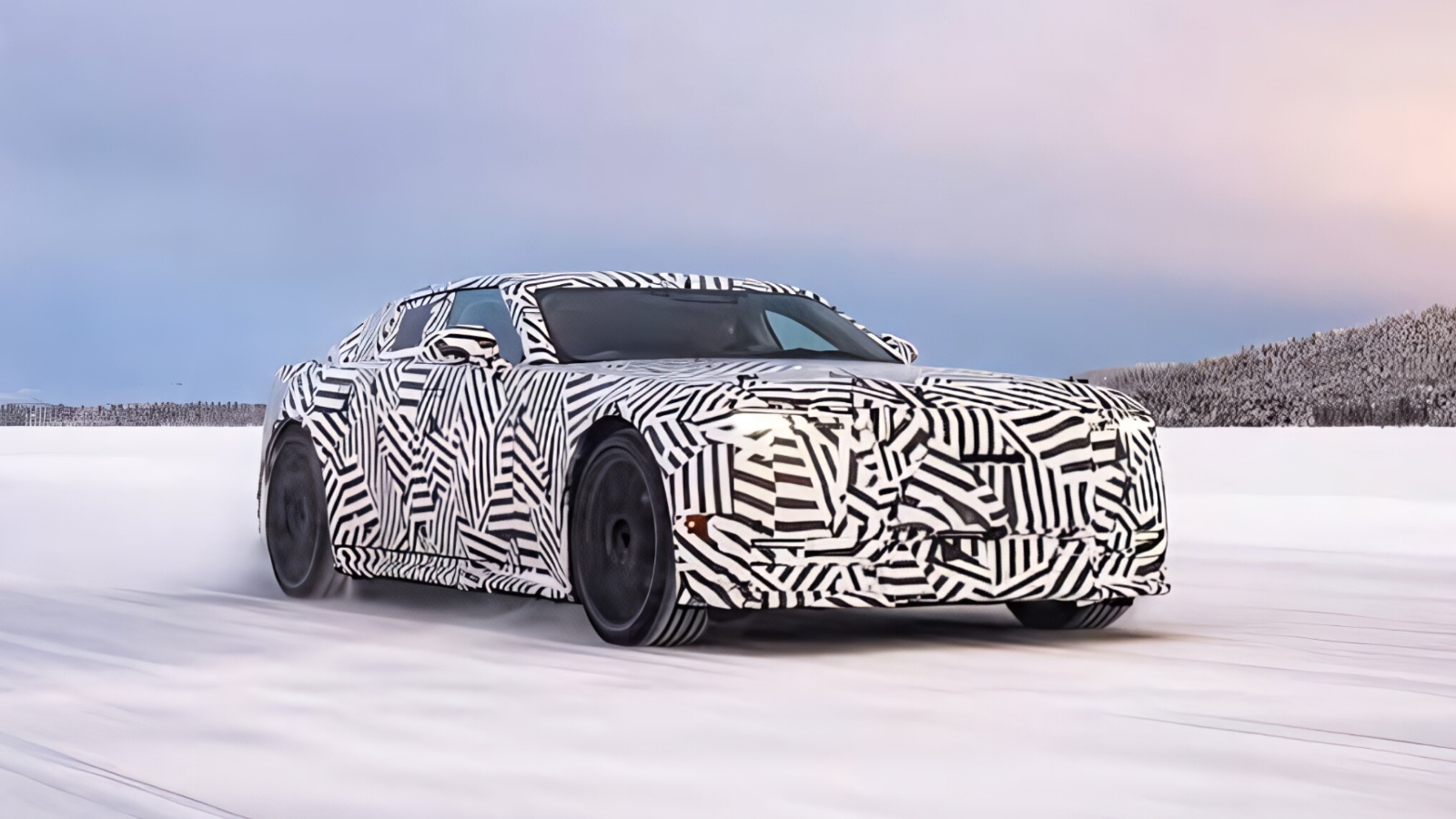
The car rides on the dedicated Jaguar Electric Architecture. A tri-motor system provides all-wheel drive, torque vectoring, more than 1,000 horsepower, and over 1,300 Nm of torque.
Jaguar has tested prototypes in temperatures reaching minus 40 degrees Celsius. Cold-weather testing matters because low temperatures can reduce battery output, slow charging, and increase heating demand.
The company is targeting the ability to add approximately 200 miles in 15 minutes. Jaguar has not yet published final usable battery capacity or peak charging power, so that charging claim cannot be fully evaluated.
The Type 01 follows classic grand-tourer proportions, with a long hood, low roof, and rearward-set cabin. A complete reveal is expected later in 2026. Until certification is finished, the car should be described as targeting 430 EPA miles, not as already possessing a certified rating.
Also read: 10 SUVs Ranked by Number of Luxury Features
6. Mercedes-Benz VLE 300 – More Than 435 Miles WLTP
- Engine: Single front-mounted permanent-magnet synchronous motor, front-wheel drive
- Torque: 378 Nm (279 lb-ft)
- Horsepower: Approximately 272 hp (203 kW)
- Length/width: 209.0/78.7 inches (5,309/1,999 mm)
A large electric passenger van exceeding 400 miles is more difficult to engineer than a low, aerodynamic sedan. That makes the Mercedes-Benz VLE’s preliminary range especially notable. Production has started, and Mercedes-Benz USA has confirmed a 2027 American arrival. The leading version is expected to exceed 700 kilometers, or more than 435 miles, under WLTP testing.
The VLE introduces Mercedes’ Van Electric Architecture as a luxury passenger model. Depending on configuration, it will seat as many as eight occupants and target families, hotels, executive transport operators, and premium shuttle services.
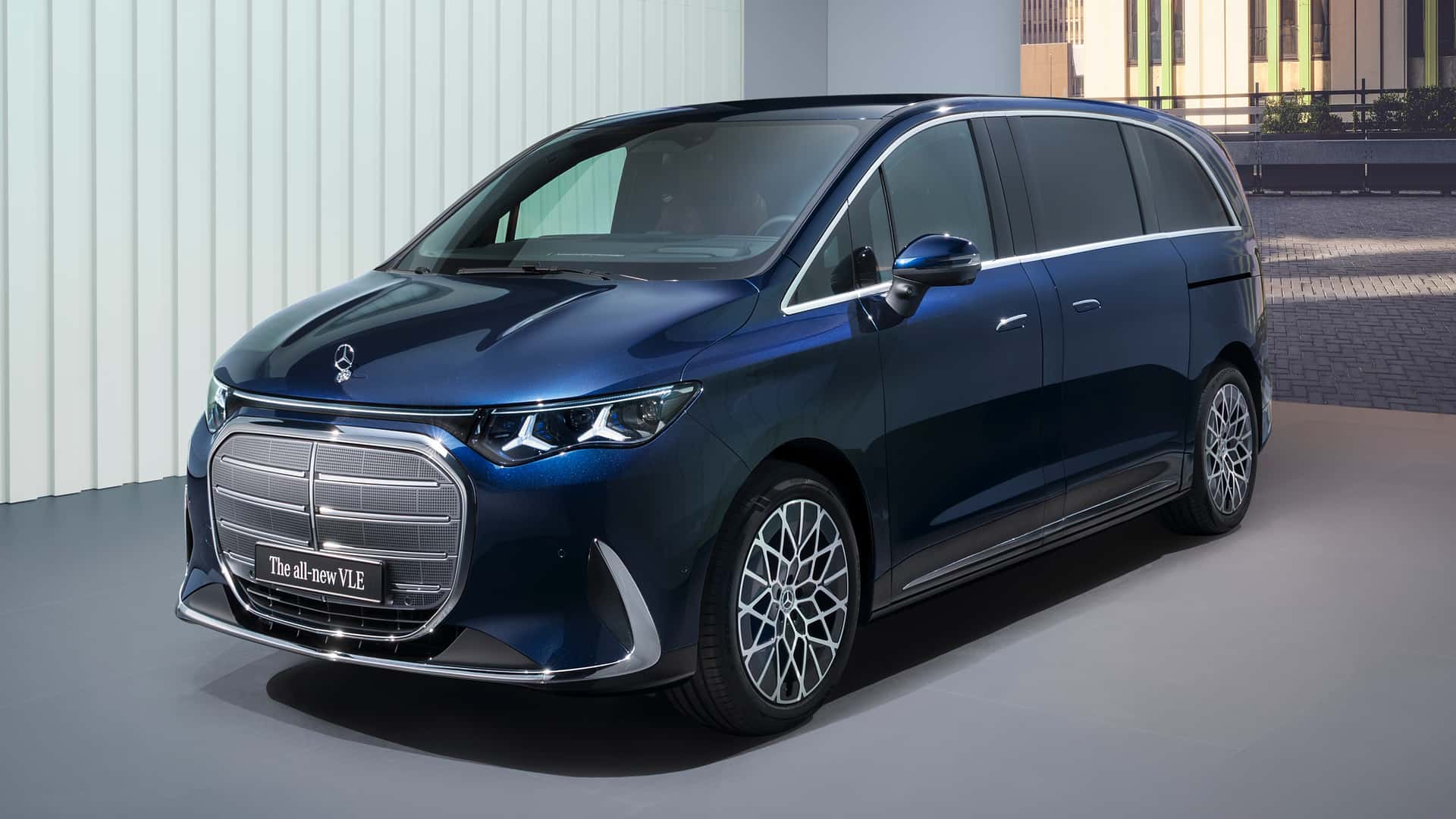
An 800-volt system and a battery reported at about 115 kWh for top versions support long-distance travel. Mercedes has announced DC charging above 300 kW and says the van can recover hundreds of kilometers during a 15-minute stop when connected to a sufficiently powerful charger.
Mercedes reshaped the roof, windshield, body sides, underbody, and rear to reduce drag without sacrificing the upright cabin needed for passenger space.
The vehicle also adopts rear-wheel steering, air suspension, and the MB.OS electronic platform.
The maximum figure will not apply to every VLE. Additional seats, larger wheels, all-wheel drive, heavy luggage, high cruising speeds, and cold weather will increase energy use. EPA certification has not yet been released, so American buyers should not expect the WLTP result to transfer directly. Even so, the VLE could reduce charging stops for family, airport, and professional transport.
7. Mercedes-Benz GLC 400 4MATIC Electric – Up to 444 Miles WLTP
- Engine: Dual permanently excited synchronous motors, 4MATIC all-wheel drive
- Torque: 800 Nm (590 lb-ft)
- Horsepower: 483 hp (360 kW)
- Length/width: 190.8/78.1 inches (4,846/1,984 mm), excluding mirrors
The electric GLC is entering production in Europe but remains an upcoming arrival in several export markets. Mercedes publishes a WLTP range of as much as 715 kilometers, approximately 444 miles, for the GLC 400 4MATIC.
Unlike the earlier EQC, this model uses the established GLC name followed by an electric-powertrain designation. Mercedes is integrating electric vehicles into its familiar model lines rather than maintaining a separate visual family.
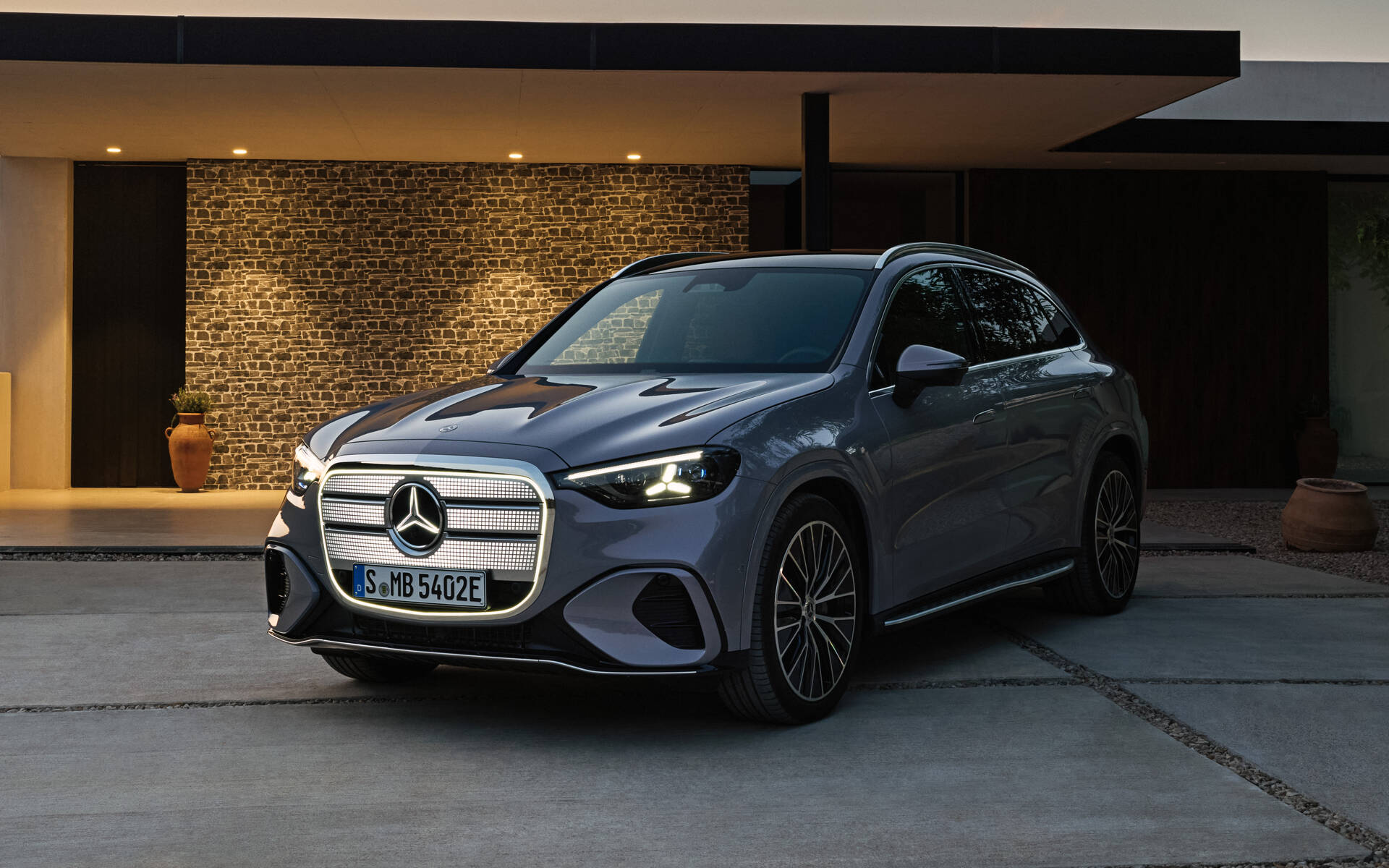
The GLC 400 4MATIC uses two motors, all-wheel drive, and a battery with approximately 94 kWh of usable capacity. Its 800-volt architecture supports rapid DC charging, with Mercedes claiming that as much as 303 kilometers, or about 188 WLTP miles, can be recovered in ten minutes.
The system can disconnect one motor under light-load conditions to reduce drag, while regenerative braking returns energy to the battery during deceleration.
Practicality is another priority. A long wheelbase creates additional passenger room, while the dedicated electric architecture provides storage beneath the front hood. Available air suspension and rear-wheel steering improve comfort and maneuverability.
Inside, buyers can choose an expansive digital dashboard, including a large Hyperscreen layout. Mercedes’ operating system manages navigation, charging, entertainment, driver assistance, and climate functions. The 444-mile figure remains a WLTP result rather than an EPA rating, and larger wheels, cold weather, heavy loads, and sustained highway speeds will reduce real-world range.
8. Mercedes-Benz GLA 250+ Electric – Up to 408 Miles WLTP
- Engine: Single rear-mounted electric motor, rear-wheel drive
- Torque: 335 Nm (247 lb-ft)
- Horsepower: Approximately 268 hp (200 kW)
- Length/width: Approximately 179.9/73.6 inches (4,570/1,870 mm)
Mercedes revealed the new GLA in late July 2026, making it one of the newest entries on this list. The rear-wheel-drive GLA 250+ is rated for as much as 657 kilometers, equivalent to approximately 408 miles, under WLTP testing. U.S. EPA range has not been announced.
The third-generation GLA will offer electric and hybrid powertrains. It shares major components with Mercedes’ newer compact EVs, including an 800-volt system and an available two-speed rear transmission.
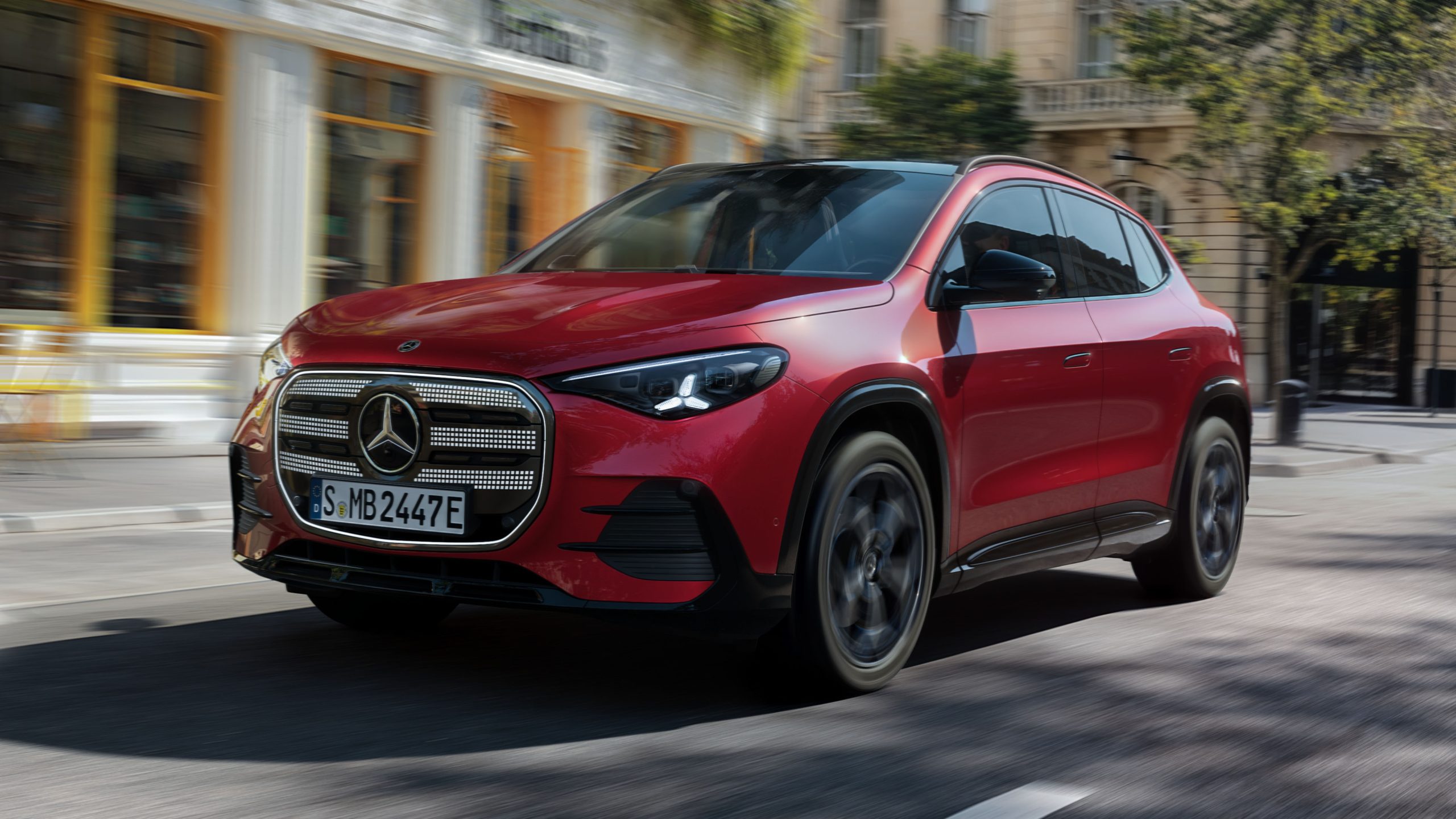
The GLA 250+ uses an 85-kWh nickel-manganese-cobalt battery and a single rear motor producing approximately 200 kW, or 268 horsepower. A dual-motor GLA 350 4MATIC will add all-wheel drive and stronger acceleration but is expected to sacrifice some range.
Mercedes says the 250+ can charge at up to approximately 320 kW and recover around 270 kilometers, or 168 WLTP miles, in ten minutes under ideal conditions. That charging speed may matter more on long trips than the headline range.
The redesigned GLA grows in length and wheelbase, creating more passenger space. Its cabin uses Mercedes’ latest software platform and connected charging-route planning.
At 408 miles, the GLA clears the threshold by only a small margin and only under WLTP. Its accomplishment is not that it becomes an American 400-mile compact SUV, but that an 85-kWh premium crossover can exceed 400 miles under European testing. U.S. availability is expected during the second half of 2027 as a 2028 model.
9. Volvo ES90 – Up to 435 Miles WLTP
- Engine: Dual electric motors, all-wheel drive
- Torque: 670 Nm (494 lb-ft)
- Horsepower: Approximately 449 hp (335 kW)
- Length/width: 196.9/76.5 inches (5,000/1,942 mm), excluding mirrors
Volvo’s ES90 is orderable in selected countries, while deliveries and availability continue to expand. Volvo publishes a maximum WLTP range of 700 kilometers, or approximately 435 miles, for the long-range twin-motor configuration using a 106-kWh battery.
The ES90 does not fit neatly into the traditional sedan category. Its raised seating position, long wheelbase, sloping roofline, and large rear hatch combine elements of a sedan, fastback, and crossover. The design provides cabin space without the aerodynamic penalty of a full-height SUV.
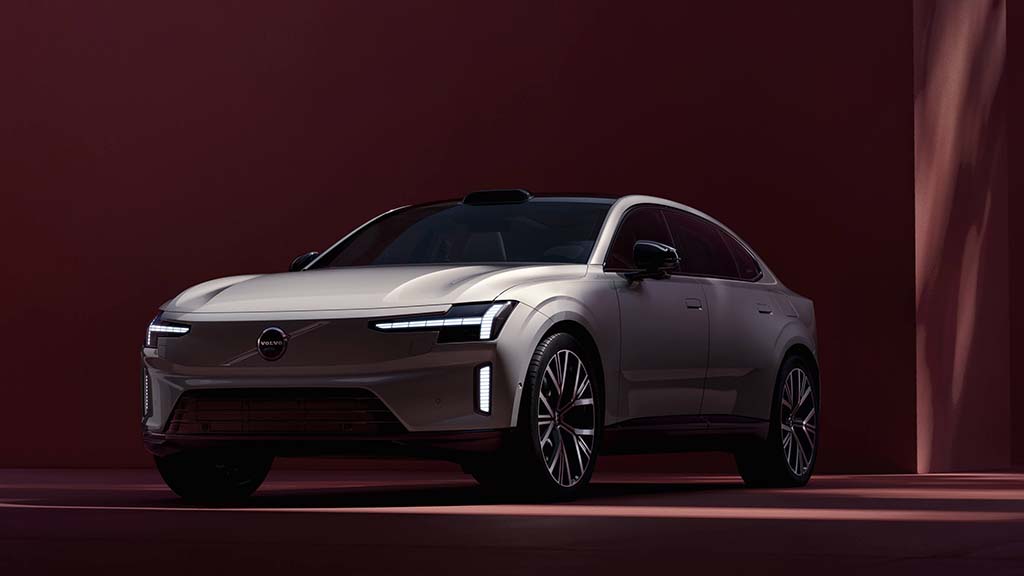
It is Volvo’s first production model with an 800-volt electrical system. The architecture reduces heat losses and supports charging speeds of as much as 350 kW. Volvo says the ES90 can add approximately 300 kilometers, or 186 miles of WLTP range, in ten minutes and charge from 10 to 80 percent in around 20 minutes under appropriate conditions.
The vehicle also uses updated battery-management software incorporating technology from Breathe Battery Technologies.
Volvo continues its safety-focused approach through cameras, radar units, ultrasonic sensors, and available lidar, depending on market and specification.
The 435-mile figure should not be treated as a guaranteed real-world result. Highway speed, tires, temperature, climate use, elevation, and payload all affect consumption, and Volvo has not announced an equivalent EPA rating. The ES90 shows how 800-volt systems are spreading into EVs focused on quiet, efficient long-distance travel.
10. Polestar 5 Dual Motor – Up to 416 Miles WLTP
- Engine: Dual electric motors, all-wheel drive
- Torque: 812 Nm (599 lb-ft)
- Horsepower: Approximately 738 hp (550 kW)
- Length/width: 200.3/79.3 inches (5,087/2,015 mm), with mirrors folded
The Polestar 5 has been revealed and opened for ordering in initial markets, but customer availability is still developing. The standard Dual Motor version is projected to travel as much as 670 kilometers, or 416 miles, under WLTP, although final certification was still pending at launch.
The car is the production interpretation of the Polestar Precept concept. Its five-meter body uses a low nose, fastback roof, flat underbody, retractable door handles, and an aerodynamic rear designed to produce a drag coefficient of approximately 0.24.
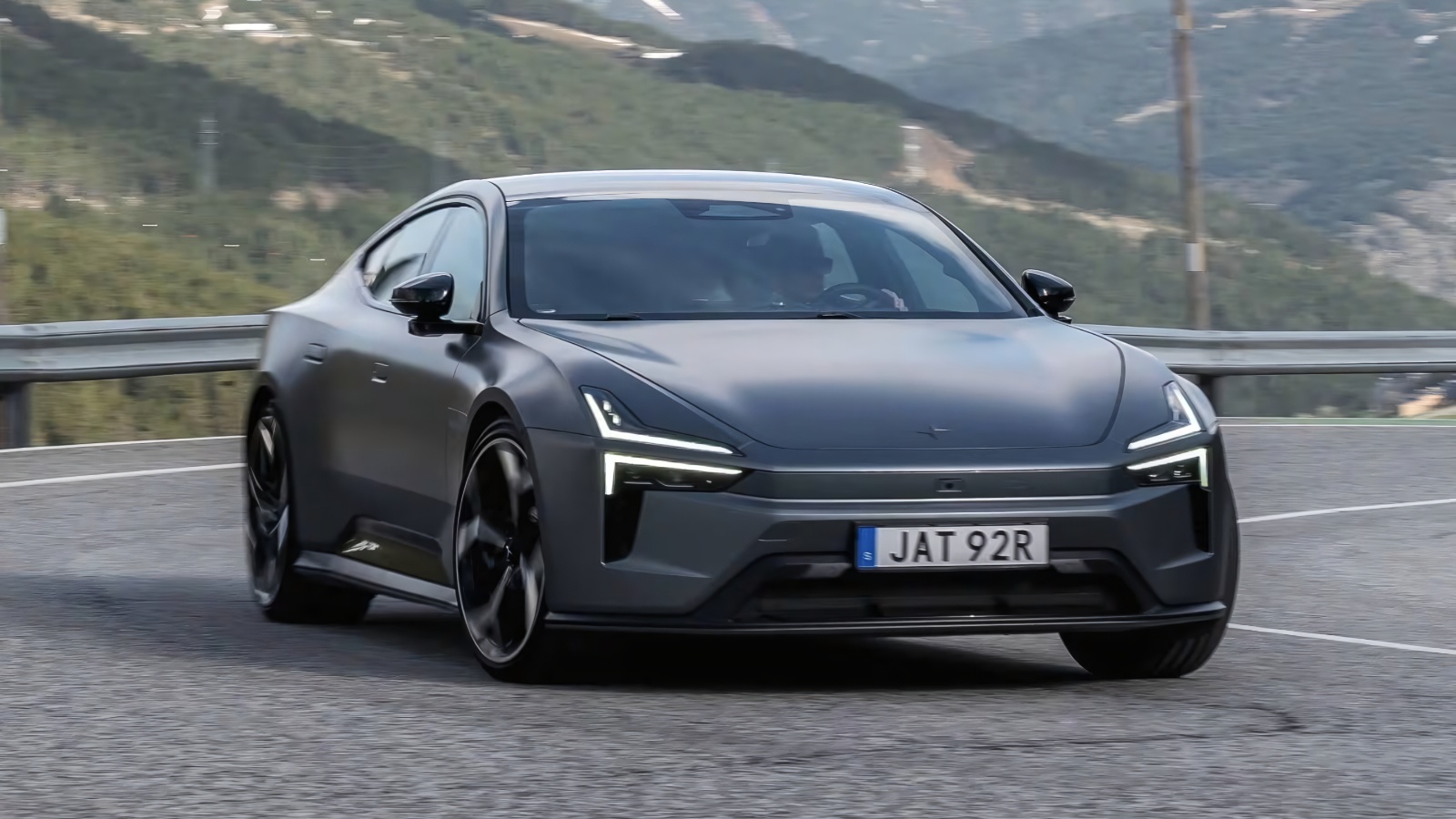
Polestar developed a bonded aluminum structure specifically for the model instead of adapting an existing steel platform. The construction aims to combine low mass with the rigidity needed for precise handling.
A 112-kWh battery provides approximately 106 kWh of usable energy. The standard Dual Motor version produces 550 kW, or about 738 horsepower, while the Performance version raises output to 650 kW, approximately 871 horsepower. Only the standard Dual Motor exceeds 400 WLTP miles; the Performance model is rated at roughly 351 miles.
The 800-volt system supports DC charging at up to 350 kW, with a listed 10-to-80-percent charging time of approximately 22 minutes. Its rear motor can disconnect during low-demand driving to improve efficiency.
A digital rearview mirror preserves the low roofline while maintaining rear visibility through a camera. The cabin uses recycled and bio-based materials alongside Google-based infotainment. Buyers should still wait for final regional certification, because an EPA result will likely be lower than the 416-mile WLTP figure.
Also read: 10 Cars That Cannot Be Driven During a System Update
