Three-row seating has long been a key selling point for families shopping for midsize and large SUVs. However, automakers are starting to rethink the idea that every SUV designed with a three-row platform must include seating for seven passengers.
For the 2027 model year, brands are taking different approaches by removing the third row in redesigned vehicles, developing five-seat versions based on three-row SUVs, or offering two-row configurations on select trims. These changes can create more usable cargo space, improve second-row comfort, give vehicles a sportier look, and help distinguish models that share similar foundations.
There is an important distinction, however. Eight established SUVs did not all suddenly lose third-row seats between 2026 and 2027. The BMW X5 is the strongest direct model-year deletion.
Others, including the Infiniti QX65 and Mazda CX-70, are purpose-built two-row alternatives to related three-row models. The entries below therefore identify exactly what the 2027 seating situation is, while using verified specifications wherever manufacturers have released them.
1. 2027 BMW X5
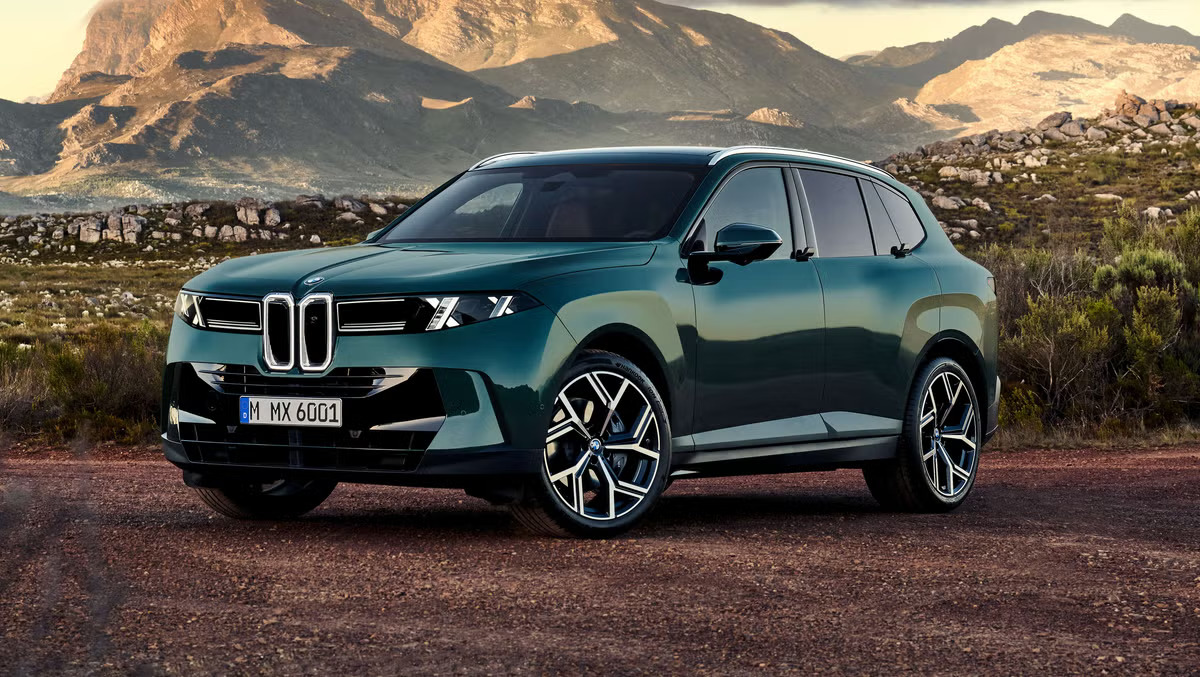
BMW’s completely redesigned fifth-generation X5 provides the clearest 2027 example of a genuine third-row deletion. Earlier X5 generations could be ordered with an optional third row, allowing buyers to carry additional passengers without moving into the larger X7.
That choice disappears with the latest X5. The new generation is structured as a dedicated two-row model, establishing a much clearer line between the five-passenger X5 and BMW’s three-row X7.
For the 2027 X5 40 xDrive, BMW introduces an extensively updated 3.0-liter turbocharged inline-six assisted by a 48-volt mild-hybrid system. Output rises to 394 horsepower and 428 lb-ft of torque. BMW says the new X5 40 xDrive can reach 60 mph in approximately 5.1 seconds. The fifth-generation SUV also grows to 197.2 inches long while measuring 78.7 inches wide.
- Engine Type: 3.0-liter turbocharged inline-six with 48V mild-hybrid assistance
- Horsepower: 394 hp
- Torque: 428 lb-ft
- Length: 197.2 inches
- Width: 78.7 inches
Rather than treating the missing seats as an equipment-package adjustment, BMW has baked the five-passenger configuration into the new generation’s identity. The larger cargo area, new electrical architecture and unusually wide range of gasoline, plug-in-hybrid and battery-electric powertrains all place additional demands on packaging.
Among 2027 SUVs, the X5 is a clear example of a model that has actually moved away from offering three-row seating. BMW previously provided an optional third row, but that configuration is no longer available. As a result, buyers who need additional passenger space must step up to the larger X7, making this a genuine year-over-year seating change.
2. 2027 Infiniti QX65
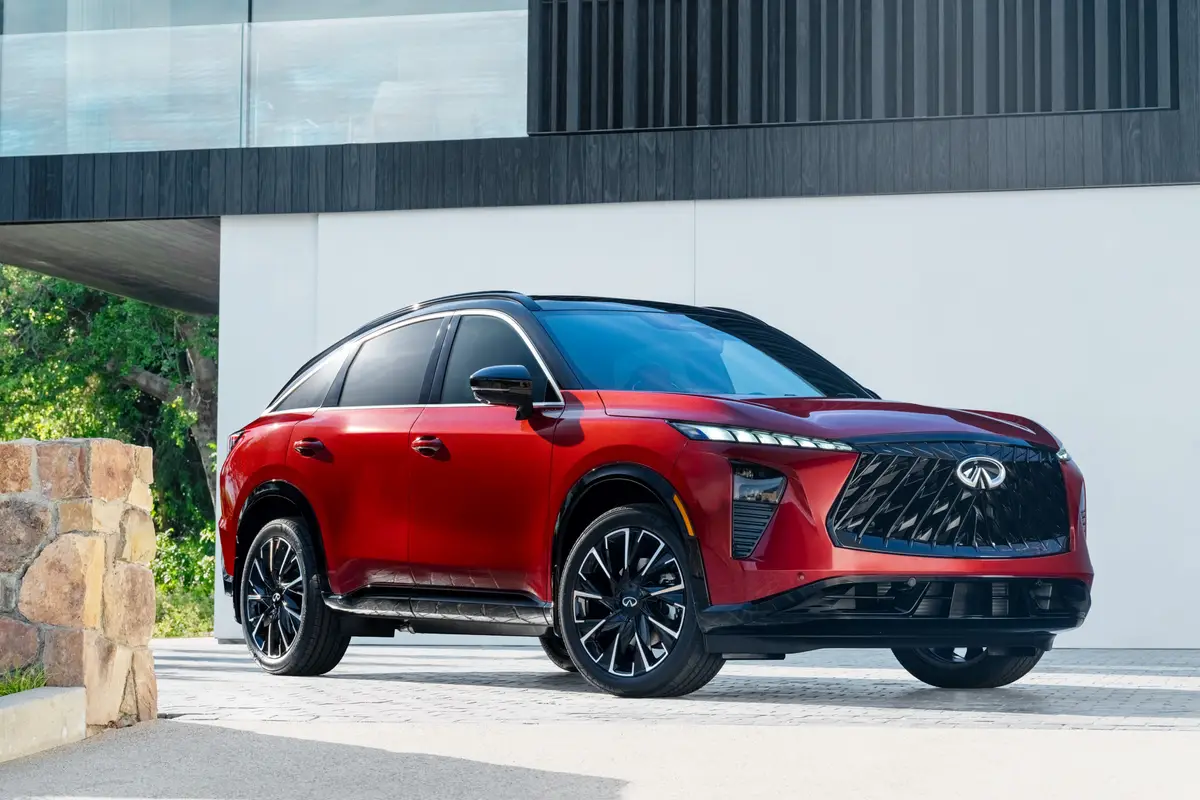
The 2027 Infiniti QX65 approaches third-row deletion differently. Instead of taking an existing QX65 and removing seats during a refresh, Infiniti created an entirely new model from architecture closely associated with the three-row QX60 and deliberately made the QX65 a five-passenger SUV.
That decision supports the QX65’s coupe-like profile. Its roofline falls more dramatically toward the rear than the QX60’s, making a conventional third-row passenger compartment less practical. Eliminating those seats also frees more room for luggage behind the second row. Infiniti lists 35.8 cubic feet of cargo capacity with the second row upright.
All three QX65 trims use Infiniti’s 2.0-liter VC-Turbo four-cylinder paired with a nine-speed automatic transmission. The engine produces 268 horsepower and 286 lb-ft of torque. Infiniti officially lists the vehicle at 198.5 inches long in its specifications and 77.9 inches wide excluding mirrors.
- Engine Type: 2.0-liter turbocharged VC-Turbo inline-four
- Horsepower: 268 hp
- Torque: 286 lb-ft
- Length: 198.5 inches
- Width: 77.9 inches
The QX65 creates an interesting contrast with the QX60 by showing how the same underlying platform can meet different customer needs. While the QX60 continues to serve as Infiniti’s traditional family-focused SUV with three-row practicality, the QX65 is aimed at buyers who place greater importance on design, increased cargo flexibility, and a more refined five-passenger luxury experience.
The 2027 QX65 does not represent a third-row removal from a previous model because it enters the market as a new vehicle. Infiniti designed the QX65 as a sportier two-row SUV from its introduction, leaving the third row out as part of its intended layout. This makes the seating choice a product strategy decision rather than a reduction in capacity between model years.
3. 2027 Mazda CX-70
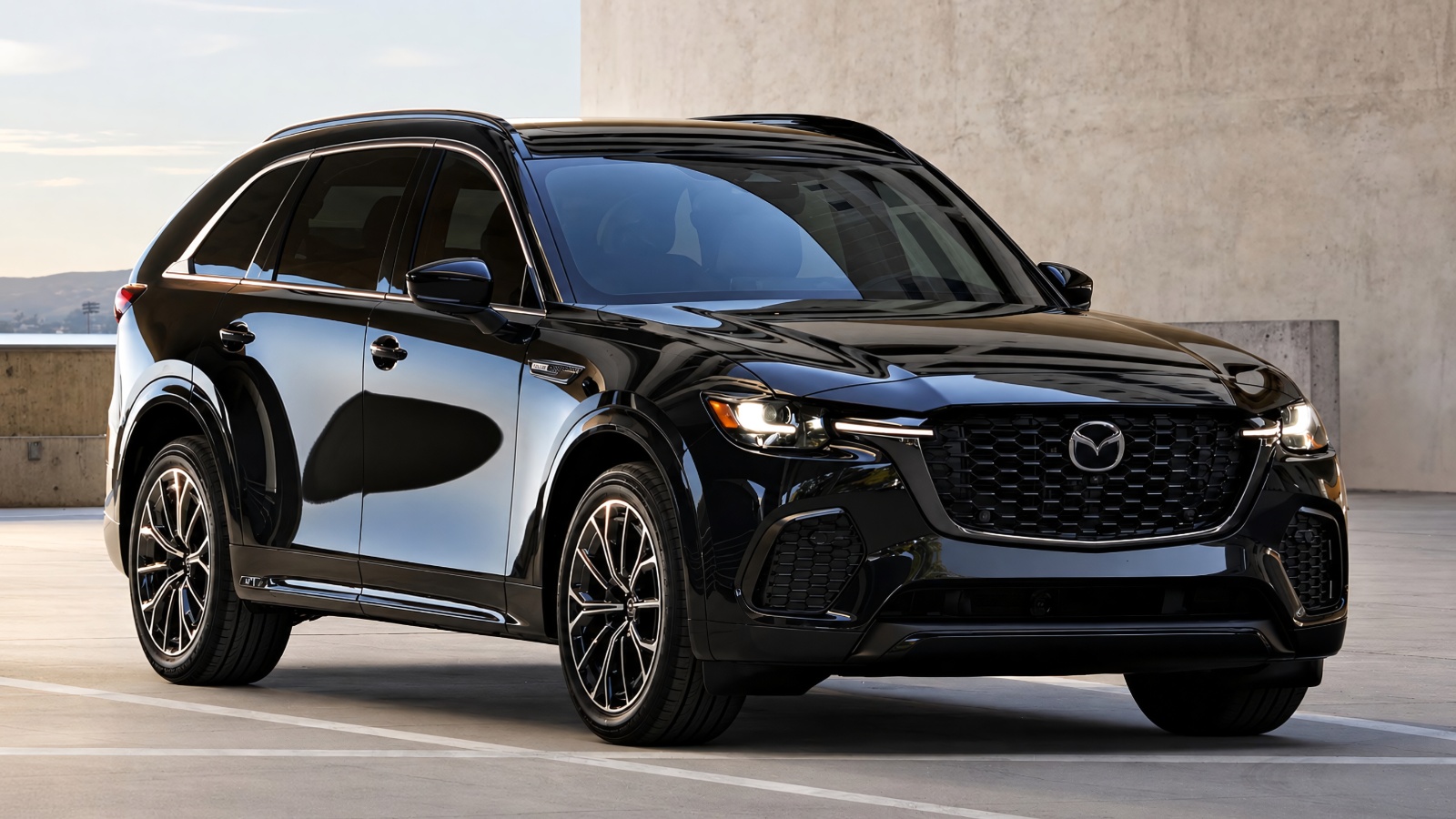
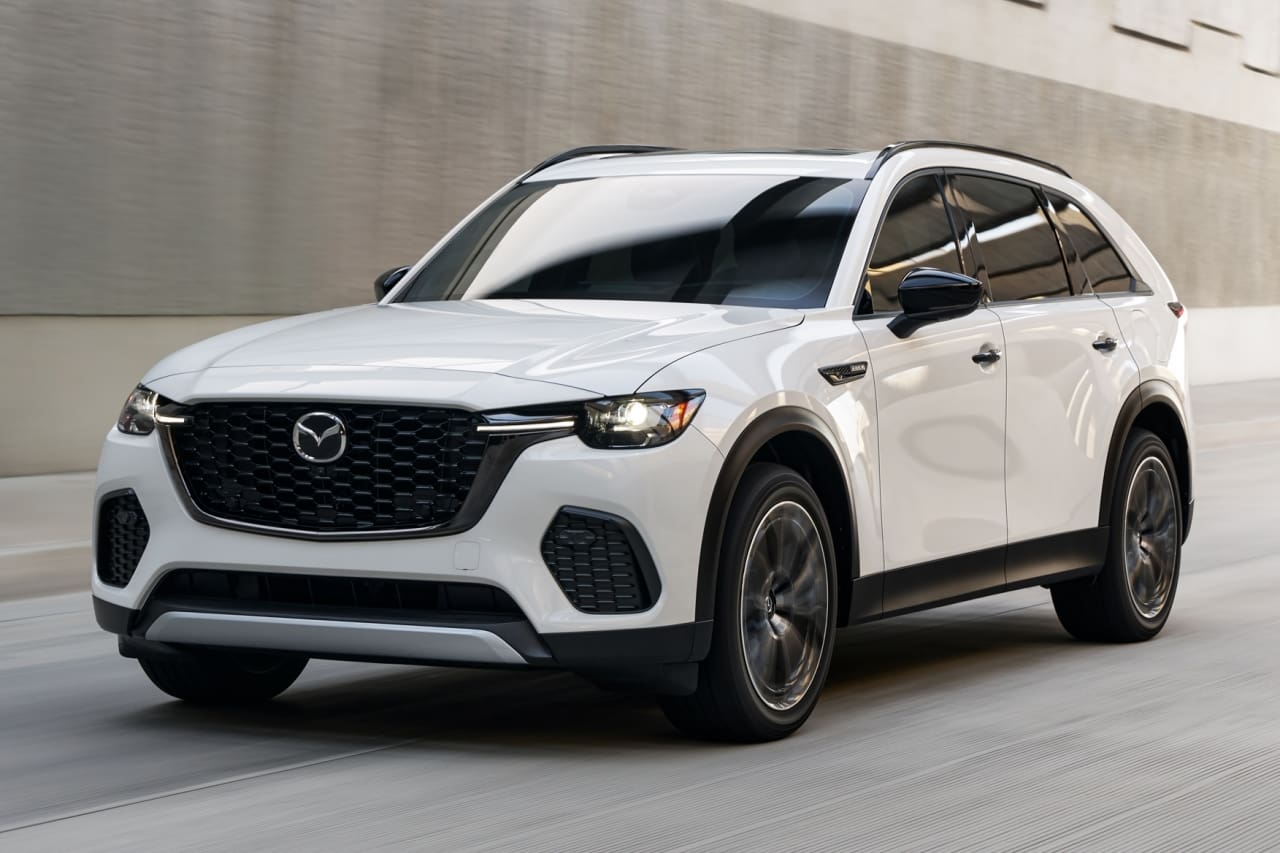
The Mazda CX-70 may be one of the clearest examples of an automaker deciding that a large three-row-capable SUV can work just as well with only five seats. It shares its basic rear-drive-oriented platform and much of its body structure with the CX-90, yet Mazda removes the third row and markets the CX-70 specifically as a two-row vehicle.
That gives the CX-70 unusual proportions for a five-passenger SUV. It measures approximately 200.8 inches long and 78.5 inches wide, dimensions verified in Mazda’s own technical documentation. In other words, Mazda did not make it significantly smaller simply because there are fewer seats inside. The unused rear-passenger space instead contributes to a particularly generous cargo area.
The high-output 3.3 Turbo S version uses Mazda’s turbocharged 3.3-liter inline-six with mild-hybrid assistance. It produces 340 horsepower and 369 lb-ft of torque. Car and Driver’s 2027 listing continues to reference these figures because the powertrain has carried over unchanged.
- Engine Type: 3.3-liter turbocharged inline-six mild hybrid
- Horsepower: 340 hp
- Torque: 369 lb-ft
- Length: 200.8 inches
- Width: 78.5 inches
This arrangement allows Mazda to sell essentially two seating philosophies around the same basic large-SUV architecture. Families needing six, seven, or eight passenger positions can choose the CX-90, while buyers who rarely carry more than five people can use the CX-70’s substantial rear volume for luggage and equipment.
Mazda maintains the same approach for the 2027 CX-70. The SUV continues without a third row, while the CX-90 offers the additional seating for buyers who need it. This is not a new seating cut for 2027. Instead, the two-row layout remains a defining part of the CX-70’s design and its key distinction from the CX-90.
4. 2027 Volkswagen Atlas Cross Sport
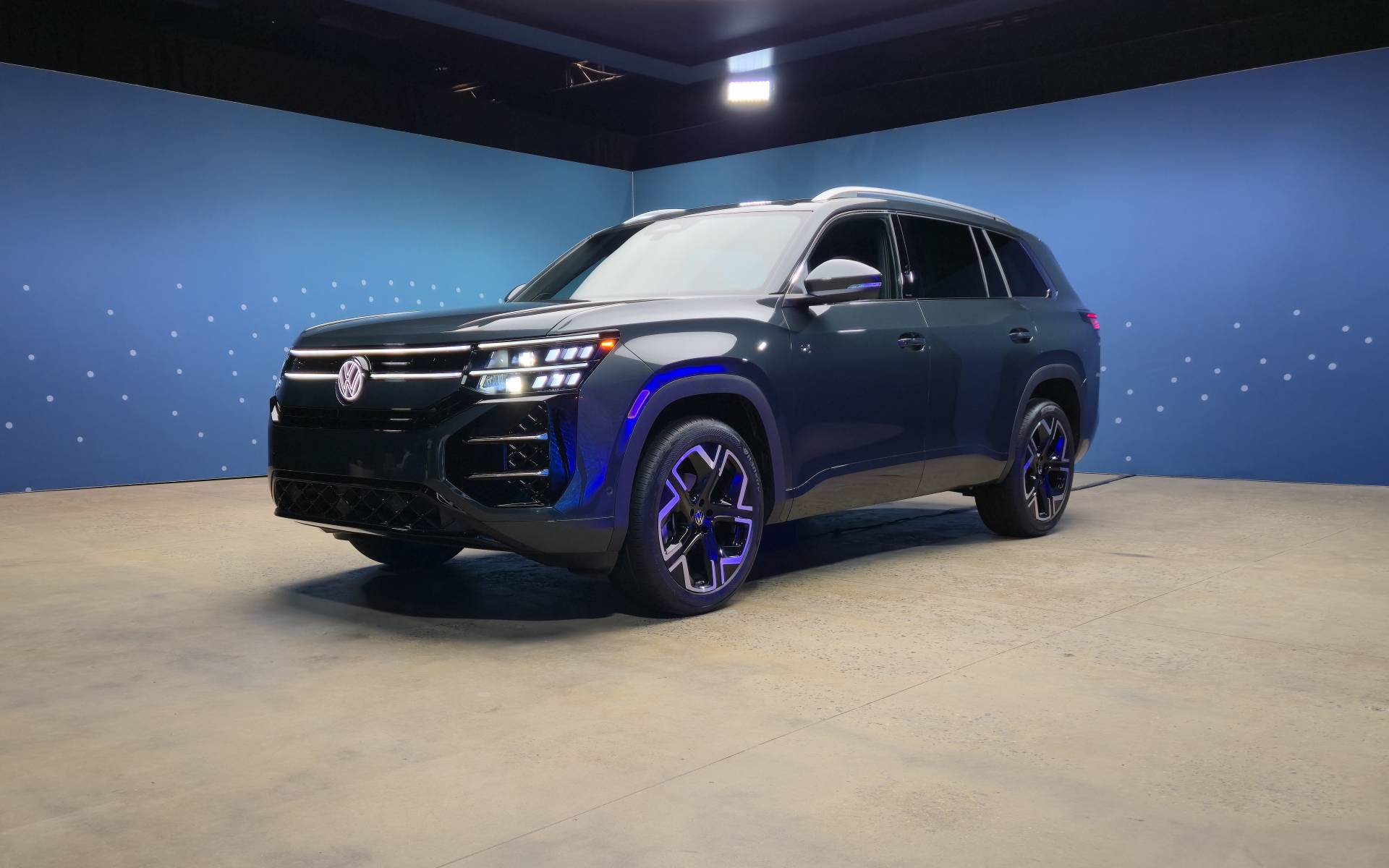
Volkswagen’s Atlas family has long offered one of the simplest examples of choosing the same basic SUV concept with or without a third row. The regular Atlas serves as the traditional three-row family vehicle, while the Atlas Cross Sport sacrifices the rear seats for a more aggressively sloped roof and five-passenger layout.
That strategy continues into the new generation. Reporting on the 2027 Atlas Cross Sport confirms that Volkswagen will again delete the third row in favor of two-row seating and more coupe-like exterior proportions. The related 2027 three-row Atlas simultaneously moves onto an updated MQB Evo architecture.
The powertrain is also changing. The latest generation of Volkswagen’s EA888 2.0-liter turbocharged four-cylinder is expected to produce 282 horsepower and 258 lb-ft of torque, compared with 269 horsepower and 273 lb-ft previously.
- Engine Type: 2.0-liter turbocharged EA888 inline-four
- Horsepower: 282 hp
- Torque: 258 lb-ft
- Length: Final U.S. 2027 Cross Sport figure not yet officially published
- Width: Final U.S. 2027 Cross Sport figure not yet officially published
The outgoing Cross Sport measures 195.5 inches long and 78.3 inches wide, but those figures should not automatically be represented as final 2027 dimensions because the redesigned vehicle is moving into a new generation.
Volkswagen’s 2027 lineup continues the same seating strategy for the Atlas family. The standard Atlas retains three rows, while the Atlas Cross Sport remains a two-row model designed with a stronger emphasis on styling and cargo space. This is not a newly canceled third-row option, but rather a continuation of the Cross Sport’s established five-seat configuration.
Also read: 10 Cars Holding Location History No Owner Can Erase
5. 2027 Honda Passport
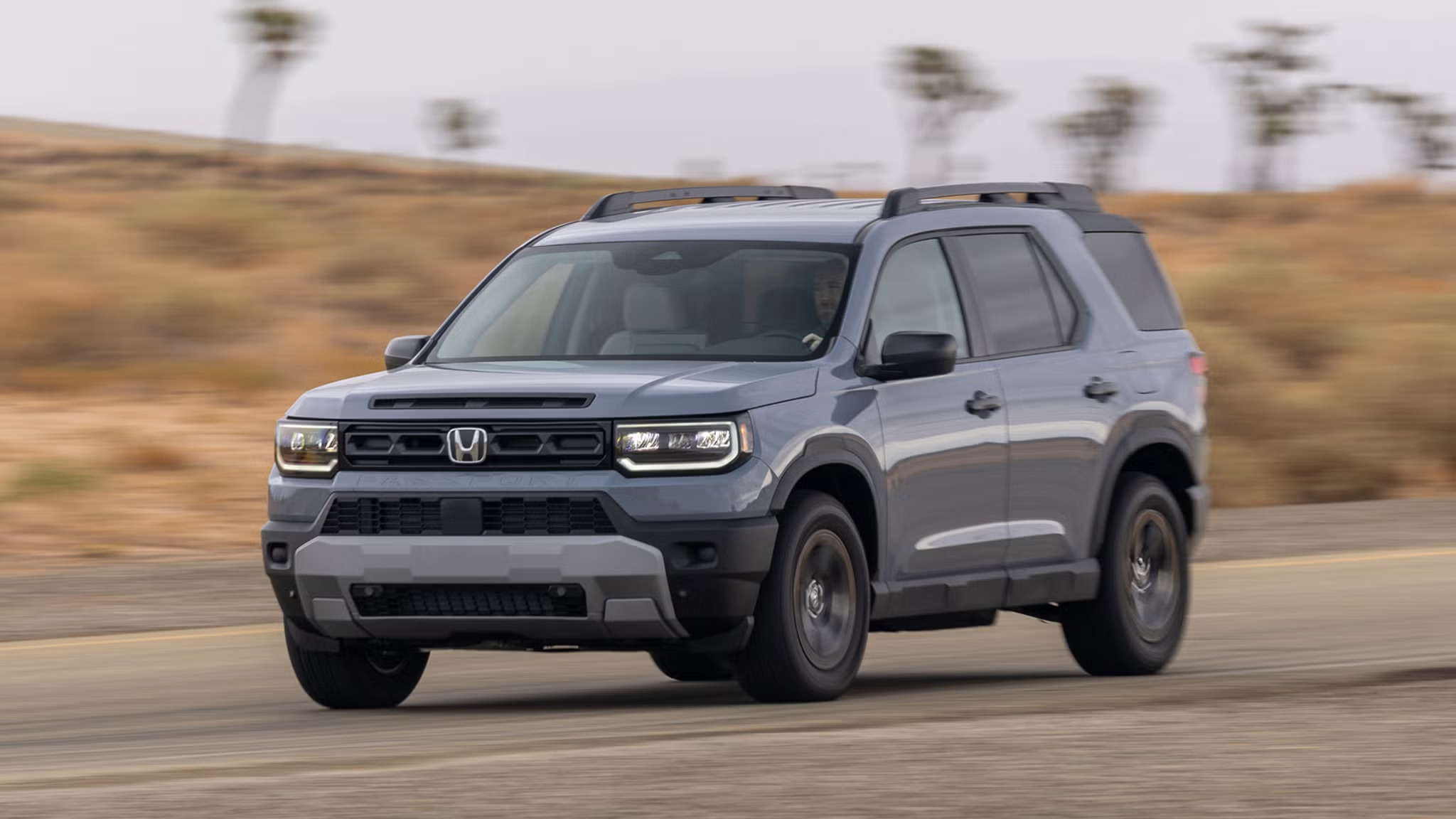
Honda follows a similar formula with the Passport and Pilot. Both occupy the midsize SUV space and share significant engineering, but Honda keeps their passenger missions separated. The Pilot is the three-row family model, while the Passport uses the related architecture for a five-passenger, adventure-oriented SUV.
The latest Passport uses Honda’s naturally aspirated 3.5-liter DOHC V6. Output is 285 horsepower at 6,100 rpm and 262 lb-ft of torque at 5,000 rpm, delivered through a 10-speed automatic transmission and standard all-wheel drive on current configurations. Honda’s specifications put the body at 191.5 inches long and 79.4 inches wide.
- Engine Type: 3.5-liter naturally aspirated DOHC V6
- Horsepower: 285 hp
- Torque: 262 lb-ft
- Length: 191.5 inches
- Width: 79.4 inches
The lack of a third row allows Honda to focus on a different buyer. The Passport emphasizes cargo capacity, tougher styling, TrailSport variants, and outdoor equipment rather than maximizing seating. Car and Driver’s 2027 coverage identifies it as a five-passenger SUV and carries forward the same core mechanical specifications because no major mechanical redesign has been announced for the model year.
Honda takes a different approach by keeping the Passport from becoming unnecessarily large just to fit rarely used third-row seats. Its more compact length compared with many three-row SUVs helps improve maneuverability while still delivering a spacious and practical cargo area.
Honda’s 2027 Passport remains a two-row SUV with seating for five, while the Pilot continues to offer three rows for larger families. There is no third row being removed from the Passport between model years. Instead, Honda has intentionally kept the Passport focused on buyers who prefer greater cargo space and capability without the need for additional seating.
6. 2027 Nissan Murano
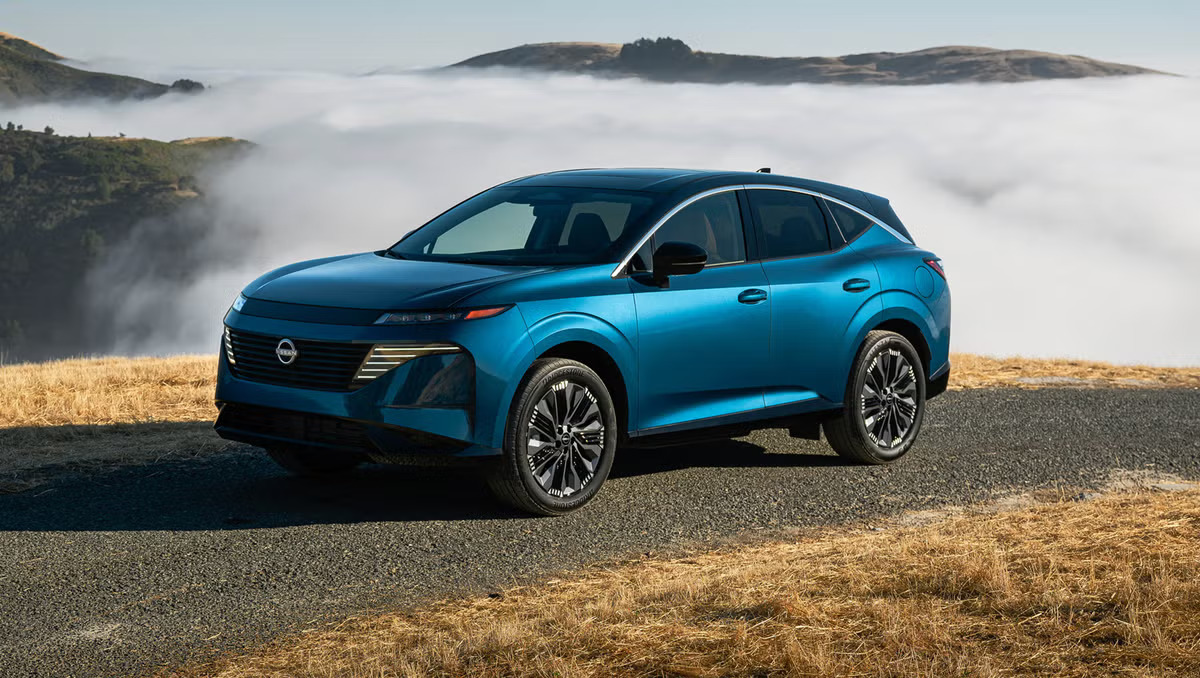
Nissan’s Murano continues to show why automakers can justify having a roomy midsize SUV without installing a third row. Rather than competing directly with Nissan’s Pathfinder for maximum seating capacity, the Murano concentrates on a more luxurious five-passenger interior and softer, road-focused character.
The latest Murano uses Nissan’s 2.0-liter variable-compression turbocharged four-cylinder. The engine develops 241 horsepower and 260 lb-ft of torque and is coupled to a conventional nine-speed automatic transmission.
The current body measures 192.9 inches long and 78.0 inches wide. Car and Driver continues to use those specifications in its 2027 model coverage because the vehicle has not undergone another redesign since the current generation arrived.
- Engine Type: 2.0-liter turbocharged variable-compression inline-four
- Horsepower: 241 hp
- Torque: 260 lb-ft
- Length: 192.9 inches
- Width: 78.0 inches
With no third row to package behind the second bench, the Murano provides about 33 cubic feet of cargo space behind its rear passengers and approximately 64 cubic feet with those seats folded. More importantly, Nissan can prioritize rear-seat comfort, upscale trim and the Murano’s distinctive roofline rather than designing the rear body around two additional passengers.
The Pathfinder remains the obvious Nissan option when buyers need three rows, meaning the company does not have to force both SUVs to perform the same role.
Nissan is keeping the 2027 Murano as a five-seat, two-row midsize SUV, while the Pathfinder continues to handle three-row duties. This means the Murano is not losing a third row for 2027 because it was never part of its current configuration. Its layout instead shows how Nissan separates its midsize SUV offerings by passenger capacity.
7. 2027 Jeep Grand Cherokee Two-Row
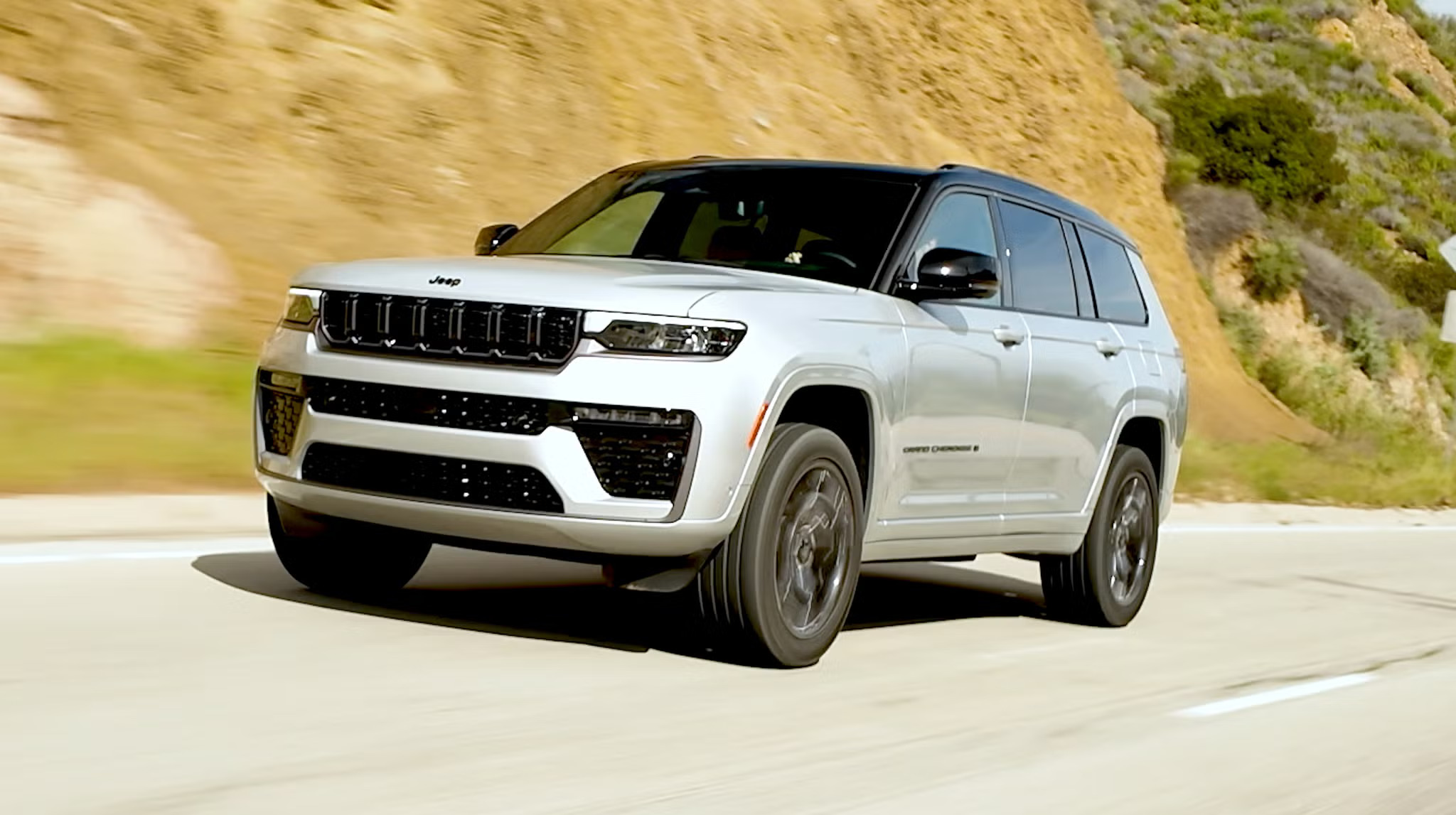
Jeep makes the third-row choice especially straightforward. The standard Grand Cherokee remains a five-passenger SUV, while the stretched Grand Cherokee L is the version designed for three-row duty. Instead of requiring every Grand Cherokee buyer to carry around seats they may never use, Jeep separates the two configurations by body length and model designation.
For 2027, the standard Grand Cherokee continues with five seats. The refreshed powertrain lineup includes Jeep’s new turbocharged 2.0-liter four-cylinder, producing 324 horsepower and 332 lb-ft of torque, while a 293-horsepower 3.6-liter Pentastar V6 remains available on certain versions.
Using the more powerful turbo-four configuration for the specification comparison, the Grand Cherokee measures 193.5 inches long and 77.5 inches wide. Those dimensions carry into 2027 because the 2027 model follows the recently refreshed version without a complete body redesign.
- Engine Type: 2.0-liter turbocharged inline-four
- Horsepower: 324 hp
- Torque: 332 lb-ft
- Length: 193.5 inches
- Width: 77.5 inches
The two-row vehicle also benefits from being shorter and somewhat easier to maneuver than the Grand Cherokee L. Cargo space behind the second row is about 38 cubic feet, expanding to roughly 71 cubic feet with the rear seats folded.
Jeep continues to offer two distinct seating layouts for the 2027 Grand Cherokee. The standard version seats five across two rows, while the Grand Cherokee L provides an additional third row. Rather than indicating that Jeep removed a seating option for 2027, the two-row arrangement remains the standard configuration for the regular Grand Cherokee.
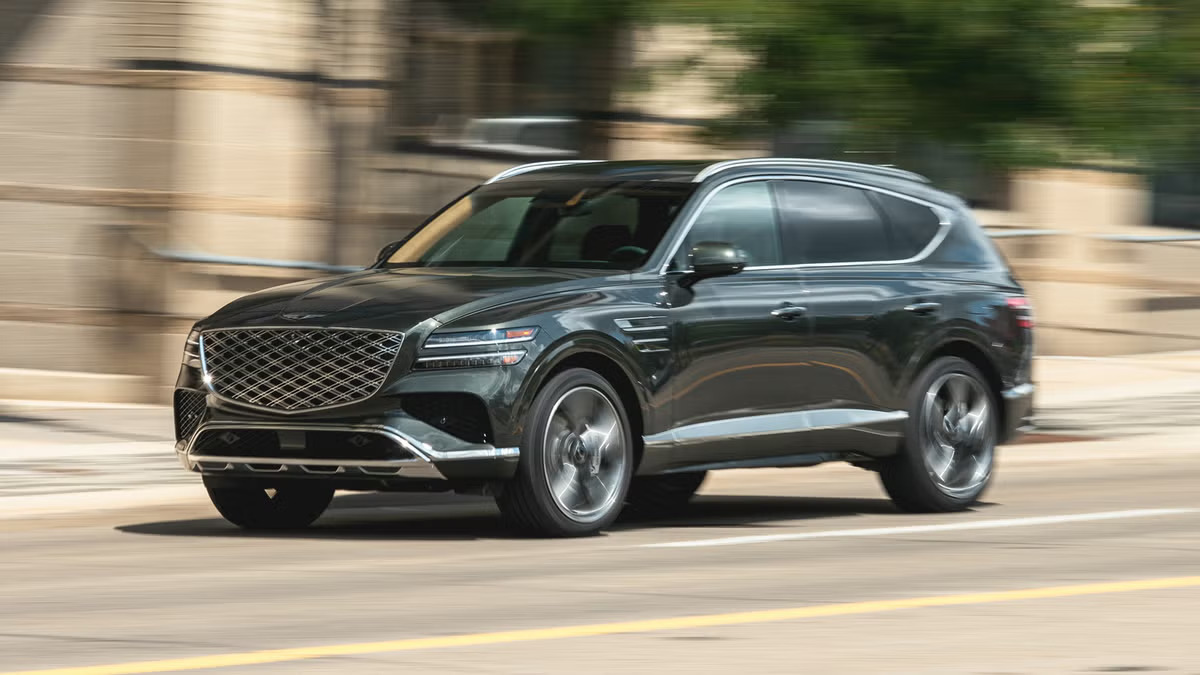
8. 2027 Genesis GV80 3.5T Prestige Black
Genesis takes a different approach from most brands by shifting almost the entire 2027 GV80 lineup toward three-row seating. For the 2027 model year, Genesis makes the third row standard across all GV80 trims with one exception. The 3.5T Prestige Black, positioned as the range-topping appearance package, continues to offer a five-passenger layout instead of the larger seating configuration.
The Prestige Black uses Genesis’ 3.5-liter twin-turbocharged V6, producing 375 horsepower and 391 lb-ft of torque. An eight-speed automatic and all-wheel drive complete the powertrain. Official 2027 Genesis specifications list the GV80 at 194.5 inches long and 77.8 inches wide, and the company’s configuration data identifies the Prestige Black specifically with seating for five.
- Engine Type: 3.5-liter twin-turbocharged V6
- Horsepower: 375 hp
- Torque: 391 lb-ft
- Length: 194.5 inches
- Width: 77.8 inches
The reason for the deletion appears tied more closely to luxury packaging than space limitations. The Prestige Black emphasizes exclusive quilted Nappa leather, special dark interior finishes, and power-adjustable second-row seating. Removing the third row allows that version to operate more like a spacious two-row luxury flagship.
It is an especially interesting contrast because lower GV80 trims now include third-row seats as standard equipment, providing capacity for as many as seven occupants.
For 2027, the change applies only to a specific trim. Genesis has expanded three-row seating across the GV80 lineup, but the Prestige Black remains limited to five seats. This means the GV80 has not lost its third-row option. Instead, the Prestige Black is the only confirmed 2027 configuration that does without it.
Also read: 10 Cars With Water Pumps Buried Behind the Timing Cover