

Car trade-ins can make upgrading to a newer vehicle feel simple, but there is a financial issue that many buyers overlook: negative equity. When a driver owes more on an auto loan than the vehicle is currently worth, the difference does not disappear when the car is traded in.
Instead, it can become part of the next loan, increasing the amount borrowed and potentially raising monthly payments. With a significant share of trade-ins carrying negative equity, understanding how this situation works has become increasingly important for car shoppers.
Knowing the numbers before visiting a dealership can help buyers make more informed decisions and avoid carrying old debt into a new vehicle.
What Is Negative Equity on a Car?
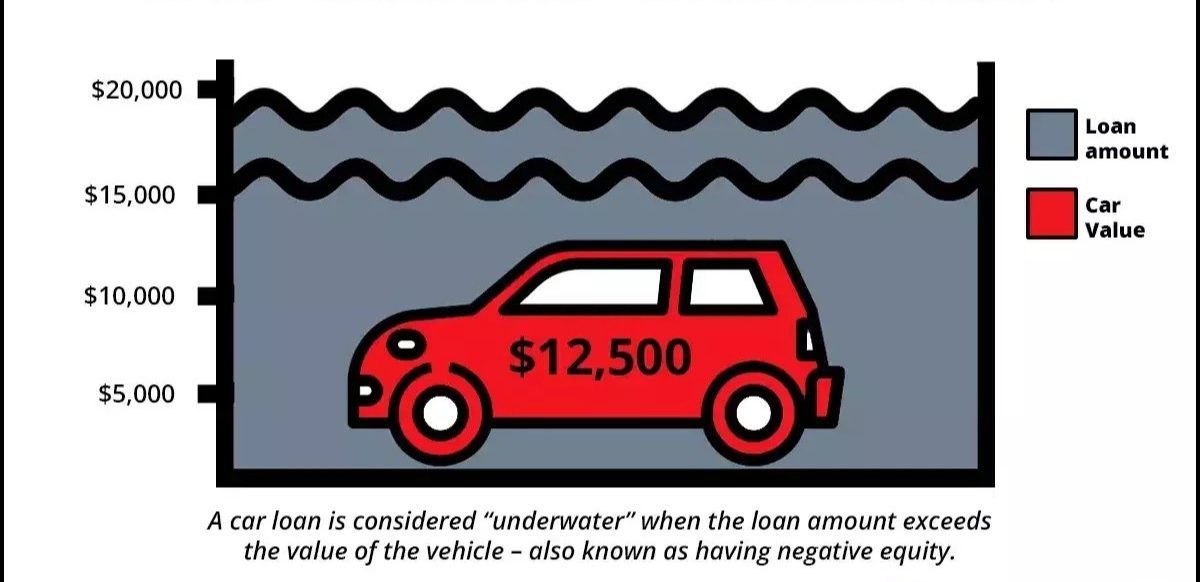
Negative equity occurs when the amount remaining on an auto loan is greater than the current market value of the vehicle. For example, imagine a car is worth $20,000, but the owner still owes $24,000 on the loan.
The difference is $4,000, meaning the owner has $4,000 in negative equity. If the vehicle is traded in for $20,000, the lender still expects the remaining $4,000 to be paid. This creates a financial gap that must be addressed before the old loan can be completely settled.
Negative equity can develop for several reasons. New vehicles often lose value quickly during the early years of ownership, while loan balances may decline at a slower pace. A buyer who makes a small down payment or finances a vehicle for a long period may owe more than the car is worth for a significant portion of the loan term.
Rolling taxes, fees, warranties, or debt from a previous vehicle into a new loan can also increase the amount financed and make it harder for the vehicle’s value to catch up with the outstanding balance.
The size of the down payment can have a major effect on equity. Someone who puts $8,000 down on a $30,000 vehicle begins with substantial equity, while someone who finances nearly the entire purchase price starts with very little financial cushion.
Depreciation can then push the vehicle’s value below the loan balance. Interest also matters because early loan payments generally devote a larger portion of each payment to interest than later payments do. The principal balance may therefore fall more slowly than a buyer expects.
Negative equity is not limited to people who make poor financial decisions. Vehicle values can change because of market conditions, mileage, accidents, mechanical problems, changing consumer preferences, or shifts in demand for particular models.
A vehicle purchased when prices were unusually high may lose value faster if market conditions return to more typical levels. A sudden change in used-car prices can therefore affect borrowers even when they have made every scheduled loan payment.
The important point for buyers is that negative equity represents real debt. Trading in a vehicle does not erase the amount owed to the lender. Before making a trade, consumers should find out their exact loan payoff amount and obtain realistic estimates of the vehicle’s trade-in value.
Comparing these figures provides a clear picture of whether there is positive equity, little equity, or negative equity. That information can make a major difference when deciding whether to replace the vehicle now or continue paying down the existing loan.
Why Are More Car Buyers Carrying Negative Equity?
Longer auto loan terms have made it possible for buyers to reduce their monthly payments by spreading repayment over more years. While this can make a vehicle easier to afford each month, it also means borrowers can take longer to build equity.
A car may depreciate faster than the loan balance declines, particularly during the early years of ownership. When buyers decide to trade before the loan is paid down sufficiently, they may discover that their outstanding balance is higher than the vehicle’s trade-in value.
High vehicle prices can also contribute to the problem. When a buyer finances a more expensive vehicle, the starting loan balance is larger. If the purchase involves a modest down payment, depreciation can quickly create a gap between the loan balance and the car’s market value.
This risk becomes greater when buyers focus heavily on monthly payment amounts rather than the total amount financed, interest rate, loan length, and expected vehicle depreciation.
The practice of carrying existing debt into a new vehicle can make the situation even more complicated. Suppose a driver has $5,000 in negative equity and trades in the vehicle for a newer car. If the buyer does not pay that $5,000 separately, the amount may be added to the financing for the replacement vehicle.
The new loan would then cover the newer car plus the old debt, before accounting for taxes, fees, interest, and other financed costs. The borrower starts the next loan already owing more than the new vehicle’s purchase price.
Trade-in decisions can also be influenced by changing household needs. A growing family may need a larger vehicle, while a change in employment may require a more reliable or fuel-efficient model.
Some owners simply want to replace an aging vehicle before repair costs increase. These circumstances can encourage people to trade before they have built enough equity. When that happens, negative equity becomes part of the financial calculation rather than a problem that can be ignored.
How Negative Equity Affects Your Next Car Loan?
The biggest concern with negative equity is that old debt can follow the borrower into a new loan. Consider a buyer who owes $27,000 on a vehicle that a dealership values at $23,000. The buyer has $4,000 in negative equity.
If that amount is rolled into financing for a replacement vehicle priced at $35,000, the buyer could end up financing roughly $39,000 before taxes, fees, and other costs. The new vehicle may be worth $35,000 at purchase, while the loan begins at a substantially higher balance.
Rolling negative equity into a new loan can increase the monthly payment, but the impact depends on the interest rate and repayment period. Extending the loan term can reduce the monthly increase, yet it also means the borrower may pay interest on the additional debt for several years.
A lower monthly payment can therefore hide a higher total borrowing cost. Buyers should compare the total amount they will repay rather than judging the deal only by its monthly payment.
Negative equity can also make the next trade-in more difficult. If the replacement vehicle depreciates while the borrower is still carrying the previous debt, the new loan balance may remain above the vehicle’s value.
A borrower who repeatedly trades vehicles while carrying unpaid equity can accumulate larger financing gaps with every transaction. This cycle can make it increasingly difficult to reach a point where the vehicle is worth more than the amount owed.
A strong credit score and competitive interest rate can help reduce borrowing costs, but they do not eliminate negative equity. The underlying issue is the difference between the loan balance and the vehicle’s value. Buyers should therefore avoid assuming that a dealer’s offer to pay off the existing loan means the debt has disappeared. If the trade-in value does not cover the payoff amount, the shortfall has to be covered through cash, additional financing, or another arrangement.
How Car Buyers Can Avoid or Reduce Negative Equity
The simplest way to reduce the risk of negative equity is to avoid borrowing more than necessary. A larger down payment creates an equity cushion from the beginning of the loan. Buyers who have a trade-in with positive equity can also use that value toward the next purchase.
Paying additional principal when financially practical can help reduce the loan balance faster, though consumers should first make sure they have adequate emergency savings and understand their loan terms.
Choosing a reasonably priced vehicle can also make a difference. Buyers sometimes qualify for a large loan and assume they should use the full amount available.
A lender’s approval, however, does not necessarily mean the resulting payment fits comfortably within a household budget. Selecting a vehicle based on total affordability rather than the maximum approved amount can reduce financial pressure and leave more room for savings, maintenance, insurance, and unexpected expenses.
Shopping for the right loan is equally important. Interest rates can vary between lenders, and even a modest difference in the annual percentage rate can affect the total cost of a long-term loan. Buyers should compare financing offers before entering negotiations over the vehicle.
Getting preapproved can provide a useful benchmark and may make it easier to evaluate dealership financing. The loan term deserves attention as well. A shorter term usually results in higher monthly payments but can help build equity faster and reduce total interest.
If a buyer already has negative equity, waiting may be financially sensible when the current vehicle is reliable and affordable to keep. Continuing regular payments reduces the loan balance, while making extra principal payments can accelerate that process if the borrower’s finances allow it.
Meanwhile, the vehicle may continue to provide transportation without creating a new loan. Waiting does not guarantee that the vehicle will gain value, but it can reduce the amount of debt that needs to be addressed at the next trade.
What Should You Do If You Already Have Negative Equity?
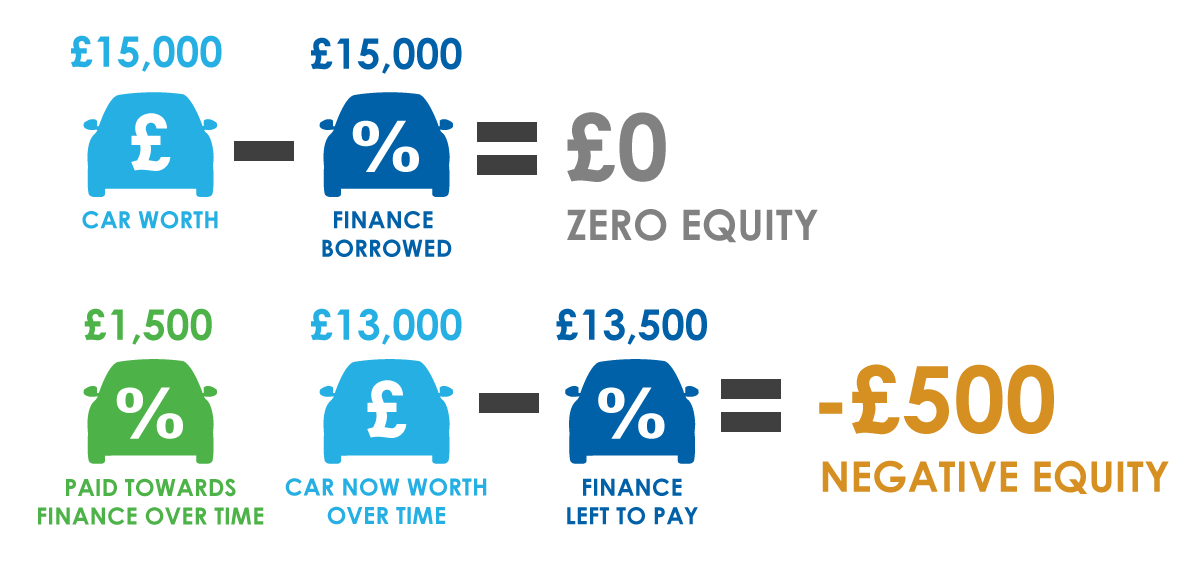
Having negative equity does not automatically mean a borrower is in serious financial trouble. The right response depends on the size of the gap, the vehicle’s condition, the loan terms, household finances, and the reason for considering a trade.
If the car is reliable and the monthly payment is manageable, keeping it until more of the principal is paid down may be the most straightforward approach. There is no requirement to trade a vehicle simply because a newer model is available.
If replacing the vehicle is necessary, buyers should calculate the negative-equity amount before visiting a dealership. Requesting a current payoff quote from the lender provides a more accurate figure than relying on an old loan statement.
The buyer can then compare that amount with several estimates of the vehicle’s current value. This calculation reveals the actual shortfall and helps prevent unpleasant surprises during negotiations.
Paying the negative-equity difference in cash can prevent the old debt from being added to the next loan, provided doing so does not leave the buyer without adequate savings.
For borrowers who cannot cover the gap, delaying the purchase may be worth considering. If the current vehicle is unsafe or requires repairs that are no longer economically sensible, the decision becomes more complicated. In that situation, the buyer may need to balance transportation needs against the cost of carrying the existing debt.
Buyers should also be cautious about offers that appear to make negative equity disappear. A dealership may advertise that it will pay off a customer’s existing loan, but the financial details matter.
The amount may be reflected elsewhere in the transaction through a higher vehicle price, larger amount financed, or other charges.
Consumers should compare the complete purchase agreement rather than focusing on promotional language. Asking for the numbers in writing can make the structure of the transaction much easier to understand.
Also read: 5 Cars With the Highest Theft Rates in New Mexico, 5 With the Lowest
