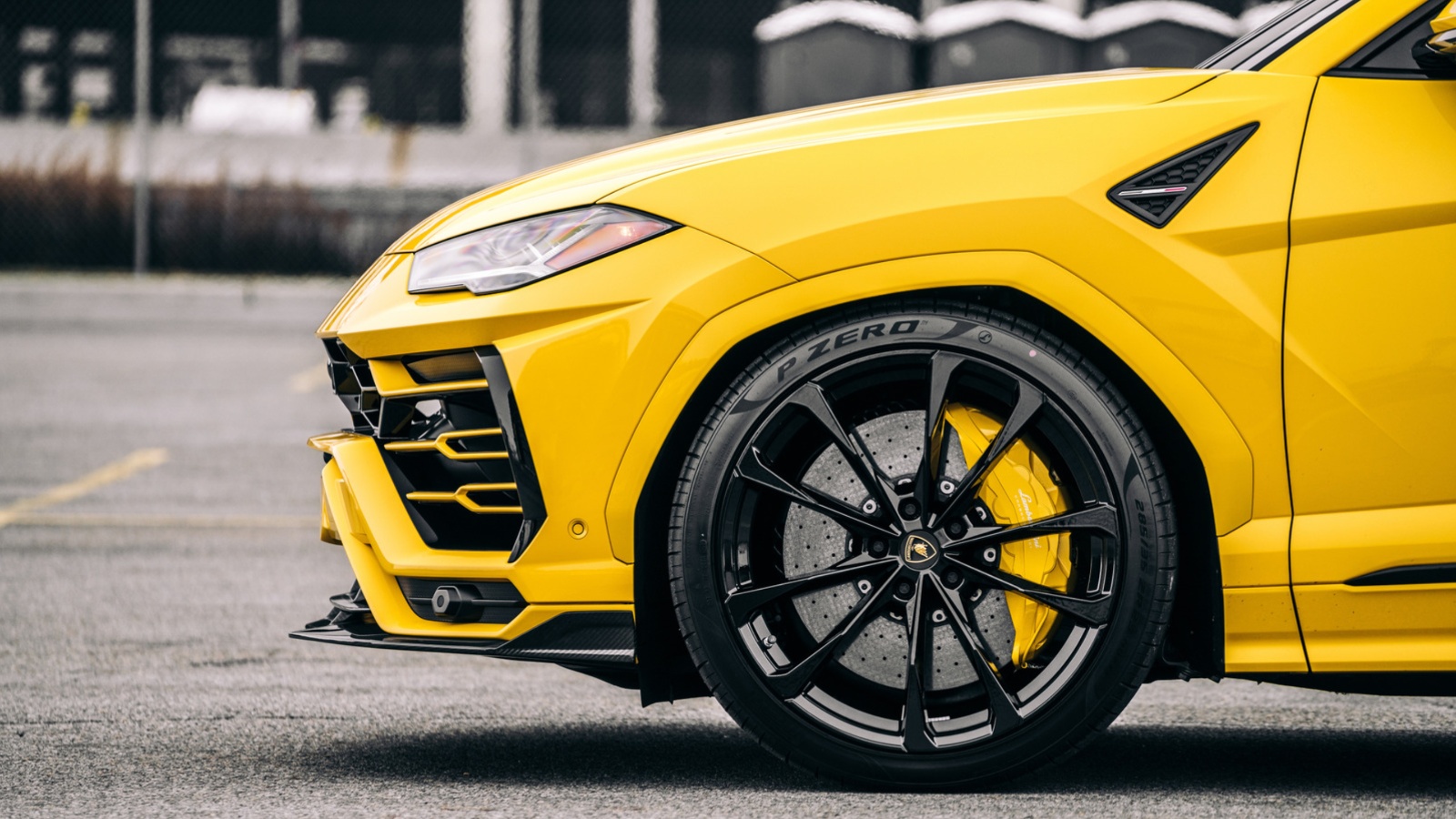
Brake rotors have become much larger as modern production cars have grown heavier, faster, and more powerful. A 300 mm disc was once considered substantial, but today’s fastest luxury sedans, EVs, and hypercars can come equipped with factory rotors measuring 420 to 440 mm, which is more than 17 inches across.
The larger size gives the brakes greater leverage and provides additional surface area to absorb and release the tremendous heat generated during repeated high-speed stops.
This list focuses on notable series-production road cars with exceptionally large factory-installed or factory-option brake systems, ranked primarily by front rotor diameter. Carbon-ceramic systems dominate because they tolerate extreme temperatures while reducing unsprung weight compared with similarly sized iron discs.
Several cars tie at the same diameter, so the order within those ties is not meant to imply one braking system is superior. Specifications refer to representative versions associated with the brake setup.
1. Porsche Panamera Turbo S E-Hybrid – 440 mm
The Porsche Panamera Turbo S E-Hybrid demonstrates why enormous brakes are no longer limited to lightweight two-seat supercars. This luxury four-door combines a twin-turbocharged V8 with plug-in-hybrid assistance to produce approximately 771 horsepower and 737 lb-ft of system torque. That performance arrives in a substantial luxury sedan capable of supercar-level acceleration.
Porsche equips the car with its Porsche Ceramic Composite Brake system, using massive 440-mm front rotors and 410-mm rear rotors. Those front discs measure roughly 17.3 inches across, making them larger in diameter than the complete wheels fitted to many economy cars from previous decades.
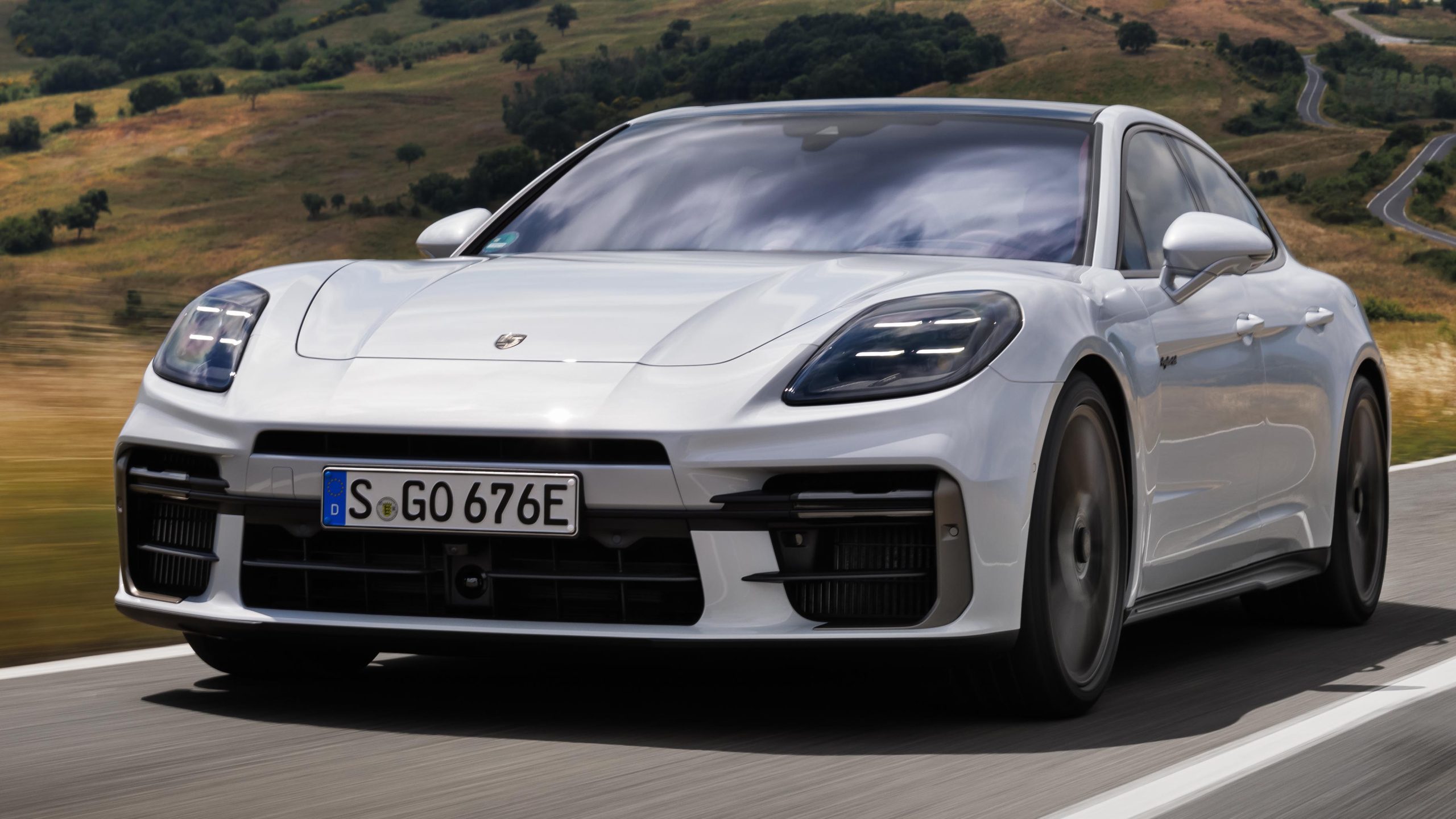
The benefit goes beyond delivering one dramatic emergency stop. A powerful hybrid sedan carries considerable weight and can generate enormous amounts of kinetic energy when repeatedly slowing from high speeds. Carbon-ceramic discs provide the thermal capacity needed to manage that energy while remaining resistant to fade.
Ceramic construction also reduces unsprung mass compared with equivalently large iron rotors. That can benefit steering response, suspension performance, and ride quality despite the enormous size of the braking hardware.
The Panamera Turbo S E-Hybrid therefore illustrates how modern performance sedans have evolved. Its brakes would once have looked appropriate only on an exotic racing-derived machine, yet they now sit beneath a practical four-door capable of carrying passengers and luggage in luxury.
- Engine: 4.0-liter twin-turbocharged V8 plug-in hybrid
- Torque: 737 lb-ft
- Horsepower: 771 hp
- Length/Width: approximately 198.9 / 76.3 inches
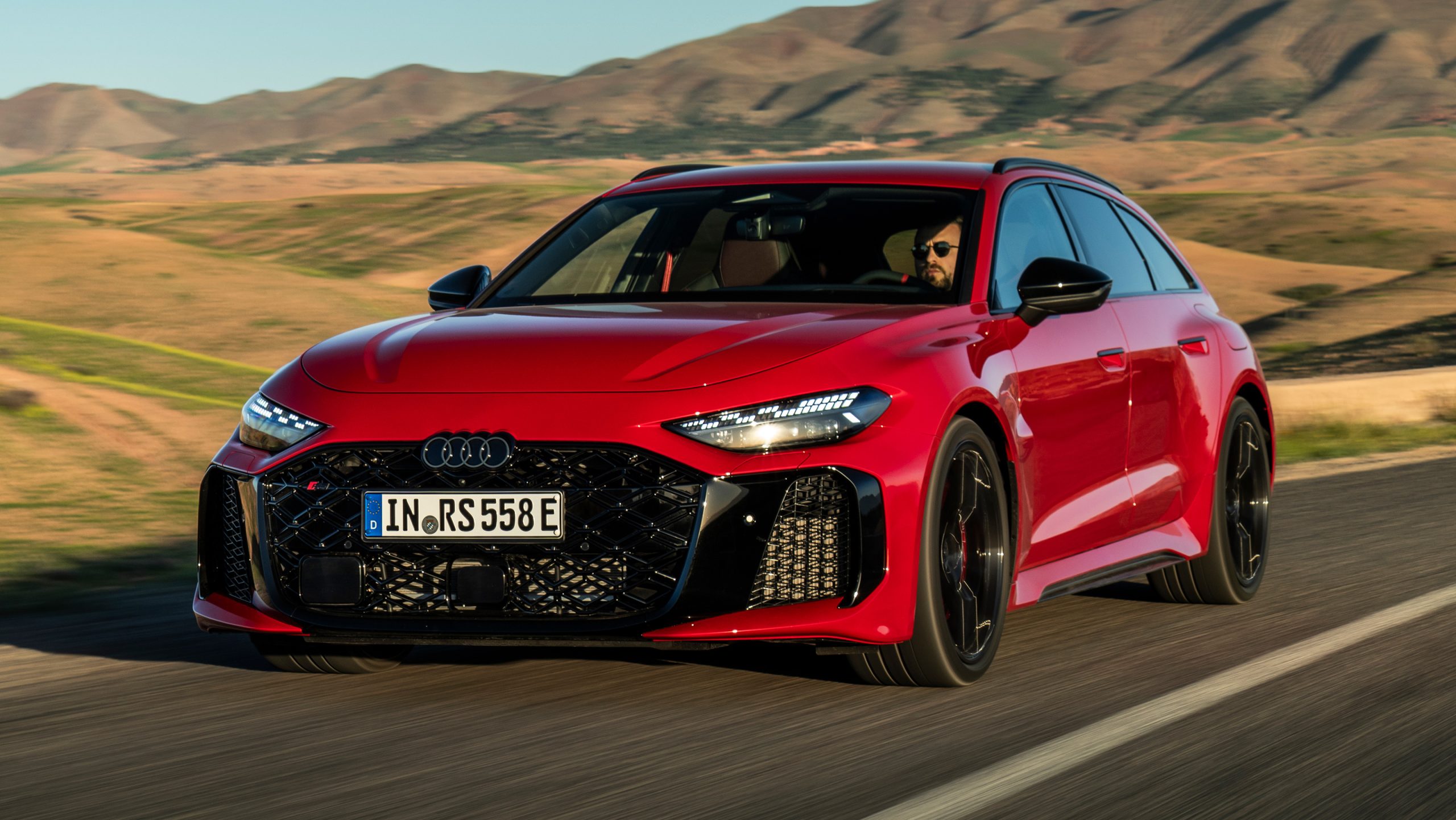
2. Audi RS 5 – 440 mm
The newest Audi RS 5 moves into extraordinary braking territory with its available RS ceramic brake system, which uses approximately 440-mm front discs. That puts the RS 5 alongside far more exotic and expensive performance cars in terms of factory rotor size.
The size makes sense because the latest RS 5 has changed significantly. Audi combines a 2.9-liter twin-turbocharged V6 with plug-in-hybrid assistance, creating more output than earlier generations while also adding the weight associated with a battery, electric motor, and hybrid hardware.
The standard brakes are already substantial, but the ceramic setup takes performance further by using larger rotors while keeping the brake system lighter than comparable large steel discs.
Cutting unsprung and rotating weight can help the suspension react more quickly to bumps and other road imperfections. It can also contribute to sharper steering response and a more precise feel behind the wheel.
Carbon-ceramic construction also offers superior heat resistance during repeated high-speed stops. This matters on a high-performance hybrid because regenerative braking cannot always absorb all the energy generated during track driving. When the battery is unable to accept additional regeneration or the driver requests maximum deceleration, the friction brakes must handle tremendous loads.
The RS 5 demonstrates a broader trend in modern performance cars: electrification produces more power but frequently more weight as well. Engineers therefore need larger and more advanced braking systems to keep stopping capability proportional to acceleration.
A 440-mm rotor on a production Audi would have seemed extraordinary not long ago. Today it is part of the engineering required to manage next-generation hybrid performance.
- Engine: 2.9-liter twin-turbocharged V6 plug-in hybrid
- Torque: approximately 608 lb-ft combined
- Horsepower: approximately 630 hp combined
- Length/Width: approximately 190 / 76 inches
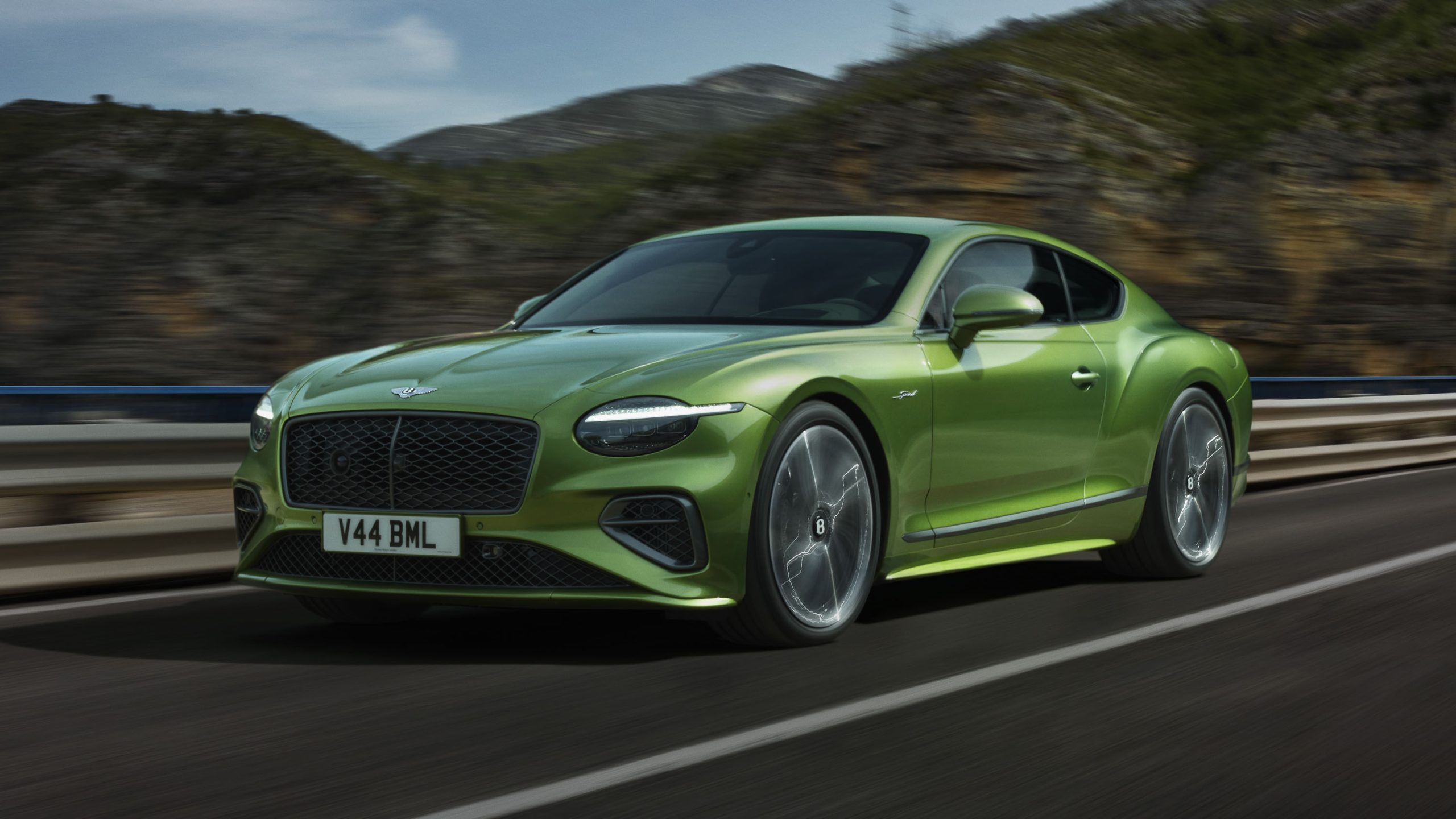
3. Bentley Continental GT Speed – 440 mm
The Bentley Continental GT Speed may present itself as a luxurious grand tourer, but its braking hardware is closer to what buyers might expect from a hypercar. The W12-powered generation offered a carbon-ceramic brake package with enormous 440-mm front rotors and ten-piston front calipers.
That scale becomes understandable once the Bentley’s mission is considered. The Continental GT Speed is a heavy, extensively equipped luxury coupe capable of traveling beyond 200 mph. Bringing such a large and powerful vehicle down from extreme speeds places enormous thermal demands on the brakes.
Its 6.0-liter twin-turbocharged W12 produces roughly 650 horsepower and 664 lb-ft of torque, meaning acceleration is effortless despite the car’s substantial mass. With that much speed and weight, a conventional brake package would need to be exceptionally large to provide repeated fade-resistant stopping performance.
Carbon-ceramic discs solve several problems simultaneously. They tolerate extremely high operating temperatures and reduce unsprung weight compared with similarly sized iron rotors. That is especially useful on a grand tourer, where engineers must balance high-speed stability and braking performance with ride comfort and refinement.
The sheer visual scale of the brakes is impressive as well. Even behind large wheels, the front rotors fill much of the available space.
The Continental GT Speed proves that huge brake rotors are not exclusively associated with track-focused supercars. High-speed luxury vehicles face equally serious braking challenges because they combine powerful engines with far greater curb weight and are expected to stop repeatedly without sacrificing comfort or confidence.
- Engine: 6.0-liter twin-turbocharged W12
- Torque: 664 lb-ft
- Horsepower: 650 hp
- Length/Width: approximately 190.9 / 76.9 inches
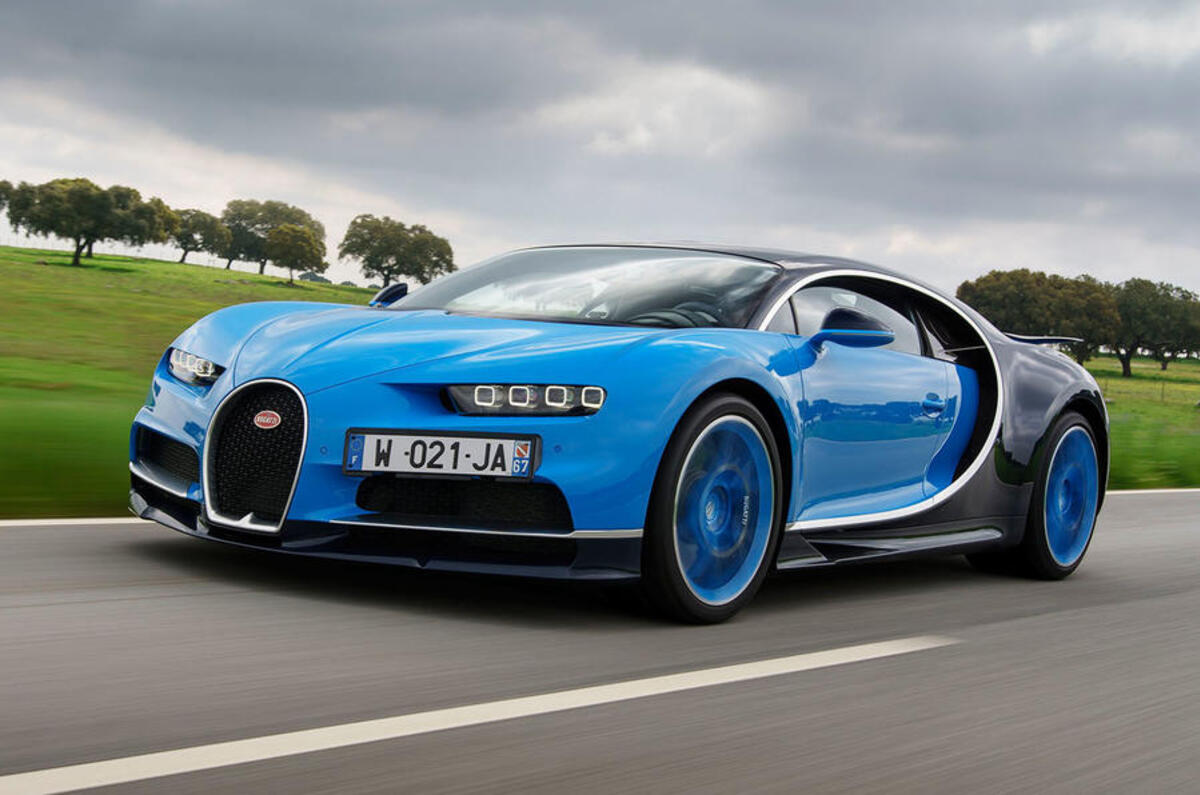
4. Bugatti Chiron – 420 mm
Few road cars place greater demands on their brake systems than the Bugatti Chiron. Its quad-turbocharged W16 develops roughly 1,500 horsepower and 1,180 lb-ft of torque, allowing the car to reach speeds that most production vehicles cannot approach.
To control that performance, Bugatti uses approximately 420-mm carbon-ceramic front rotors and 400-mm rear rotors. Large multi-piston calipers clamp those discs, while the active rear wing can also move into an air-brake position under heavy deceleration.
The forces involved become extreme as speed rises. Kinetic energy increases dramatically with velocity, so slowing from 250 mph is a completely different engineering challenge from stopping an ordinary car from highway speed.
During such braking events, enormous amounts of energy are converted into heat. The rotor, pad, caliper, fluid, cooling ducts, tires, and aerodynamics all have to work together without exceeding their operating limits.
The Chiron’s carbon-ceramic discs are therefore functional necessities rather than visual decoration. They provide the thermal capacity and fade resistance required for repeated high-speed deceleration while also keeping rotating mass under control.
Interestingly, several newer luxury sedans and EVs now use rotors that equal or exceed the Chiron’s 420-mm diameter. That does not make the Bugatti system less impressive. Instead, it shows how quickly production-car braking requirements have escalated as vehicles become heavier and more powerful.
The Chiron remains one of the clearest examples of a road-car brake system engineered specifically around extreme speed.
- Engine: 8.0-liter quad-turbocharged W16
- Torque: approximately 1,180 lb-ft
- Horsepower: 1,500 hp
- Length/Width: approximately 178.9 / 80.2 inches
5. BMW M5 – 420 mm
The current BMW M5 is another example of electrification creating the need for much larger brakes. Its plug-in-hybrid drivetrain combines a 4.4-liter twin-turbocharged V8 with electric assistance to deliver approximately 717 horsepower and 738 lb-ft of system torque.
That performance is exceptional, but the hybrid system also makes the latest M5 substantially heavier than earlier generations. Controlling that mass during repeated high-speed stops requires serious braking hardware.
BMW equips the car with large compound brakes as standard, while the optional M Carbon Ceramic brake system uses approximately 420-mm front rotors. Despite their greater diameter and thermal capacity, the ceramic brakes can weigh substantially less than comparable iron systems.

That reduction in unsprung weight is important. Heavy wheels, tires, and brakes make it harder for the suspension to respond quickly to bumps and changing road surfaces. Reducing rotor mass can therefore benefit both handling and ride quality.
The ceramic material also resists fade during prolonged high-temperature use. This is particularly relevant for the M5 because BMW expects the car to function as both a comfortable luxury sedan and a track-capable performance machine.
A driver may spend the morning commuting quietly in hybrid mode and the afternoon repeatedly braking from triple-digit speeds on a circuit. The brake system has to perform convincingly in both situations.
A 420-mm factory carbon-ceramic rotor on a five-seat executive sedan shows just how far modern supersedans have progressed beyond the performance levels once associated with exotic sports cars.
- Engine: 4.4-liter twin-turbocharged V8 plug-in hybrid
- Torque: 738 lb-ft
- Horsepower: 717 hp
- Length/Width: approximately 200.6 / 77.6 inches
Also read: 5 Cars With Cheap Window Regulators and 5 Over $600
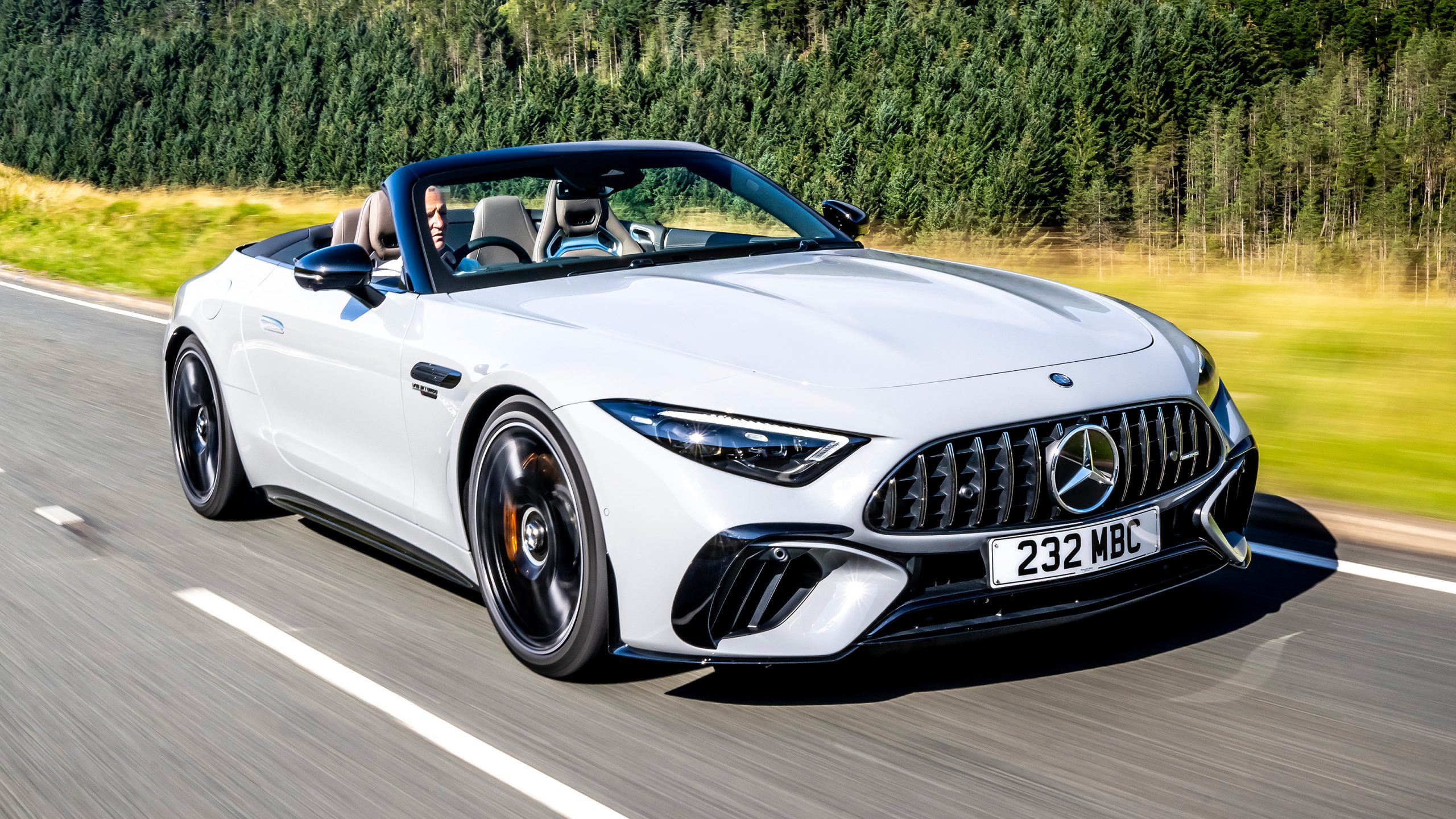
6. Mercedes-AMG SL 63 S E PERFORMANCE – 420 mm
The Mercedes-AMG SL 63 S E PERFORMANCE receives an exceptionally large braking system to match its extreme hybrid output. Its carbon-ceramic front rotors measure approximately 420 mm in diameter and 40 mm thick, while six-piston fixed calipers provide substantial clamping force.
The reason becomes obvious after looking at the drivetrain. A 4.0-liter twin-turbocharged V8 works with an electric motor to produce roughly 805 horsepower, with total system torque reaching approximately 1,047 lb-ft under certain operating conditions.
That performance comes with considerable mass. The SL carries its battery, electric motor, all-wheel-drive system, sophisticated suspension, luxury equipment, and structural reinforcements while still being expected to perform like a supercar.
Carbon-ceramic brakes help address the problem. Their high-temperature resistance allows the car to repeatedly shed speed without suffering the severe fade that can affect conventional braking systems under prolonged track use.
Ceramic construction also reduces mass. Less weight at each wheel helps the suspension control movement more effectively and can improve both steering response and ride comfort.
The size is remarkable in physical terms. A 420-mm disc measures around 16.5 inches in diameter, nearly equal to the entire wheel diameter found on many ordinary compact cars.
In the SL 63 S E PERFORMANCE, however, that scale is entirely appropriate. The car combines convertible luxury with acceleration and top-speed capability that would once have belonged exclusively to dedicated supercars.
Its giant factory rotors are therefore a direct reflection of the modern performance arms race: more horsepower, more weight, and consequently a much greater need for braking capacity.
- Engine: 4.0-liter twin-turbocharged V8 plug-in hybrid
- Torque: up to approximately 1,047 lb-ft
- Horsepower: approximately 805 hp
- Length/Width: approximately 185.2 / 75.4 inches
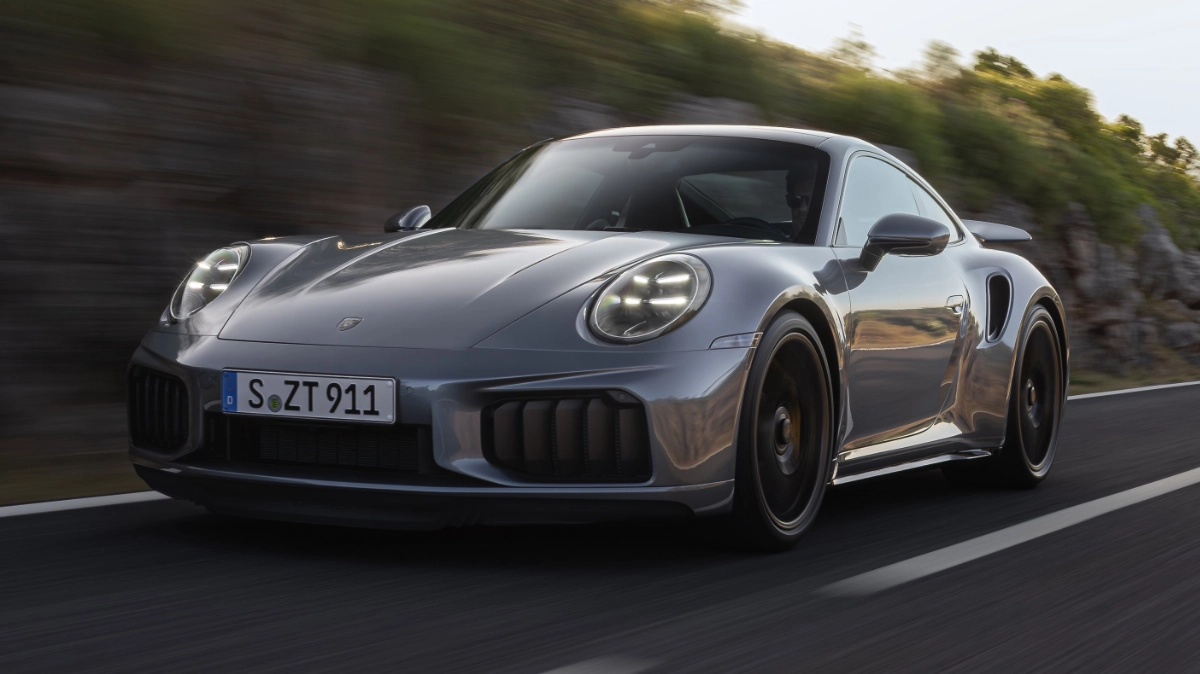
7. Porsche 911 Turbo S – 420 mm
The Porsche 911 Turbo S has long been known for combining immense acceleration with braking performance that can be repeated again and again. On the 992-generation car, Porsche increased the front ceramic brake rotor diameter to approximately 420 mm, pairing the discs with massive ten-piston front calipers.
The 3.8-liter twin-turbocharged flat-six produces roughly 640 horsepower and 590 lb-ft of torque, enabling acceleration that rivals many hypercars despite the 911 retaining a relatively compact footprint.
The braking challenge is particularly interesting because of the 911’s rear-engine configuration. Much of its static mass sits behind the driver, yet aggressive braking transfers considerable load toward the front axle. Porsche therefore has to carefully balance rotor size, caliper design, tire grip, aerodynamics, ABS programming, and suspension geometry.
The carbon-ceramic system is designed not only to stop the car quickly once but also to maintain performance over repeated high-speed braking events.
That distinction matters on a vehicle capable of exceeding 200 mph and being driven hard on a race circuit. A brake system can deliver an excellent first stop yet become inadequate if temperatures climb rapidly during consecutive laps.
Ceramic rotors also help reduce unsprung and rotating mass, contributing to the responsive steering and suspension behavior expected from a 911.
Making such a large ceramic system standard on the Turbo S highlights the performance level Porsche expects customers to use. These brakes are not simply an expensive visual option. They are fundamental to ensuring that stopping capability keeps pace with the extraordinary acceleration.
- Engine: 3.8-liter twin-turbocharged flat-six
- Torque: 590 lb-ft
- Horsepower: 640 hp
- Length/Width: approximately 178.6 / 74.8 inches
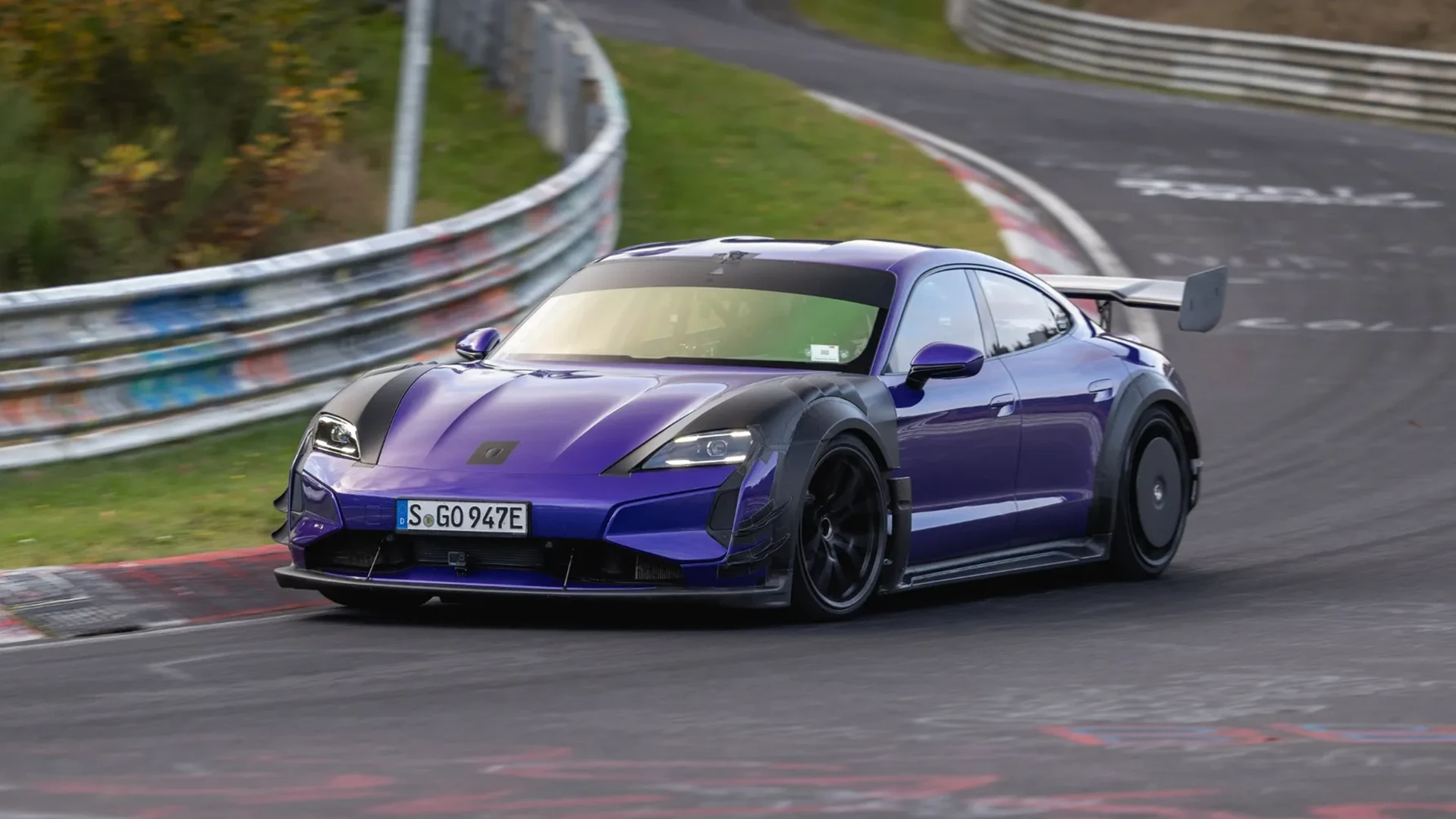
8. Porsche Taycan Turbo GT – 420 mm
Electric performance cars create a unique braking challenge. Regenerative braking can recover significant energy during normal driving, reducing use of the conventional friction brakes. During maximum-performance driving, however, a heavy EV still needs an enormous mechanical braking system.
The Porsche Taycan Turbo GT uses approximately 420-mm front carbon-ceramic discs paired with ten-piston aluminum monobloc calipers. Rear ceramic rotors measure around 410 mm.
The Turbo GT can produce more than 1,000 horsepower under maximum-output conditions, giving the four-door electric car acceleration that rivals some of the quickest production vehicles ever built.
Battery mass is the other side of the equation. Even with careful lightweight engineering, a high-performance EV carries a substantial battery pack. When slowing from high speed, all that vehicle mass contributes to the energy the braking system must control.
Regeneration can handle much of ordinary deceleration, but it cannot completely replace friction brakes during repeated maximum-effort stops. Battery state of charge, temperature, and system limits can all reduce the amount of regenerative braking available.
The massive ceramic discs become especially valuable during track driving, where repeated hard braking generates extreme heat. Porsche also worked to reduce brake-system weight, recognizing that lowering unsprung mass is particularly beneficial for an EV that already carries significant weight.
The Taycan Turbo GT illustrates how braking technology has had to evolve alongside electric performance. Adding more powerful motors is comparatively easy. Ensuring the car can repeatedly stop from the resulting speeds without overheating the brakes is a much more demanding engineering challenge.
- Engine: Dual electric motors
- Torque: approximately 988 lb-ft at maximum output
- Horsepower: up to approximately 1,019 hp with Launch Control
- Length/Width: approximately 195.6 / 78.7 inches
9. Audi RS e-tron GT – 420 mm
The Audi RS e-tron GT helped bring supercar-sized brakes into the electric luxury-sedan market. Audi offered a top-level carbon-ceramic braking system using approximately 420-mm front rotors with ten-piston front calipers.
Even the standard high-performance brake system was already substantial, so moving to carbon ceramics was aimed at drivers requiring even greater heat resistance and lower unsprung weight.
The original RS e-tron GT produced up to approximately 637 horsepower with boost and around 612 lb-ft of torque, allowing the large four-door EV to accelerate with remarkable force.
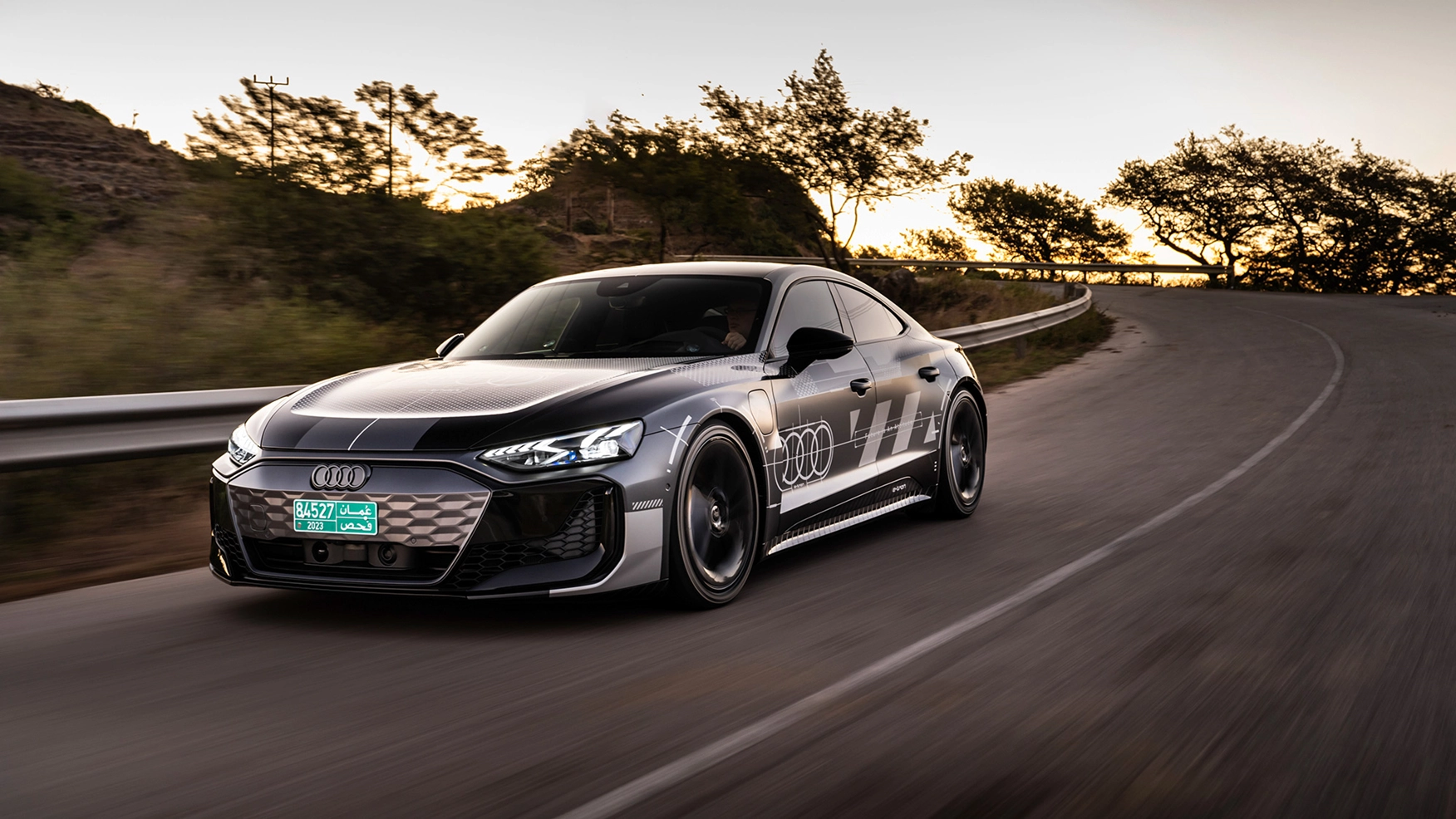
Instant electric torque places high demands on chassis and braking components. More importantly, the vehicle carries a substantial battery pack that contributes significantly to curb weight.
Under normal conditions, regenerative braking can handle much of the slowing process. That reduces wear on pads and rotors during ordinary commuting. Under track conditions, however, the friction brakes have to handle repeated high-energy stops when regeneration is insufficient or unavailable.
Large carbon-ceramic rotors provide excellent thermal capacity while weighing less than equivalently sized iron discs. Reducing rotating mass can help steering response and suspension behavior, benefits that are especially valuable on a heavy electric grand tourer.
The RS e-tron GT was therefore one of the first practical electric sedans to use braking hardware more commonly associated with exotic supercars.
Newer performance EVs now make significantly more power, but the Audi helped establish the idea that 420-mm ceramic rotors could belong on a four-door electric road car rather than only a track-oriented hypercar.
- Engine: Dual electric motors
- Torque: approximately 612 lb-ft
- Horsepower: up to approximately 637 hp with boost
- Length/Width: approximately 196.1 / 77.3 inches
10. Chevrolet Corvette ZR1X – 16.5 Inches, About 419 mm
The Chevrolet Corvette ZR1X narrowly misses the 420-mm category numerically, but its braking system is unusual for another reason: the front and rear rotors are both approximately 16.5 inches in diameter, or about 419 mm.
Using similarly enormous discs at all four corners makes the ZR1X especially impressive. The carbon-ceramic rotors are paired with large multi-piston calipers designed to provide the stopping performance needed for an electrified Corvette producing hypercar levels of power.
The drivetrain combines a 5.5-liter twin-turbocharged V8 producing 1,064 horsepower with an electric motor driving the front wheels. Total output reaches approximately 1,250 horsepower.
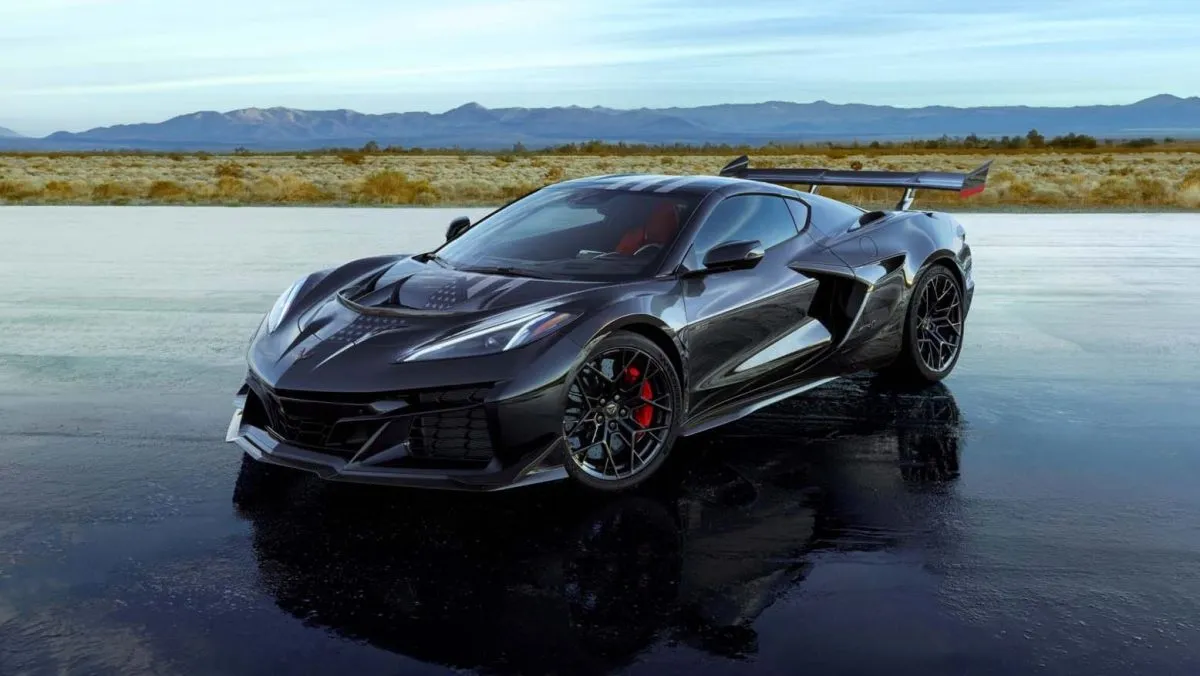
The V8 alone produces around 828 lb-ft of torque, while the front electric motor contributes additional torque at the front axle. That creates extraordinary acceleration while giving the ZR1X an all-wheel-drive advantage during launches.
Huge brakes are necessary because a car capable of accelerating this quickly can repeatedly arrive at braking zones carrying tremendous amounts of kinetic energy.
Carbon-ceramic construction helps handle that heat while keeping rotor mass manageable. Large calipers distribute clamping force across substantial pad areas, improving consistency under repeated circuit use.
The ZR1X also shows how far American production-car brake technology has progressed. Corvette brakes were once relatively simple compared with European exotics. The newest high-performance variants now use systems directly comparable with the largest factory setups from Porsche, Bentley, Audi, and Bugatti.
At nearly 419 mm on both axles, the ZR1X deserves a place among the largest factory brake systems fitted to any production road car.
- Engine: 5.5-liter twin-turbocharged V8 plus front electric motor
- Torque: 828 lb-ft from V8; additional 145 lb-ft from front motor
- Horsepower: 1,250 hp combined
- Length/Width: approximately 184.6 / 79.7 inches
Also read: 8 SUVs That Lost More Than Half Their Value in 12 Months