
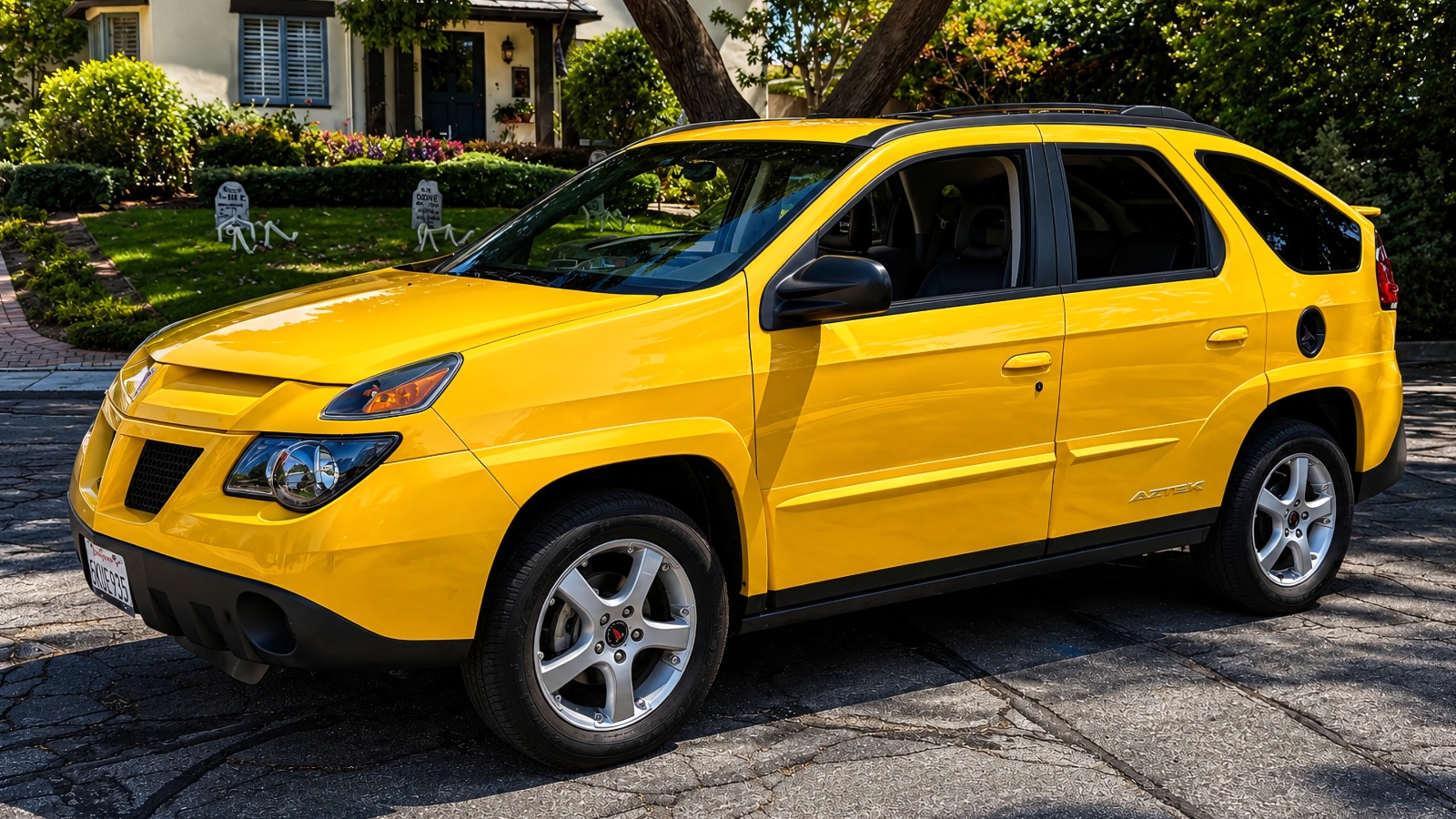
The Pontiac Aztek is remembered for its unusual styling, but there was much more to this strange early crossover than its controversial appearance. Beneath its plastic body cladding and sharply angled exterior, the Aztek offered a clever collection of camping features that made it surprisingly useful for outdoor trips.
Buyers could order a Camping Lifestyle Package containing a tent and air mattress, while the vehicle itself offered cargo solutions designed around recreation.
The result was a family vehicle that could transform a simple parking spot into a basic campsite. For its era, the idea was remarkably creative, even if the Aztek never received the appreciation Pontiac hoped it would.
The Pontiac Aztek Was More Than Its Looks
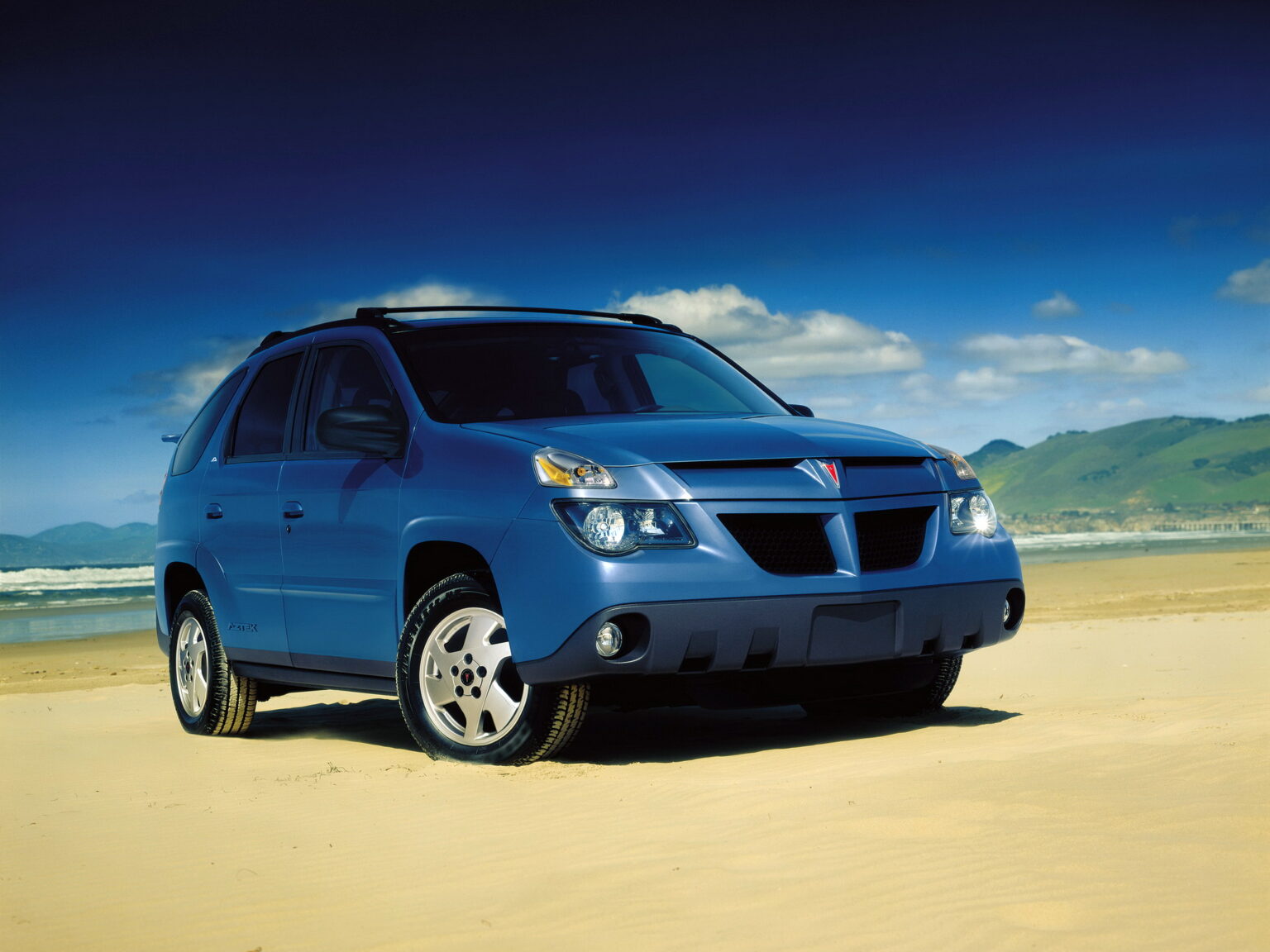
When the Pontiac Aztek arrived for the 2001 model year, its styling immediately became the subject of discussion. The tall body, pronounced wheel arches, dark exterior trim, and unusual front end gave it an appearance that stood apart from conventional sport utility vehicles.
Many shoppers were not prepared for such an unconventional design, and the Aztek eventually became famous for its appearance rather than for the engineering ideas hidden inside it. That reputation has lasted for decades, yet it tells only part of the story. The Aztek was developed around the idea of combining everyday transportation with recreation, cargo carrying and outdoor activities.
Pontiac clearly wanted the Aztek to appeal to active buyers. Rather than simply creating a larger family vehicle, the company filled it with features intended to make weekends, road trips and outdoor adventures easier. The rear cargo area could be configured in several ways, and the vehicle was designed to accommodate bulky equipment.
A sliding cargo tray was available, while other storage solutions helped owners organize equipment. The interior could also handle a standard 4-by-8-foot sheet of plywood, a useful demonstration of how much attention engineers had paid to practical cargo space.
The camping equipment was perhaps the most memorable expression of that philosophy. Pontiac offered a Camping Lifestyle Package that included a camper tent and an air mattress with a manual self-inflator. This was not simply a generic tent thrown into the options catalog.
The accessories were designed specifically around the Aztek and its rear cargo area, allowing the vehicle to become part of the camping setup. Period Pontiac specifications list the package as an available option, confirming that the tent and mattress were genuine factory-supported equipment rather than an aftermarket curiosity.
That approach made sense during a period when manufacturers were increasingly interested in crossover vehicles. The Aztek was aimed at people who wanted the flexibility of an SUV without necessarily needing a traditional truck-based vehicle.
Pontiac attempted to give those customers practical equipment for hobbies such as camping, cycling, boating and other outdoor pursuits. Specialized racks and other accessories were available, reinforcing the idea that the Aztek was supposed to be a lifestyle vehicle rather than simply family transportation.
How the Aztek Tent Worked
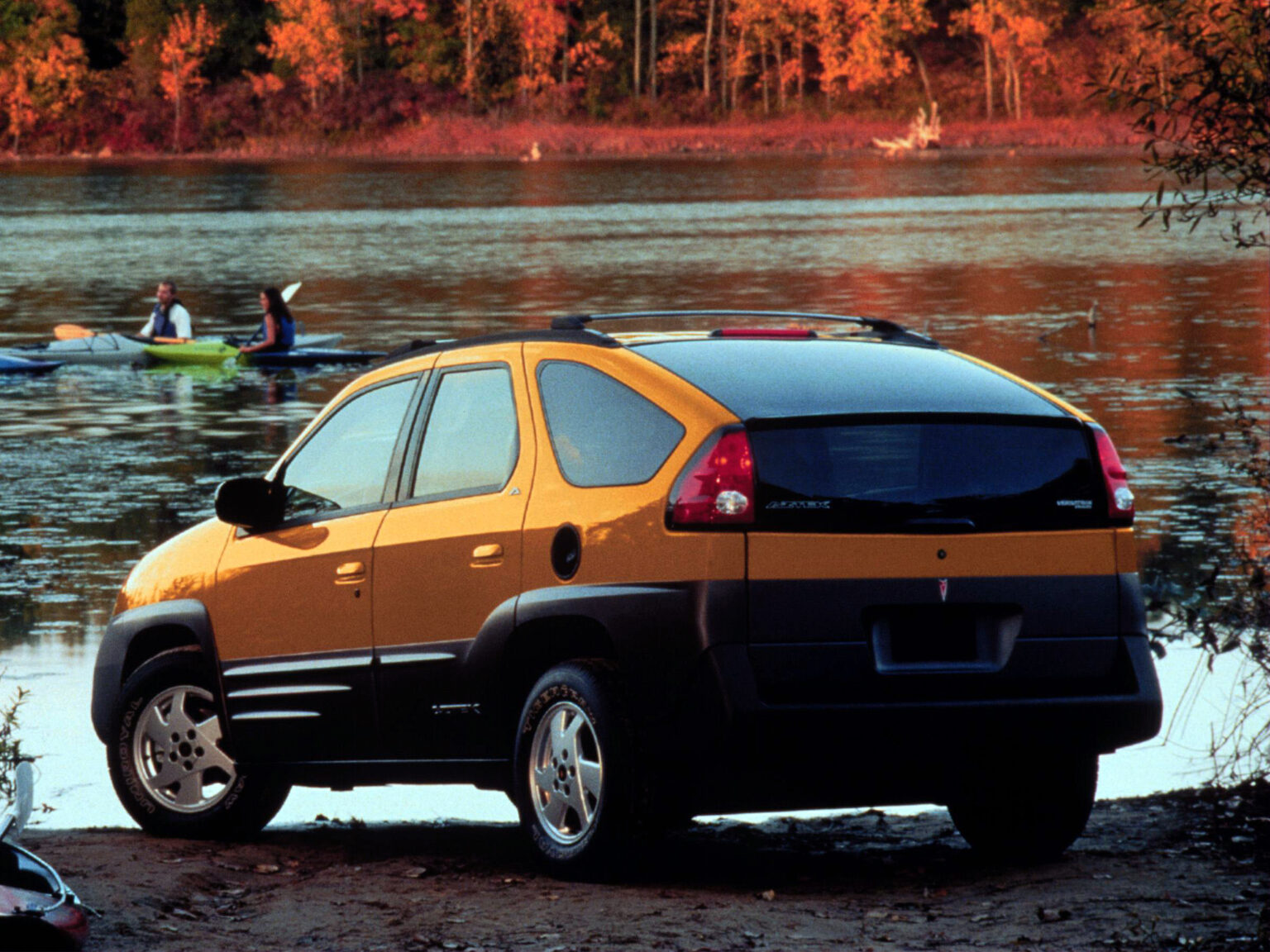
The Aztek tent was designed to attach to the rear of the vehicle, effectively extending the usable living space beyond the cargo area. Instead of carrying a completely independent camping shelter, owners could use the vehicle as part of the tent’s structure.
This approach created a sheltered area around the rear of the Aztek and allowed campers to move between the vehicle and tent without treating them as two unrelated pieces of equipment. The concept was particularly suited to short camping trips where convenience mattered more than carrying a large traditional tent.
The design also reflected Pontiac’s broader attempt to make the Aztek an outdoor recreation machine. The vehicle was already equipped with a large rear opening and a flexible cargo area, so attaching a shelter to the back was a logical extension of that layout.
The tent could provide additional covered space while the vehicle remained available for storage. In practical terms, that meant camping gear could stay organized inside the Aztek instead of being scattered around the campsite.
The factory specifications are important because the camping equipment is sometimes misunderstood today. The tent and air mattress were not standard equipment on every Aztek.
Pontiac listed the Camping Lifestyle Package as an option, meaning buyers had to select the package when ordering or obtain the appropriate equipment separately. This distinction explains why many surviving Azteks do not have the camping gear. Finding an original tent and mattress with a surviving vehicle can therefore be much harder than simply finding an Aztek itself.
The tent was also part of a larger group of unusual accessories. Pontiac offered equipment aimed at people who wanted to carry bicycles, canoes and snowboards, among other recreational gear. The vehicle’s unusual cargo arrangements were intended to make those activities easier.
The Air Mattress Had a Clever Design
The air mattress may be even more interesting than the tent itself. Pontiac’s specifications describe it as an air mattress with a manual self-inflator. That detail matters because the system was designed to avoid depending on a conventional electric pump.
The mattress was intended to work as part of the Aztek’s camping setup, providing a sleeping surface in the rear area when the vehicle was configured for overnight use.
A surviving example examined in detail decades later revealed just how unusual the mattress was. Rather than relying on a typical powered pump, the factory mattress used a mechanical inflation arrangement.
The system incorporated a built-in structure and valve that allowed the user to inflate the mattress manually. The technique involved pulling and pushing against the mattress in a way that forced air into the sleeping surface. It was a surprisingly inventive solution for an accessory produced for an early-2000s crossover.
The mechanical approach had an obvious benefit for camping. There was no need to depend on an electrical outlet or a separate powered inflator. A camper could set up the mattress using the mechanism built into the accessory itself.
For a vehicle intended to travel away from developed areas, that simplicity had practical value. The idea also fits the Aztek’s general philosophy of giving owners useful equipment that could be carried with the vehicle.
The mattress was designed around the Aztek rather than being a universal camping mattress. That made it more convenient for the vehicle but also makes surviving examples especially interesting today.
Once the original accessories disappear, replacing them is difficult because they were not ordinary off-the-shelf camping products. Owners who find an original tent and mattress can therefore possess a surprisingly rare piece of Pontiac equipment.
Other Aztek Features Made It a Camping-Friendly Vehicle
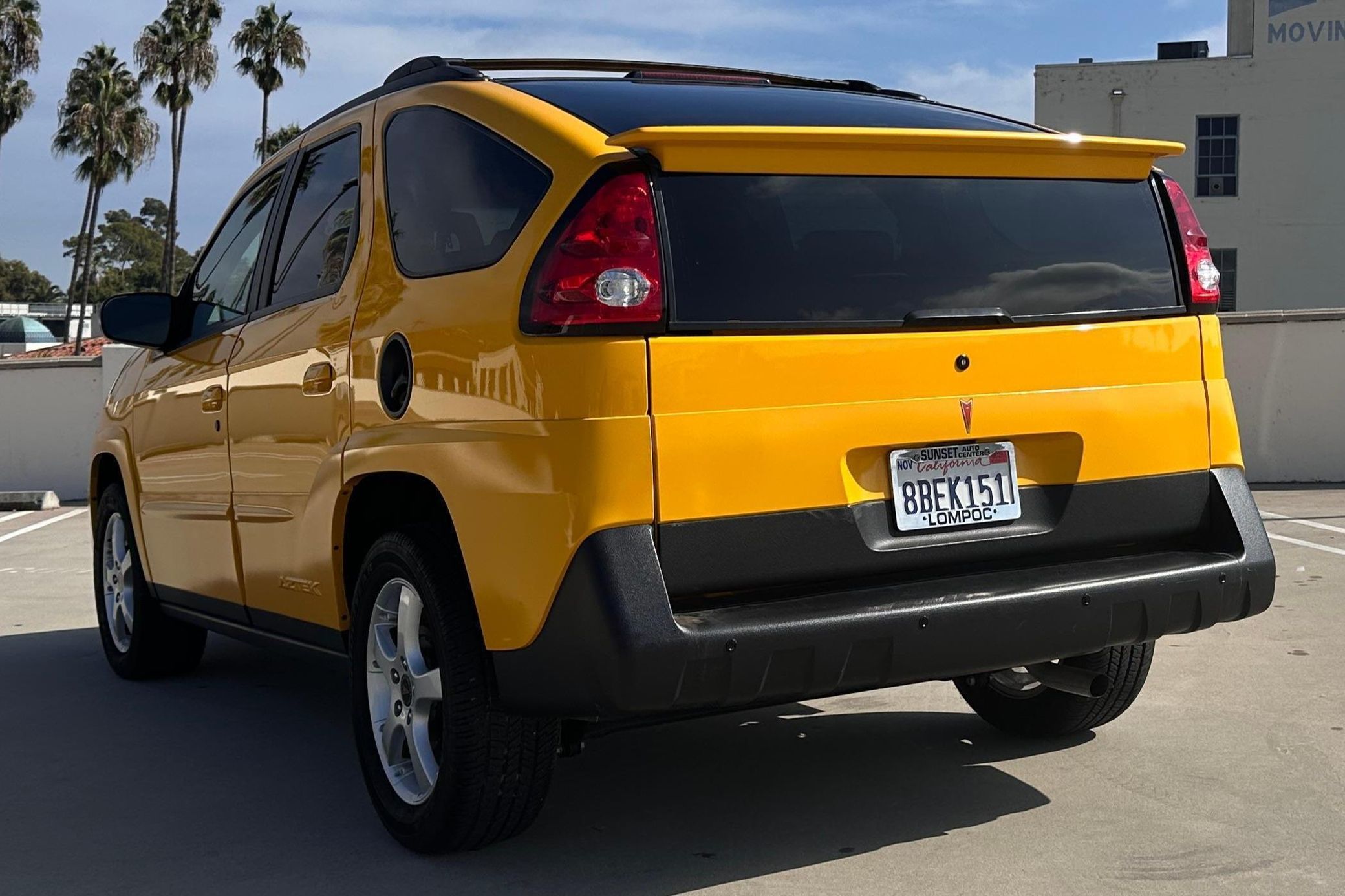
The camping package worked because the Aztek itself had been designed with unusual flexibility. The rear cargo area could be adapted to different needs, and Pontiac offered a sliding rear cargo tray as an option.
The tray could be pulled outward and used to make loading bulky objects easier. According to period information, the tray could support up to 400 pounds when removed from the vehicle, giving owners another practical tool for hauling equipment.
The vehicle also offered a removable center console that could function as a cooler. That feature was particularly appropriate for outdoor trips because it provided a convenient way to carry drinks or food.
The combination of a cooler, flexible cargo space, rear entertainment controls, and camping equipment gave the Aztek an unusual collection of recreational features. These details were not essential for commuting, but they made sense when the vehicle was viewed as a weekend adventure machine.
The rear of the vehicle contained further surprises. An optional audio system could provide controls toward the rear cargo area, allowing occupants to manage music during outdoor gatherings.
The tailgate design also incorporated seating and cupholders, creating a small social area at the back of the vehicle. Those features helped Pontiac market the Aztek as a vehicle suited to gatherings, tailgating, and outdoor recreation.
Cargo flexibility was another important part of the concept. The Aztek could carry large items and was designed to support equipment associated with recreational hobbies.
Owners could configure storage nets and other cargo accessories to keep equipment secure. Pontiac’s specifications also mention a reconfigurable cargo net system with multiple possible arrangements, showing how much attention the company paid to making the rear area adaptable.
Also read: 5 Cars With the Highest Theft Rates in New Mexico, 5 With the Lowest
