
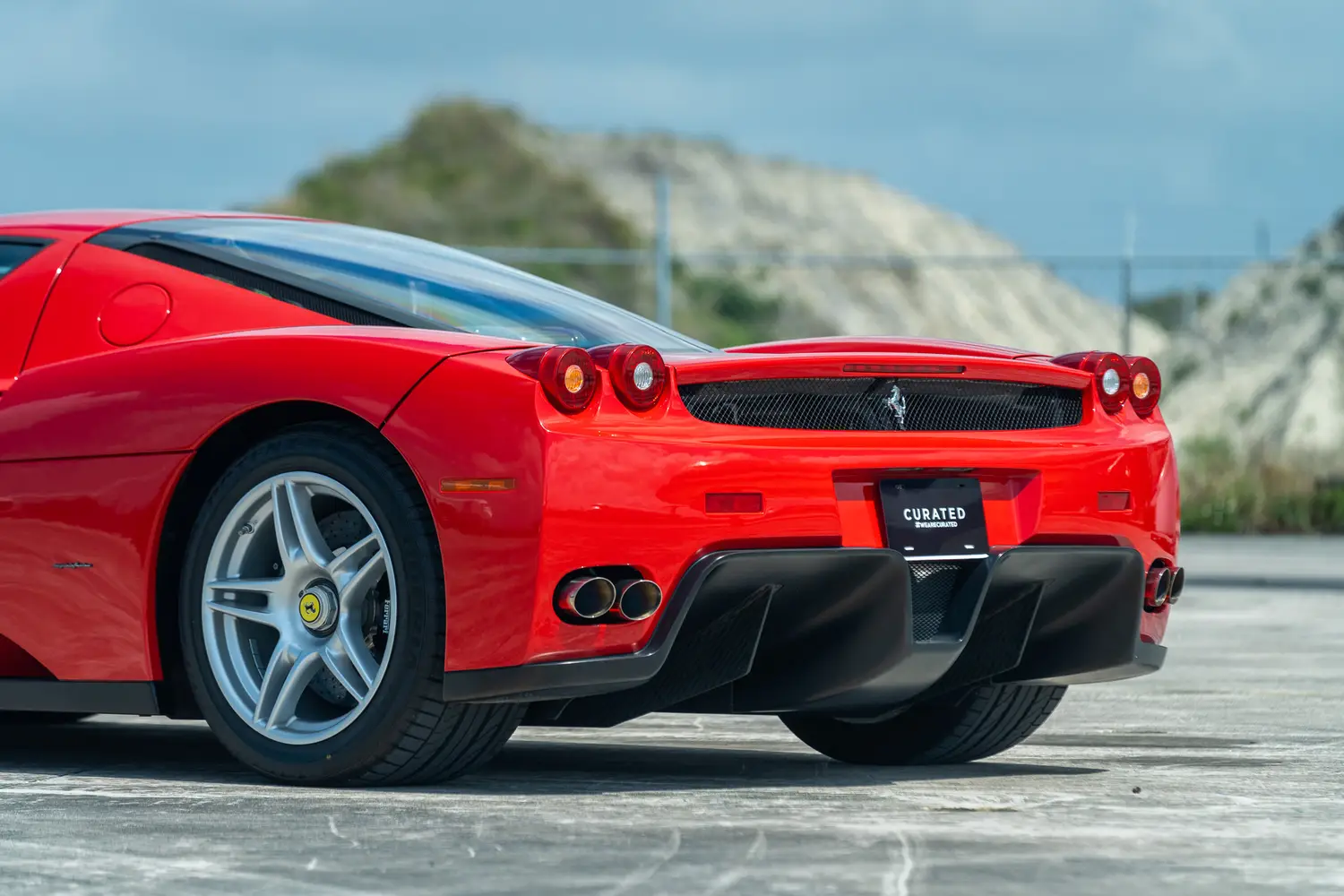
Ferrari’s famous Prancing Horse did not begin on a luxury sports car or inside a racing workshop. Its story started during the First World War, when Italian fighter pilot Francesco Baracca displayed a black rearing horse on the fuselage of his aircraft.
Baracca became Italy’s leading fighter ace, and his personal emblem later gained a second life through Enzo Ferrari. A meeting between Ferrari and Baracca’s family helped carry the symbol from military aviation to motor racing.
In 1932, the Prancing Horse appeared on Scuderia Ferrari’s Alfa Romeo racing cars, beginning its transformation into an enduring automotive emblem.
Francesco Baracca and the Original Prancing Horse
Francesco Baracca was born in Lugo, Italy, in 1888 and initially served as a cavalry officer before moving into military aviation. His background in the cavalry became important to the history of the Prancing Horse because the regiment he belonged to used a horse as part of its heraldic identity.
When Baracca adopted his personal aircraft emblem during the First World War, he chose a black version of the rearing horse.
The Museo Francesco Baracca states that the emblem appeared on his aircraft in early 1917 and was connected directly to his cavalry background and affection for horses.
Baracca was not simply a pilot with an attractive emblem. He was an exceptionally successful combat aviator who became a major figure in Italian military aviation. On April 7, 1916, he achieved Italy’s first officially recognized aerial victory of the war by bringing down an Austrian aircraft.
His reputation grew rapidly, and by 1917 he was associated with the elite 91st Fighter Squadron. Personal markings were useful during an era when aircraft lacked modern communication systems, allowing pilots and observers to identify individual machines in the sky. The black horse therefore had a practical function before it became a cultural symbol.
The first documented appearance of Baracca’s Prancing Horse came on a Nieuport 17. According to the Museo Baracca, the horse was painted on both sides of the aircraft’s fuselage. It later appeared on the SPAD VII and SPAD XIII fighters flown by Baracca.
On the SPAD XIII, the horse was placed against a white area so that the dark figure would remain visible against the aircraft’s camouflage. This detail is important because many modern retellings simplify the story and suggest that the Ferrari horse was copied directly from a single aircraft. In reality, Baracca carried the emblem across several machines during his service.
Baracca’s aircraft emblem also became associated with his personality and reputation. His fellow aviators and the Italian public followed the achievements of pilots who were becoming celebrated as the “Knights of the Sky.”
The markings painted on their aircraft helped create recognizable identities around individual pilots and squadrons. Baracca’s horse became particularly memorable because it was visually simple and strongly connected with his cavalry past.
He also wrote to his mother in April 1918 explaining the connection between the horse and the Piedmont cavalry tradition. That surviving explanation provides stronger historical evidence than several popular stories that appeared later.
Baracca’s life ended on June 19, 1918, when he failed to return from a combat mission over Montello. His aircraft crashed, and his death turned him into a lasting national hero. The Prancing Horse survived as part of his legacy.
The emblem continued to appear in Italian aviation circles after the war and eventually became connected with military units of the Italian Air Force. The Aeronautica Militare still recognizes the historical significance of Baracca’s horse, showing how the symbol developed along two separate paths, one connected with aviation and the other with Ferrari.
How Enzo Ferrari Received the Horse?
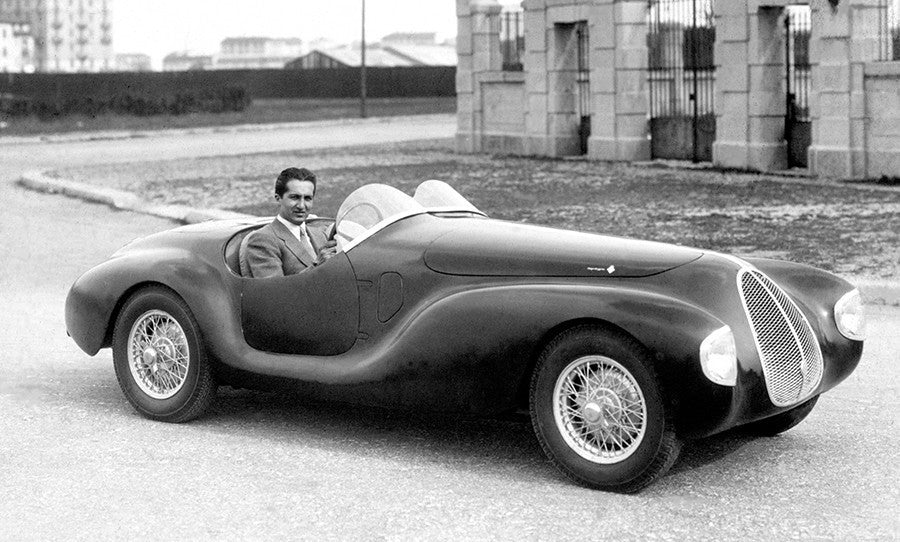
The connection between Francesco Baracca and Enzo Ferrari began after the pilot’s death. Ferrari was a racing driver at the time, competing with Alfa Romeo machinery rather than producing cars under his own name. In 1923, Ferrari won the Circuito del Savio near Ravenna.
At that event, he met Count Enrico Baracca, Francesco’s father. Ferrari later recalled that the meeting eventually led to a conversation with Countess Paolina Baracca, who suggested that he place her son’s Prancing Horse on his racing cars because it would bring him good fortune.
The date of this encounter is sometimes presented differently in retellings, but Ferrari’s own account and Italian Air Force material place the important meeting in 1923. The story is significant because the horse did not immediately become a Ferrari racing emblem after the conversation.
Ferrari continued his career with Alfa Romeo, and Scuderia Ferrari was not founded until 1929. The team initially operated as Alfa Romeo’s racing organization.
This means the famous symbol’s transition from a military aircraft to a racing machine happened gradually rather than through a single dramatic event.
There is also an important design distinction between Baracca’s original horse and the Ferrari emblem. Baracca’s horse was black and was associated with his aircraft. Ferrari retained the black horse but placed it against a yellow background. Ferrari later explained that the yellow represented Modena, his home city.
The shape was also modified, including the horse’s raised tail and the surrounding shield used by Scuderia Ferrari. The modern badge therefore should not be viewed as an exact reproduction of the aircraft marking. It was a redesigned emblem inspired by Baracca’s symbol.
Historical research has added an interesting detail to the story. The Museo Baracca notes that a 1930 publication concerning Francesco Baracca featured a heraldic design created by Lugo painter Gino Croari. That version showed a horse with an upturned tail and a shield, closely resembling the form later associated with Ferrari.
This suggests that Ferrari’s final emblem may have drawn from more than the horse painted on Baracca’s aircraft. The family heraldry and commemorative material surrounding Baracca could have influenced the final graphic design used by Scuderia Ferrari.
The Prancing Horse finally appeared on Scuderia Ferrari’s racing cars on July 9, 1932, at the 24 Hours of Spa-Francorchamps in Belgium. The cars were Alfa Romeos entered by Ferrari’s racing organization.
This date is a key point in Ferrari history because it marks the first confirmed use of the horse by Scuderia Ferrari. Ferrari itself did not yet produce road cars bearing the badge. That chapter came later. The emblem had already established its identity in competition before it became attached to the Ferrari automobile company and its road-going sports cars.
From Aircraft Marking to Global Ferrari Symbol
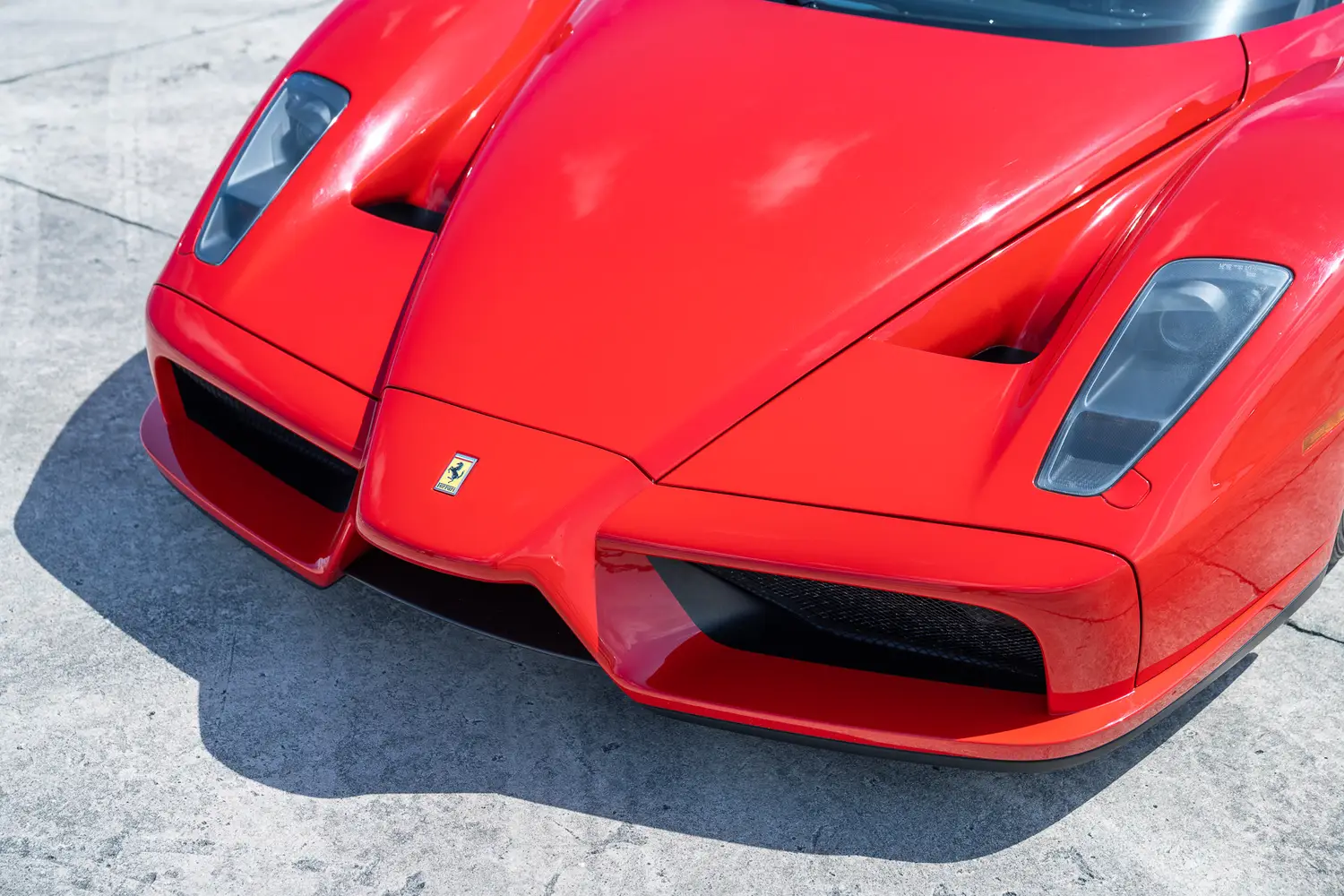
The journey from Baracca’s fighter aircraft to Ferrari’s road cars took several decades. Scuderia Ferrari used the horse in motorsport from 1932, building an association between the emblem and racing success.
Ferrari later developed its own manufacturing operation, and the first Ferrari road cars appeared in the postwar period.
The Prancing Horse became closely linked with the Ferrari name as the company established itself as a manufacturer of high-performance sports cars. By then, a symbol that had once identified a military pilot had acquired an entirely new association with speed, competition and engineering.
The transformation worked because the horse carried a strong visual identity. A black figure against a yellow field could be recognized quickly on a race car, just as Baracca’s aircraft marking helped identify his fighter in the sky.
Ferrari also incorporated the Italian tricolour and the letters “SF” into the shield version associated with Scuderia Ferrari. The rectangular Ferrari badge developed alongside the shield and became widely associated with the company’s road cars.
The design has remained remarkably stable, helping generations of enthusiasts recognize Ferrari vehicles immediately.
The aviation connection never disappeared either. The Prancing Horse continued to hold a place in Italian military aviation. The Museo Baracca records its adoption by the 4th Stormo in 1933, helping turn Baracca’s personal marking into a lasting military insignia.
Modern Italian Air Force units have continued to use variations inspired by the horse, and the Frecce Tricolori’s “Pony” radio call sign also preserves a connection with Baracca’s legacy. The emblem therefore belongs to both automotive and aviation history rather than existing exclusively as a Ferrari trademark.
There are several myths surrounding the origin of the horse, including claims that Baracca took it from the coat of arms of Stuttgart after defeating a German pilot. That story is frequently repeated because Stuttgart also has a famous black horse in its heraldry.
The Museo Baracca says there is no documentary evidence supporting this explanation. Baracca’s own explanation provides a more reliable answer: the horse was connected with his former cavalry regiment. This distinction matters because the real history is already compelling without adding an unsupported wartime legend.
