
Moving a full sheet of plywood can reveal more about a car than its horsepower, styling, or fuel economy. A standard sheet measures 4 feet by 8 feet, creating a serious cargo challenge for many vehicles. Some cars can accommodate plywood by folding seats, removing panels, or using a practical loading angle.
Others simply lack the interior length, width, or usable cargo opening required for the job. This guide compares five cars that can carry a plywood sheet and five that generally cannot, while explaining the loading methods, space limitations, and practical considerations that matter when transporting large building materials safely.

1. Honda Element
The Honda Element has earned a reputation as a highly practical vehicle, and its boxy body makes it particularly useful for carrying bulky items. The upright cabin provides considerable interior volume compared with many conventional cars, while the rear seats can be folded, flipped upward, or removed depending on the configuration.
That flexibility creates a large, open cargo area that can handle items that would be awkward or impossible to fit inside a typical sedan. A 4 by 8 foot plywood sheet can be carried inside an Element when positioned appropriately, though the exact loading method depends on the sheet’s orientation and the specific model year.
The Element’s rear doors and large hatch also make loading considerably easier than its exterior dimensions might suggest. Rather than forcing a sheet through a narrow trunk opening, the owner can take advantage of the vehicle’s tall rear opening and flexible seating arrangement.
For a full sheet, the plywood may need to be positioned diagonally or at an angle rather than lying perfectly flat. This distinction matters because cargo capacity is not determined simply by the published volume figure. The shape of the opening, the distance between interior surfaces, and the available clearance near the dashboard all affect whether a large panel can actually enter the cabin.
A major benefit of the Element is its durable, easy-to-clean interior. Honda designed the vehicle with utility in mind, and its flooring and seating arrangement are better suited to hauling messy or oversized items than the carpeted interiors found in many passenger cars.

2. Honda CR-V
The Honda CR-V is another compact vehicle that can handle surprisingly large cargo. Its rear seats fold down to create a much longer loading area, and the rear hatch provides a broad opening for bulky objects.
A full 4 by 8 foot plywood sheet is too large to simply lie flat inside the vehicle, but it can be positioned diagonally or at an angle with the appropriate interior configuration.
This makes the CR-V more versatile for sheet goods than many traditional passenger cars. The exact amount of usable space varies by generation, so owners should check their particular vehicle before attempting the job.
The biggest challenge with the CR-V is not necessarily getting the plywood through the hatch. It is creating enough usable length after the panel enters the cabin. With the rear seats folded, a plywood sheet can extend forward toward the front passenger area.
The panel may need to be tilted, with part of it resting above the folded rear seat area and extending toward the dashboard. This configuration can work for transporting a single sheet, but it reduces available passenger space. In some situations, the front passenger seat may need to be moved significantly forward or adjusted to create the required clearance.

3. Subaru Outback
The Subaru Outback combines a long roofline with a wagon-style cargo area, giving it an advantage when transporting large objects. Its rear seats fold down, producing a substantial cargo floor, while the rear hatch creates a wide access point.
A full 4 by 8 foot sheet of plywood generally cannot lie completely flat inside the cabin, but an appropriately positioned panel can extend diagonally through the interior. The wagon shape is particularly helpful because it provides more usable length than many compact SUVs and avoids the sharply sloping rear rooflines found on several crossover designs.
Loading a plywood sheet into an Outback requires attention to the sheet’s orientation. A person can begin by placing one end through the rear hatch and then rotating the panel as it enters the cabin. The rear seats should be folded before loading, and the front passenger area may need to be adjusted to provide additional clearance.
Depending on the generation and interior configuration, the sheet can occupy most of the available cabin space. This is best treated as a cargo-only trip because carrying passengers alongside a large panel may not leave enough room for safe positioning.
The Outback’s low cargo floor is another advantage. Lifting a large sheet several feet into the air can be difficult, especially for one person. A lower loading height allows the plywood to be maneuvered into the vehicle with less effort. The long wagon-style roof also provides more freedom to angle the panel during loading.
That can be valuable when the diagonal dimensions of the cargo area are more important than its straight-line length. In practical terms, a vehicle does not always need an eight-foot-long flat floor to transport an eight-foot sheet.
4. Toyota Sienna
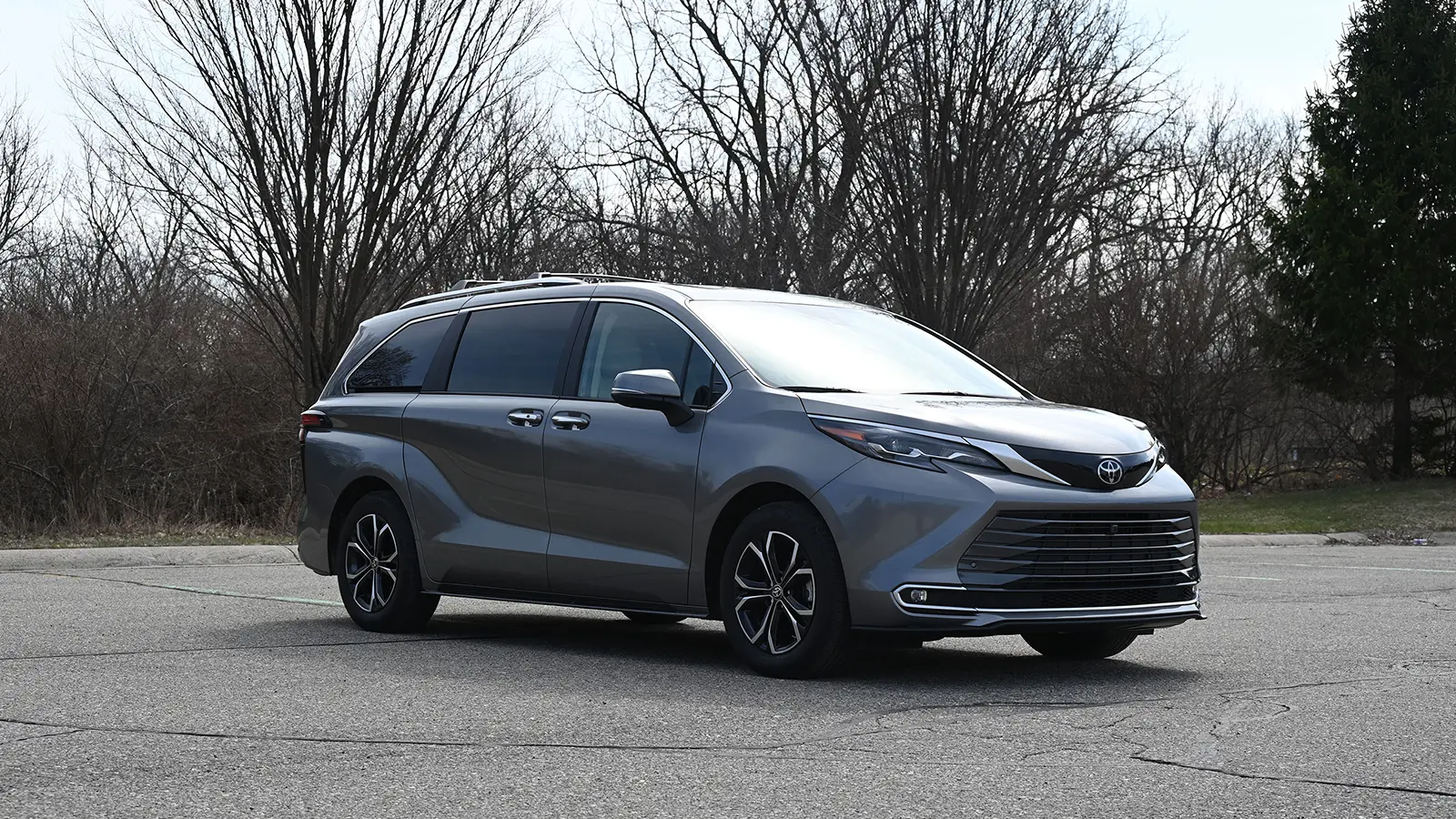
The Toyota Sienna is considerably larger than the other vehicles in this group, and its minivan layout gives it exceptional flexibility for bulky cargo. Depending on the model year and seating configuration, the second-row seats can be removed, folded, or otherwise repositioned.
The third row can also be folded into the floor in many generations. This can create a large interior area suitable for carrying large sheets of plywood. The key advantage is not simply total cargo volume but the ability to transform the passenger compartment into a long, relatively unobstructed loading space.
A standard 4 by 8 foot plywood sheet can fit inside suitable Sienna configurations when the interior is prepared correctly. The sheet may need to be tilted or positioned diagonally, particularly if the available interior length is slightly shorter than eight feet.
The minivan’s large rear opening makes the initial loading process easier than it would be in a sedan. With the rear seating arranged properly, there is considerably more freedom to move the panel into position. This is exactly the kind of task for which minivans are often underestimated.
The Sienna also provides practical advantages when several sheets or other building materials need to be transported. While weight limits must always be respected, the available floor area makes it possible to organize cargo more effectively than in a compact car.
Protective coverings are still recommended because unfinished plywood can leave dust, splinters, and rough edges behind. The interior should also be checked for contact points before driving. A large panel can shift when the vehicle accelerates, brakes, or turns, so securing the load is essential.
5. Chrysler Pacifica
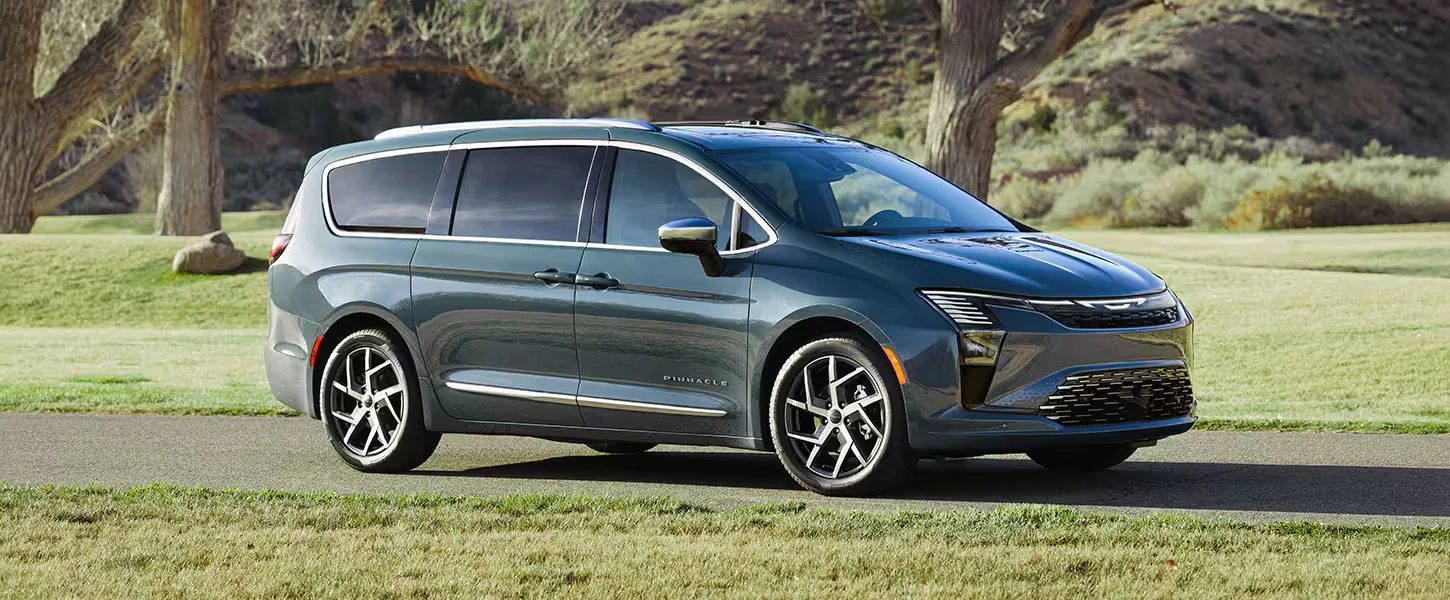
The Chrysler Pacifica is another minivan capable of handling large cargo when its seating system is configured for maximum floor space. Its Stow ‘n Go seating system in applicable configurations allows the second- and third-row seats to fold into dedicated floor compartments.
This creates a remarkably open interior without requiring the owner to physically remove every seat. For carrying plywood, that feature can be especially convenient because it creates a long cargo area with fewer obstacles. A full 4 by 8 sheet can be accommodated in suitable configurations by positioning it carefully inside the vehicle.
The Pacifica’s wide rear hatch is helpful when loading large panels. Instead of approaching the cargo area through a narrow trunk opening, the user can guide the plywood through a broad rear opening and then angle it into place.
The sheet may not lie completely flat depending on the exact model and configuration, but the available interior space provides substantially more flexibility than most passenger cars. The vehicle’s minivan proportions also allow large objects to be carried without requiring the roof rack systems that would be necessary on smaller vehicles.
Careful loading is important because a plywood sheet can contact many interior surfaces during installation. The edges can scratch trim, while the corners can damage plastic panels or upholstery. A moving blanket can serve as a simple protective barrier. It is also useful to have a second person help guide the sheet.
Large plywood panels catch air and can be difficult to control, especially when being loaded through a hatch. Once inside, the sheet should be secured so it cannot move toward the front of the vehicle.
5 Cars That Generally Cannot Fit a Full Sheet of Plywood
1. Toyota Corolla Sedan
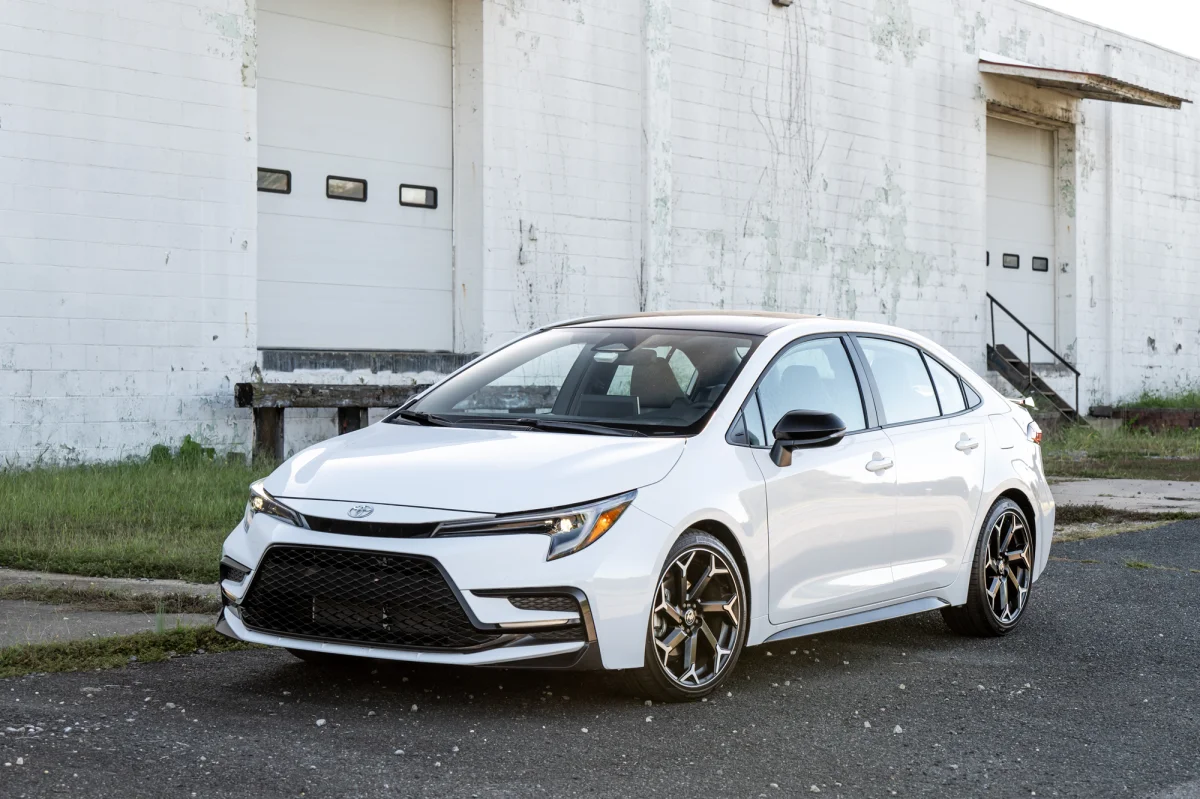
The Toyota Corolla sedan is designed primarily for passenger transportation and everyday luggage, making it poorly suited to carrying a full 4 by 8 foot sheet of plywood inside the cabin.
Its trunk opening is too limited for a large flat panel, while the passenger compartment lacks the combination of length and width needed to maneuver the sheet into position. Folding the rear seats can increase the available cargo length, but it does not transform the sedan into a vehicle capable of accepting a full-size building panel.
The biggest obstacle is the trunk opening. Even if the rear seats fold, plywood has a fixed width of four feet. A sedan’s trunk is designed for suitcases, groceries, and smaller cargo rather than large rectangular panels.
The panel cannot simply pass through the trunk opening and then extend forward. Its dimensions and rigidity make it difficult to rotate inside the limited space. The narrow entry point becomes a physical barrier before the available cabin length even becomes relevant.
Owners sometimes assume that folding the rear seats will solve the problem. In reality, a pass-through opening does not necessarily provide enough width or height for plywood. The panel must first enter through the trunk or a door, and a standard sheet is much larger than the openings found on ordinary sedans.
Even if part of the panel could be placed inside, leaving a large portion outside the vehicle would create an unsafe and impractical configuration. The Corolla’s design simply does not prioritize this type of cargo.
A smaller plywood panel can still be transported in a Corolla. Hardware stores frequently offer half sheets, quarter sheets, shelving panels, and other smaller cuts that are far easier to manage.
These pieces can fit into the trunk or rear seating area depending on their dimensions. For a full sheet, however, an external solution is more appropriate. That could mean using a properly rated roof rack, arranging delivery, or borrowing a vehicle specifically designed for large cargo.
2. Honda Civic Sedan
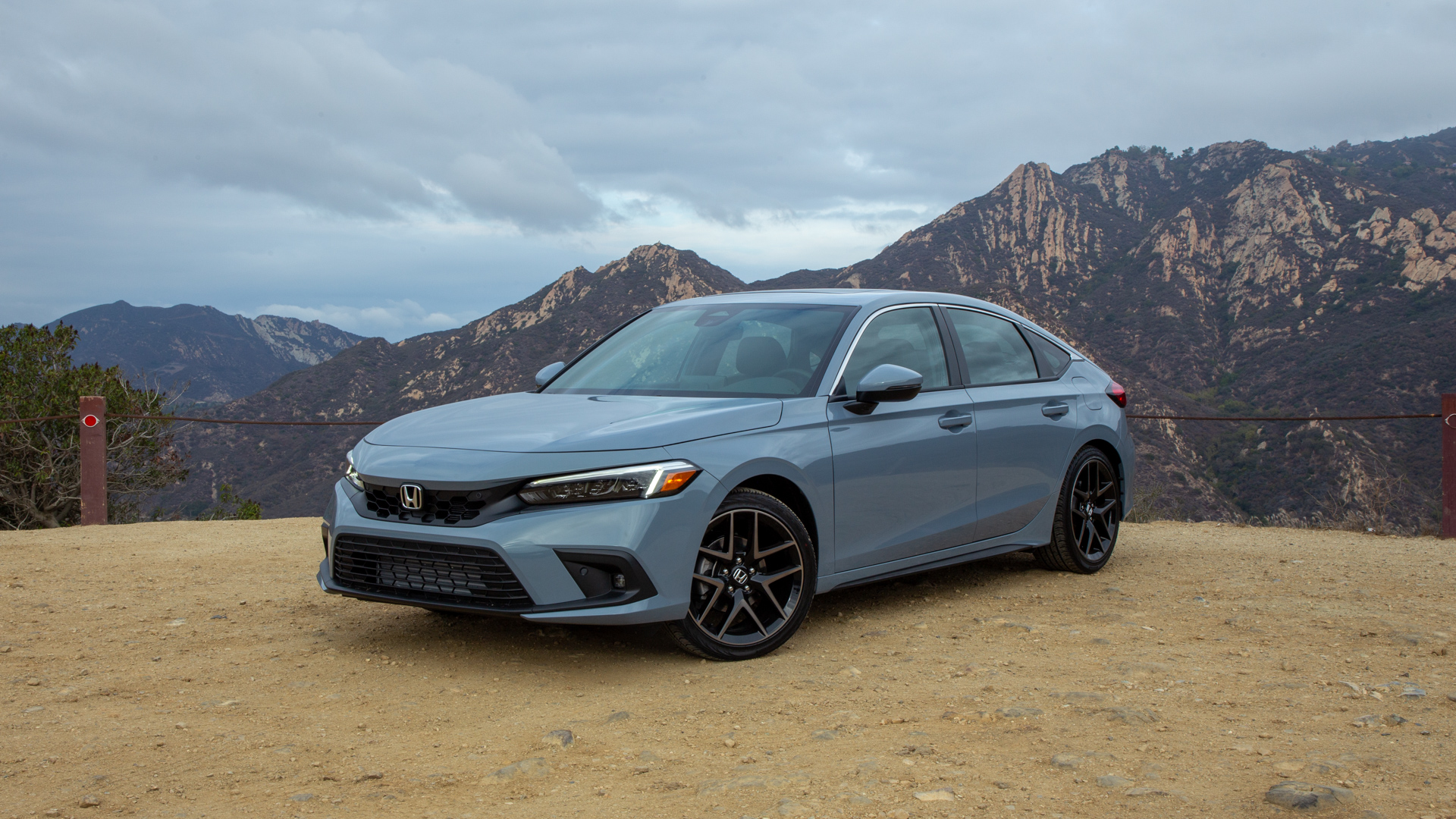
The Honda Civic sedan faces similar limitations. Its trunk provides useful space for normal luggage, but a standard plywood sheet is far larger than the trunk opening and cannot be conveniently maneuvered through the passenger compartment.
Folding the rear seatbacks increases the pass-through length, yet the width of the opening and the shape of the cabin remain limiting factors. As a result, a full sheet of plywood should not be considered an interior cargo item for a Civic sedan.
The Civic’s sloping body design also works against large flat panels. Passenger sedans are shaped to balance aerodynamics, comfort, visibility, and styling. Those priorities leave less vertical and horizontal clearance for oversized cargo.
A sheet of plywood needs a large entry path because it cannot bend around obstacles. The trunk lid and rear window area create additional restrictions. Even if the rear seats fold, there is no practical way to transform the vehicle into a straight-through cargo compartment.
Smaller pieces of plywood are a different matter. A hardware store can cut a full sheet into manageable sections, allowing homeowners to transport the material in several pieces. This can be useful when the project does not require a single unbroken panel.
A Civic can also carry many smaller boards and tools when the rear seats are folded. The important distinction is between cargo that can be manipulated inside the cabin and a rigid sheet that maintains its full four-foot width.
Trying to force a full sheet into the Civic can also cause expensive damage. The plywood edges can scrape door panels, crack trim, damage the dashboard, or mark the headliner.
More importantly, an improperly positioned panel can interfere with the driver or passengers. Blocking visibility or creating a loose object inside the cabin creates a safety concern. The fact that a piece of material physically fits partway through an opening does not mean the vehicle can safely transport it.
3. Ford Mustang
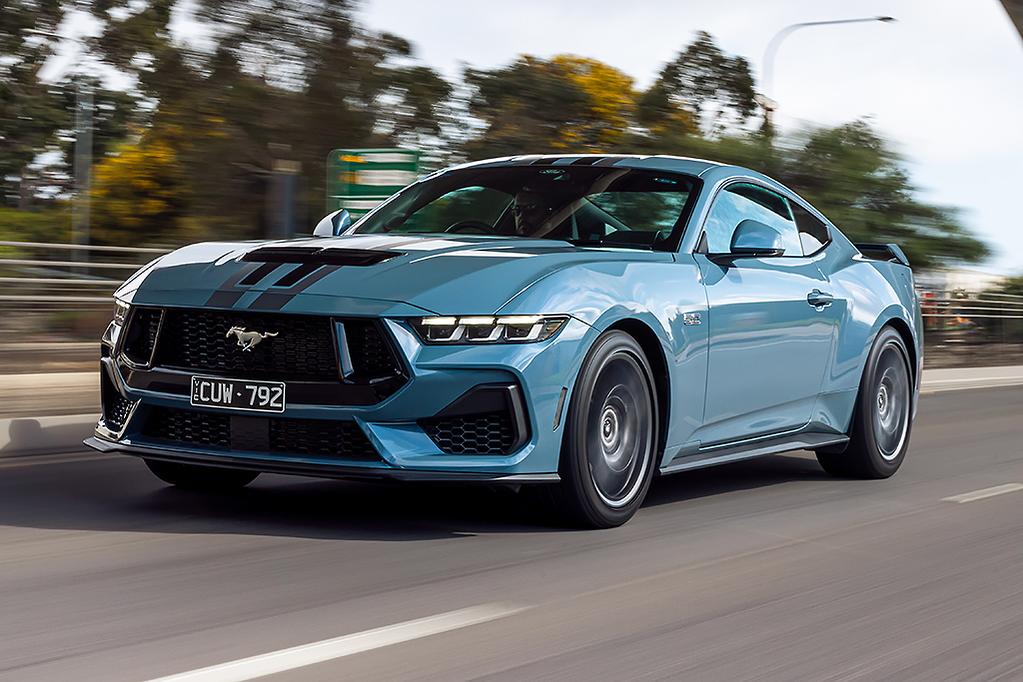
The Ford Mustang is a performance-oriented coupe, and its cabin was never designed around large cargo. Even though newer Mustang generations have useful trunk space for a sports car, the trunk opening and rear passenger compartment are fundamentally unsuitable for a full 4 by 8 foot plywood sheet.
Folding or removing interior components would not solve the basic problem because the sheet is simply too large and rigid for the available openings.
The coupe body creates several restrictions. The roofline is low, the rear window area slopes significantly, and the trunk opening is relatively compact. These characteristics are useful for creating a sporty profile but leave little room for maneuvering a large panel.
Plywood cannot be folded around the rear seats or bent through the trunk. Its four-foot width alone makes the loading process impractical. Even if an owner manages to insert one corner, the remaining dimensions prevent the sheet from being positioned safely.
The Mustang’s trunk is better suited to luggage, shopping bags, small equipment, and other compact objects. That distinction is important when comparing published cargo capacity with real-world utility. A trunk can hold a substantial amount of soft luggage because bags can be compressed and shaped around available space.
A rigid sheet of plywood behaves very differently. Its dimensions remain fixed, and every corner must clear the opening during loading.
Using the passenger compartment as an alternative is not realistic either. The front seats, dashboard, center console, doors, and roof structure create multiple obstacles.
A large panel extending toward the driver could interfere with steering and visibility. Even if the material could be partially positioned inside, it would not have a stable or secure resting location. Attempting such a setup would create unnecessary risks for the vehicle and its occupants.

4. Mazda MX-5 Miata
The Mazda MX-5 Miata is perhaps an even clearer example of a vehicle that cannot accommodate a full plywood sheet. Its compact two-seat roadster design prioritizes low weight, responsive handling, and open-air driving.
There is no large rear cargo compartment and no long interior passage capable of accepting a 4 by 8 panel. The trunk is designed for relatively small luggage, while the passenger compartment has almost no practical space for oversized materials.
The Miata’s compact dimensions create an immediate limitation. A full plywood sheet is four feet wide, while the vehicle’s interior is nowhere near wide enough to accept that dimension in a useful configuration.
The sheet also cannot be folded, rolled, or compressed. Even removing luggage from the trunk would not change the basic geometry. The opening simply does not provide a path for the panel to enter and be positioned safely.
The convertible roof adds another complication. A large sheet cannot be placed through the open roof in a way that creates a safe cargo arrangement.
The material would extend far beyond the vehicle, potentially affecting balance, visibility, aerodynamics, and the ability to operate the car normally. The roof mechanism itself is also not designed to support heavy cargo. Treating the open cabin as a substitute for a cargo opening would risk damaging the vehicle.
Smaller pieces of plywood can sometimes be transported if they are cut to suitable dimensions. A project requiring shelving, small panels, or short sections can therefore still be completed without using a truck.
The Miata’s limited storage capacity simply means the material needs to be divided into manageable pieces. This is a common solution for people who own compact cars but occasionally take on home improvement projects.

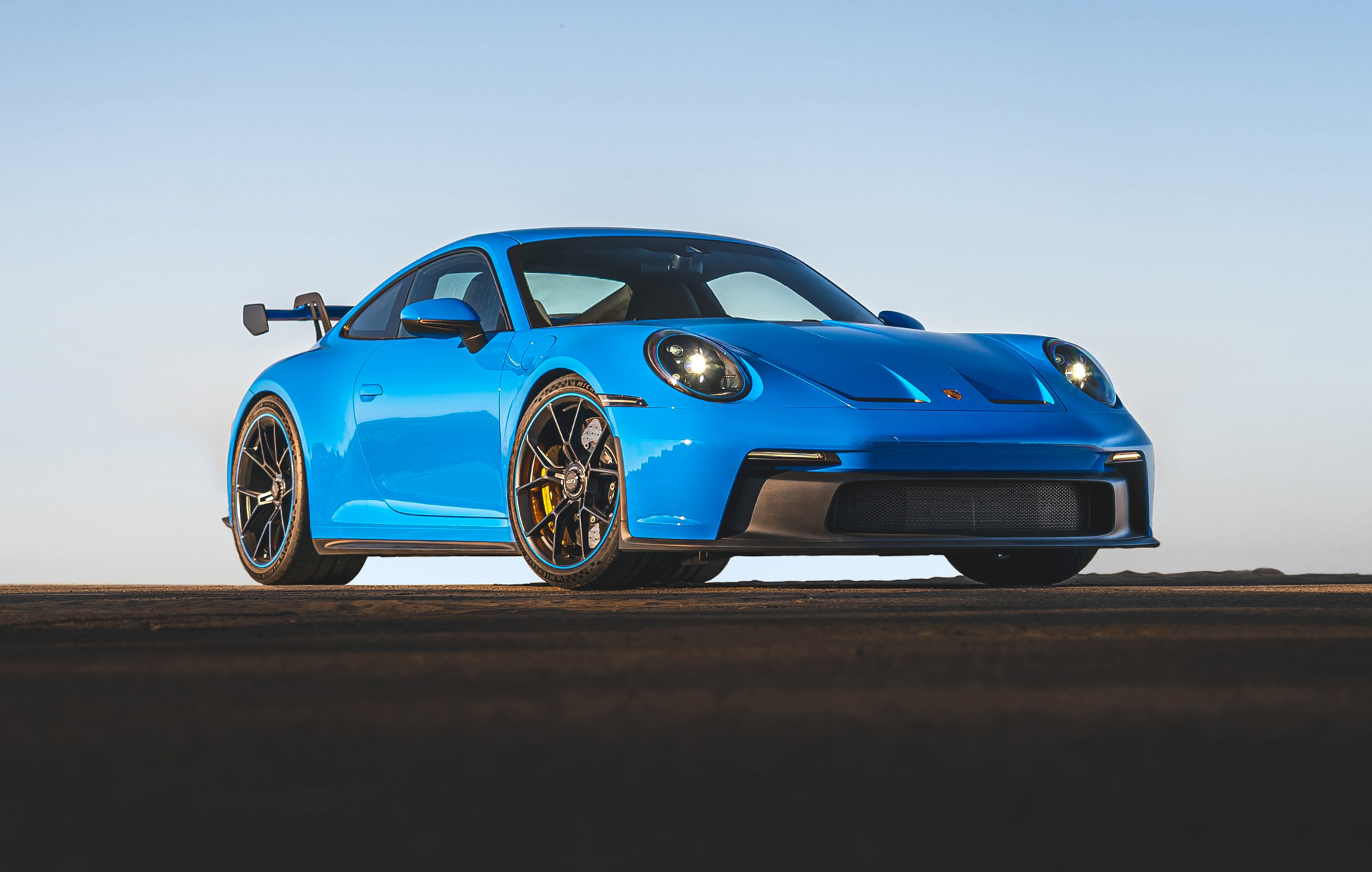
5. Porsche 911
The Porsche 911 offers useful luggage areas for a sports car, but it cannot accommodate a full 4 by 8 foot plywood sheet inside. Its front trunk, or frunk, and rear storage area vary by generation, yet neither compartment provides the large opening and continuous interior space necessary for a rigid four-foot-wide panel.
The 911’s rear seats in applicable versions are also extremely small and do not create a practical cargo passage for full-size construction materials.
The vehicle’s basic architecture makes the limitation easy to understand. A plywood sheet requires a large opening and enough interior clearance to rotate the panel into position. The 911 has compact storage compartments shaped around its mechanical layout and low sports-car body.
These areas can handle luggage, groceries, and smaller equipment, but a flat construction panel is a completely different cargo challenge. Folding the rear seats, where available, does not provide the necessary width.
The front trunk presents its own limitation. Although it can be useful for luggage, its opening and compartment shape are not designed for long, rigid panels.
The sheet would need to pass through an opening much smaller than its four-foot width. Trying to force it through could damage body panels, seals, trim, or paint. A Porsche 911 is also an expensive vehicle to repair, making an improvised cargo solution particularly unattractive.
Owners can still transport smaller woodworking materials by having the supplier cut them into appropriate sizes. This allows the material to fit within the vehicle’s actual storage limitations.
For full sheets, professional delivery is a better choice. A truck, van, or properly equipped trailer offers the required space without placing the sports car or its occupants in an awkward situation. The cost of delivery may also be small compared with the potential cost of repairing vehicle damage.
