
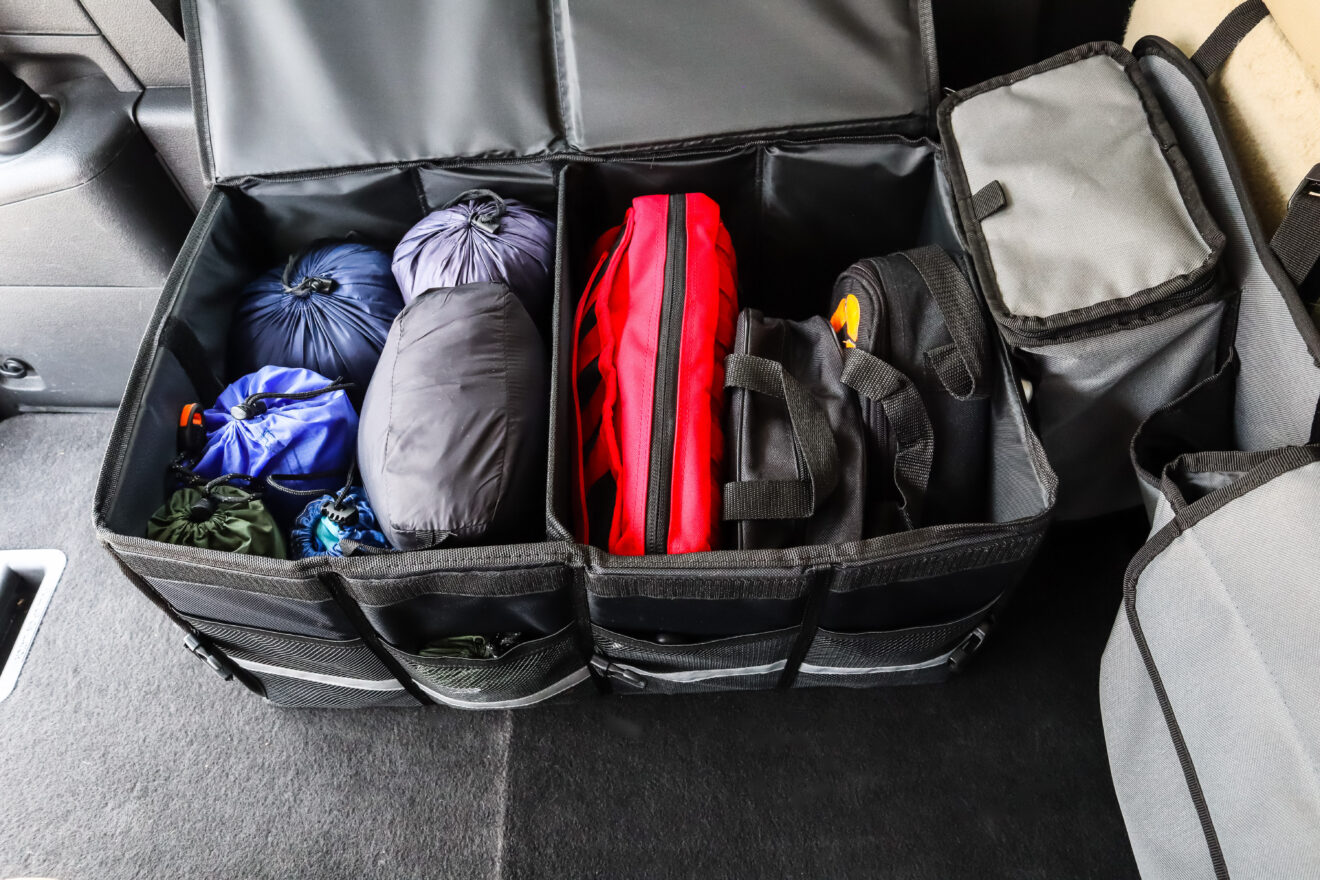
When you drive regularly, a small collection of useful car tools can make a big difference when something goes wrong. A flat tyre, weak battery, low tyre pressure, loose belt, or unexpected roadside emergency can leave you stranded if you are not prepared.
Keeping practical equipment in your vehicle gives you options when professional help is not immediately available. Some tools are designed for routine maintenance, while others are meant for emergencies where speed matters.
This guide covers 12 must-have tools for every car, including a tyre inflator, jump starter, emergency window breaker, belt cutter, tyre repair equipment, and other useful roadside essentials.
1. Portable Tyre Inflator
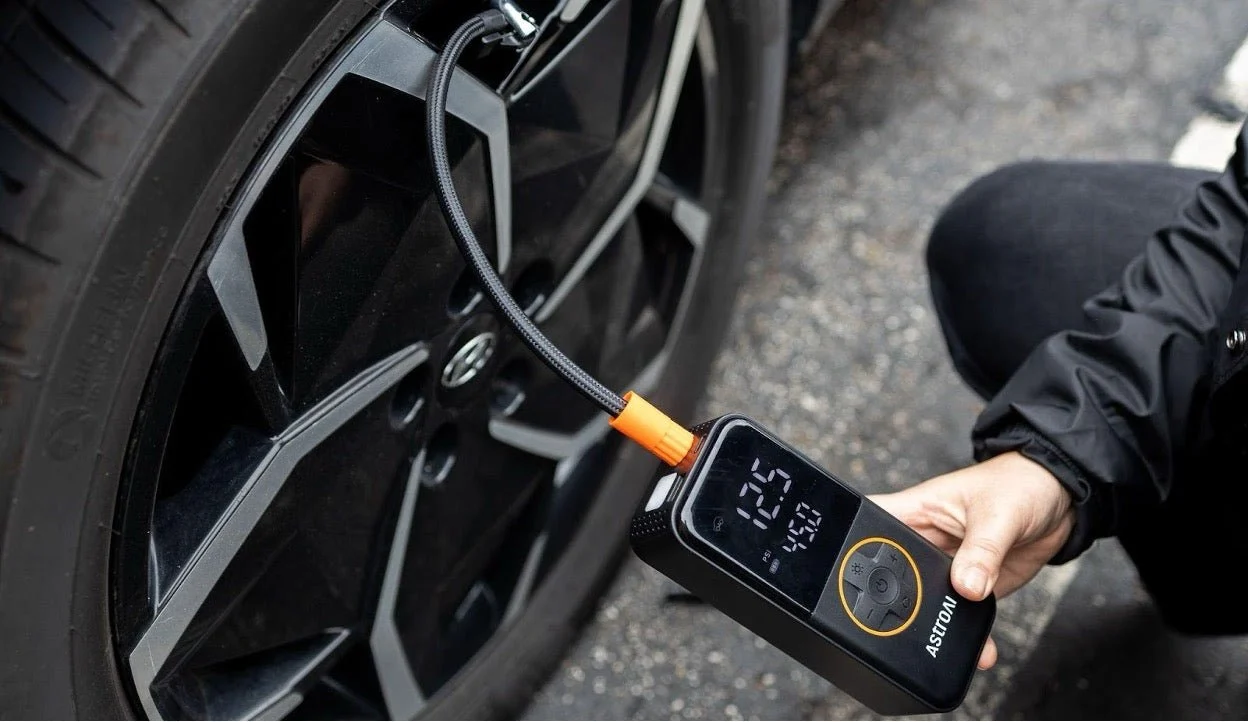
A portable tyre inflator is a valuable tool for any driver. Tyre pressure naturally changes with temperature, road conditions, and time, so having a compact compressor in the car allows you to correct pressure when needed. Properly inflated tyres can also support better handling, braking, and fuel efficiency during normal driving.
Modern portable inflators are generally compact enough to store in a boot or side compartment. Many models connect to a 12-volt vehicle socket, while battery-powered versions can operate without a cable connected to the car. Some units have digital displays that allow drivers to monitor pressure while inflating.
A tyre inflator can be particularly useful when a tyre has slowly lost air but has not suffered major damage. Instead of immediately stopping at a petrol station or tyre shop, you can restore the pressure temporarily and continue to a suitable location for inspection.
It is important to remember that an inflator is not a permanent solution for a damaged tyre. If the tyre has a puncture, sidewall damage, a separated tread, or another serious defect, adding air does not make it safe. The tyre should be inspected by a qualified professional.
Before buying a portable compressor, check its maximum pressure, power source, hose length, display, operating speed, and compatibility with your vehicle. A model that is easy to operate at night and simple to store is especially practical for regular drivers.
2. Portable Jump Starter
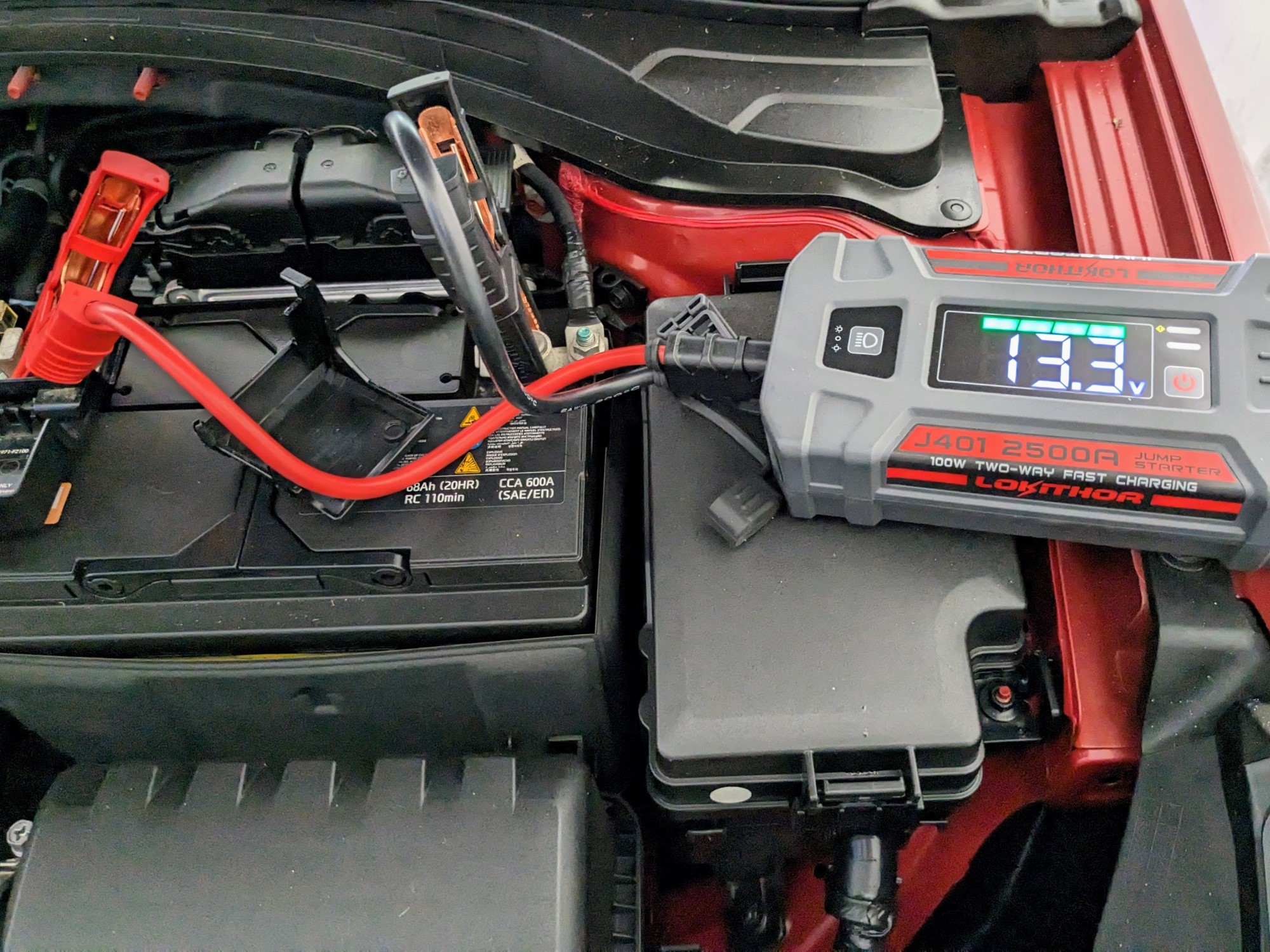
A portable jump starter can help when a car battery becomes too weak to start the engine. Traditional jump-starting usually requires another vehicle and a suitable set of jumper cables. A battery-powered jump starter provides an alternative that can be particularly useful when you are travelling alone or parked somewhere with limited access to other vehicles.
Most modern jump starters use rechargeable lithium-ion batteries and include positive and negative clamps. Some models also provide USB ports for charging phones and other small electronic devices, making them useful during roadside emergencies.
Correct connection is essential when using a jump starter. The positive clamp and negative clamp must be connected according to the manufacturer’s instructions. Incorrect connections can cause sparks, damage electrical components, or create other hazards.
A jump starter should be kept charged even when it is not being used. Leaving the unit in a car for long periods without checking its battery can result in finding an empty jump starter when you actually need it.
When choosing a model, check its compatibility with your engine type and battery requirements. Petrol and diesel engines can have different starting demands, while larger engines may require a higher-capacity device. Follow the manufacturer’s specifications rather than choosing based only on appearance.
3. Emergency Window Breaker
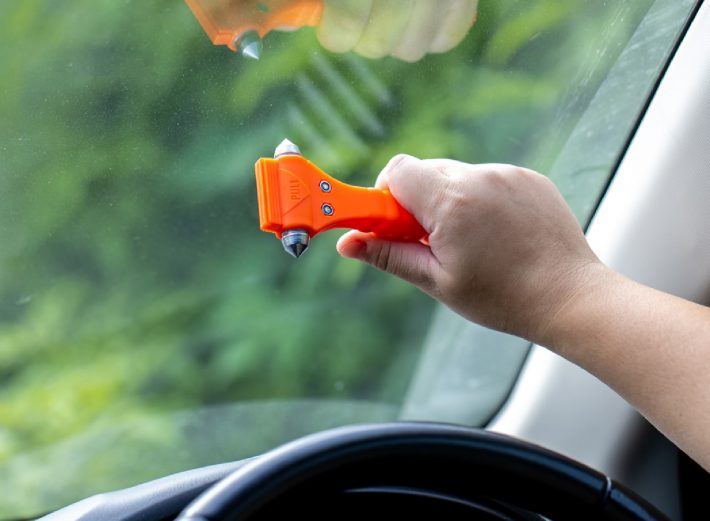
An emergency window breaker is a small tool designed to help occupants escape from a vehicle when a door cannot be opened. Certain models combine a hardened tip for breaking suitable vehicle glass with a blade for cutting seat belts.
This tool can become important during a serious emergency, such as a vehicle becoming trapped or a door mechanism becoming inaccessible. Its purpose is not ordinary vehicle maintenance. It is an emergency escape device that should remain accessible to the driver or passengers.
A key point is that not every car window is designed to break in the same way. Many vehicles use laminated glass in some locations, while tempered glass is used in others. A standard glass breaker may work on suitable tempered side or rear glass but may not be effective against laminated glass.
Placement matters as much as ownership. Keeping an emergency escape tool buried beneath luggage defeats much of its purpose. It should be secured somewhere reachable from inside the vehicle, preferably according to the manufacturer’s installation guidance.
Drivers should also read the product instructions before an emergency occurs. Knowing where the tool is stored and understanding its intended use can reduce confusion during a stressful situation. Never use it casually or as a substitute for normal vehicle access.
4. Seat Belt Cutter
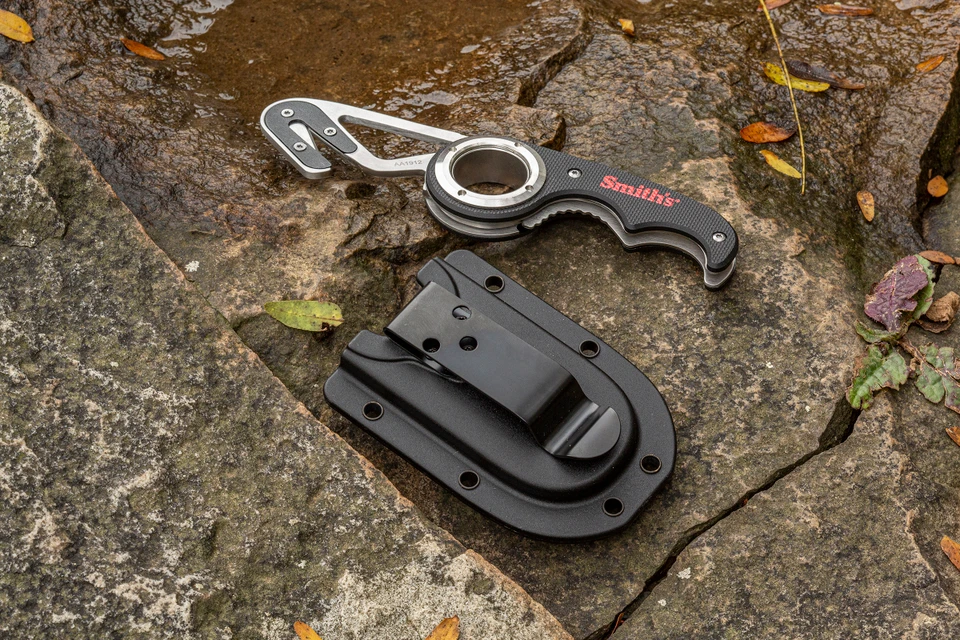
A seat belt cutter is another compact emergency tool worth carrying. In a severe crash or vehicle emergency, a seat belt may become difficult to release normally. A purpose-built cutter can provide an alternative way to free a trapped occupant when circumstances require it.
Most emergency belt cutters use a recessed blade. The protected design helps reduce the chance of accidentally contacting the sharp edge while the tool is being handled. Some models combine a belt cutter with a window-breaking tip.
Like an emergency glass breaker, a belt cutter should be stored where occupants can reach it quickly. A tool kept inside a locked boot may be inaccessible after a collision, so the passenger compartment is generally a more practical location.
When selecting a cutter, look for a robust design with a protected cutting edge and a grip that remains easy to hold. A bright colour can also make a small emergency tool easier to locate in low-light conditions.
This tool should be regarded as emergency equipment rather than something for routine use. Its main value comes from providing an additional escape option when a seat belt cannot be released through its normal buckle mechanism.
5. Tyre Repair Kit
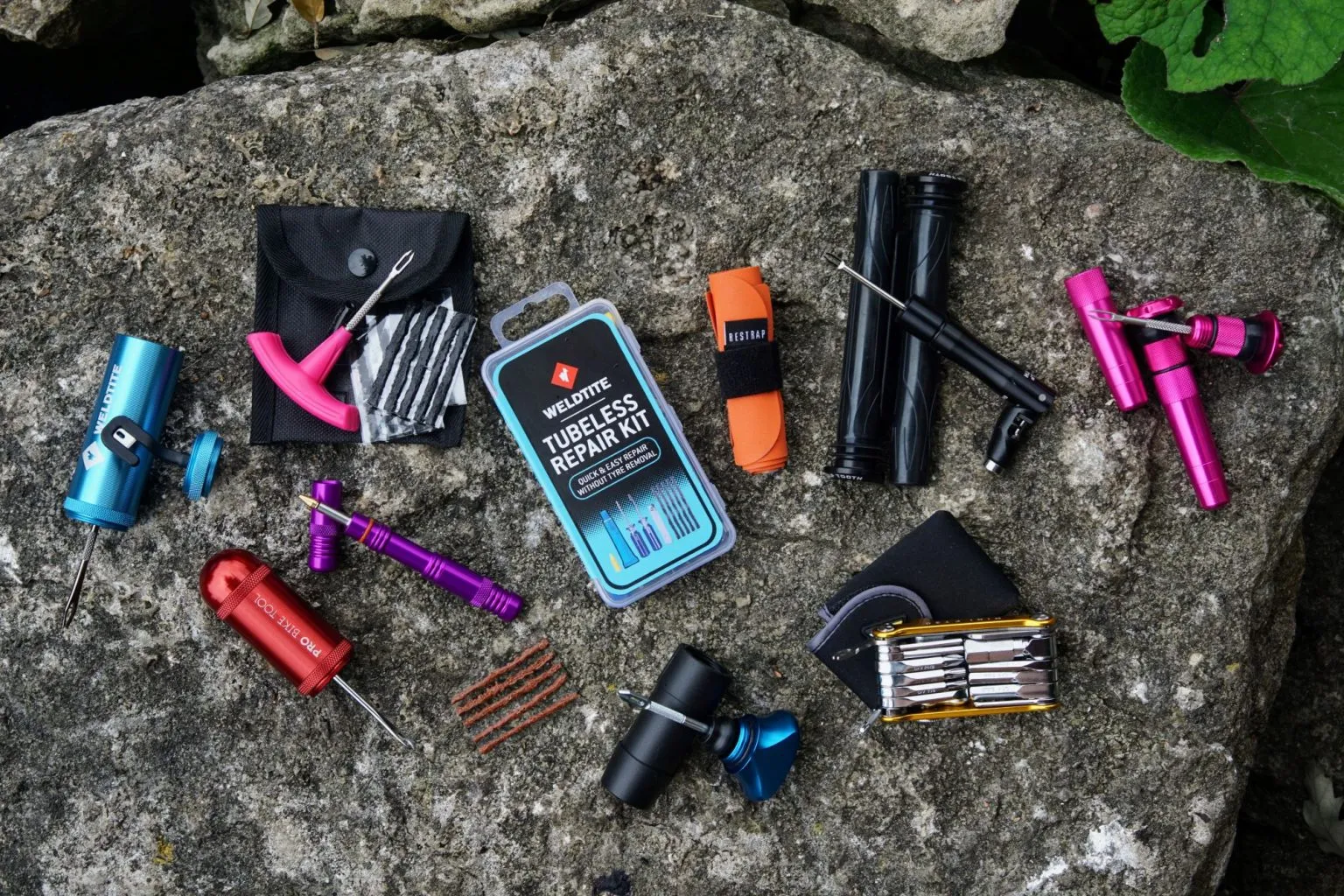
A tyre repair kit can be useful when a tubeless tyre develops a small tread puncture. Basic kits often include puncture plugs, an insertion tool, a reaming tool, and accessories needed to make a temporary repair.
Such kits can be helpful when a puncture occurs far from a tyre shop. Repairing a small tread puncture may allow the driver to restore mobility and reach a professional repair facility rather than remaining stranded at the roadside.
Not every tyre problem can be repaired using a plug kit. Damage to the sidewall or shoulder, large cuts, severe structural damage, or other significant defects generally require professional assessment and may require tyre replacement.
Drivers should follow the repair kit manufacturer’s instructions carefully. The procedure involves working close to the tyre and wheel, so rushing can increase the chance of an improper repair or personal injury.
A repair kit should complement, not replace, a spare tyre or other roadside equipment. Having multiple options is particularly useful for long-distance driving where access to tyre services may be limited.
6. Digital Tyre Pressure Gauge
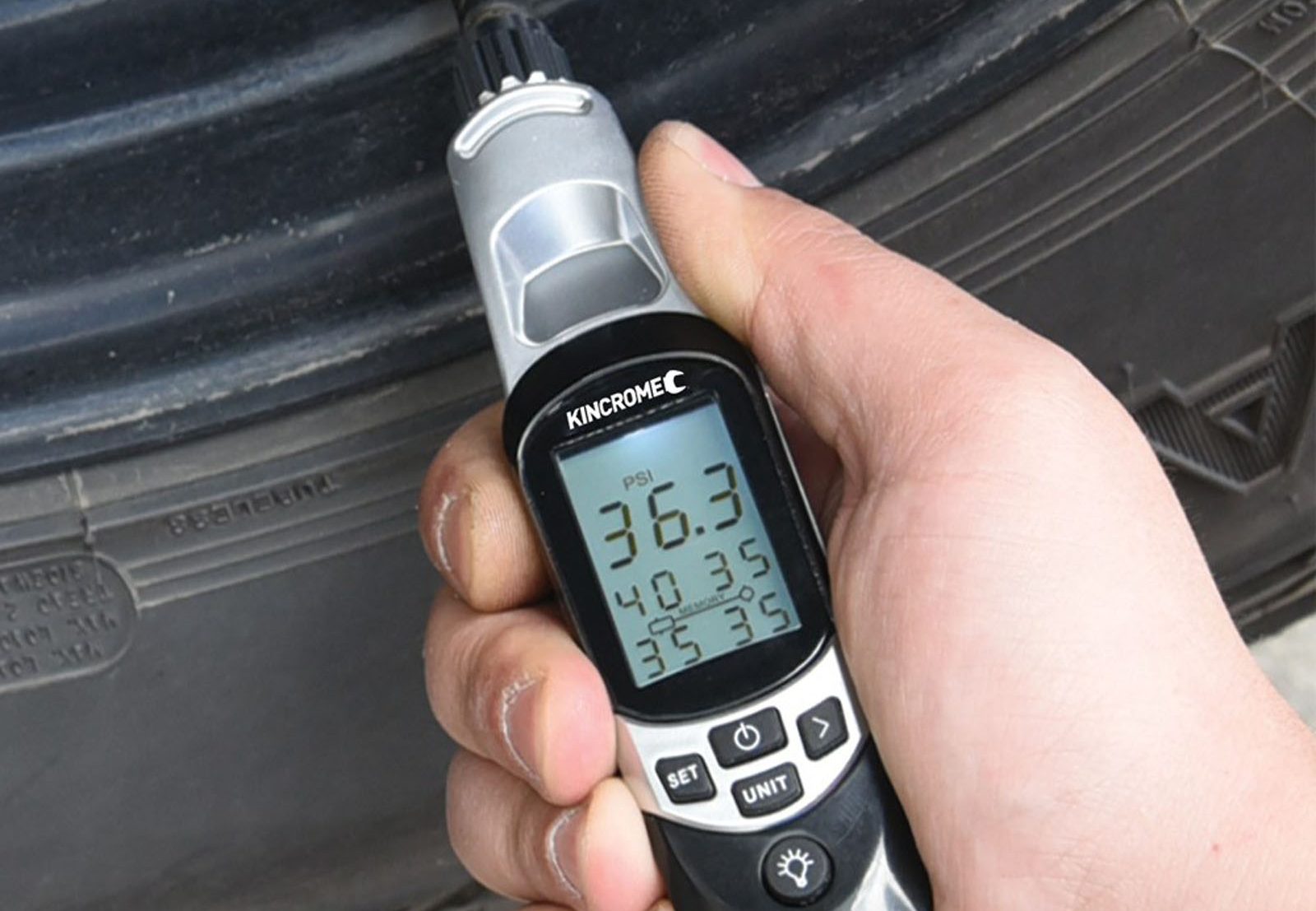
A digital tyre pressure gauge is a simple tool that can help drivers monitor tyre pressure accurately. Even if your vehicle has a tyre pressure monitoring system, a separate gauge can provide a convenient way to check individual tyres.
Incorrect tyre pressure can affect steering feel, braking behaviour, tyre wear, and fuel consumption. Checking pressure regularly is therefore a useful part of vehicle care, particularly before long journeys.
A digital gauge is generally straightforward to use. The nozzle is placed on the tyre valve, and the display provides a pressure reading. Drivers should compare the measurement with the vehicle manufacturer’s recommended pressure.
The recommended pressure is normally found on a vehicle information label, often around the driver’s door area, or in the owner’s manual. The correct value may differ between the front and rear tyres and may change when the vehicle is heavily loaded.
A small pressure gauge takes very little storage space, which makes it an easy addition to an emergency car kit. It can also be used alongside a portable inflator to confirm that the tyre has reached the correct pressure.
7. Basic Car Tool Kit
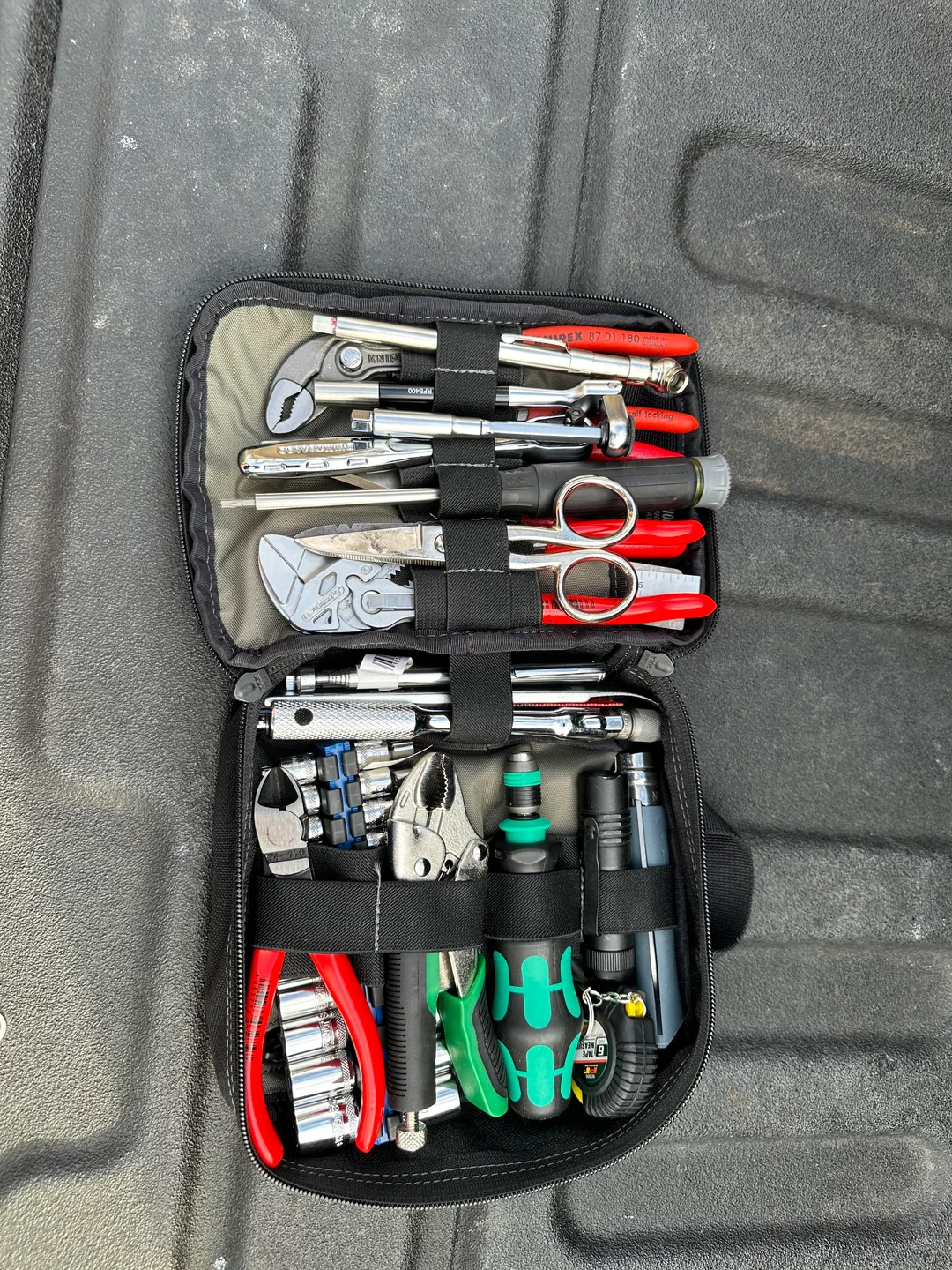
A compact car tool kit can handle a variety of minor mechanical and household-style tasks. Useful contents may include screwdrivers, pliers, adjustable wrenches, sockets, hex keys, and other basic hand tools.
These tools can help with simple jobs such as tightening accessible fasteners, removing small covers, adjusting loose components, or dealing with equipment attached to the vehicle. They can also be useful for securing accessories and making minor roadside adjustments.
A car tool kit does not need to be huge. A carefully selected compact set is easier to store and less likely to become a collection of tools that never gets used. Focus on durable tools with common sizes and comfortable grips.
It is important to know the limits of basic roadside repairs. Modern vehicles contain complex electrical systems, sensors, computers, and specialised components. Attempting unfamiliar repairs without the right knowledge can cause additional damage.
For most drivers, the purpose of a basic tool kit is simple: handle small problems, make safe temporary adjustments, and provide useful equipment while waiting for roadside assistance. It should not encourage unnecessary repairs beside a busy road.
8. Jumper Cables
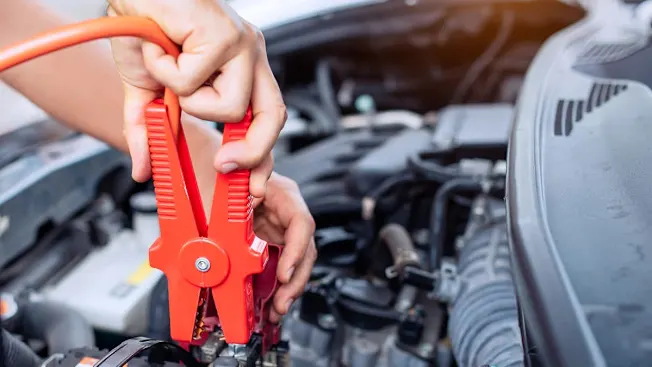
Jumper cables remain useful even when a driver owns a portable jump starter. A good pair can allow a vehicle with a weak battery to be started using another compatible vehicle when the situation permits.
Quality matters because jumper cables carry substantial electrical current. Thick, properly insulated cables with secure clamps are generally preferable to extremely thin cables that may not be suitable for larger engines.
The connection sequence should always follow the vehicle and cable manufacturer’s instructions. Both vehicles should be positioned safely, ignition systems should be handled correctly, and the clamps should not be allowed to touch each other.
Modern vehicles can have specific jump-starting procedures, including designated terminals rather than direct battery connections. The owner’s manual should be consulted whenever there is uncertainty.
Jumper cables are inexpensive compared with many roadside service calls, and they take relatively little space. Combined with a jump starter, they give drivers two practical ways to address a low-battery situation.

9. Reflective Warning Triangle
A reflective warning triangle is a basic roadside safety item that can help make a disabled vehicle more visible to approaching traffic. This becomes particularly important at night, during rain, or on roads with poor visibility.
If your car becomes disabled, visibility should be treated as a priority. A warning triangle can alert approaching drivers that there is an obstruction ahead, giving them more time to slow down or change their path.
The exact placement and use of warning equipment should follow local traffic rules and the conditions at the scene. Drivers should never place themselves in a dangerous position merely to set up a warning device.
A good warning triangle should be stable, reflective, and easy to unfold. A compact storage case can protect it from damage while keeping it organised in the vehicle.
This simple piece of equipment does not repair a vehicle, but it can contribute to roadside safety. It is best viewed as part of a broader emergency kit rather than as a mechanical tool.

10. Work Gloves
A durable pair of work gloves is useful whenever a driver needs to handle a tyre, inspect a vehicle, connect equipment, or work around dirty mechanical components. Gloves can help protect hands from grime, sharp edges, and hot or cold surfaces.
Roadside repairs are rarely clean. Changing a tyre, checking a damaged component, or handling tools on wet ground can quickly leave hands covered in dirt and grease. Gloves make these tasks more manageable.
Choose gloves that provide a balance between protection and dexterity. Extremely thick gloves may protect well but make it difficult to operate small tools, while very thin gloves may offer limited protection.
A pair should be kept in an accessible section of the vehicle rather than at the bottom of a tool bag. Waterproof or washable materials can be particularly convenient for equipment that remains in a car for extended periods.
Gloves are a small addition to a car emergency kit, but they can make roadside work considerably more comfortable. They also encourage drivers to handle tools and vehicle components with appropriate protection.

11. Flashlight or Rechargeable Work Light
A reliable flashlight is essential for vehicle emergencies after dark. Looking under the bonnet, checking a tyre, finding a dropped tool, or inspecting the area around a disabled car becomes much harder without adequate lighting.
A rechargeable work light can provide broader illumination than a traditional narrow-beam flashlight. Some models can stand on their own or attach to a metal surface, allowing both hands to remain available for a task.
A headlamp is also worth considering because it directs light wherever the driver looks. This can be particularly useful when both hands are needed to operate a tool or inspect a component.
Battery condition should be checked regularly. A flashlight that has been sitting unused for months may have depleted batteries or a damaged rechargeable cell. Periodic testing ensures that the light remains ready.
For roadside emergencies, visibility has a safety benefit beyond convenience. A light can help you identify hazards around the vehicle and make you more visible to other people. Use it carefully and avoid shining powerful beams directly into approaching drivers’ eyes.
12. Emergency Roadside Kit
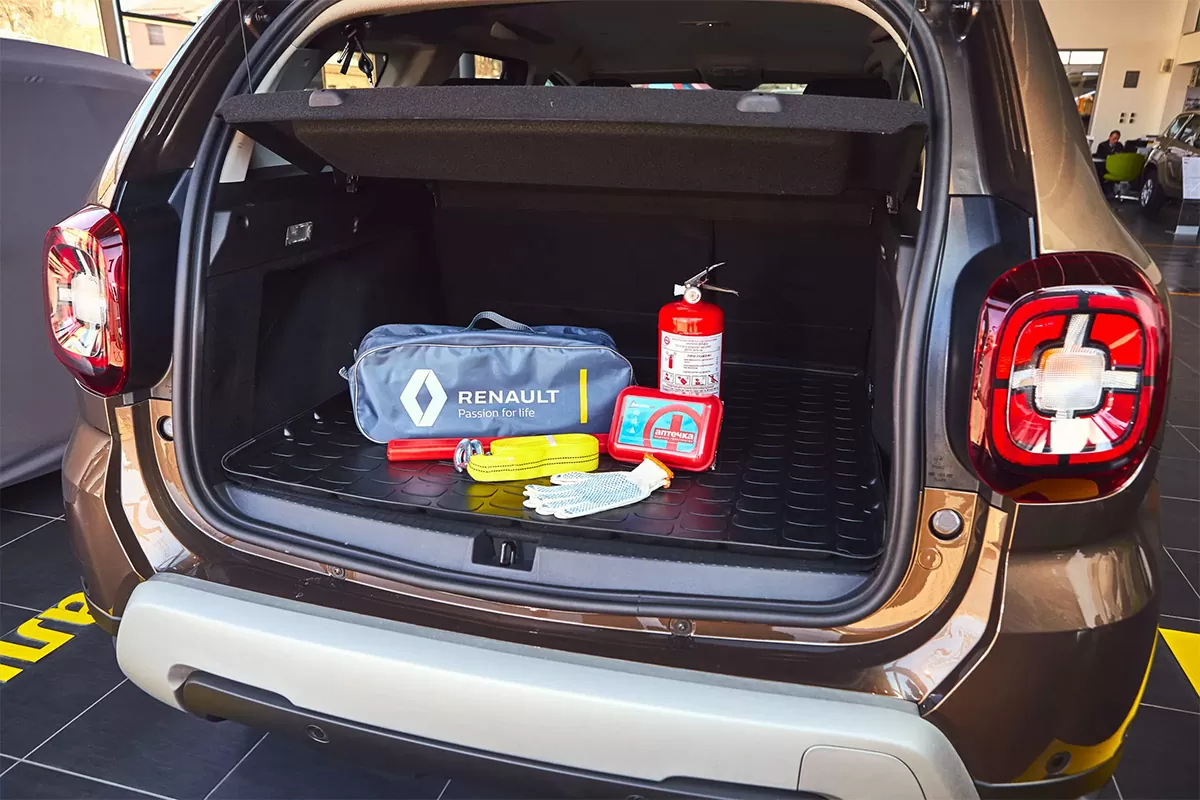
A complete roadside emergency kit brings several useful items together in a single organised package. Depending on the kit, it may include a first-aid kit, reflective vest, warning triangle, gloves, flashlight, basic tools, cable ties, and other emergency supplies.
Having these items together saves time during stressful situations. Instead of searching through different compartments for individual pieces of equipment, the driver can reach for a clearly marked emergency bag.
The contents should be adapted to the vehicle and the type of journeys being taken. Someone who regularly drives long distances may need more equipment than someone who primarily makes short trips around town.
An emergency kit should also be checked periodically. Replace damaged equipment, expired first-aid supplies, dead batteries, and missing tools. A kit is useful only when its contents are functional and ready to use.
The best approach is to combine preparedness with sensible driving habits. Keep emergency equipment accessible, maintain the vehicle regularly, check tyres and fluids, and arrange professional assistance when a problem exceeds your ability to handle it safely.
