
Four-cylinder engines have changed dramatically over the decades. Once associated mainly with affordable transportation, compact powerplants now deliver outputs that would have seemed extraordinary in larger engines.
Turbocharging, direct injection, advanced cooling, variable valve timing, stronger internal components, and hybrid assistance have pushed four-cylinder performance into serious sports-car territory. This ranking looks at ten remarkable production four-cylinder engines that earned attention through horsepower, engineering, motorsport influence, responsiveness, and tuning potential.
The list includes modern turbocharged units and legendary older designs, with factory output serving as the primary ranking factor while engineering significance, character, durability, and real-world performance help separate closely matched contenders.
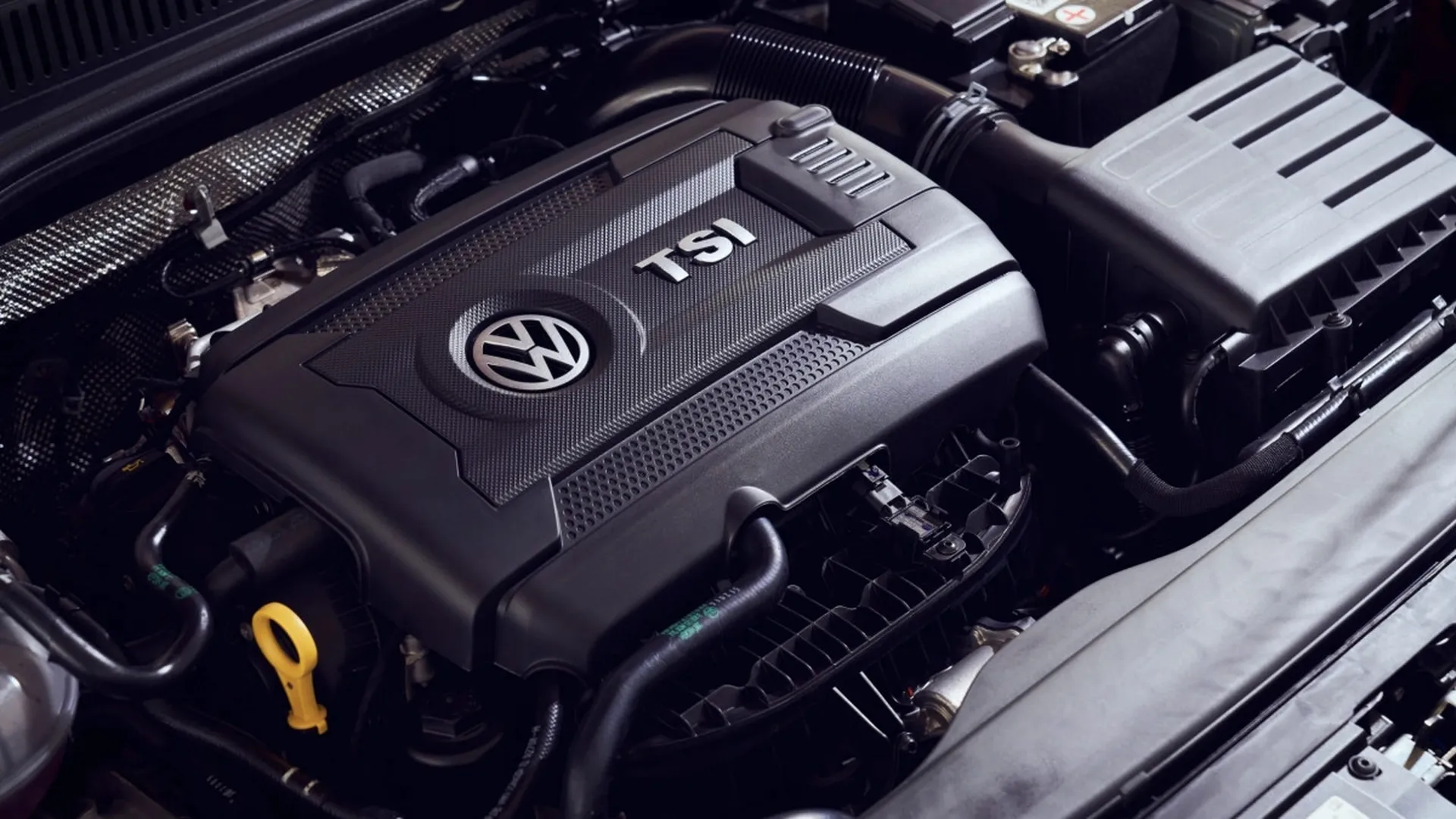
10. Volkswagen Group EA888 2.0 TSI
The Volkswagen Group EA888 earns the tenth position because it transformed the idea of what a mass-produced 2.0-liter four-cylinder could accomplish.
Developed in several generations and specifications, the engine has powered everything from compact hatchbacks to performance sedans and SUVs. In its stronger factory versions, output has reached the low 300-horsepower range, giving this relatively compact engine impressive flexibility.
The EA888 is especially impressive because of its enormous range of applications. Rather than being restricted to a single specialist performance model, versions of the engine have appeared across Volkswagen, Audi, SEAT, Škoda, and Porsche-related applications.
The hardware has evolved through successive generations, bringing improved fuel injection, turbocharging, thermal management, friction reduction, and emissions control.
In cars such as the Volkswagen Golf R and Audi S3, the engine developed roughly 300 horsepower in earlier high-output applications.
That figure may not sound extraordinary beside newer 400-plus-horsepower engines, yet the EA888 established a highly useful balance between performance, everyday drivability, packaging, and efficiency. Its broad torque curve also made the cars surprisingly quick outside laboratory conditions.
Another major advantage is its tuning community. Enthusiasts quickly discovered that turbocharged versions could respond strongly to software calibration, intake and exhaust improvements, intercooling upgrades, and other modifications.
Factory output tells only part of the story with this engine because its underlying architecture has supported substantially higher figures in modified applications.
The EA888 therefore deserves recognition for making high-output four-cylinder performance accessible across a wide section of the automotive market.
It was not designed solely as an exotic engineering statement. Its importance comes from combining serious power with everyday usability, which helped establish the modern turbocharged 2.0-liter four-cylinder as a mainstream performance engine.
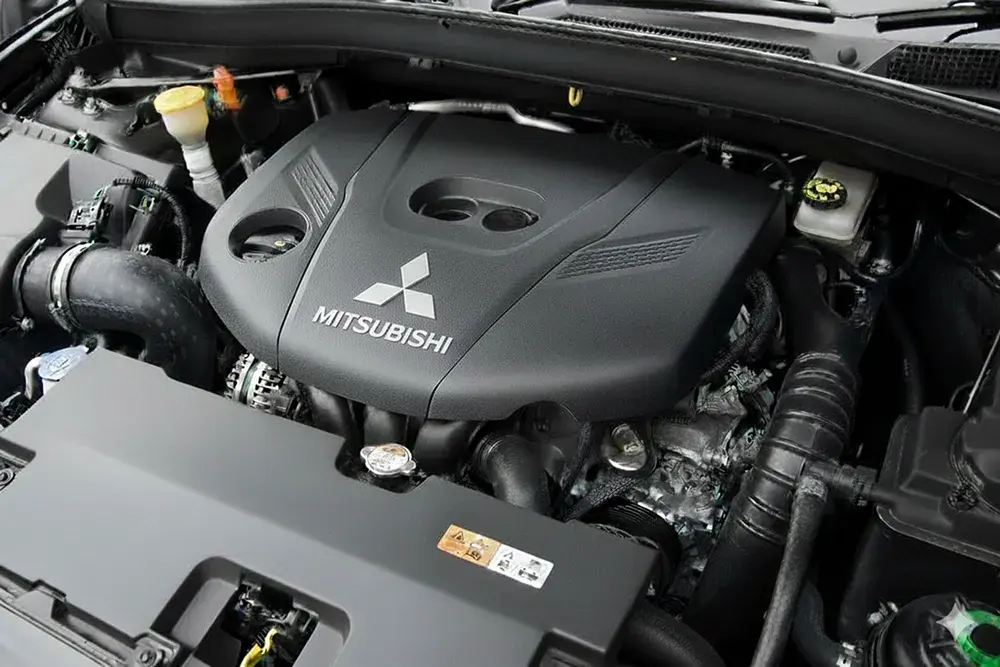
9. Mitsubishi 4B11T
The Mitsubishi 4B11T arrived as the successor to the famous 4G63T in the Lancer Evolution family. It powered the Evolution X and represented a major technological shift for Mitsubishi’s rally-bred performance sedan.
Factory output varied by market and specification, with later versions reaching around 300 horsepower in special applications. Its significance goes beyond its official rating because the engine was built with serious performance demands in mind.
The 4B11T uses an aluminum block rather than the iron construction associated with the older 4G63T. Mitsubishi also developed the engine around modern variable valve timing and turbocharging technology.
The result was a more contemporary powerplant that could deliver strong acceleration while supporting the all-wheel-drive system and performance-focused chassis of the Evolution X.
Power figures for Japanese performance cars from this period can be confusing because manufacturer ratings, market regulations, and special editions did not always tell the complete story. The important point is that the 4B11T comfortably entered the 300-horsepower conversation in production form. It also became a popular platform for enthusiasts seeking significantly more power.
Its response characteristics helped separate the Evolution from ordinary turbocharged sedans. The engine delivered substantial torque through the middle of the rev range, allowing the car to accelerate hard between corners.
Combined with Mitsubishi’s sophisticated all-wheel-drive system, the four-cylinder could turn modest displacement into extremely effective real-world performance.
The 4B11T lands at number nine because newer engines eventually surpassed its factory horsepower. Its place in history remains secure, however. The engine carried the Lancer Evolution name into a new technological era and demonstrated that a relatively compact four-cylinder could provide the foundation for a genuinely serious performance car.
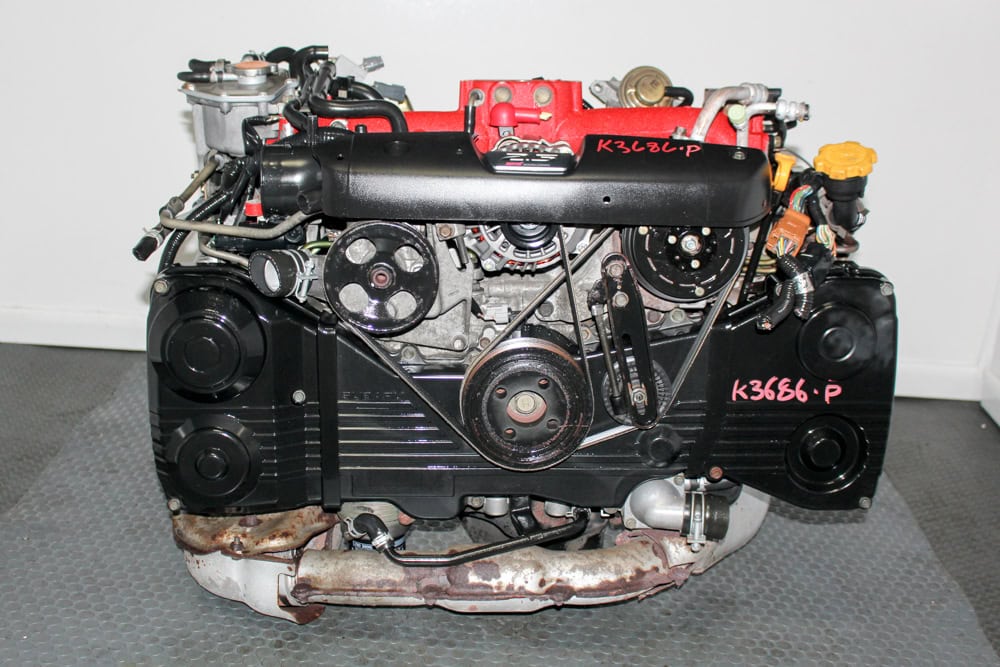
8. Subaru EJ257
The Subaru EJ257 is among the most recognizable high-performance four-cylinder engines ever fitted to a road car. Its 2.5-liter horizontally opposed layout powered generations of the WRX STI and became closely associated with Subaru’s rally-inspired identity.
In its later production form, it produced around 310 horsepower in the United States, making it a formidable factory engine.
The boxer configuration gives the EJ family a naturally low center of gravity. That characteristic worked particularly well with Subaru’s symmetrical all-wheel-drive philosophy.
The engine’s exhaust pulse arrangement also produced the distinctive sound that became part of the WRX STI experience. For many enthusiasts, the soundtrack was nearly as memorable as the acceleration.
The EJ257 was not the most sophisticated engine on this list, and it did not possess the specific output of modern 2.0-liter turbocharged units. Its strength came from its combination of displacement, turbocharging, all-wheel drive, and a chassis designed to exploit the engine’s performance. The result was a car that felt highly purposeful on challenging roads.
Factory output reached 310 horsepower in the STI, while torque reached 290 lb-ft in the specification tested by MotorTrend. Those numbers gave the Subaru enough performance to compete with other compact performance cars while retaining the distinctive boxer layout.
The EJ257 ranks eighth because its importance cannot be measured solely by horsepower. It helped define the modern rally-inspired sports sedan and became a major part of Subaru’s performance heritage.
Its combination of character, motorsport connections, tuning potential, and distinctive engineering makes it worthy of a place among the greatest four-cylinder engines ever sold.
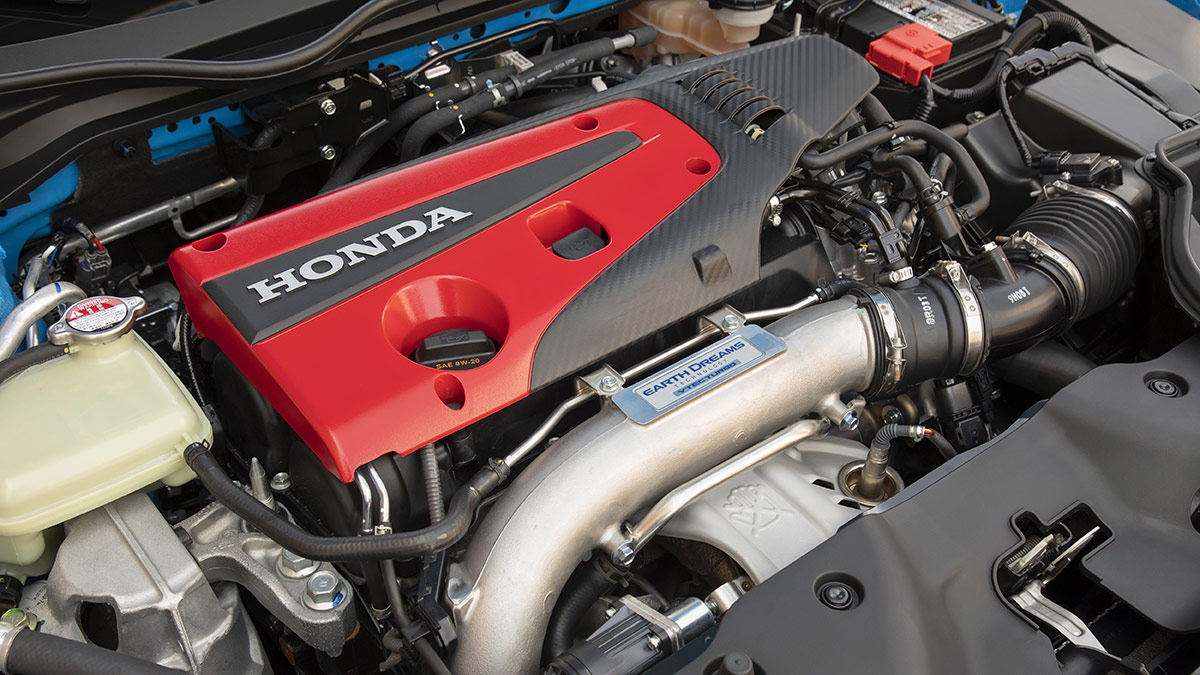
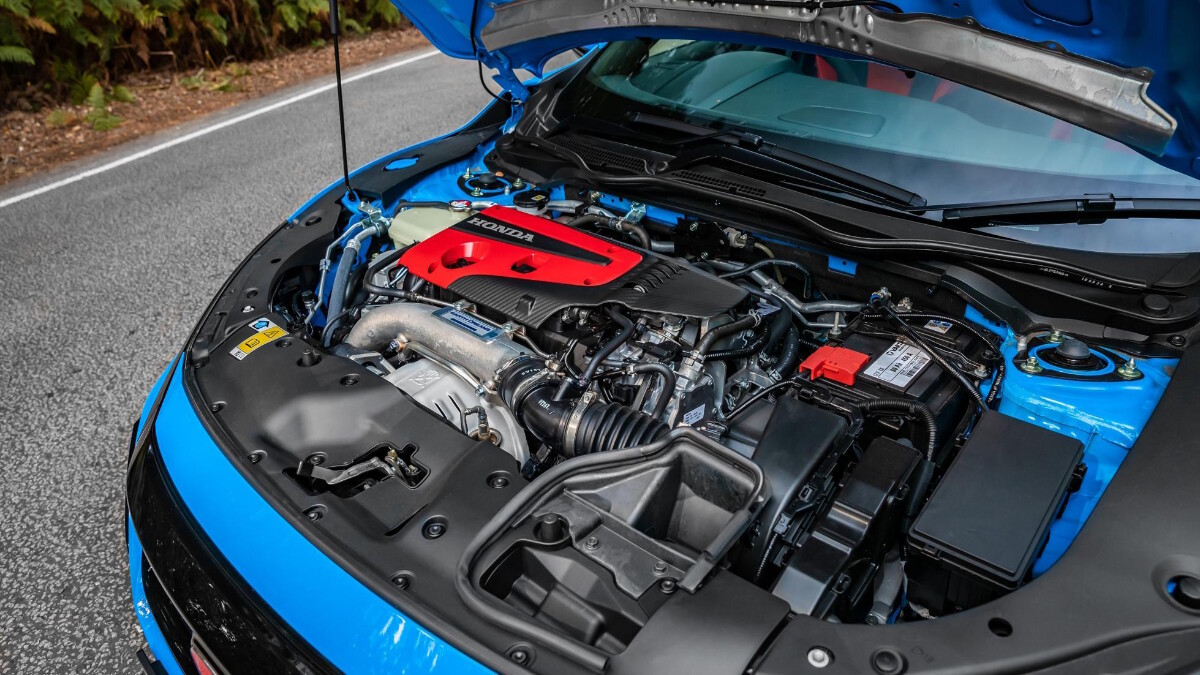
7. Honda K20C1
Honda’s K20C1 is a modern interpretation of the company’s long-standing performance philosophy. Found in the Civic Type R, the 2.0-liter turbocharged engine combines direct injection, variable valve timing, a twin-scroll turbocharger, and a high-revving character unusual for a heavily boosted four-cylinder. Depending on generation and market, output has climbed beyond 300 horsepower.
The engine became particularly important because Honda did not sacrifice everyday usability for performance. The Civic Type R could operate as a practical daily car while still providing the power needed for aggressive driving.
Earlier versions produced 306 horsepower and 295 lb-ft, figures that put the engine firmly among the strongest factory four-cylinders of its era.
Honda also gave the engine a broad personality. Turbocharged torque arrives much earlier than it would in an old naturally aspirated Honda performance engine, yet the power delivery retains a sense of urgency as revs rise. That combination helped the Type R feel quick without becoming difficult to drive in ordinary traffic.
The K20C1 also benefited from a sophisticated cooling and lubrication strategy. High-output turbo engines generate substantial heat, particularly during repeated hard acceleration and track use.
Honda designed the engine around the demands of the Civic Type R, allowing it to deliver strong performance while maintaining the reliability expectations associated with a production Honda.
It takes seventh place because several engines now produce more factory horsepower. Still, the K20C1 deserves a high ranking for its balance of output, response, refinement, and motorsport-inspired engineering. It proved that a four-cylinder could power a front-wheel-drive performance car to genuinely high speeds while remaining usable every day.
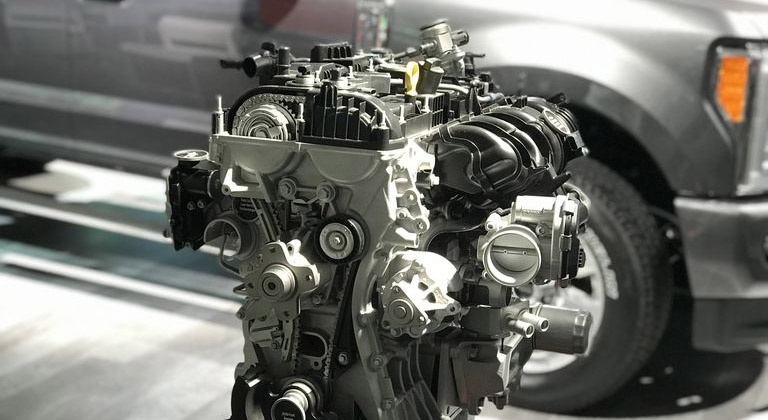
6. Ford 2.3 EcoBoost
Ford’s 2.3-liter EcoBoost became a major performance engine through applications such as the Focus RS and Mustang EcoBoost. The Focus RS version produced 350 horsepower and 350 lb-ft of torque, making it one of the strongest four-cylinder engines available in a mainstream performance hatchback at the time.
The engine’s appeal came from its torque. A 350-horsepower figure is impressive, but the matching 350 lb-ft made the Focus RS exceptionally forceful when accelerating from low and medium speeds. Turbocharging allowed the relatively small engine to generate the kind of output traditionally associated with much larger naturally aspirated engines.
In the Focus RS, the engine was paired with an all-wheel-drive system designed to make the most of its output. MotorTrend recorded a 0-to-60 mph time of 4.5 seconds for the car during testing, demonstrating how effectively Ford converted four-cylinder power into acceleration.
The 2.3 EcoBoost also demonstrated Ford’s ability to create a modular engine platform capable of serving different purposes. It could power a performance hatchback with an aggressive personality while also serving as the foundation for Mustang applications. The hardware and calibration varied, but the basic engine architecture proved remarkably versatile.
The Ford engine takes sixth because its 350-horsepower Focus RS specification was genuinely remarkable for its period.
It offered serious output without requiring six or eight cylinders, while its broad torque delivery made the car exceptionally quick in everyday conditions. Few mainstream four-cylinder engines matched its combination of power and accessibility.
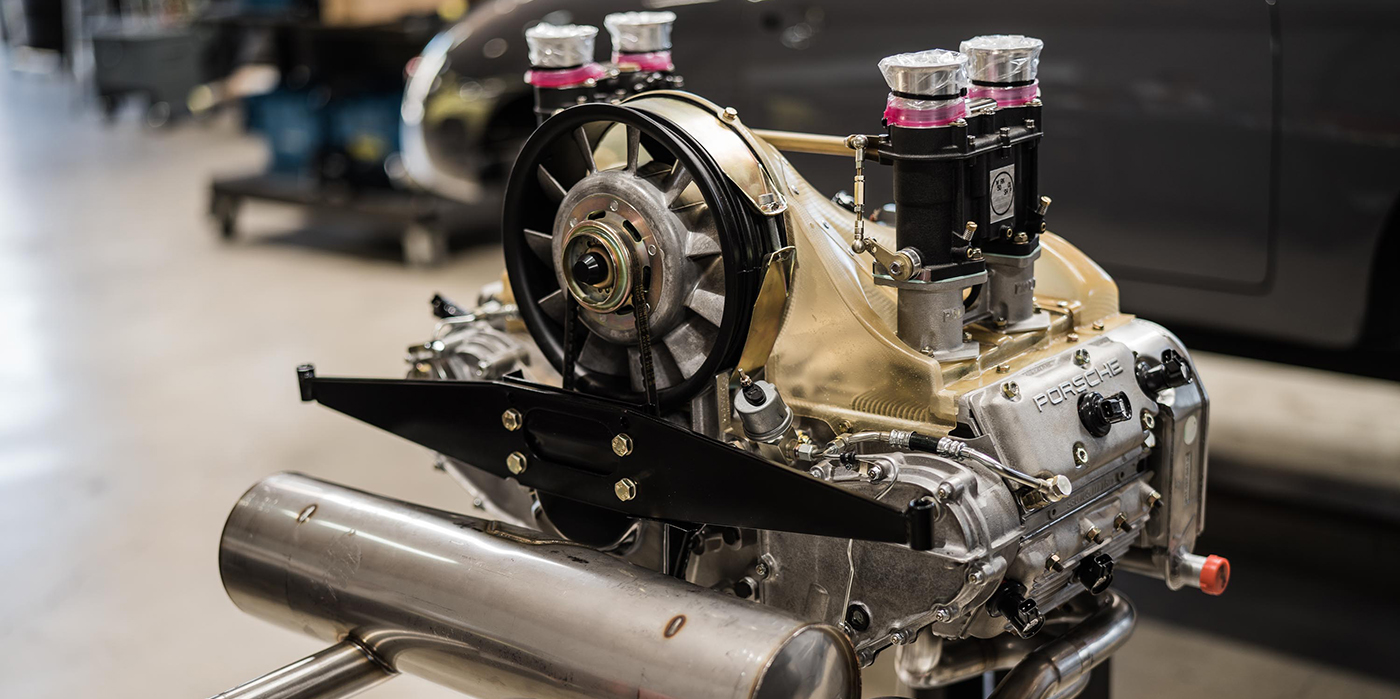
5. Porsche 2.5-Liter Turbo Flat-Four
Porsche shocked many enthusiasts when it replaced naturally aspirated flat-six engines with turbocharged flat-fours in the 718 Boxster and Cayman family. The 2.5-liter engine in the Boxster GTS and Cayman GTS produced 365 horsepower and 317 lb-ft of torque, making it Porsche’s most powerful turbocharged four-cylinder in those applications.
The horizontally opposed layout kept the engine low in the chassis, an important advantage for a mid-engine sports car. Turbocharging then supplied the additional torque needed to compensate for the reduced cylinder count. The result was an engine that delivered serious acceleration while preserving the compact packaging required by the 718 platform.
Porsche’s engineering approach also focused heavily on throttle response and drivability. Turbo engines can sometimes deliver power in a sudden or disconnected manner, yet the 718’s four-cylinder was engineered to provide a usable spread of torque.
The car could therefore feel fast on a winding road rather than relying exclusively on straight-line acceleration.
The 365-horsepower rating gave the GTS models a strong position among production four-cylinders. The engine also benefited from Porsche’s experience with forced induction, thermal management, and high-performance drivetrain engineering. Its placement in a lightweight mid-engine chassis amplified the effect of every unit of power.
The Porsche flat-four takes fifth because it combined substantial horsepower with sports-car packaging and handling requirements. It also represented a significant change for Porsche.
While some enthusiasts missed the sound of the company’s naturally aspirated flat-six, the 2.5-liter turbo proved that a four-cylinder could still deliver convincing Porsche performance.
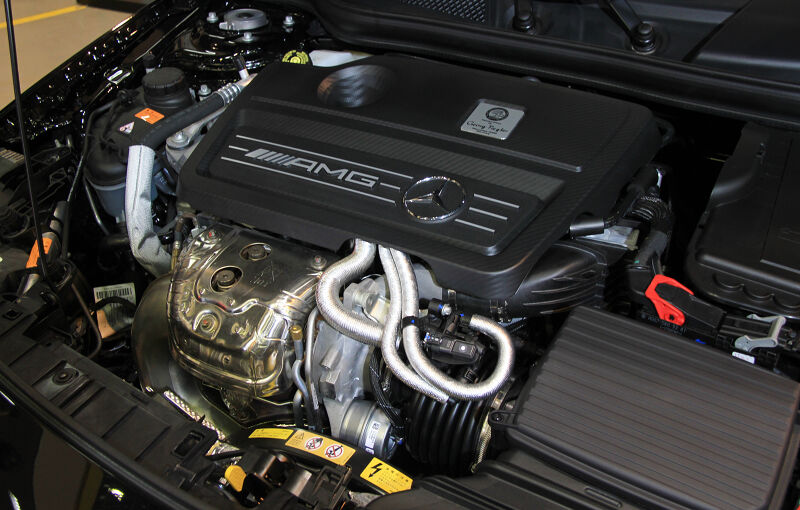
4. Mercedes-AMG M133
Before the M139 arrived, Mercedes-AMG’s M133 established an extraordinary benchmark for compact four-cylinder power. The 2.0-liter turbocharged engine powered cars such as the A45 AMG and CLA45 AMG, with output reaching roughly 375 to 381 horsepower in later versions. Its high specific output made it a standout during the 2010s performance-car boom.
The M133 was remarkable because Mercedes-AMG extracted so much power from only two liters while maintaining production-car usability.
The engine used direct fuel injection, turbocharging, sophisticated thermal management, and reinforced components designed to withstand substantial cylinder pressures. It demonstrated that a small engine could deliver the acceleration expected from a much larger performance powerplant.
Its character also helped define the early AMG compact-car era. The engine could feel aggressive when pushed, yet it remained compatible with daily driving. In A45 applications, power was sent through an all-wheel-drive system that helped transform the compact hatchback into a seriously fast machine.
The M133’s significance becomes clearer when viewed beside its successor. Mercedes-AMG later developed the M139 with even higher output, but the M133 established much of the foundation for that achievement.
It proved there was a market for extremely high-output four-cylinder engines in premium performance cars.
The M133 takes fourth because it represented a major leap in factory four-cylinder horsepower. Its output approached 400 horsepower before hybrid assistance became a common path to huge combined figures. It also helped change public expectations about what a 2.0-liter engine could accomplish in a production automobile.
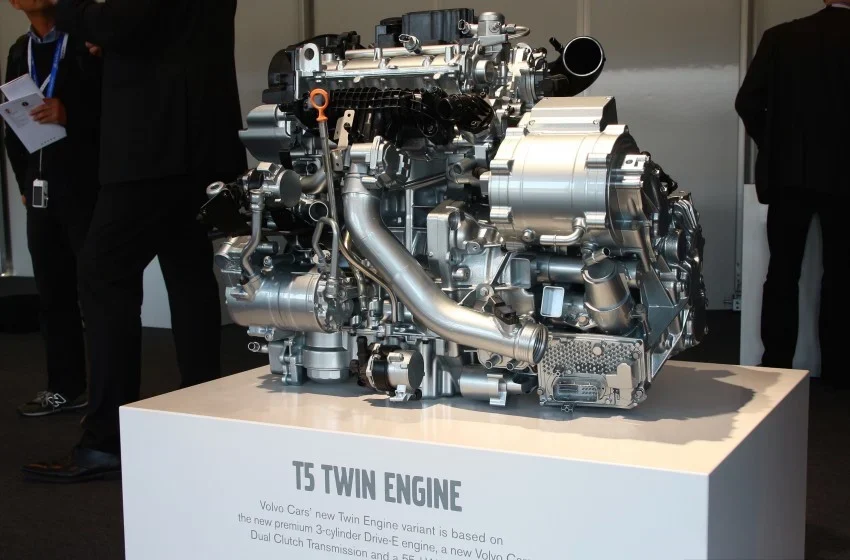
3. Volvo Drive-E T8 Twin-Engine Powertrain
Volvo’s Drive-E four-cylinder family deserves special attention because engineers created remarkable output from a compact 2.0-liter platform using multiple forms of forced induction and electrification. In earlier T8 configurations, the combined powertrain reached around 400 horsepower, while later versions increased total system output considerably.
The underlying gasoline engine used both a turbocharger and a supercharger in high-output applications. The supercharger helped provide immediate response at lower engine speeds, while the turbocharger supplied additional airflow as revs and load increased. Electric assistance then added another layer of torque and power to the complete powertrain.
This approach was particularly unusual because the four-cylinder engine did not need to perform every task alone. Instead, Volvo divided the workload among mechanical forced induction and electric motors. The result was an impressive combination of torque, refinement, efficiency, and acceleration from a powertrain architecture that remained compact.
Earlier Volvo specifications were already producing roughly 400 horsepower in models such as the XC90 T8, with published figures showing 472 lb-ft of torque and more than 200 horsepower per liter for the complete configuration.
The electric component is important when discussing those numbers because they represent system output rather than gasoline-engine output alone.
The Volvo powertrain ranks third because it showed how far four-cylinder performance could go when engineers stopped relying exclusively on combustion power.
It may not have the mechanical simplicity of a traditional performance engine, but its sophisticated combination of turbocharging, supercharging, and electric assistance created an exceptionally powerful production four-cylinder-based system.
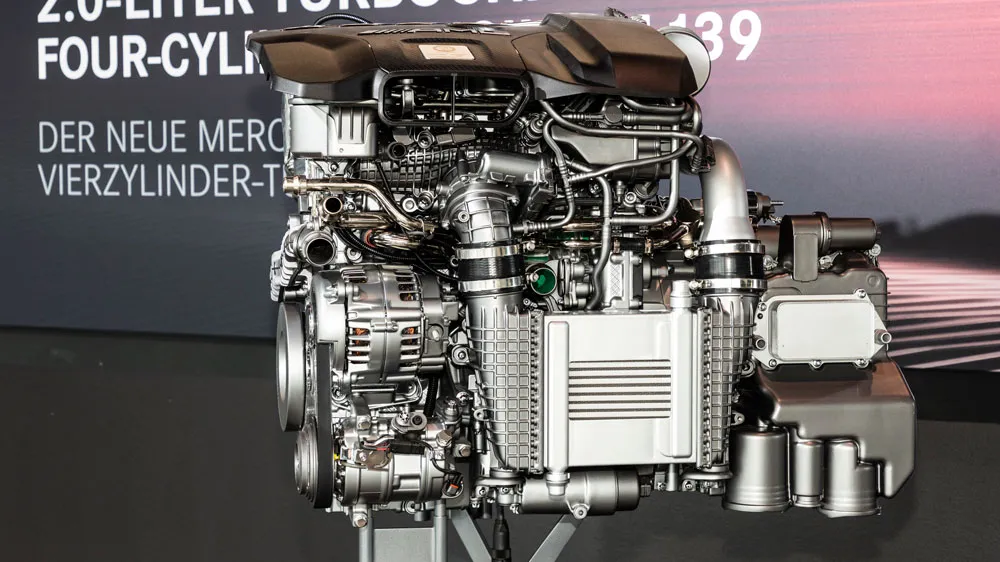
2. Mercedes-AMG M139
The Mercedes-AMG M139 takes the second position in this ranking and represents a spectacular achievement in modern combustion-engine design. When introduced, the 2.0-liter turbocharged engine produced up to 416 horsepower in the AMG A45 S, with 369 lb-ft of torque. Later developments pushed its standalone output even higher.
The engine’s architecture is unusually serious for a compact production unit. Mercedes-AMG uses a closed-deck aluminum block, sophisticated cooling, direct and port fuel injection, and a twin-scroll turbocharger.
The cylinder head was rotated and repositioned to improve packaging and airflow, while the turbocharger was mounted in a configuration intended to shorten the exhaust path.
The M139 also became famous for its production philosophy. Mercedes-AMG assembles these engines under its “One Man, One Engine” approach, where an individual technician is responsible for assembling the engine. That process reinforces the engine’s position as a specialist performance component rather than simply a mass-market powerplant.
Specific output is where the M139 becomes extraordinary. Its 416-horsepower launch specification works out to more than 200 horsepower per liter. Later versions increased the figure further, and the engine eventually reached 469 horsepower in the most extreme production application, according to current published specifications.
The M139 ranks second only because the ranking must account for the broader history of four-cylinder engines rather than simply declaring the newest specification the automatic winner.
In terms of factory horsepower from a 2.0-liter combustion engine, however, it sits at the very top of the modern category. Its combination of output, technology, packaging, and engineering ambition is extraordinary.
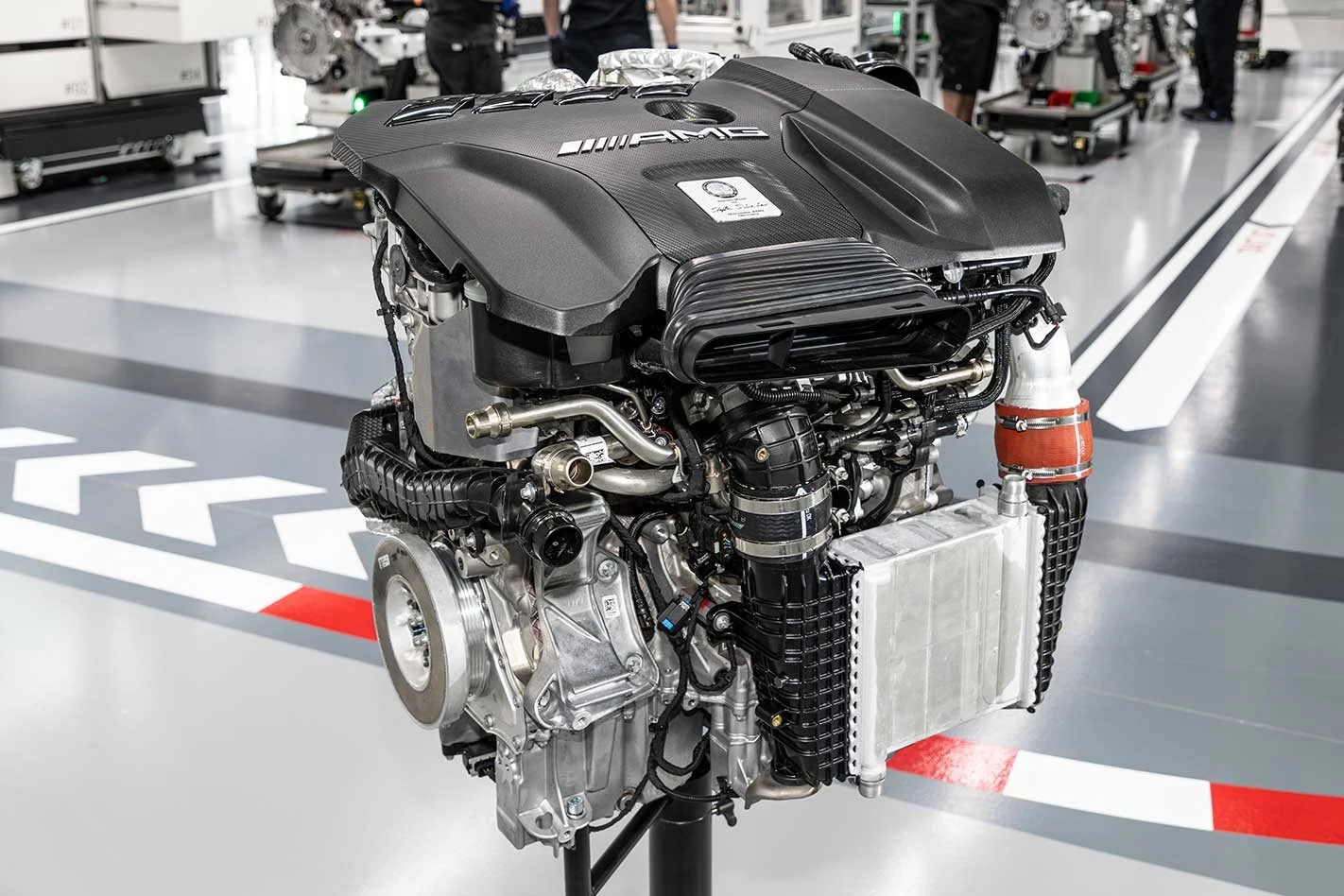
1. Mercedes-AMG M139 in Its 469-HP Specification
The highest-output production four-cylinder engine currently associated with a road-going car is the extreme version of Mercedes-AMG’s M139. In the C63 S E Performance, the 2.0-liter engine produces 469 horsepower on its own before the electric motor’s contribution is added. That makes this specification a remarkable peak for four-cylinder combustion-engine output.
The engine’s 469 horsepower comes from only 1,991 cc of displacement. That works out to roughly 235 horsepower per liter, a figure that places the M139 among the most power-dense production combustion engines ever fitted to a road car.
The engine achieves this through extremely high boost, advanced airflow management, sophisticated fuel delivery, and carefully engineered thermal control.
The C63 application adds another layer of technology. An electric motor on the rear axle contributes substantial additional power and torque, taking the complete system to a much higher combined figure.
Published specifications put total system output at 671 horsepower and 752 lb-ft, although those figures belong to the complete hybrid powertrain rather than the four-cylinder engine by itself.
What makes the M139 particularly impressive is the engineering challenge involved in extracting this much power from such a small combustion engine while retaining production-car requirements.
Cylinder pressures, exhaust temperatures, cooling demands, lubrication, and turbocharger loads all become major concerns at this level. Mercedes-AMG had to engineer the entire package around those stresses.
For that reason, the 469-horsepower M139 earns the number one position. Older engines such as the Mitsubishi 4G63T and Subaru EJ series built legendary reputations through motorsport and tuning, while Porsche and Honda created engines famous for response and character.
The M139 represents the current peak of factory four-cylinder combustion performance, proving just how far compact engines have progressed.
