
Police cars live harder lives than ordinary vehicles, facing long hours, repeated acceleration, hard braking, rough roads, idling, heavy equipment, and frequent high-speed driving. Automakers respond by giving police versions stronger cooling systems, brakes, suspension components, electrical systems, and other duty-focused upgrades.
That does not mean every retired police car will automatically last longer than a privately owned example. Maintenance history and mileage matter greatly.
Still, certain police packages were built to withstand punishment that would wear out a comparable civilian model much sooner. Here are ten examples where the police version gained meaningful hardware designed for demanding service conditions.
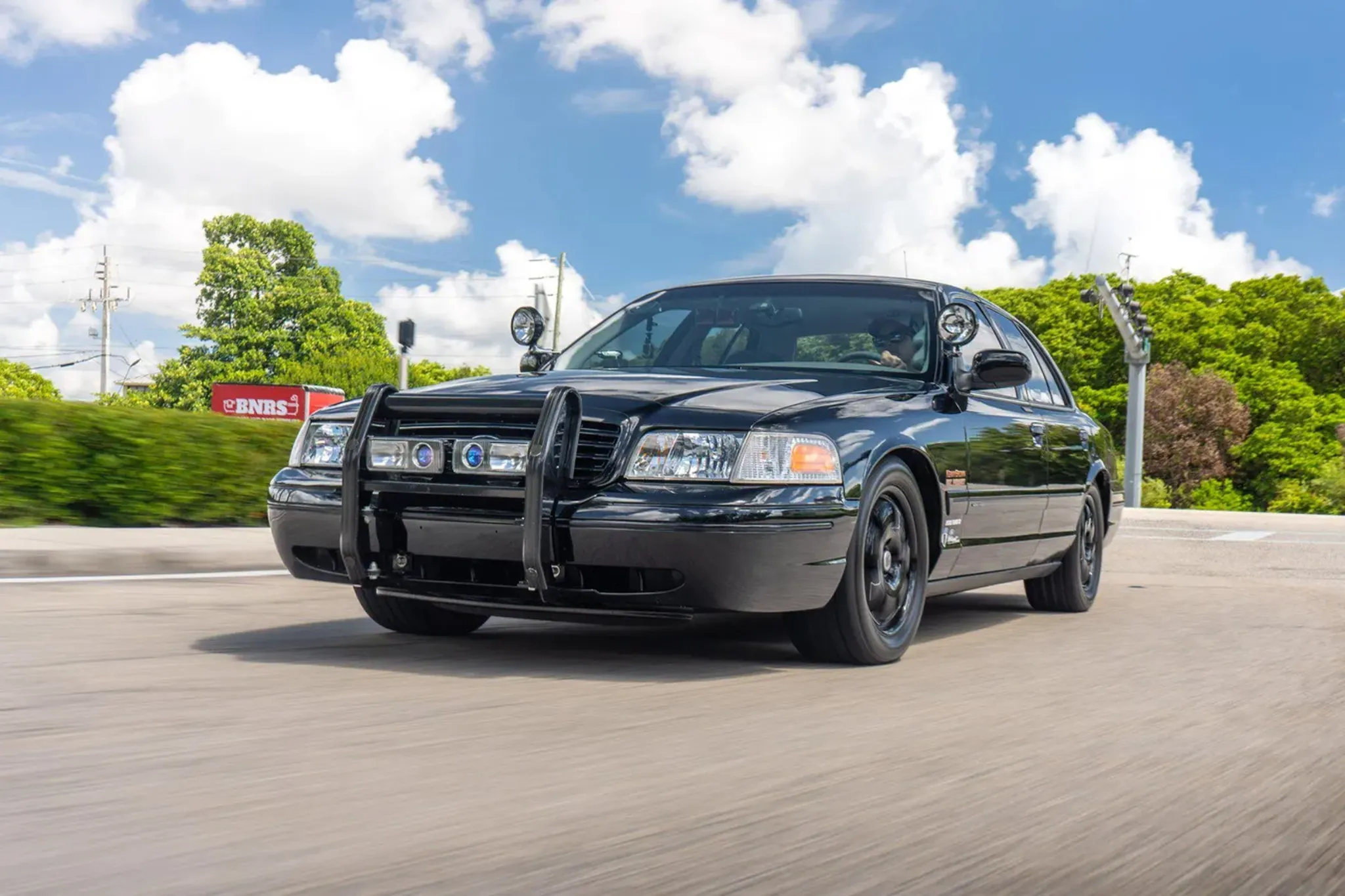
1. Ford Crown Victoria Police Interceptor vs Civilian Crown Victoria
The Ford Crown Victoria is probably the clearest example of a police car being substantially better prepared for hard use than its civilian counterpart. The civilian Crown Victoria was designed as a comfortable full-size sedan, while the Police Interceptor, commonly called the P71, was configured around law enforcement requirements.
Both shared the same basic Panther platform and 4.6-liter V8 architecture, making this a genuine comparison between closely related versions of the same car. The police model received numerous changes intended to handle severe service.
The Police Interceptor received a stronger suspension setup, upgraded cooling, a higher-output electrical system, heavy-duty brakes, and other components suited to continuous duty.
Police cars also commonly carried radios, computers, emergency lighting, cages, and additional equipment, creating loads that civilian versions did not normally experience. Ford designed the package around repeated hard driving rather than simply adding a police badge to a regular Crown Victoria.
The difference becomes particularly important when considering engine temperature and braking. A patrol vehicle can spend long periods idling before suddenly accelerating, followed by repeated braking.
Those conditions generate stresses that ordinary commuting rarely produces. The police package addressed several of these demands with severe duty equipment. Period testing also highlighted the Crown Victoria Police Interceptor’s durability and reliability as important strengths.
The civilian Crown Victoria, however, should not be considered fragile. Its body-on-frame construction, Rear Wheel Drive layout, simple mechanical design, and proven 4.6-liter V8 helped create a reputation for longevity. Many civilian examples accumulated substantial mileage.
Police versions simply had an advantage when the comparison involved repeated severe service rather than ordinary commuting. Former officers have frequently praised the Crown Victoria for reliability and its ability to tolerate demanding patrol work.
The Crown Victoria Police Interceptor is arguably the strongest example on this list. If both cars had similar maintenance histories and were subjected to demanding driving, the police version’s additional hardware gave it a meaningful durability advantage. It was built for punishment, not merely transportation.
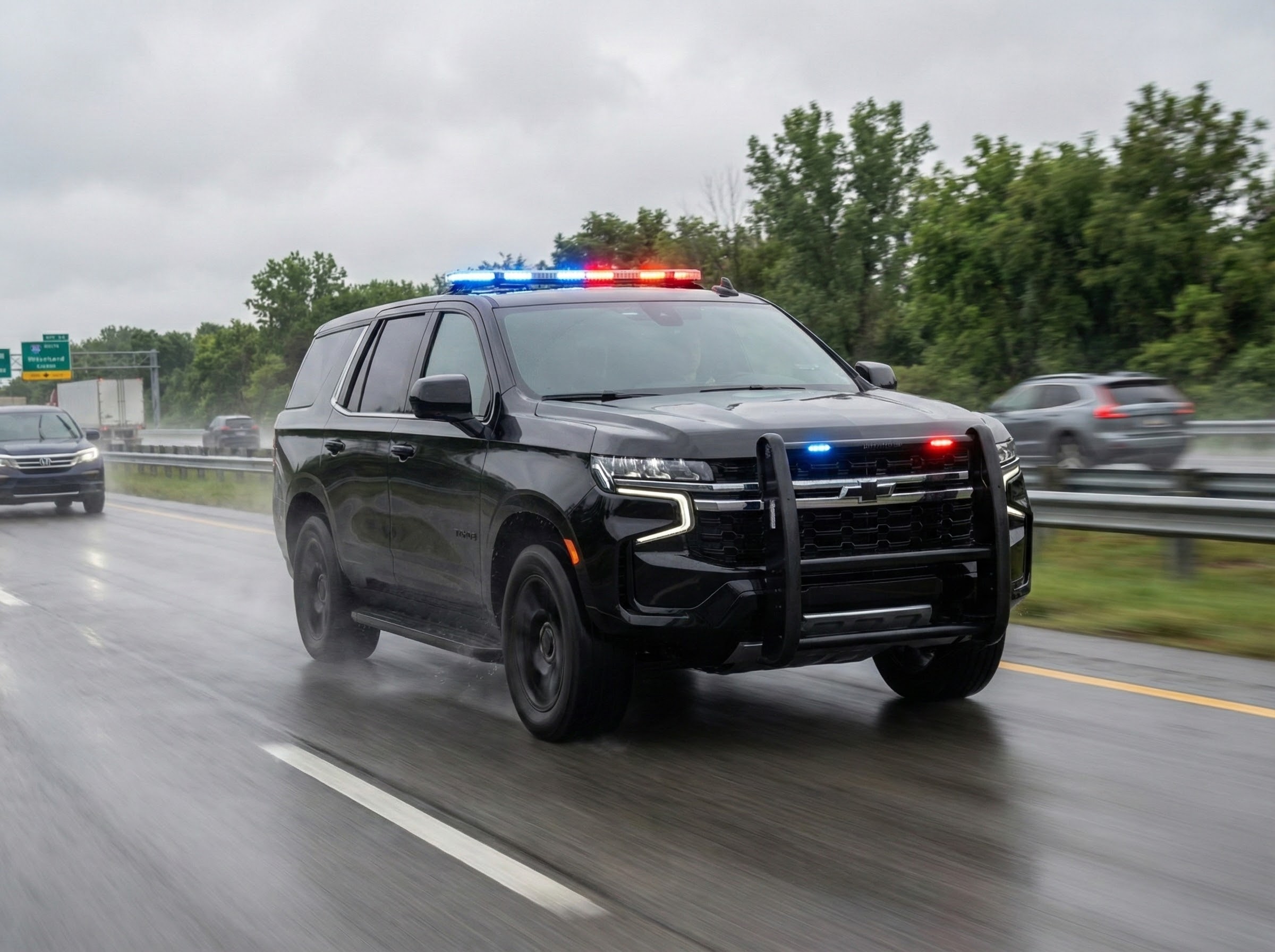
2. Chevrolet Tahoe PPV vs Civilian Chevrolet Tahoe
The Chevrolet Tahoe presents an interesting comparison because its civilian counterpart was already a rugged SUV. The police package made the platform even better suited to demanding service.
Police Tahoe models were designed for agencies that needed space, towing ability, ground clearance, Four Wheel Drive availability in some configurations, and durability under heavy use. The Police Package Vehicle, commonly known as the Tahoe PPV, became particularly popular with law enforcement agencies.
A major advantage comes from the Tahoe’s basic construction. Unlike many modern unibody cars, the Tahoe traditionally used a truck-based architecture. That gave it a strong foundation for carrying equipment and enduring rough conditions.
Police versions also received changes involving suspension, brakes, cooling, electrical capacity, tires, and other areas. A police Tahoe could therefore spend its working life carrying several occupants, communications equipment, protective gear, and other hardware without being treated like a lightly loaded family SUV.
Historical fleet experience gives the Tahoe an especially interesting reputation. In a long discussion involving police fleet vehicles, an experienced officer described early police Tahoes as exceptionally durable and reported examples reaching very high mileage.
Anecdotal fleet experiences should not be treated as laboratory proof, but they illustrate why the platform became respected among agencies.
The civilian Tahoe is still a highly capable vehicle, and a well-maintained civilian example can easily outlive a neglected police vehicle. That point is essential because police duty is brutally demanding.
A patrol Tahoe can accumulate enormous amounts of engine running time without traveling the same number of miles as a private vehicle. Its odometer therefore does not tell the entire story. The police equipment makes it more resistant to severe use, but it does not make mechanical wear disappear.
The Tahoe PPV has a convincing advantage when the question is durability under severe service. Its truck-based foundation and police specific upgrades make it better prepared for punishment than a standard Tahoe, particularly when the vehicle is properly maintained.
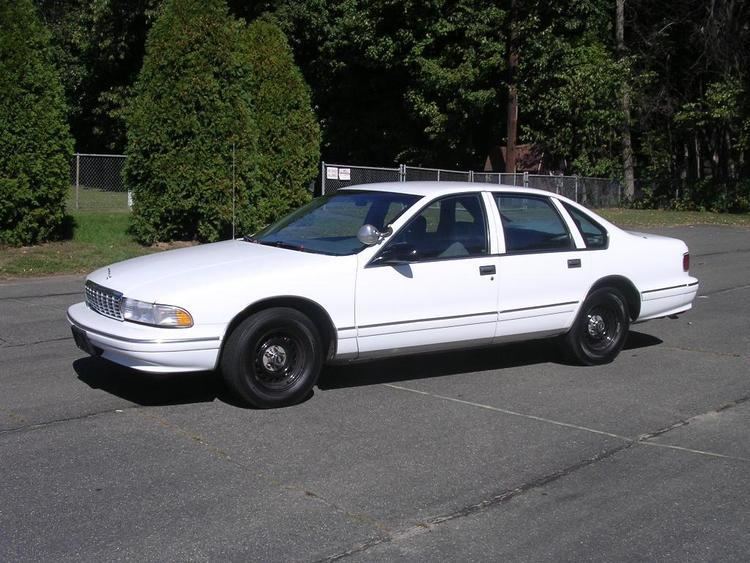
3. Chevrolet Impala 9C1 vs Civilian Chevrolet Impala
The Chevrolet Impala 9C1 is a useful example of how a familiar family sedan can be transformed for police service. The civilian Impala was designed primarily for comfortable transportation, while the 9C1 police package was engineered around law enforcement demands.
The difference was not simply cosmetic. Police versions received equipment designed to deal with long periods of operation and aggressive driving.
The 9C1 package included changes involving cooling, suspension, brakes, electrical capacity, and other components. Police vehicle evaluations specifically considered these areas because law enforcement cars experience conditions that ordinary family sedans rarely encounter.
A patrol Impala might idle for hours, carry several hundred pounds of equipment, accelerate repeatedly, and perform emergency braking. Those requirements demanded a different approach to durability.
The Impala’s Front Wheel Drive configuration made it different from traditional Rear Wheel Drive police cars such as the Crown Victoria. That layout offered advantages in certain weather conditions, particularly where traction was important.
At the same time, the front end carried additional responsibilities because it handled both propulsion and steering. Period comparisons noted that the police Impala had its own strengths and weaknesses compared with Rear Wheel Drive competitors.
The civilian Impala was not a poor vehicle simply because the 9C1 existed. It was designed for a different mission. A privately owned Impala generally experienced shorter duty cycles, less weight, fewer abrupt stops, and far fewer hours of idling.
The police version’s extra equipment therefore becomes most valuable when the vehicle is subjected to the type of punishment for which it was designed.
The 9C1 has the stronger severe duty package, giving it an advantage over the standard Impala when both are subjected to hard use. For normal family driving, that advantage becomes much less significant because the civilian car faces far easier operating conditions.
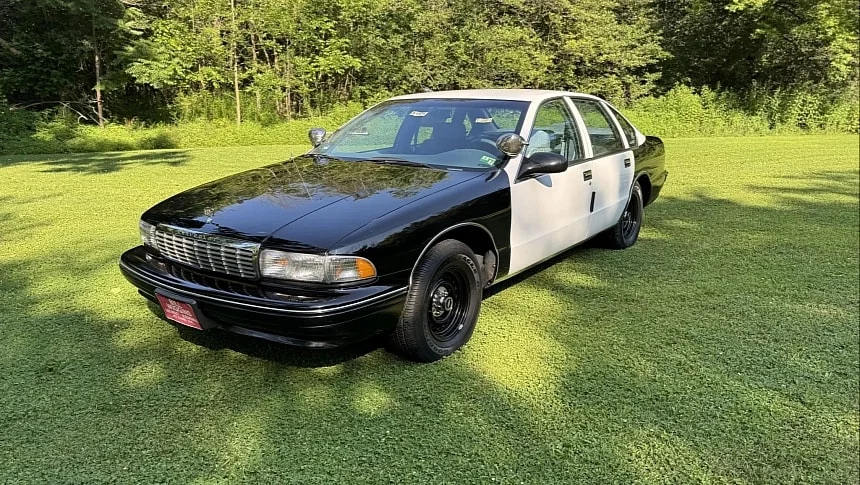
4. Chevrolet Caprice 9C1/PPV vs Civilian Caprice
The Chevrolet Caprice has an unusual place in this comparison because its modern police version was closely related to the Holden based full size sedans sold in other markets.
The North American Caprice PPV was built specifically for fleet and police applications rather than being a regular showroom sedan available to ordinary American buyers. That makes a direct civilian comparison more complicated, but the underlying vehicle family had civilian versions elsewhere.
The police Caprice was engineered around high performance and severe duty. Depending on model year, it could be equipped with V6 or V8 power, with the 6.0-liter V8 becoming particularly famous among police enthusiasts.
The vehicle received police specific suspension tuning, cooling equipment, brakes, electrical provisions, and other changes. Michigan State Police testing included the Caprice alongside other major police vehicles and evaluated acceleration, braking, handling, and related characteristics.
The Caprice’s strong point was its combination of performance and durability. Its Rear Wheel Drive configuration, substantial body, powerful engines, and police oriented chassis made it well suited to highway patrol and pursuit work.
Unlike a civilian sedan designed mainly around comfort, the police version had to tolerate repeated acceleration and braking while carrying additional equipment.
Still, there is a major distinction between surviving police work and simply reaching a high odometer reading. A retired police Caprice could have far more wear than a civilian vehicle with the same mileage. The police model’s hardware helps protect it from severe conditions, but it cannot erase years of hard launches, emergency braking, idling, and rough driving.
The police Caprice is a strong candidate for this list because its entire configuration emphasized severe duty performance. Compared with a civilian member of the same vehicle family, its police equipment was better suited to repeated punishment.
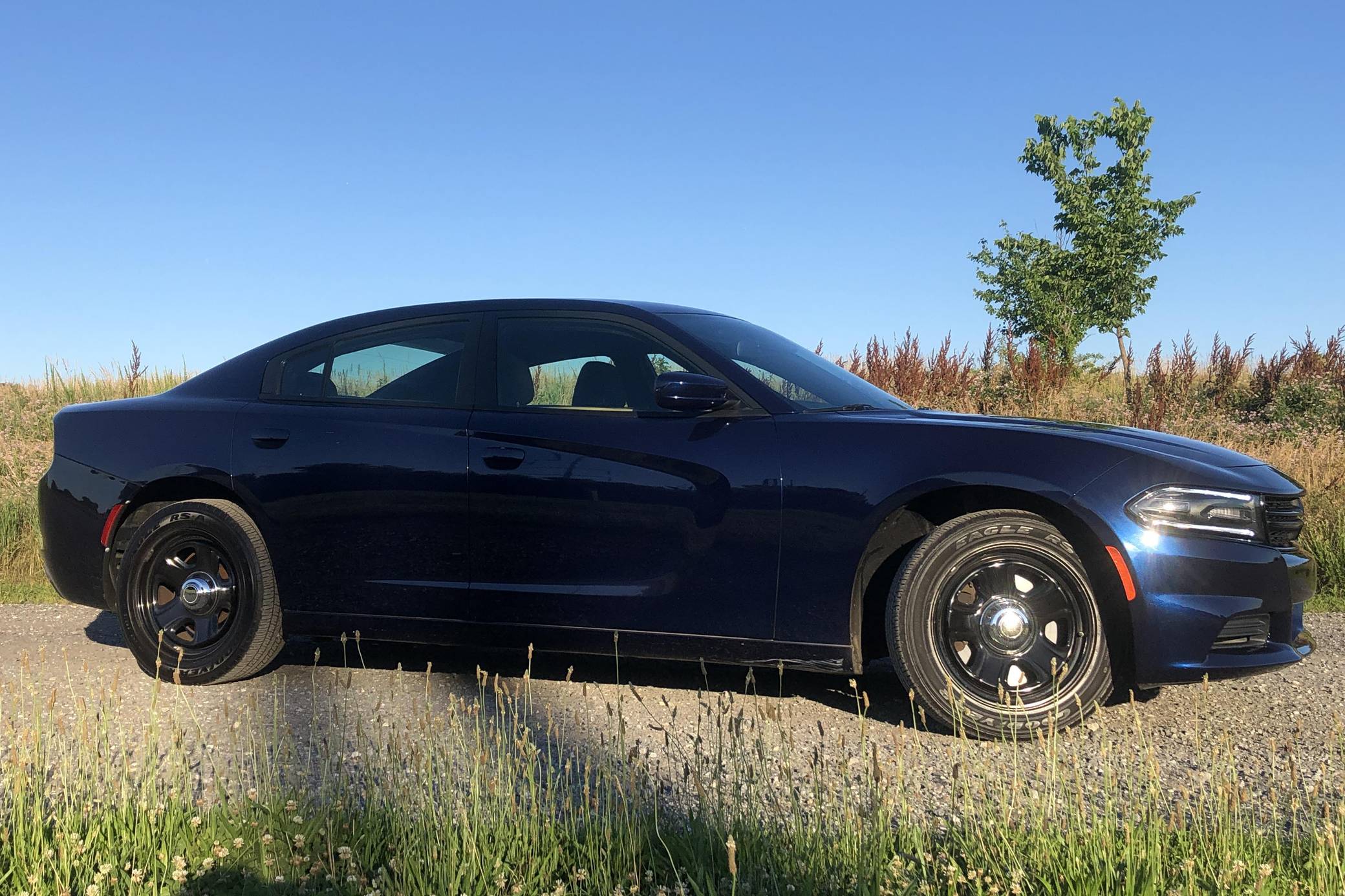
5. Dodge Charger Pursuit vs Civilian Dodge Charger
The Dodge Charger became a major successor to the traditional American police sedan. The civilian Charger was already available with powerful engines and Rear Wheel Drive, but the Pursuit version added equipment intended specifically for law enforcement.
That distinction matters because the civilian Charger was built to offer performance to private buyers, while the police model had to survive continuous fleet operation.
Police Chargers received changes to suspension, brakes, cooling, electrical systems, tires, and other components. The police package also considered the realities of emergency equipment and interior modifications.
A patrol Charger could spend hours running electronics and climate control while stationary, then accelerate rapidly and brake hard. Those conditions required a different durability target from an ordinary commuter vehicle.
The Charger also demonstrated that police durability was not always about using a completely different engine. Period testing of police vehicles showed that many mechanical components remained closely related to civilian hardware, while surrounding systems received important upgrades.
Heavy-duty cooling and braking were particularly valuable because repeated high-speed operation places enormous thermal demands on a vehicle.
The civilian Charger can still be extremely durable when properly maintained. Engine choice, drivetrain, model year, maintenance, and driving style can have a much larger effect on lifespan than the presence of a police package.
A privately owned Charger that spends its life cruising highways could easily have a healthier drivetrain than a retired patrol car that spent years responding to emergency calls.
The Charger Pursuit has the advantage in severe duty preparation, not necessarily in absolute lifespan. Its police specific components make it better equipped for repeated hard use, but a civilian Charger with an easy life may still be the better long-term survivor.
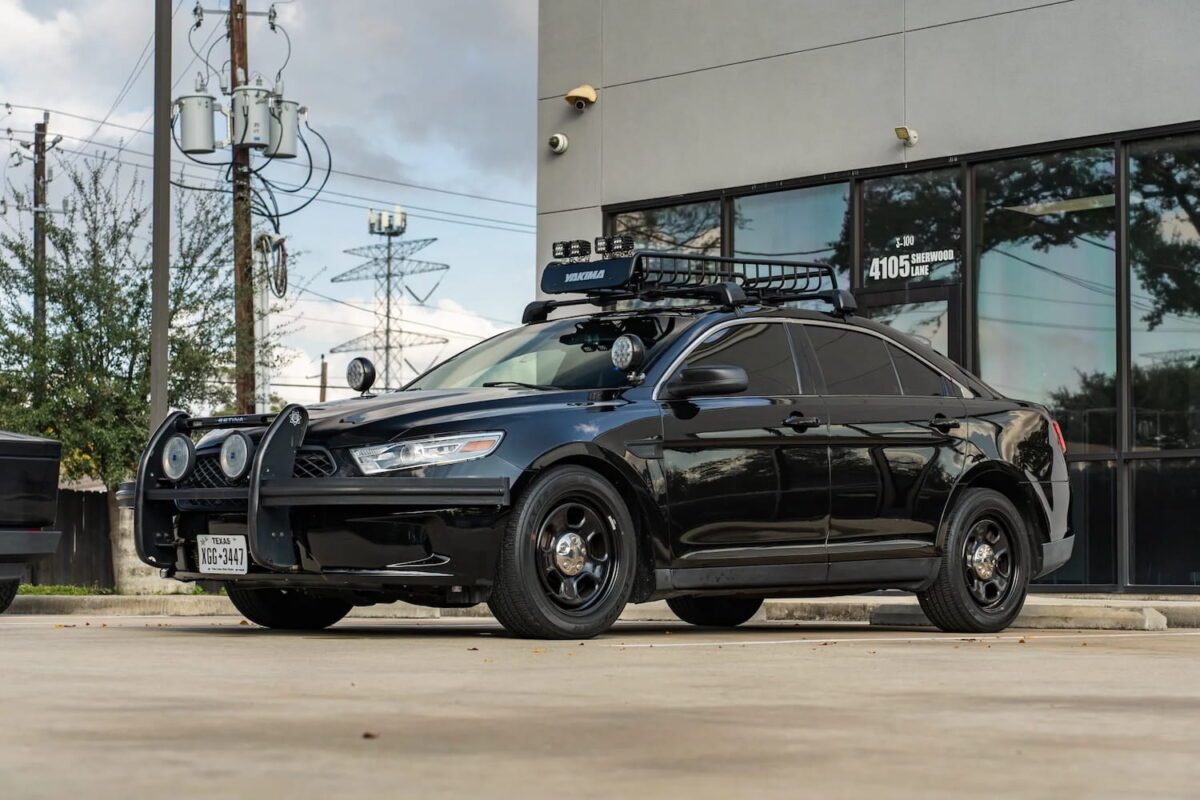
6. Ford Taurus Police Interceptor vs Civilian Ford Taurus
The Ford Taurus Police Interceptor replaced the Crown Victoria as Ford’s major sedan-based police offering. The civilian Taurus was positioned as a large family sedan, while the Police Interceptor version was designed around law enforcement requirements. Ford offered different powertrains and drivetrains for police use, including All Wheel Drive configurations and EcoBoost applications.
Police Interceptor models received changes intended to handle severe service, including upgraded suspension, brakes, cooling, electrical systems, and other equipment.
The Michigan State Police testing program evaluated the Taurus Police Interceptor alongside the Chevrolet Caprice, Chevrolet Tahoe, Dodge Charger, and other police vehicles. The testing covered acceleration, top speed, braking, dynamics, ergonomics, and fuel economy.
The Taurus Police Interceptor also benefited from a more substantial duty cycle than the civilian model. Police vehicles must maintain predictable behavior after repeated hard stops and sustained high-speed operation.
This is why police evaluations place so much emphasis on brake performance and thermal management. A civilian Taurus rarely needs to perform the same sequence of severe stops and rapid acceleration during its normal life.
There was also a practical benefit to the police configuration. Law enforcement vehicles needed room for communications equipment, computers, emergency systems, and other gear. The interior and electrical system therefore had to accommodate equipment that would not normally appear in a family sedan. These changes helped make the car more suitable for continuous professional use.
The Taurus Police Interceptor is better prepared for severe service than the civilian Taurus. Its advantage comes from the complete police package rather than simply its engine or exterior appearance.
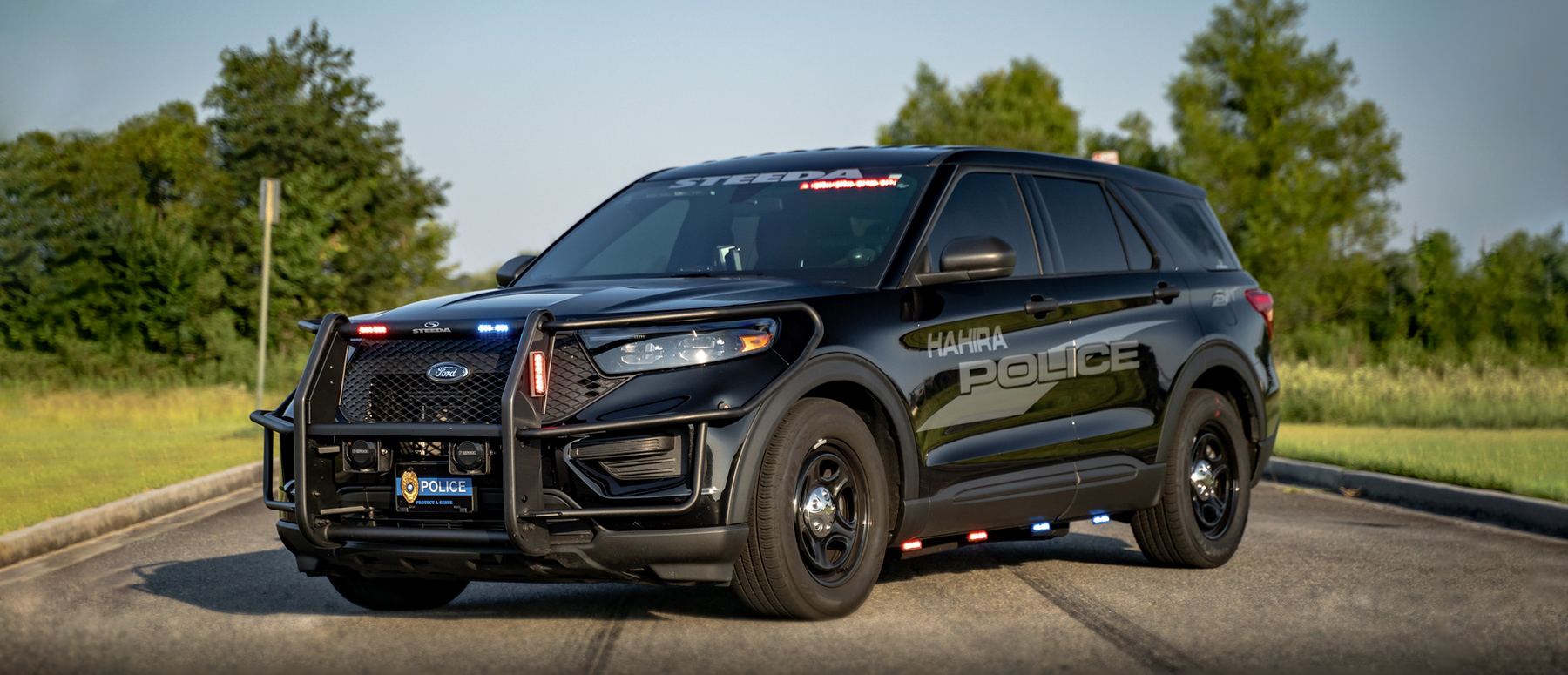
7. Ford Explorer Police Interceptor Utility vs Civilian Ford Explorer
The Ford Explorer Police Interceptor Utility is perhaps the most important modern example of a police vehicle sharing its basic identity with a civilian SUV.
The civilian Explorer is designed for families, commuting, road trips, and recreational use. The Police Interceptor Utility is intended for law enforcement, where the vehicle can spend long periods running, carrying equipment, and responding to demanding situations.
The police version receives specialized suspension tuning, braking hardware, cooling improvements, electrical provisions, tires, and other changes. These modifications allow agencies to operate the vehicle under conditions far more demanding than those faced by an ordinary family Explorer.
Michigan State Police evaluations have included the Police Interceptor Utility as a dedicated law enforcement vehicle and compared it with other police platforms.
The difference is especially noticeable in equipment capacity. A patrol Explorer may carry a computer, radio equipment, emergency lighting, protective equipment, a partition, and additional cargo. It also has to accommodate an officer for long shifts. The vehicle therefore operates with a different weight distribution and duty cycle than a civilian Explorer carrying passengers on a weekend trip.
That does not mean every Police Interceptor Utility will last longer than every civilian Explorer. Modern vehicles contain many electronic and mechanical systems, and police use can accelerate wear considerably.
A fleet vehicle that was poorly maintained can become expensive after retirement. A civilian Explorer that received regular oil changes, gentle driving, and careful maintenance may have a much easier life.
The Police Interceptor Utility is stronger where severe duty matters. Its additional police hardware gives it a clear advantage when the comparison is based on repeated hard use rather than ordinary ownership.
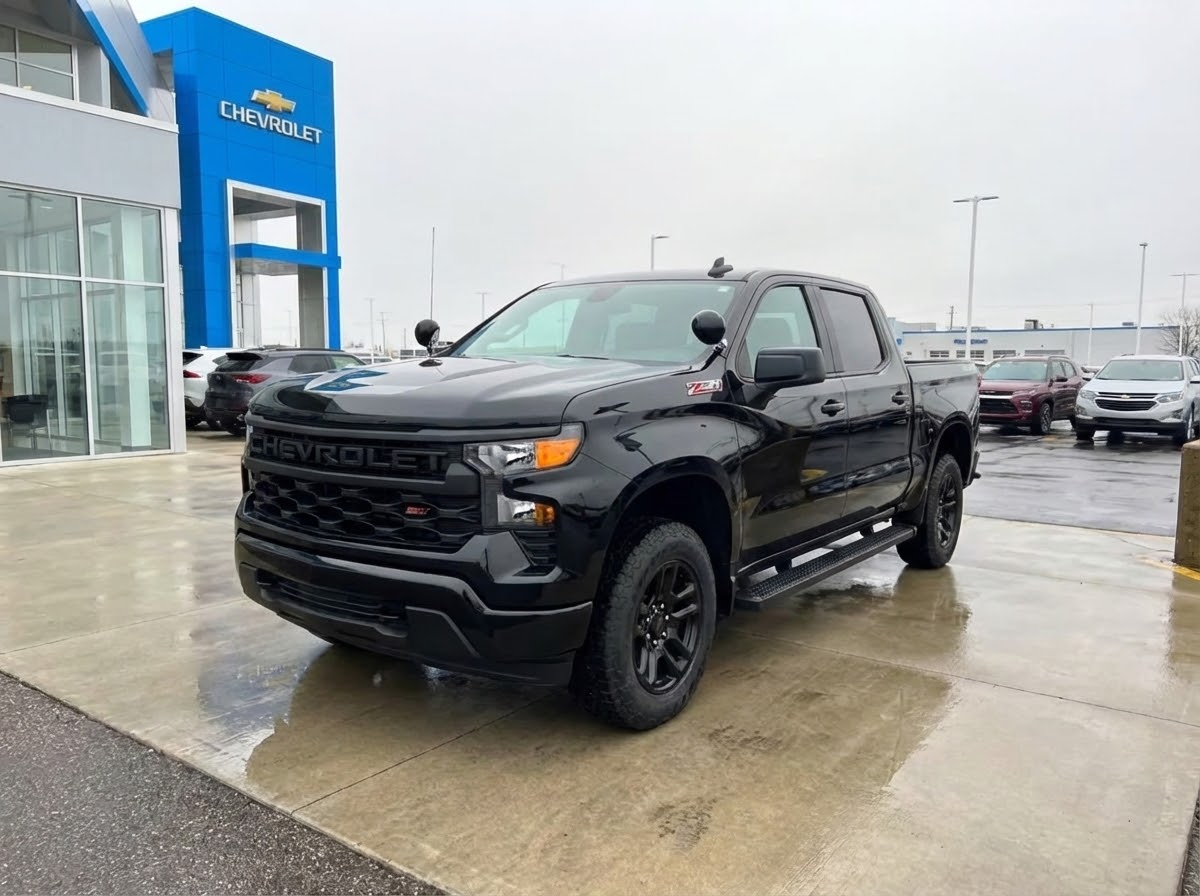
8. Chevrolet Silverado Police Pursuit/PPV vs Civilian Silverado
The Chevrolet Silverado demonstrates that police durability is not limited to traditional sedans and SUVs. Certain law enforcement and special service Silverado configurations have been developed for agencies that need a pickup truck capable of carrying equipment while operating under demanding conditions.
The civilian Silverado is already designed for substantial workloads, giving the police comparison a strong starting point.
Police and special service pickups may receive upgrades to their suspension, cooling, electrical systems, brakes, tires, and other components based on the model year and intended configuration. These changes are designed to meet the demanding requirements of fleet use. The truck must operate for extended periods and remain reliable even when exposed to conditions far more demanding than those faced by typical civilian vehicles.
The Silverado’s truck architecture gives it a natural advantage when carrying heavy equipment. A civilian owner might use the truck for towing, construction, recreation, or occasional hauling, but a law enforcement agency can keep it loaded with equipment throughout its service life. The suspension and cooling systems therefore become important areas of concern.
The comparison also illustrates why “police car” should not always be interpreted literally. Police fleets have moved increasingly toward SUVs and trucks because these vehicles provide more interior room, better cargo flexibility, and greater ground clearance.
Modern police fleets are now dominated by platforms such as the Ford Explorer, Chevrolet Tahoe, and Dodge Durango rather than the classic sedans that once defined American patrol cars.
A properly equipped police Silverado can have an advantage under severe fleet conditions, but this comparison depends heavily on the specific police package and model year. The civilian Silverado is already built for demanding work, so the difference is less dramatic than it was with a family sedan.
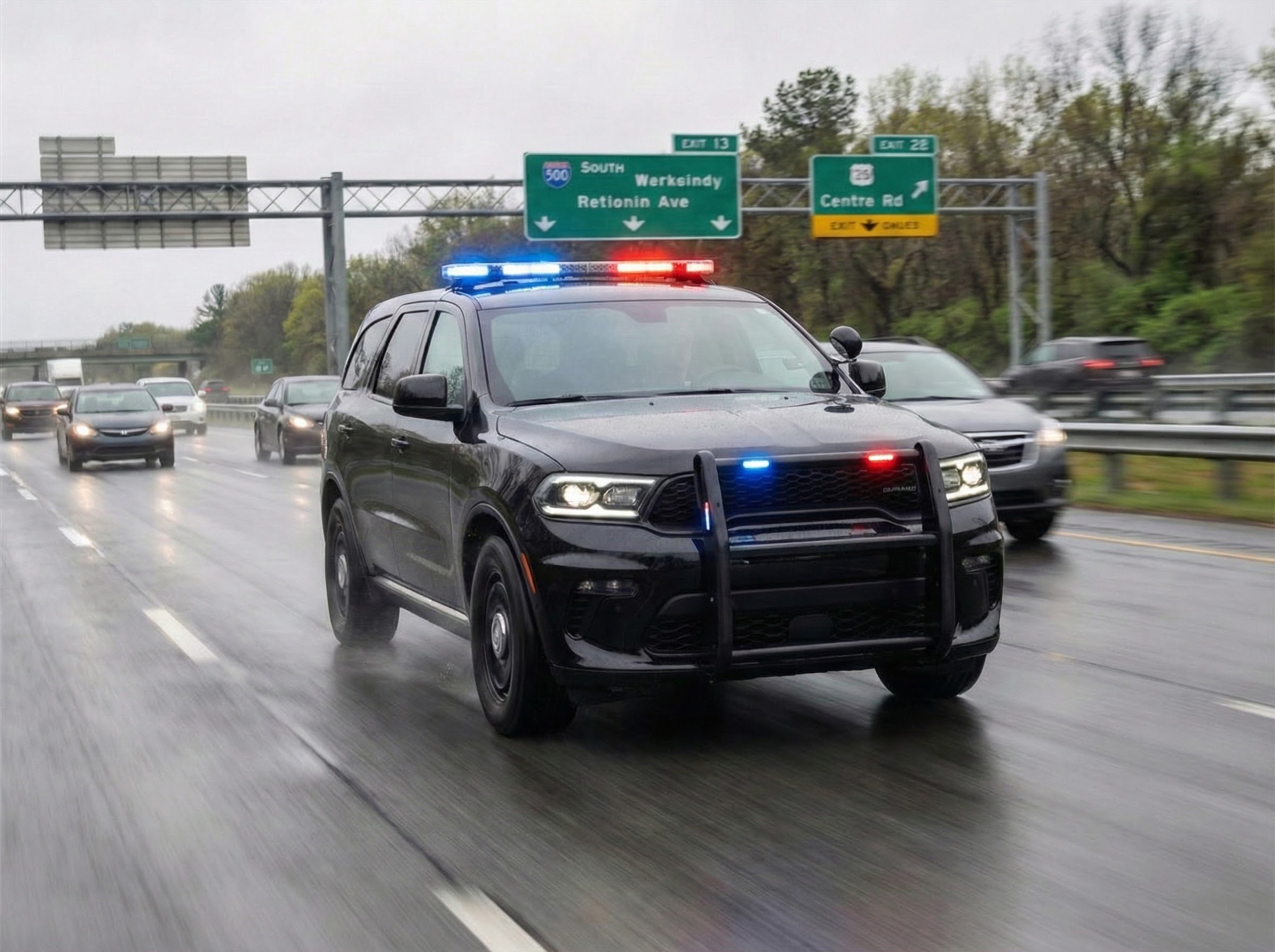
9. Dodge Durango Pursuit vs Civilian Dodge Durango
The Dodge Durango is another example of the shift toward SUV-based police fleets. The civilian Durango is designed as a family SUV with substantial power and passenger capacity. The Pursuit version takes that same basic concept and modifies it for emergency service, where high mileage, long idling periods, heavy equipment, and aggressive driving are common.
Police Durango configurations can receive specialized suspension, brakes, cooling, electrical equipment, tires, and other components. These changes are intended to keep the vehicle stable and functional under conditions that would be unusual for the average family owner. The police vehicle also has to handle additional weight from equipment and interior modifications.
The Durango is particularly interesting because it combines SUV practicality with performance-oriented engineering. Police departments can use it for patrol duties that might previously have required a sedan while gaining additional cargo capacity.
That makes it useful for agencies that need space for equipment without moving into a larger truck-based SUV.
As with every vehicle on this list, police service itself can shorten the life of mechanical components. A Pursuit Durango with 100,000 miles of hard fleet service should not automatically be considered healthier than a civilian Durango with 100,000 easy highway miles. The police hardware is designed to resist severe use, not to make normal maintenance unnecessary.
The Durango Pursuit is better prepared for demanding service than a civilian Durango, particularly in braking, cooling, suspension, and electrical requirements. Its durability advantage is most meaningful when both vehicles are exposed to similar workloads.
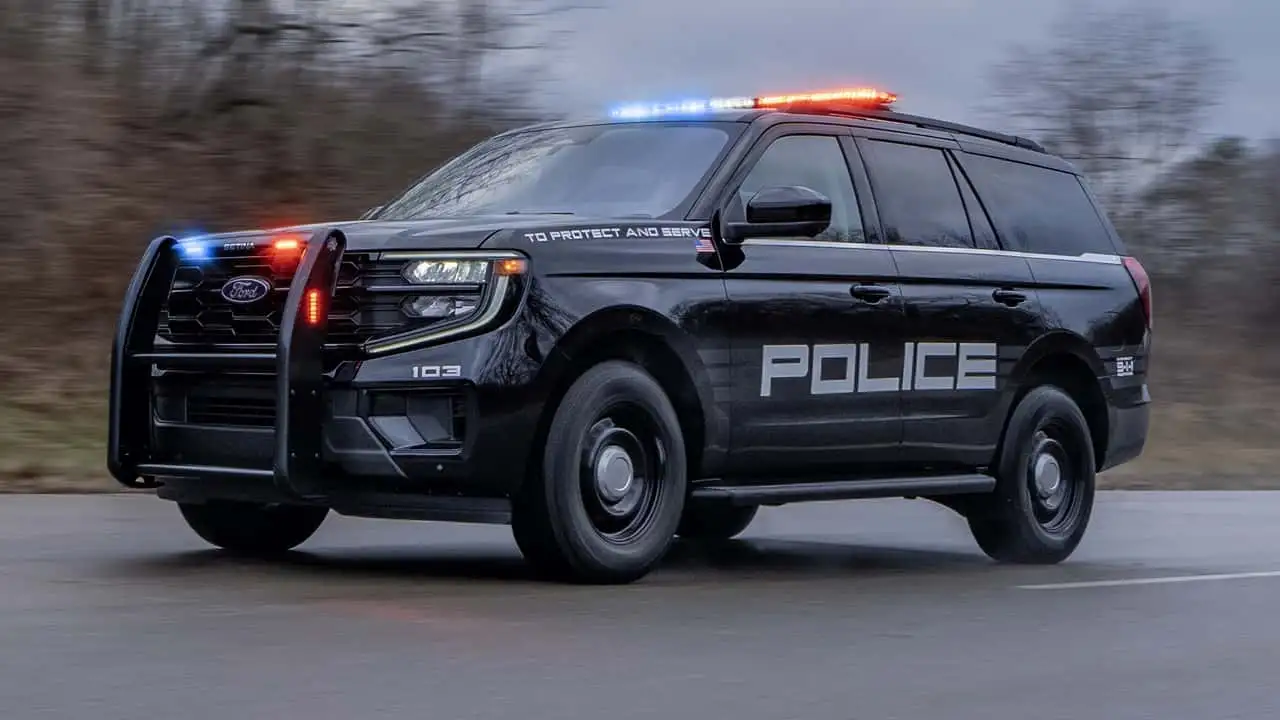
10. Ford Expedition SSV vs Civilian Ford Expedition
The Ford Expedition is another large SUV that demonstrates how police and civilian versions can share a platform while serving very different purposes. The civilian Expedition is designed for families, towing, travel, and utility. Special Service Vehicle configurations are intended for government and law enforcement applications where additional equipment, payload demands, and severe operating conditions may be involved.
The SSV approach focuses on practical durability rather than creating a completely different vehicle. Depending on configuration and model year, special service versions can include heavy-duty electrical provisions, suspension changes, cooling improvements, and equipment mounting provisions. These changes help the vehicle cope with long periods of operation and the added weight associated with professional use.
The Expedition’s size gives it an important advantage for specialized roles. Law enforcement agencies sometimes need to transport equipment, personnel, medical supplies, protective gear, or other bulky items. A standard family SUV can carry these loads, but a special service configuration is designed with professional equipment and duty cycles in mind.
There is still a catch when comparing longevity. Police and government fleet vehicles often accumulate significant engine hours and experience frequent starts, stops, idling, and equipment loads. A civilian Expedition that spends most of its time on long highway journeys may experience considerably less mechanical stress. Therefore, the special service vehicle’s stronger components do not guarantee a longer lifespan in every real-world comparison.
The Expedition SSV is better equipped for professional duty, but its actual longevity depends heavily on fleet maintenance and operating history. The civilian Expedition may last longer if it has lived a substantially easier life.
