
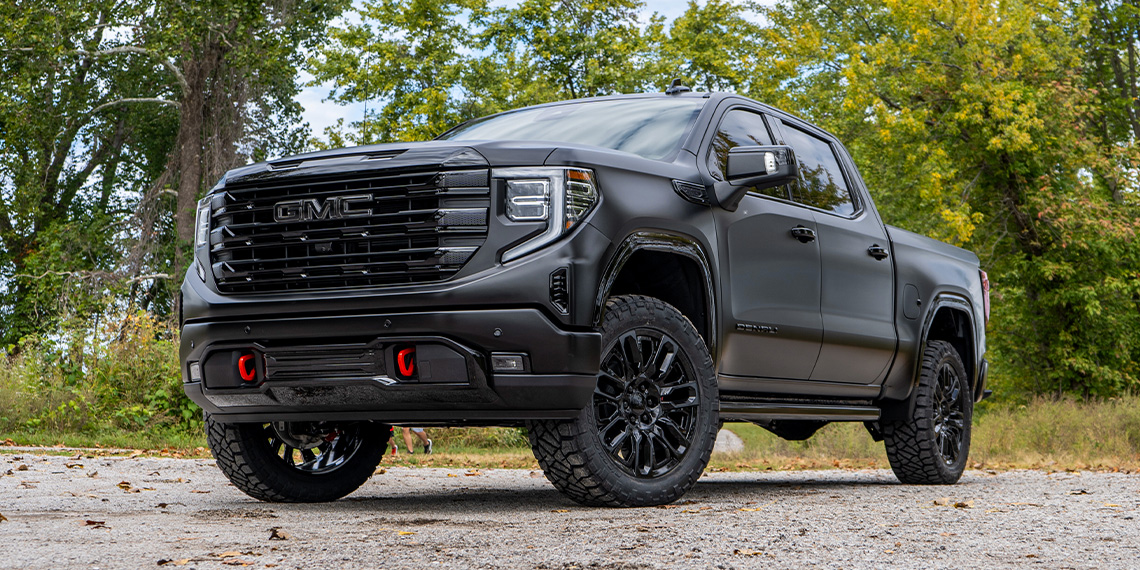
GMC trucks are known for their strength, towing ability, comfortable cabins, and practical technology, but many useful features can remain unnoticed during everyday driving. Some functions are tucked inside the infotainment system, while others are built into the truck’s controls, mirrors, camera system, or cargo area.
These small details can make driving, parking, towing, loading, and long trips easier without requiring expensive upgrades. Depending on the model, trim, and model year, GMC trucks may offer several lesser-known features that owners can benefit from regularly.
Learning where these functions are located can help drivers get more value from their trucks and use available equipment with greater confidence.
1. MultiPro Tailgate Functions
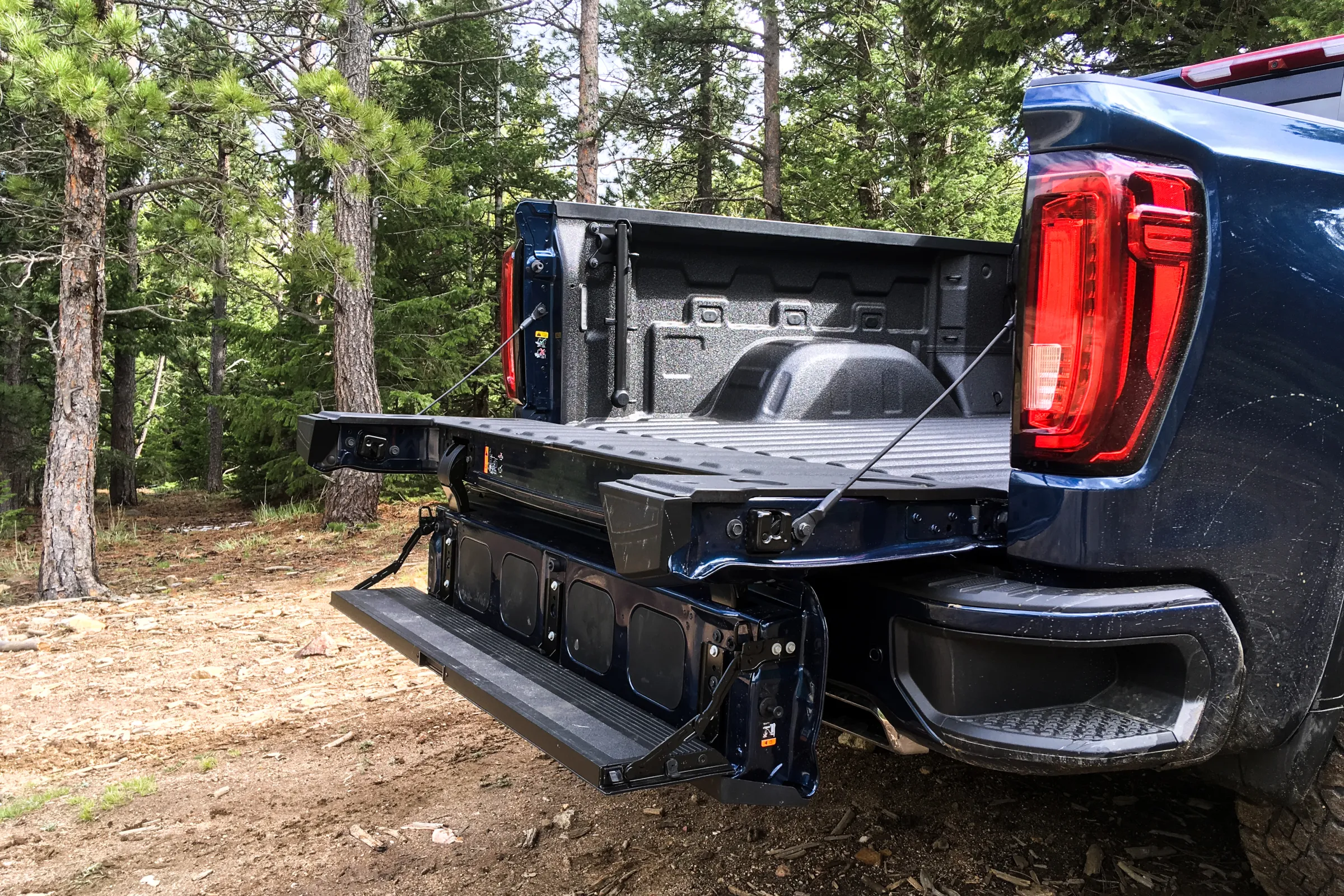
The GMC MultiPro Tailgate is far more versatile than a conventional pickup tailgate. It is designed with several sections that can be opened or positioned independently, creating different ways to access the cargo bed.
Many owners initially use it like a standard tailgate and may not realize that its additional panels can serve different purposes. Depending on the configuration, the tailgate can provide easier access to items near the front of the bed, create a step for climbing into the cargo area, or form a convenient work surface.
This design is particularly useful for people who regularly carry tools, equipment, camping supplies, sports gear, or construction materials.
A useful feature is the primary gate’s ability to work with the inner gate. When the inner section is opened, drivers can reach items farther inside the bed without having to lean as deeply over the tailgate. This can make a noticeable difference when the truck is loaded with heavy objects.
Instead of climbing into the bed or stretching across a large cargo area, a person can position the tailgate to bring stored equipment closer. The exact operation depends on the truck’s configuration, so owners should become familiar with the controls and instructions supplied with their particular GMC model.
Some MultiPro configurations also include a built-in step arrangement. This can make getting into and out of the cargo bed considerably easier, especially when the truck has a tall ride height. The step can be useful while loading groceries, securing recreational equipment, checking cargo, or reaching tools.
A grab handle may also be available as part of the setup, providing additional support. Drivers should make sure the step and associated components are fully deployed and locked before placing weight on them. Safe operation matters because the tailgate system is designed for specific loads and positions.
2. Camera Views for Towing and Parking
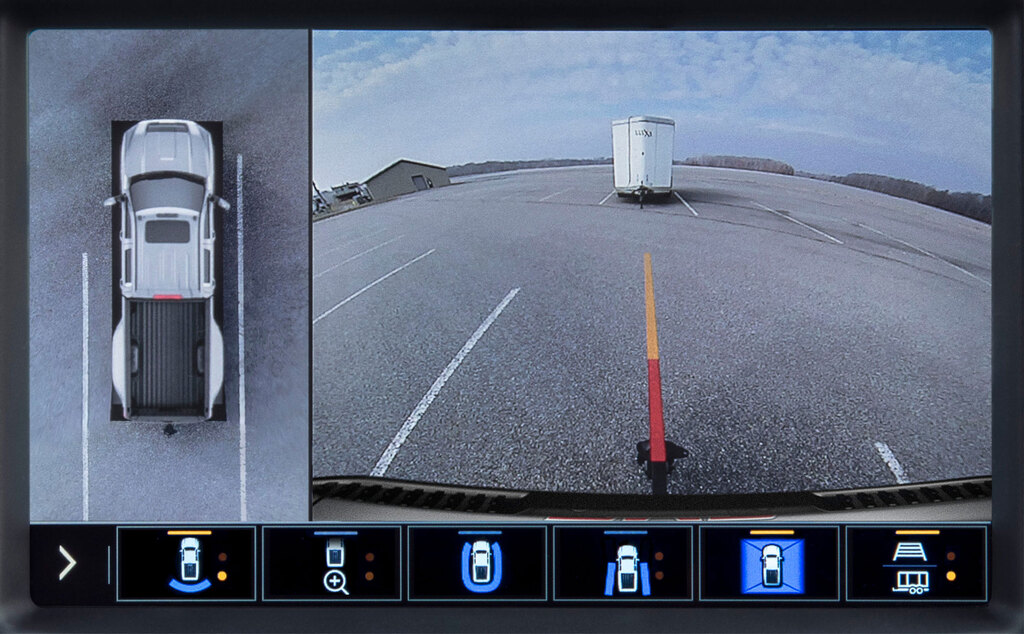
Modern GMC trucks can offer several camera views that are much more useful than a simple rear-facing image. Depending on the model and equipment package, the camera system may provide different perspectives around the truck.
These views can help with parking, maneuvering in tight areas, checking the trailer connection, and monitoring a trailer while driving. Drivers who only use the standard backup camera may be missing several available perspectives. The exact number and type of views depend on the vehicle, model year, trim level, and optional equipment.
A particularly useful function for towing is the ability to check the area around the hitch. Hitch-related camera views can help a driver line up the truck with a trailer more accurately. This can make connecting a trailer less frustrating because the driver can see the hitch and surrounding area from inside the cabin.
Camera assistance does not replace careful observation, however. Drivers should still inspect the connection manually and confirm that the coupler, safety chains, electrical connection, and other equipment are properly secured before towing.
Some GMC trucks equipped with advanced camera systems can provide views that help drivers see around or through a trailer. Trailer camera technology can use additional cameras mounted on the trailer or compatible equipment to provide a broader picture.
This can be particularly helpful when changing lanes or monitoring traffic behind a trailer. The system can make a large trailer feel easier to manage, but it should be treated as an aid rather than a replacement for mirrors and direct observation. Proper mirror adjustment remains essential when towing.
Camera views can also help when navigating narrow driveways, parking spaces, job sites, and crowded areas. A front-facing camera may make it easier to judge the distance between the truck and an obstacle that is difficult to see from the driver’s seat. Surround-view systems can provide a wider perspective when available.
This can be particularly useful with full-size pickups because their size can make close-range maneuvering challenging. Drivers should remember that camera systems have blind spots and that displayed images may not show every object around the vehicle.
3. Trailer Profiles and Towing Information
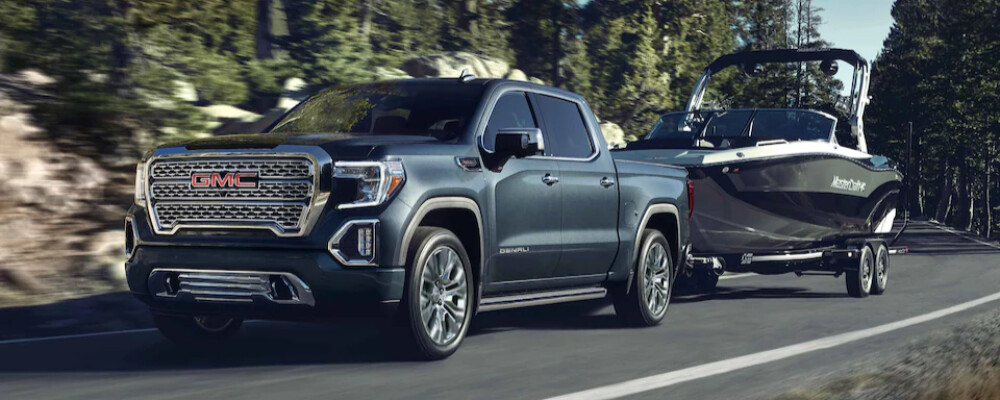
GMC trucks equipped with suitable towing technology can make trailer management easier through integrated trailer-related settings. Trailer profiles allow drivers to save information associated with different trailers, depending on the truck’s equipment and model year.
This can be useful for households or businesses that regularly tow more than a single trailer. Rather than treating every trailer as an entirely new setup, the driver can use stored information where supported. This can help keep towing-related settings organized and make repeated trailer use more convenient.
Trailer profiles can be particularly helpful because trailers behave differently depending on their size, weight, brakes, and configuration. A small utility trailer may require different settings from a large travel trailer or equipment trailer.
GMC’s integrated towing systems can provide information related to trailer status and, on equipped trucks, may assist with trailer brake settings. Correct configuration remains the driver’s responsibility. The driver should know the trailer’s specifications and make sure the truck, hitch, brakes, tires, and electrical connections are appropriate for the load.
Some GMC towing systems can also provide trailer light testing or related checks through the vehicle’s interface. This can help identify potential problems before a trip begins. Trailer lighting is essential for communication with other road users, particularly at night or during poor weather.
A built-in test function can reduce the need for a second person to stand behind the trailer while lights are being checked. However, drivers should still conduct a complete pre-trip inspection because a digital check cannot identify every mechanical or physical issue.
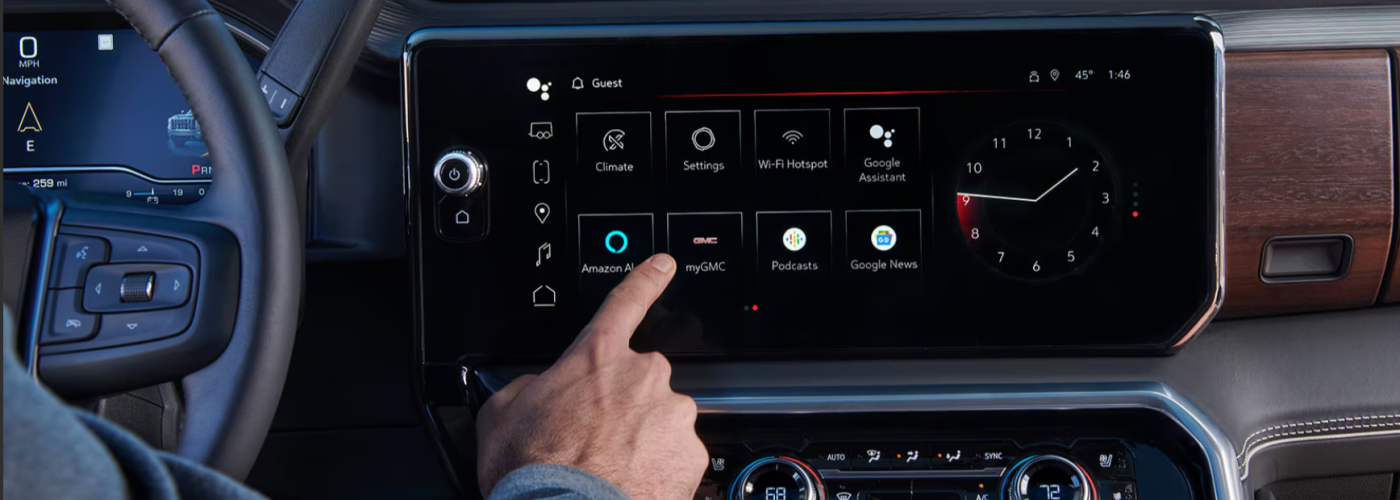
4. The Hidden Convenience of the Driver Information Display
The driver’s information display is capable of showing much more than speed and fuel level. Depending on the GMC model and instrument cluster, drivers may be able to access information about fuel economy, tire pressure, trip distance, engine data, towing information, and vehicle status.
Many owners become accustomed to the default display and rarely explore the other screens. Taking time to cycle through the available menus can reveal information that is useful for both everyday driving and long trips.
Fuel economy information can help drivers understand how their truck performs under different conditions. A pickup’s fuel consumption can change significantly depending on payload, trailer weight, driving speed, terrain, weather, and traffic.
Trip information can provide useful context when comparing different routes or driving habits. Rather than relying solely on a general fuel gauge, owners can use the available trip and economy displays to understand how the vehicle is being used. This information can be especially useful during long-distance travel.
Tire pressure information is another feature worth checking regularly when supported by the truck. Proper tire inflation affects handling, tire wear, fuel consumption, and towing performance.
A tire pressure monitoring system can alert the driver when pressure falls outside an expected range, but it should not replace manual checks. Tire pressure should be measured with a reliable gauge and adjusted according to the vehicle manufacturer’s recommendations, taking the truck’s load and tire specifications into account.
Some GMC trucks can display engine-related information that may help owners understand how the vehicle is operating. Certain models provide additional gauges or data when particular drive modes or towing features are active.
Information may include transmission temperature, oil-related data, or other vehicle parameters depending on the configuration. These displays can be useful for drivers who tow frequently because heavy loads place additional demands on the powertrain.

5. Remote Start and Climate Control Features
Remote start is familiar to many GMC owners, but its practical benefits extend beyond simply starting the engine from a distance. On compatible vehicles, remote starting can prepare the cabin before the driver gets inside.
Depending on the model, outside temperature, climate settings, and vehicle configuration, the truck may automatically adjust heating, ventilation, or other climate-related functions. This can be particularly convenient during very hot summers or cold winter mornings. Drivers should always use remote start responsibly and follow local regulations regarding idling.
A remote start system can also save time during busy mornings. Instead of entering a cold or overheated cabin and immediately adjusting the controls, the driver may be able to begin the process before leaving the house.
The amount of climate preparation depends on the truck’s configuration and settings. Some vehicles may use previously selected climate settings, while others can manage temperature-related functions automatically. The exact behavior should be confirmed in the owner’s manual.
Connected vehicle services can provide additional remote functions on compatible GMC trucks. Depending on the subscription, model, and service availability, an owner may be able to use a smartphone application to interact with the vehicle.
Features can change over time and may not be included on every truck. Some services require an active plan after an introductory period. Owners should check the services associated with their particular vehicle rather than assuming that every GMC truck supports every remote function.
Remote features can also be useful when locating or preparing a truck in a large parking area, depending on the vehicle’s connected services. Some GMC systems provide information through a mobile application that can make vehicle ownership more convenient.
These functions are especially helpful for people who frequently park in large lots or use their truck during demanding work schedules. Smartphone connectivity has become an increasingly important part of modern vehicle ownership.
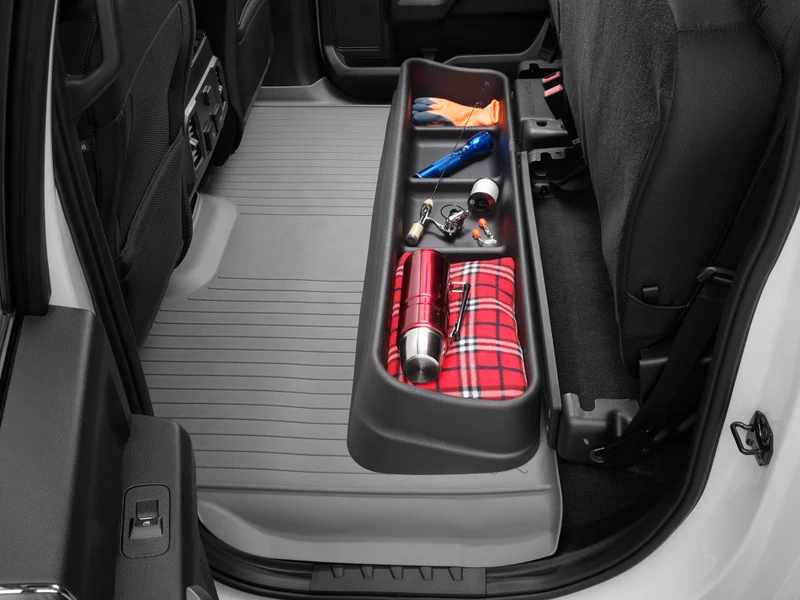
6. Rear-Seat Storage and Under-Seat Space
Pickup trucks are often praised for their cargo beds, but useful storage space can also be hidden inside the cabin. Depending on the GMC model, rear-seat areas can offer additional places to store tools, emergency supplies, work equipment, groceries, or personal belongings.
This space is easy to overlook because it does not have the same visual impact as the truck bed. For owners who use their truck as a daily vehicle, interior storage can help keep valuable items protected from weather and reduce clutter.
Some GMC pickups offer under-seat storage compartments in the rear cabin. These spaces can be useful for items that are too large for the center console but do not need to occupy the cargo bed.
Drivers may store jumper cables, tie-down straps, cleaning supplies, blankets, small tools, or roadside emergency equipment in these areas. Keeping frequently needed equipment in a dedicated location can also make it easier to find when required.
Foldable rear seats can add further flexibility in certain GMC models. A rear seat may be raised to create additional floor space when passengers are not using the area.
This allows the cabin to carry larger objects while keeping them protected from rain, snow, and road debris. Before placing cargo inside the passenger compartment, owners should make sure it is secured properly. Loose objects can become dangerous projectiles during sudden braking or a collision.
Interior storage can also be useful for people who regularly use their GMC truck for work. Tools and equipment can remain inside the cab when conditions make an open truck bed impractical.
However, valuable tools should not be left unattended simply because they are stored inside the cabin. Vehicle security remains important, particularly when the truck is parked in public areas. Owners should use sensible precautions and avoid leaving valuable belongings visible.
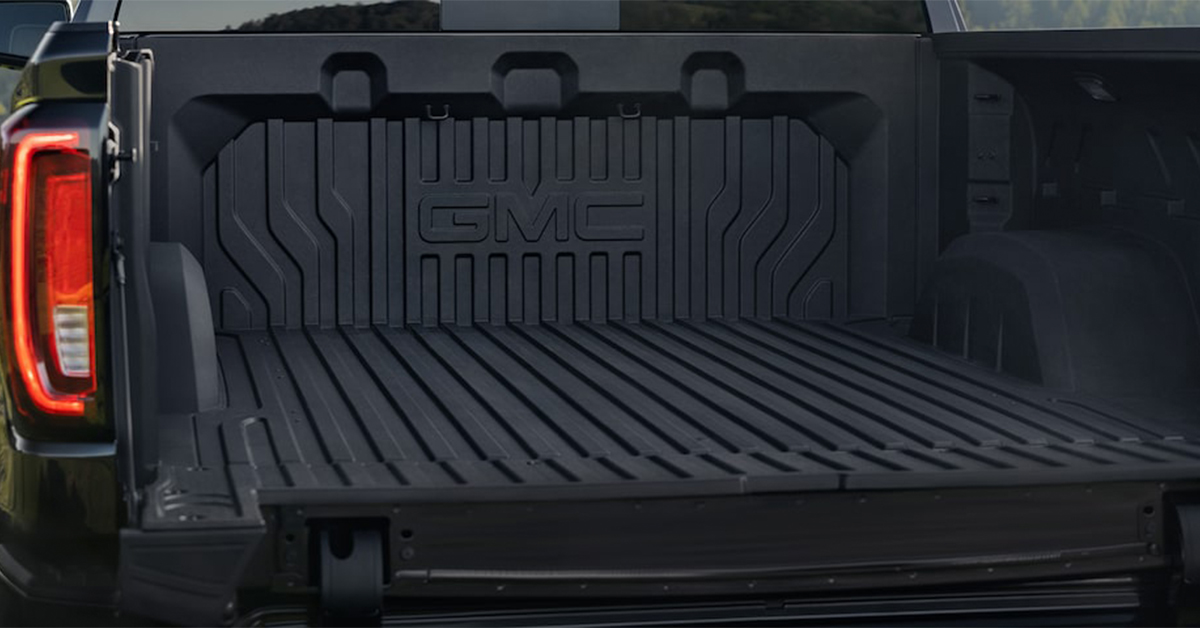
7. Bed Lighting and Cargo Area Illumination
Truck beds can become difficult to use after sunset, particularly when cargo blocks the main cabin light. GMC offers bed lighting on certain trucks, and this feature can be surprisingly useful for everyday tasks. Bed lights can help drivers locate tools, groceries, sports equipment, camping gear, and other items without relying on a flashlight. They can also make it easier to inspect cargo before driving away at night.
The usefulness of bed lighting becomes even more apparent when a truck is used for work. A contractor arriving at a job site early in the morning may need to retrieve equipment before sunrise.
Similarly, someone returning from a camping trip after dark can benefit from being able to see the cargo area clearly. Good illumination can reduce the chance of leaving small items behind. It can also make loading safer when the surrounding area is poorly lit.
Some GMC trucks provide lighting around the rear cargo area or tailgate depending on the equipment level. The controls and activation methods can vary between models.
Some lighting functions may be connected to the truck’s general lighting controls, while others may have dedicated switches or activation points. Owners who have never used their bed lighting should test it in a safe location and learn how the system operates.
Bed lighting can also work well alongside other cargo features. A MultiPro Tailgate, cargo tie-downs, bed storage accessories, and lighting can combine to make the truck bed more functional.
The value of these systems comes from how they work together rather than from any single component. A well-organized bed is easier to load, easier to inspect, and easier to unload when every item has a predictable location.

8. Wireless Phone Charging and Smartphone Integration
Smartphone integration has become an important part of modern GMC trucks, yet many drivers use only basic Bluetooth functions. Compatible GMC models can offer smartphone connectivity features such as Apple CarPlay or Android Auto, allowing drivers to access supported navigation, communication, music, and other applications through the vehicle’s infotainment system.
Depending on the model year and equipment, the connection may be wired or wireless. These systems can make smartphone functions easier to use while keeping attention focused on driving.
Wireless phone charging is another convenience available on certain GMC trucks. When supported, the charging pad allows a compatible smartphone to charge without a cable.
This can be useful during long drives when navigation and streaming services consume battery power. Wireless charging works best when the phone is positioned correctly and is compatible with the system. Large cases or objects between the phone and charging surface can interfere with charging performance.
The infotainment system can also provide access to vehicle settings and information beyond entertainment. Depending on the GMC model, drivers may be able to adjust certain comfort settings, configure vehicle preferences, access camera functions, or manage connected services through the central screen.
Because modern pickup trucks contain numerous electronic systems, learning the infotainment menus can reveal functions that are not obvious from the physical controls.

9. Adjustable Drive Modes and Tow/Haul Settings
GMC trucks can provide different drive modes depending on the model and configuration. These settings are designed to alter aspects of vehicle operation to suit different driving conditions. A truck may offer modes intended for towing, off-road use, slippery surfaces, or general driving.
Many owners select a preferred mode and rarely change it, meaning they may not take full advantage of the truck’s available driving technology.
Tow/Haul mode is particularly useful when pulling a trailer or carrying a substantial load. It can change the behavior of the transmission and powertrain to better manage the additional demands associated with towing or hauling.
The exact operation varies by GMC model. Drivers should understand that Tow/Haul mode does not increase the truck’s maximum towing capacity. It is a driving aid that can improve control and powertrain behavior within the vehicle’s approved limits.
Off-road-oriented GMC trucks may offer specialized settings designed to help with challenging terrain. Depending on the model, these settings can affect throttle response, transmission behavior, traction control, and other systems.
Some trucks are equipped with hardware specifically designed for off-road driving, while others are intended primarily for paved roads. Choosing the correct mode can help the vehicle respond more appropriately to the conditions.
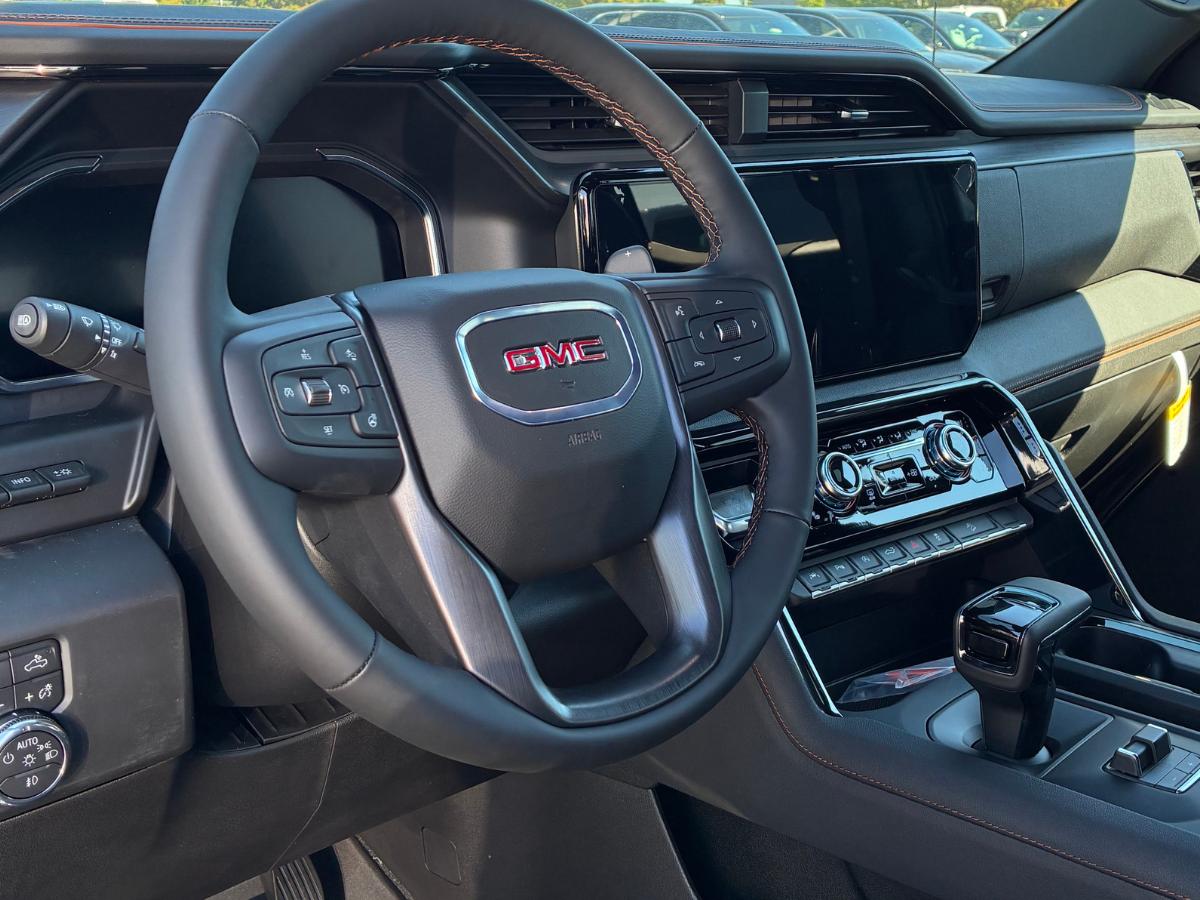
10. Automatic Emergency Features and Driver Assistance Settings
Modern GMC trucks can include a range of driver assistance technologies designed to support the driver in specific situations. Depending on the model and equipment, these may include forward collision alerts, automatic emergency braking, lane-related assistance, blind-zone monitoring, rear cross-traffic alerts, and parking assistance.
These features are sometimes overlooked because they work quietly in the background. Drivers may notice an alert or steering input without fully understanding which system produced it.
Forward collision warning systems can alert the driver when the vehicle detects a potential frontal collision under certain conditions. Some configurations may also provide automatic emergency braking when specific criteria are met.
These technologies are designed to support the driver, not replace attentive driving. Weather, road conditions, vehicle speed, visibility, and other factors can affect how well driver assistance systems operate. Drivers should always remain responsible for controlling the vehicle.
Blind-zone monitoring can be particularly helpful in a pickup because the truck’s size and body design can create areas that are difficult to see. When equipped, the system can alert the driver to vehicles in certain areas beside or behind the truck.
This can be useful during lane changes, but drivers should still check their mirrors and blind spots directly. A warning system should be treated as an additional layer of awareness rather than a substitute for proper observation.
