

Across the United States, automobile factories have shaped far more than production lines. They have influenced where people live, where businesses open, how roads develop, and how local economies survive. In several American towns, a single vehicle plant became the economic center that attracted workers, suppliers, restaurants, housing, schools, and supporting businesses.
Some communities grew alongside factories operated by Ford, General Motors, Honda, Toyota, Nissan, and other manufacturers. Their stories reveal how deeply car manufacturing became connected with American community life.
The following ten towns show how a major automotive facility can transform a relatively small place into a manufacturing hub.
1. Georgetown, Kentucky
Georgetown, Kentucky, provides a strong example of how a modern automobile factory can transform a community. The city is home to Toyota Motor Manufacturing Kentucky, commonly known as TMMK. Toyota selected Georgetown for its large manufacturing operation in the 1980s, and production began in the late 1980s.
The facility became a major employer in the region and helped establish Scott County as an important automotive manufacturing center. Before the factory arrived, Georgetown already had a long history and a diversified local economy.
The Toyota plant changed the scale and character of economic activity by creating thousands of manufacturing positions and attracting supporting companies.
The factory became closely associated with the Toyota Camry, which was produced at the Georgetown facility for decades. Other Toyota vehicles and components have also been manufactured there as the operation expanded. Large-scale production requires workers in areas such as assembly, machining, quality control, maintenance, logistics, engineering, and management.
That workforce creates demand far beyond the factory gates. Housing, retail stores, restaurants, transportation services, contractors, and professional services all benefit when thousands of people receive stable industrial employment. Georgetown therefore developed a strong connection between local prosperity and the continued operation of the Toyota facility.
The plant also helped attract automotive suppliers to central Kentucky. Automobile manufacturing depends on a complicated network of companies that provide seats, electronic components, plastics, metal parts, glass, tires, and other materials. Having a major assembly facility nearby makes it attractive for suppliers to establish operations within a practical shipping distance.
This supplier network contributes additional employment and tax revenue to surrounding communities. Georgetown’s location in Kentucky also gives manufacturers access to major transportation routes connecting the Southeast and Midwest. The result is an industrial ecosystem rather than an isolated factory sitting inside a residential community.

2. Bowling Green, Kentucky
Bowling Green, Kentucky, is closely associated with America’s sports car manufacturing tradition. The city became home to the General Motors Corvette Assembly Plant in the early 1980s after Corvette production moved from St. Louis, Missouri.
The decision gave Bowling Green a specialized automotive identity that remains important to the community. Corvette production is different from high-volume family-car manufacturing because the vehicle carries a distinctive performance and cultural reputation.
Yet the factory still creates the same kind of economic connections found in other automotive communities, including skilled employment, suppliers, transportation activity, hospitality, and tourism.
The Corvette plant has helped make Bowling Green recognizable to automobile enthusiasts across the country. Visitors travel to the city because of its connection with the Corvette, and that interest supports hotels, restaurants, museums, automotive attractions, and local businesses.
The National Corvette Museum, located near the assembly plant, further strengthened the relationship between manufacturing and tourism. The museum opened in the 1990s and became a major destination for enthusiasts. This combination gives Bowling Green an unusual economic advantage: the city benefits from both vehicle production and the cultural interest surrounding the product made there.
The manufacturing operation also requires highly trained workers. Building a modern performance car involves body construction, painting, mechanical installation, electrical systems, quality inspection, logistics, and numerous specialized processes.
Workers develop skills that can have value throughout the manufacturing sector. The plant therefore contributes to the local labor market beyond its direct payroll. Companies serving the facility may employ additional technicians, drivers, maintenance workers, engineers, and other professionals.
Bowling Green’s broader economy has grown considerably over time, yet Corvette manufacturing remains an important part of its industrial character.
The plant’s presence also connects Bowling Green with a larger automotive supply chain. Vehicles require components from many companies, and those parts must arrive according to tightly organized production schedules. Suppliers and logistics firms can benefit from being located within reasonable reach of a major assembly operation.
Kentucky has become an important automotive manufacturing state, with several major plants and numerous suppliers. Bowling Green’s Corvette facility contributes to that wider network while retaining a distinctive identity based around a single iconic vehicle.

3. Marysville, Ohio
Marysville, Ohio, became deeply connected with Honda after the Japanese automaker established Honda of America Manufacturing in the area during the late 1970s. The Marysville Auto Plant began producing vehicles in 1982, marking a major development in American automotive manufacturing.
Honda’s investment brought a new manufacturing philosophy and created a large industrial employer outside the traditional automotive centers of Michigan and the Midwest’s older factory cities. Marysville subsequently became closely associated with Honda production and developed a substantial network of manufacturing activity around the company.
The Marysville plant produced Honda automobiles for the American market, including the Accord, a vehicle that became particularly important to Honda’s U.S. manufacturing strategy. The company gradually expanded its American manufacturing presence, and Marysville became part of a wider Honda network that included plants and suppliers across Ohio.
This development gave the town access to employment in assembly, engineering, quality assurance, maintenance, logistics, and administration. Manufacturing wages also generated spending throughout the surrounding economy, supporting local shops, housing, restaurants, contractors, and service providers.
Honda’s influence extends beyond the factory itself. The company established significant operations in Ohio, including research and development and engine manufacturing activities. That concentration created a sophisticated automotive employment base in the state.

4. Spring Hill, Tennessee
Spring Hill, Tennessee, became nationally associated with the Saturn automobile project in the 1990s. General Motors selected the rural Middle Tennessee community for a new manufacturing facility, and the Saturn plant began producing vehicles in 1990.
The project received considerable attention because Saturn was designed as a different kind of General Motors brand, with a distinct retail approach and an emphasis on customer relationships. The manufacturing facility became a major economic force in Spring Hill and helped transform the community into an important automotive location.
Saturn production brought thousands of manufacturing jobs and encouraged infrastructure development around the facility. Workers needed roads, housing, retail services, restaurants, schools, and other community resources. The plant therefore affected the physical development of Spring Hill as well as its employment base.
As the community expanded, the relationship between residential growth and industrial employment became increasingly apparent. A large factory can generate a powerful multiplier effect because wages paid to workers circulate through local businesses and support additional jobs in the service economy.
The Saturn brand eventually disappeared, but General Motors continued operating the Spring Hill facility and shifted its focus to other vehicles. The change highlights how automobile towns can endure even after the brand or model that put them on the map is gone.
General Motors later used the plant for production of vehicles including the Cadillac XT5 and other models. The facility also received major investments for new manufacturing capabilities. Continued investment allowed Spring Hill to remain an automotive production center rather than becoming a community built around an obsolete industrial site.

5. Smyrna, Tennessee
Smyrna, Tennessee, developed a major connection with Nissan after the Japanese automaker established a large vehicle assembly plant there. Production began in 1983, making the facility a major part of Nissan’s American manufacturing strategy. The plant helped transform the surrounding area into a significant automotive manufacturing center.
Nissan’s presence also contributed to Tennessee’s emergence as an important location for automobile production. The community became increasingly connected with vehicle assembly, parts manufacturing, logistics, engineering, and other industrial activities.
The Smyrna plant has produced several important Nissan vehicles over its history. Models such as the Altima, Maxima, Pathfinder, and Leaf have been associated with production in Tennessee at various periods. Manufacturing multiple models gives a facility flexibility and helps spread its economic importance across different vehicle segments.
A large assembly plant also needs an extensive workforce. Employees work in production, maintenance, material handling, quality control, engineering, management, and many other functions. Each department contributes to the factory’s ability to operate continuously and efficiently.
Nissan’s presence also helped attract automotive suppliers to Tennessee. Parts manufacturers often locate near assembly facilities because shorter transportation distances can improve efficiency and simplify production scheduling. This creates clusters where multiple companies operate within the same regional economy.
Tennessee eventually attracted additional major automotive investments, including other vehicle assembly plants. Smyrna thus became part of a larger southern manufacturing network that challenged the traditional concentration of American automobile production around Michigan and neighboring states.
The factory’s economic influence can also be seen in the broader growth of Rutherford County and Middle Tennessee. Industrial employment attracts workers, while workers increase demand for housing, retail, healthcare, education, restaurants, transportation, and entertainment.
Communities surrounding major plants can experience substantial development as businesses respond to this demand. Automotive manufacturing therefore affects far more than the employees whose names appear on factory payrolls. Its influence spreads through the regional economy.

6. Canton, Mississippi
Canton, Mississippi, became a major automotive manufacturing community when Nissan opened its vehicle assembly plant in the area in 2003. The decision was significant for Mississippi because the state had not traditionally been viewed as a major automobile manufacturing center.
Nissan’s investment changed that perception. The plant created thousands of direct and indirect jobs and brought advanced manufacturing activity to the region. Canton subsequently became strongly associated with Nissan and with the wider automotive industry.
The Nissan Canton facility has produced several models over its history, including vehicles from Nissan and Infiniti. Production has included pickup trucks and passenger vehicles, giving the plant an important role within the company’s North American manufacturing system.
Vehicle assembly involves numerous specialized occupations, from line workers and maintenance technicians to engineers and quality specialists. The facility therefore created opportunities for workers with different levels of education and technical experience. Training became an important part of preparing employees for modern industrial production.
The factory also encouraged development among automotive suppliers. Large assembly plants cannot operate without a steady flow of components, and suppliers frequently establish nearby operations to meet those demands. This creates additional industrial employment and strengthens the economic impact of the original investment.
Logistics companies also benefit because finished vehicles and components must move efficiently through regional transportation networks. Canton consequently became connected to a broader industrial supply chain extending beyond the town itself.
7. Lordstown, Ohio
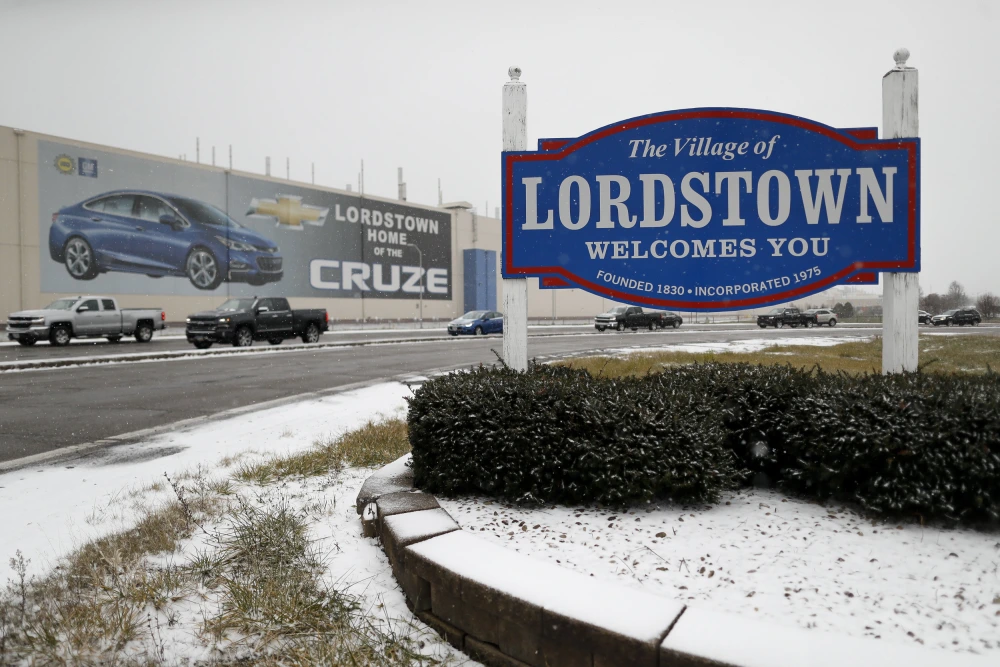
Lordstown, Ohio, became synonymous with automobile manufacturing after General Motors opened the Lordstown Assembly Plant in 1966. The factory was enormous by local standards and quickly became a central source of employment.
Generations of workers built vehicles there, creating a strong connection between the plant and the surrounding communities. Lordstown became a classic example of an American industrial town whose prosperity was closely connected with a large automobile factory.
The plant produced several well-known General Motors vehicles over the decades. Production changes reflected shifts in consumer preferences, corporate strategy, and broader economic conditions. When demand for certain models increased, the factory could become extremely busy.
When markets changed, employment and production could decline. This made the community highly sensitive to decisions made by General Motors. The relationship between factory employment and local economic health became a defining feature of Lordstown.
The factory also supported a large network of suppliers and related businesses. Automobile assembly requires parts arriving in precise quantities and at specific times. Companies providing components, transportation, equipment, maintenance, and other services benefited from the presence of the plant.
Workers spent their earnings at local businesses, supporting restaurants, retailers, contractors, and service providers. Such economic connections explain why the closure or downsizing of a major factory can have consequences far beyond the property itself.
General Motors eventually ended traditional vehicle assembly at Lordstown, creating severe economic challenges for the community. The closure reflected broader changes in the American automotive industry, including shifts in vehicle demand and corporate manufacturing strategies.
Lordstown’s experience showed the vulnerability of communities that become heavily dependent on a single large employer. The town’s history also illustrates the emotional importance of automobile plants, since factory work became part of family histories and local identity for generations.
8. Normal, Illinois
Normal, Illinois, has a long connection with automobile manufacturing that changed significantly when Mitsubishi Motors established a vehicle assembly operation there in the 1980s. The plant began production in 1988 and became a major industrial employer in central Illinois.
Mitsubishi eventually ended production at the facility in 2015, but the site continued to have an important automotive future. Rivian later acquired the facility and began producing electric vehicles there, giving Normal a new role in America’s changing automobile industry.
The Mitsubishi years helped establish Normal as a manufacturing community. Vehicle assembly required thousands of workers at different stages of the facility’s history.
The factory also supported suppliers, transportation companies, maintenance contractors, and other businesses. The surrounding community benefited from wages and industrial investment. Manufacturing became an important part of the area’s economic structure, adding diversity to a region that also had strong connections with education, agriculture, and services.
Rivian’s arrival gave the old factory a new purpose. Rather than abandoning the industrial site, the electric vehicle company invested in adapting the facility for modern production.
The transformation illustrates how existing automotive infrastructure can be reused when transportation technology changes. Electric vehicle manufacturing still requires extensive assembly, quality control, logistics, engineering, and skilled labor.
The products are different, yet the basic relationship between factory and community remains familiar.

9. Flint, Michigan
Flint, Michigan, became deeply connected with General Motors through a long history that reaches back to the early twentieth century. The city grew alongside Buick and other GM operations and became a major center of automobile and component manufacturing.
Flint’s industrial development was closely linked with the expansion of mass automobile production. Factories created large numbers of jobs and attracted workers from across the United States, transforming Flint into a major industrial city.
Buick became especially important to Flint’s identity. The company established substantial manufacturing operations there before becoming part of General Motors. GM’s growth expanded the scale of automotive production and strengthened Flint’s position within the American industrial economy.
Automobile manufacturing affected nearly every part of city life, including housing, transportation, retail commerce, schools, and labor organizations. Thousands of families built their livelihoods around factory employment, and industrial wages supported a broad local economy.
Flint also became an important location for automobile components rather than merely finished vehicles. Engine and parts manufacturing were essential to GM’s production system.
This created a more complicated industrial ecosystem in which different plants performed different stages of vehicle production. Workers could specialize in machining, casting, assembly, inspection, toolmaking, or maintenance. The concentration of skilled industrial labor helped give Flint a reputation as a manufacturing center.
The city’s dependence on automotive employment later became a serious challenge. Changes in the American auto industry, plant closures, employment reductions, and shifts in manufacturing contributed to long-term economic difficulties. Flint’s experience demonstrates how the strength of an industrial city can become a vulnerability when its dominant sector contracts.
The same factories that once attracted workers and generated prosperity became symbols of industrial decline when employment disappeared. This history is central to understanding the social and economic consequences of manufacturing restructuring.
10. Dearborn, Michigan
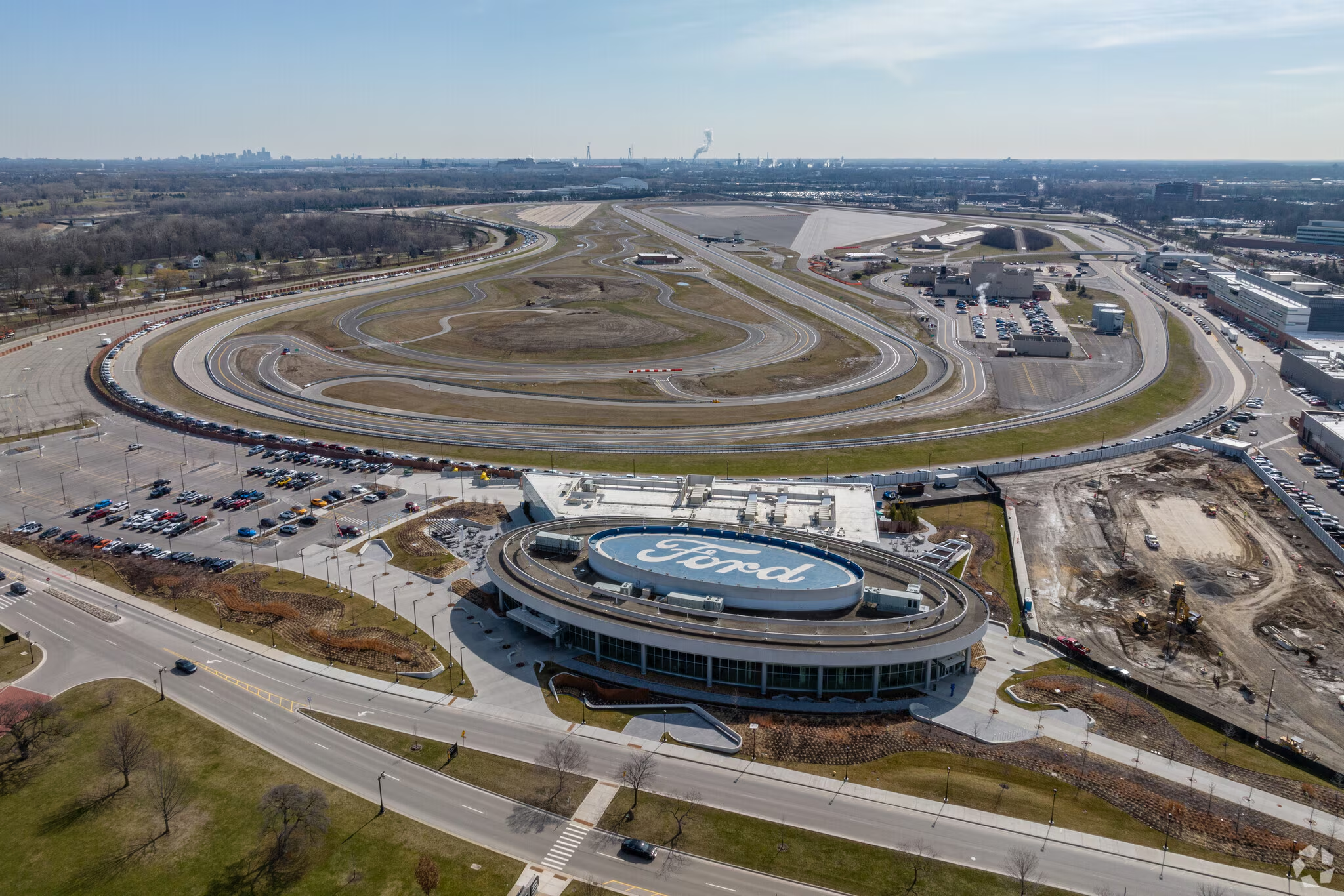
Dearborn, Michigan, has perhaps the most recognizable connection between a city and an automobile manufacturer in American industrial history. The Ford Motor Company established major operations in Dearborn, including the massive Rouge complex.
The River Rouge manufacturing complex became a landmark of industrial production, bringing together processes involved in making automobiles and their components. Dearborn grew into a company-centered community where Ford employment influenced local development for generations.
The Rouge complex represented an ambitious vision of integrated manufacturing. Raw materials could move through various stages of industrial processing before becoming components or finished vehicles. The scale of the operation required enormous numbers of workers, extensive transportation infrastructure, and supporting businesses.
Ford’s presence affected residential development, commercial activity, schools, roads, and municipal finances. The company became so closely associated with Dearborn that the city developed an identity intertwined with the Ford brand.
Ford employment also influenced the culture of the community. Industrial jobs provided opportunities for immigrants and migrants who came to the Detroit region seeking factory work. Workers from different backgrounds became part of the expanding manufacturing workforce.
The wages associated with mass production helped many families purchase homes, automobiles, and consumer goods. Dearborn therefore became an important example of how automobile manufacturing contributed to the growth of the American middle class during the twentieth century.
The Ford connection remains visible in Dearborn today. The Rouge complex continues to operate as a major Ford manufacturing site, though its processes and products have changed substantially from the early days of integrated production.
The facility has adapted to modern manufacturing requirements and remains part of Ford’s North American industrial network. Nearby attractions also reflect the company’s historical importance, including the Henry Ford Museum and related sites that preserve the history of American innovation and manufacturing.
