

The Ford Expedition is known for its spacious cabin, strong towing ability, family-friendly design, and impressive road presence. Yet, beyond its familiar features, this full-size SUV offers several useful functions that can make everyday driving more convenient.
Some are tucked away in the infotainment system, while others are built into the cabin, tailgate, seats, or driving controls. These features may not receive much attention during a showroom visit, but they can make a noticeable difference after you start using the vehicle regularly. From smart storage solutions to helpful technology, the Expedition has plenty of thoughtful details worth discovering. Here are eight hidden features worth knowing about.
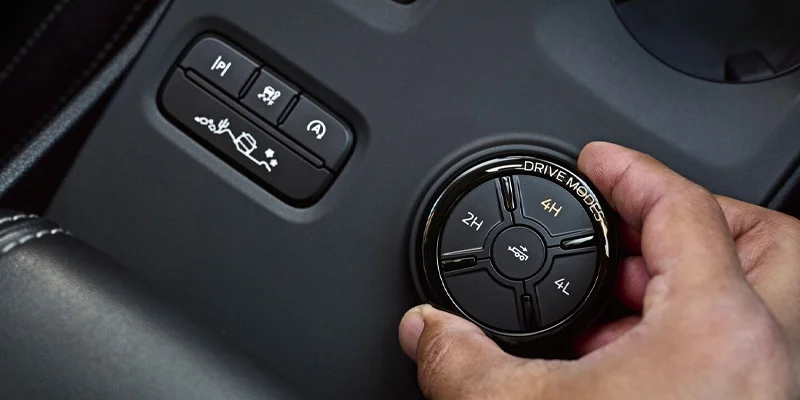
1. Pro Trailer Backup Assist
Towing a trailer can be challenging, particularly when you need to reverse into a narrow driveway, campsite, boat ramp, or parking space. The Ford Expedition can make this task easier with Pro Trailer Backup Assist on properly equipped models.
Rather than requiring the driver to make constant steering corrections while looking in the mirrors, the system allows the driver to control the trailer’s direction through a dedicated rotary control. The technology works with the vehicle’s steering and camera systems to help guide the trailer where you want it to go.
The basic idea is surprisingly simple. When reversing, you turn the control in the direction you want the trailer to move. The Expedition then makes the corresponding steering adjustments.
This can feel unusual during the first few attempts because your natural instinct may be to steer the vehicle directly. After some practice, the control becomes easier to understand. The system does not remove the need for attention, but it can reduce some of the mental workload involved in backing a trailer.
The feature is particularly useful for people who tow recreational equipment. A camper, utility trailer, boat trailer, or horse trailer can be difficult to position accurately without assistance.
Even experienced drivers may appreciate having a tool that reduces repeated forward and reverse corrections. When space is limited, small steering mistakes can quickly become frustrating. A backup-assistance system can help make the process more controlled.
Camera views can add further assistance when the Expedition is equipped with the appropriate technology package. Seeing the area surrounding the vehicle and trailer can help the driver judge positioning more accurately.
Drivers should still check mirrors and physically inspect the surroundings because cameras have limitations. People, low objects, uneven surfaces, and changing conditions can affect visibility.
For Expedition owners who regularly tow, this is a feature worth learning rather than simply knowing that it exists. Taking time to understand the controls in an open area can make future towing situations much easier.
The system is designed as a driver aid, not an autonomous towing solution, so careful observation remains important. Once familiar with it, many drivers may find that reversing a trailer becomes less stressful and more predictable.
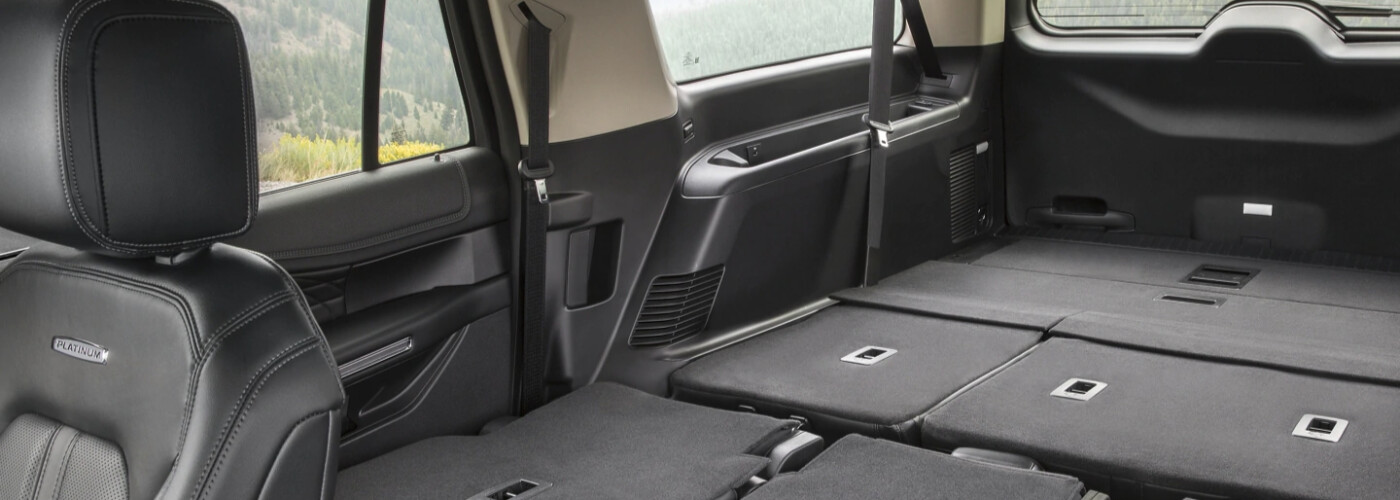
2. Power-Folding Third-Row Seats
The Expedition’s third row provides useful passenger space, but its folding mechanism can be even more valuable when you need additional cargo room.
Depending on the model and equipment, the SUV can offer power-operated third-row seating that allows you to fold or raise the seats without manually wrestling with heavy seatbacks. This function can be particularly convenient when you frequently switch between carrying passengers and transporting large items.
A full-size SUV often needs to serve several purposes in the same week. You might use the Expedition for school runs on Monday, a grocery trip on Tuesday, and a family road trip later in the week.
Having to manually rearrange the rear seating each time can become inconvenient. Power-operated controls simplify that transition. With the appropriate buttons, the third-row seats can be adjusted to create more usable cargo space.
The feature becomes even more useful when the vehicle is parked in a tight location. Reaching into the rear cargo area to operate seat mechanisms can sometimes be awkward, especially if you have bags or other items already loaded.
Convenient controls can save time and reduce the effort involved. It is a small example of how thoughtful interior technology can have a practical effect on daily use.
Before using powered seat controls, it is important to make sure the seating area is clear. Objects placed on or around a seat can interfere with movement and potentially cause damage. The same applies when returning the seats to their upright position. Checking that seat belts and other items are positioned correctly helps prevent them from becoming trapped.
Many owners initially think of powered third-row seating as a luxury feature. In regular use, however, it can become one of those functions you quickly take for granted. Families carrying children, luggage, sports equipment, shopping bags, or bulky household items can benefit from the added convenience.
The Expedition’s large cabin already gives it strong cargo flexibility, and an easy-to-use seat-folding system makes that flexibility even more useful.
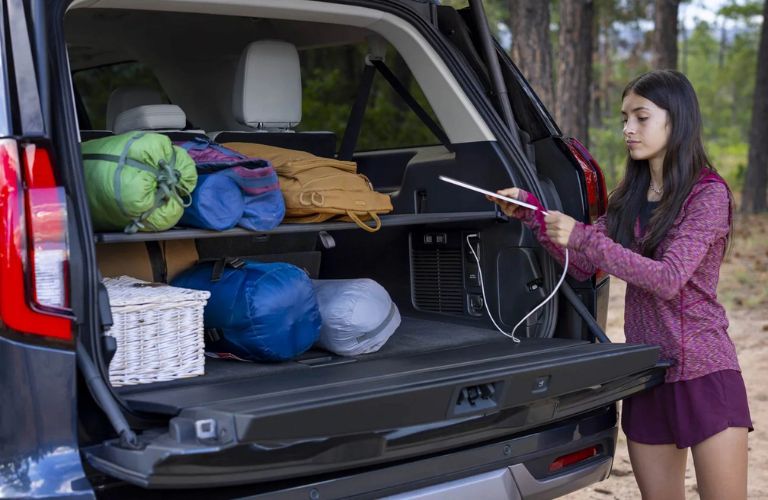
3. Adjustable Cargo Management
Large SUVs provide plenty of cargo capacity, but a large open space is not always easy to organize. The Expedition addresses this problem with practical cargo-management features that can help keep smaller items separated from larger luggage.
Depending on configuration and model year, storage solutions can include adjustable floor sections, compartments, tie-down points, and other ways to organize the rear area.
This matters because loose cargo can quickly become difficult to manage. Grocery bags can tip over during turns, backpacks can slide toward the rear seats, and smaller objects can disappear underneath larger pieces of luggage.
Using the available storage features can help keep items in their intended positions. For families, this can make the difference between a tidy cargo area and a pile of belongings that needs to be rearranged after every trip.
The cargo floor can also be useful when loading large objects. Creating a flatter surface makes it easier to slide certain items into position. When the rear seats are folded, the additional space can transform the Expedition into a capable vehicle for home-improvement supplies, camping equipment, luggage, or other bulky cargo.
Tie-down points deserve attention as well. They may not be exciting, but they provide an important function when transporting items that need to remain secure.
Using appropriate straps and attachment points can prevent cargo from shifting during braking or cornering. Heavy objects should always be secured properly, rather than relying on the weight of surrounding luggage to hold them in place.
The best approach is to learn the cargo area before you actually need its maximum capacity. Spend a few minutes identifying the compartments, seat controls, floor configurations, and attachment points available in your particular Expedition.
This can make loading much quicker when you are in a hurry. A well-organized cargo area also makes better use of the SUV’s substantial interior space.
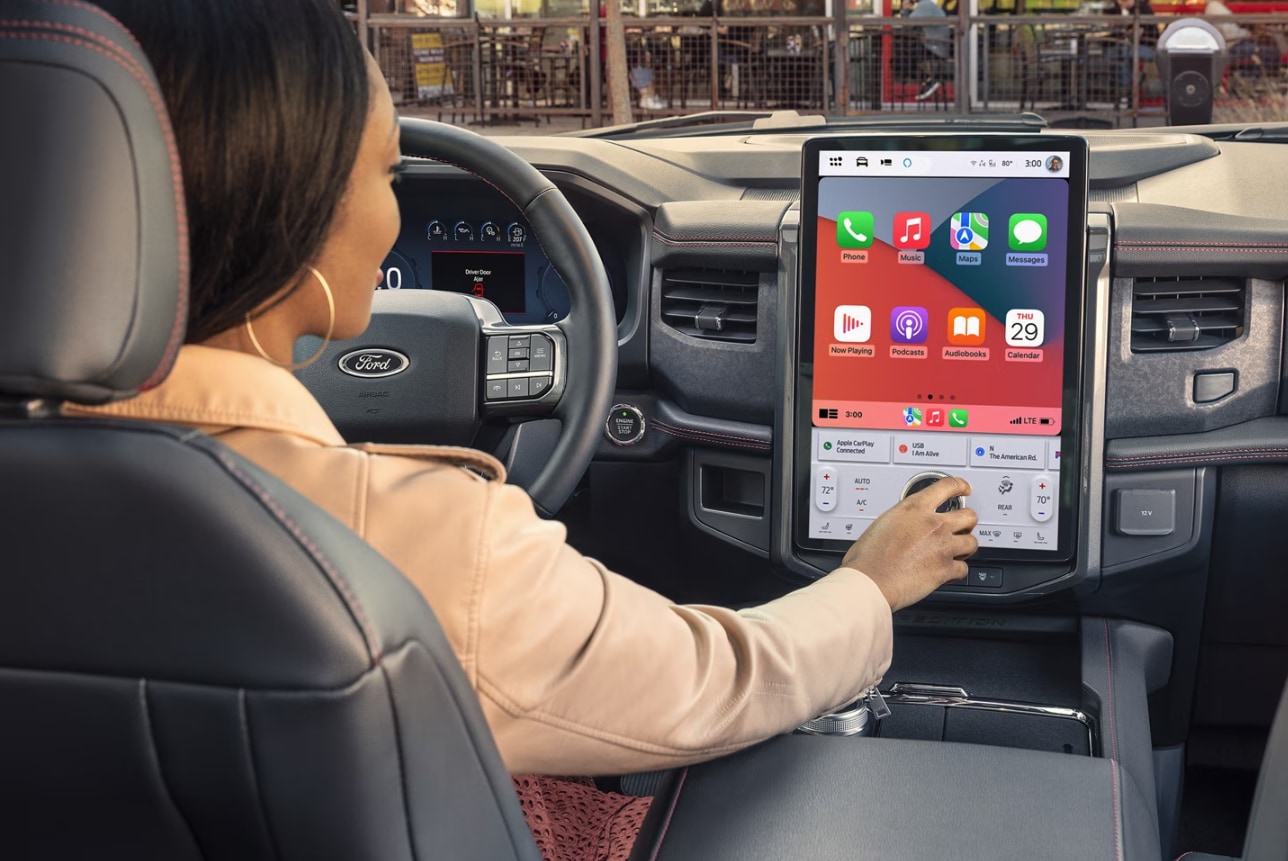
4. Intelligent Access and Hands-Free Convenience
Modern Expedition models can offer intelligent access features that reduce the need to repeatedly handle the key fob. When the vehicle is equipped with the appropriate system, having the key nearby can allow the driver to unlock the doors by interacting with the door handle. This can be especially helpful when your hands are full.
Imagine returning from a supermarket with bags in both hands. Instead of putting everything down to search for the key, the intelligent access system can make entry easier when conditions are right.
The same convenience can help parents carrying children, travelers handling luggage, or anyone approaching the vehicle with equipment.
The hands-free liftgate can add further convenience on appropriately equipped vehicles. A foot movement beneath the rear bumper area can trigger the liftgate when the key is detected nearby and the system is activated. This feature is particularly useful when loading groceries, luggage, sports equipment, or other objects that make it difficult to reach for a button.
It is worth learning the correct activation method because the system is designed to respond to a specific movement and operating condition. Randomly moving your foot around the bumper may not produce the desired result. The owner’s manual provides model-specific instructions, and the exact availability can vary according to trim level and model year.
These access features may seem minor compared with the Expedition’s engine, towing capacity, or interior dimensions. Yet small conveniences often become highly valuable through repeated use.
When you use the vehicle every day, saving a few seconds and avoiding unnecessary movements can improve the entire ownership experience. They are particularly helpful when the Expedition is being used as a family vehicle.
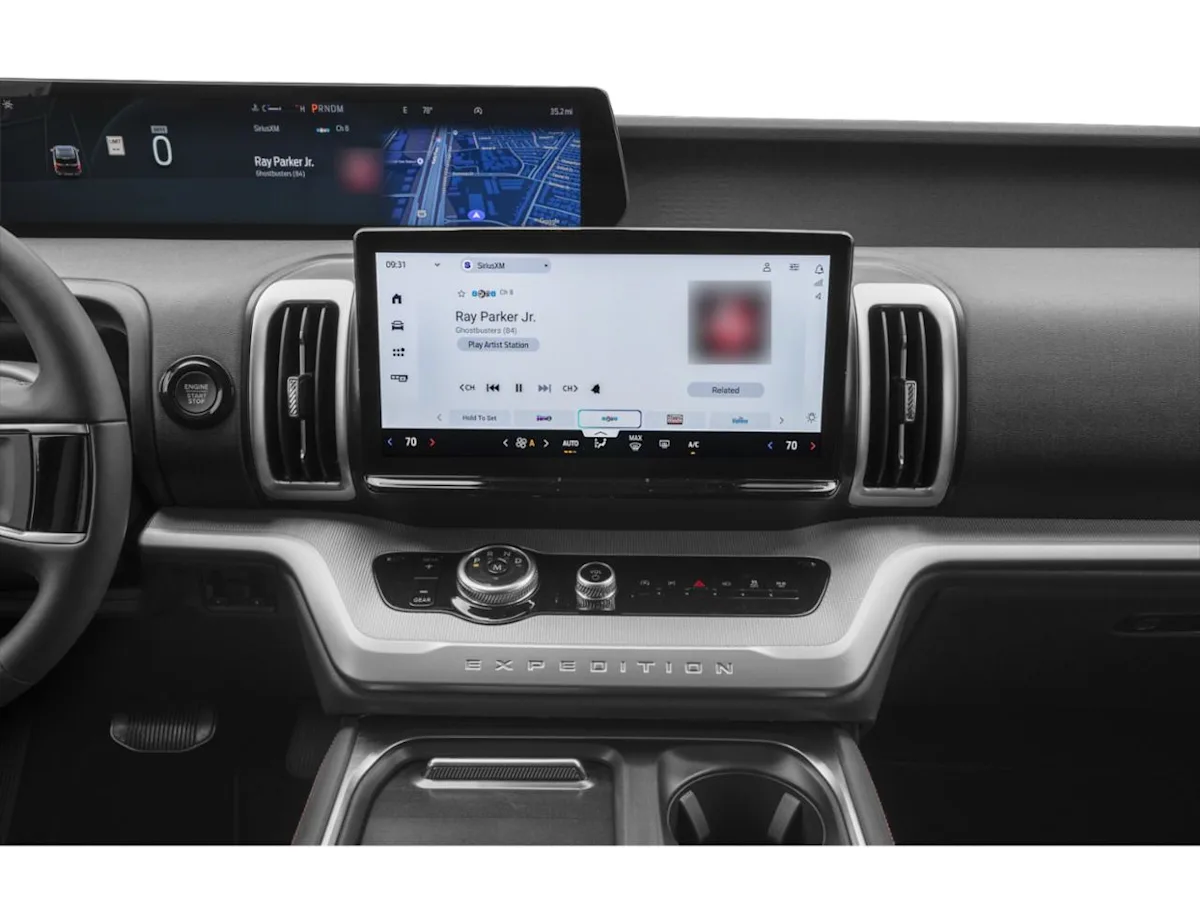
5. Multiple Camera Views
A large SUV can be difficult to judge in tight spaces. The Expedition’s available camera technology helps address this challenge by providing different views around the vehicle on properly equipped models. These views can assist with parking, maneuvering, hitching a trailer, and navigating narrow areas.
A traditional rearview camera gives the driver a clearer look at the area immediately behind the vehicle. However, additional camera views can provide more information.
Depending on configuration, the system may combine images from multiple cameras to create a broader view around the SUV. This can make it easier to understand the vehicle’s position relative to parking lines, curbs, nearby vehicles, or obstacles.
The camera system can be particularly helpful in parking lots. A full-size SUV has substantial dimensions, so accurately judging the front corners or sides from the driver’s seat is not always easy. Camera views can supplement what you see through the windshield and mirrors. This can help reduce uncertainty when maneuvering into a narrow space.
Camera technology can also be useful when connecting a trailer. Hitching requires the vehicle and trailer to be positioned accurately, and even a small misalignment can mean getting out of the vehicle several times to check the connection. A suitable camera view can make the process easier by giving the driver a better visual reference.
It is important to remember that cameras should supplement, not replace, direct observation. They have blind spots and can be affected by dirt, rain, darkness, glare, or other conditions.
Before moving, drivers should check mirrors and surroundings and remain alert to pedestrians and objects. Used correctly, the Expedition’s camera technology can provide an extra layer of awareness during everyday driving.
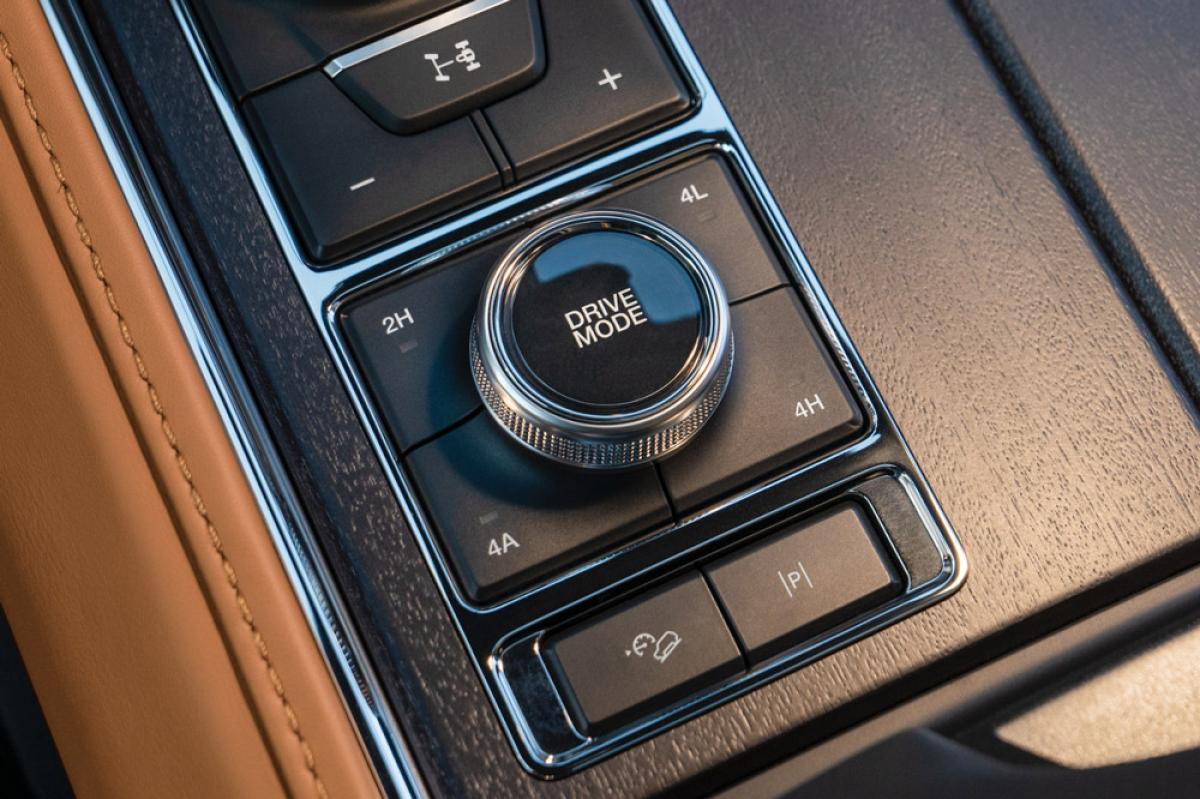
6. Selectable Drive Modes
The Expedition’s drive modes can be easy to overlook because they are not always needed during ordinary city driving. Yet they can change how the SUV responds to different road and driving conditions.
Depending on model and drivetrain, available modes can be designed for situations such as normal road use, slippery surfaces, towing, off-road conditions, or other specific environments.
A drive mode can adjust several vehicle characteristics at once. Depending on the selected setting and vehicle configuration, these adjustments may influence throttle response, transmission behavior, traction management, steering feel, and other systems. The goal is to give the vehicle characteristics that are better suited to a particular situation.
For everyday driving, the standard setting is generally sufficient. When conditions change, however, choosing a more suitable mode can help the vehicle respond more appropriately.
Wet roads, loose surfaces, snow, mud, or towing can place different demands on a large SUV. The available drive modes are designed to help manage those situations.
Drivers should not assume that selecting a special mode makes difficult conditions completely safe. Tire condition, road surface, speed, visibility, vehicle load, and driver behavior remain critical. A drive mode is an assistance feature rather than a substitute for good judgment.
The best way to understand these settings is to read the vehicle’s instructions and try them in appropriate conditions. Knowing what each mode changes can prevent confusion when a challenging road surface appears unexpectedly. Once you understand the purpose of each setting, the Expedition becomes easier to adapt to different types of driving.
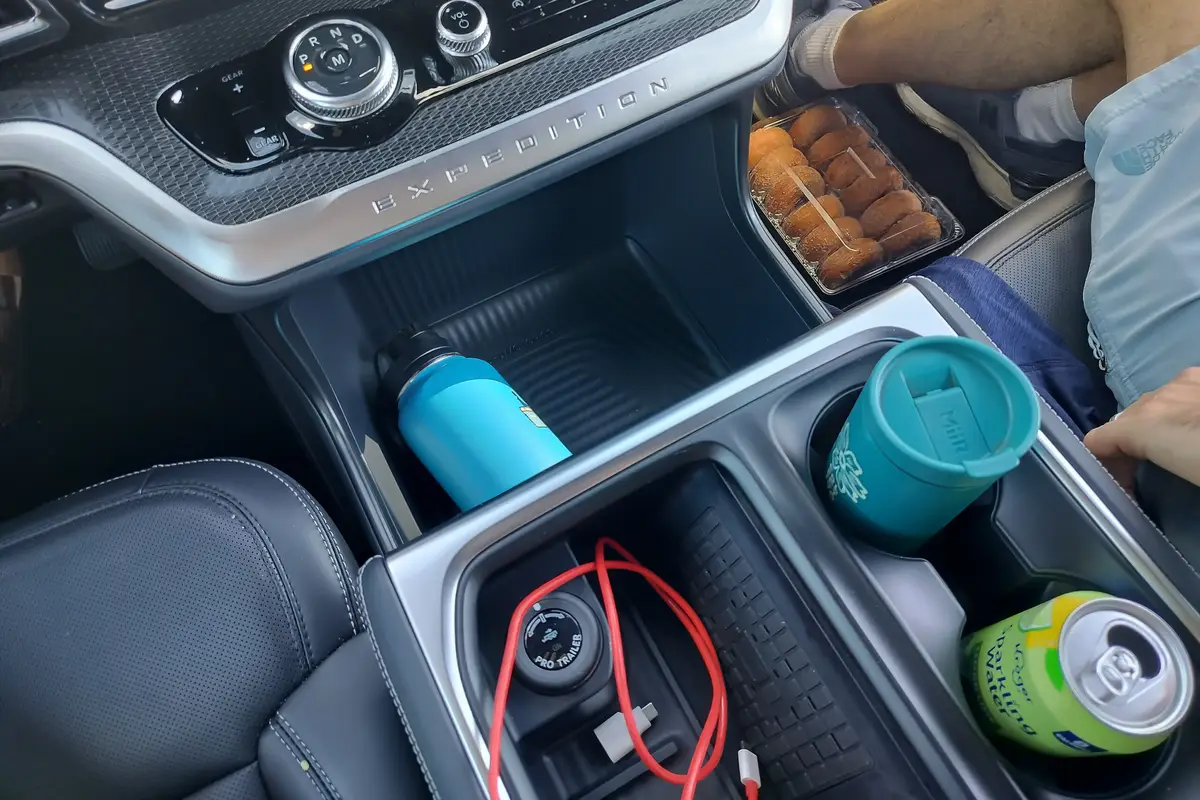
7. Convenient Interior Storage
The Expedition’s large cabin provides more storage opportunities than may be immediately obvious. In addition to the main center console and door pockets, the SUV can offer smaller storage areas designed for everyday objects. These spaces can help keep phones, charging cables, sunglasses, bottles, documents, and other items organized.
Interior storage becomes particularly valuable on long trips. A family may have several phones, tablets, snacks, water bottles, headphones, and travel accessories inside the vehicle at the same time.
Without dedicated places for those items, the cabin can quickly become cluttered. Using the available compartments gives each item a logical location.
The center console is another area worth understanding fully. Depending on the configuration, it can provide substantial storage beneath or around the main controls. Some versions may also offer flexible arrangements that allow drivers to customize how items are stored. Learning the console’s layout can help make better use of the available space.
Door storage can also be useful, but heavy objects should not simply be placed in any available compartment. Storage areas have practical limits, and items should not interfere with controls, doors, seat movement, or visibility.
The safest arrangement is one where frequently used objects are accessible without creating distractions.
These storage details may not appear on a specification sheet as prominently as horsepower or towing capacity. Their value becomes clearer through everyday use. A well-organized cabin is more comfortable, easier to maintain, and less distracting. For an SUV designed to carry families and large amounts of equipment, thoughtful storage can make a meaningful difference.

8. Remote Start and Cabin Preparation
Remote start is a familiar feature on many modern vehicles, but it can be especially useful in a large SUV like the Expedition. When properly equipped and configured, remote starting allows the vehicle to run before you enter it. This can help prepare the cabin for the conditions outside, subject to local laws and the vehicle’s operating requirements.
During hot weather, allowing the cabin to begin cooling before everyone gets inside can make the first few minutes of a journey more comfortable. In colder climates, remote starting can help warm the vehicle. The exact operation of the climate system depends on the vehicle’s settings, equipment, and environmental conditions.
Remote functions may also be available through Ford’s connected services on compatible vehicles. Features and service requirements can vary by model year, trim, subscription, region, and connected-service availability. Owners should check the specific capabilities of their vehicle rather than assuming every Expedition has identical remote functions.
There are also practical safety considerations. A vehicle should only be remote-started in an appropriate location with adequate ventilation. It should never be operated in an enclosed garage because exhaust gases can create a serious hazard. Drivers should also follow local regulations and the instructions provided for their particular vehicle.
Once properly configured, remote start can become a convenient part of a daily routine. It is especially useful when the Expedition is being used for commuting, school runs, family trips, or regular errands.
Like several other features on this list, it may not seem essential at first, but frequent use can make it surprisingly valuable.
