
Long before many famous cars carried sleek badges and powerful engines, their manufacturers were building bicycles. This unusual path shaped companies such as Peugeot, Opel, Rover, Škoda, Triumph, NSU, Sunbeam, and Humber.
Their early bicycle businesses taught them about frames, wheels, chains, bearings, metalworking, production, and customer demand. When engines became practical, these firms adapted their workshop skills to motorized transport. Some created named bicycles, while others sold early machines identified mainly by their maker or design.
Their first cars ranged from tiny three-wheelers to simple two-seat models, laying foundations for brands that later became important names in motoring history.
1. Peugeot
Peugeot’s roots date back to the early 19th century, when the Peugeot family was involved in steelmaking and the production of tools and household goods. Bicycle manufacturing became an important part of the business in the 1880s. According to Peugeot Cycles, the company began mass-producing penny-farthings in 1886.
These early bicycles had a large front wheel and a much smaller rear wheel, reflecting the technology of the period. The machines were not known by a modern-style individual model name, so the historically appropriate designation is the Peugeot Penny-Farthing.
The move from bicycles to automobiles happened quickly compared with the long history of the Peugeot family business. In 1889, Armand Peugeot presented a steam-powered three-wheeler at the Paris World Fair. It was designed with engineer Léon Serpollet and was not commercialized.
Peugeot then turned toward petrol power, producing the Type 2 in 1890. The Type 2 used a Daimler engine and represented a major change in Peugeot’s manufacturing direction. Later, Armand Peugeot created the Société Anonyme des Automobiles Peugeot, separating automobile production from the family’s traditional cycle and tool businesses.
The early Peugeot story shows why bicycle manufacturing was useful preparation for automobile production. A bicycle required accurate metalwork, reliable wheels, steering components, chains, bearings, and careful assembly. Cars required those same principles on a much larger and more complicated scale.
Peugeot could therefore transfer knowledge from two-wheeled transportation into four-wheeled engineering. The company eventually combined its bicycle and automobile activities again, with the broader Peugeot organization becoming associated with both forms of transportation. This history also explains why Peugeot’s early identity was connected with practical engineering rather than cars alone.
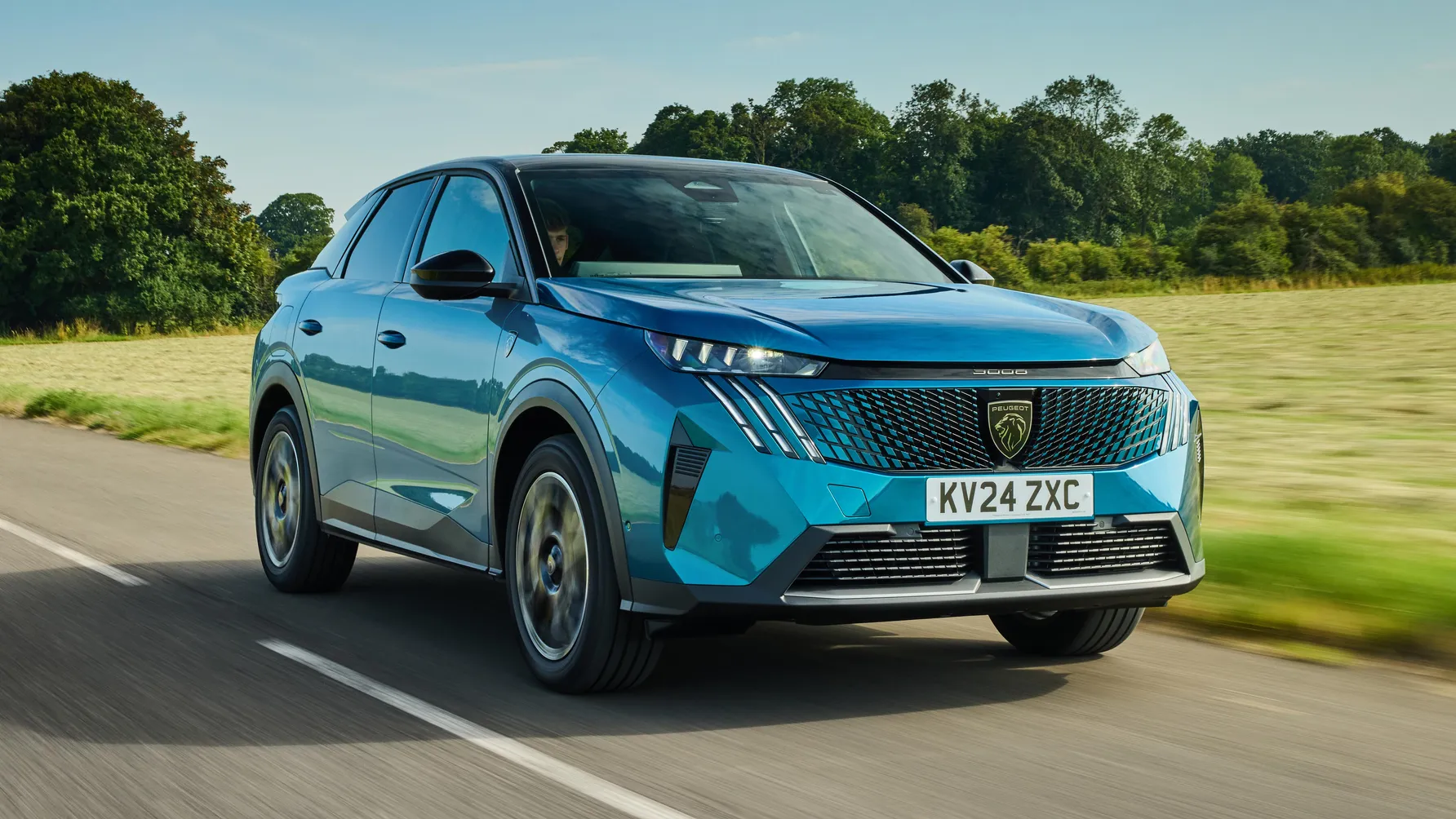
The Peugeot logo has a particularly clear historical connection with strength and regional identity. The lion became associated with Peugeot products during the 19th century and appeared in different forms on bicycles, tools, and later automobiles. Early versions included a lion on an arrow, while later car badges developed into more recognizable lion figures.
Peugeot’s historical logo evolution also includes the lion of Franche-Comté, the region connected with the company’s origins. The company describes the lion as an emblem whose appearance has changed repeatedly while maintaining the brand’s feline character and passionate identity.
2. Opel
Opel’s story began with Adam Opel, who founded his manufacturing business in Rüsselsheim, Germany, in 1862. The company initially became known for sewing machines, but bicycles later became a major part of its development.
Adam Opel built his first high-wheel bicycle, commonly called a penny-farthing, in 1886 after becoming interested in the growing bicycle industry. Opel began selling bicycles that year, followed by safety bicycles and other designs. The bicycle operation eventually became so successful that Opel was a major bicycle manufacturer in the early 20th century.
The first Opel car arrived after the company had already developed substantial experience with bicycles and motorcycles. In 1899, Opel began automobile production through an agreement connected with Friedrich Lutzmann. The resulting Opel Patentmotorwagen System Lutzmann became the company’s first automobile.
It looked very different from modern Opel models, with an exposed body and a relatively simple mechanical layout. The transition marked Opel’s move from two-wheeled transport into the rapidly developing motorcar market. The company’s sons were closely involved in this expansion after Adam Opel died in 1895.
Opel’s bicycle manufacturing became far more than a temporary experiment. The company introduced assembly-line production for bicycles in 1923, allowing production to increase dramatically and prices to fall. By 1925, Opel had become the world’s largest bicycle manufacturer according to the company’s historical account.
Its bicycles were also successful in racing, giving the Opel name visibility beyond ordinary transportation. This experience with volume manufacturing, competitive engineering and customer-focused products provided useful knowledge for the company’s expanding automobile business.
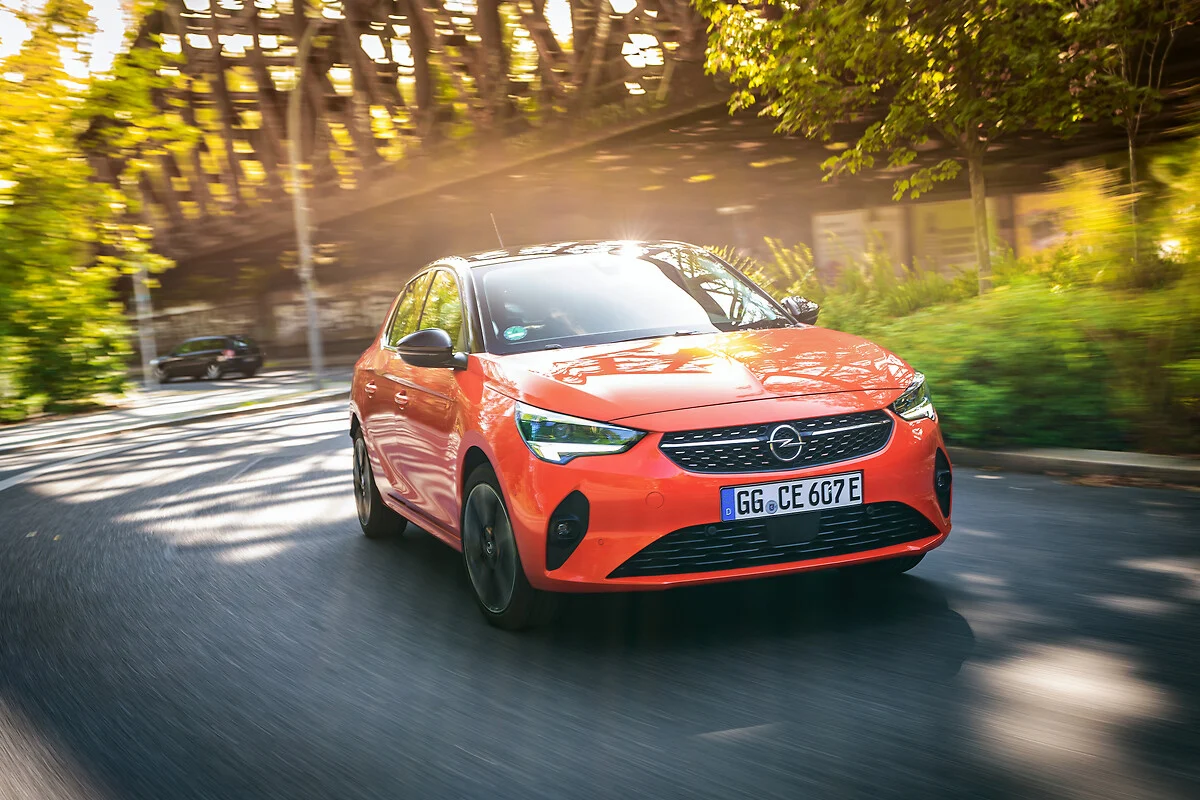
The Opel logo has changed considerably, but its famous modern symbol is the Blitz, German for “lightning.” The lightning flash became associated with Opel during the 20th century and eventually became the defining emblem on its vehicles.
Opel states that the lightning symbol has a close connection with electricity and serves as a fitting representation for the company’s move toward electric mobility. The circular form surrounding the flash has appeared on Opel vehicles since 1963, with several design updates over the decades.
The present Opel identity places the Blitz at the center of the brand’s visual system. The lightning shape communicates energy, speed, and electrical power, while the circular ring creates a compact badge that works well on vehicle grilles and digital platforms. Opel has also incorporated the emblem into its Vizor design language.
The meaning has therefore gained a modern technological association while retaining a symbol that has represented Opel vehicles for decades. The contrast between the company’s early penny-farthings and today’s electric vehicles makes Opel’s history particularly striking.
3. Rover
Rover’s connection with bicycles is particularly important because its early safety bicycle helped establish a design that became influential in cycling history. The Rover Safety Bicycle was developed in the 1880s and offered a much more practical arrangement than the earlier high-wheel bicycle.
It used two wheels of similar size and a chain-driven rear wheel, giving riders greater stability and making the bicycle easier to control. The design became closely associated with the Rover name and helped the company build expertise in lightweight transportation.
The company gradually moved from bicycles toward powered vehicles. Motorcycles followed in the early 1900s, giving Rover an opportunity to gain experience with engines, transmissions, and motorized chassis. This intermediate stage mattered because the leap from a pedal-powered bicycle to a full automobile involved major engineering challenges.
Rover could experiment with engines and mechanical systems while retaining its existing knowledge of frames, wheels, steering and manufacturing. In 1904, the company introduced its first car, the Rover Eight, a compact two-seat automobile powered by a single-cylinder engine.
The Rover Eight was simple by modern standards, yet it represented a significant step for the company. It used a 1,327cc single-cylinder engine and produced about eight horsepower, explaining the model’s name. Production continued until 1912.
The car demonstrated how Rover could apply its engineering background to a vehicle designed for road use. Its compact dimensions and straightforward mechanical layout were appropriate for the early automobile market, where manufacturers were still developing practical solutions for engines, suspension and steering.
Rover’s best-known historical car logo is the Viking longship. The ship became closely associated with the Rover identity and was used to suggest exploration, travel, movement and independence. The name “Rover” itself has associations with travelling or moving from place to place, making the Viking ship a natural visual expression of that identity.
The badge was frequently rendered in red and gold or other variations during different periods. Its nautical and Nordic imagery gave Rover a distinctive character compared with brands that relied on animals, initials or geometric shapes.
4. Škoda
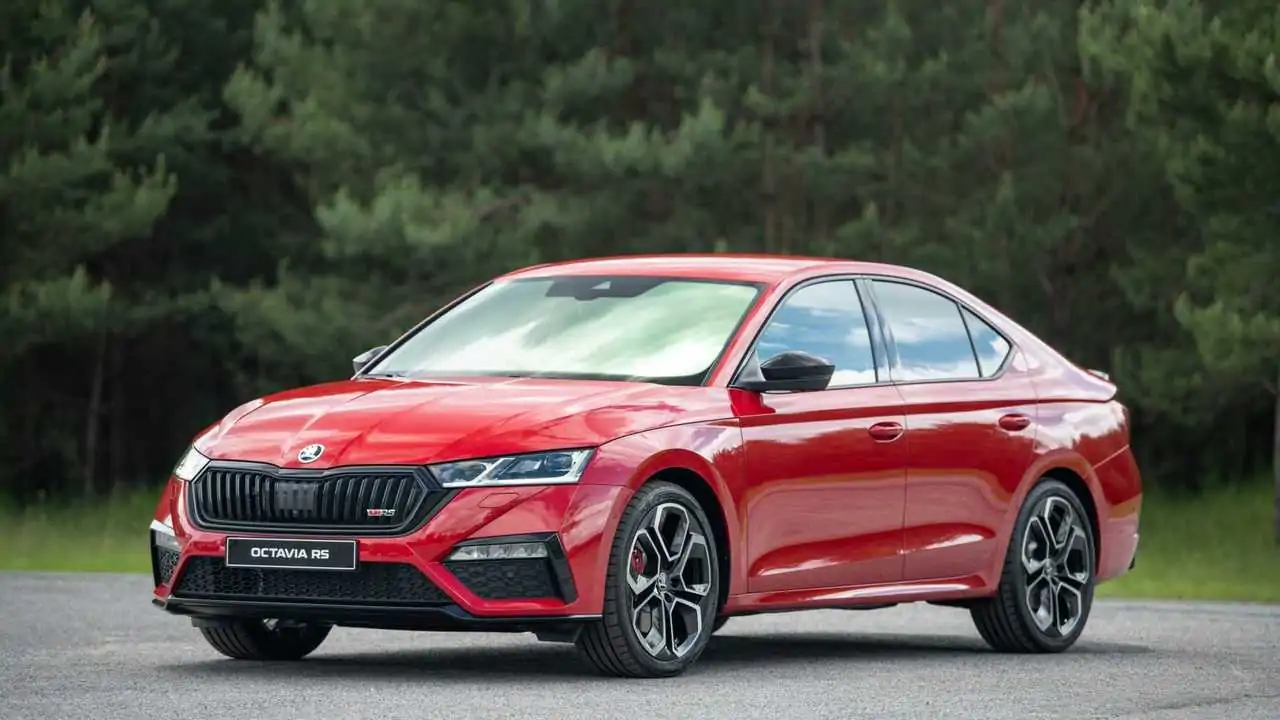
The story of Škoda’s automobile heritage begins with two men named Václav Laurin and Václav Klement. In 1895, they established a bicycle manufacturing and repair business in Mladá Boleslav. Their bicycles were sold under the name Slavia.
The company developed a reputation for producing reliable bicycles and quickly expanded its operations. Slavia became the first major product identity associated with the business that would later develop into the Škoda automotive organization.
The company soon moved beyond pedal-powered bicycles. In 1898, it began producing bicycles fitted with auxiliary engines, and by 1899 it was manufacturing motorcycles. This progression provided valuable experience with internal-combustion engines before automobile production began.
In 1905, Laurin & Klement presented the Voiturette A, a small two-seat automobile powered by a two-cylinder engine producing about seven horsepower. Series production followed in 1906. The Voiturette A became a landmark in the company’s history and established the foundation for its later automobile manufacturing.
The Slavia bicycle name remains important because it demonstrates that the company’s automotive identity did not appear suddenly. Laurin and Klement first learned about manufacturing through bicycles, then applied their engineering knowledge to motorcycles and finally to cars.
This sequence was common among early vehicle manufacturers because bicycles were relatively simple mechanical machines that encouraged experimentation with lightweight frames, chain drives, steering systems and production methods. The Voiturette A represented the point where those lessons were brought together into a practical motorcar.
5. Triumph
Triumph’s roots reach back to 1885, when Siegfried Bettmann established a business in Coventry that initially imported bicycles. Bettmann later began manufacturing bicycles locally with partner Moritz Schulte, and the Triumph trade name became established in the bicycle market.
The company then entered motorcycle production in the early 1900s. This progression gave Triumph experience with powered two-wheelers before it moved into automobiles. The bicycle business was therefore a genuine part of the company’s industrial development rather than a minor side activity.
Triumph produced its first car in 1923. The model was the Triumph 10/20, developed following the acquisition of the Dawson Car Company. It was a small two-seat car with a 1.4-litre engine and became the first automobile sold under the Triumph name.
Approximately 2,500 examples were produced during its production period. The 10/20 was quite different from the lightweight bicycles that had introduced Triumph to transportation, yet the company had already gained years of experience with mechanical products before taking this step.
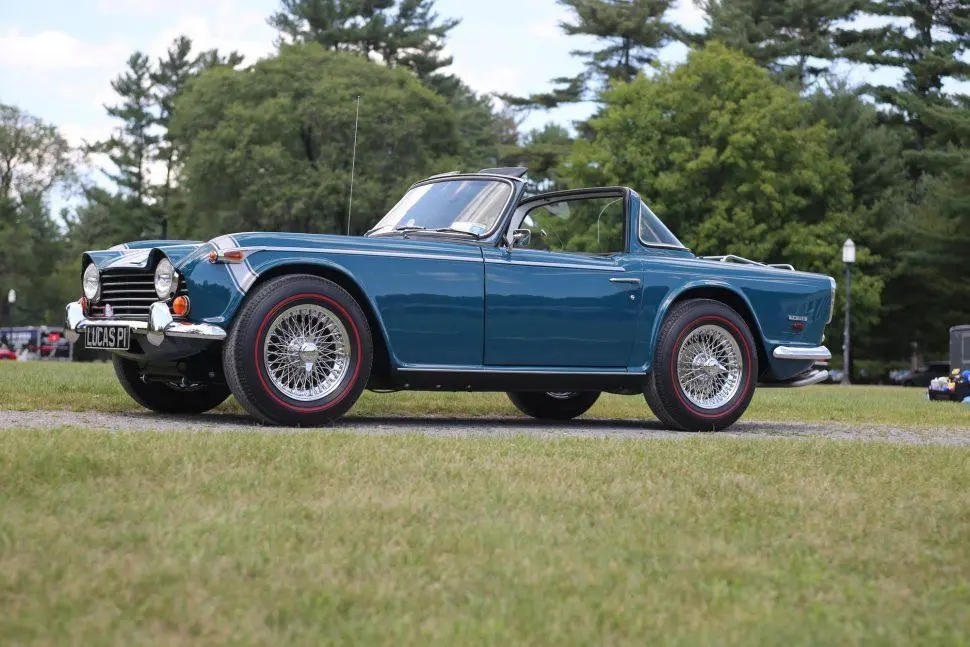
Triumph’s automobile history later became closely linked with sports cars. Models such as the TR2, TR3, TR4, Spitfire and GT6 helped create the marque’s reputation for compact British performance cars. The early bicycle business had already established the Triumph name in personal transportation, while motorcycles strengthened its understanding of engines and chassis.
This combination made the move into cars more logical. Triumph’s story also shows that early vehicle manufacturers frequently operated across several forms of transportation rather than specializing immediately in automobiles.
The historic Triumph car logo used several designs. Early cars carried a globe badge, often associated with the phrase “Triumph All Over The World.” The globe conveyed international ambition and reflected the company’s growing reach. Later cars used a stylized griffin-based badge, influenced by the branding of Standard, after Standard acquired Triumph.
The griffin is a traditional mythical creature combining features of an eagle and a lion and is commonly associated with strength and guardianship. Triumph’s badges therefore changed according to ownership and product eras.
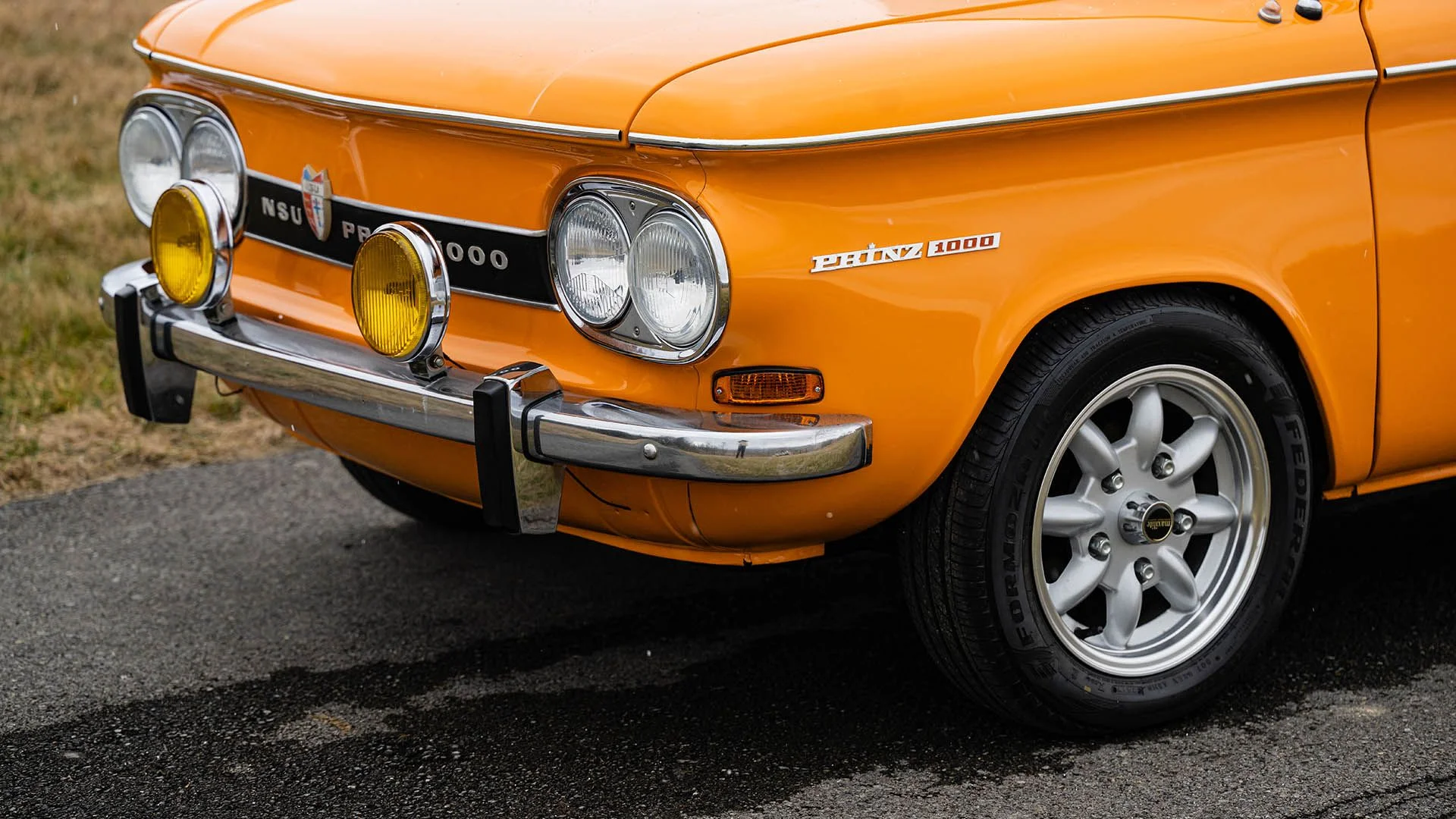
6. NSU
NSU began in Germany in 1873 as a company associated with knitting-machine manufacturing and repair. The business moved to Neckarsulm in 1880 and entered bicycle production in 1886. By 1892, the company was using the NSU name on its bicycles.
The name itself came from the city of Neckarsulm, whose name combines references to the Neckar and Sulm rivers. Bicycle manufacturing became an important foundation for the company’s later development into motorcycles and automobiles.
Motorcycle production began around 1900, giving NSU additional experience with engines and powered transportation. In 1906, the company presented its first motorcar to the public. This early NSU automobile was a small, mid-range vehicle with a water-cooled four-cylinder engine.
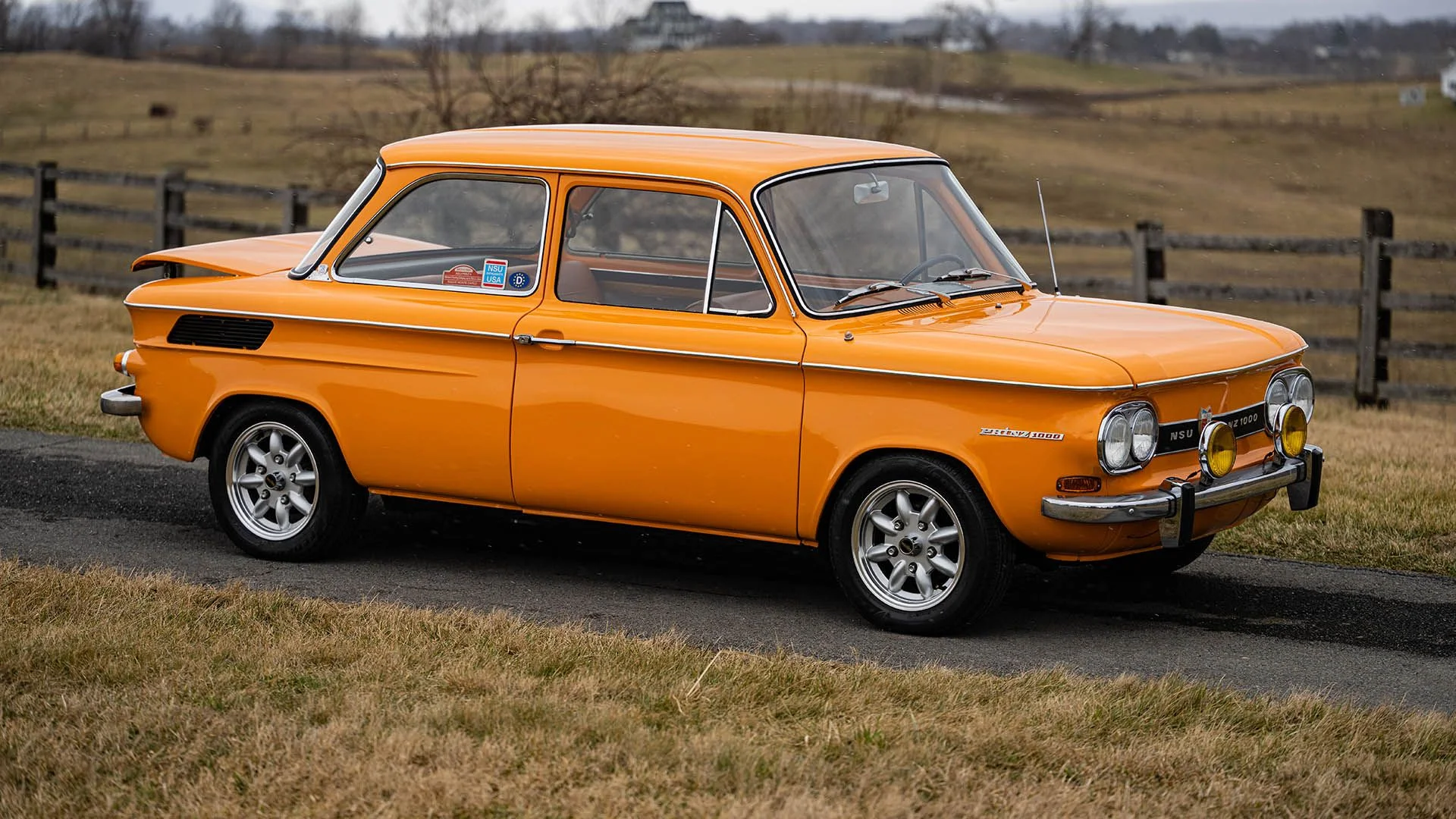
The company’s ability to produce bicycles and motorcycles had prepared its workforce for increasingly complex mechanical systems. NSU subsequently became particularly famous for motorcycles and later returned to cars with models such as the Prinz and technologically ambitious rotary-engine vehicles.
The bicycle business remained significant even after automobiles became an important part of NSU’s activities. By the 1920s, NSU was producing bicycles, motorcycles and cars at substantial volumes.
Later, the company expanded its two-wheeler operations further and became a major motorcycle manufacturer. In 1936, NSU acquired Opel’s bicycle business, increasing its position in the German bicycle industry. This history demonstrates how closely bicycles, motorcycles and cars could be connected within a single manufacturing organization
NSU’s historic logo is strongly connected with its German hometown. The letters NSU were derived from Neckarsulm, and early branding incorporated a stag’s antlers.
The antler motif was borrowed from the city’s heraldic tradition and represented a geographical connection with Neckarsulm and the surrounding region. The stag antler therefore had a different purpose from the Peugeot lion or Škoda winged arrow. It served as a heraldic reference to place and identity rather than simply representing a mechanical characteristic.
7. Sunbeam
Sunbeam’s beginnings are closely associated with John Marston, a Wolverhampton industrialist who entered bicycle manufacturing during the late 19th century. Historical accounts state that Marston built his first bicycle in 1887, and bicycles were subsequently produced under the Sunbeam name.
The bicycles became known for careful construction and high-quality finishes. The name Sunbeam is traditionally linked with the appearance of sunlight on the black enamel finish of an early bicycle, though the story is recorded as a legend rather than established fact.
Sunbeam began experimenting with motorcars in the late 1890s. Several experimental cars were built between 1899 and 1901, but they were not initially marketed as regular production vehicles.
The first Sunbeam automobile to reach production was the Sunbeam-Mabley, introduced in 1901. It was an unusual cycle-car with a small single-cylinder engine and a distinctive wheel arrangement. Approximately 130 examples were built, giving Sunbeam a genuine production presence in the emerging automobile market.
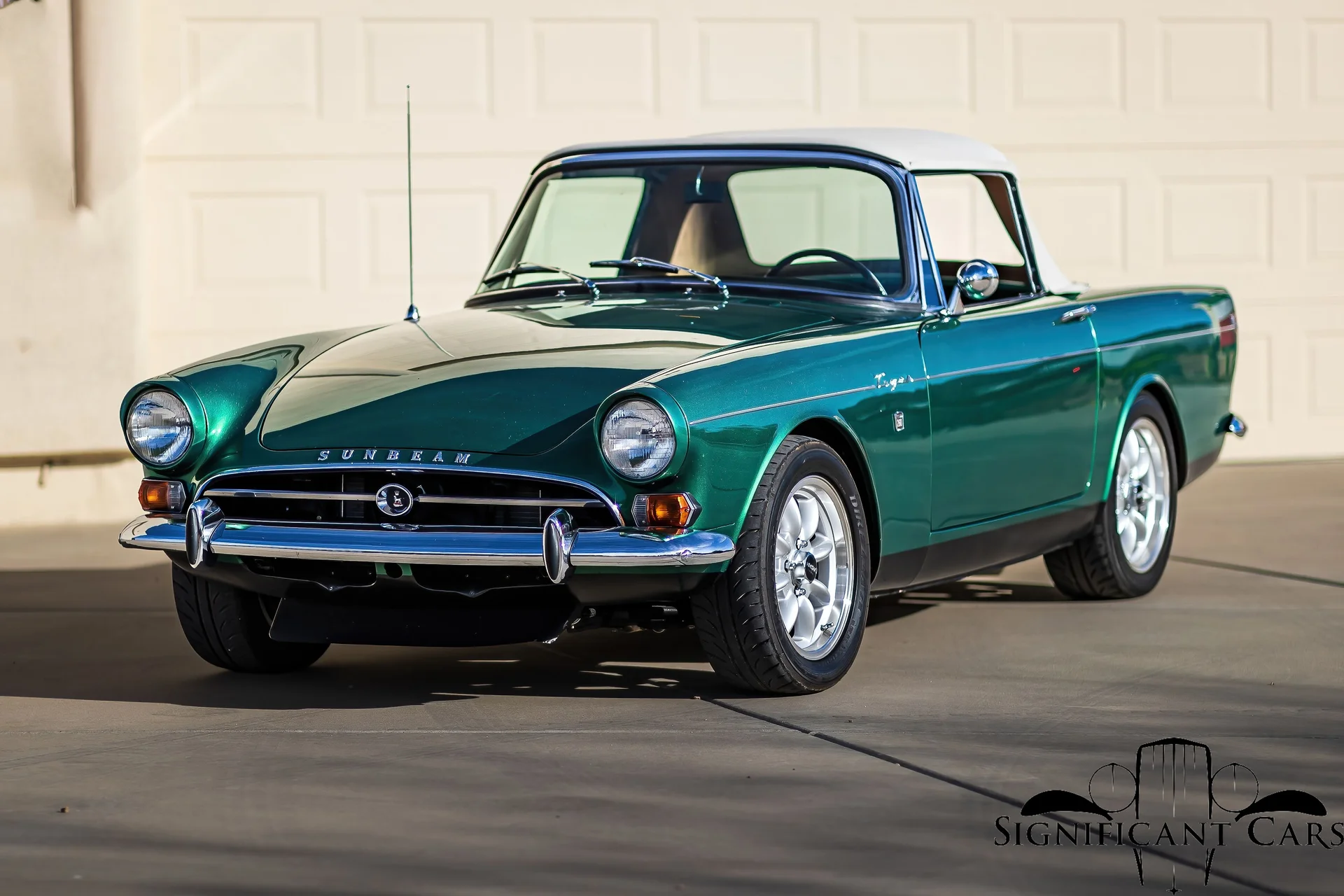
The Sunbeam-Mabley was unconventional, but it reflected the experimental character of early motoring. Manufacturers were still testing different layouts, engines, transmissions and body arrangements. Sunbeam soon moved toward more conventional automobiles, including the 12/16 and later models that established the marque in higher-end motoring and competition.
The company became involved in racing and speed-record attempts, eventually gaining a strong sporting reputation. Its bicycle expertise helped establish the engineering culture that preceded these automotive achievements.
The Sunbeam logo changed substantially during the company’s history. An early automobile badge used the Sunbeam name, while later designs introduced more elaborate imagery.
During the 1930s, a prominent version featured a lion and crown within a blue roundel. The lion conveyed strength, courage and authority, while the crown gave the emblem a royal and prestigious character. Later Sunbeam-Talbot branding used a crest associated with Talbot, rather than representing the original Sunbeam identity alone.
8. Humber
Humber’s origins are connected with Thomas Humber, who established a bicycle business in the 19th century. The company became known for bicycles and developed a strong reputation for engineering and manufacturing quality.
The bicycle industry was rapidly changing during this period, and Humber was involved in the development and production of practical bicycle designs. Its experience with lightweight frames, wheels, steering and mechanical construction provided a useful technical base when motor vehicles began to appear.
Humber entered automobile production near the end of the 19th century. A Humber motor vehicle was displayed at the Stanley Cycle Show in London in 1896, and the company subsequently prepared for production.
The first Humber car appeared in 1898 and was a three-wheeled tricar powered by a single-cylinder Turrell engine. A conventional four-wheeled Humber followed in 1901. The early three-wheeler shows how bicycle manufacturers were naturally positioned to experiment with lightweight motorized vehicles.
The connection between bicycles and early three-wheelers was especially strong. A tricar could use concepts already familiar to bicycle manufacturers, including lightweight construction, narrow dimensions and chain-driven mechanical arrangements.
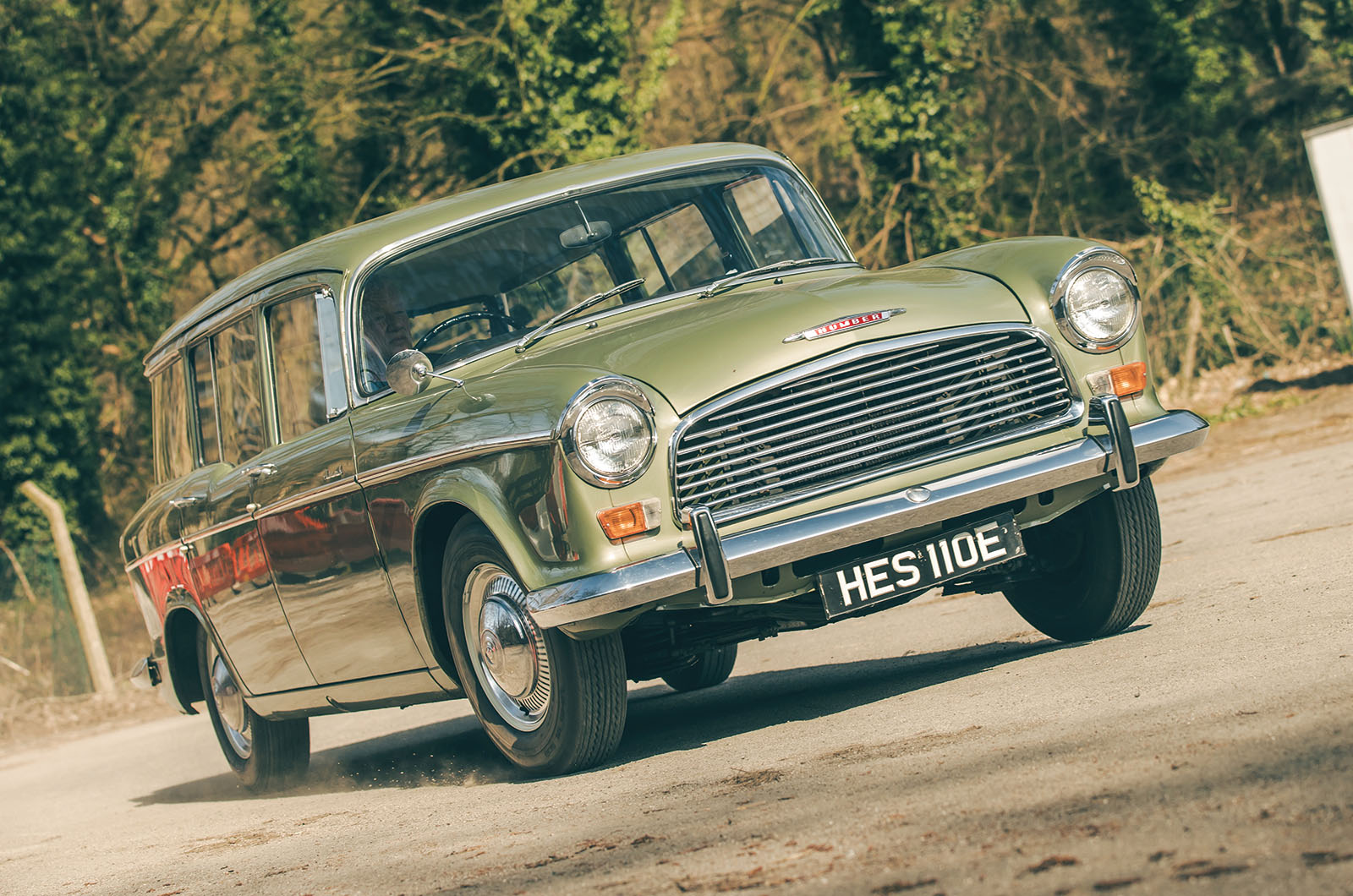
Humber’s move into four-wheeled automobiles followed as technology and consumer expectations developed. By the early 20th century, the company was producing a range of automobiles, and Humber eventually became part of the Rootes Group. Its vehicles later became associated with larger and more luxurious British cars.
Humber’s badge history is less widely documented than the famous emblems of Peugeot or Škoda, so it is useful to distinguish established symbolism from later interpretations. The Humber name itself comes directly from the company’s historical identity rather than from an animal or mechanical object.
Various Humber badges used lettering, shields and heraldic styling associated with British automotive presentation. These designs communicated British manufacturing, prestige and established engineering rather than having a single universally documented symbolic meaning comparable with Škoda’s winged arrow or NSU’s stag antler.
