Brake fluid plays a vital role in vehicle safety, transferring force from the brake pedal to the components that slow your car. Choosing the right formula can help maintain consistent braking, protect internal parts from corrosion, and support reliable performance under heat.
Yet the market includes products with similar specifications, overlapping features, and price differences that are not always easy to justify. This guide compares five brake fluids worth considering and five products or product categories that may offer similar everyday performance.
You will learn what matters on the label, where premium fluids make sense, and how to avoid paying extra for benefits your vehicle may never need.
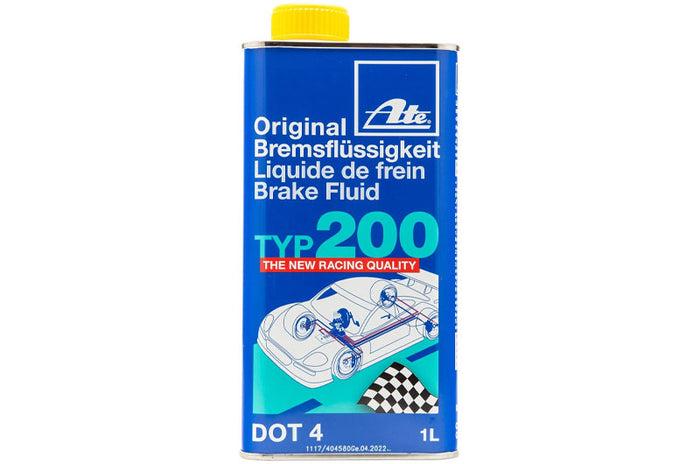
1. ATE Original TYP 200 DOT 4 Brake Fluid
ATE Original TYP 200 DOT 4 is worth considering for drivers who want a reputable European brake fluid for compatible road cars and spirited driving. It is a glycol-based DOT 4 fluid designed for hydraulic braking systems that specify the appropriate fluid class.
Its appeal comes from a balance of heat resistance, practical service use, and established recognition among automotive enthusiasts. Before buying, check your vehicle handbook and the exact product label rather than assuming that every car can use it.
A key specification to understand is the boiling point. Brake fluid absorbs moisture over time, and that contamination can lower its boiling point. Under heavy braking, excessive heat can cause fluid to vaporize, creating compressible gas within a hydraulic system.
The pedal may then feel soft, and braking performance can deteriorate. A quality DOT 4 fluid helps provide an appropriate safety margin when it meets the vehicle manufacturer’s requirements and is replaced in a timely manner.
ATE TYP 200 is commonly associated with European performance and maintenance applications. It may suit a road car that sees mountain roads, frequent highway driving, or occasional enthusiastic use.
However, a product marketed toward performance drivers does not automatically outperform every competing DOT 4 fluid in every measurement. Published specifications, the applicable testing standard, and the vehicle’s needs are more useful than a racing-inspired label.
For normal commuting, the benefits of a premium fluid depend on driving conditions and maintenance history. A driver who rarely brakes hard may not notice a meaningful difference between compliant DOT 4 products in good condition.
The bigger improvement may come from replacing old, moisture-contaminated fluid and repairing worn components. If your vehicle requires DOT 3, DOT 5, or a manufacturer-specific fluid, do not switch to TYP 200 without confirming compatibility.
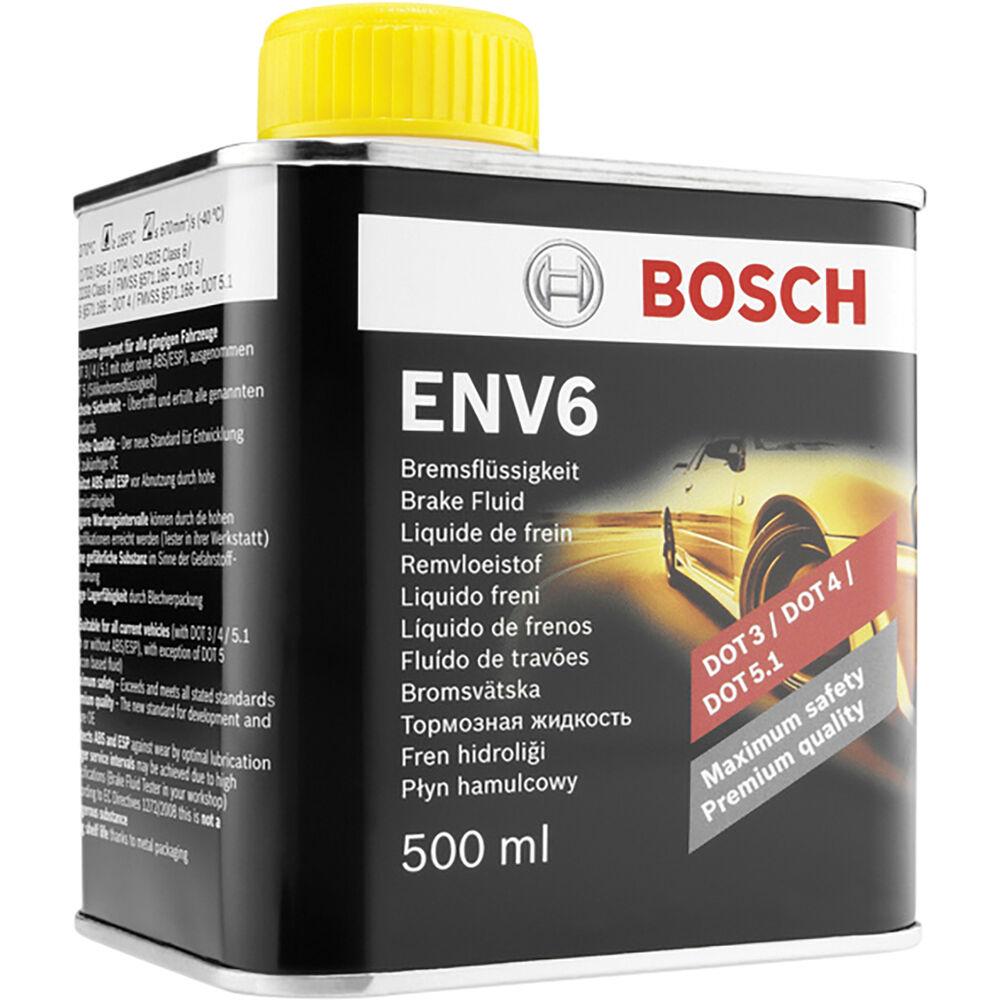
2. Bosch ENV6 DOT 4 Brake Fluid
Bosch ENV6 is a brake fluid worth investigating when a vehicle needs a modern DOT 4 product and its manufacturer permits the relevant specification. Bosch is a well-established automotive supplier, and its brake fluid range includes formulations designed for hydraulic braking systems.
The exact ENV6 product designation matters, so verify the packaging and current technical data before purchasing. Names, formulations, and availability can vary by market, making it important to confirm that the bottle matches the product described by the seller.
Modern braking systems can place different demands on fluid, particularly when electronic control systems operate the brakes during stability control or automatic emergency braking.
Certain low-viscosity brake fluids are designed to support hydraulic operation under conditions that require rapid response. However, not every Bosch DOT 4 product has identical properties. Do not assume that ENV6 and a conventional DOT 4 fluid are interchangeable simply because both display DOT 4 on the label.
For everyday drivers, the main purchasing question is whether the fluid satisfies the required standard and manufacturer approval. A car that specifies a particular low-viscosity fluid may need more than a basic DOT 4 designation.
Check the owner’s manual for references to low-viscosity requirements, manufacturer specifications, or approved fluid types. When the vehicle calls for a specific standard, choosing a bottle that meets only a general category may be insufficient.
Bosch ENV6 may be attractive to owners who prefer a known automotive supplier and want to maintain a compatible braking system with the correct fluid. Its value depends on availability, authenticity, local pricing, and technical suitability.
There is little benefit in paying a premium if a less expensive, fully compliant fluid meets every requirement. Conversely, choosing a cheaper bottle that lacks the necessary specification is a poor saving when brakes are involved.
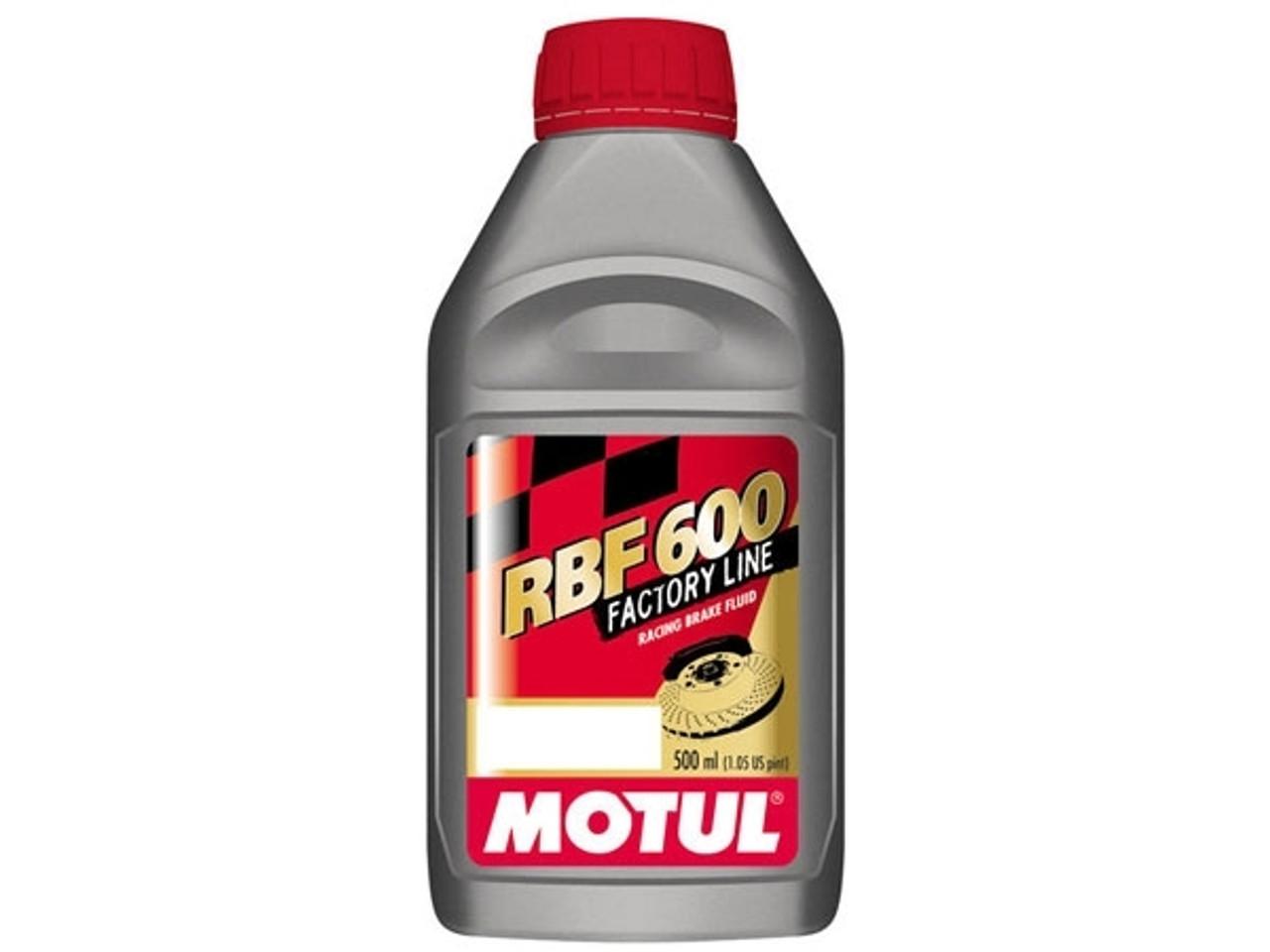
3. Motul RBF 600 Factory Line
Motul RBF 600 Factory Line is aimed at drivers who place greater demands on their braking systems than ordinary commuting usually creates.
It is a high-performance DOT 4 brake fluid commonly associated with track use, motorsport preparation, and vehicles that experience repeated hard braking. Its main selling point is a high dry boiling point compared with many standard fluids. That characteristic can provide a useful margin when the braking system becomes extremely hot.
Track driving changes the demands placed on brake fluid. Repeated heavy stops transfer substantial heat into the calipers and surrounding components. If fluid temperature rises enough to cause vapor formation, the pedal can lose firmness and braking may become inconsistent.
A suitable high-temperature fluid helps reduce this risk, provided the rest of the braking system is in good condition and the driver follows appropriate maintenance procedures.
RBF 600 is not automatically the best choice for every car. High-performance fluids can have different moisture-management characteristics from everyday formulations, and their condition still needs monitoring.
A high dry boiling point does not mean the fluid can remain in service indefinitely. Moisture enters glycol-based brake fluid through normal exposure, and its wet boiling point is therefore important when evaluating longer-term use.
For a vehicle used mainly for school runs, commuting, or relaxed highway trips, the additional performance may be unnecessary. Ordinary road driving often benefits more from fresh fluid, suitable tyres, healthy pads, and properly maintained calipers.
Track enthusiasts, competitive drivers, and people who regularly descend steep roads may have stronger reasons to consider a high-temperature product, subject to vehicle requirements.
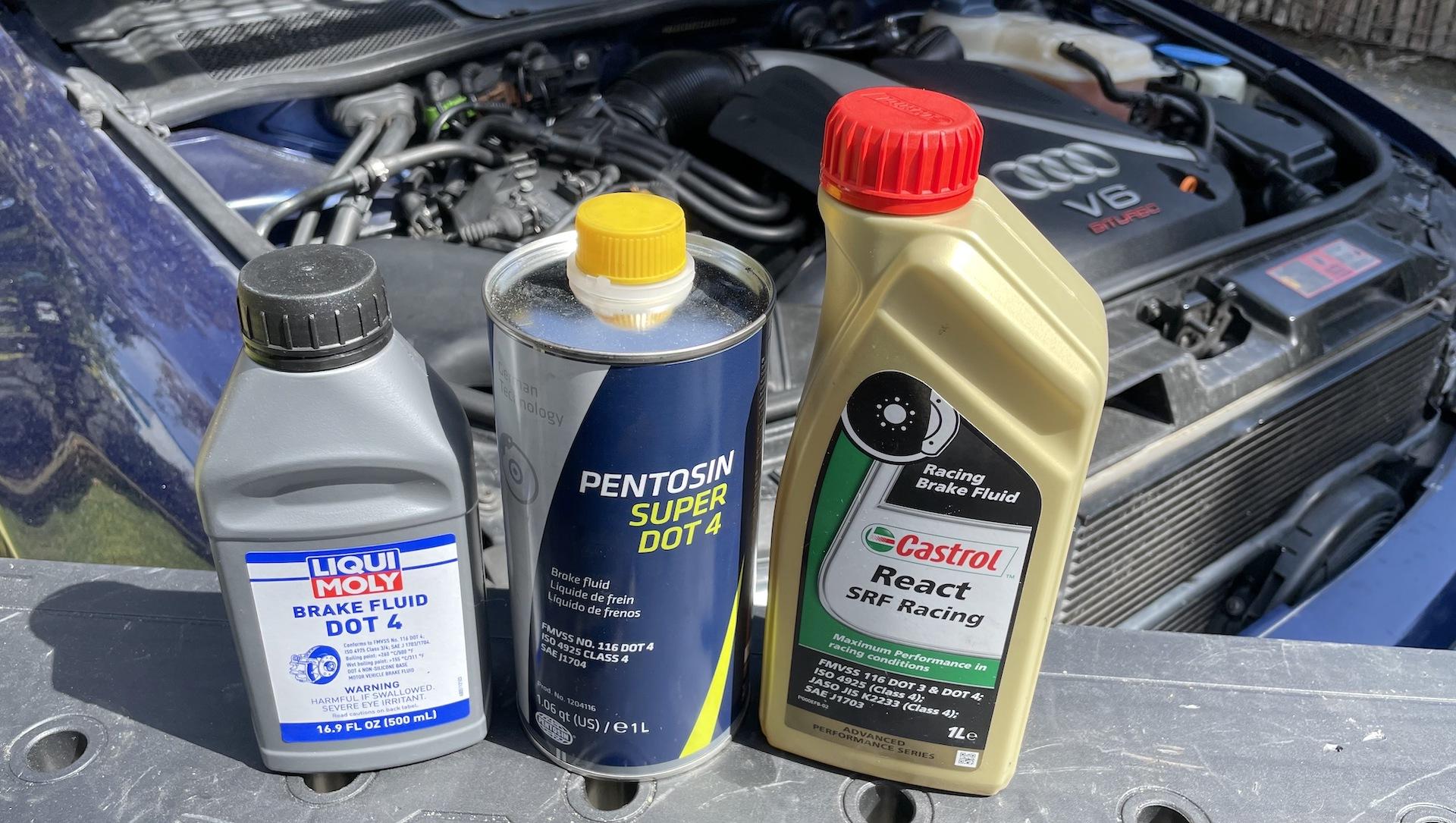
4. Castrol React Performance DOT 4
Castrol React Performance DOT 4 is another product to consider when the vehicle requires a compatible glycol-based DOT 4 brake fluid. Castrol’s automotive lubricants and maintenance products are widely recognized, and its brake fluid range serves drivers looking for dependable hydraulic system protection.
The exact product specification is more important than the name alone. Check the current label and technical data sheet to establish which performance claims and vehicle requirements apply to the bottle available in your market.
The attraction of a performance-oriented DOT 4 fluid is its ability to handle heat while meeting the required braking system standard. Brake fluid must transmit pressure reliably while operating across changing temperatures.
Its boiling point, viscosity, chemical compatibility, and resistance to corrosion all contribute to suitability. A fluid that performs well in one measurement is not necessarily the best option for every car, so comparisons should consider several specifications rather than a single headline figure.
Castrol React Performance may appeal to drivers who want a product from an established supplier for a compatible road vehicle. It can also be worth comparing with other premium DOT 4 fluids when preparing a car for demanding road conditions.
However, a more expensive fluid does not automatically shorten stopping distances. Tyre grip, brake pad condition, road surface, vehicle speed, and braking technique all affect stopping performance, while the fluid primarily supports reliable hydraulic operation.
One practical purchasing consideration is local availability. A brake fluid sold through a trusted parts shop may be a better option than an unfamiliar online listing with unclear storage history.
Fluid should be supplied in a sealed, undamaged container. Once opened, glycol-based brake fluid can absorb moisture from the atmosphere, so unused fluid should not be stored carelessly for future servicing.
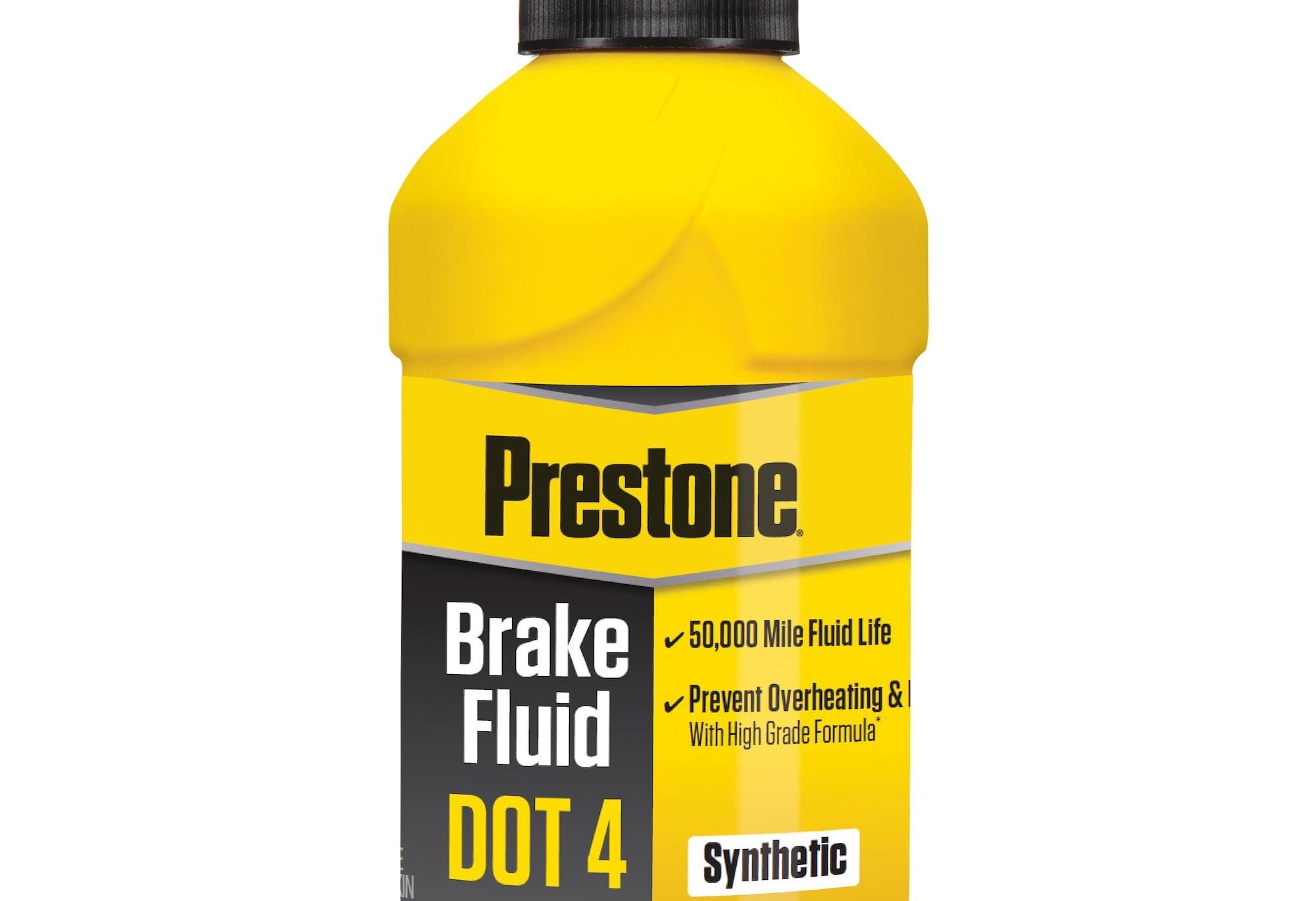
5. Prestone DOT 4 Synthetic Brake Fluid
Prestone DOT 4 Synthetic Brake Fluid is a practical option for motorists looking for a conventional replacement fluid that meets the requirements of their vehicle. Prestone is known for automotive maintenance products, including fluids used in routine vehicle care.
The exact formulation and specifications depend on the product version, so buyers should check the current container rather than assuming every product carrying the Prestone name has the same performance characteristics.
The word synthetic can make a bottle appear more advanced than its competitors, but it is not enough to establish superiority. Many conventional glycol-based brake fluids are described as synthetic. The more useful details are the required DOT classification, relevant manufacturer approvals, boiling point information, and any viscosity requirements.
If two products meet the same applicable standard, the term printed prominently on the front may tell you little about their relative suitability.
For everyday driving, a compliant DOT 4 fluid can be a sensible purchase when the owner’s manual calls for that category. It supports normal brake system operation while providing protection against corrosion when used correctly. Its effectiveness still depends on the system being properly maintained.
Old fluid, air in the hydraulic lines, leaking seals, damaged hoses, and worn components can all undermine braking performance regardless of the brand poured into the reservoir.
Prestone may be a good value when its price, authenticity, and specifications compare favourably with competing products. Drivers should resist the urge to select fluid based only on bottle size or an attractive retail promotion.
A smaller sealed container may be more suitable when a workshop needs only a limited quantity, because keeping an opened bottle for a long period can introduce moisture and contamination.
6. Bosch DOT 4 and Other Compliant Standard DOT 4 Fluids
Standard DOT 4 brake fluids from established manufacturers often serve the same basic purpose. Products from Bosch and other reputable suppliers may share the same general classification and be intended for ordinary road vehicles.
That does not mean their formulations are identical, but it does mean a shopper should begin by comparing technical requirements instead of assuming that a familiar brand must deliver a major improvement.
The DOT classification provides a useful starting point. It identifies minimum performance requirements for brake fluid, including boiling point and other relevant properties. A DOT 4 label therefore tells you more than a marketing phrase such as premium, advanced, or professional.
Yet two products carrying the same classification may still have different measured boiling points, viscosity characteristics, and manufacturer approvals. Those details can matter when a vehicle has specific technical requirements.
For a car used mainly in ordinary traffic, a compliant standard DOT 4 fluid may perform its intended role just as effectively as a pricier alternative. The key is that the fluid must actually meet the car’s specifications and be maintained in good condition.
If the manufacturer’s requirements are modest and the vehicle rarely experiences severe braking heat, paying more for a specialised racing formulation may offer limited practical benefit.
It is also important to distinguish a shared category from complete product equivalence. Standard DOT 4 fluids are not all manufactured from an identical recipe, and their additives can differ.
7. Premium Road DOT 4 Fluids With Similar Everyday Uses
Premium road DOT 4 products can look quite different on store shelves while targeting broadly similar drivers. They may feature different packaging, brand identities, and promotional descriptions, yet all be intended for compatible passenger vehicles.
If their documented performance and approvals satisfy the same requirements, the practical difference during ordinary commuting may be small. That makes technical comparison more useful than choosing the bottle with the most impressive advertising.
The difference between marketing language and measurable performance deserves attention. Terms such as high performance, premium protection, and advanced formula do not independently prove that a fluid is better for a specific car.
The manufacturer’s technical data sheet should provide the meaningful information needed for a comparison. Look for applicable standards, boiling point figures, viscosity data where relevant, and explicit compatibility statements.
For most motorists, the condition of the fluid is especially important. Glycol-based fluids gradually absorb moisture, which can lower their boiling point and increase the risk of problems under heavy braking.
A premium fluid that has remained in service too long may be a worse choice than a less expensive compliant product that is fresh and correctly installed. Service history therefore belongs in the buying decision alongside the brand name.
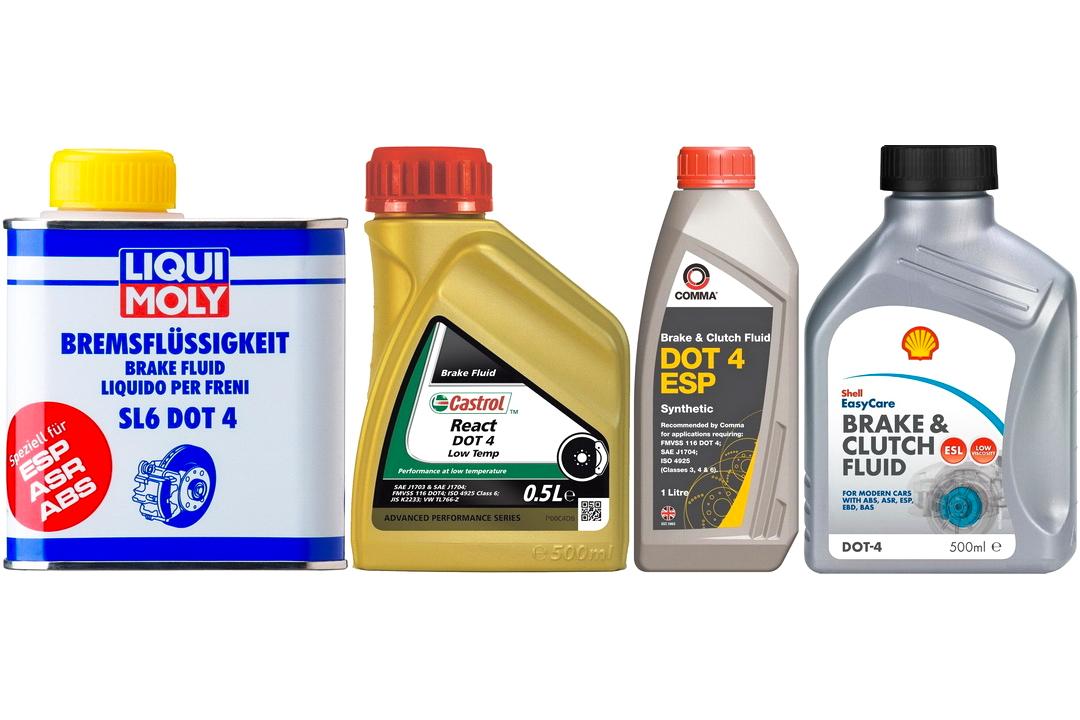
8. Different Brands of Equivalent DOT 4 Fluids
Brand differences can be less important than specification differences when comparing brake fluids for everyday use. Several suppliers manufacture products for vehicles that require standard DOT 4 fluid, and some may meet similar minimum performance requirements.
Their packaging and prices may vary considerably. For a driver maintaining a conventional road car, the central question is whether the chosen fluid satisfies the manufacturer’s instructions, not whether the bottle carries the most prestigious logo.
However, similar labels do not prove that products share an identical formula. Brake fluids contain base fluids and additives selected to meet performance and compatibility requirements.
A supplier may optimise a formulation for viscosity, corrosion protection, or other characteristics. These differences can matter in a vehicle with specific technical demands, even when two products display the same DOT category.
A fair comparison begins with the owner’s manual. Identify the specified fluid class and check whether the manufacturer requires an additional approval or a particular low-viscosity formulation.
Then compare the products’ technical information. If both meet the full set of requirements, it may be reasonable to choose the less expensive option from a reliable seller. If only one satisfies a specific approval, the products are not equivalent for that vehicle.
9. Budget DOT 4 Fluids That Meet the Required Standard
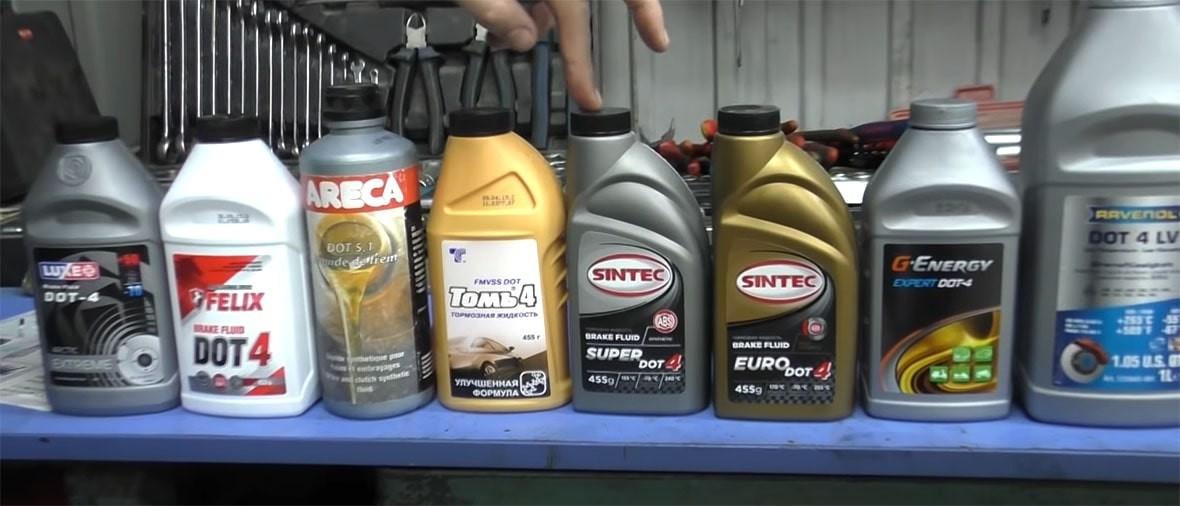
Budget DOT 4 brake fluids can offer good value for motorists who need routine maintenance rather than specialist track performance. A lower retail price does not automatically mean inferior braking performance, provided the product meets the vehicle’s specifications and applicable standards.
Some drivers pay extra for features they rarely use, while a correctly specified standard fluid can meet their needs perfectly well. The important distinction is between an affordable compliant product and a cheap bottle with unclear specifications or questionable authenticity.
When comparing budget options, check the actual label rather than relying on the seller’s description. Confirm the DOT classification, manufacturer requirements, and any additional approval specified in your owner’s manual.
Look for a clear manufacturer identity, identifiable packaging, and technical information that supports the product’s claims. If the seller cannot establish what the fluid is or which standards it meets, choose a better-documented alternative.
A low price is useful only when the product is genuine and has been stored appropriately. Brake fluid should be protected from contamination, and a damaged seal or questionable storage history can undermine confidence in its condition.
Buying from a reputable parts supplier helps reduce the risk of counterfeit or poorly handled stock. Saving a small amount on an essential braking component is not worthwhile when product quality cannot be established.
10. Private-Label and Store-Brand DOT 4 Fluids
Private-label brake fluids are sold under retailer or distributor brands rather than the familiar names associated with major automotive suppliers. Some can be perfectly suitable products for routine vehicle maintenance.
Their value depends on the specifications they meet, the reliability of the manufacturer or supplier, and the accuracy of the product information. A less familiar brand should not be dismissed automatically, but it deserves the same careful checks as any other fluid.
The first task is to establish whether the product meets the requirements for the intended vehicle. Read the label and look for the appropriate DOT classification and any additional specification demanded by the manufacturer. If the technical information is unavailable, ask the seller for the product data sheet. A retailer’s assurance that a fluid is suitable for most cars does not establish compatibility with every braking system.
Some private-label products may be sourced from established fluid manufacturers, but the supplier’s identity and formulation should not be guessed from the packaging.
Similar bottle shapes, matching colours, or comparable prices do not prove that two fluids come from the same factory. Without reliable documentation, it is not possible to claim that a store brand is chemically identical to a major manufacturer’s product.