
Choosing a reliable three-row SUV means finding a vehicle that combines passenger comfort, practical storage, safety, and manageable maintenance costs. Families depend on these vehicles for school runs, daily commutes, weekend trips, and long-distance travel, making dependability an important buying consideration.
Consumer Reports evaluates vehicles using owner surveys, road tests, safety information, and predicted reliability data. This guide examines ten three-row SUVs worth considering, highlighting their strengths, potential drawbacks, and suitability for different family needs.
Since reliability ratings vary by model year and powertrain, buyers should verify the latest ratings before making a final purchase decision.
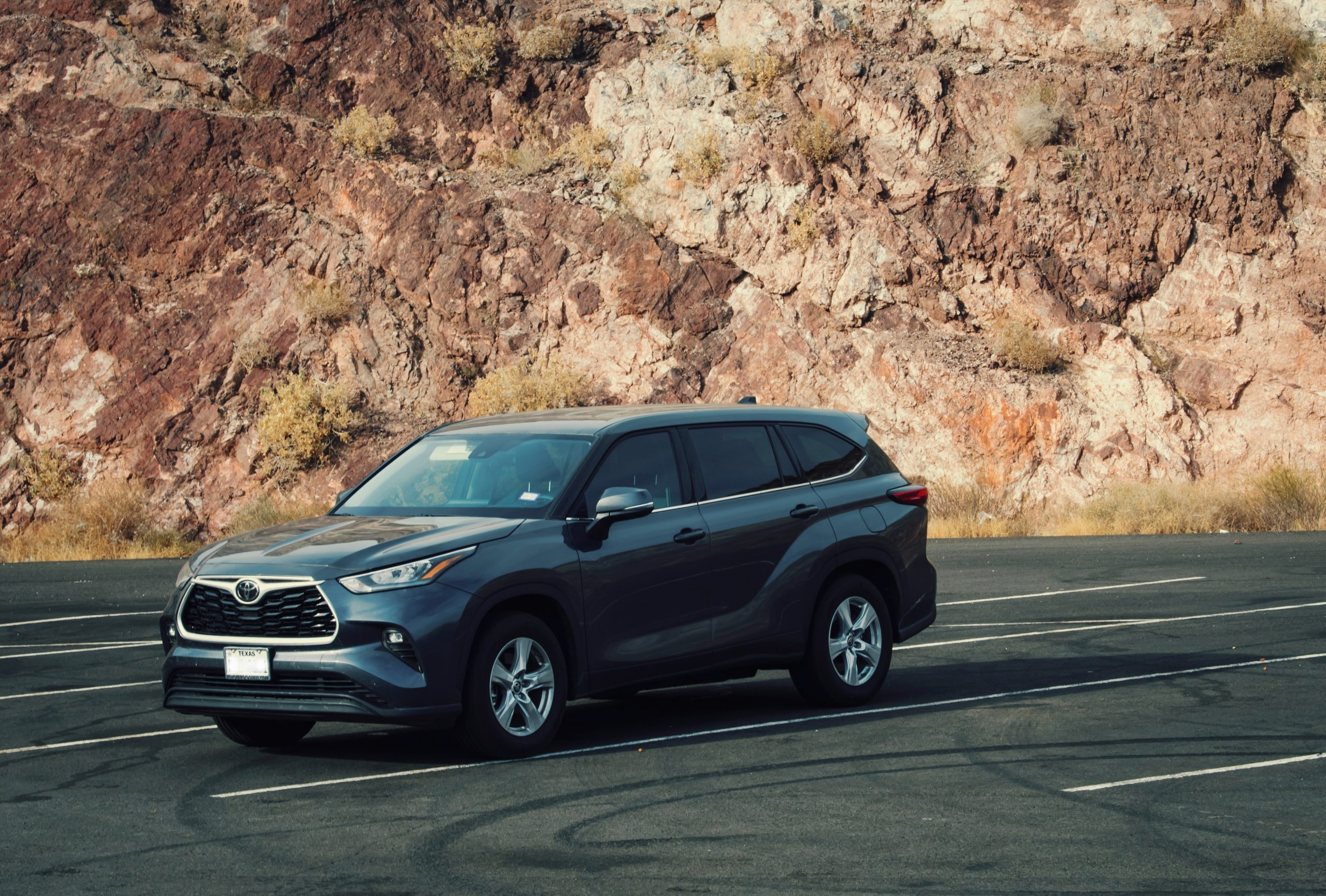
1. Toyota Highlander Hybrid
The Toyota Highlander Hybrid has earned a strong reputation among families seeking efficient transportation, comfortable seating, and established hybrid technology. Its gasoline-electric powertrain reduces fuel consumption compared with many conventional three-row SUVs, particularly during city driving.
For households that cover substantial mileage throughout the year, this efficiency can translate into meaningful savings. Toyota’s experience with hybrid vehicles also makes the Highlander Hybrid a sensible candidate for shoppers who value a proven mechanical design rather than an unfamiliar powertrain.
A major advantage of the Highlander Hybrid is its ability to combine everyday usability with impressive fuel economy. Its smooth acceleration suits urban traffic, while the cabin provides comfortable accommodation for routine family travel.
The second row offers useful space for children and adults, and the available seating arrangements can make passenger access easier. Buyers should remember that the third row is relatively compact compared with larger family SUVs, so adults may find it less comfortable on extended journeys.
Reliability depends on more than the manufacturer’s reputation. The condition of the hybrid battery, cooling system, suspension, brakes, and electronic equipment can affect ownership costs over time. Routine servicing and timely repairs remain important, particularly when purchasing a used vehicle.
Prospective owners should also check whether the particular model year has any outstanding recalls or documented technical issues. A carefully maintained Highlander Hybrid can be an appealing long-term purchase, but a vehicle history inspection remains essential.
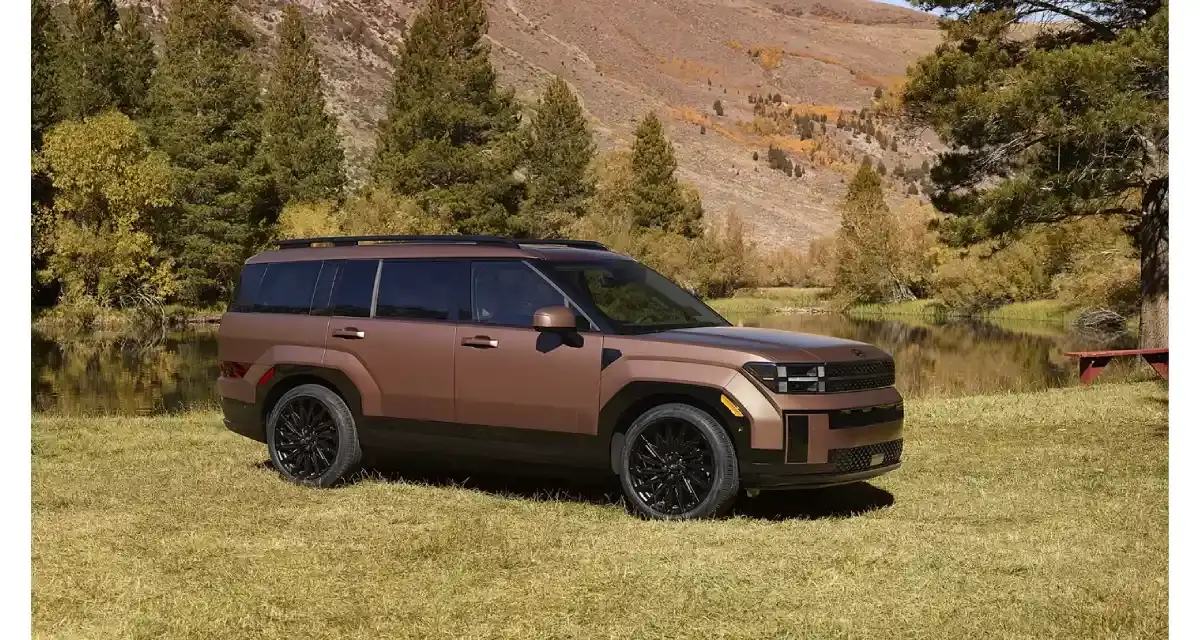
2. Hyundai Santa Fe Hybrid
The Hyundai Santa Fe Hybrid appeals to buyers who want contemporary styling, useful technology, and reduced fuel consumption without stepping up to a full-size SUV. Its upright body design creates a practical cabin, while the hybrid powertrain combines a gasoline engine with electric assistance.
The latest generation introduced a distinctive exterior and a more spacious-looking interior, making the Santa Fe an attractive option for households seeking a modern family vehicle.
Passenger comfort is an important part of its appeal. The front seats provide a useful driving position, and the second row offers practical room for passengers and child seats. Depending on the configuration and market, the Santa Fe accommodates up to seven people.
The third row is better suited to children or occasional passengers than to adults on long trips. Families should inspect the access route to the rear seats and confirm that the available space suits their regular travel needs.
The hybrid system can help reduce fuel use in stop-and-go traffic, where electric assistance is particularly useful. It also allows drivers to enjoy a familiar gasoline-powered vehicle without relying entirely on charging infrastructure.
However, hybrid efficiency varies with speed, temperature, passenger load, driving style, and road conditions. Buyers should compare real-world fuel economy reports for the precise model year and drivetrain they intend to purchase rather than relying solely on advertised figures.
Consumer Reports’ October 2025 vehicle ratings listed the 2025 Santa Fe Hybrid as a recommended SUV, noting its strong road-test performance, comfortable ride, and good fuel economy.
The same assessment identified limitations, including a tight third row and a gear selector that some drivers may find unintuitive. These observations highlight why road-test performance and reliability should be considered separately. A vehicle may be enjoyable to drive while still requiring careful examination of its predicted reliability record.
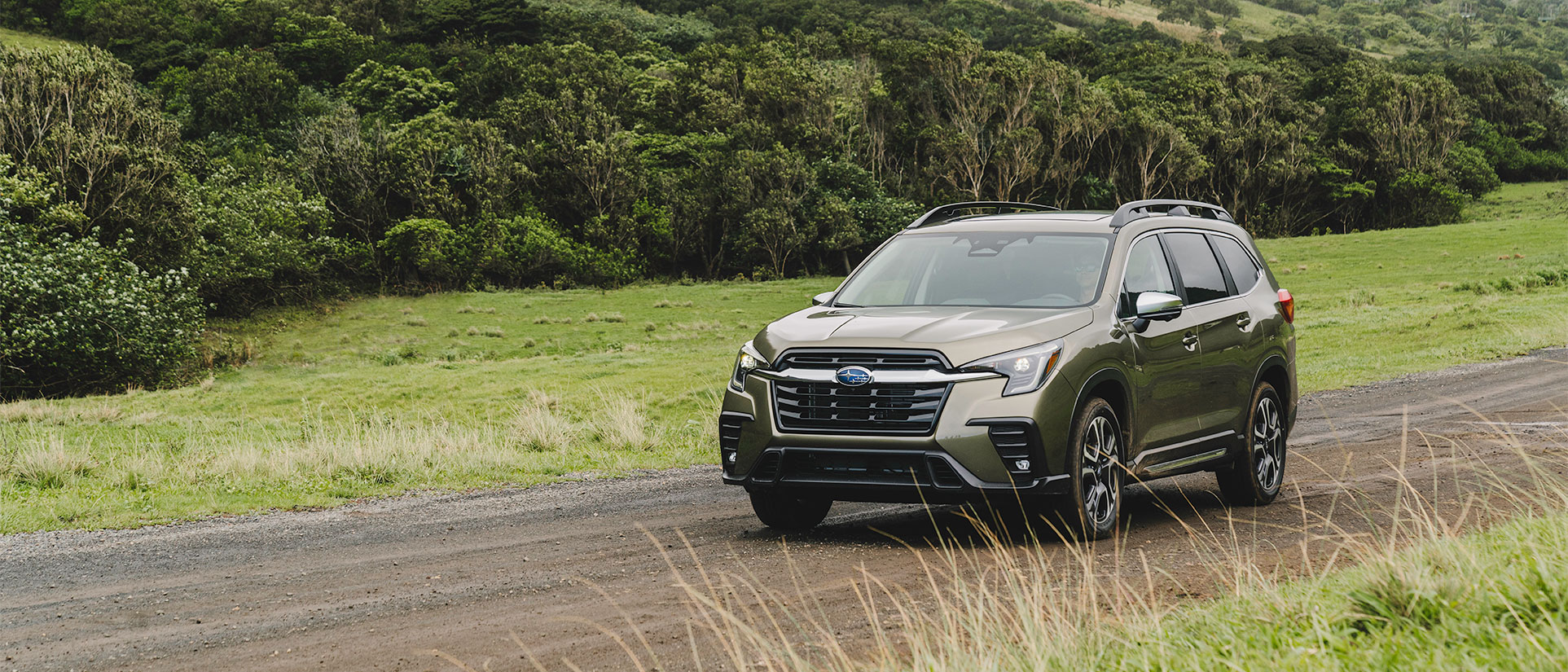
3. Subaru Ascent
The Subaru Ascent is designed for families who need three rows of seating and confidence in changing weather conditions. Its standard all-wheel-drive system provides traction to all four wheels, making it useful on wet roads and slippery surfaces.
This feature is especially appealing to drivers who regularly encounter rain, snow, or uneven roads. All-wheel drive does not eliminate the risk of skidding or shorten braking distances in every condition, so suitable tires and sensible driving remain essential.
Inside, the Ascent emphasizes practical family transportation rather than sporty handling. The cabin offers useful passenger space, accessible controls, and storage areas for everyday belongings. Its three-row layout can accommodate a growing family, while the second row makes room for child seats and passengers who need extra legroom.
The third row is most comfortable for children and shorter journeys for adults. Families should test the seating arrangement with their usual passengers before committing to a purchase.
Consumer Reports’ October 2025 ratings listed the 2025 Ascent as a recommended model, with a strong road-test score and favorable assessments of ride comfort, quietness, visibility, and braking.
These qualities matter when a vehicle spends much of its life carrying passengers through traffic or covering long highway distances. The same assessment noted that agility was a relative weakness. For most family buyers, predictable handling and a comfortable ride may matter more than quick responses through tight corners.
When assessing reliability, prospective owners should look beyond the Ascent’s general reputation and examine the exact year under consideration. Engine performance, transmission operation, electronic systems, and previous maintenance all deserve attention during a used-car inspection.
Ask the seller for service invoices, verify recall completion, and have an independent mechanic check for fluid leaks, unusual noises, tire wear, and warning lights. These steps are especially useful when a vehicle has covered high mileage or has been used for frequent family road trips.
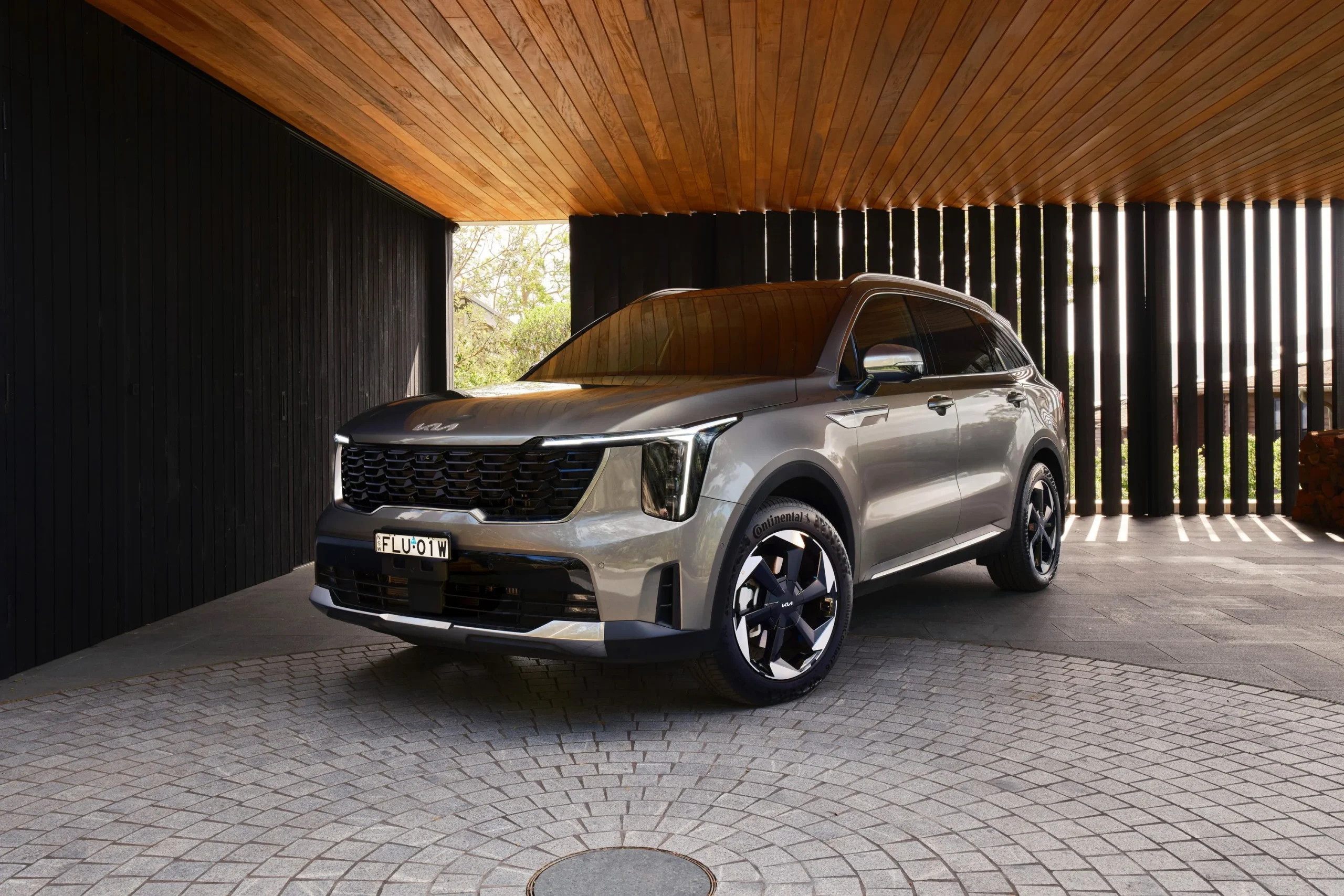
4. Kia Sorento Hybrid
The Kia Sorento Hybrid offers a useful middle ground between smaller crossovers and larger family SUVs. Its relatively manageable exterior dimensions can make parking and navigating busy streets easier than in a full-size vehicle.
At the same time, its available third row provides additional flexibility when relatives, friends, or children need a ride. This combination suits households that require occasional extra seating but do not want the bulk of a large sport utility vehicle.
Fuel efficiency is a central attraction of the Sorento Hybrid. Its gasoline-electric system helps reduce fuel consumption compared with many similarly sized conventional SUVs, while retaining the convenience of a gasoline engine.
Buyers who spend substantial time commuting may appreciate the potential savings over several years. Actual results depend on traffic, weather, terrain, and driving habits, so an assessment of typical daily mileage is more useful than assuming every owner will achieve the same economy.
The Sorento’s interior combines family-oriented storage, modern infotainment, and useful convenience features. Depending on the trim and model year, equipment may include driver-assistance technologies, smartphone connectivity, and multiple charging options.
The third row, however, is limited in space and is generally best for children or occasional passengers. With all seats in use, cargo room can become restrictive, so families should bring their regular luggage or a stroller when visiting a dealership.
Consumer Reports’ October 2025 ratings included the 2025 Sorento Hybrid among its recommended vehicles, highlighting fuel economy, ride comfort, and standard lane-centering assistance and adaptive cruise control.
The assessment also mentioned hesitation when moving away from a stop and a combined audio and climate-control panel that could be inconvenient to operate. Such observations reinforce the value of a proper test drive. Buyers should try the infotainment controls, assess low-speed acceleration, and check whether the interface feels intuitive.
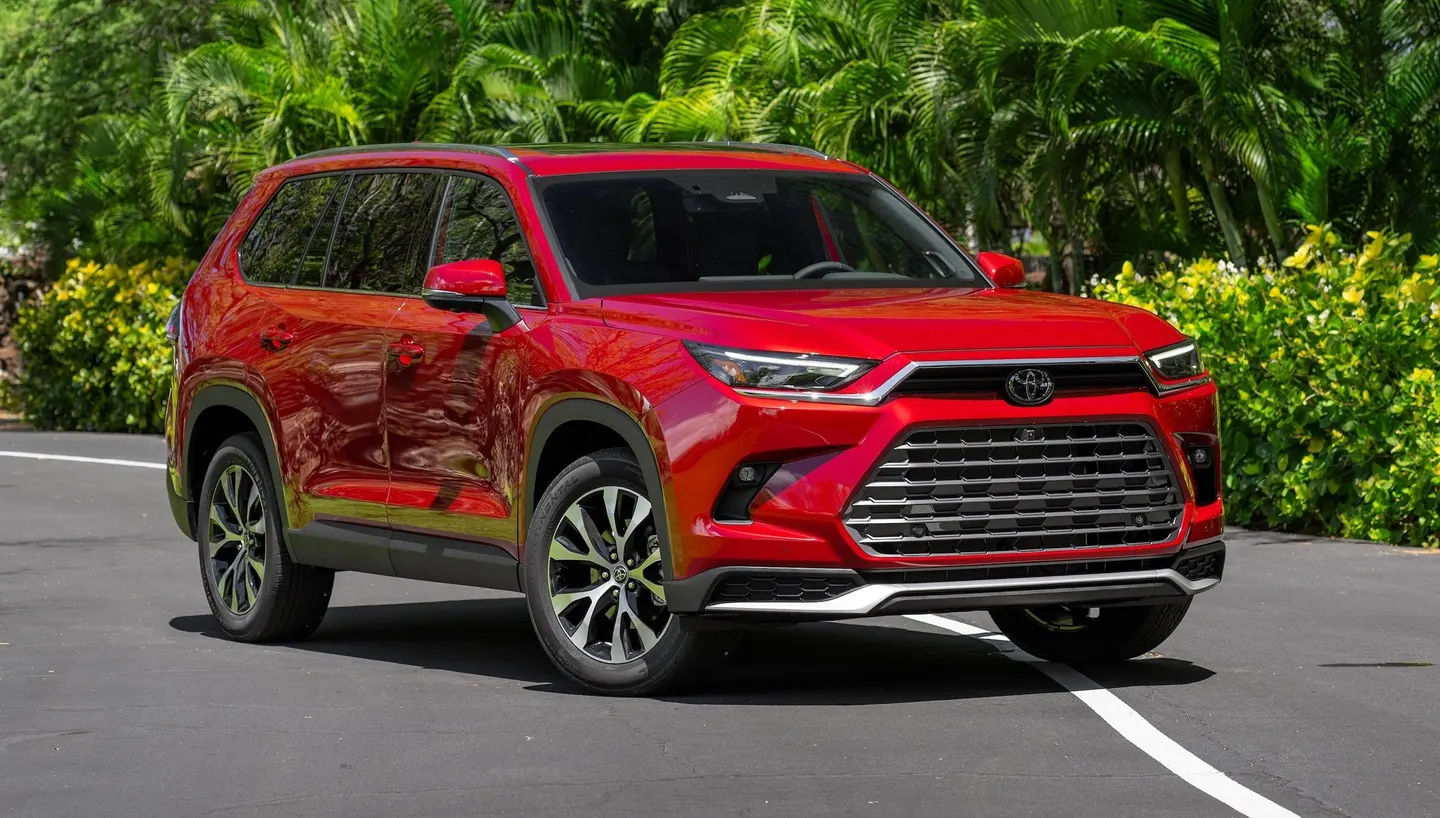
5. Toyota Grand Highlander Hybrid
The Toyota Grand Highlander Hybrid caters to families who need more passenger space than a conventional midsize SUV offers. Its larger dimensions provide a roomier interior, giving passengers in the rear rows more space than many other three-row SUVs with more compact designs.
This makes it worth considering for households that regularly transport several children, grandparents, or groups of passengers. Its design also supports family holidays when multiple people need to travel with luggage.
Toyota offers hybrid powertrain choices in the Grand Highlander range, allowing buyers to prioritize efficiency or stronger performance according to the version selected.
A conventional hybrid can reduce fuel use without requiring external charging, while a more performance-oriented hybrid configuration may deliver quicker acceleration at the expense of some efficiency. The precise options vary by model year and market. Buyers should identify the specific powertrain before comparing fuel economy, maintenance needs, and predicted reliability.
Space is a major practical benefit. The second row provides useful accommodation for adults, while the third row is intended to make regular passenger carrying easier than in many smaller three-row SUVs.
Cargo capacity also matters because a large passenger cabin has limited value if there is insufficient room for suitcases, shopping, or sports equipment. Families should inspect the luggage area with all seats upright and test how easily the rear seats fold when additional storage is needed.
Reliability requires particular care when assessing a relatively recent generation or a vehicle fitted with a newer powertrain. Toyota’s experience with hybrids is encouraging, but brand history alone cannot establish the reliability of every new model or component.
Buyers should examine the latest Consumer Reports ratings for the exact model year, look for technical service information and recall notices, and ask whether the vehicle has received all required software updates. Used examples should have a documented maintenance history and a satisfactory independent inspection.
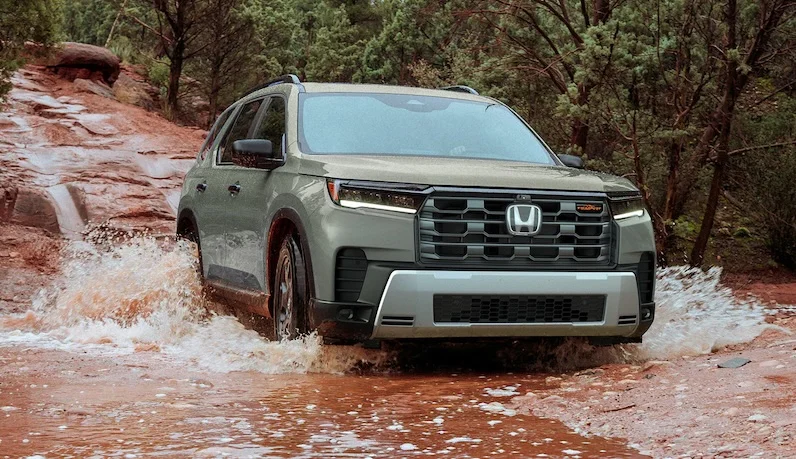
6. Honda Pilot
The Honda Pilot has long served families who need a spacious cabin, practical storage, and comfortable long-distance driving. Its midsize proportions offer a compromise between the maneuverability of a smaller crossover and the passenger capacity of a full-size SUV.
The Pilot is particularly suitable for households that regularly carry several passengers and need enough room for school bags, groceries, sports equipment, and holiday luggage.
Passenger access is an important consideration in a three-row vehicle, and the Pilot’s seating layout is designed to make family travel more convenient.
Depending on the model year and trim, the second-row configuration may include a removable middle seat or other flexible seating arrangements. Such features can help parents manage child seats and provide easier access to the rear. Buyers should verify the equipment on the exact vehicle because seating features vary across versions and generations.
The Pilot uses a gasoline engine rather than a conventional hybrid system in the versions discussed here. Its advantages include familiar refueling and straightforward operation, while the trade-off is that fuel expenses may be higher than those of an efficient hybrid competitor.
Driving conditions make a substantial difference, particularly when the vehicle is used for short urban journeys or spends time in congested traffic. A family with high annual mileage should calculate expected fuel spending before choosing a powertrain.
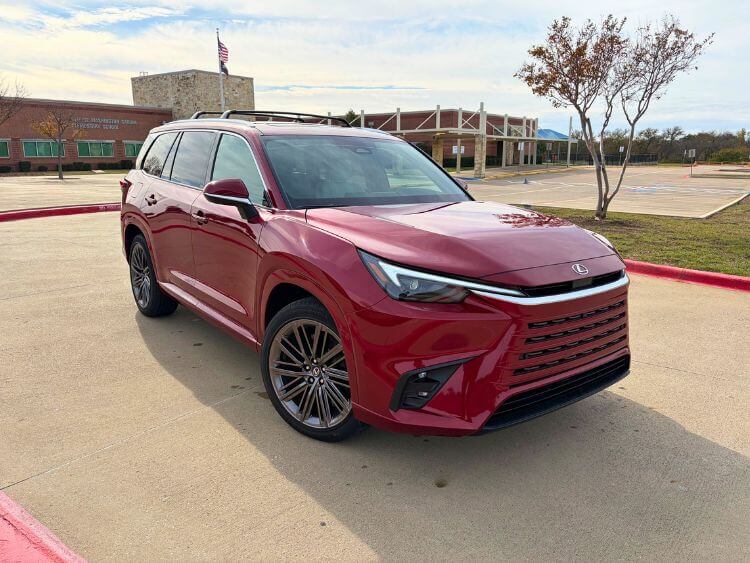
7. Lexus TX Hybrid
The Lexus TX Hybrid targets families who want a more refined driving experience without sacrificing everyday practicality. As a luxury three-row SUV, it combines a roomy passenger cabin with upscale materials, modern technology, and a focus on ride comfort.
It can suit households that spend long hours traveling together and appreciate a quieter interior, supportive seating, and convenient features. Its premium positioning also means that purchase price, insurance, tires, and replacement parts deserve close attention.
The TX lineup includes hybrid powertrain options, with specifications varying by trim and model year. Hybrid assistance can provide useful efficiency gains in certain driving conditions, while more powerful versions emphasize acceleration and performance.
Buyers should avoid treating all TX variants as mechanically identical because different powertrains can have different service requirements and reliability histories. Reviewing the exact vehicle identification details and official specifications is essential before comparing running costs.
Cabin space is a central strength of the TX. Its larger dimensions allow more room for rear passengers than many compact luxury SUVs can offer, and the third row adds flexibility for families who regularly travel with several occupants.
Materials, seat comfort, and infotainment equipment contribute to the premium experience. Still, shoppers should check whether the third row accommodates their tallest passengers and how much luggage remains possible when every seat is occupied.
Consumer Reports’ October 2025 ratings listed the 2025 Lexus TX Hybrid among its recommended luxury three-row SUVs, reporting a strong score and road-test performance.
The review noted acceleration, cabin room, ride comfort, and interior materials as positives, while some controls were less intuitive. These observations provide a useful starting point, but reliability must be assessed independently for the exact variant. A strong test result is not proof that a vehicle will be trouble-free throughout ownership.
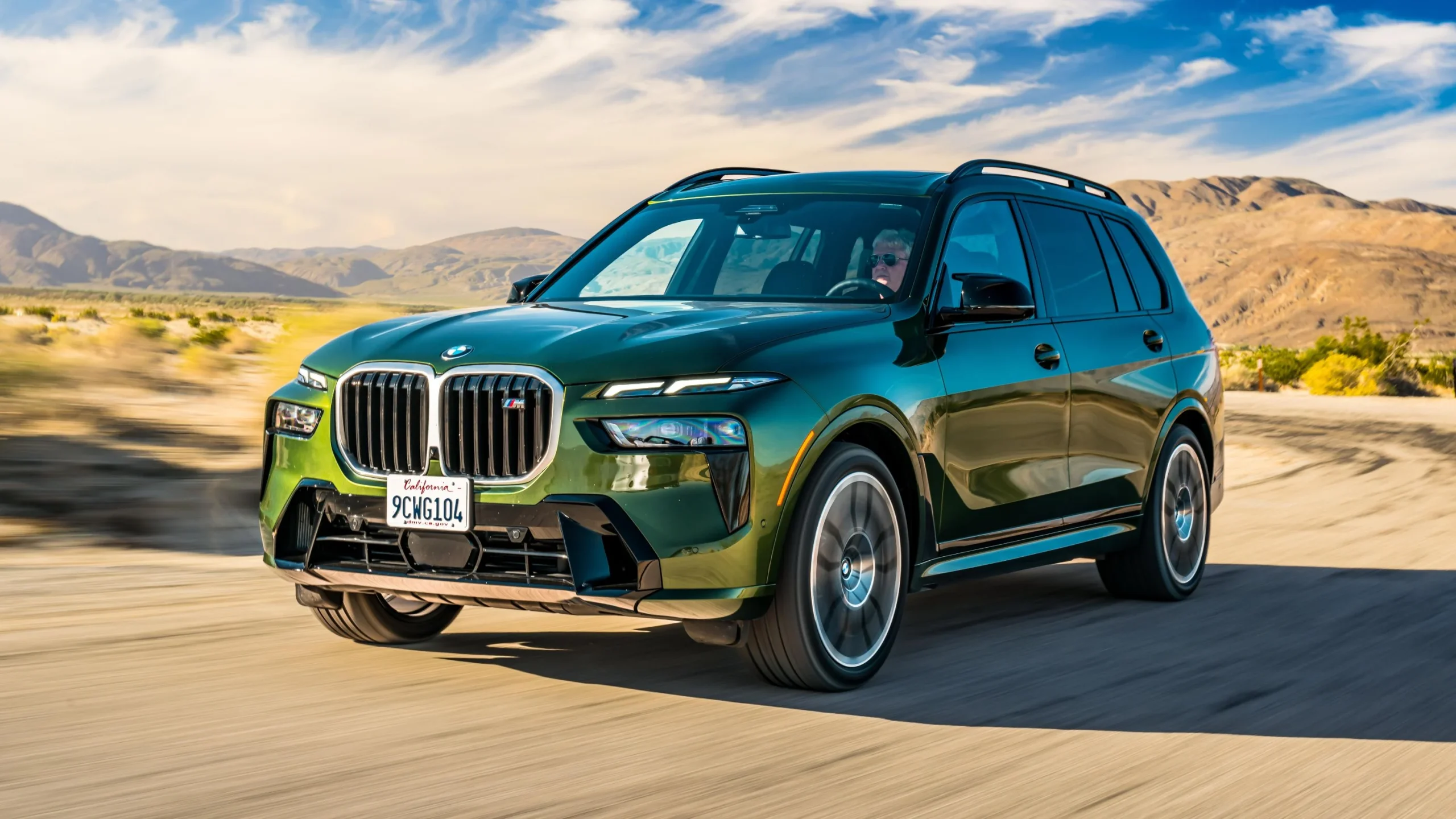
8. BMW X7
The BMW X7 combines a large three-row cabin with powerful performance and premium appointments. It is designed for buyers who want substantial passenger space and a more engaging driving experience than many conventional family SUVs provide.
Its size makes it suitable for highway journeys and family travel, while its luxury-focused interior includes technology and comfort features intended to reduce fatigue. However, its purchase price and operating expenses place it in a different category from mainstream family vehicles.
The X7’s cabin offers a high level of refinement, with supportive seating, sophisticated infotainment, and a quiet ride at cruising speeds. Its third row provides additional passenger capacity, though actual comfort depends on occupant height and seating position.
The vehicle’s large exterior dimensions can make parking in tight spaces challenging, especially for drivers moving up from a smaller crossover. A test drive should include narrow streets, parking maneuvers, and a highway section to establish whether the vehicle suits everyday use.
BMW offers different powertrain configurations across X7 model years and trims. Powerful engines provide strong acceleration, but fuel consumption and maintenance costs can be higher than those of less expensive family SUVs.
Complex electronic systems and premium mechanical components can also increase the price of repairs outside the warranty period. Buyers should consider these costs alongside the initial purchase price, rather than focusing exclusively on performance or the appeal of a luxury badge.
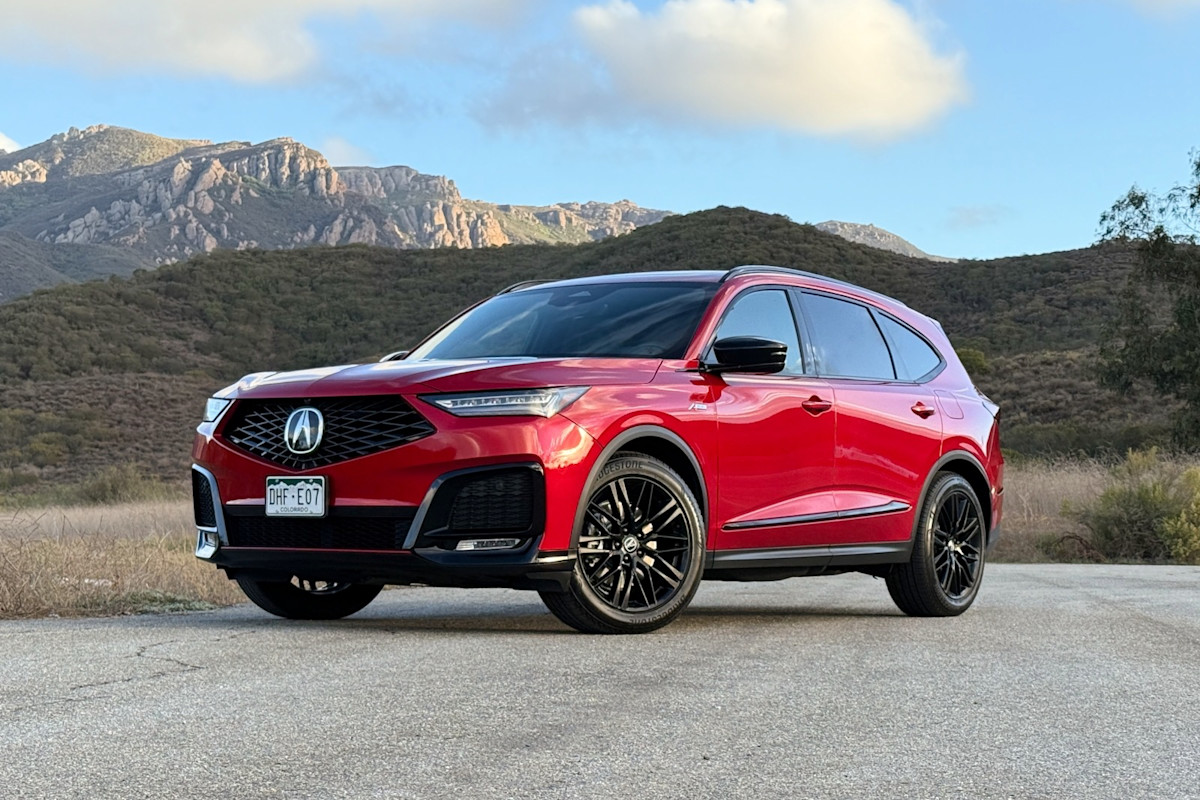
9. Acura MDX
The Acura MDX is aimed at families seeking premium comfort without moving to the largest luxury SUVs. Its midsize body offers a practical combination of passenger capacity, road manners, and everyday usability.
Acura positions the MDX as a more driver-focused alternative to some comfort-oriented rivals, making it appealing to owners who enjoy driving but still need room for family members. Its suitability depends on how often all three rows are occupied and how much cargo must fit behind them.
The MDX provides a well-finished interior with supportive seats and a range of convenience features that vary by trim. Second-row passengers receive useful space, while the third row offers extra capacity for children or shorter journeys.
Families should check how easily passengers can enter the rear seats and whether child seats interfere with access. A practical dealership visit should include adjusting every seat, trying the seat-folding mechanisms, and measuring the cargo area with the rear seats upright.
Powertrain specifications differ between MDX generations and trim levels. Conventional gasoline versions prioritize familiar operation and straightforward refueling, while performance-oriented trims may use more powerful mechanical components.
Fuel consumption, tire costs, and brake expenses should be considered when estimating ownership costs. Buyers who primarily drive in crowded urban areas may place greater importance on parking assistance, visibility, and low-speed smoothness than on maximum acceleration.
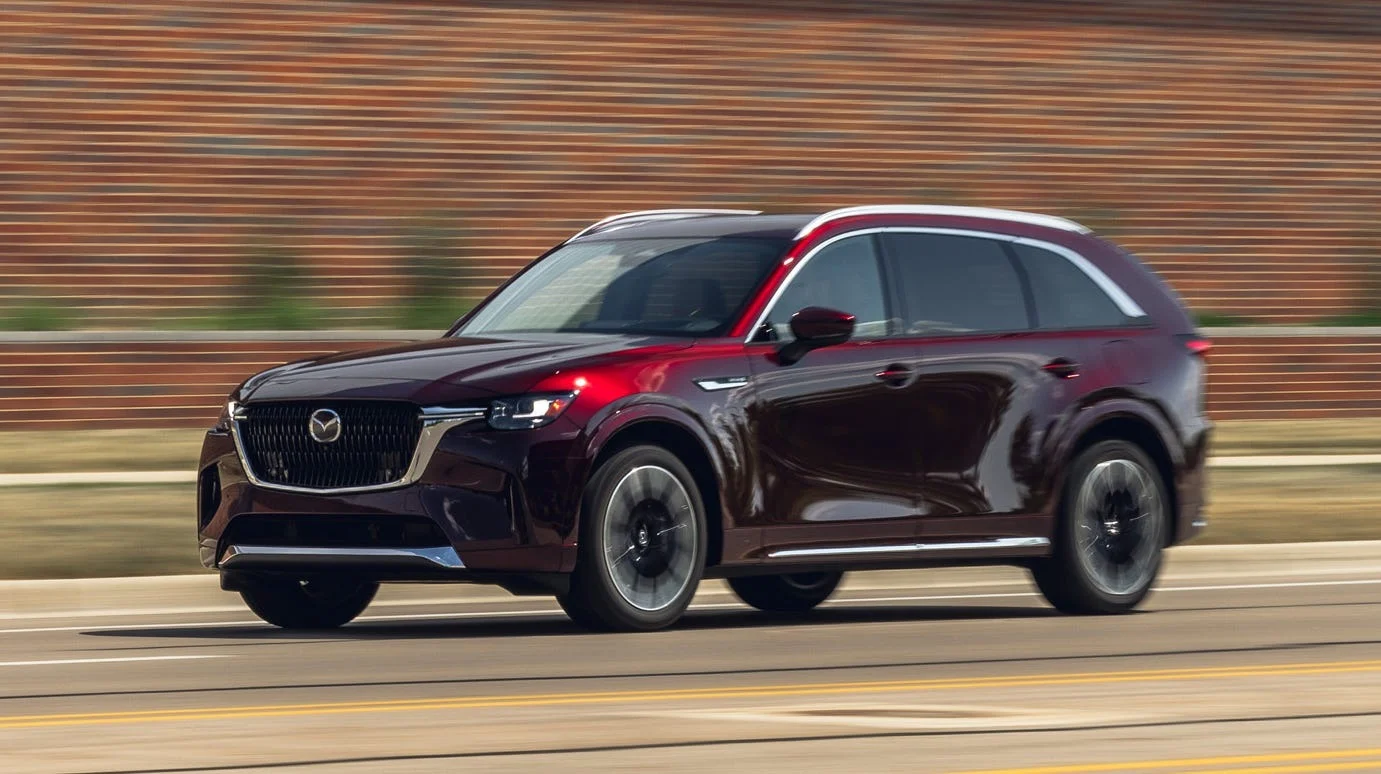
10. Mazda CX-90
The Mazda CX-90 brings distinctive styling and a premium-oriented cabin to the family SUV segment. Its exterior design is more understated than that of some large American SUVs, while the interior focuses on materials, seating comfort, and a driver-centered layout.
The CX-90 appeals to buyers who want a vehicle that feels refined during daily commuting and remains practical for family journeys. Its reliability record, however, should be assessed with particular attention to the exact model year and powertrain.
Mazda has offered the CX-90 with different powertrain choices, including mild-hybrid-assisted gasoline engines and a plug-in hybrid version in certain markets. These systems have different operating characteristics, fuel requirements, and maintenance considerations.
A plug-in hybrid may offer electric-only driving for shorter trips when its battery is charged, while a conventional gasoline-based version avoids the need for external charging. Buyers should compare the options based on their access to charging, annual mileage, and typical journey length.
Inside, the CX-90 offers three-row seating and a cabin designed to feel more upscale than many mainstream family vehicles. The second row can provide comfortable accommodation, while the third row is more appropriate for children or occasional adult passengers.
Available seating configurations and equipment vary by trim. Families should test the rear seating area with their usual passengers, then assess whether the remaining cargo room is adequate for shopping, luggage, and everyday equipment.