
Here is an uncomfortable truth about American driving. Most people who get behind the wheel believe they are better than average drivers. Research on how drivers evaluate their own ability consistently finds that a large majority of Americans rate their skills above the midpoint, even though that outcome is mathematically impossible in a normal distribution of ability.
What that confidence often produces is a relaxed relationship with traffic laws, not through deliberate lawbreaking but through genuine unawareness that certain rules exist, that habits learned years ago were wrong, or that a law has changed since the last time anyone thought about it.
Traffic violations fall into a few categories. Some are conscious shortcuts, rolling through a stop sign when no one is watching, speeding slightly because everyone else is doing it. Others are honest mistakes, not knowing that the law requires a certain behavior in a specific situation.
But a third category is the most interesting and the most common: rules that drivers break routinely because they genuinely do not know the rule applies to them, were never properly explained during driver education, or differ from what common practice around them suggests is normal.
This page covers nine traffic laws that fall squarely into that third category. These are rules that a substantial portion of American drivers violate regularly, often daily, without any awareness that their behavior is illegal. Some carry fines. Some carry points on a license. A few carry consequences serious enough to affect insurance rates or result in citations that create real financial pain.
No judgment is attached to any of this. If you recognize yourself in any of these entries, you are in very good company. What matters is knowing the rule accurately going forward, because knowing it is the only thing that changes the behavior. Read through all nine, check your own habits honestly, and decide which adjustments are worth making before a traffic stop decides for you.
1. Treating the Left Lane as a Personal Cruising Lane on Multi-Lane Highways
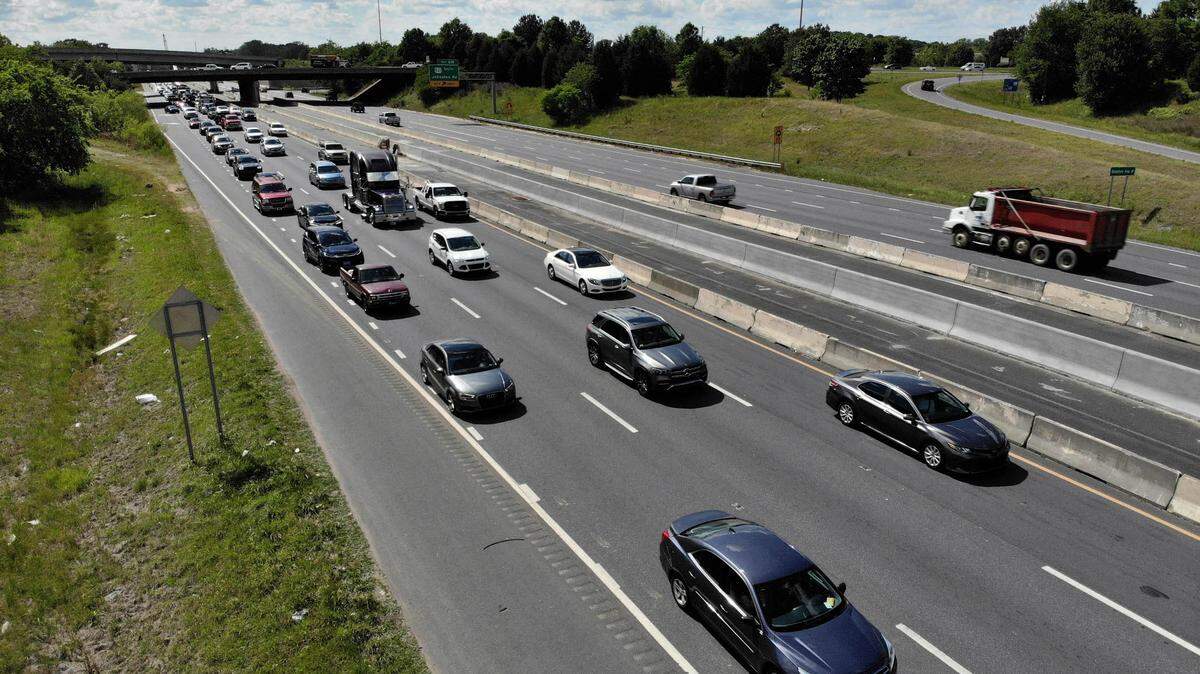
Ask most American highway drivers about lane discipline, and you will encounter a confident response: the left lane is for faster drivers and the right lane is for slower traffic. That general idea is correct. What most drivers miss is the legal requirement embedded in that principle.
In the majority of US states, it is not merely suggested that drivers move right after passing. It is required by law. Remaining in the left lane when not actively passing other vehicles is a traffic violation in states including California, Florida, New Jersey, Georgia, and many others, with fines ranging from $50 to several hundred dollars depending on the jurisdiction.
Left-lane loitering is the informal name for this violation, and it is one of the most visibly common traffic law breaches on American interstates. A driver who sets their cruise control at 68 mph in the left lane of a 65 mph highway and remains there indefinitely is violating both the spirit and, in most states, the specific language of the keep-right-except-to-pass statute. The fact that they are traveling above the posted speed limit does not exempt them from the lane discipline requirement.
Why does this matter beyond the legal technicality? Lane compliance research consistently shows that left-lane loitering contributes to tailgating behavior, creates high-speed passing maneuvers on the right side that increase collision risk, and produces road rage incidents that generate their own accident category.
When the passing lane is occupied by drivers who are not passing, faster-moving traffic either tailgates aggressively or passes on the right, both of which are more dangerous behaviors than a properly moving traffic flow that uses the left lane only for passing and returns to the right immediately after.

2. Failing to Yield to Pedestrians at Unmarked Crosswalks
When American drivers think about yielding to pedestrians, they typically picture a clearly marked crosswalk with white stripes painted across the road, possibly with a pedestrian crossing signal. This mental model creates a legal blind spot that produces real danger for pedestrians and real citations for drivers: the unmarked crosswalk.
Under the traffic laws of most US states, every intersection where two public roads meet constitutes a legal crosswalk, even when no paint, signage, or traffic signal marks it as one. Pedestrians who step into that intersection to cross have the legal right of way in virtually every state..
Failing to do so is a moving violation in most jurisdictions, and if a pedestrian is struck at an unmarked intersection, failure to yield is the presumptive legal finding unless evidence supports another conclusion. This matters practically because intersections without marked crosswalks are common in residential neighborhoods, near schools, in older downtown areas where crosswalk marking has not been maintained, and at mid-block intersections in urban grids.
A driver traveling through a residential neighborhood in a 2024 Honda Pilot TrailSport AWD who does not yield to a person stepping off the curb at a four-way stop intersection without painted crosswalk lines is technically violating the pedestrian right-of-way law, regardless of whether they were aware that an unmarked crosswalk existed at that location.
The broader legal principle is this: pedestrians have the right of way at any intersection when they are legally present in or entering the roadway, with or without paint on the pavement indicating it. Drivers bear the responsibility of watching for pedestrians at all intersections, not just the ones with obvious markings, because the law does not limit pedestrian protections to only the intersections that have been clearly painted.
Also Read: 8 Tips for Negotiating the Lowest Interest Rate on a Car Loan in 2026

3. Rolling Through Stop Signs Instead of Coming to a Complete Stop
Rolling through stop signs has become an accepted habit for many drivers across the United States, even though the law treats it as a clear violation. Many motorists slow their vehicles to a crawl, often between three and five miles per hour, then proceed without allowing the wheels to come to rest.
Drivers who practice this behavior often describe it as cautious driving rather than illegal conduct. Traffic law does not share that interpretation. Every state traffic code defines a stop as the vehicle reaching zero movement. Anything less fails to meet the legal requirement attached to a stop sign.
Law enforcement officers who issue citations for rolling stops are not relying on obscure technical language. They are enforcing a direct instruction conveyed by the sign itself. The word “stop” carries a precise meaning within traffic regulation. It does not invite interpretation based on intent or degree of slowing. In many towns, rolling stop citations account for a large portion of traffic enforcement activity.
Residential areas, school zones, and pedestrian-dense neighborhoods receive particular attention because incomplete stops place vulnerable road users at higher risk. The reasoning behind a complete stop extends beyond rule compliance. A vehicle that reaches zero movement eliminates forward momentum, giving the driver a wider margin for visual assessment.
Cross traffic, cyclists approaching from blind angles, and pedestrians stepping off kerbs become easier to identify when the driver pauses fully. A vehicle still moving, even at low speed, must overcome remaining motion before reacting to unexpected movement. That delay, though small, matters in tight intersections. Traffic engineering standards recognize this difference and form the basis of the stop sign rule.
Drivers often rely on experience to justify rolling stops. Someone who has slowed through neighborhood intersections for years without penalty may conclude the practice is accepted. That assumption misunderstands enforcement realities. Absence of citation reflects timing and observation, not legality.
The rule remains in force whether enforced consistently or not. When an officer observes the violation directly, the resulting citation stands on clear statutory ground. Arguments raised in traffic court frequently include claims that the driver exercised caution or followed common practice.
4. Using the Wrong Merge Technique in Construction Zones and Highway Lane Reductions
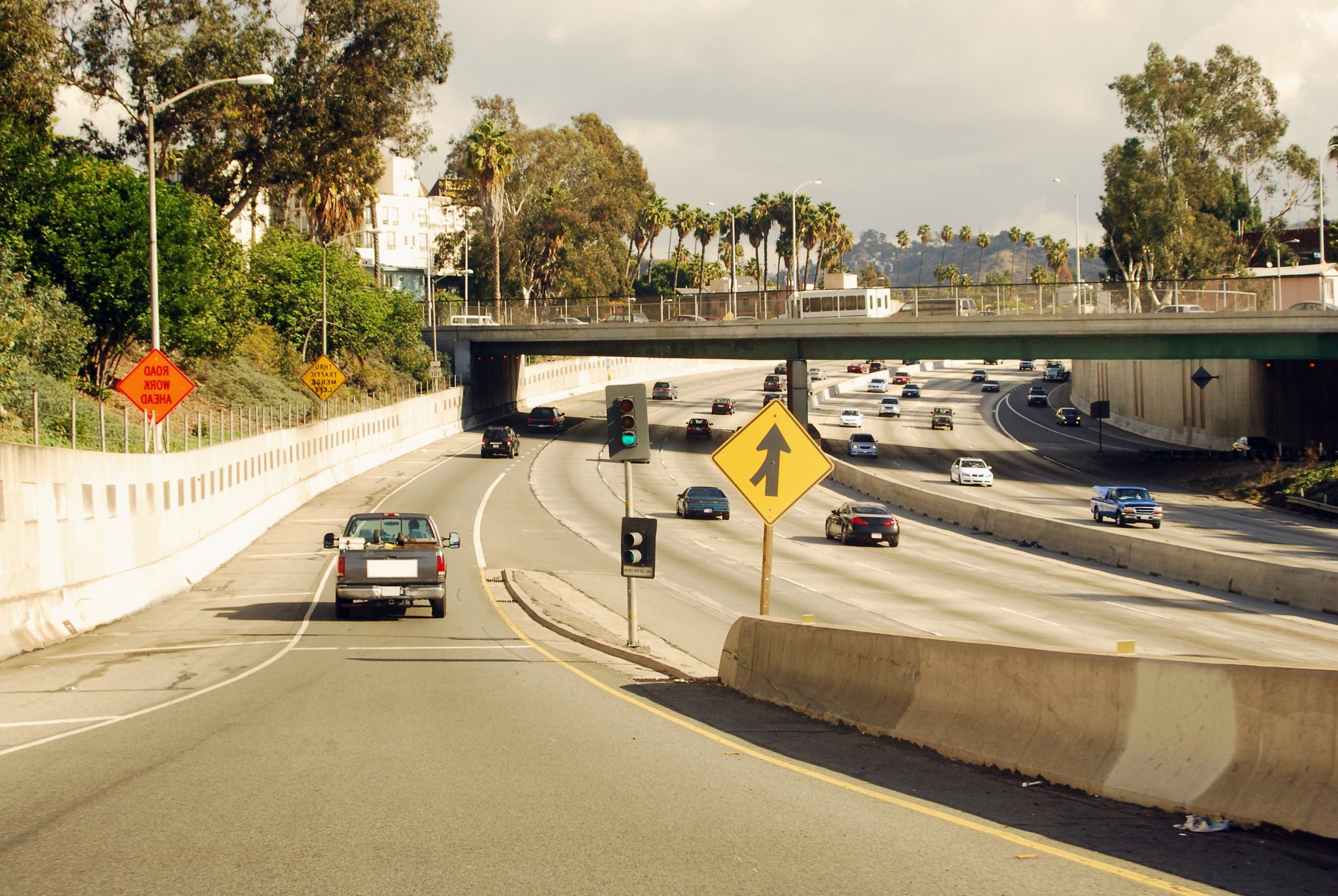
Highway lane reductions in the United States often trigger frustration and hostility among drivers, largely because of widespread misunderstanding about proper merging behavior. When warning signs announce an upcoming lane closure, many drivers move immediately into the open lane, believing early movement reflects courtesy.
Drivers who remain in the closing lane until the marked merge point are frequently viewed as aggressive or selfish. This belief is deeply rooted in driving culture, yet it conflicts with established traffic engineering guidance and, in several jurisdictions, traffic law.
Transportation authorities recommend using both lanes fully until the merge point, then alternating vehicles in a structured sequence. This approach is known as zipper merging. It is supported by federal roadway guidance and by state-level education campaigns.
Studies conducted by transportation agencies show higher vehicle throughput when both lanes are used fully. The result is shorter delays and fewer aggressive interactions. Problems arise when early merging drivers attempt to enforce their interpretation of courtesy by blocking others.
Some motorists position their vehicles to prevent access from the closing lane, believing they are discouraging improper behavior. In reality, this action worsens congestion and can violate traffic regulations where alternating merges are recognized by law. Blocking another vehicle’s lawful movement introduces risk and escalates tension in already constrained conditions.
Construction zones amplify the impact of poor merging habits. Reduced lanes, narrow shoulders, and altered traffic patterns require predictable cooperation. Early merging produces long queues that extend beyond the work area, interfering with access points and emergency movement. Late merging at the marked point keeps traffic compressed closer to the restriction, where it can be managed more effectively by signage and barriers.
5. Not Turning Right on Red When It Is Legal to Do So
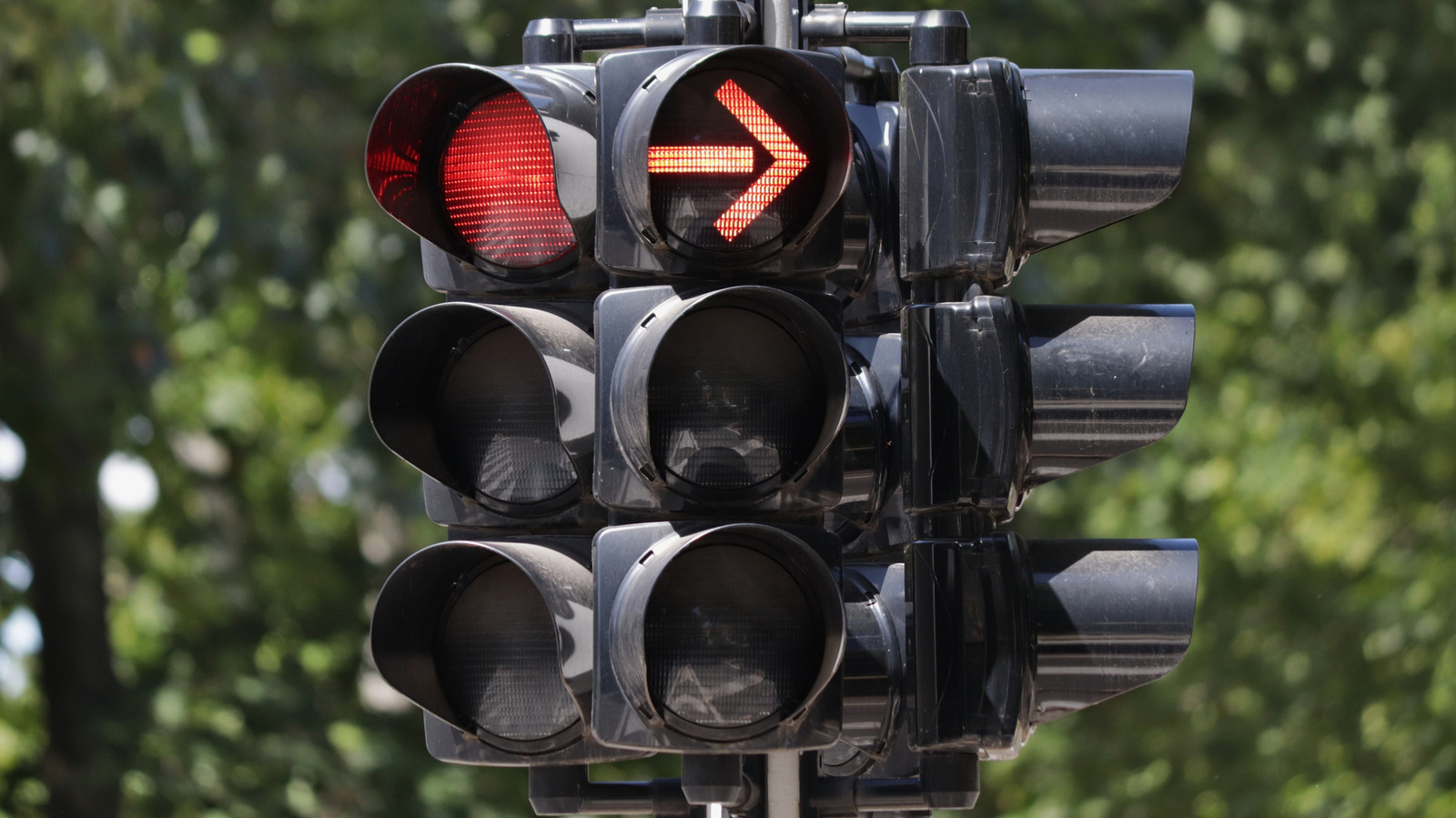
Right turn on red is permitted in all 50 US states at intersections where no sign prohibits it, after a complete stop, and when the way is clear of conflicting traffic and pedestrians. This rule has been in place nationally since the 1970s, when it was adopted as a fuel conservation measure and has remained as a traffic flow efficiency standard.
Most drivers know the rule exists. A meaningful number of drivers do not know that in several states, failure to turn right on red when it is legally permissible and traffic conditions allow can itself be cited as impeding traffic. Beyond the citation risk, blocking other vehicles by refusing to turn right on red when conditions are clear creates traffic backup, frustrates following drivers, and, at certain intersections, contributes to intersection congestion that affects cross-street signal timing.
A driver sitting stationary through a complete red cycle at an intersection where right-turn-on-red is permitted, with no traffic conflicting with their turn and no pedestrians in the crosswalk, is not being cautious. They are impeding normal traffic flow at an intersection designed to function with right-turn-on-red compliance.
The obligation accompanying this rule is clear: come to a complete stop, check carefully for pedestrians and conflicting traffic, and if the way is clear and no sign prohibits the turn, proceed. Comfort level with the turn does not change the traffic law requirement. In jurisdictions where impeding traffic is citable, a driver in a 2025 Hyundai Ioniq 6 SE RWD who sits through multiple red cycles without turning when conditions permit may face the same enforcement attention as a driver committing the opposite violation.
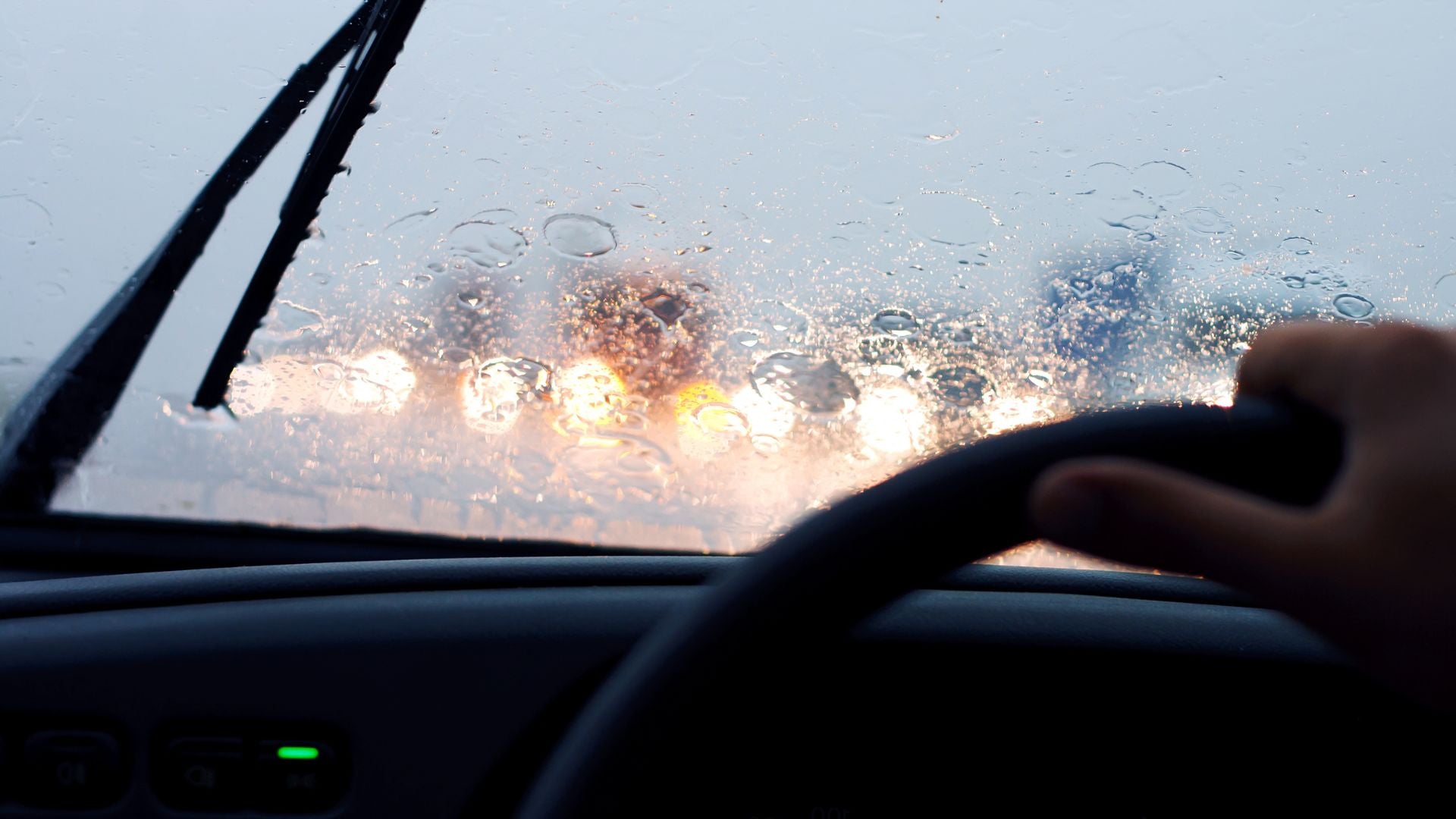
6. Driving With Headlights Off During Rain, Fog, and Low-Visibility Conditions
American drivers overwhelmingly associate headlight use with darkness. Headlights go on at dusk and go off at sunrise. That mental model is incorrect as a matter of law and dangerous as a matter of practice. Every US state requires headlights to be used in conditions of reduced visibility that include rain, fog, smoke, and snow, regardless of whether it is daytime.
Many states specify that when windshield wipers are in continuous operation, headlights must be on. A driver caught in a daytime rainstorm with windshield wipers running but headlights off is violating the law in the majority of American states. Why does this matter so much that states have codified it specifically? Daytime running lights, which many modern vehicles activate automatically, are not the same as full headlights.
Daytime running lights typically illuminate the front of the vehicle but do not activate taillights. In a rainstorm viewed from behind, a vehicle without active taillights is substantially harder to see than one with them on, particularly at highway speeds where following distance shortens perception and reaction time. The danger is not about the driver seeing the road. It is about other drivers seeing the vehicle.
A driver in a 2024 Ford Escape Active FWD with automatic daytime running lights active during a rainstorm may believe their visibility to other drivers is adequately addressed. If their taillights are not on, the vehicle following them at 65 mph has a materially reduced visibility window of their presence.
The headlights-on-in-rain requirement is a rear visibility mandate as much as a forward visibility one, and most drivers do not think about it in those terms. Enforcement of this rule varies widely by jurisdiction and by weather event. Some states are more proactive about citing this violation during inclement weather than others.

7. Passing a School Bus That Has Stopped With Flashing Red Lights and an Extended Stop Arm
Traffic rules governing school buses are among the clearest and most strictly enforced road safety laws in the United States. When a school bus comes to a stop and activates its flashing red lights while extending its stop arm, every driver approaching the bus is required by law to stop, subject only to narrow and clearly defined exceptions.
This requirement exists in every state traffic code. Penalties for violation are severe, reflecting the vulnerability of children entering or exiting the bus. Fines commonly reach several hundred dollars, while some states impose penalties exceeding one thousand dollars, alongside license points and possible criminal charges when aggravating factors apply.
Despite the clarity of the rule and the seriousness of the punishment, violations occur daily. Transportation safety studies and school transport monitoring programmes record millions of stop arm violations each year. Many incidents occur during routine morning and afternoon routes, where familiarity breeds inattention.
Drivers often report that they did not notice the lights activate in time, assumed the bus was preparing to move again, or misunderstood whether traffic on the opposite side of the road was required to stop. Understanding roadway configuration is essential to lawful compliance.
On a two-lane road without any physical separation, traffic traveling in both directions must stop when a school bus displays flashing red lights. This requirement applies regardless of traffic volume, speed limit, or time of day. Children may cross the road after leaving the bus, and the law presumes their presence until the bus resumes motion and deactivates its warning signals.
On divided highways, the rule changes only when a physical barrier separates opposing traffic. Where a concrete median, guard rail, or raised divider exists, vehicles travelling in the opposite direction are not required to stop. Traffic moving in the same direction as the bus must still stop fully.
This distinction is strictly interpreted. Painted lines alone do not always qualify as a dividing structure. In several states, a painted median without a physical barrier does not remove the stopping requirement for opposing traffic. Misinterpretation of this detail accounts for many citations.

8. Failing to Signal Before Changing Lanes on a Highway
Turn signals are basic safety devices fitted to every road-legal vehicle, yet they remain among the least consistently used by drivers on American highways. Traffic laws in all states require drivers to signal their intention before changing lanes, merging, or turning. The signal must be activated in advance of the maneuver, not during or after steering input begins.
This requirement exists to provide other road users with time to perceive, process, and respond to intended movement. Studies examining driver behavior show widespread disregard for this rule. Large-scale traffic observation research estimates that failures to signal occur hundreds of millions of times each day across the national road network.
Highway driving shows the highest rate of non-use. Drivers often justify omission by claiming the maneuver was safe, or that mirrors and blind spot checks confirmed a clear path. This reasoning misunderstands the function of a signal. A turn signal does not exist to confirm safety to the driver. It exists to inform others.
Drivers approaching from behind, vehicles travelling at higher speeds, and motorists occupying blind spots rely on visual cues to anticipate changes. Signaling provides that cue. Without it, other drivers are forced to react suddenly rather than adjust gradually.
Highway conditions amplify this issue. Traffic flows at higher speeds, spacing between vehicles is reduced, and decision windows are shorter. A vehicle that moves laterally without warning can force abrupt braking or evasive steering by others. Even when no collision occurs, such actions increase risk and contribute to congestion through ripple effects.
Traffic statutes specify minimum distances for signal activation. Many states require signals to be activated at least one hundred feet before a lane change. This distance is not arbitrary. It represents a buffer that allows surrounding traffic to respond safely. Activating a signal simultaneously with steering fails to meet this standard and does not satisfy legal requirements.
Also Read: 8 Tips for Driving Safely Around Large Semi Trucks on the Interstate

9. Driving Too Slowly for Traffic Conditions on a Highway
Speed enforcement in the United States is almost entirely focused on maximum speed violations. Officers write tickets for drivers going too fast. Anti-speeding campaigns, speed cameras, and traffic enforcement priorities are built around reducing excessive speed.
This enforcement focus has produced a widespread cultural assumption that slower is always safer and that driving below the speed limit is inherently law-abiding behavior. That assumption is legally incorrect and physically misleading. Most US states have minimum speed laws or impeding traffic statutes that make it illegal to drive at a speed that is unreasonably slow for current traffic conditions, regardless of whether the driver is below the posted maximum speed limit.
Driving 45 mph on an interstate highway with a 65-mph speed limit and 65 to 70 mph normal traffic flow is not legally safe because the driver is below the maximum limit. It creates a speed differential between the slow vehicle and surrounding traffic that produces the same collision risk as moderate speeding in the opposite direction.
Studies of highway accident causation consistently show that large speed differentials between vehicles, whether the outlier is faster or slower than traffic, produce higher accident risk than uniform traffic flow at moderately above-limit speeds. A driver in a 2026 Kia Carnival LX FWD traveling 45 mph on an interstate where traffic moves at 65 to 70 mph is creating a situation where every following vehicle must brake, change lanes around them, or match their below-flow speed.
These lane changes and speed adjustments ripple backward through traffic and produce the compressing, accordion-effect slowdowns that cause rear-end collision chains. Minimum speed violations are citations in states including California, which specifically prohibits driving at a speed that impedes the normal flow of traffic.
